15 Boho Bathroom Styles Built Around Natural Materials

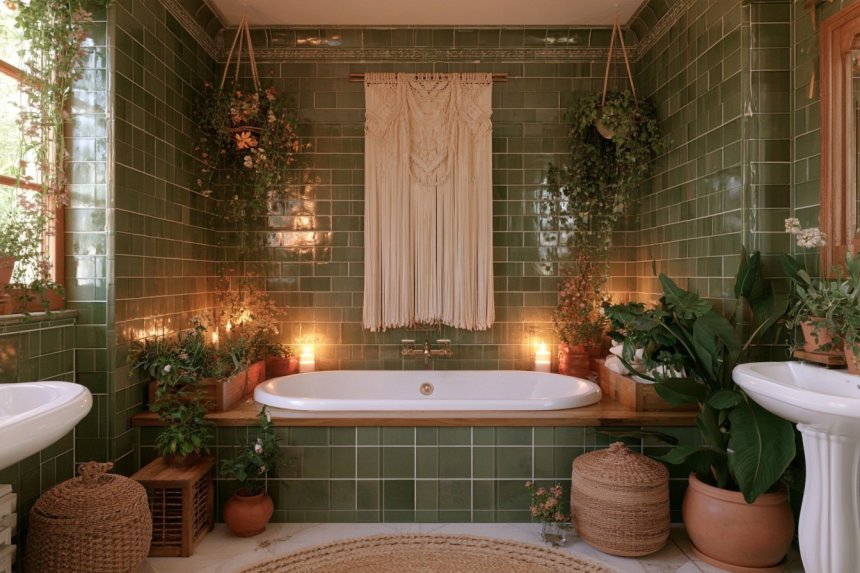
Boho bathroom design feels most convincing when color, texture, and handcrafted objects are balanced with materials suited to a wet environment. Artisan tile, warm timber, stone, clay, woven storage, and earthy finishes can create a collected atmosphere, but every surface still needs to tolerate humidity and regular cleaning. Begin with permanent elements such as flooring, waterproof wall finishes, ventilation, and sanitary fixtures before introducing baskets, textiles, plants, or decorative objects. Limiting the palette and leaving some surfaces visually quiet will prevent the room from becoming cluttered. These boho bathroom styles combine expressive materials with practical maintenance, safer installation, and storage that supports everyday routines.
1. Build the Room Around a Handmade Clay Sink
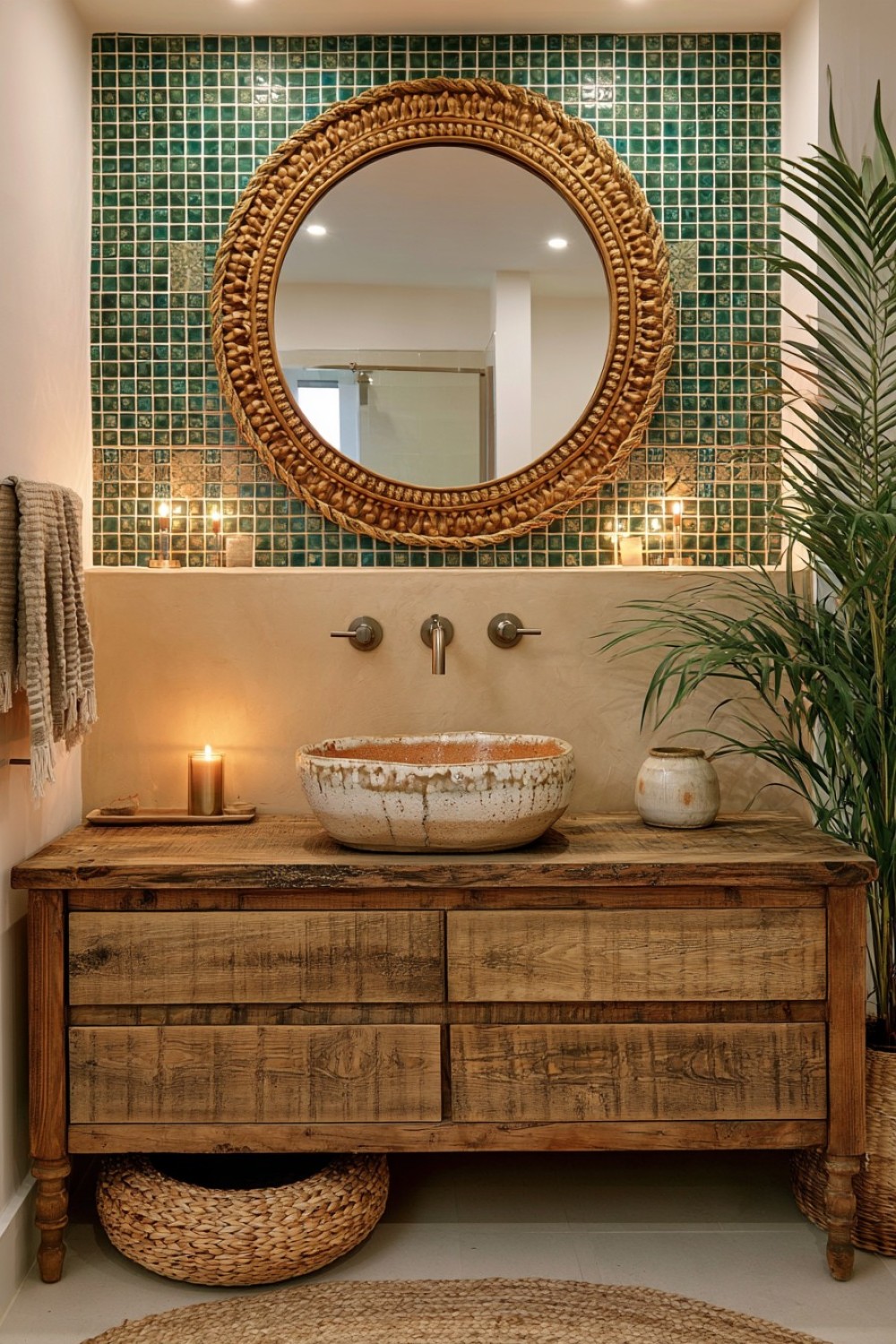
A handmade clay basin can establish the room’s color palette through its glaze, pattern, and natural variation. Surround it with a quiet countertop and simple wall finish so the basin remains the focal point. Warm white, sand, muted terracotta, olive, and charcoal can all complement clay. Select a tap with sufficient projection to direct water toward the center of the bowl and reduce splashing.
Confirm that the basin is manufactured and sealed for repeated bathroom use rather than being purely decorative pottery. Handmade dimensions may vary, so the counter opening and waste connection should be based on the actual piece. Follow the maker’s cleaning guidance and avoid abrasive products that could damage the glaze. The vanity must also support the basin’s weight and provide access to plumbing for future maintenance.
2. Pair Tadelakt-Inspired Walls With Natural Timber
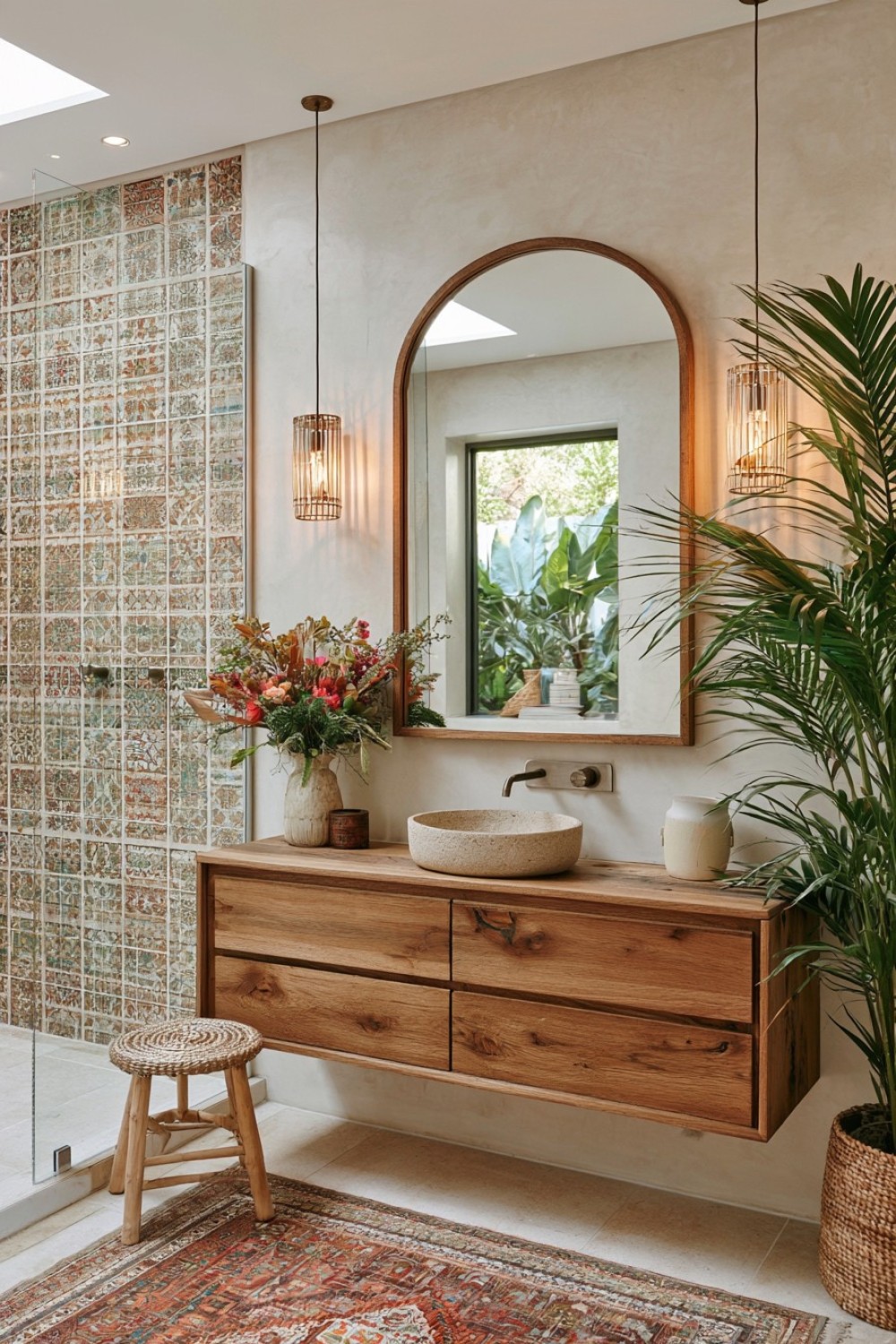
Tadelakt and tadelakt-inspired finishes create a softly varied surface that works naturally with oak, teak, or walnut tones. Use the textured finish across a main wall or bathing zone and keep furniture lines simple. Warm off-white, clay, mushroom, and pale rose finishes can produce depth without relying on bold pattern. Timber shelves or a vanity provide a clear material contrast.
Traditional tadelakt is a specialist lime-based finish requiring correct preparation, application, polishing, and maintenance. Decorative products that imitate its appearance may not provide the same water resistance. Confirm exactly where a chosen system can be installed and what waterproof substrate it requires. Timber in splash-prone areas must also be properly finished, ventilated, and maintained rather than assumed to be naturally waterproof.
3. Balance a Patchwork Tile Floor With Quiet Walls
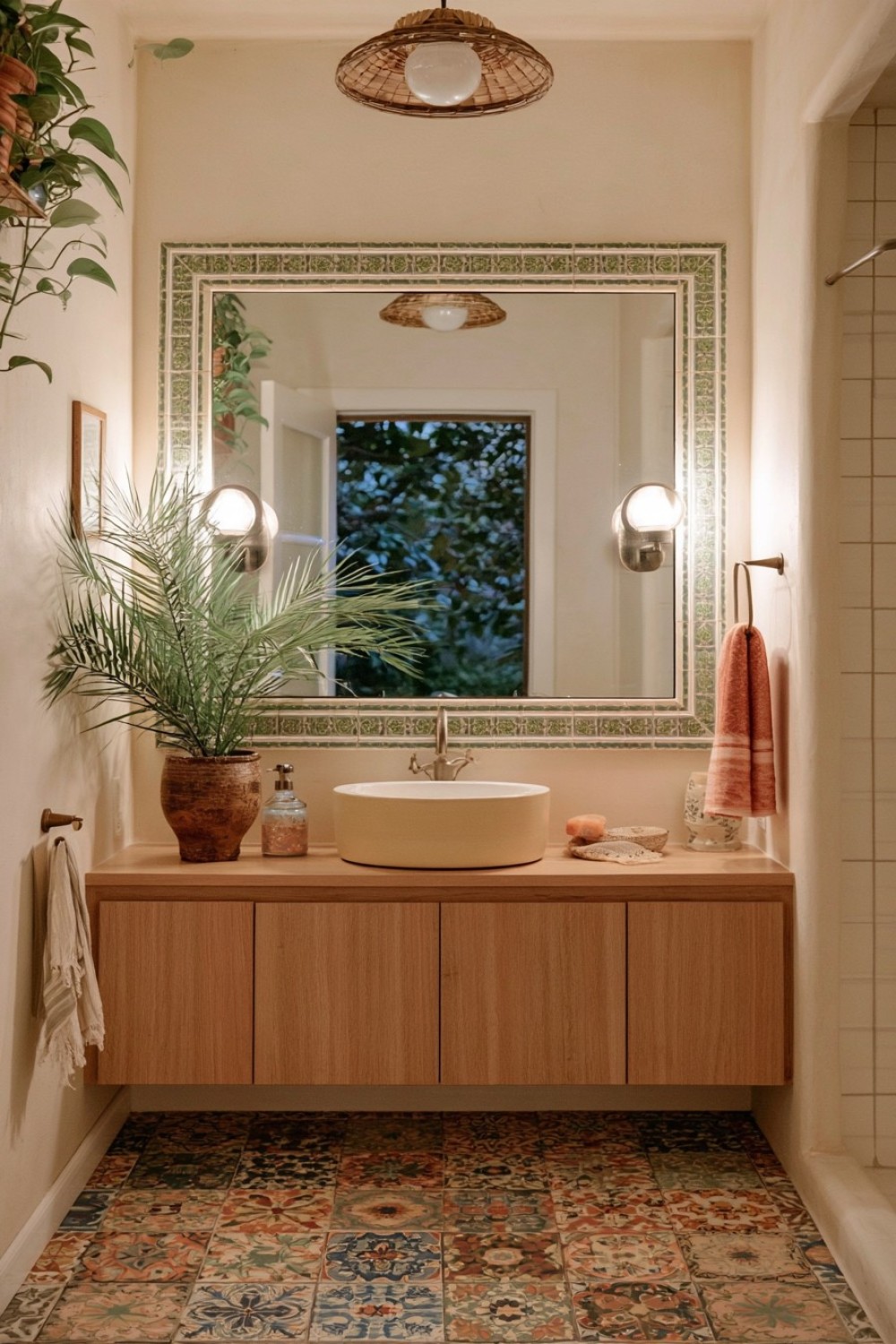
A patchwork floor can introduce several colors and motifs without requiring additional wall decoration. Select tiles that share a related background color or controlled palette so the variation appears intentional. Plain walls and simple sanitary fixtures allow the floor to remain visually dominant. Before installation, arrange several boxes of tiles together to distribute repeated patterns and strong colors evenly.
Use floor-rated tile with appropriate slip resistance for a bathroom. Patterned surfaces can disguise dirt, but grout and textured areas still require regular cleaning. Plan the layout around the doorway, toilet, vanity, and drain so prominent edges do not finish with awkward tile fragments. Waterproofing, substrate preparation, movement joints, and floor slope must be resolved beneath the decorative finish.
4. Convert an Antique Wood Cabinet Into a Vanity
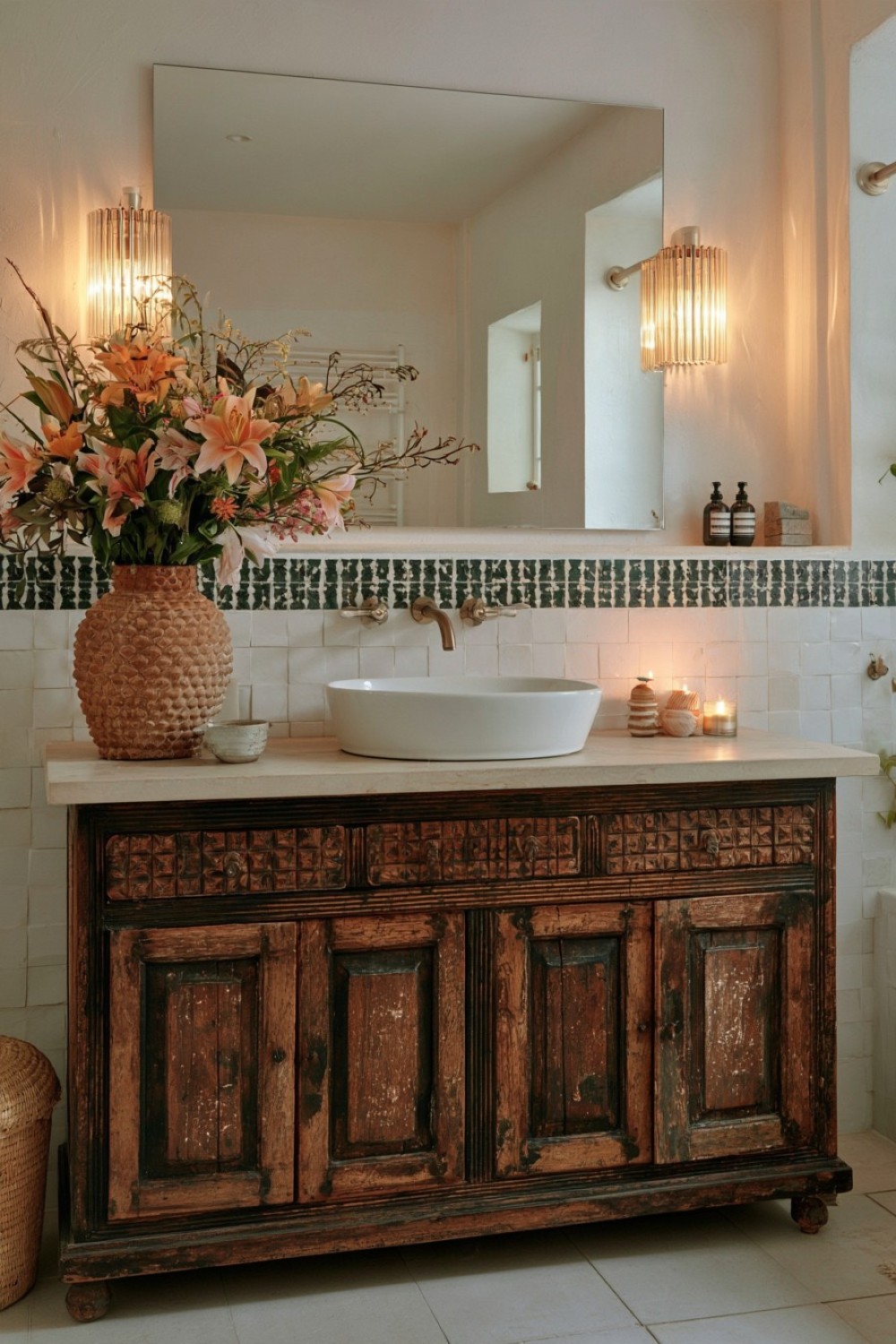
An antique cabinet can give the bathroom a collected character that new matching furniture rarely achieves. Select a piece with enough depth for the basin and plumbing while preserving useful drawer or cupboard space. A vessel basin may reduce structural alterations, although its combined height must remain comfortable. Retaining original hardware can emphasize the furniture’s age when it still operates reliably.
Inspect the cabinet for unstable joints, pests, odors, damaged veneer, and unsuitable old coatings before conversion. Timber needs protection from splashes, but sealing cannot correct active rot or structural weakness. Plumbing cuts should be planned carefully so the furniture remains stable and serviceable. Secure the vanity appropriately, use a water-resistant counter solution, and wipe standing water promptly to extend its life.
5. Introduce Olive Green Through Artisan Tile
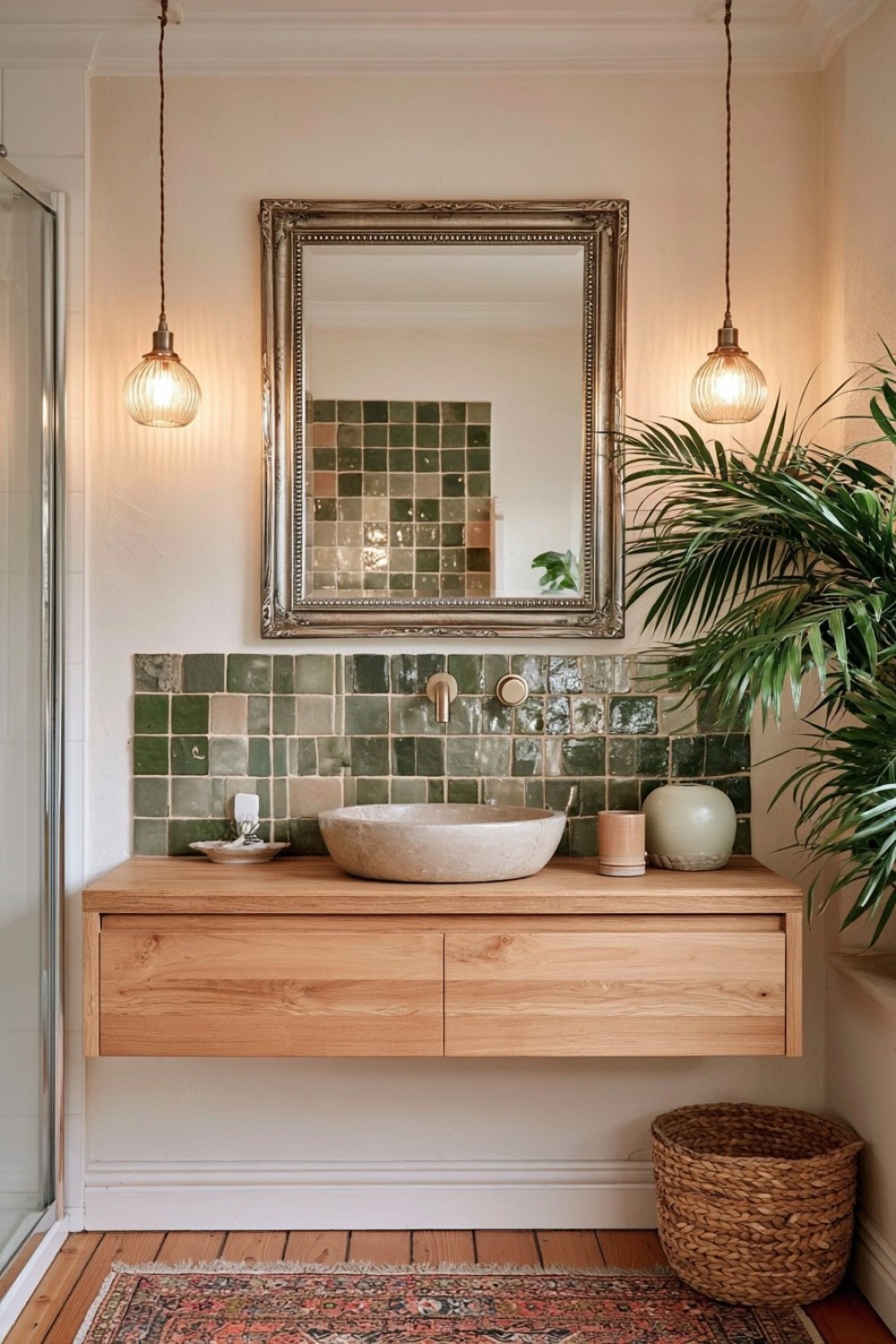
Olive green tile adds earthy color while pairing comfortably with timber, terracotta, cream, aged brass, and natural stone. Use it inside the shower, behind the vanity, or across one carefully selected wall. Handmade and handmade-look tiles often contain variations in glaze and edge shape, giving the surface movement even when only one color is used.
Variation should be reviewed before installation rather than treated as an unexpected defect afterward. Open multiple boxes and distribute lighter, darker, and more irregular pieces throughout the area. Confirm whether the tile and glaze are approved for the intended wet zone. Uneven edges may require wider or more carefully controlled joints, making an experienced installer valuable for achieving a balanced result.
6. Organize Essentials With Moisture-Resistant Woven Storage
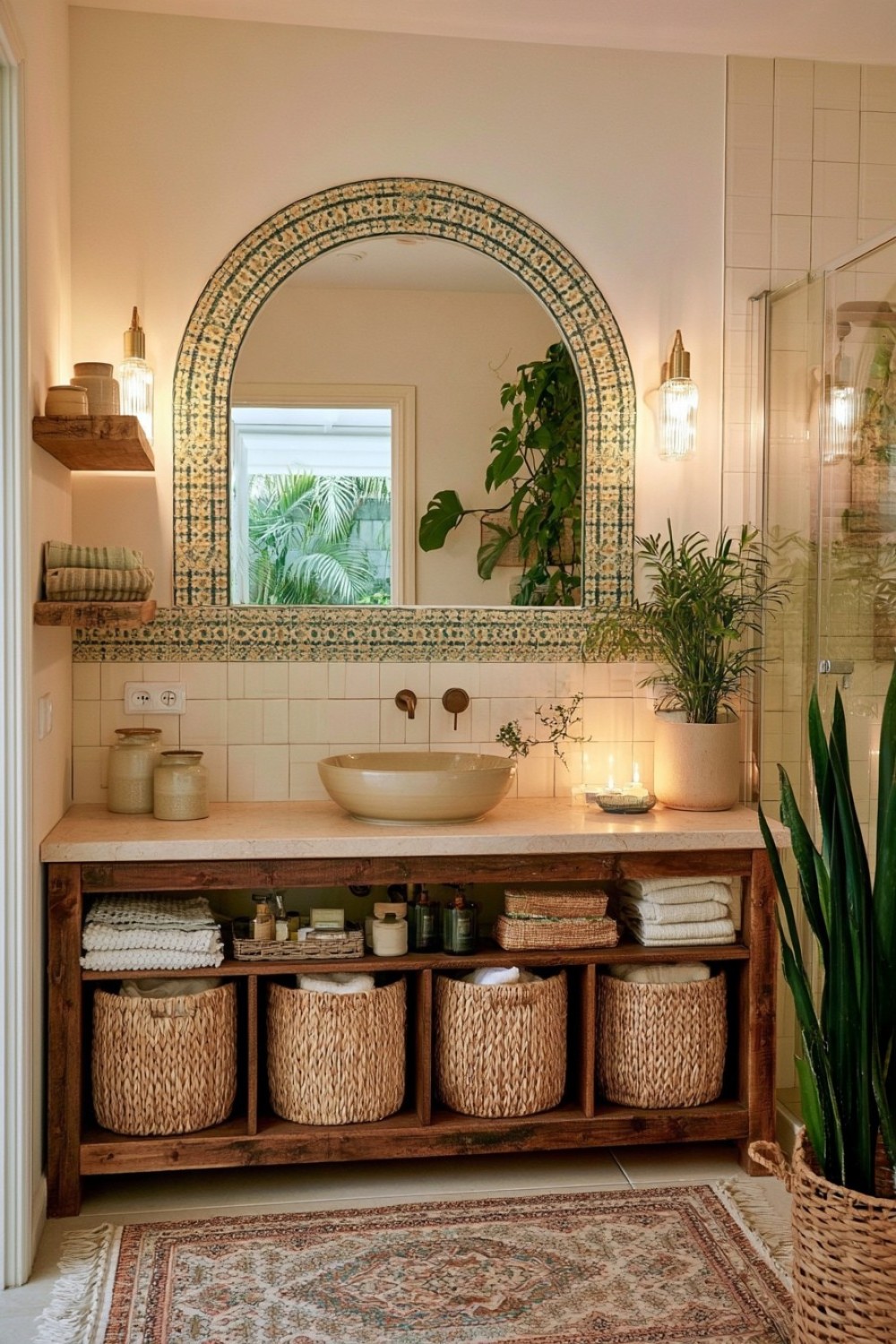
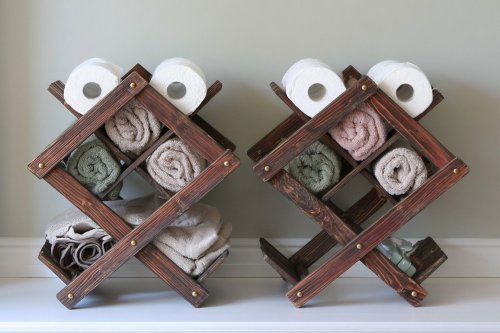
Woven baskets can soften tile and stone while organizing towels, toilet paper, or unopened toiletries. Use several baskets from the same material family rather than combining many unrelated weaves. Open baskets suit frequently used dry items, while containers with lids can reduce visible clutter. Position storage on shelves or raised furniture instead of placing natural fibers directly on a damp floor.
Seagrass, rattan, and untreated natural fibers may absorb moisture and develop odors or mildew. Good ventilation and regular inspection are necessary, and baskets should be allowed to dry completely if they become damp. Washable fabric liners simplify cleaning. For areas exposed to frequent splashes, a durable woven-look synthetic container may provide similar texture with easier maintenance.
7. Pair Terracotta Flooring With Crisp White Fixtures
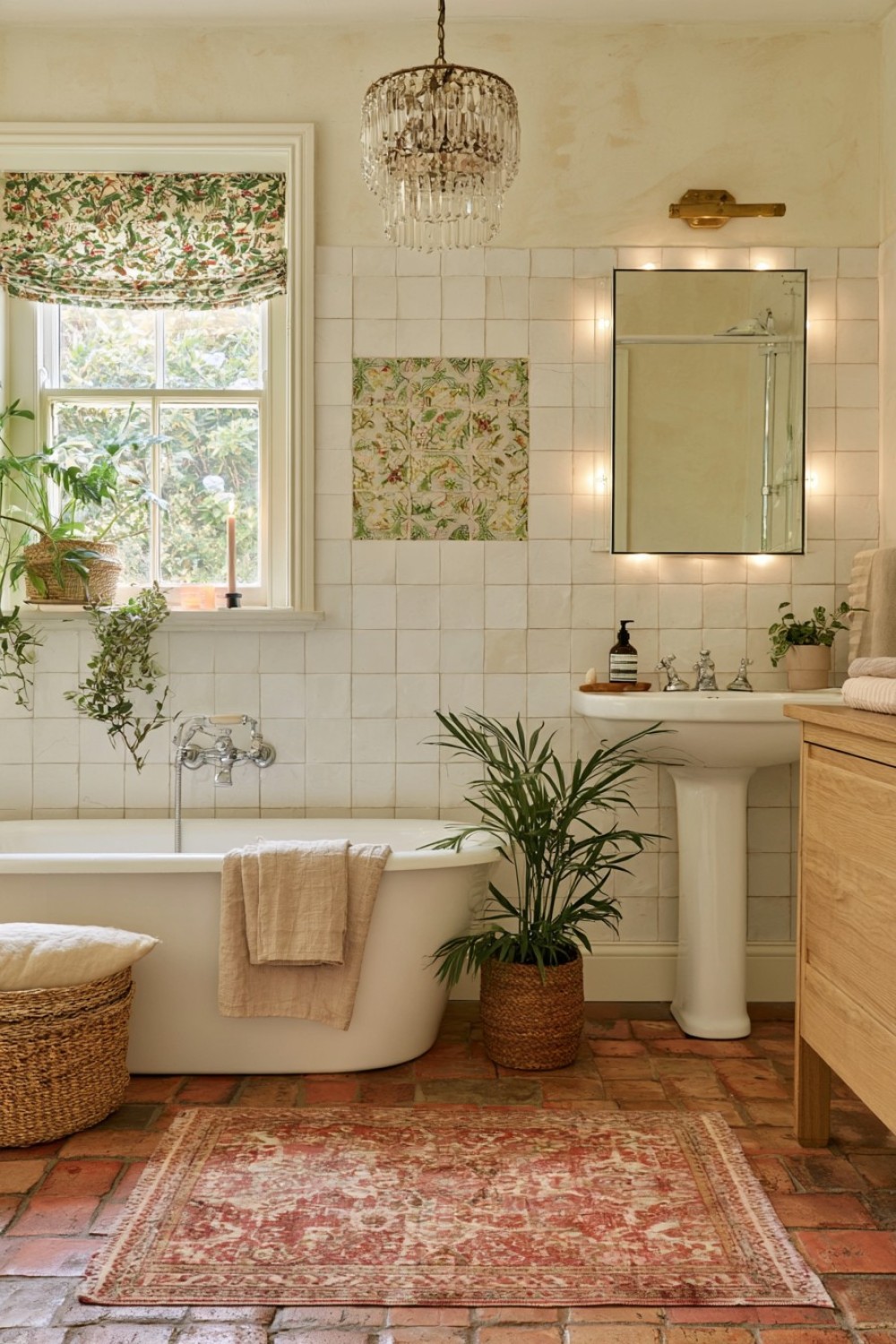
Terracotta flooring brings warmth and natural variation to a bathroom, while white fixtures prevent the room from becoming visually heavy. Keep the wall color soft and restrained, allowing the floor to establish the earthy palette. Towels in cream, rust, olive, or muted charcoal can connect the two elements without adding another permanent finish.
Traditional terracotta is porous and generally requires appropriate sealing and ongoing care. Ask the supplier whether the product is suitable for bathroom floors and what slip resistance it provides when wet. Sealer choice can change the tile’s color and sheen, so test it first. Clean with compatible products and reseal according to the material’s condition and manufacturer guidance.
8. Shape an Arched Shower Entrance With Textured Walls
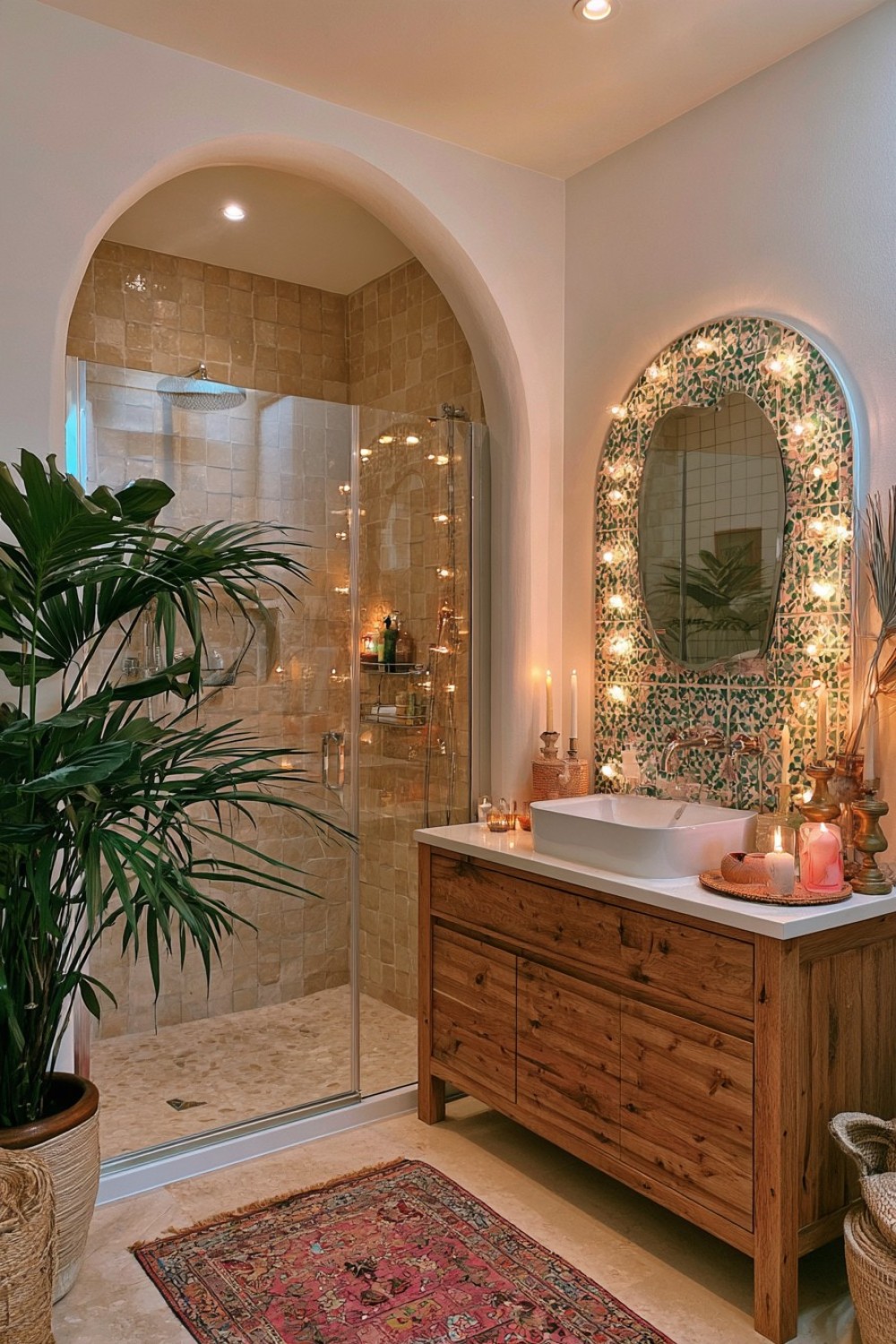
An arched shower entrance introduces a soft architectural shape that complements handcrafted tile and organic materials. Keep the opening broad enough for comfortable access and use a simple finish so the curve remains clear. Repeating the arch through one mirror or cabinet detail can create continuity, but excessive repetition may make the design feel themed.
Constructing an arch in a wet area requires correct framing, waterproofing, drainage, and finishing. The curve must not reduce headroom or make cleaning difficult. A fully open shower may allow water and steam to spread beyond the intended area, so its dimensions and showerhead position require careful planning. Local accessibility and building requirements should be considered before finalizing the opening.
9. Mix Raw Stone With Washable Linen-Look Textures
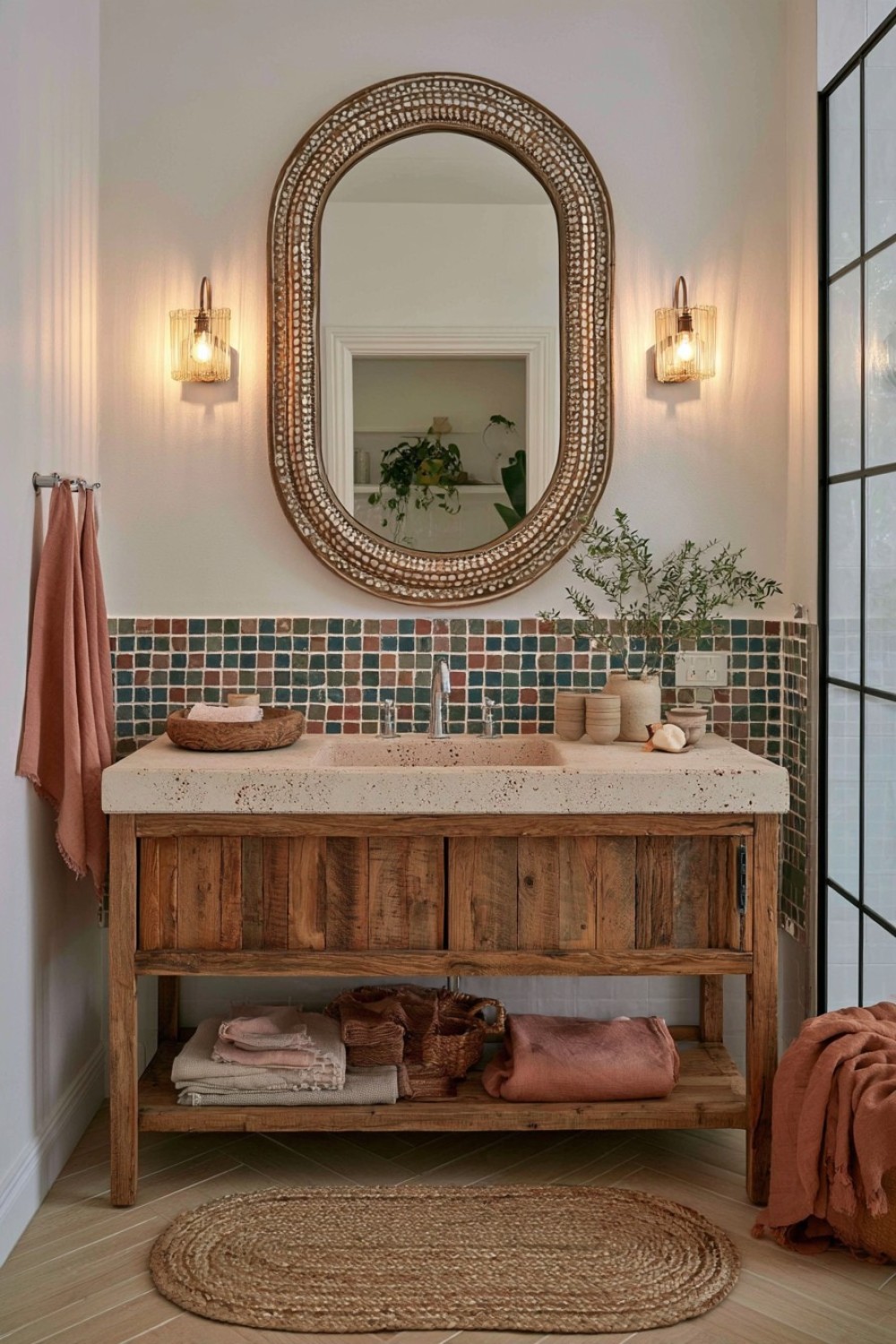
Stone introduces visual weight, while linen-look shower curtains, towels, or storage liners soften the bathroom’s harder surfaces. Use stone on one significant element, such as the basin counter, floor, or shower wall, instead of mixing several unrelated varieties. Textiles in oatmeal, warm white, clay, or muted green can reinforce a calm bohemian palette.
Natural stone varies in porosity, stain resistance, and reaction to cleaning products. Confirm its suitability for the intended location and follow specific sealing instructions. Actual linen may retain moisture and wrinkle heavily, so washable quick-drying fabrics with a linen-like texture can be more practical. Allow textiles to dry fully and replace any item that develops persistent mildew or odor.
10. Create an Elevated Botanical Corner
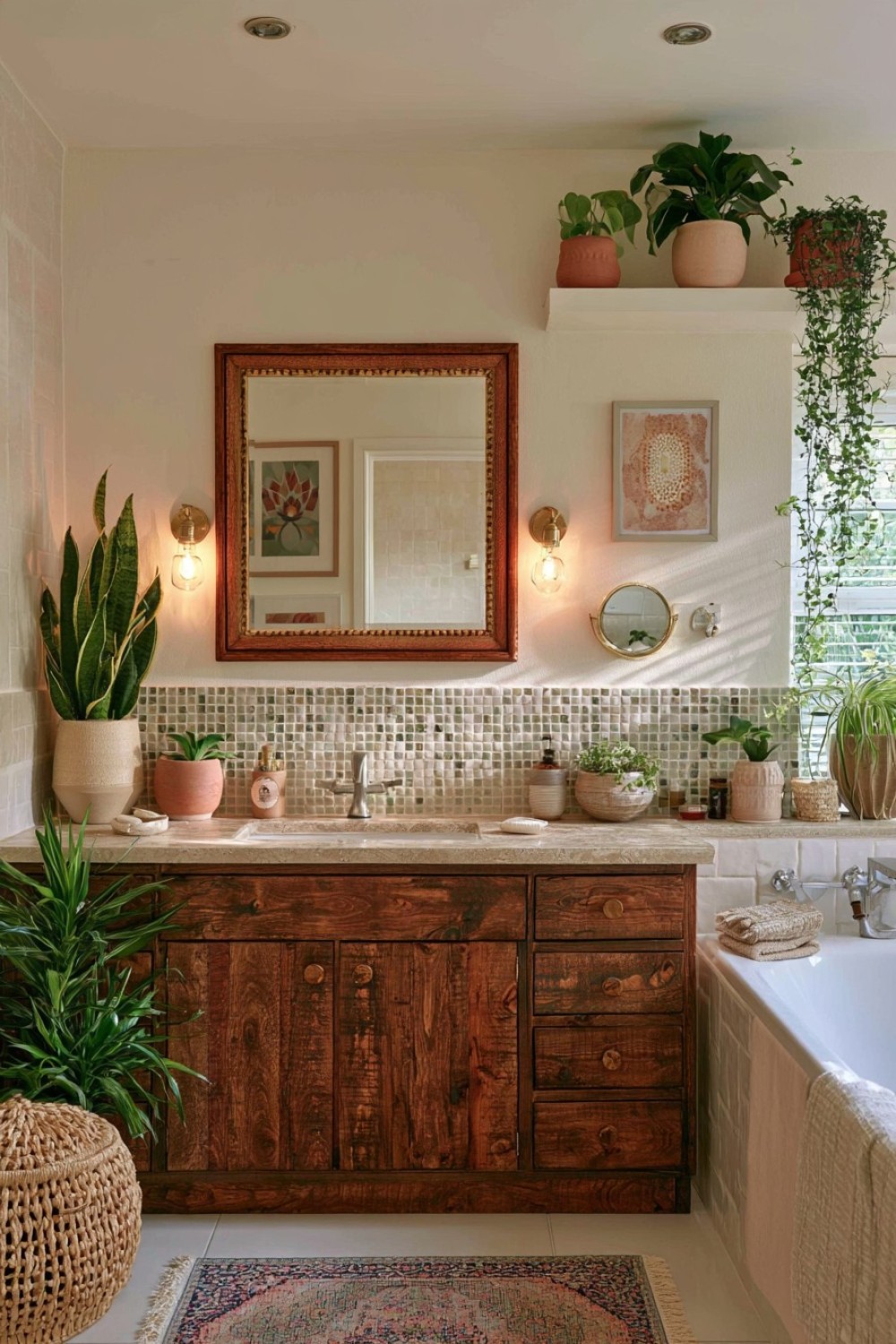
A small group of plants can add movement and color without covering every available surface. Use a stable plant stand, wall shelf, or vanity corner to arrange specimens at two or three heights. Choose plants according to the bathroom’s actual light, temperature, and humidity rather than selecting them only for appearance. One larger plant may be easier to maintain than many small pots.
Every container needs controlled drainage so water cannot damage furniture, flooring, or electrical fittings. Raised planters and shelves must be secure and positioned away from narrow walkways. Check whether plant species are toxic when children or pets use the room. Artificial plants are a practical alternative where growing conditions are unsuitable, but they still require periodic cleaning.
11. Balance Moroccan-Inspired Tile With Minimal Cabinetry
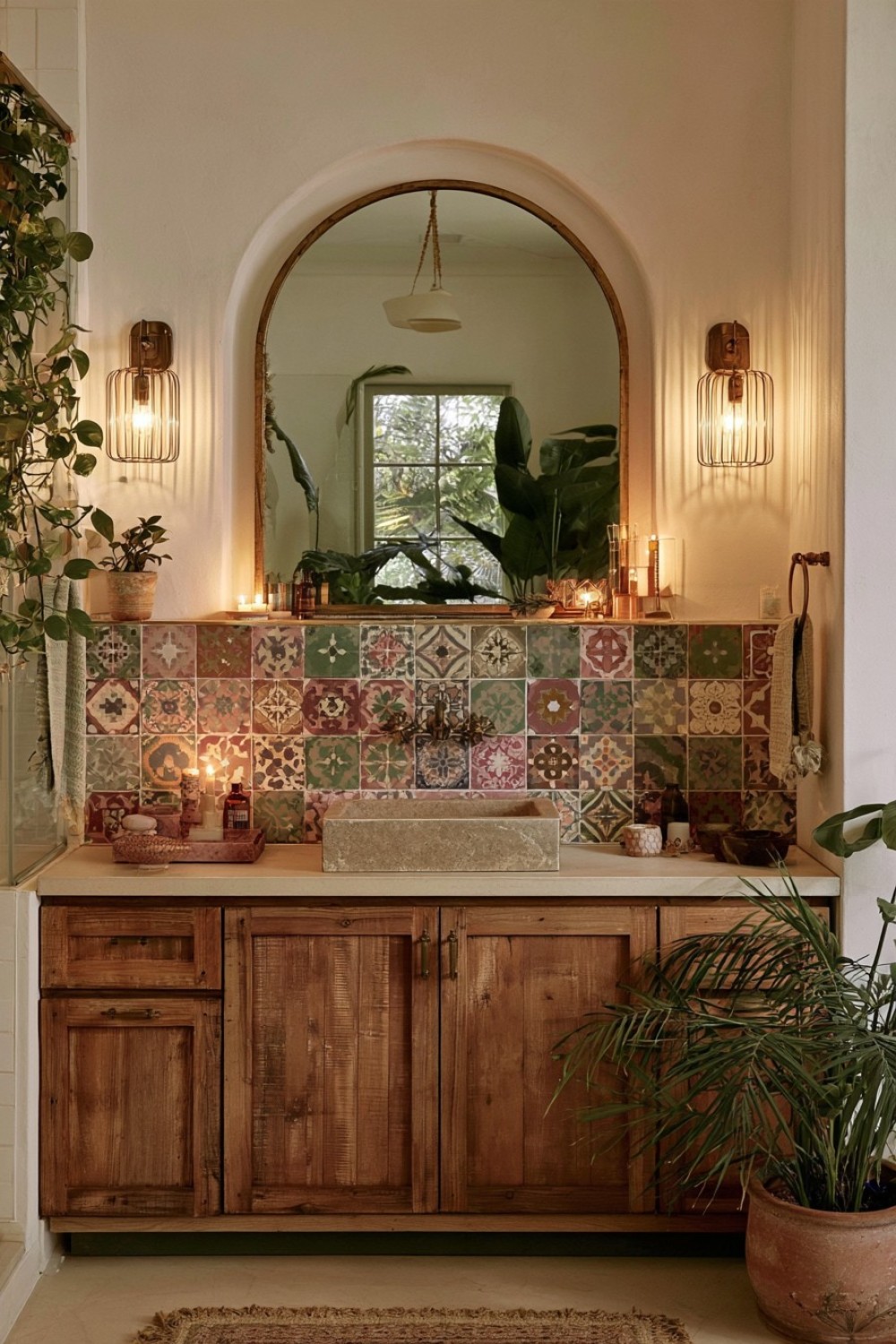
Moroccan-inspired tile can provide enough pattern for the entire bathroom when cabinetry remains simple. Apply it to the floor, vanity backsplash, or one shower section and surround it with plain painted or tiled surfaces. Select a pattern containing colors already present in the timber, fixtures, or textiles. Flat-front cabinetry prevents the room from becoming overloaded with competing detail.
Pattern scale should suit the dimensions of the installation area. Large motifs may be lost through numerous cuts in a small backsplash, while tiny patterns can become visually intense across an entire room. Dry-lay sections before installation and establish where the pattern should begin. Choose tile, grout, waterproofing, and slip resistance according to the actual surface rather than decorative style alone.
12. Use a Stone Trough Sink for Rustic Character
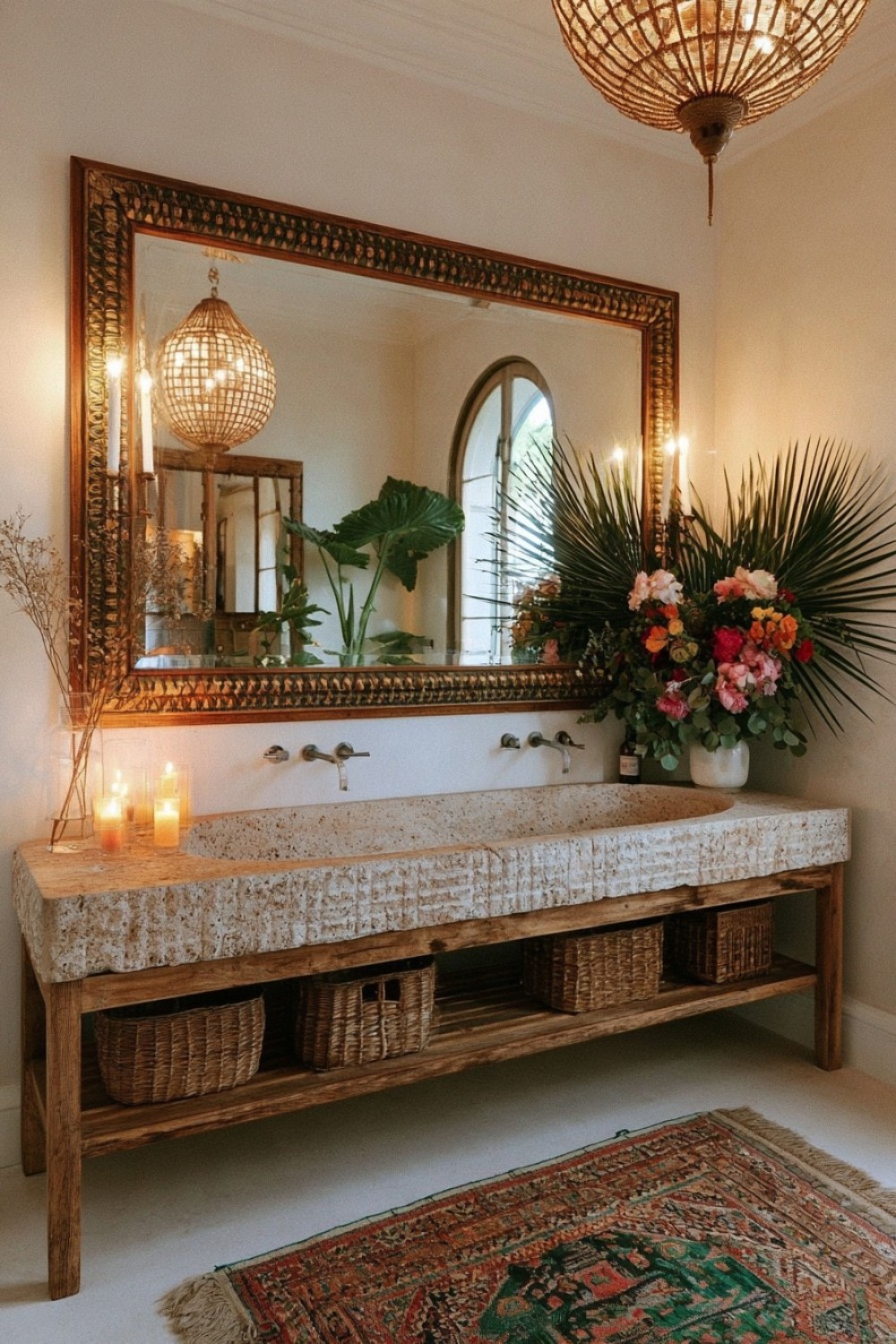
A trough-style sink can serve one or two users while giving the vanity a substantial handcrafted appearance. Pair it with restrained wall tile and simple taps so the stone remains prominent. Check the basin’s internal depth, drainage slope, splash behavior, and tap placement before purchasing. A long basin does not automatically provide comfortable space for two people unless the taps and surrounding counter are planned accordingly.
Stone troughs can be extremely heavy and may require structural support, specialist installation, and reinforced cabinetry. Natural material may also show variation, staining, or patina over time. Request written sealing and cleaning guidance from the supplier. Plumbing connections should remain accessible, and the vanity must provide enough support without relying solely on decorative wall brackets.
13. Add Timber Detail Near the Ceiling
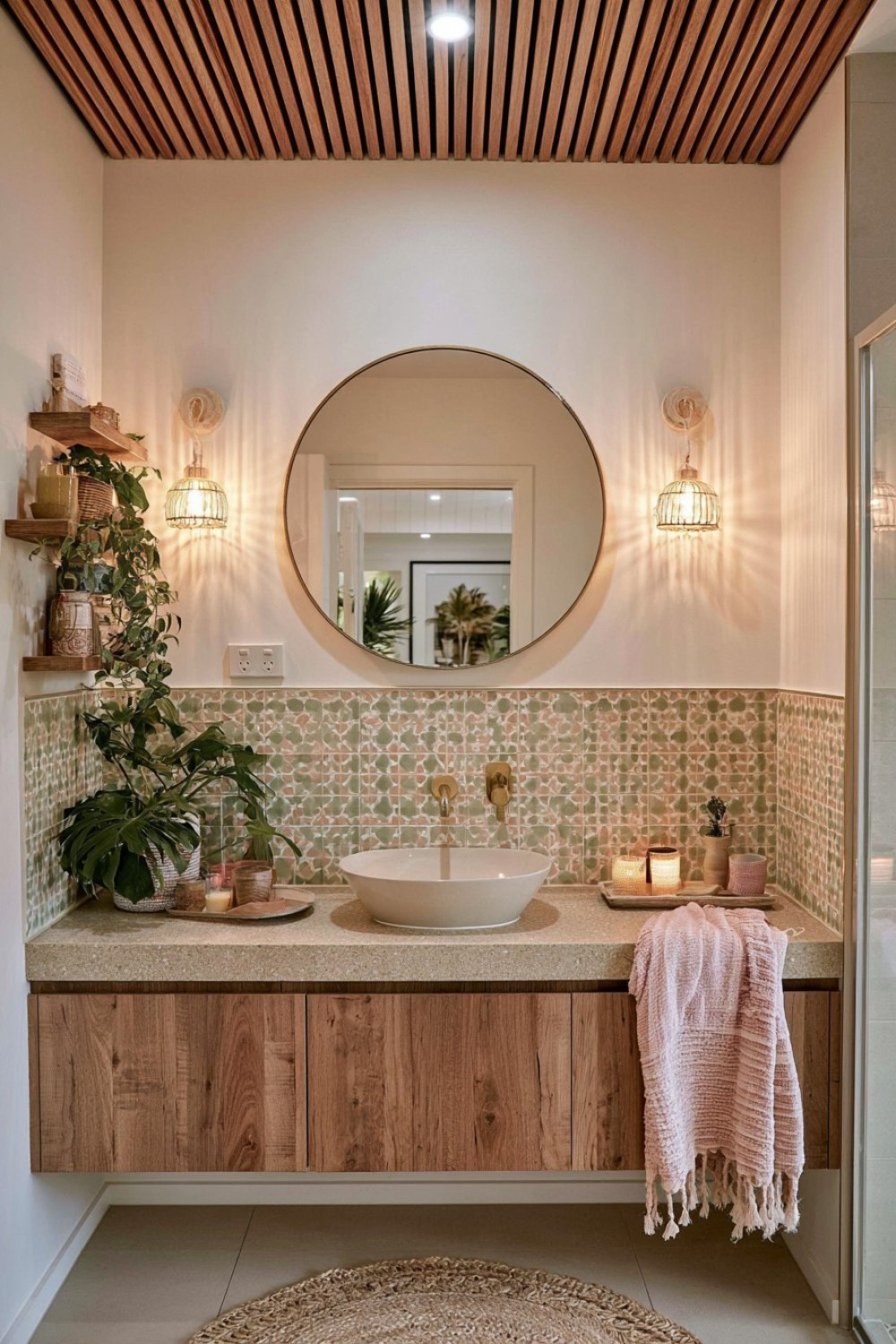
Timber beams, narrow slats, or a restrained ceiling border can introduce warmth above tile-heavy bathroom surfaces. Use the detail sparingly so the ceiling does not feel lower or overly busy. A medium wood tone can connect with the vanity or shelving, while surrounding warm white surfaces keep the room visually open. Faux beams may provide a lighter alternative to solid timber.
Ceiling-level materials are exposed to rising humidity and must be appropriate for bathroom conditions. Good ventilation is essential, and timber requires a suitable finish on all exposed edges. Decorative elements must not obstruct lights, alarms, ventilation grilles, or electrical access. Any attachment to structural components should be planned carefully rather than improvised for appearance.
14. Build a Low Open Shelf Along the Bathtub Wall
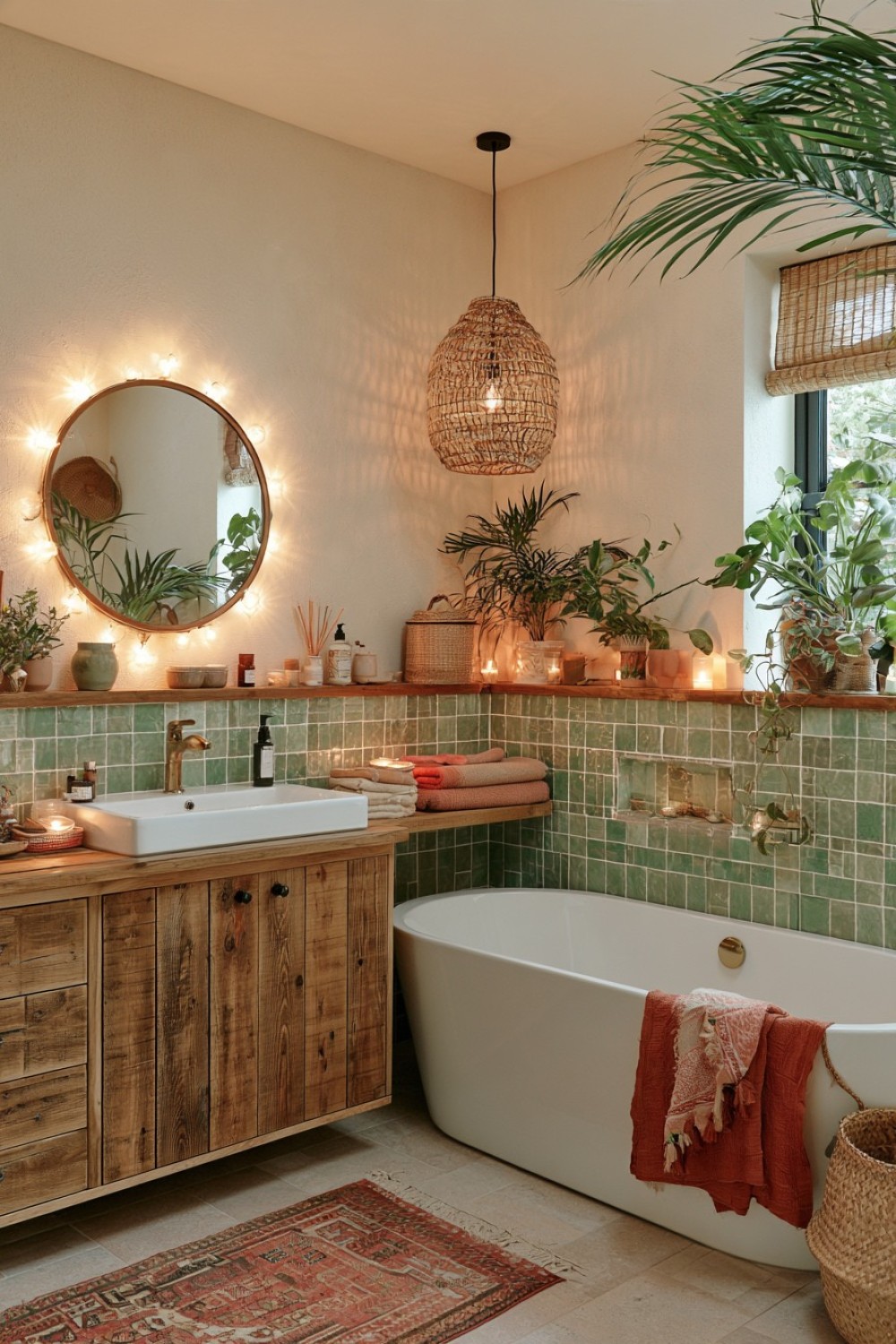
A low shelf beside the bathtub can hold folded towels, sealed toiletries, and a small number of decorative objects. Matching it to the wall finish creates a built-in appearance, while timber introduces contrast. Keep the depth narrow enough to preserve access around the tub and arrange frequently used items where they can be reached without standing or stretching awkwardly.
The shelf surface should tolerate repeated splashing and allow water to be wiped away easily. Avoid storing electrical devices, glass objects, or unstable containers beside the bath. Built-in construction must not interfere with plumbing access or waterproofing. Open shelves require editing and regular cleaning, so reserve them for items that genuinely support bathing rather than filling them with purely decorative clutter.
15. Layer Rust, Sand, and Charcoal Into an Earthy Palette
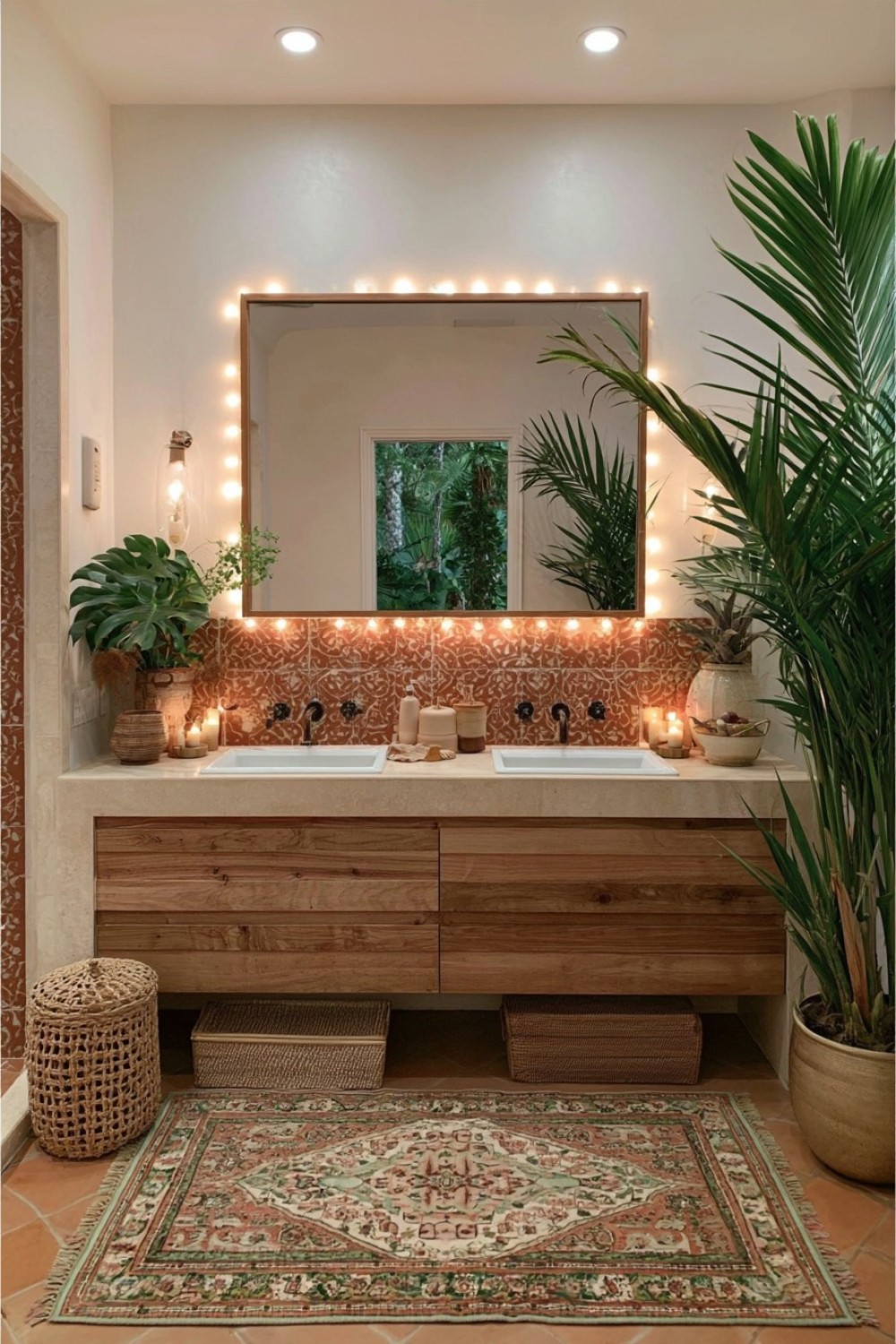
Rust, sand, and charcoal create an earthy palette with enough contrast to define bathroom fixtures and architectural features. Use sand on the largest surfaces, rust through tile or washable textiles, and charcoal on smaller elements such as hardware, a vanity, or mirror frame. Repeating each color in a limited number of places creates cohesion without forcing every object to match.
Test materials together under the bathroom’s installed lighting because warm colors and dark finishes can change significantly. Charcoal surfaces may reveal mineral deposits, while rust-colored textiles can fade or transfer dye if unsuitable products are selected. Choose permanent colors conservatively and introduce stronger shades through replaceable elements. This makes the palette easier to update without removing tile or sanitary fixtures.
MORE IDEAS


Share
What's Your Reaction?
 Like
0
Like
0
 Dislike
0
Dislike
0
 Love
0
Love
0
 Funny
0
Funny
0
 Angry
0
Angry
0
 Sad
0
Sad
0
 Wow
0
Wow
0