17 Vintage Bathroom Details for a Graceful, Timeless Look

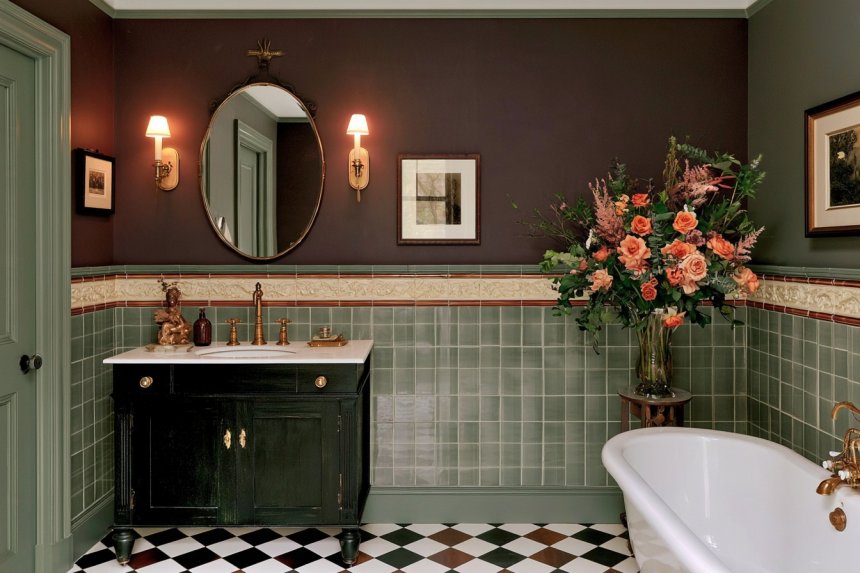
A vintage bathroom feels most convincing when its character comes from proportion, materials, and architectural detail rather than from a collection of obvious retro accessories. Traditional fixtures, painted joinery, patterned tile, furniture-style storage, and aged metal finishes can all contribute, but they work best when the room still functions comfortably for everyday life.
Before choosing decorative elements, consider moisture resistance, ventilation, storage needs, cleaning, plumbing access, and how much visual detail the room can comfortably handle. A small bathroom may benefit from one strong historical reference, while a larger space can support several coordinated layers.
The goal is not to reproduce a specific period perfectly. Instead, combine older design language with modern durability so the bathroom feels collected, practical, and naturally connected to the rest of the home.
1. Let a Console Sink Set the Architectural Tone
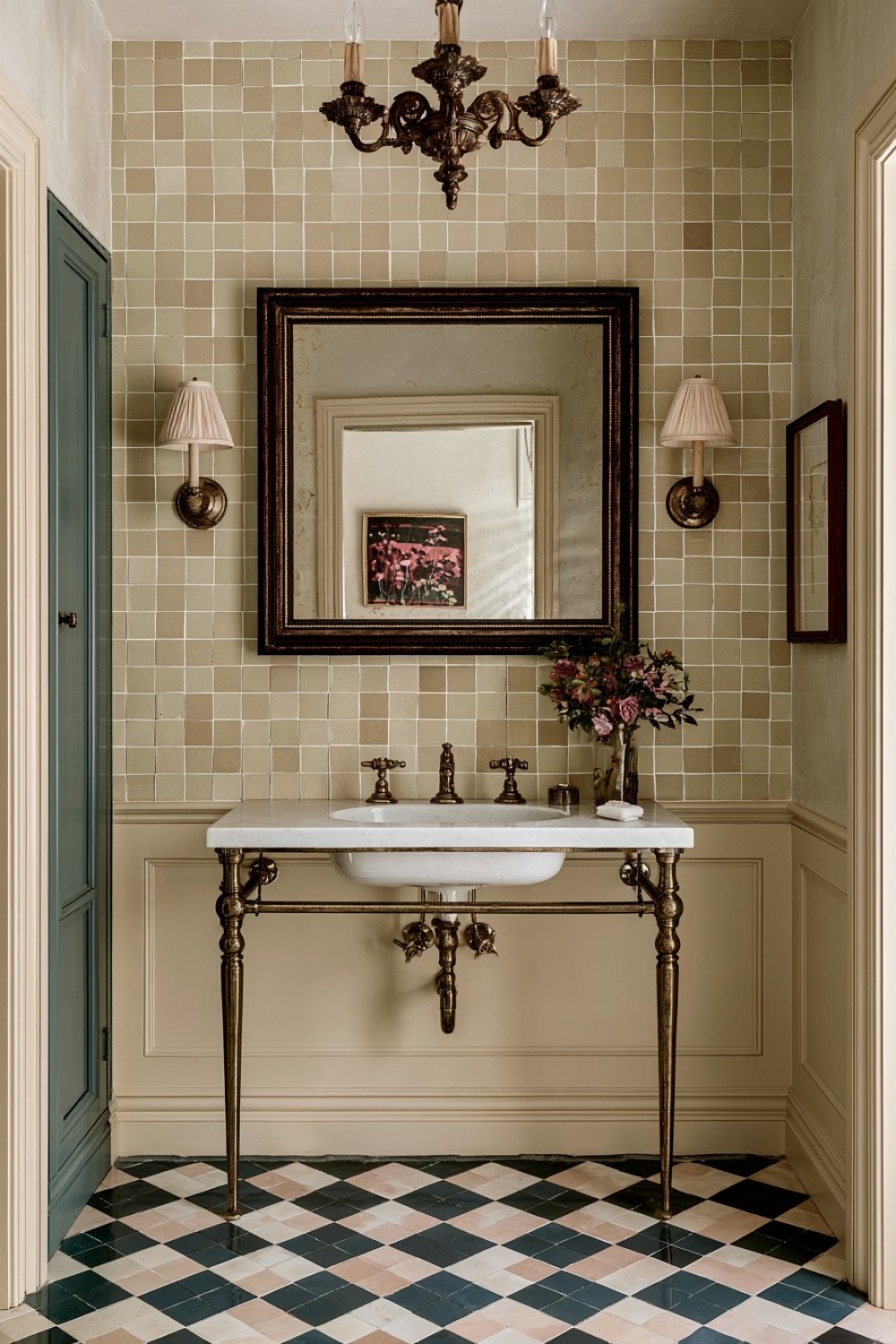
A console sink can establish vintage character without requiring a large vanity. Its open structure, visible legs, and traditional ceramic basin feel closer to early twentieth-century bathroom furniture than to contemporary built-in cabinetry.
Choose a model with painted timber, metal, or turned furniture-style supports, then keep the surrounding wall treatment relatively simple. Small-format ceramic tile, painted plaster, or subtle paneling allows the sink silhouette to remain visible.
Because this type of basin provides little concealed storage, plan another location for toiletries and cleaning supplies. A narrow wall cabinet or freestanding cupboard can handle everyday items without crowding the sink area.
Visible plumbing should be neat and intentionally finished. When the basin, taps, and supporting structure share compatible proportions, the result feels architectural rather than decorative, giving the room a strong vintage foundation from the beginning.
2. Use Burgundy and Cream for a Rich Heritage Palette
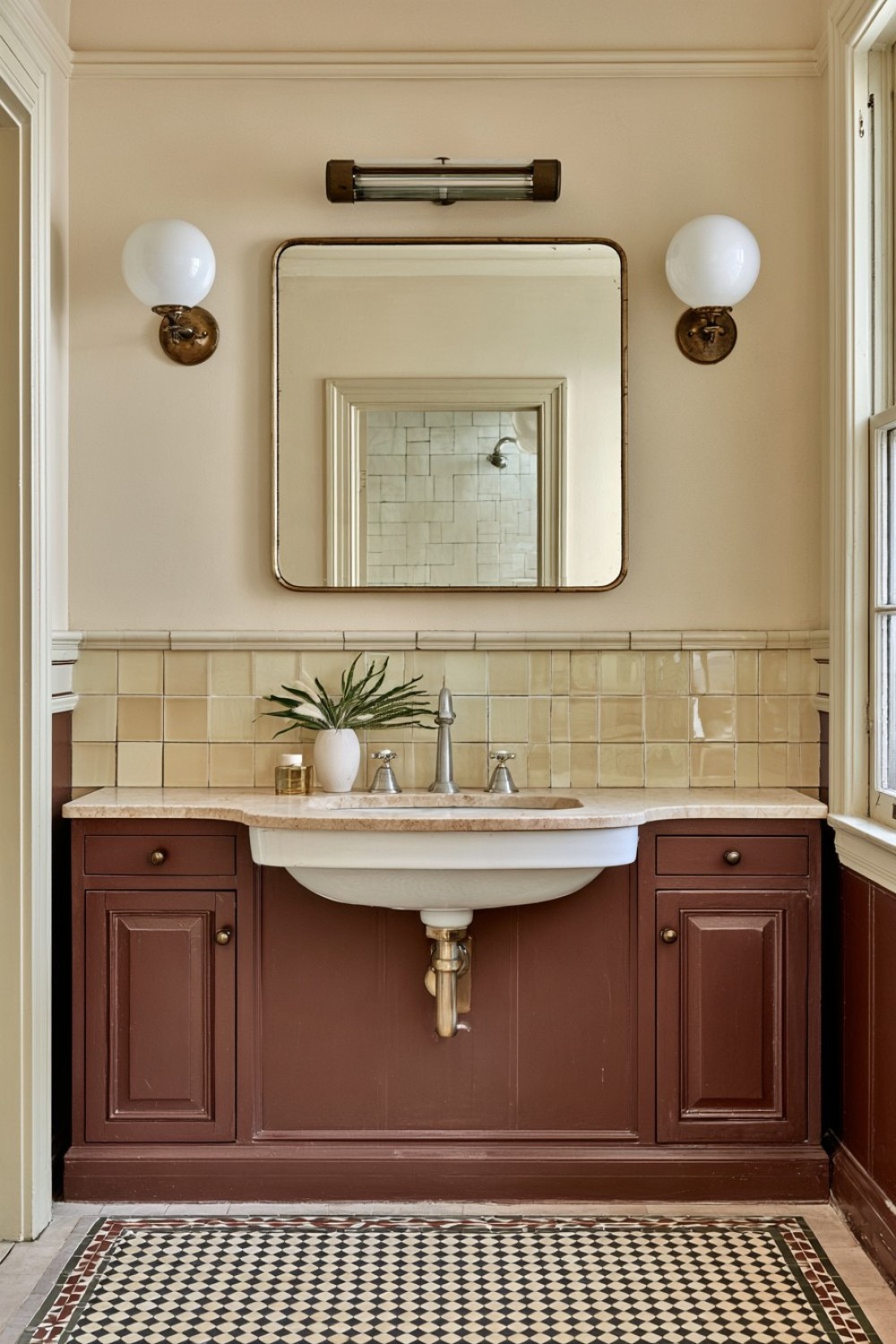
Vintage bathrooms do not have to rely on pale neutrals. Burgundy paired with cream can create a warmer and more sophisticated historic mood, especially when used in measured amounts.
Apply the deeper tone to lower wall paneling, a vanity, selected tiles, or one painted cabinet, then keep the remaining surfaces lighter. Cream ceramics, warm stone, and soft off-white walls help balance the visual weight of the darker color.
Aged brass, bronze, or muted nickel can complement the palette without introducing too many competing finishes. Avoid adding several other saturated colors because burgundy already provides a strong focal point.
This combination works particularly well with framed mirrors, traditional joinery, and small patterned flooring. Used carefully, it creates depth and character while still feeling appropriate for a contemporary home rather than turning the bathroom into a literal period recreation.
3. Turn an Antique Washstand Into a Practical Vanity
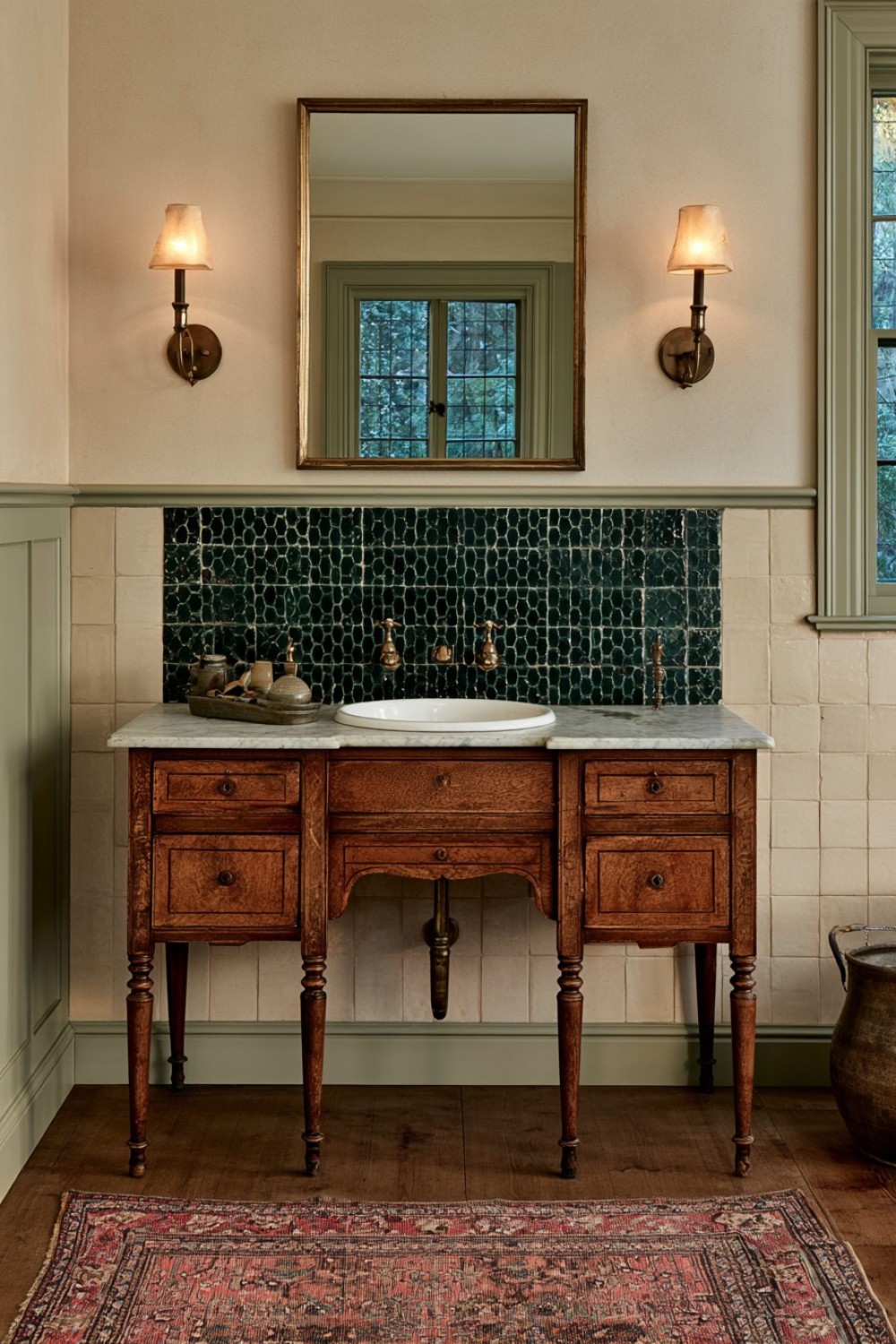
A converted washstand can give a bathroom a more collected appearance than a standard modern vanity. Look for a piece with useful drawers, sufficient depth, and proportions that suit the room rather than choosing furniture solely for age or ornament.
A stone, marble, or marble-effect top can help protect the timber around the basin. An inset sink often preserves more visible work surface than a large vessel basin and can make the conversion feel better integrated.
Moisture protection is essential. Timber edges, drawer openings, joints, and cut sections around plumbing should be sealed appropriately for bathroom conditions.
Avoid refinishing every surface until the furniture looks completely new. Small variations, worn edges, and natural patina can add authenticity when they do not affect structural stability.
Keeping surrounding finishes restrained allows the vanity to remain the primary character piece instead of competing with several other decorative focal points.
4. Give the Floor a Victorian-Style Mosaic Border
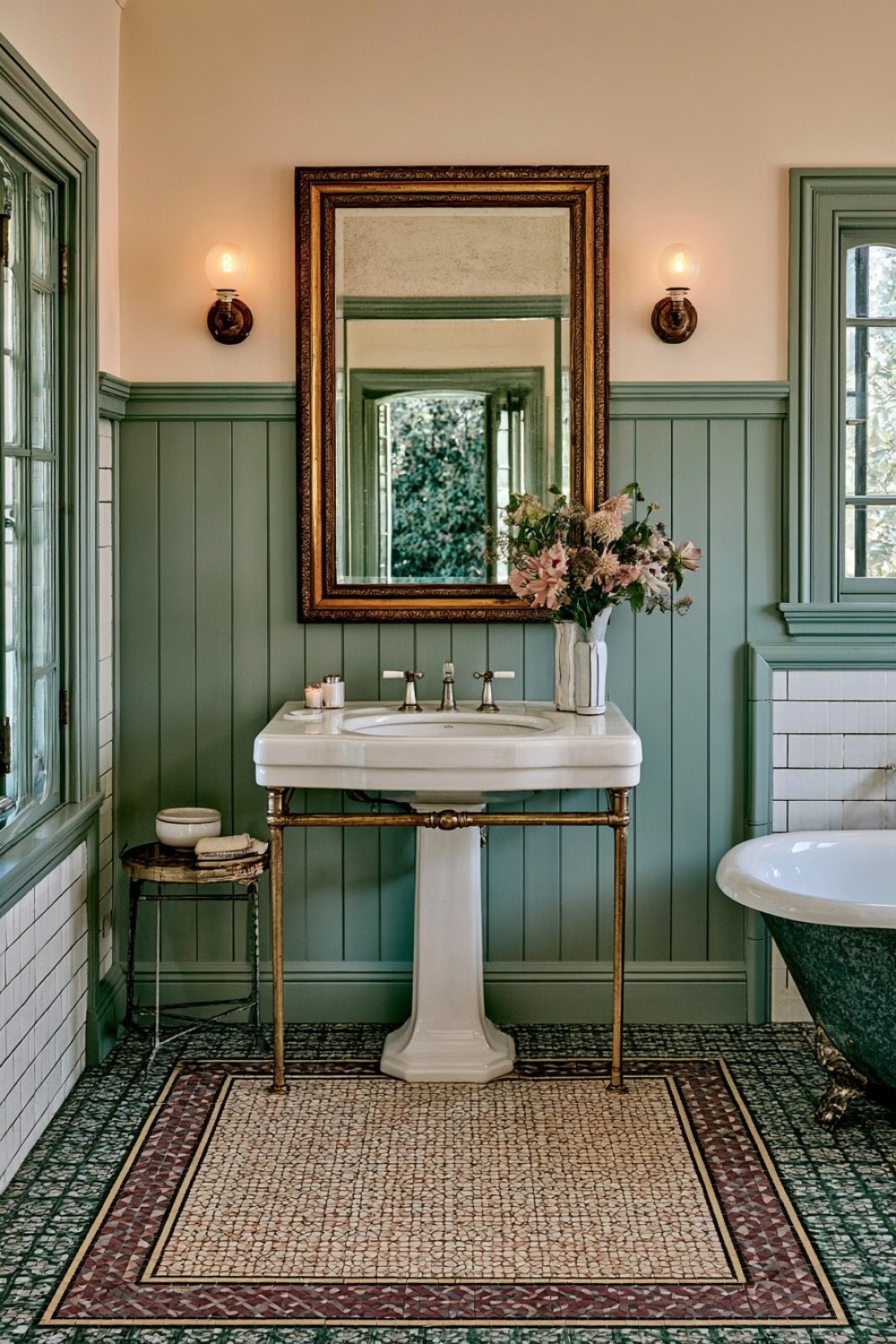
Small-format mosaic flooring can introduce period character through pattern rather than through furniture or accessories. A border combined with a simpler central field often works better than covering the entire floor with a complex design.
Muted black, ivory, green, burgundy, and gray can be arranged into geometric or floral-inspired motifs without making the room excessively ornate. The pattern should relate to the room’s proportions, especially around doorways, vanities, and the bathtub.
Installation quality matters because small tiles reveal alignment issues quickly. Grout color also affects how strongly the pattern reads, so it should be chosen as part of the design rather than as an afterthought.
Keep the walls comparatively simple if the floor is highly detailed. Painted paneling, plain plaster, or understated ceramic tile can provide enough visual balance.
A well-planned mosaic floor gives a newly renovated bathroom a stronger sense of architectural age.
5. Use a Glazed Linen Cabinet Instead of Built-In Storage
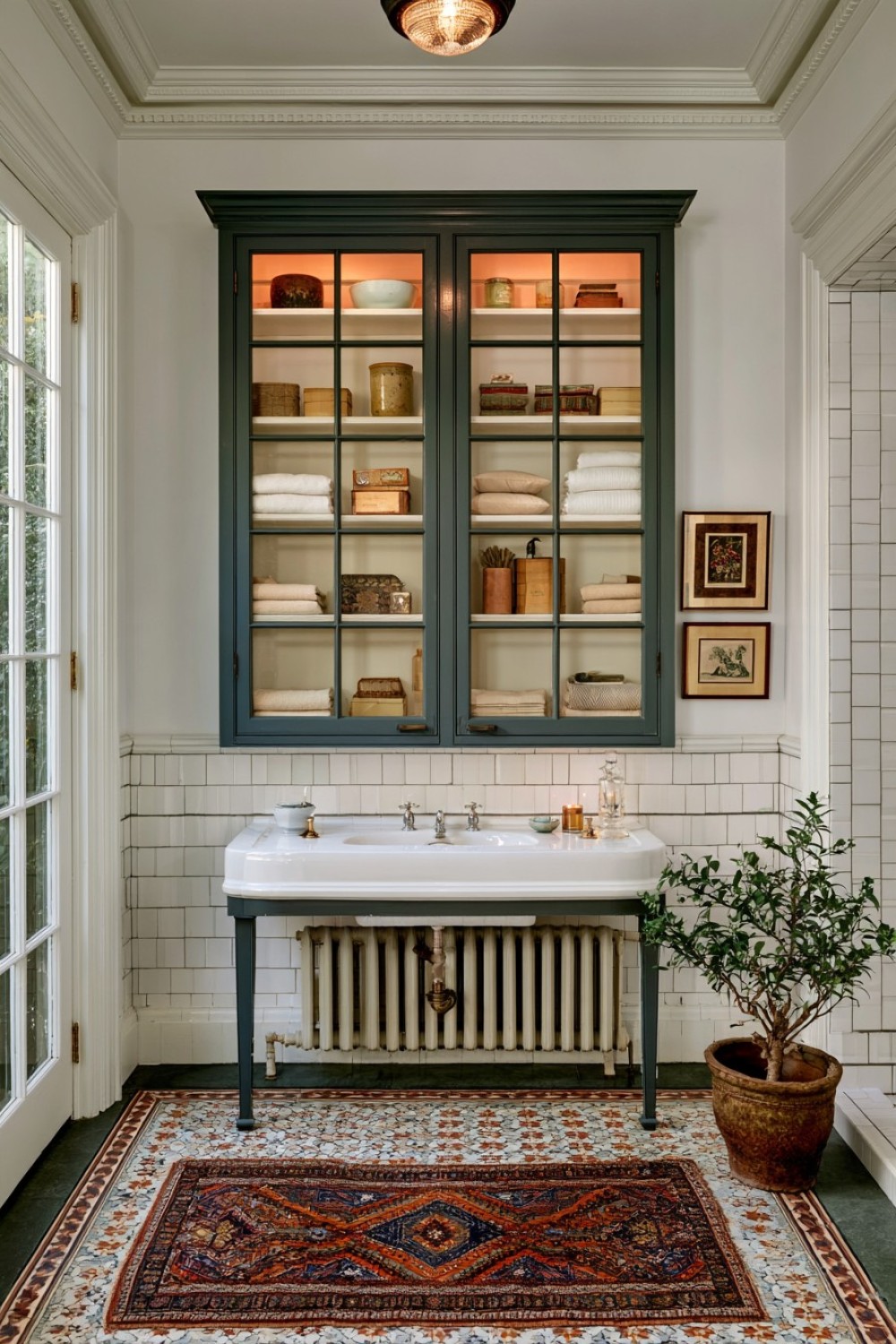
Freestanding furniture can help a vintage bathroom feel less like a fully coordinated modern suite. A tall linen cabinet with glazed upper doors provides practical storage while introducing the appearance of a room furnished gradually over time.
Use the lower enclosed section for toiletries, cleaning products, and less attractive necessities. Towels, ceramic containers, and neatly arranged grooming items can occupy the visible upper shelves.
Painted finishes such as sage, cream, dusty blue, or muted gray often feel lighter than dark timber, particularly in smaller bathrooms.
The cabinet should be secured appropriately to the wall, especially in a busy household, and positioned away from constant splash zones where possible.
This approach adds height and storage without requiring wall-to-wall cabinetry. It also helps separate functional storage from the vanity, making the bathroom feel more like a traditionally furnished interior rather than a single continuous run of modern fixtures.
6. Introduce Delft-Inspired Tile as a Controlled Accent
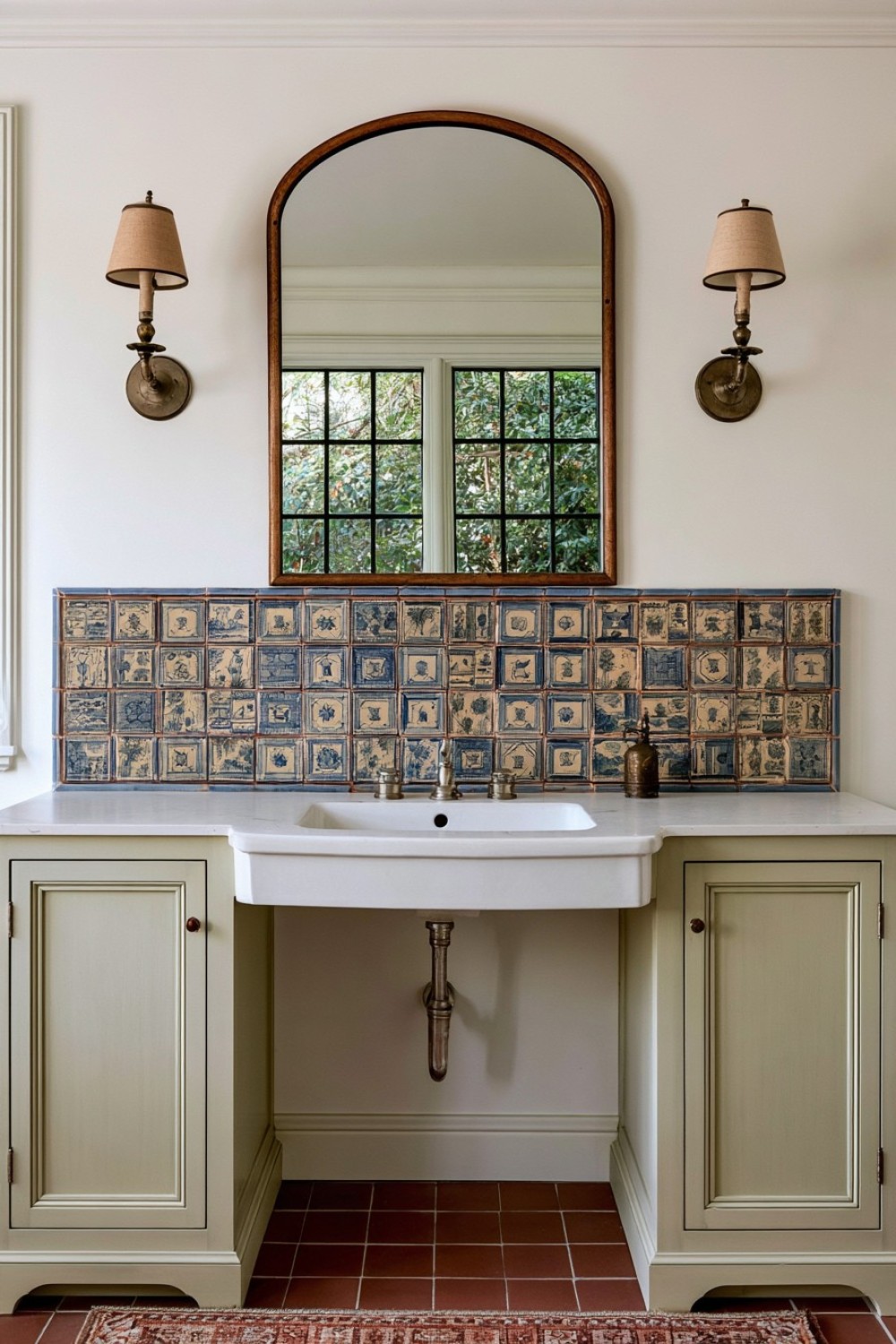
Blue-and-white decorative tile can bring European vintage character into a bathroom without making the room dark or overly formal. The key is to use patterned ceramics selectively.
A backsplash, narrow tub surround, recessed shelf, or small wall section can provide enough visual interest. Mix illustrated or patterned pieces with plain white or pale blue field tiles so individual motifs remain readable.
Slight glaze variation and hand-finished character can make the installation feel less uniform, but too many competing patterns may quickly overwhelm a compact bathroom.
Warm white walls, painted cabinetry, and restrained aged metal hardware work well alongside blue-and-white ceramics. Keep textiles and accessories relatively simple so the tile remains the main decorative layer.
This treatment creates a distinct historical reference while preserving enough visual calm for daily use, making it especially suitable for bathrooms where a full patterned room would feel too busy.
7. Add Depth With Dark Painted Beadboard
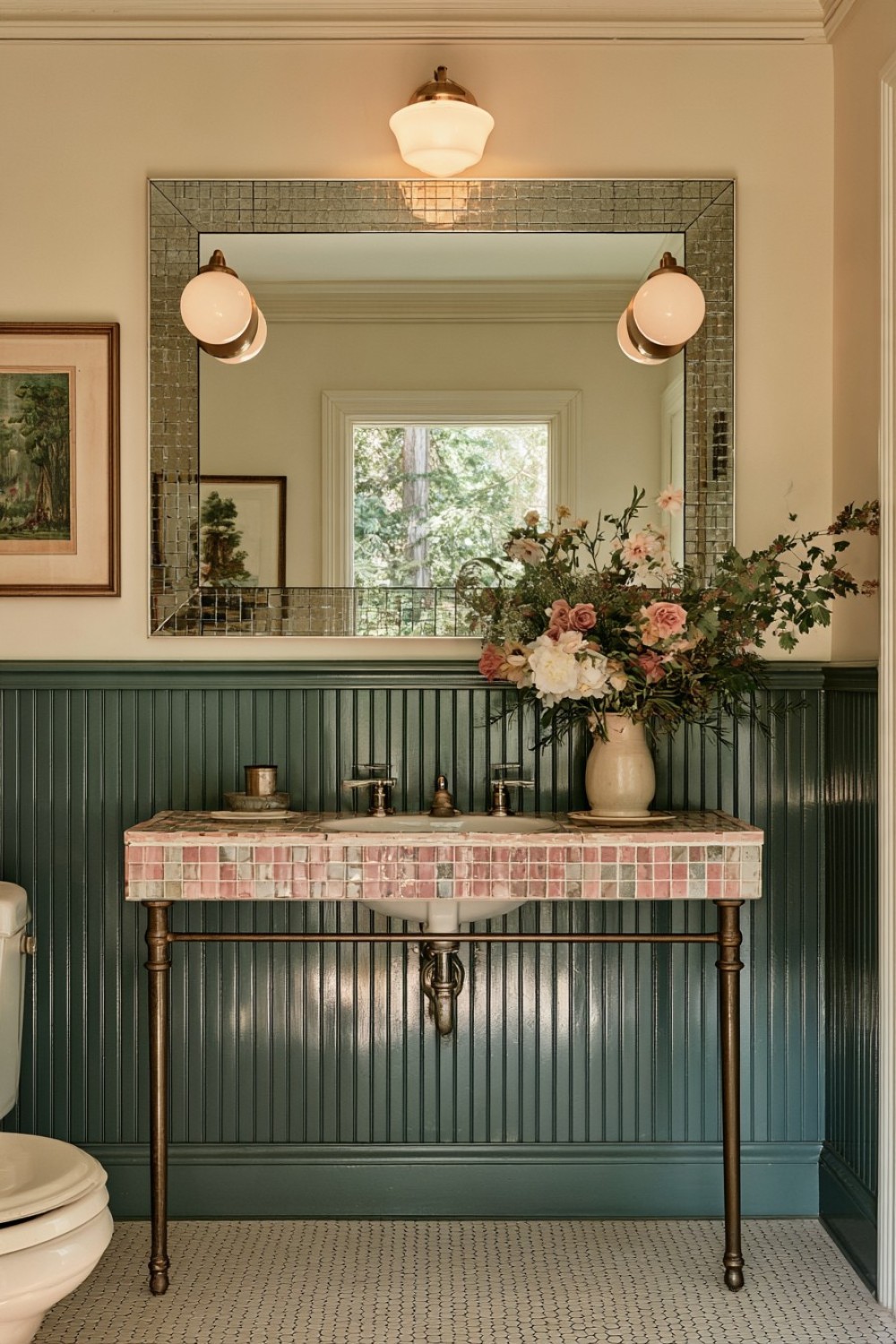
Beadboard can introduce architectural texture to a bathroom that otherwise has plain walls. Instead of painting it conventional white, use a deeper heritage color such as muted navy, charcoal green, aubergine, or earthy brown.
Limit the darker treatment to the lower portion of the wall and keep the upper section lighter. This creates contrast without reducing the sense of space too dramatically.
Panel height should respond to nearby features such as the vanity, tub edge, or architectural trim rather than ending at an arbitrary level. A defined top rail can make the installation feel more intentional.
Use moisture-resistant materials and suitable paint in areas exposed to humidity. Standard interior paneling may not perform well in a consistently damp environment.
Paired with white ceramic fixtures and restrained hardware, dark beadboard gives the room a stronger architectural identity without relying on multiple decorative accessories.
8. Make a High-Level Cistern the Main Period Feature
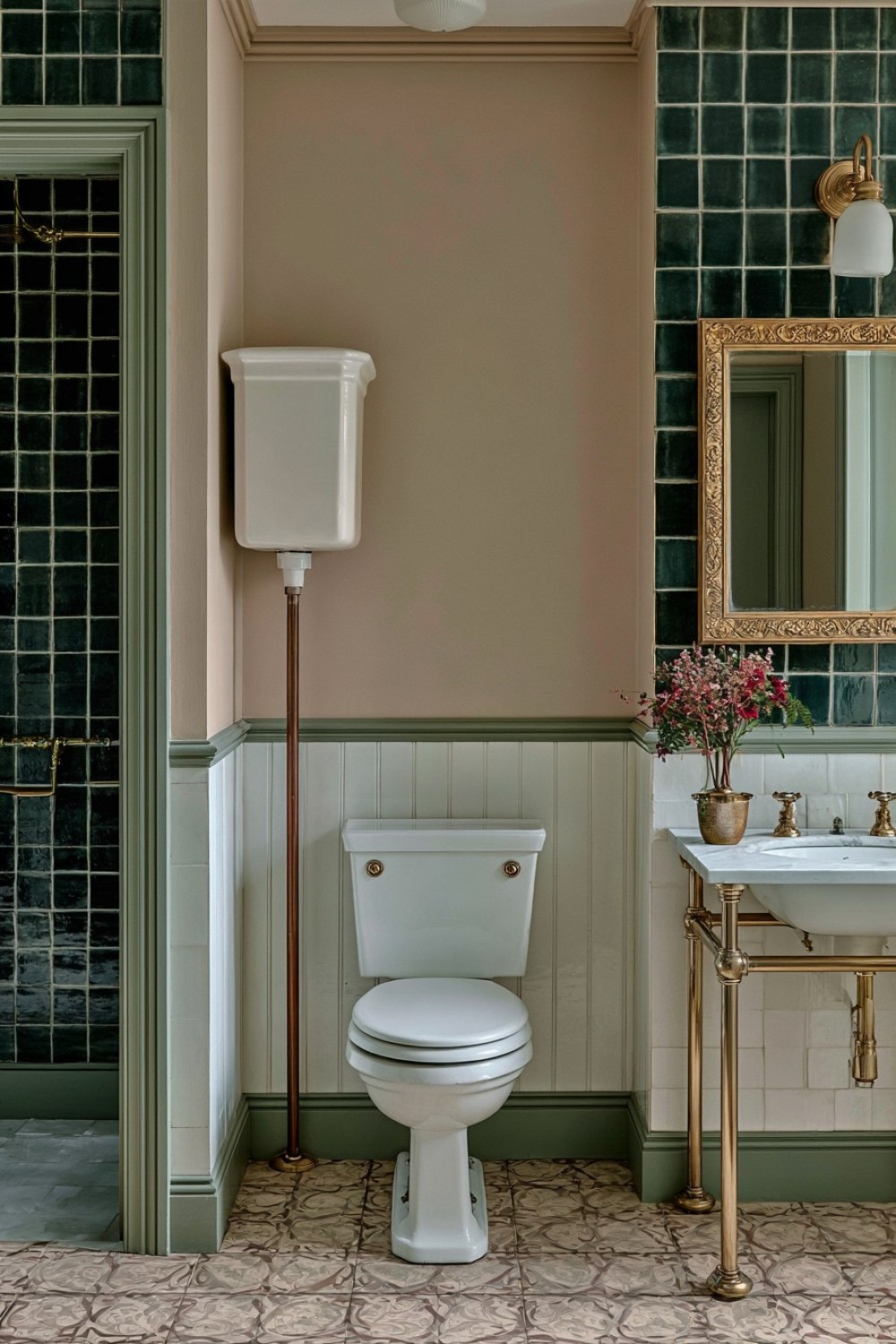
A high-level cistern toilet creates immediate historical character because the plumbing itself becomes part of the visual design. The elevated tank and exposed connecting pipe introduce vertical structure that standard modern toilets do not provide.
Because this feature is already visually strong, keep the surrounding wall relatively quiet. Simple painted paneling, small-format tile, or plain plaster usually provides enough context.
Choose a contemporary product designed to current plumbing requirements rather than adapting unreliable old components simply for appearance. Function and maintenance should remain as important as style.
Traditional flooring and compatible metal finishes can reinforce the period influence without adding numerous nostalgic objects.
This type of fixture works best when it is treated as a deliberate architectural element rather than one vintage item among many. By allowing functional plumbing to provide the historical reference, the bathroom gains authenticity without needing excessive decoration.
9. Use a Scalloped Tile Band for Subtle Movement
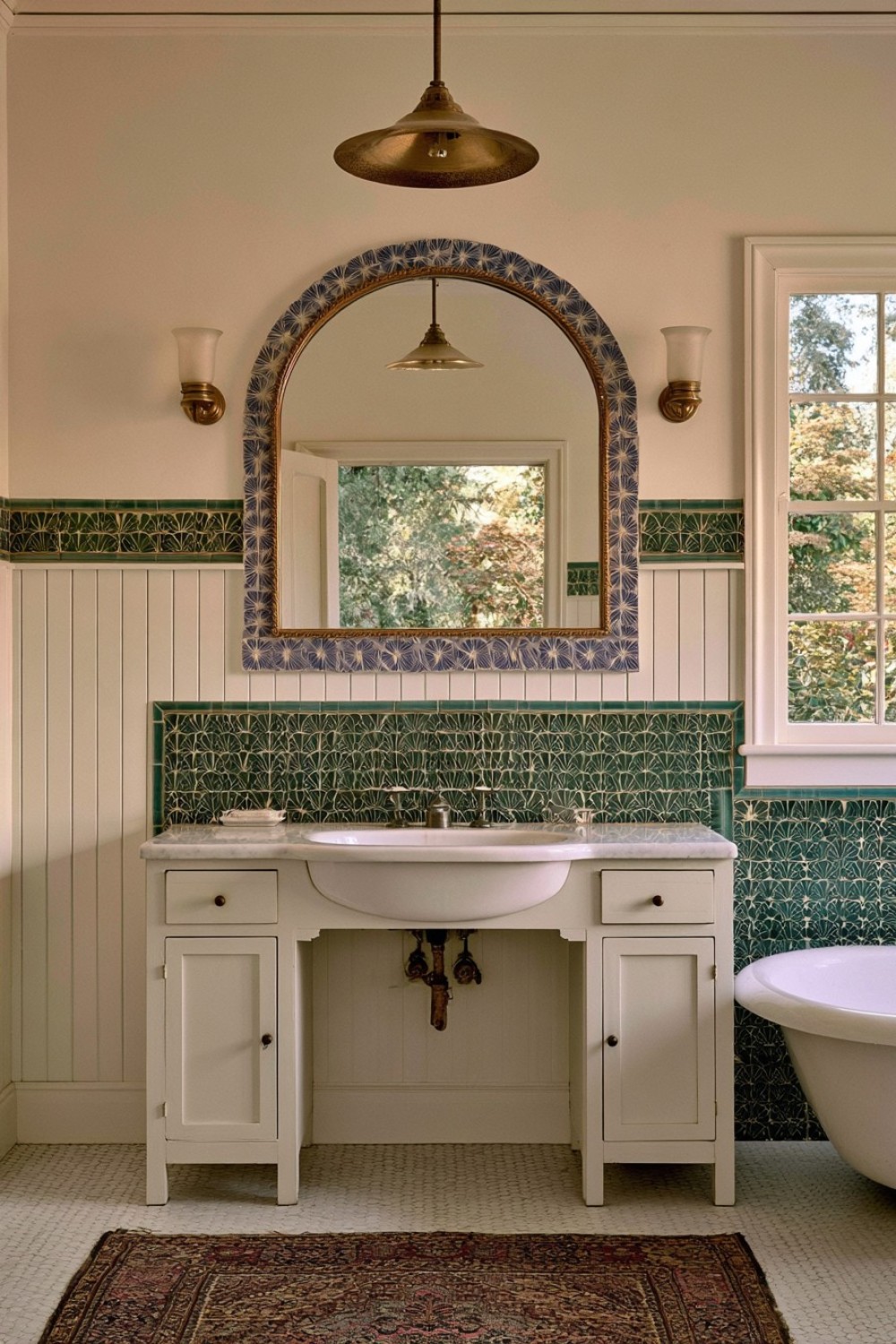
A scalloped or fan-shaped tile border can add personality without covering an entire bathroom in pattern. Its curved outline introduces movement that contrasts nicely with rectangular fixtures and straight architectural lines.
Use the shape in a narrow band above paneling, behind the vanity, or along the edge of a tiled bathtub surround. Muted green, cream, dusty rose, pale blue, and charcoal can all work depending on the overall palette.
Because the tile shape already creates visual activity, pair it with simple field tiles or painted walls. Combining several additional geometric patterns can make the room feel overly busy.
Plan corner transitions and end points carefully so the curved edges finish cleanly around fixtures and wall changes.
This relatively small detail can provide a strong vintage reference while keeping the overall bathroom restrained, making it particularly useful in smaller spaces.
10. Let One Ornate Mirror Carry the Decorative Weight
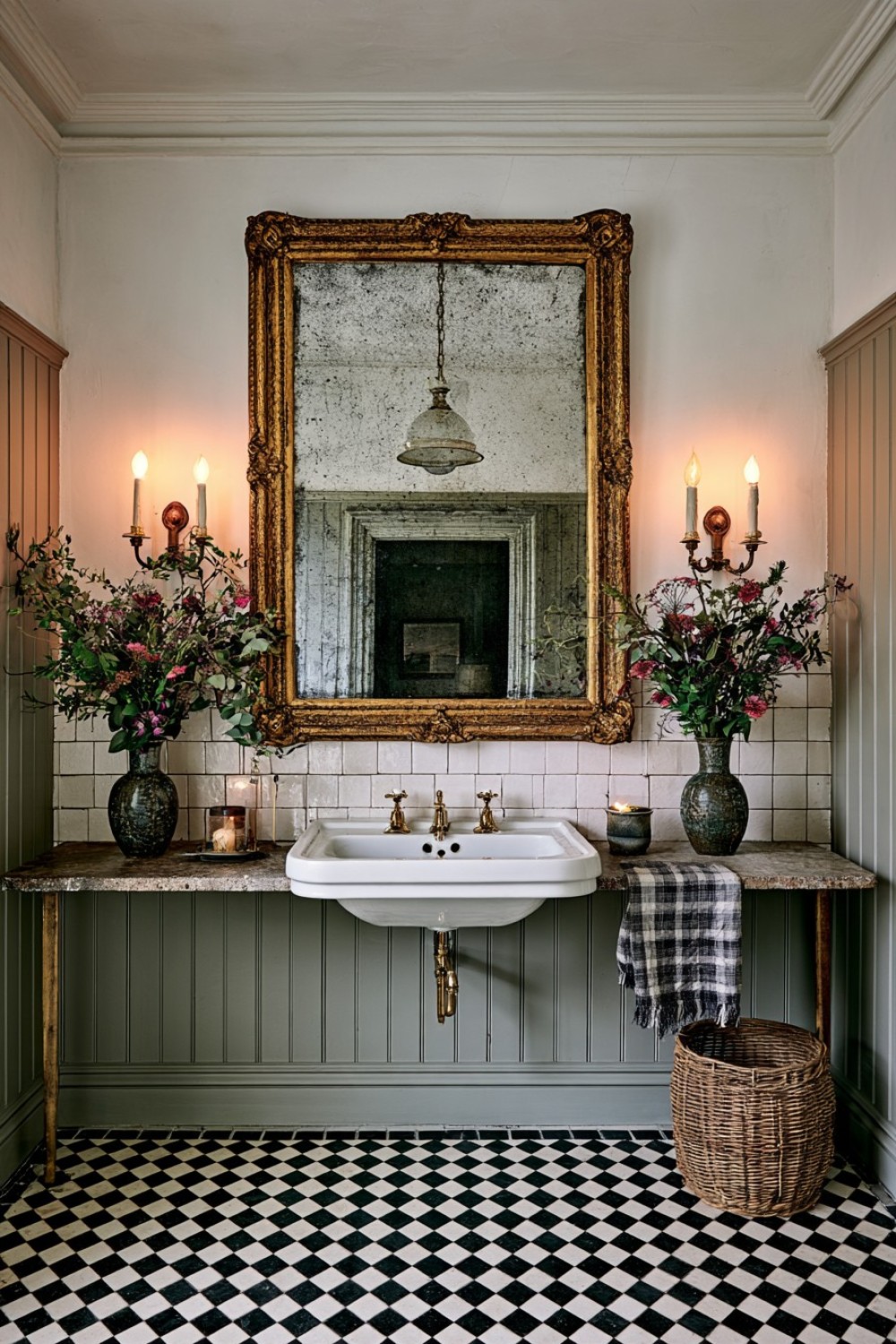
A large framed mirror can introduce vintage character more effectively than a collection of small decorative accessories. Gilded, aged brass, or distressed carved frames can create a strong focal point above a simple basin or understated vanity.
The surrounding wall should remain relatively quiet so the frame has enough visual space. Warm white plaster, muted paint, or plain ceramic tile usually works better than another highly patterned surface.
If using an antique mirror, inspect the backing and frame condition carefully. Bathroom humidity can accelerate deterioration, and an old frame may require protective treatment before installation.
A reproduction may be more practical in a heavily used bathroom while still delivering the desired visual effect.
Keeping the basin and nearby fittings simpler creates useful contrast. One expressive mirror can establish the room’s decorative personality without making the bathroom feel crowded or theatrical.
11. Organize Storage With Apothecary-Style Cabinetry
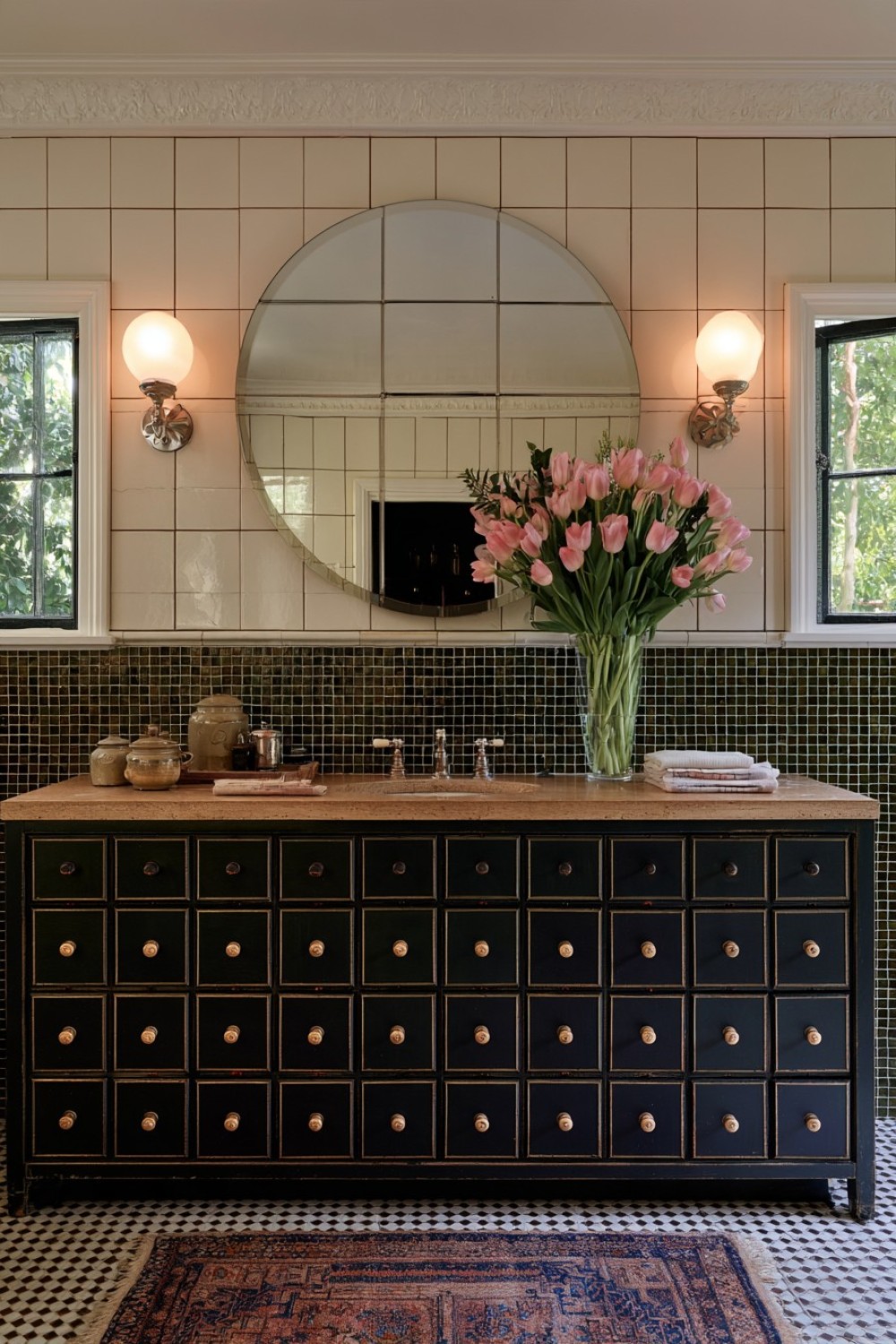
Apothecary-inspired storage can give a larger vintage bathroom a distinctive functional feature. Instead of relying on one wide vanity, use a structured arrangement of shallow drawers, cupboards, and limited open shelving.
Repetition is important. Drawer sizes, hardware, and cabinet proportions should follow a consistent rhythm so the storage feels intentional rather than chaotic.
Use larger drawers for towels and appliances, while smaller compartments can organize grooming items and everyday supplies. Closed storage should handle most visual clutter, leaving only selected items on display.
Dark timber, painted cream, or muted green can support the historic character depending on the rest of the room. A simple stone or timber ledge can add practical surface area.
This approach works best when the cabinetry provides real organization rather than merely imitating old shop furniture. Its value comes from combining distinctive detailing with efficient everyday storage.
12. Balance Soft Pink Tile With Dark Timber
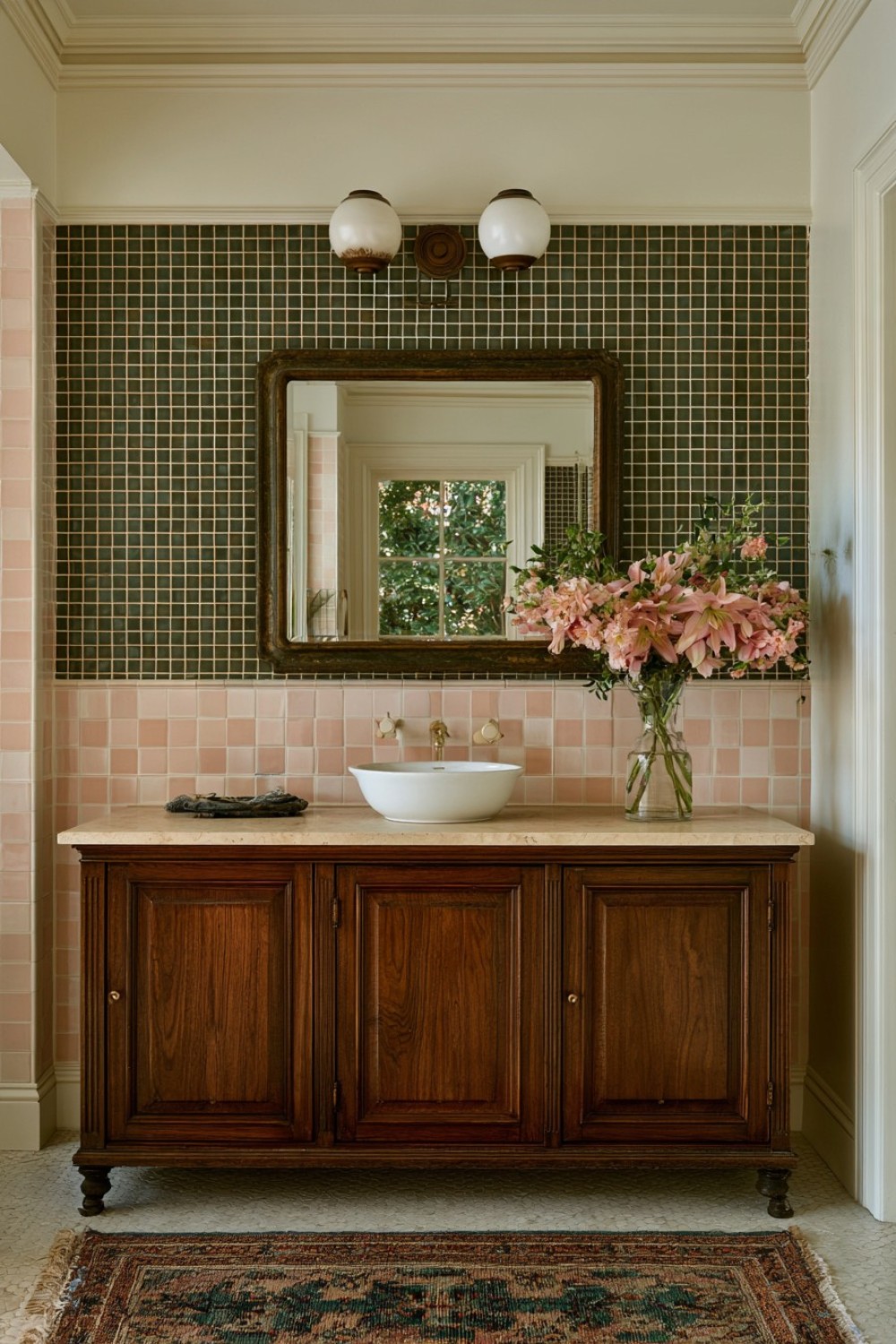
Muted pink tile can feel elegant rather than overly sweet when paired with darker, more substantial materials. Dusty blush, muted salmon, and faded rose tones work particularly well with walnut, mahogany, or deep brown finishes.
Use the pink on small rectangular or square tiles rather than oversized contemporary slabs if you want a stronger vintage reference. A dark timber vanity, mirror frame, or linen cabinet can anchor the softer wall color.
Cream or warm-toned grout may create gentler transitions than bright white, depending on the tile finish.
Keep other colors restrained so the relationship between pink ceramic and dark wood remains the dominant design feature. Introducing several additional pastels can weaken the contrast.
The result is warm and nostalgic without depending on obvious retro motifs. This pairing suits bathrooms that need character but still benefit from a controlled, sophisticated palette.
13. Choose Nickel Framing for a More Traditional Shower
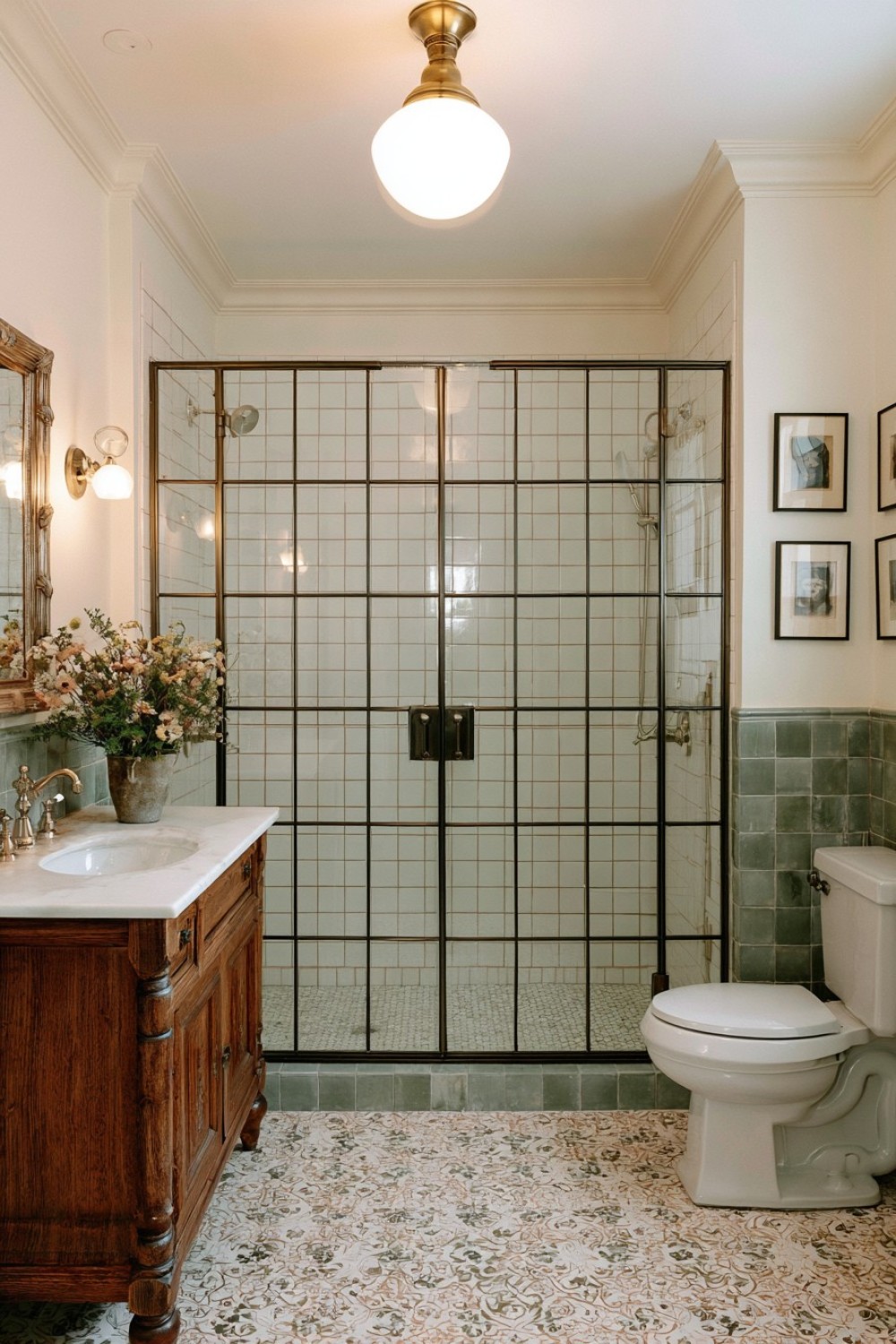
A modern shower can still fit comfortably into a vintage bathroom when the framing is treated as part of the design. Brushed or polished nickel usually has a softer, more traditional appearance than heavy black industrial-style profiles.
Use narrow metal sections and simple rectangular divisions rather than overly complex grid patterns. Clear glass can keep decorative flooring and wall tile visible through the enclosure.
Repeat the same nickel tone on selected taps, handles, or cabinet hardware to create consistency without matching every metal surface exactly.
Proportion matters in a smaller shower. Too many frame divisions can make the enclosure appear cramped, while a cleaner structure allows the glass to remain visually light.
This approach balances modern waterproofing and everyday practicality with a more historically sympathetic appearance, making it useful when the bathroom needs contemporary performance without losing its vintage design language.
14. Let Sage Green Joinery Carry the Cottage Influence
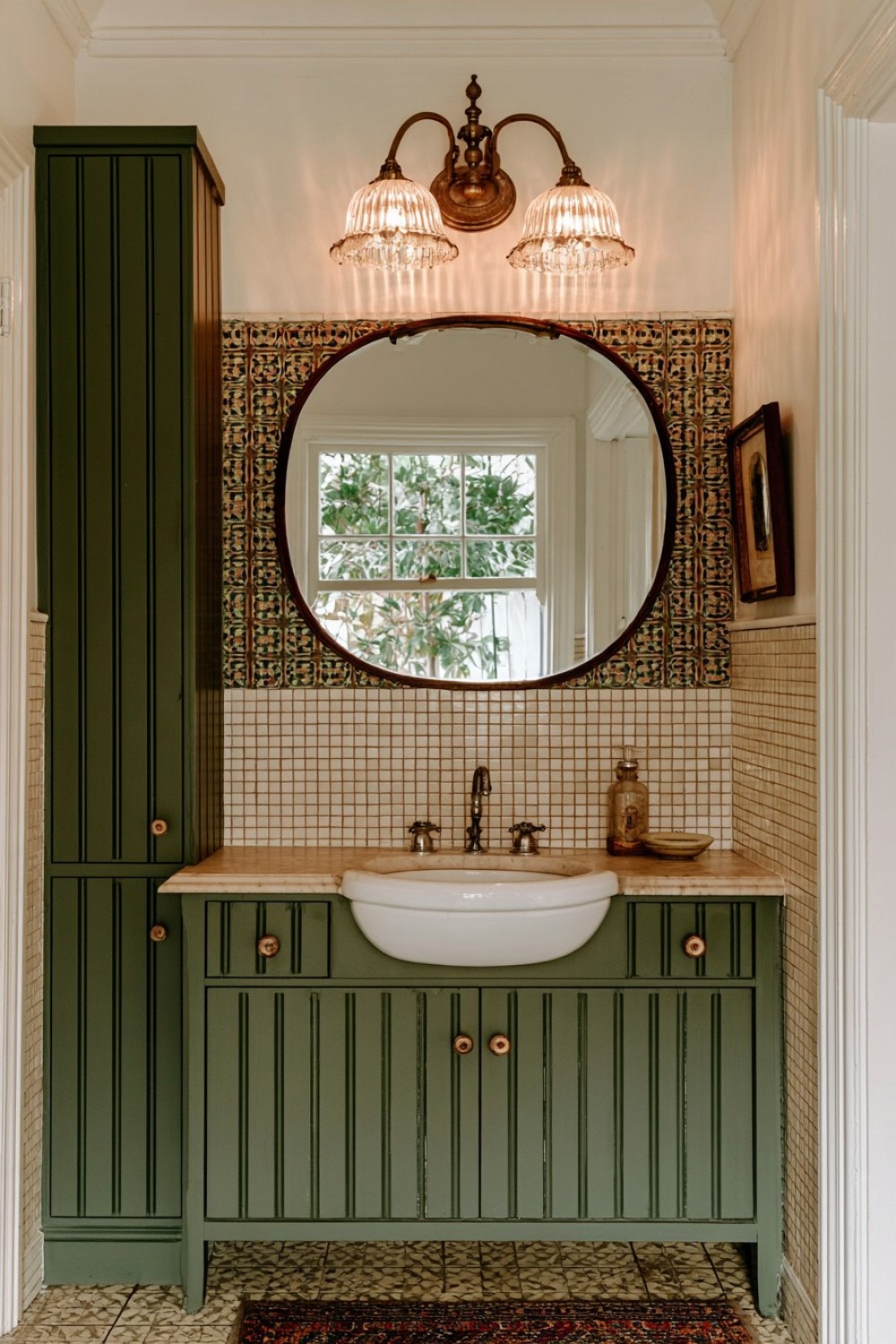
Sage green works especially well in vintage bathrooms because it adds color without overwhelming traditional fixtures. Use it on a vanity, wall cabinet, built-in shelving, or paneling rather than spreading the color across every surface.
Warm white ceramics, lightly aged timber, and cream stone can provide a natural-looking foundation. Small-format tiles also complement the softer cottage character.
Matte or low-sheen paint often feels more appropriate than highly glossy finishes because it allows joinery details to appear less manufactured.
Simple cup handles, aged knobs, or understated metal fittings can reinforce the furniture-like quality of the cabinetry.
Avoid layering too many botanical patterns simply because the room uses green. The color itself already provides a natural association.
This restrained treatment creates a familiar, lived-in atmosphere while remaining practical enough for a modern family bathroom.
15. Frame the Bathtub With Traditional Wall Molding
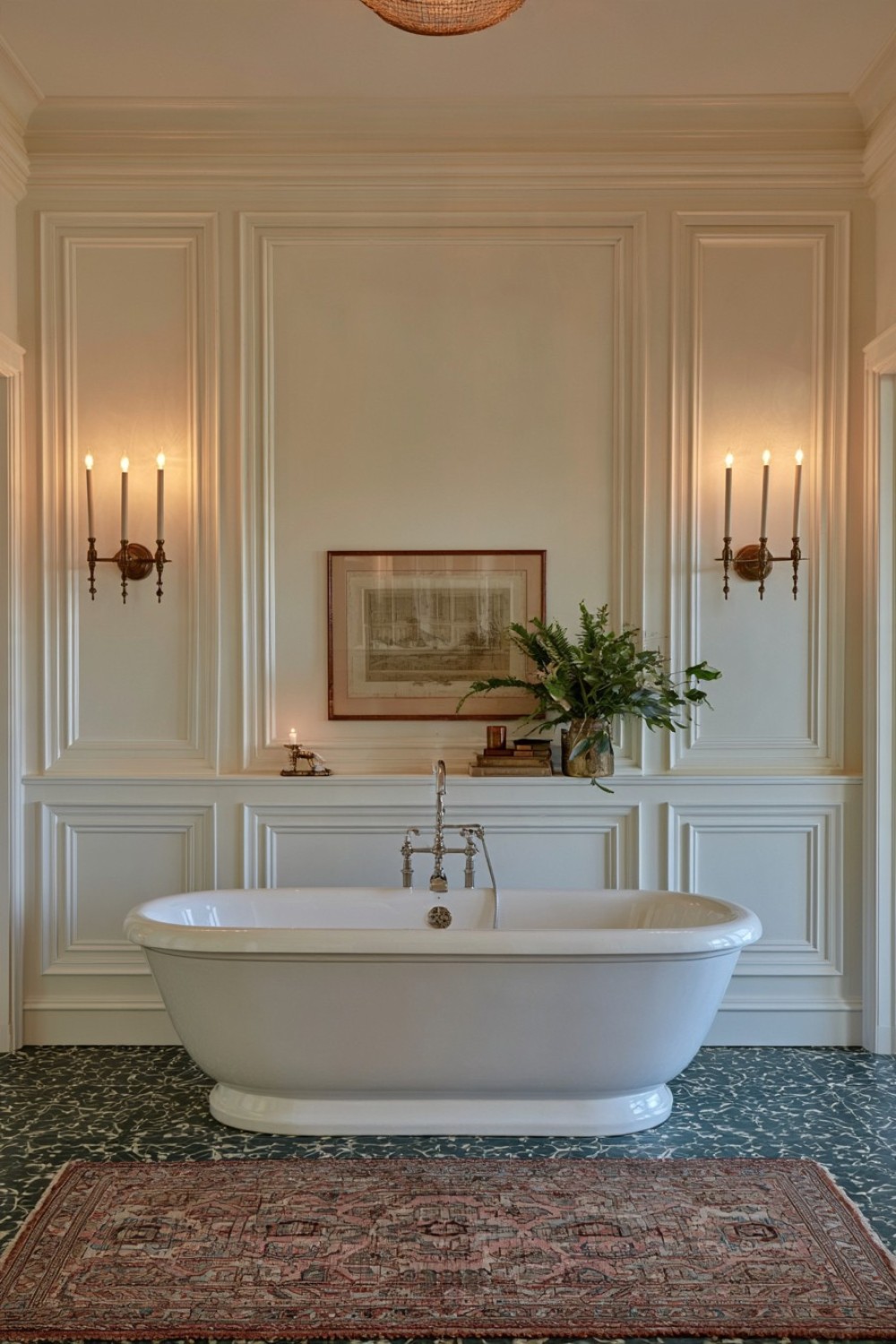
Panel molding can give a bathtub zone architectural presence without taking up usable surface area. Rectangular or square trim applied behind the tub creates depth and proportion through the wall itself.
Paint the molding and wall in one color for a cohesive result. Warm white creates a classic look, while dusty blue, olive, mushroom, or muted taupe can add more character.
Panel dimensions should relate to the bathtub and wall width rather than following an arbitrary grid. Oversized panels may feel awkward in a small room, while very narrow sections can become visually busy.
Use moisture-resistant materials and appropriate bathroom paint in humid areas.
Because the wall treatment already supplies detail, pair it with a relatively simple tub silhouette and restrained accessories.
This method creates vintage atmosphere through architecture rather than decoration, helping the bathroom feel established and refined.
16. Hide Plumbing With a Washable Sink Skirt
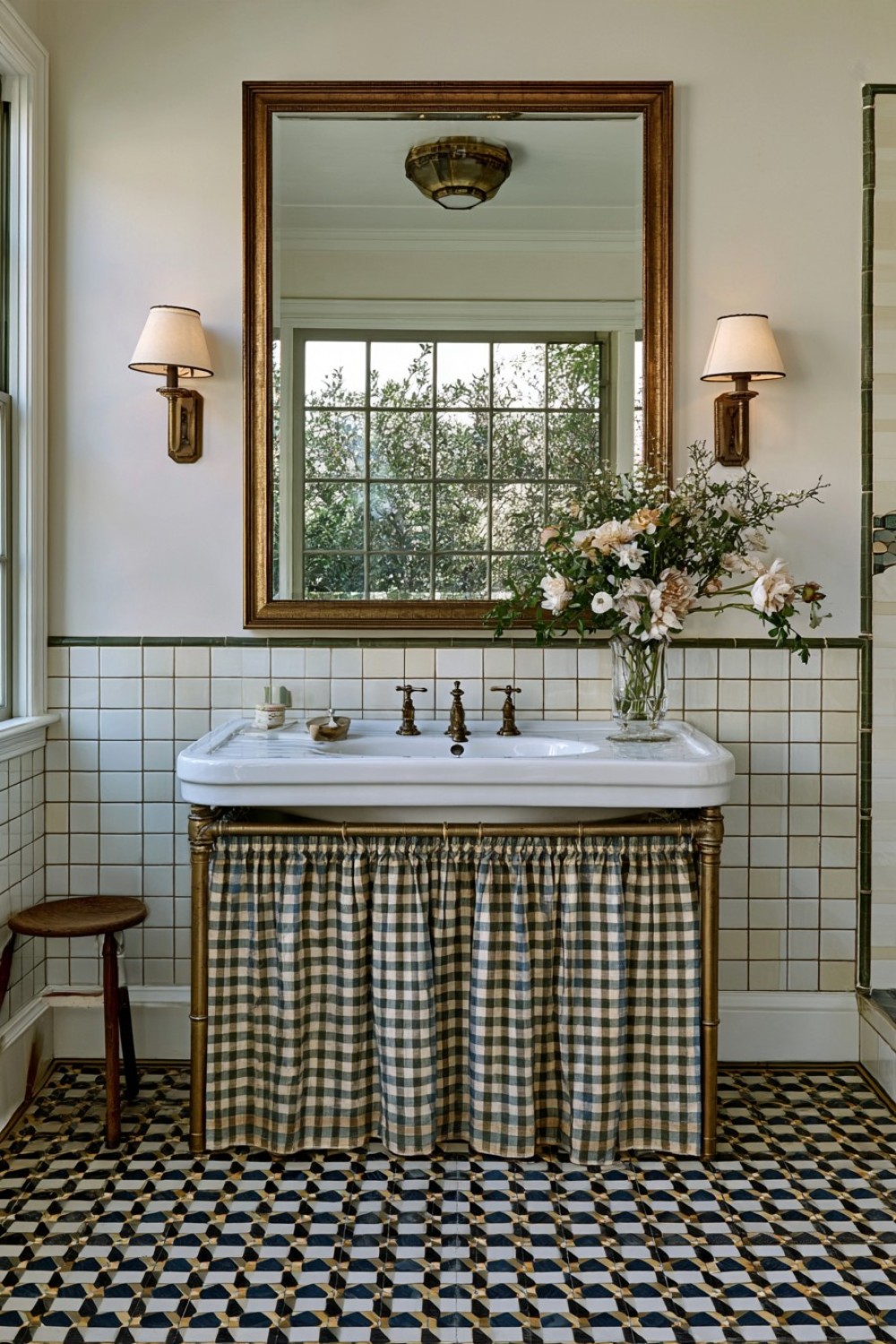
A fabric skirt beneath a simple sink can soften a bathroom dominated by ceramic, glass, metal, and stone. It also provides a discreet way to conceal plumbing and limited storage.
Choose washable linen, cotton, or another suitable fabric with enough weight to hang neatly. Faded stripes, small checks, understated florals, or plain natural cloth can all suit a vintage interior.
The skirt should end slightly above the floor so it does not drag through moisture or collect dirt. Use a removable attachment method so the fabric can be washed regularly.
Keep the surrounding wall and fixtures simple because the textile already introduces pattern and softness.
This detail works particularly well in cottage or country-inspired bathrooms where a fully enclosed vanity would feel too heavy. It combines practical concealment with a more informal traditional character.
17. Finish With an Edwardian-Inspired Neutral Scheme
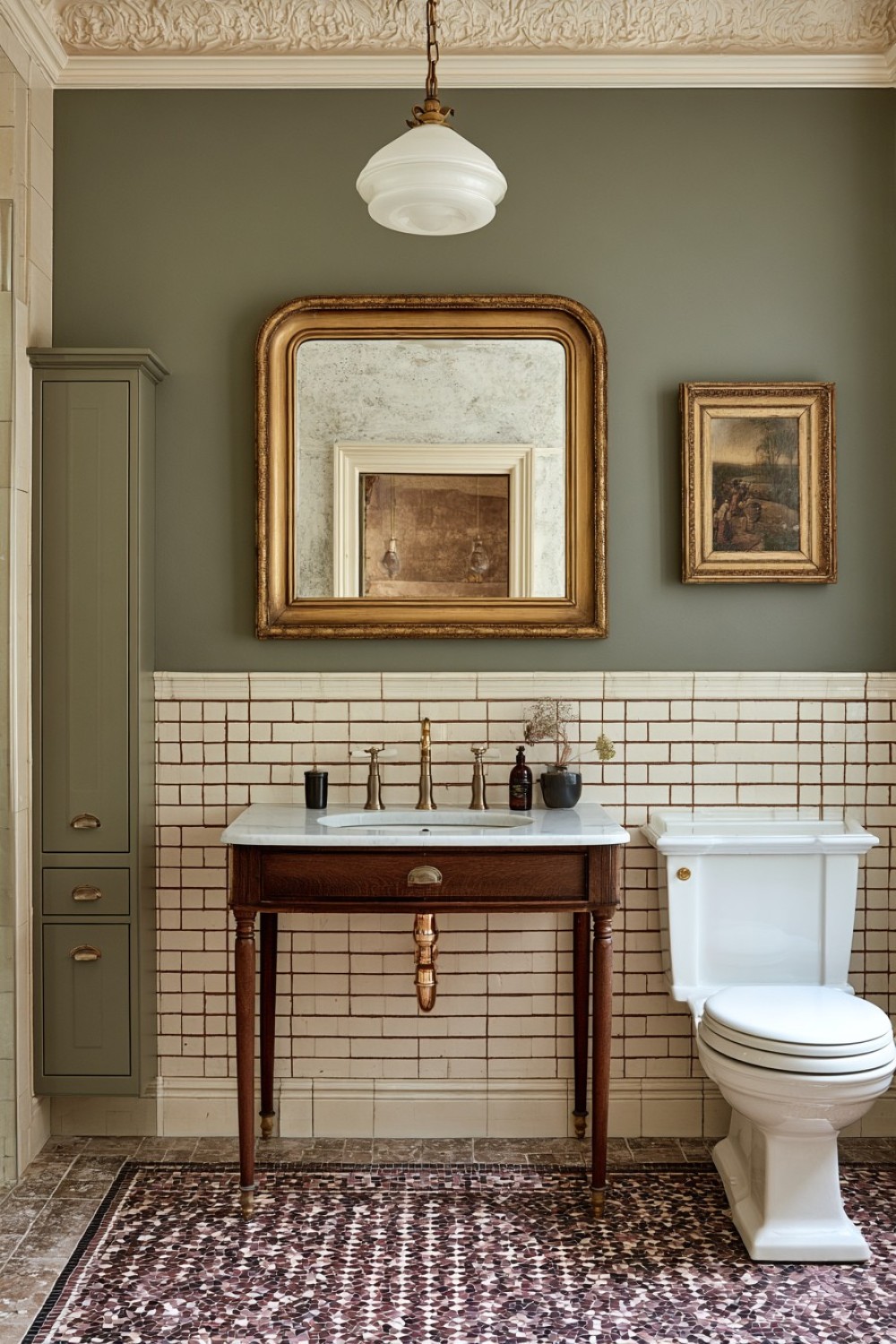
An Edwardian-inspired bathroom can achieve historical character without dark colors, heavy ornament, or numerous decorative accessories. Warm ivory walls, subtle stone flooring, traditional white ceramics, and walnut-toned furniture create a restrained foundation.
Small rectangular wall tiles can protect wet areas while painted surfaces keep the rest of the room visually calm. Choose furniture with gentle detailing rather than elaborate carving.
Hardware should also remain understated. Aged nickel, brass, or bronze can support the period influence without becoming the main feature.
Limit decorative objects to a few well-chosen pieces so the room does not become overly nostalgic.
The strength of this approach comes from proportion and material harmony rather than obvious vintage styling. It is especially suitable for homeowners who want historical influence while preserving the comfort, durability, and simplicity expected from a contemporary bathroom.
Keep Vintage Character Functional
A successful vintage bathroom should feel comfortable to use, not like a room preserved for display. Begin with the features that affect daily function: ventilation, durable wet-area finishes, practical storage, reliable plumbing, and surfaces that can be cleaned easily.
Then introduce historical character through a limited number of stronger decisions. One patterned floor, a furniture-style vanity, painted paneling, traditional fixtures, or an expressive mirror may contribute more than many small decorative accessories.
Try to avoid combining references from too many different periods unless the room is intentionally eclectic. Consistency in color, material, and proportion usually creates a more convincing result than strict historical reproduction.
The most effective vintage bathrooms balance age-inspired detail with contemporary practicality, allowing the room to feel graceful, personal, and naturally developed over time.
MORE IDEAS


Share
What's Your Reaction?
 Like
0
Like
0
 Dislike
0
Dislike
0
 Love
0
Love
0
 Funny
0
Funny
0
 Angry
0
Angry
0
 Sad
0
Sad
0
 Wow
0
Wow
0