12 Gothic Bathroom Designs That Balance Drama and Daily Use

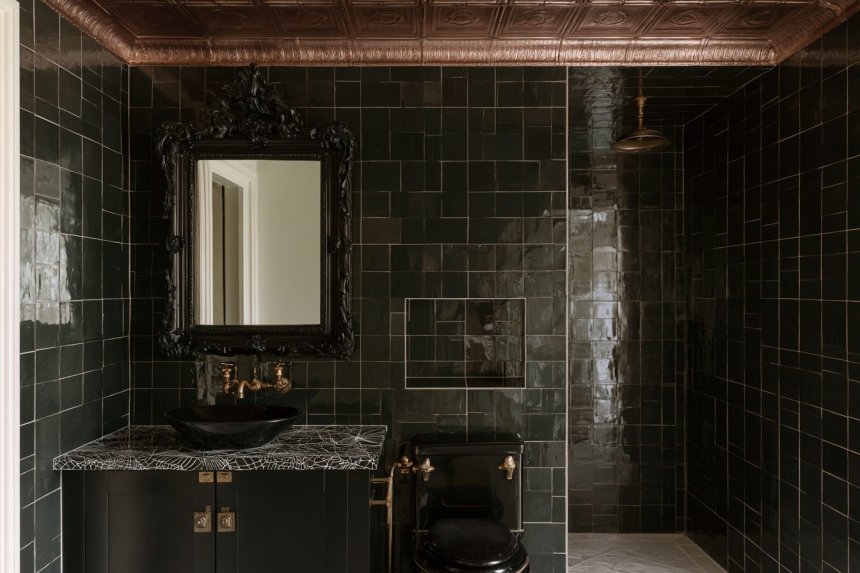
Gothic bathroom design combines dramatic architecture, shadow-rich colors, aged materials, and decorative details with the practical requirements of a wet room. Arches, carved wood, dark stone, botanical patterns, and antique-inspired fittings can create the atmosphere, but every choice must also tolerate moisture, regular cleaning, and daily use. The strongest rooms feel mysterious and layered without becoming uncomfortable or unnecessarily dark.
A convincing result does not require covering every surface with elaborate decoration. One architectural focal point can establish the theme while quieter materials support it. Before choosing finishes, consider ventilation, waterproofing, slip resistance, storage, electrical safety, and the amount of natural and artificial light available. These twelve approaches demonstrate how Gothic character can be introduced without sacrificing function.
1. Frame the Shower with a Cathedral-Inspired Arch
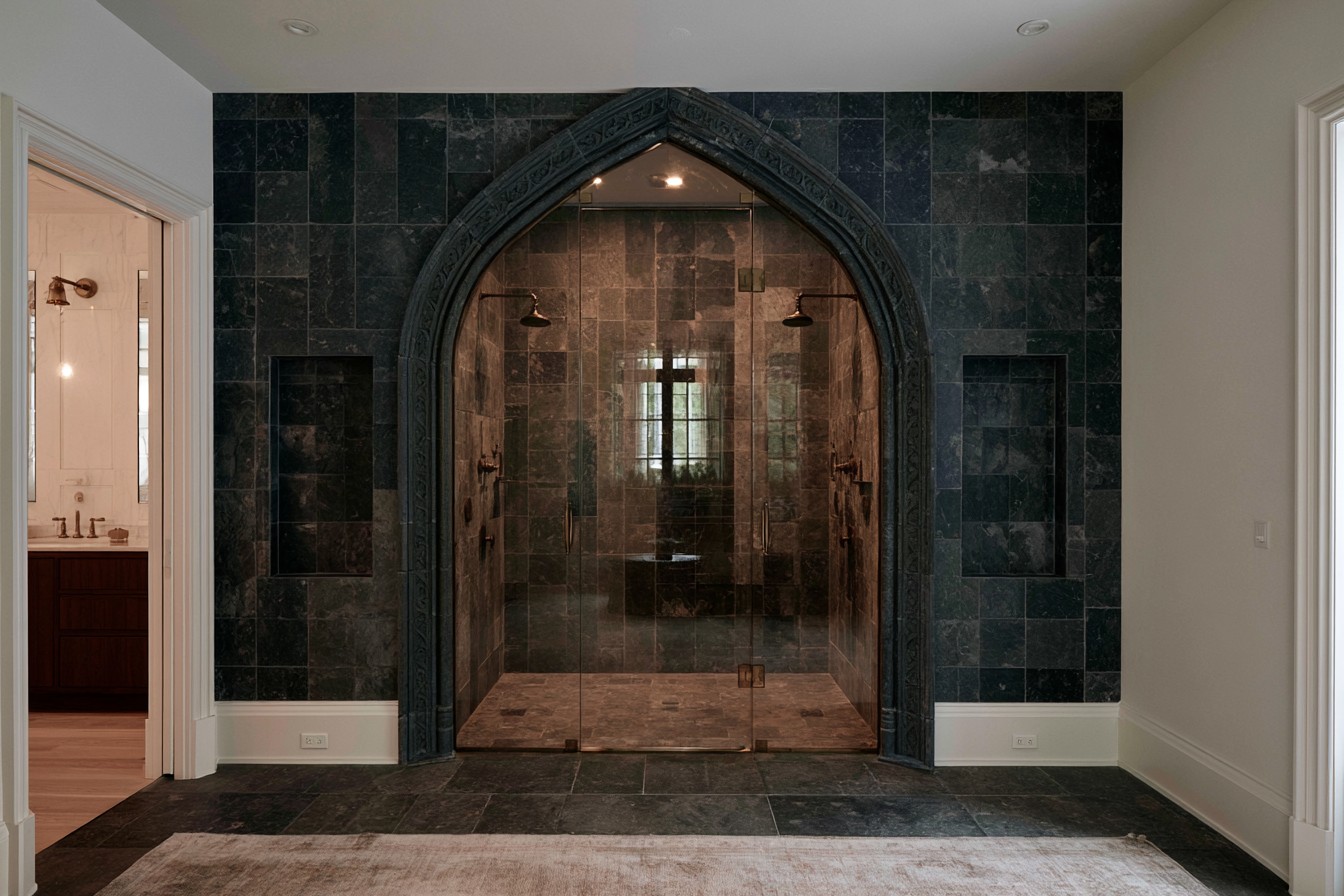
A pointed arch can turn an ordinary shower entrance into the main architectural feature of a Gothic bathroom. The shape may be constructed around a recessed shower, repeated in a fixed glass panel, or suggested with decorative trim. Keeping the surrounding wall relatively simple allows the silhouette to remain noticeable without overwhelming the room.
Any newly constructed arch inside a wet zone requires the same waterproofing continuity as the rest of the shower enclosure. Curves, corners, niches, and transitions must be properly sealed before tile is installed. Use a qualified bathroom contractor when changing wall framing, plumbing, or waterproof membranes. In a simpler renovation, an arch-shaped mirror can echo the same form without structural work.
2. Make a Black Stone Vanity the Central Anchor
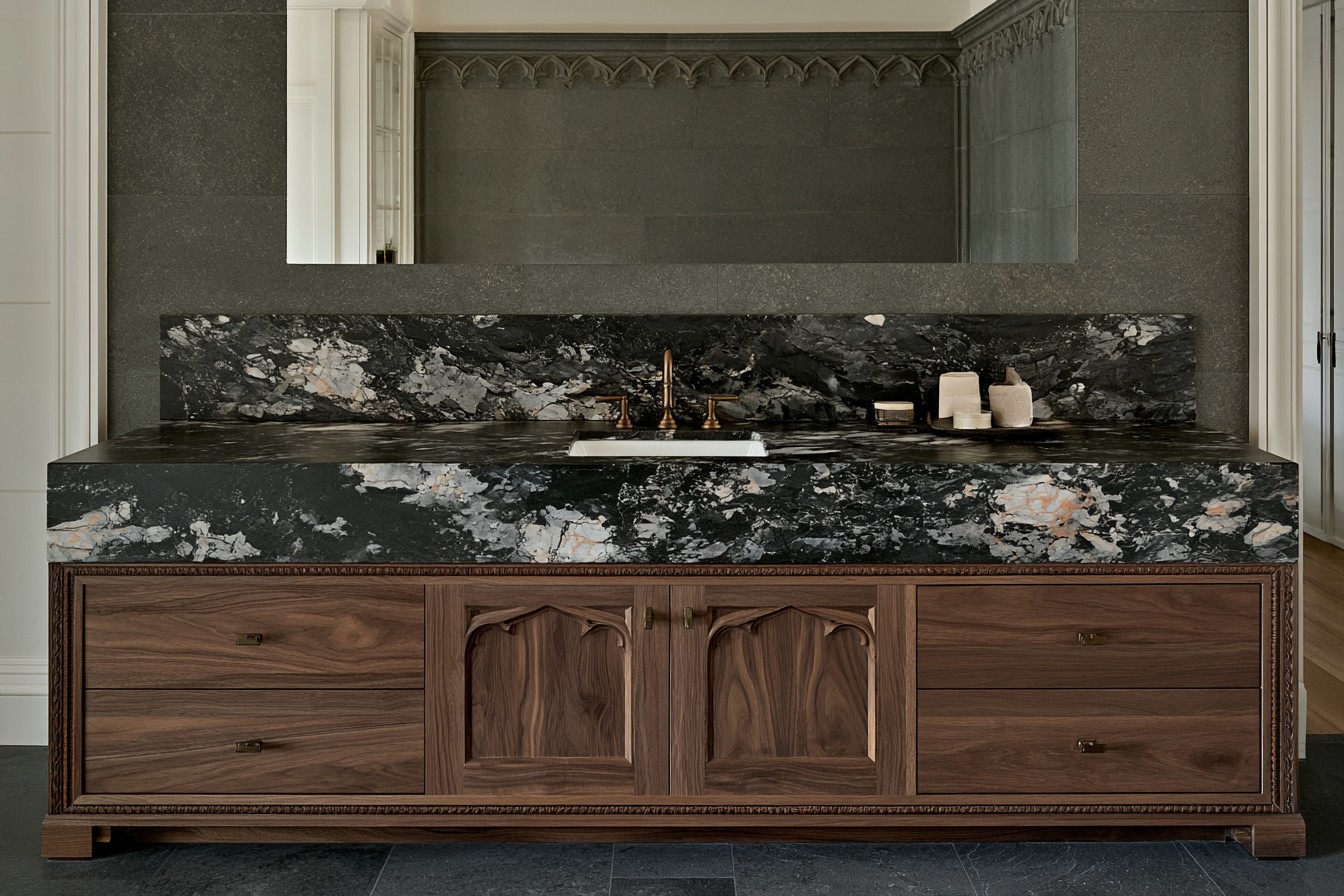
A black vanity top with pronounced veining introduces depth and permanence. Natural marble offers individual variation, while porcelain and engineered surfaces can provide a similar visual effect with different maintenance requirements. Pair the dark counter with an under-mount basin to preserve the uninterrupted stone pattern and make routine cleaning easier.
Compare samples under the bathroom’s actual lighting before ordering a large slab. Some black surfaces show water spots, soap residue, and fingerprints more readily than expected. Confirm whether the chosen material needs sealing and which cleaners are safe to use. Wall-mounted lighting on both sides of the mirror can also reveal the veining without creating harsh shadows across the face.
3. Balance Burgundy Walls with Charcoal Surfaces
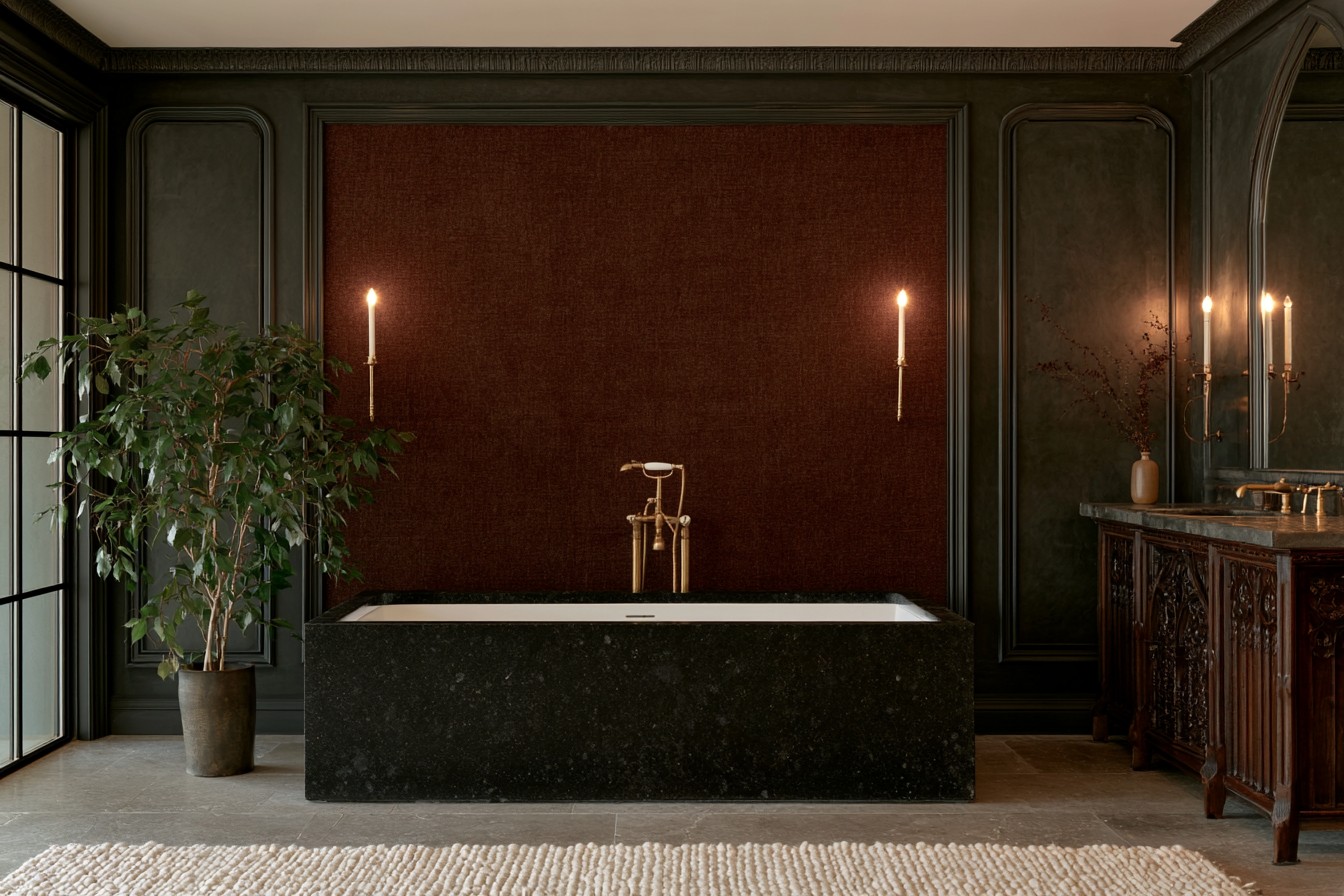
Burgundy contributes warmth, while charcoal introduces the shadowed quality associated with Gothic interiors. Instead of dividing the room into equal areas of both colors, allow one to dominate. Burgundy can frame the vanity or cover the upper walls, with charcoal appearing in floor tile, cabinetry, or the shower enclosure.
Dark paint should be selected in a finish suitable for humid interiors, particularly outside the tiled wet zones. Test the color beside the vanity lighting because burgundy can shift toward brown, red, or purple depending on the bulb temperature. Warm white illumination generally keeps the palette inviting, while a pale ceiling can prevent a compact bathroom from feeling compressed.
4. Introduce Pattern Through a Medieval-Inspired Floor
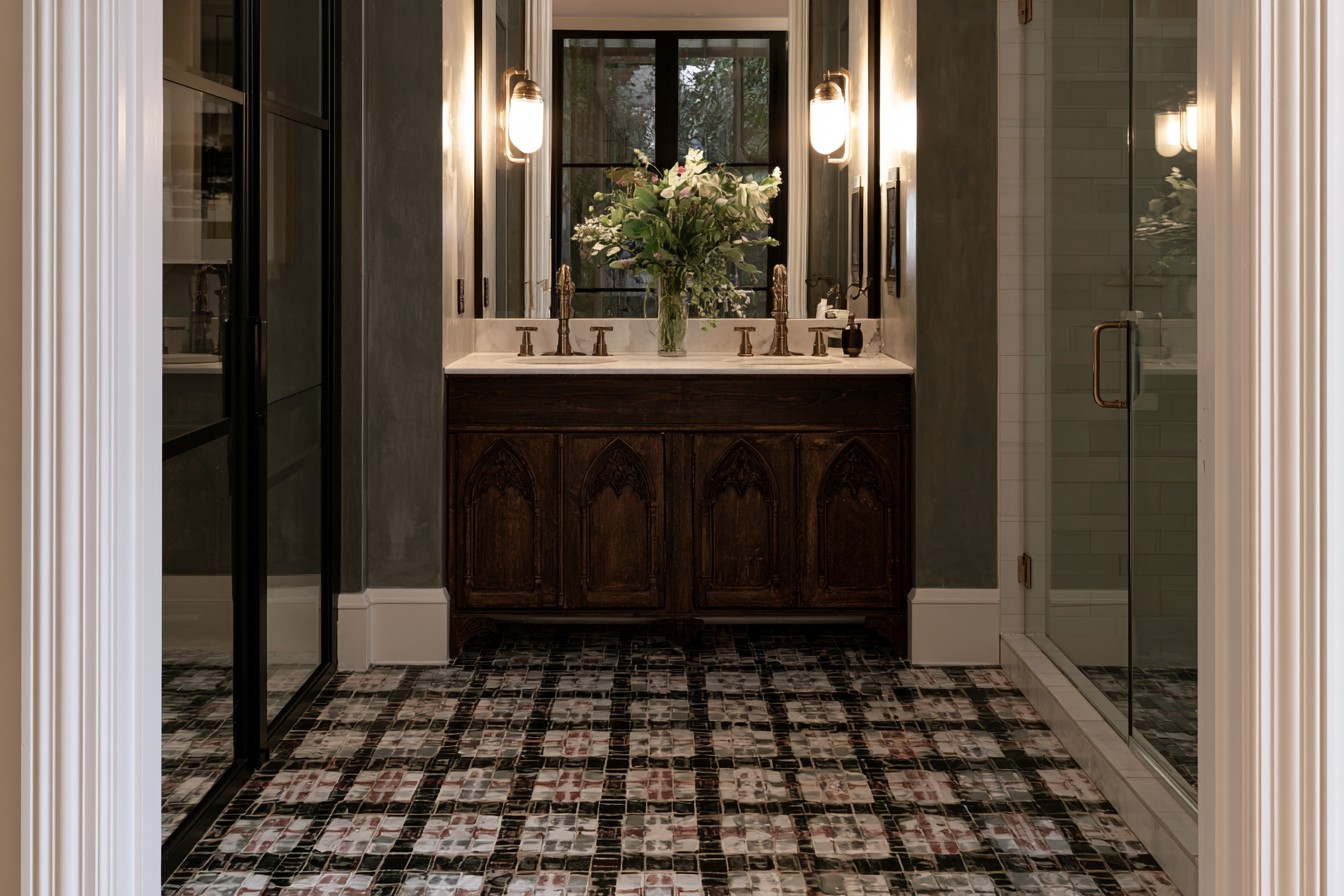
A patterned floor can suggest the visual richness of medieval tilework without requiring ornate decoration on every wall. Geometric stars, quatrefoils, interlocking borders, and aged encaustic-style motifs work particularly well. A limited palette of black, cream, brown, and muted red keeps the floor expressive but still compatible with other finishes.
Bathroom flooring must be chosen for more than its pattern. Check the manufacturer’s suitability for wet environments and select a surface with appropriate slip resistance. Smaller tiles and additional grout joints may improve traction, although the grout will require regular cleaning. Lay several tiles on the floor before installation to confirm that the pattern is correctly aligned from the doorway.
5. Adapt a Carved Cabinet into a Practical Vanity
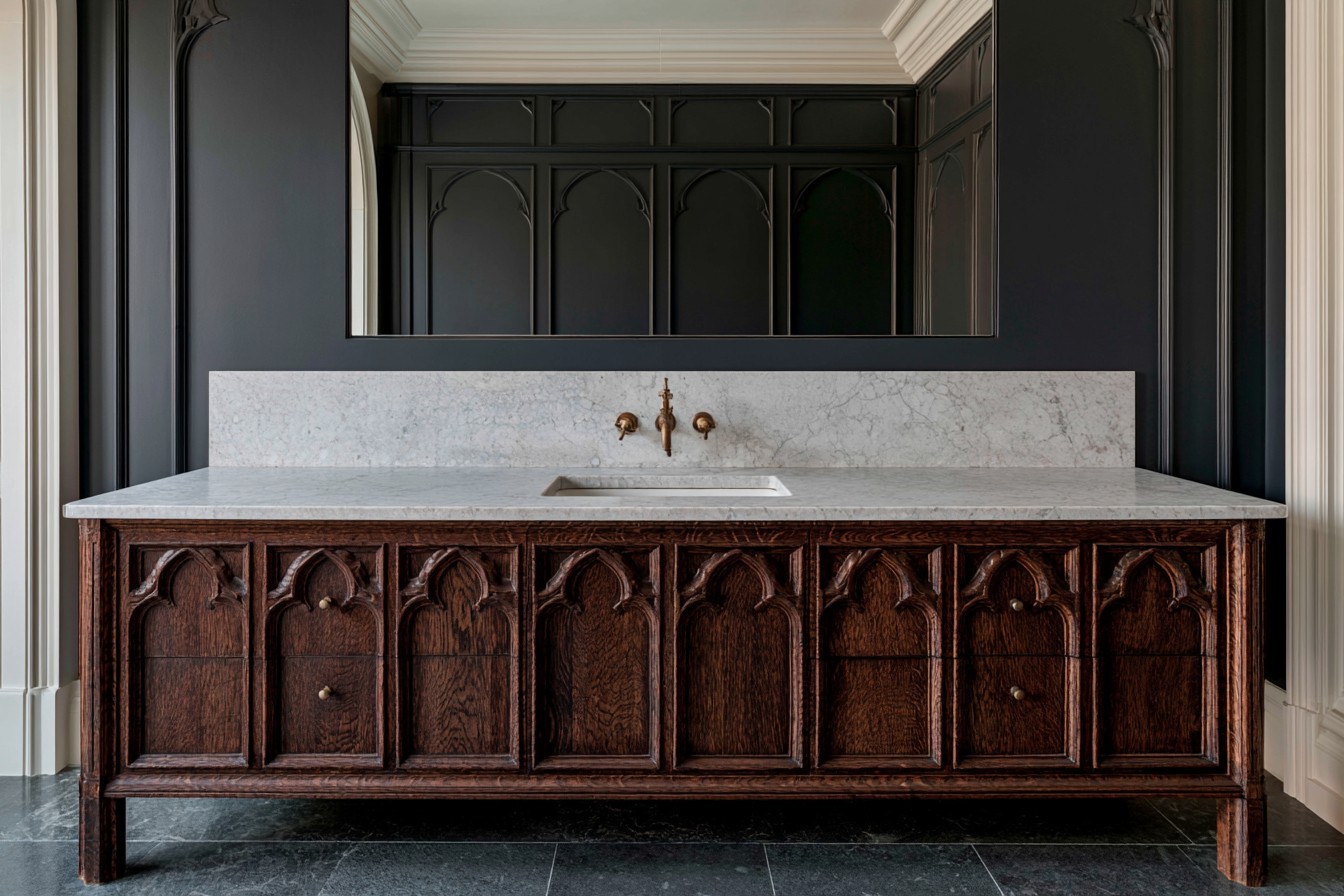
A carved wooden vanity adds craftsmanship and warmth to a room dominated by tile and stone. Paneled doors, restrained tracery, antique-style handles, or turned feet can convey the theme without relying on theatrical ornament. A vintage cabinet may also be converted into a vanity when its height, depth, and internal construction accommodate a basin and plumbing.
Wood used in a bathroom must be protected from standing water and excessive humidity. Seal exposed edges, especially around a cutout basin, and repair any damaged finish promptly. A converted cabinet should be checked for structural stability before a heavy counter is fitted. Preserve as much internal storage as possible by planning pipe positions before modifying drawers or shelves.
6. Turn the Bathtub into a Shadowed Architectural Retreat
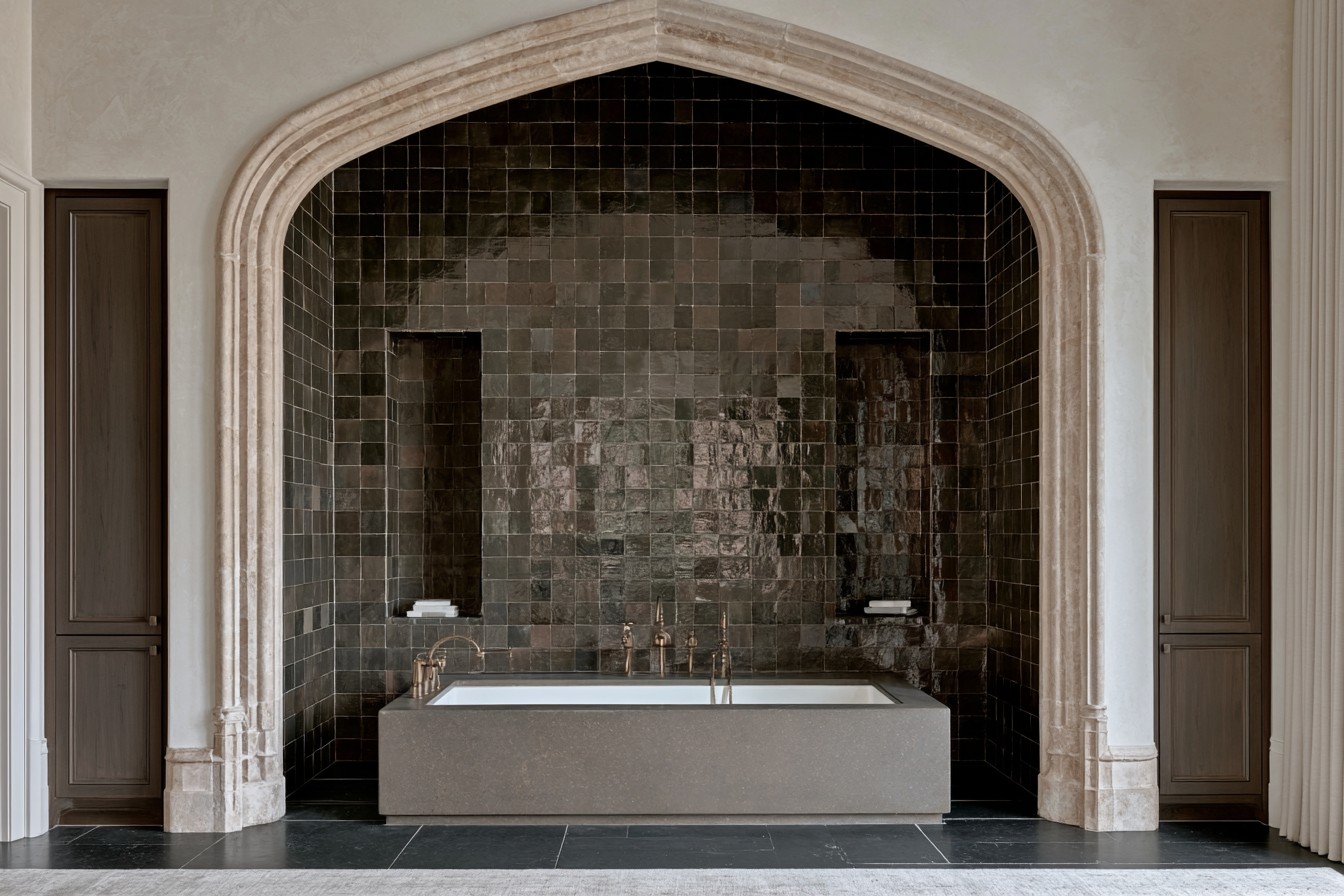
Placing a bathtub within an alcove gives it a sheltered, architectural quality. An arch, dark tile surround, or paneled outer wall can visually separate the bathing zone from the rest of the room. Repeating the same curve in the mirror or doorway creates continuity without adding several unrelated Gothic motifs.
The alcove should not restrict cleaning access, ventilation, or safe entry into the tub. Include a practical surface for toiletries and use fixtures that can be serviced without dismantling decorative finishes. Any light installed near the bath must be rated and positioned for the relevant wet-area zone, with electrical work completed according to local regulations.
7. Use Oxblood Red as a Controlled Focal Color
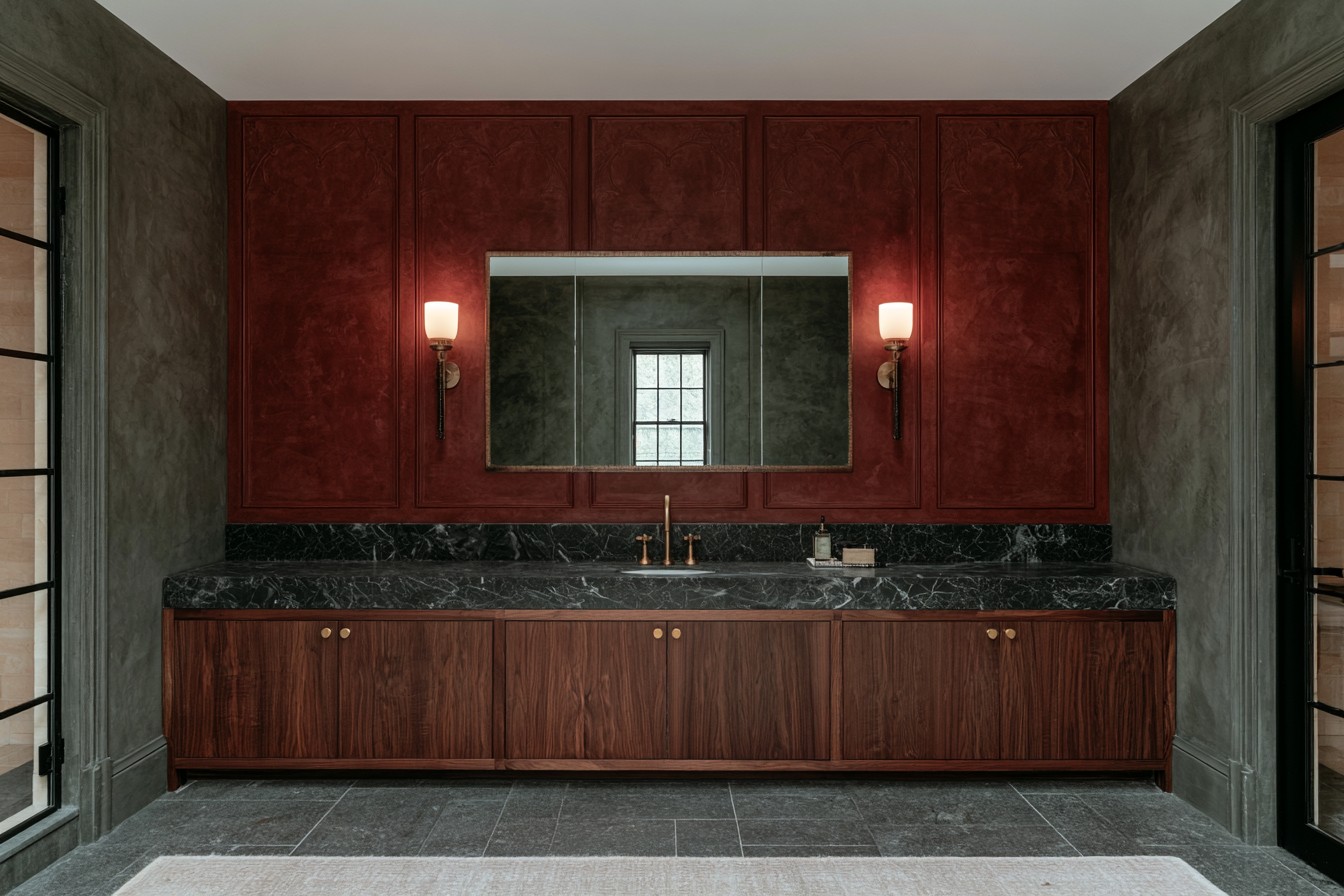
Oxblood red delivers drama with a deeper and more sophisticated appearance than a bright primary red. It works particularly well behind a vanity, where a mirror and wall lights interrupt the large field of color. Dark timber, antique brass, aged bronze, and warm stone can reinforce its earthy undertones.
Because such a strong shade changes noticeably under artificial light, sample it on more than one wall. Use it selectively in smaller bathrooms and balance it with calm flooring or neutral fixtures. A moisture-resistant paint with a washable finish will be easier to maintain around the basin, although splash-prone areas may still need tile or another water-resistant surface.
8. Build Useful Storage into Stone-Inspired Niches
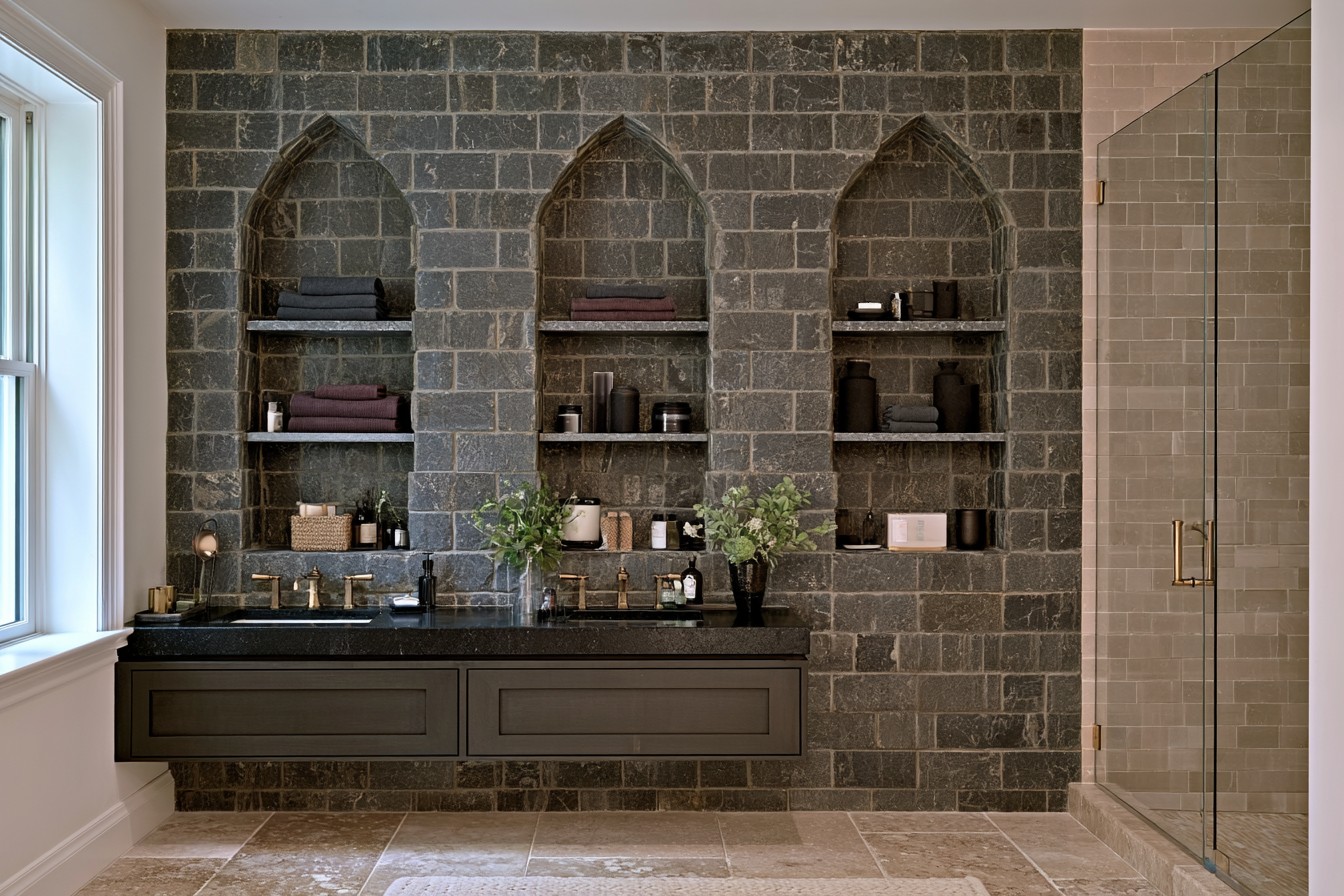
Recessed niches provide storage while repeating the arched vocabulary of Gothic architecture. Inside a shower, they can hold frequently used bottles; beside a bathtub, they may display folded towels or a small decorative object. A contrasting tile inside each recess can emphasize its shape without adding clutter to the surrounding wall.
Niche placement must be coordinated with wall studs, pipes, wiring, and waterproofing before construction begins. The base should slope slightly toward the wet area so water does not collect at the back. Faux-stone porcelain is usually easier to maintain than deeply textured real stone, which may trap moisture and require more demanding sealing and cleaning.
9. Reserve Dark Botanical Wallpaper for a Dry Zone
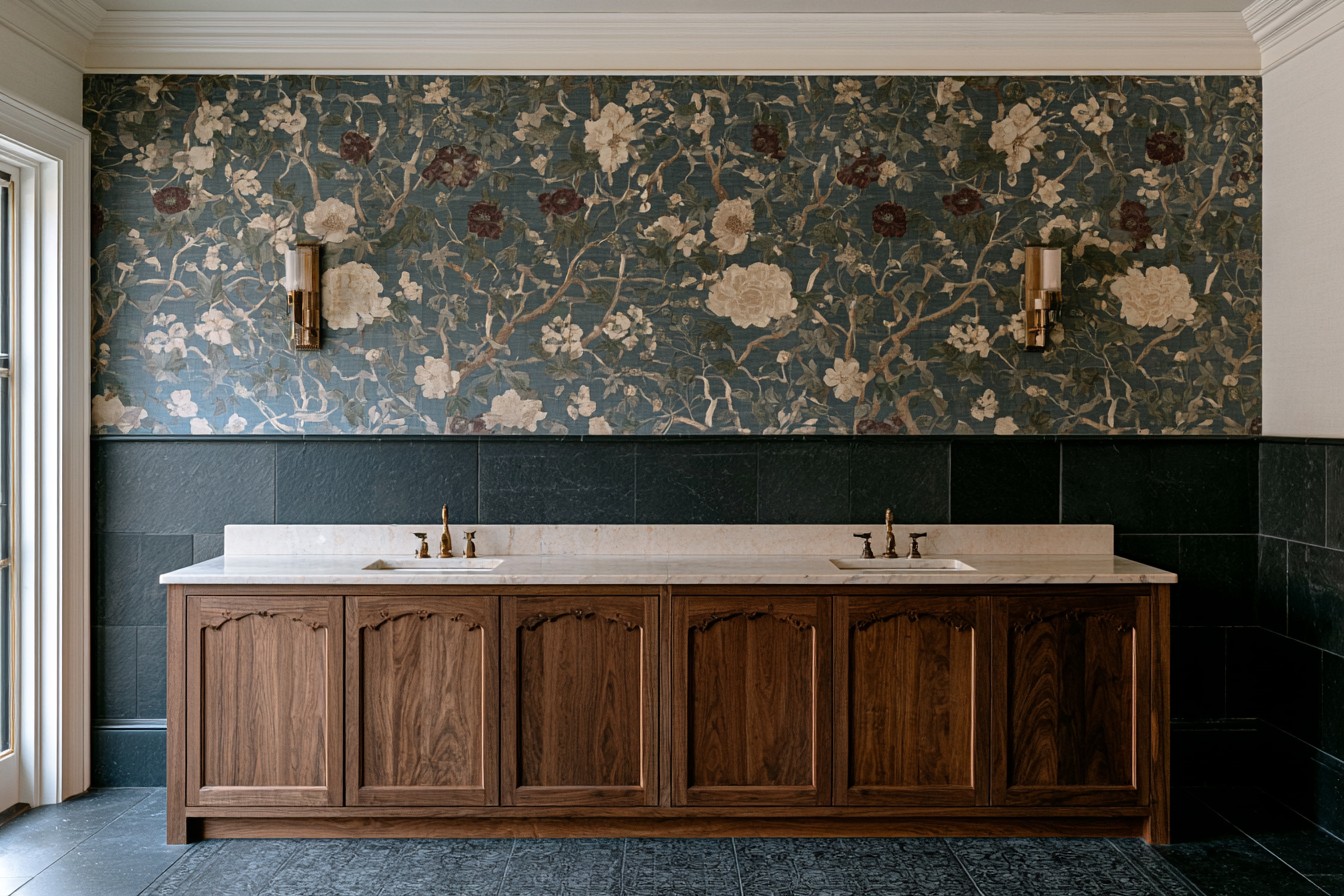
Botanical wallpaper introduces movement and a slightly romantic dimension to the harder Gothic materials. Look for oversized foliage, night-blooming flowers, thorny vines, or illustrations resembling historic botanical studies. Deep green, faded plum, black, and parchment tones can create atmosphere without depending on predictable skull or bat motifs.
Use wallpaper away from direct shower spray and select a product intended for humid interiors. Good ventilation remains essential because even moisture-resistant coverings can fail when condensation repeatedly collects behind them. Preparing the wall properly and following the adhesive manufacturer’s instructions will reduce lifting seams. In an especially damp room, a botanical mural printed on a suitable wall panel may be more durable.
10. Organize Small Items in Apothecary-Style Storage
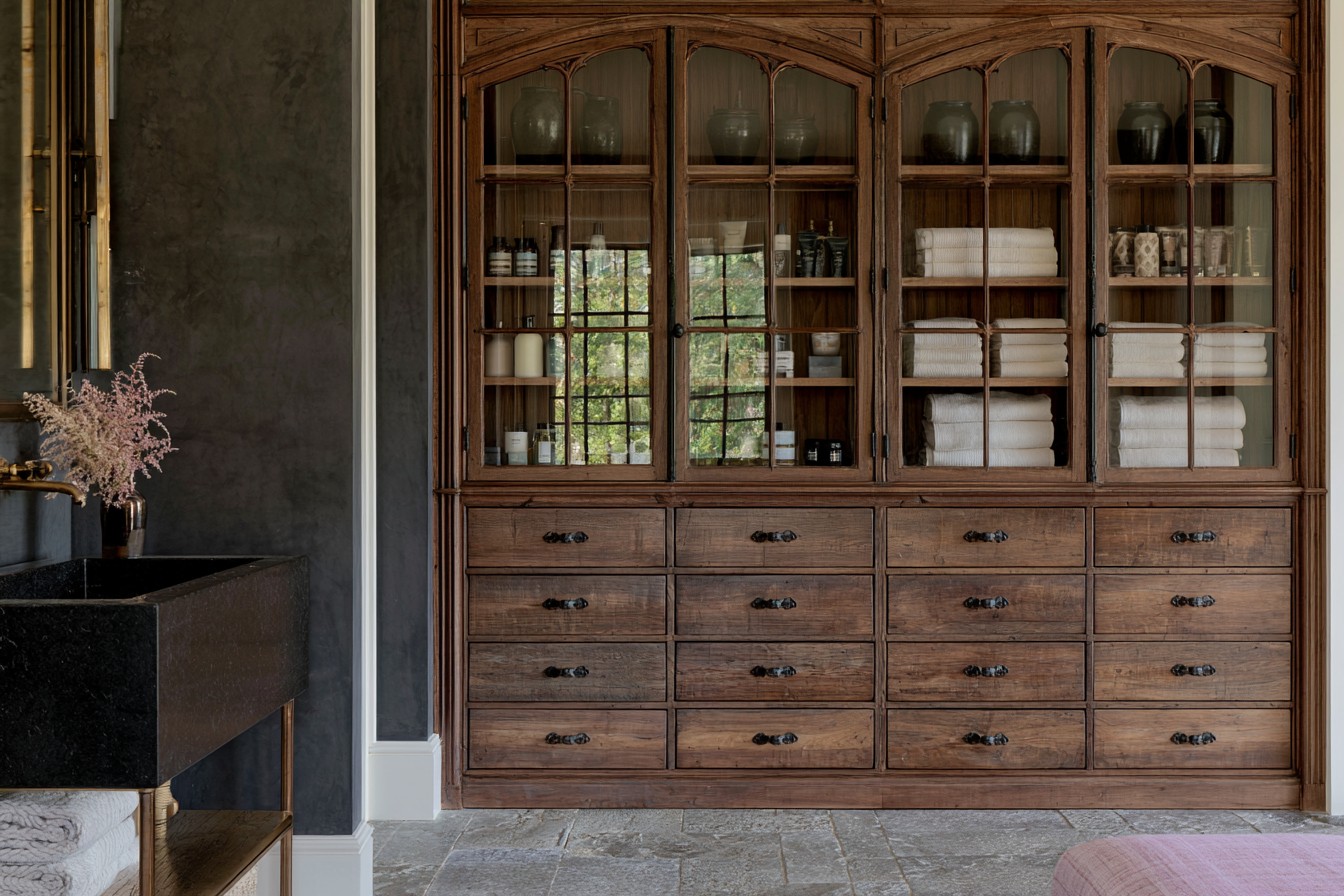
An apothecary-inspired cabinet brings order to cosmetics, grooming tools, first-aid items, and extra toiletries. Many shallow drawers can be visually appealing, but the interior layout should match what actually needs to be stored. A combination of drawers, adjustable shelves, and one taller compartment will usually be more versatile than identical miniature drawers.
Anchor tall freestanding furniture securely to the wall and keep medication or hazardous products out of children’s reach. Labeling can be subtle, using small metal holders or handwritten cards placed inside the drawers. If using a genuine antique, inspect it for peeling finishes and musty odors before moving it into a humid environment.
11. Refine a Checkerboard Floor with a Dark Border
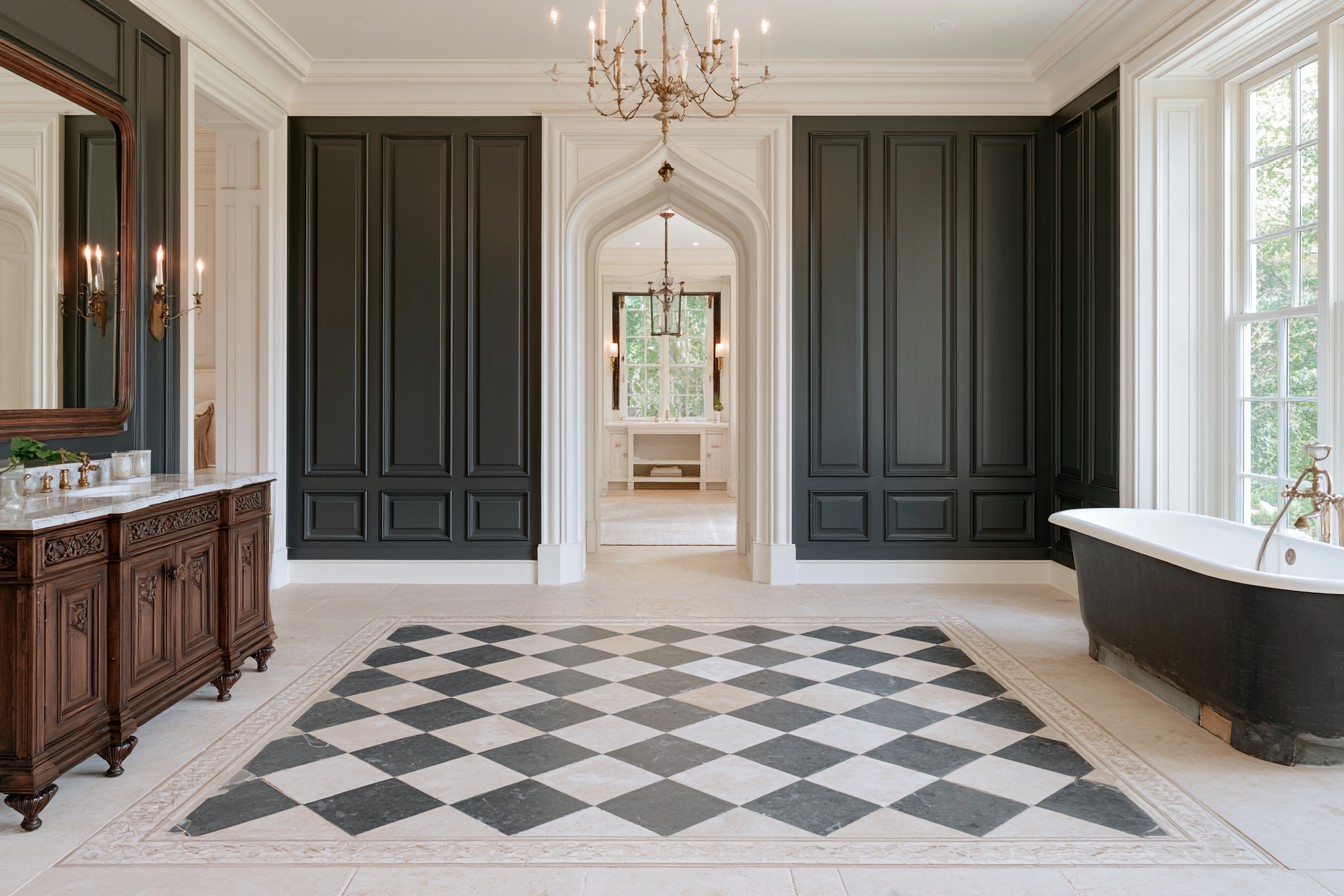
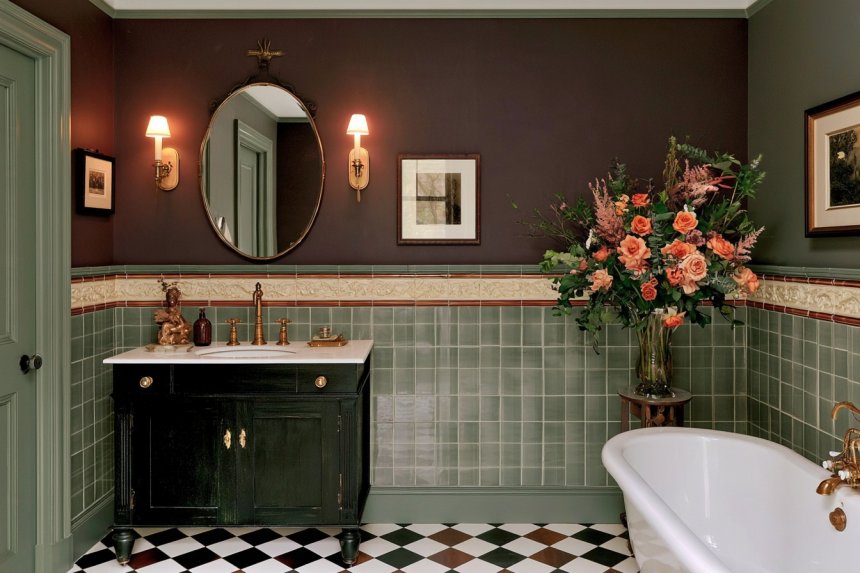
A checkerboard floor supplies historic character through a clear, recognizable pattern. Black and white creates strong contrast, while charcoal and limestone tones produce a softer aged effect. Adding a narrow perimeter border makes the central pattern appear more deliberate and can accommodate rooms whose dimensions do not divide evenly into full squares.
Plan the tile layout from the room’s most visible axis instead of beginning automatically in one corner. Narrow, irregular cuts beside the doorway or bathtub can make an otherwise precise pattern appear unfinished. Matte or softly honed surfaces are usually more forgiving than highly polished stone in wet conditions. Confirm slip resistance and maintenance requirements before installation.
12. Build a Forest Green Scheme with Layered Finishes
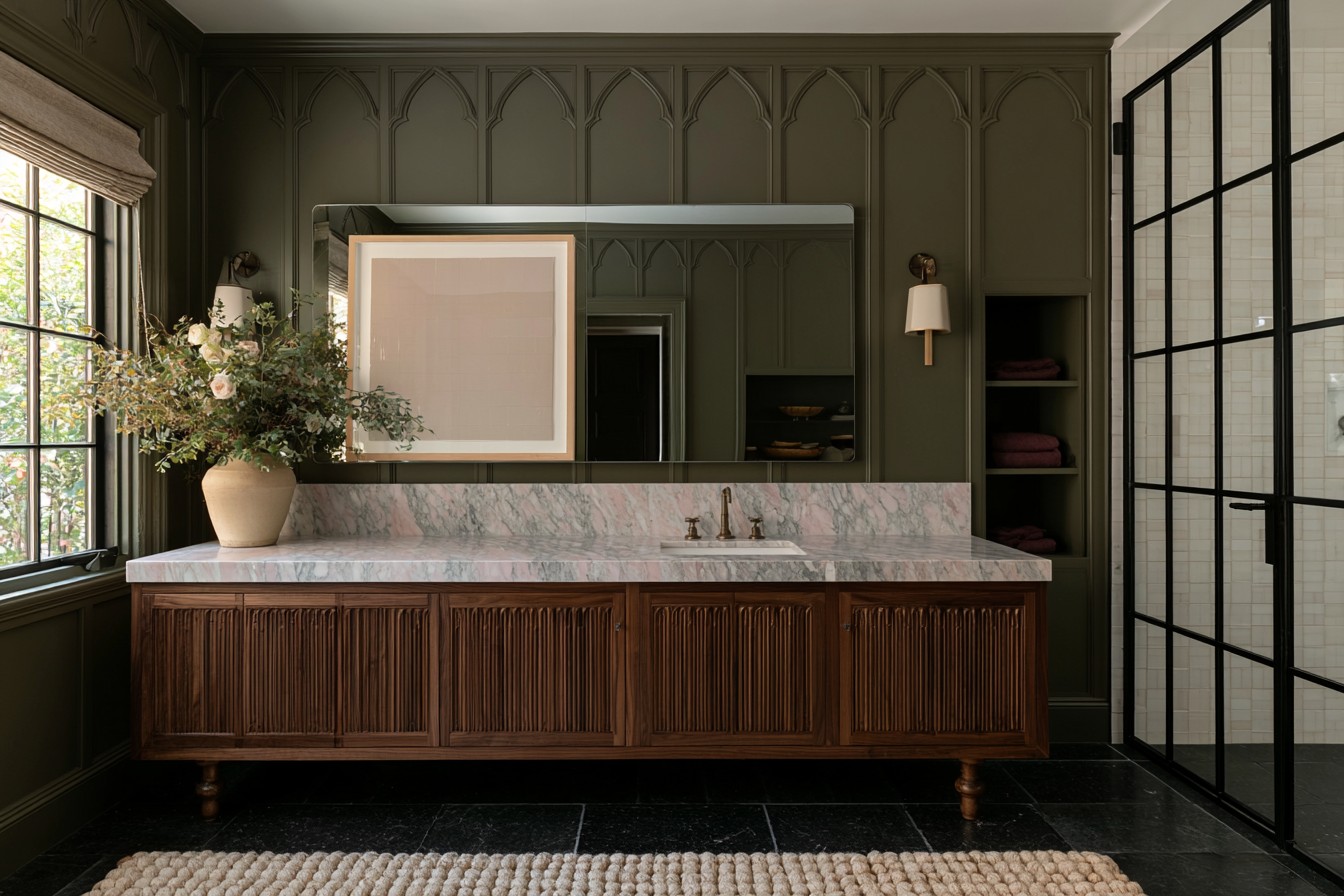
Forest green offers Gothic depth while feeling calmer than an entirely black interior. It can appear on painted walls, glazed tile, cabinetry, or a vanity backsplash. Combine several related green tones rather than relying on one perfectly matched shade. Variations between matte paint, reflective tile, and textiles give the scheme dimension.
Dark wood and aged brass complement green particularly well, but they should be distributed carefully. Repeating the metal finish on the faucet, mirror, and cabinet hardware is usually enough to create cohesion. Pale grout, white sanitaryware, or a lightly veined countertop can provide necessary contrast and keep important surfaces visible during cleaning.
Creating a Gothic Bathroom That Works Every Day
A successful Gothic bathroom begins with ordinary practical decisions: reliable waterproofing, effective extraction, safe flooring, sufficient storage, and useful lighting. Decorative arches, deep colors, carved furniture, and historical patterns should be added around that foundation. This order prevents the theme from interfering with the room’s essential functions.
Choose one or two dominant features and allow the remaining finishes to support them. A cathedral-shaped shower entrance may need only simple dark tile, while a richly patterned floor works best with quieter walls. When every material is suitable for a humid environment and every feature serves a purpose, the bathroom can feel dramatic without becoming difficult to maintain.
MORE IDEAS


Share
What's Your Reaction?
 Like
0
Like
0
 Dislike
0
Dislike
0
 Love
0
Love
0
 Funny
0
Funny
0
 Angry
0
Angry
0
 Sad
0
Sad
0
 Wow
0
Wow
0