11 Practical English Cottage Balcony Projects for Flowers, Seating, and Storage

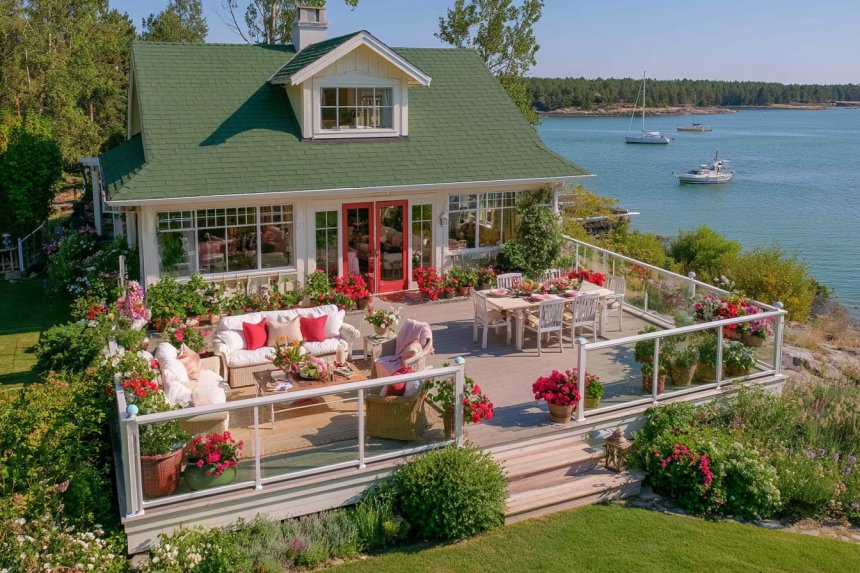
An English cottage balcony can capture the informal character of a country garden within a limited urban space. Layered flowers, aged containers, floral textiles, compact furniture, and useful gardening details establish the style, but every element must remain appropriate for a raised outdoor area. Weight, drainage, wind exposure, railing safety, and unobstructed access are more important than filling every corner.
Begin by measuring the usable floor area and confirming any building or rental restrictions. Check the balcony’s permitted load before adding heavy planters, storage cabinets, or large quantities of growing material. Observe sunlight and wind throughout the day, then select plants suited to those conditions. A smaller collection that grows successfully will create more character than an overcrowded display requiring constant replacement.
1. Layer Cottage Flowers According to Mature Height
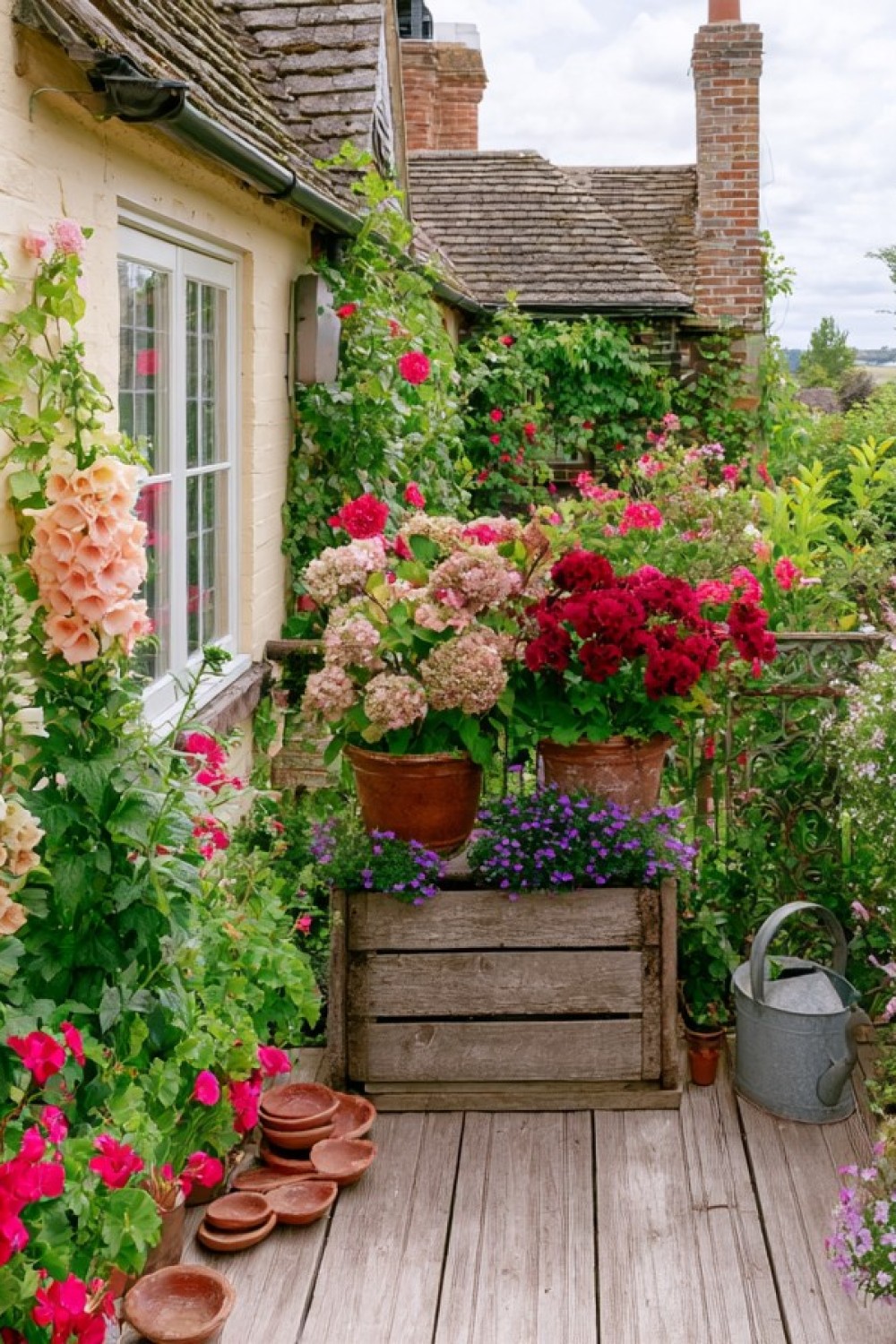
Arrange one or two taller plants near a protected wall, place medium flowering varieties in front, and use trailing plants along the lowest safe level. This creates the depth of a cottage border without requiring a permanent garden bed. Repeat several varieties rather than filling every container with a different plant.
Base spacing on mature dimensions and group plants with compatible sunlight and watering requirements. Tall stems may need discreet support in exposed locations. Keep foliage clear of doors and walking routes, and do not allow containers or trailing growth to reduce the safe height or function of the balcony railing.
2. Construct a Drained Wooden Window Box
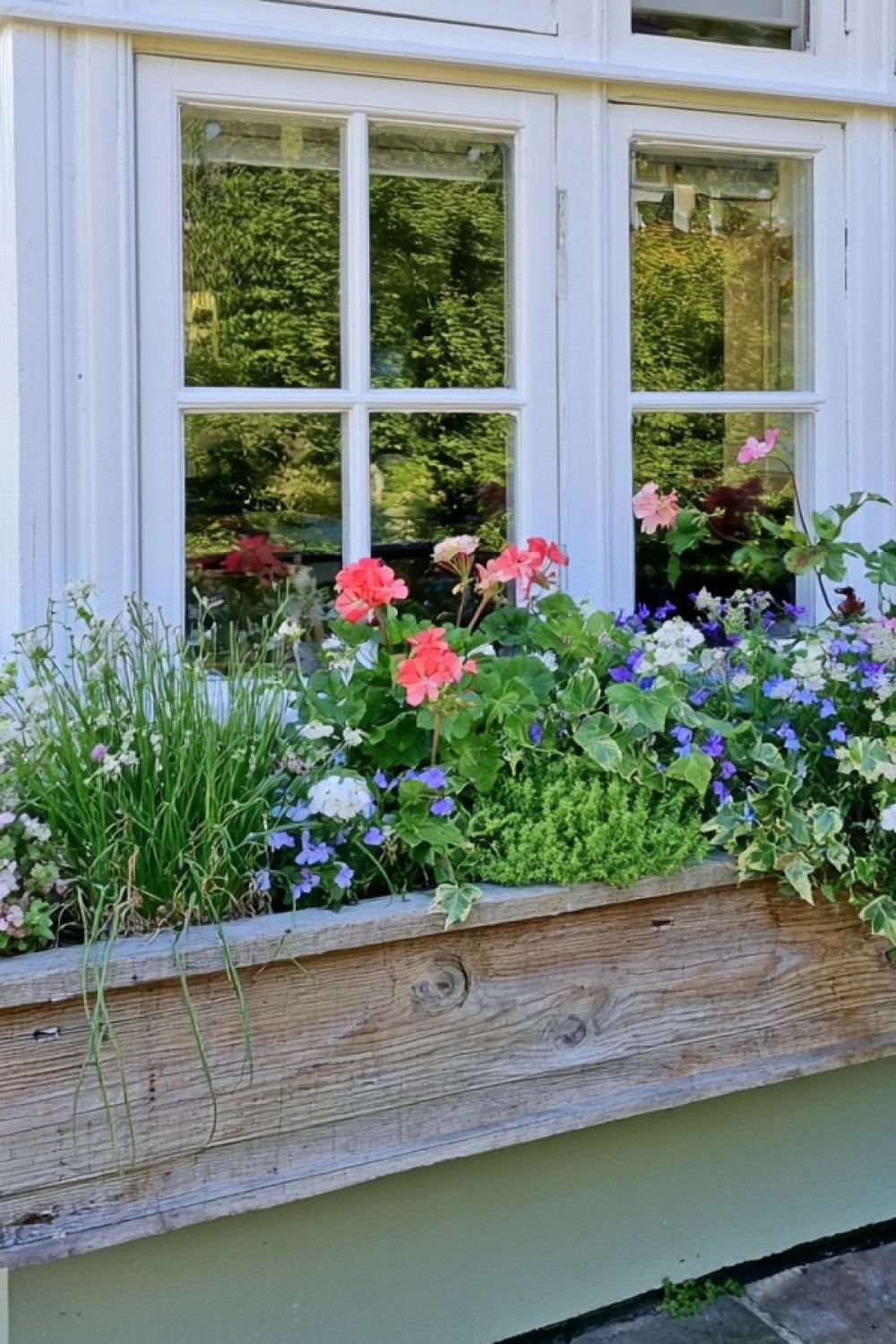
A wooden planter can introduce traditional texture while providing a long growing area for compatible flowers. Use exterior-suitable timber, corrosion-resistant fasteners, and a removable liner that protects the box without preventing drainage. Seal cut ends and raise the container slightly so its base does not remain continuously wet.
Secure the box with brackets designed for the railing and include the full weight of wet growing material and mature plants in the calculation. Mounting it inside the balcony is generally safer than suspending it over public or neighboring space. Direct drainage into controlled trays and empty standing water when appropriate.
3. Choose Folding Bistro Furniture for Flexible Seating
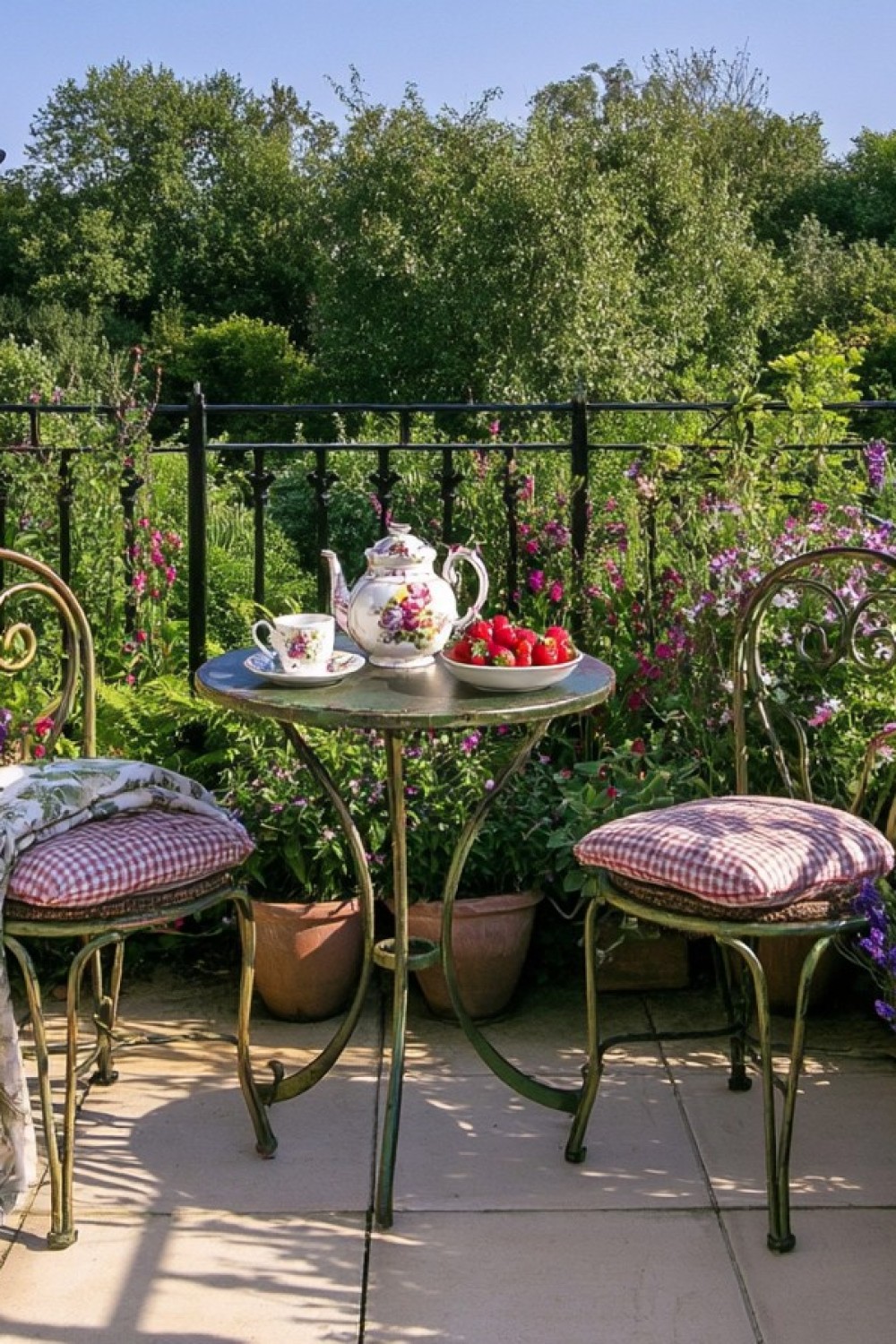
A small round table and two folding chairs provide space for drinks or breakfast while remaining easy to rearrange. Measure the furniture with the chairs pulled out rather than relying only on the table dimensions. There should still be a clear route from the interior door to the railing and any required exit.
Furniture must stand securely on the existing floor without rocking across drainage slopes or decking joints. Folding pieces should lock safely when opened and be secured or moved indoors during strong wind. Inspect painted metal for rust and timber joints for movement at the beginning of each season.
4. Grow a Compact Rose in a Protected Position
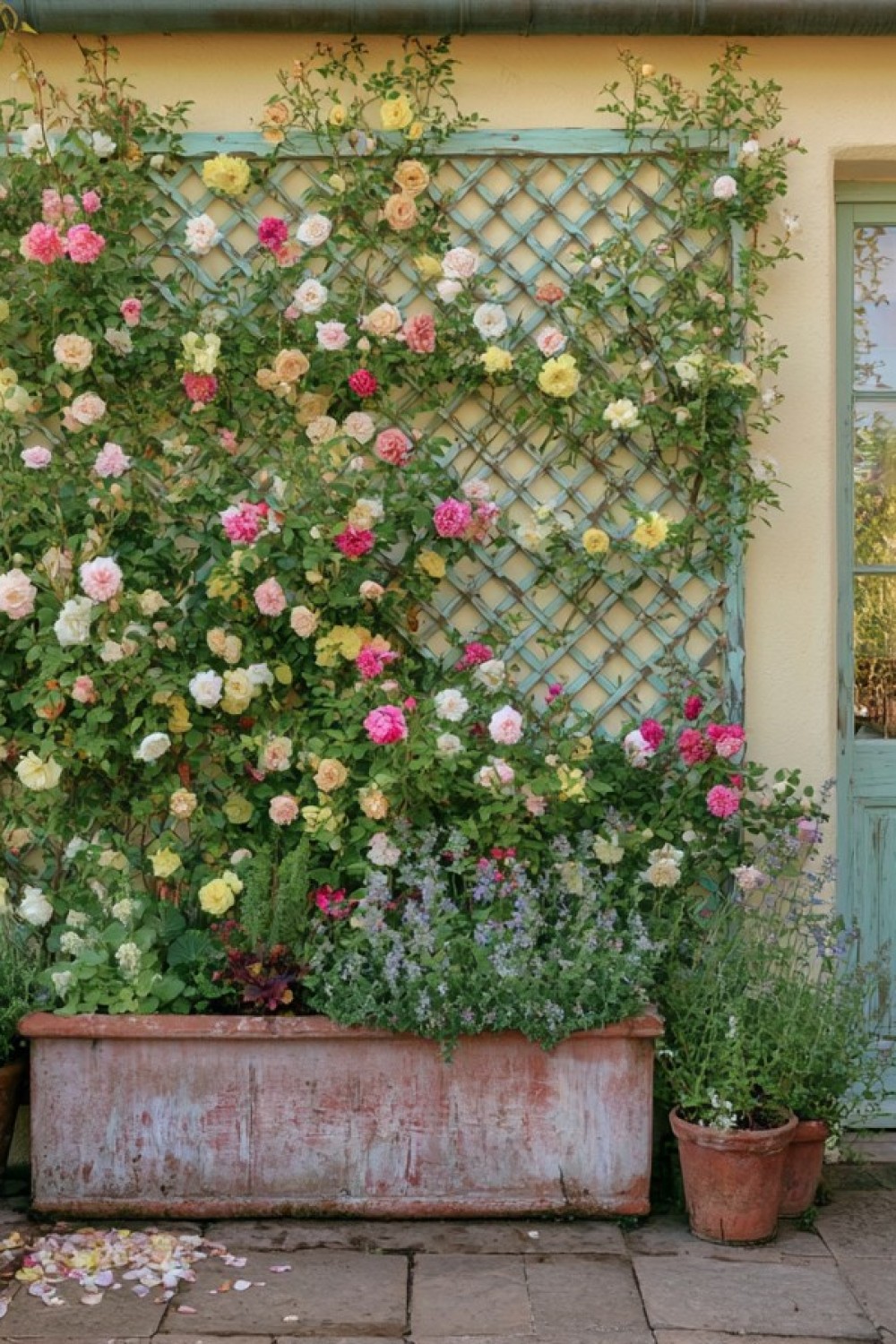
A patio or compact climbing rose can provide a traditional cottage focal point when the balcony receives suitable sunlight. Select a variety according to its mature size, disease resistance, fragrance, and container suitability. A generous pot with drainage gives the roots more stable moisture than a small decorative container.
Position thorny growth away from chairs, doors, and narrow passages. Use a freestanding support or an approved fixing method rather than allowing the plant to enter gutters, windows, or building joints. Pruning, feeding, winter protection, and watering requirements should be understood before purchasing the plant.
5. Combine Terracotta with Sound Aged Metal Containers
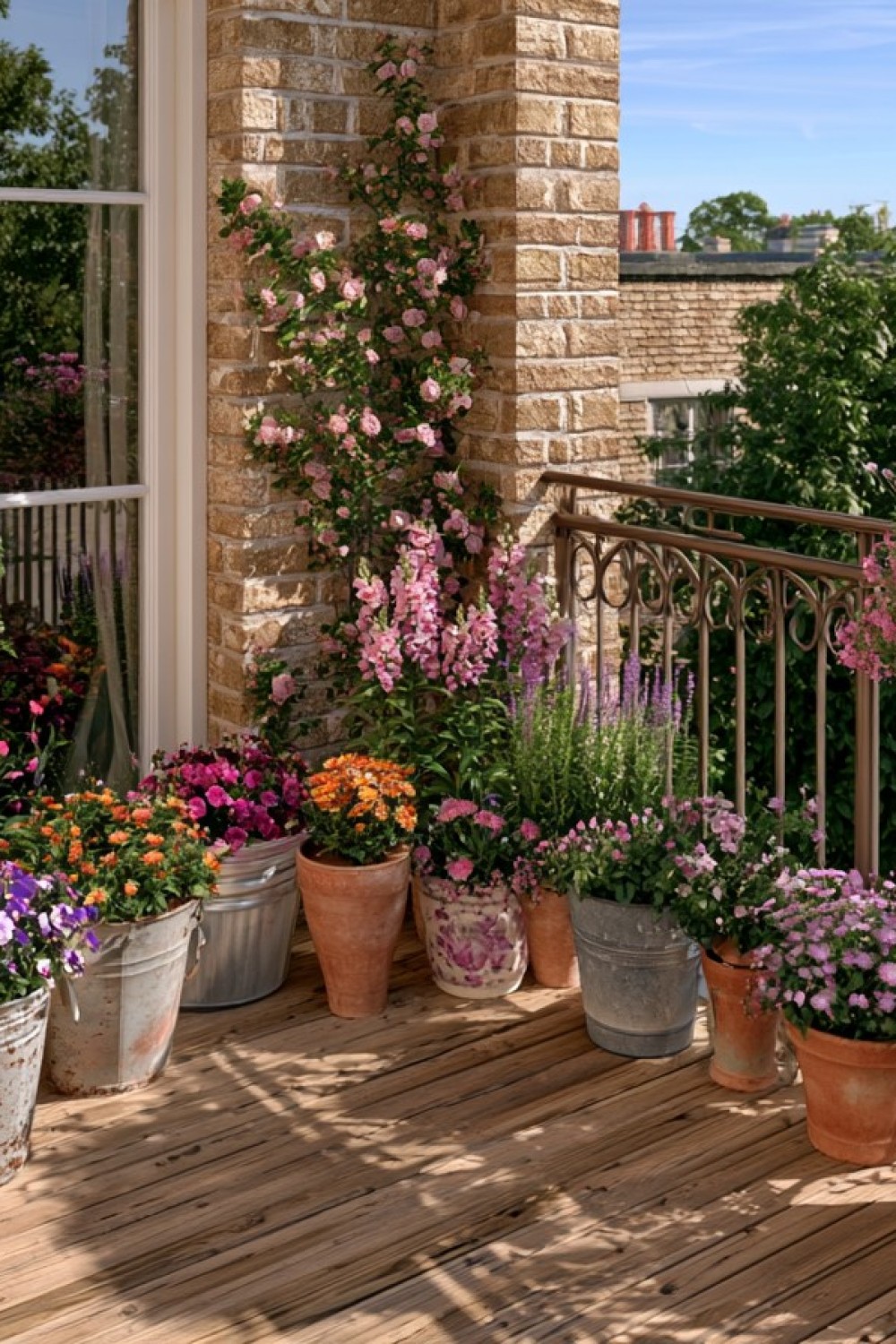
Terracotta and galvanized or painted metal provide the varied, collected appearance associated with cottage gardens. Create cohesion by repeating one pot shape or limiting the range of colors. Place heavier containers at floor level and use smaller pots only on shelves or stands designed to support them.
Terracotta can dry quickly and may crack in freezing conditions, while metal can heat up in direct sun or corrode where its coating is damaged. Ensure every container has drainage and a stable base. Do not reuse vessels with sharp edges or an unknown chemical history, and prevent runoff from staining the balcony below.
6. Grow a Useful Collection of Container Herbs
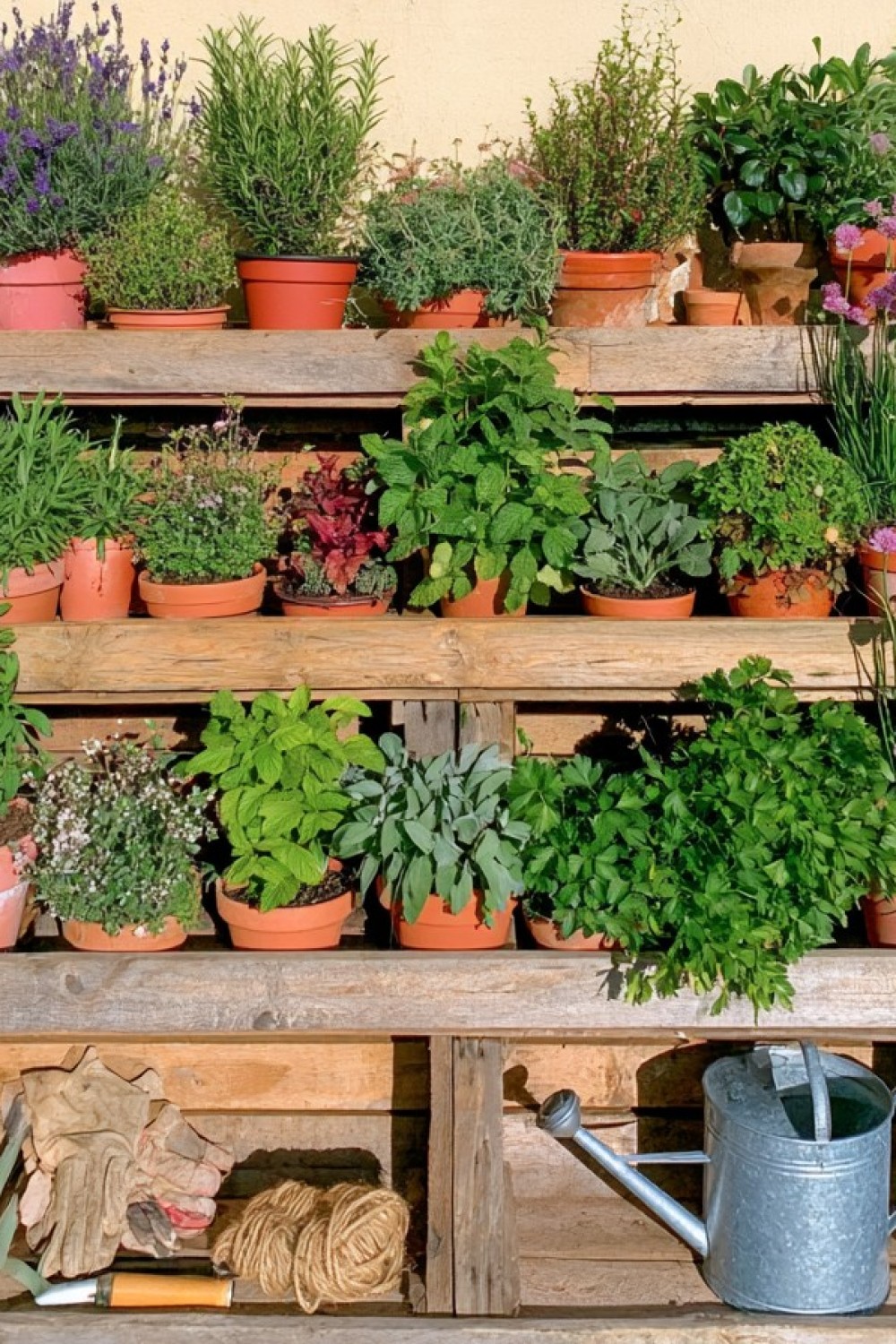
Herbs can add fragrance and texture while remaining useful in the kitchen. Select varieties that suit the balcony’s light and are genuinely used for cooking. Plants with different moisture needs are easier to manage in individual pots than in one shared container. Clear labels prevent confusion as young plants develop.
Use clean containers and growing material intended for edible plants. Identify every herb correctly before consuming it and follow appropriate guidance for feeding and pest management. Keep strong fragrances in moderation near seating and consider sensitivities among household members and regular visitors.
7. Introduce Floral Pattern through Removable Textiles
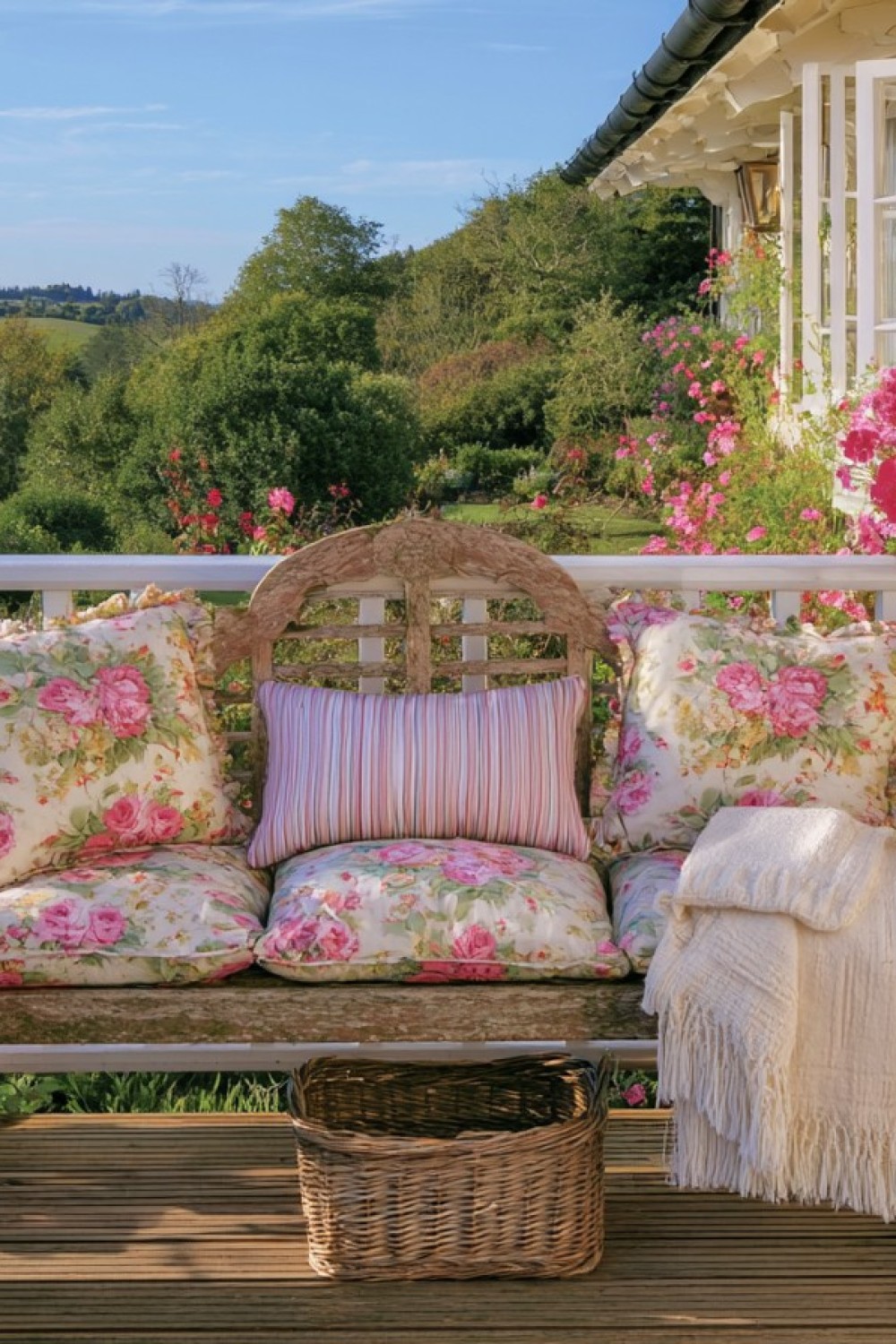
Floral cushions can establish cottage character without adding more planters to a crowded balcony. Select one leading print and combine it with a stripe, check, or plain fabric using related colors. This creates variety while allowing the living flowers to remain the main visual feature.
Use outdoor-rated fabric with removable washable covers. Even weather-resistant cushions should be stored during heavy rain and strong wind. Make sure ties and loose fabric cannot catch on railings or nearby plants. Dry every textile fully before placing it in a storage container.
8. Add Privacy with a Wind-Safe Partial Screen
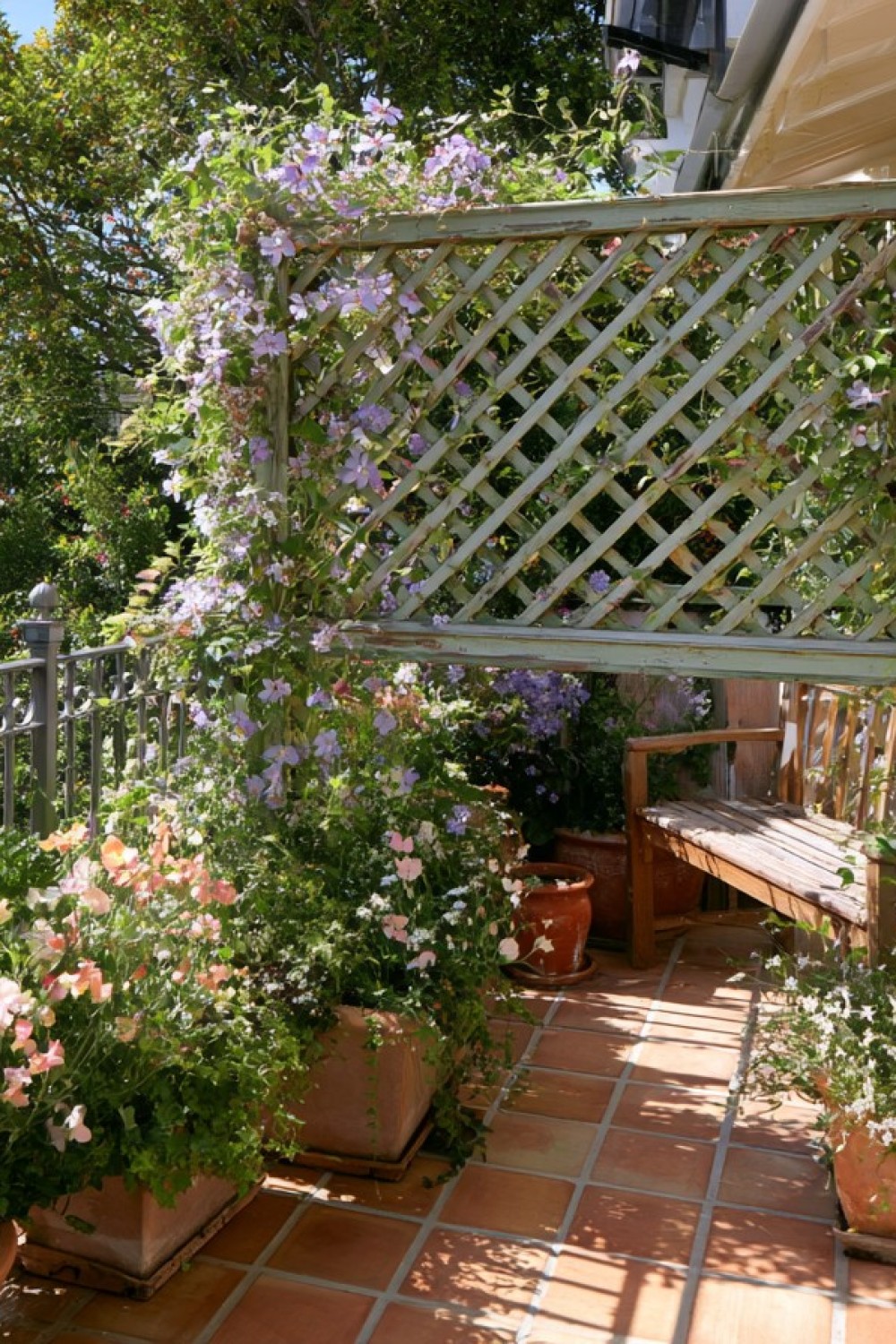
A partially open timber lattice or exterior-rated woven panel can improve privacy without stopping all airflow. Screen only the required sightline instead of enclosing the entire balcony. A restrained stain or paint color can connect the structure to furniture and containers while allowing plants to remain visible.
Screens experience substantial wind pressure and should never be attached casually to a railing. Confirm building rules and have the support method assessed where necessary. The screen must not reduce railing safety, block drainage, obstruct required access, or create a climbable arrangement for children.
9. Weather-Proof Vintage Storage Before Moving It Outdoors
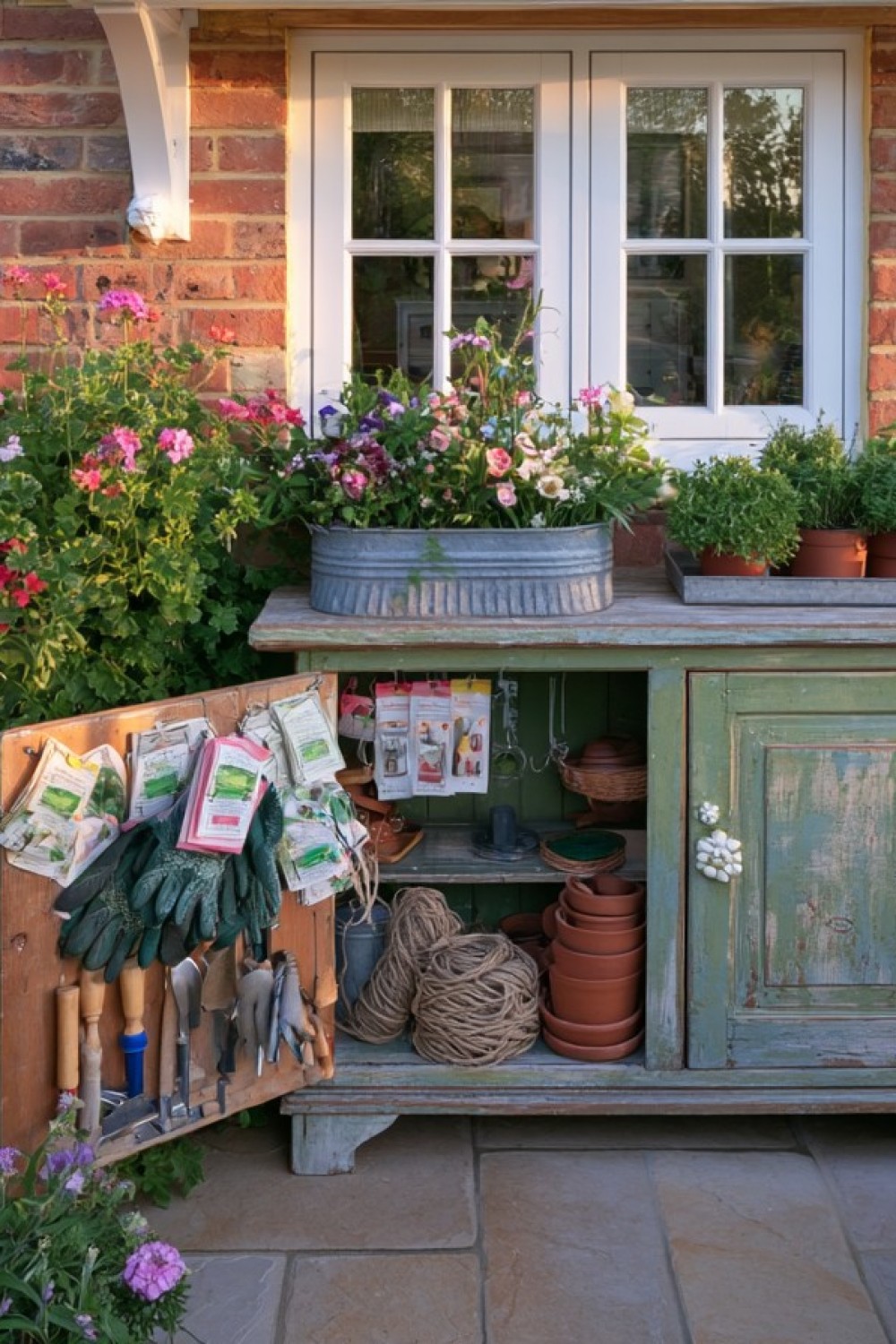
A narrow vintage cabinet can store hand tools, empty pots, and durable gardening supplies. Before outdoor use, inspect it for rot, loose joints, peeling finishes, unstable doors, and insect damage. Not all indoor furniture can tolerate changing humidity and rain, even after a surface coating is applied.
Raise the cabinet above standing water, protect exposed edges, and anchor tall furniture securely. Do not block drains, utility access, or inspection points behind it. Garden chemicals should remain in their original labeled containers and be stored securely away from children, pets, food, and intense heat.
10. Keep the Potting Area Compact and Easy to Clean
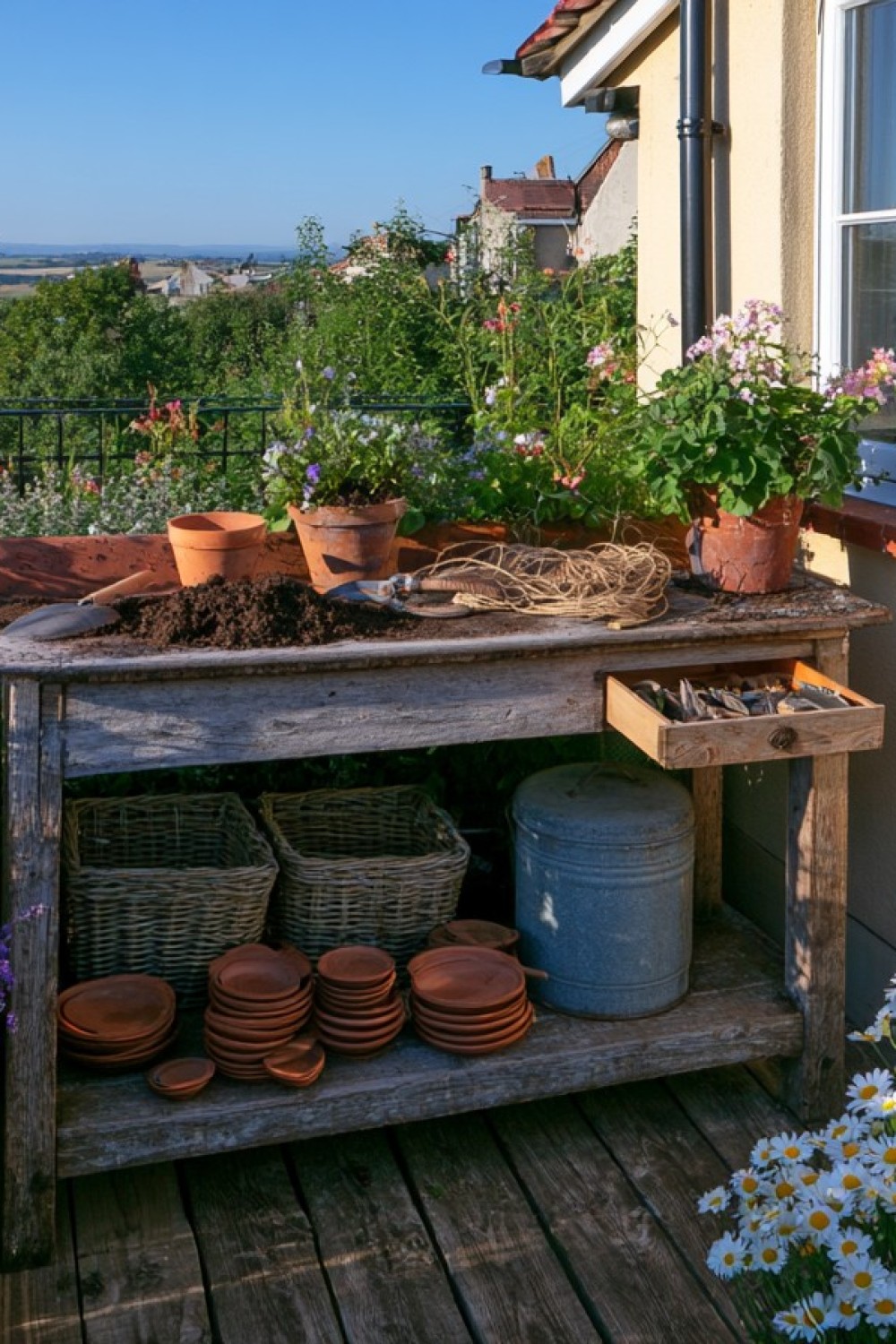
A fold-down work surface or narrow console can provide a dedicated place for repotting without becoming permanent clutter. Keep a washable tray on the surface to contain loose growing material and store only frequently used hand tools nearby. A small covered container can hold modest quantities of potting mix.
The worktop and any shelves must be secured appropriately and should not project into the main walkway. Sweep spilled material promptly so it does not enter drains or create a slippery surface. Sharp tools, fertilizers, and plant-care products require controlled storage rather than open decorative display.
11. Plan Seasonal Flowers as a Rotating Display
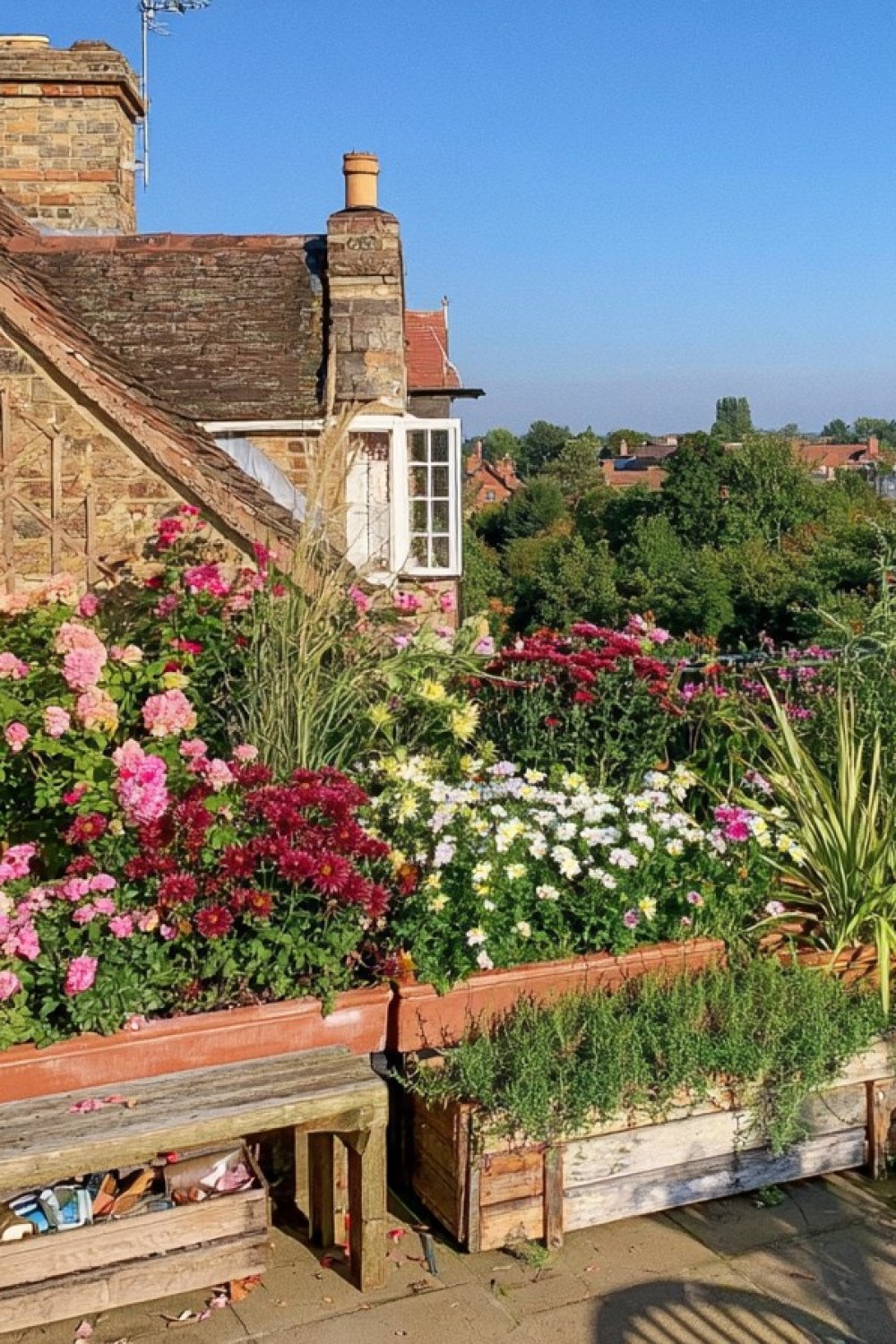
Reusable planters can support a sequence of seasonal displays without requiring the entire balcony to be redesigned. Choose a limited spring, summer, or autumn palette and repeat it across several containers. Include foliage plants that maintain structure before and after the main flowering period.
Record which plants perform well in the balcony’s conditions and use those observations when planning the next season. Remove diseased material, clean containers, and refresh growing material appropriately before replanting. Do not keep unsuccessful plants solely to preserve the original arrangement.
Let Restraint Create the Cottage Character
An English cottage balcony does not need to contain every traditional garden feature. A carefully layered flower display, compact seat, useful herb collection, and a few weathered materials can communicate the style while leaving the space comfortable. Repetition of plants and containers creates more unity than a large number of unrelated decorations.
Review the arrangement as plants grow and weather conditions change. Maintain clear access, secure anything affected by wind, and relocate containers that become too heavy or crowded. When safety and plant care guide the design, the balcony can retain its informal character without becoming difficult to use.
MORE IDEAS


Share
What's Your Reaction?
 Like
0
Like
0
 Dislike
0
Dislike
0
 Love
0
Love
0
 Funny
0
Funny
0
 Angry
0
Angry
0
 Sad
0
Sad
0
 Wow
0
Wow
0