13 Low-Cost Patio Projects for a More Comfortable Outdoor Space

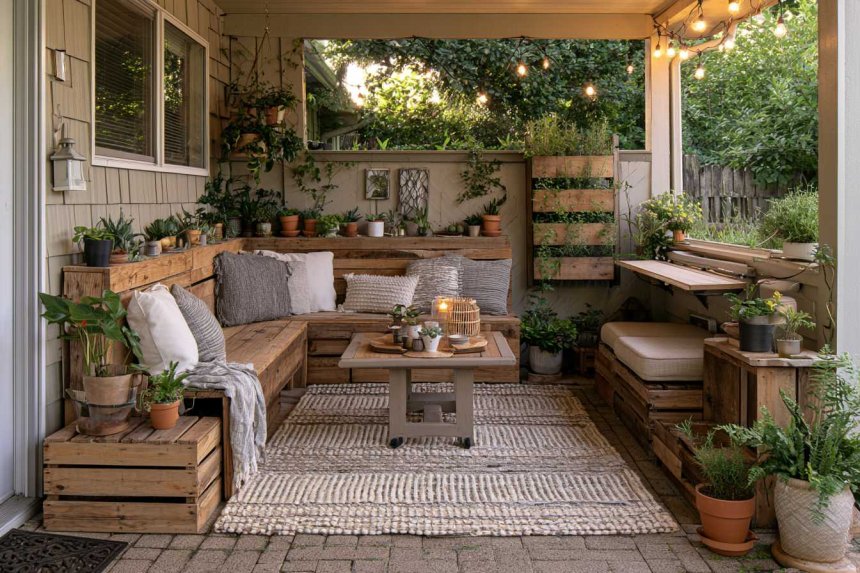
A patio makeover does not have to begin with new furniture or an expensive construction project. Repairing what already exists, improving the layout, and adding a few carefully selected DIY elements can make an outdoor area more comfortable at a manageable cost. The most useful upgrades usually solve a specific problem, such as insufficient seating, exposed storage, limited planting space, or the lack of a practical surface for meals and drinks.
Before starting, evaluate the condition of the patio floor, railing, drainage, and existing furniture. Materials used outdoors must tolerate sunlight, rain, temperature changes, and repeated cleaning. Establish a budget for essential hardware and protective finishes before purchasing decorative accessories. The following projects can be adapted to different patio sizes, but each should be planned according to the available space and local weather conditions.
1. Fit a Wooden Bench into an Underused Corner
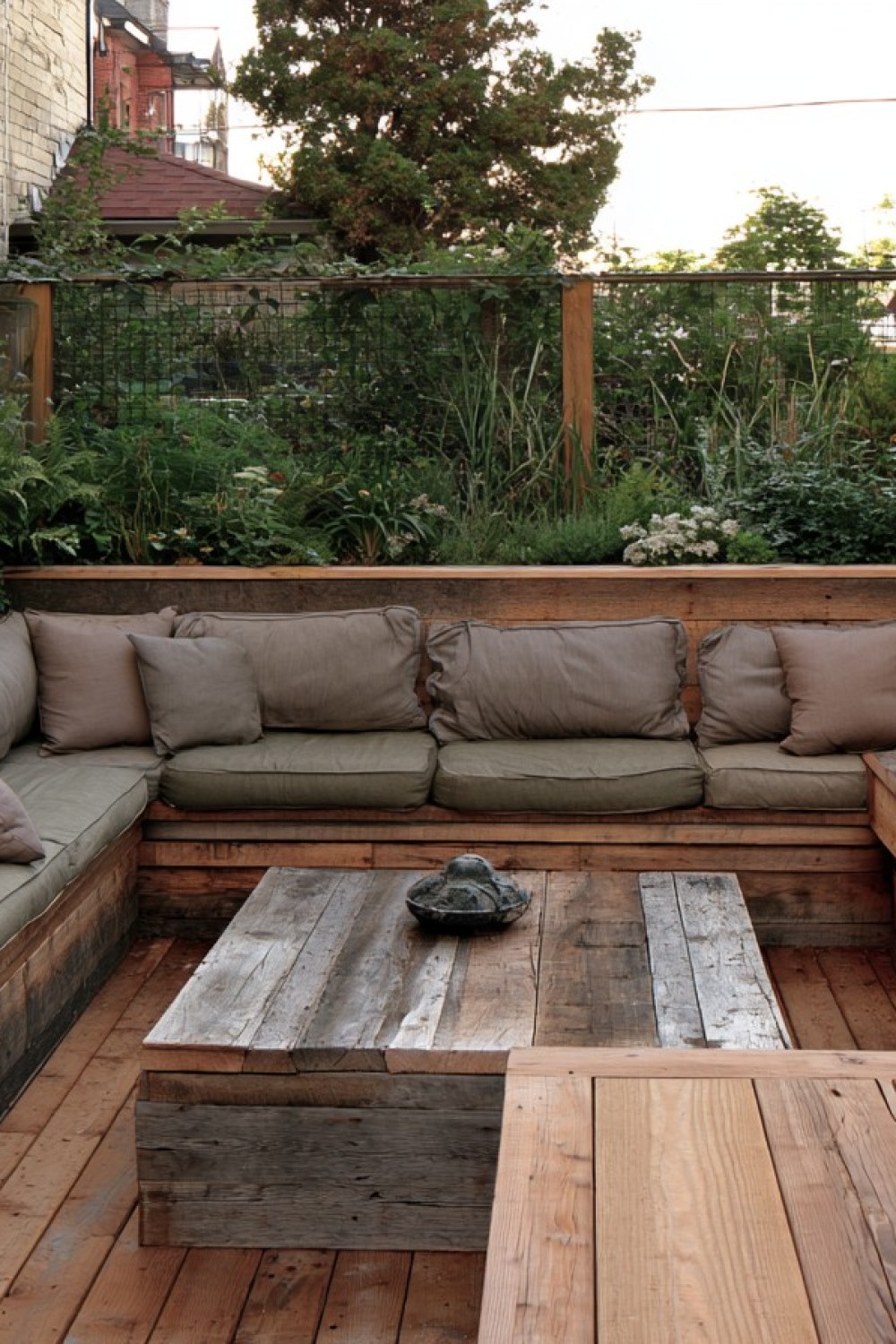
A corner bench can accommodate several people while occupying less open floor area than separate chairs. Constructing the frame to follow two adjoining walls also leaves the center of the patio available for circulation. Measure the space carefully and keep the seat depth around a comfortable dining or lounge proportion rather than making it so deep that extra cushions are required for support.
Use wood and fasteners suitable for exterior conditions, and seal cut edges before assembly. The frame must remain level and stable on the patio surface without blocking drainage. If the bench is attached to a wall, confirm that the structure can accept the fixings and avoid damaging exterior waterproofing. Removable cushion covers will make cleaning and seasonal storage easier.
2. Assemble Crates into Adaptable Outdoor Storage
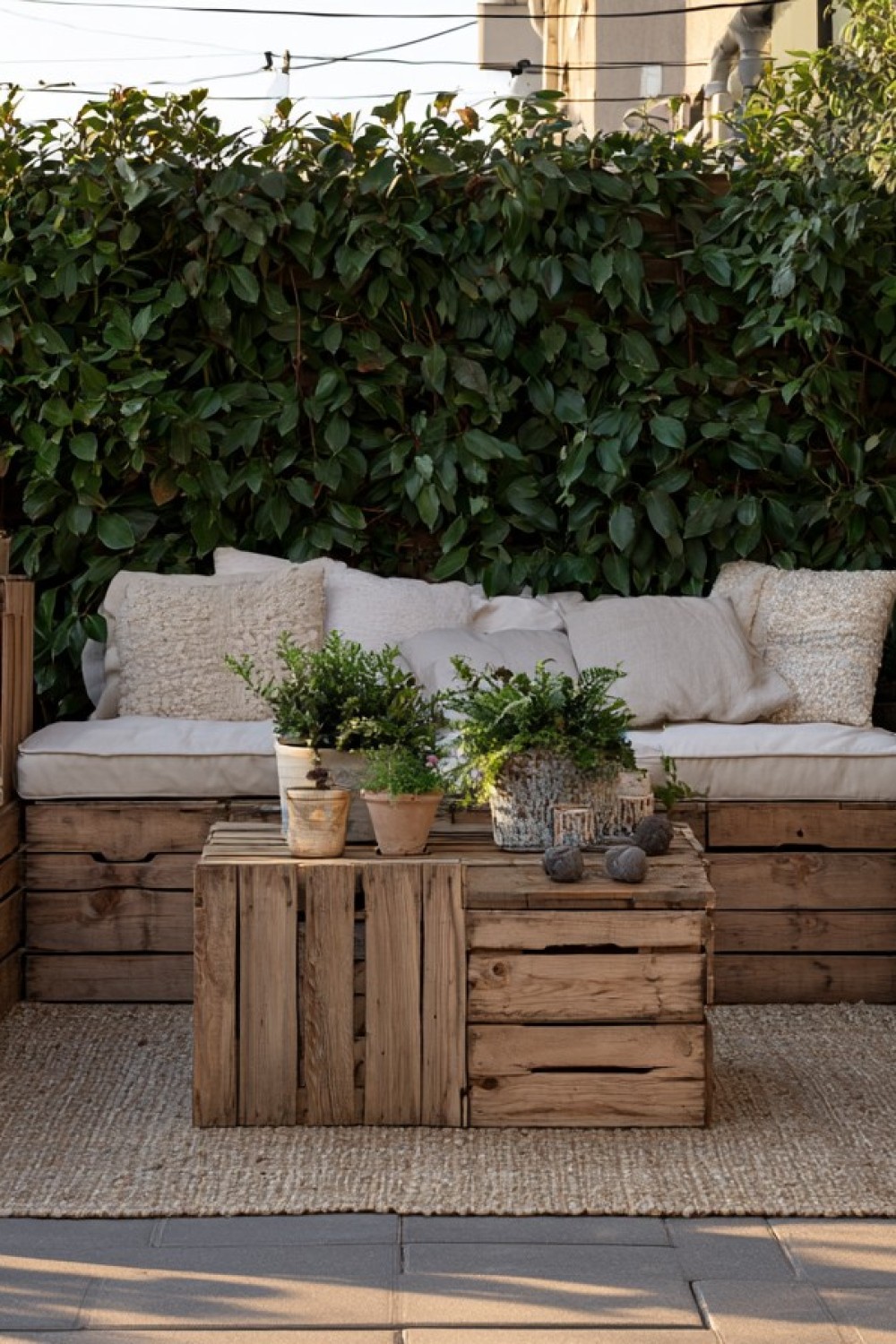
Wooden crates can become low shelving for plant supplies, outdoor tableware, or frequently used gardening tools. Sand rough surfaces, arrange the crates in a stable configuration, and connect adjoining units rather than relying on their weight to hold them together. Alternating open and closed sides can provide a combination of display space and visual screening.
Do not use untreated or unidentified shipping crates that may have been exposed to chemicals. Raise wooden units slightly above the floor so water can drain and air can circulate beneath them. Tall arrangements should be anchored against wind and accidental tipping. Store cushions and moisture-sensitive items indoors or inside genuinely weatherproof containers rather than exposed wooden compartments.
3. Install a Fold-Down Table for Flexible Floor Space
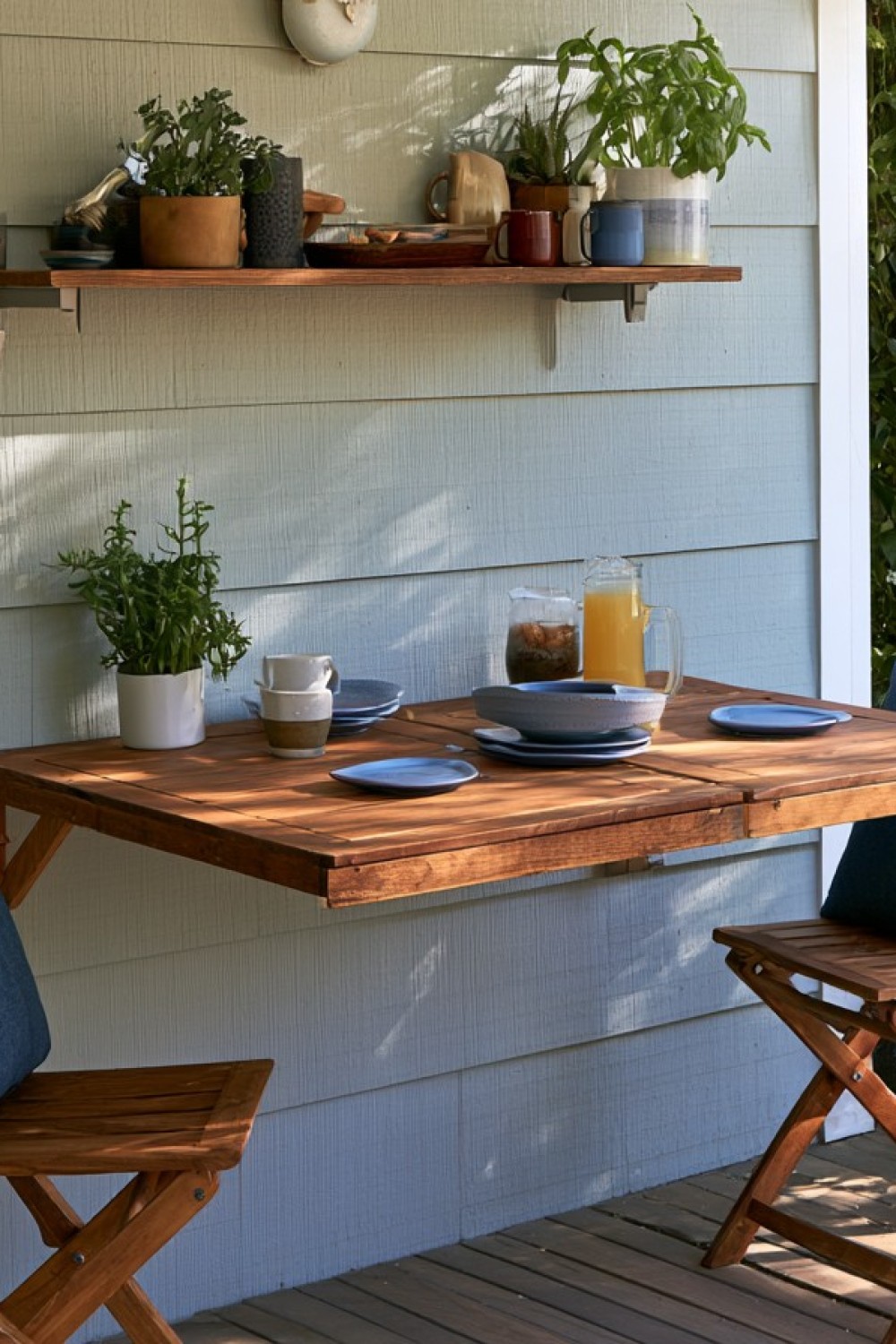
A folding wall table provides a useful surface for drinks, casual meals, or gardening work and can be lowered when the patio needs more room. Choose the table dimensions according to its main purpose. A narrow shelf-like surface may be enough for two people, while dining requires additional depth and knee clearance.
The supporting wall and mounting hardware must be capable of carrying the tabletop and anything placed on it. Do not attach a load-bearing table to decorative cladding without locating suitable structural support. Exterior-rated hinges, brackets, and finishes will reduce corrosion and swelling. Include a secure latch so the table cannot fall open unexpectedly during wind.
4. Grow Frequently Used Herbs Vertically
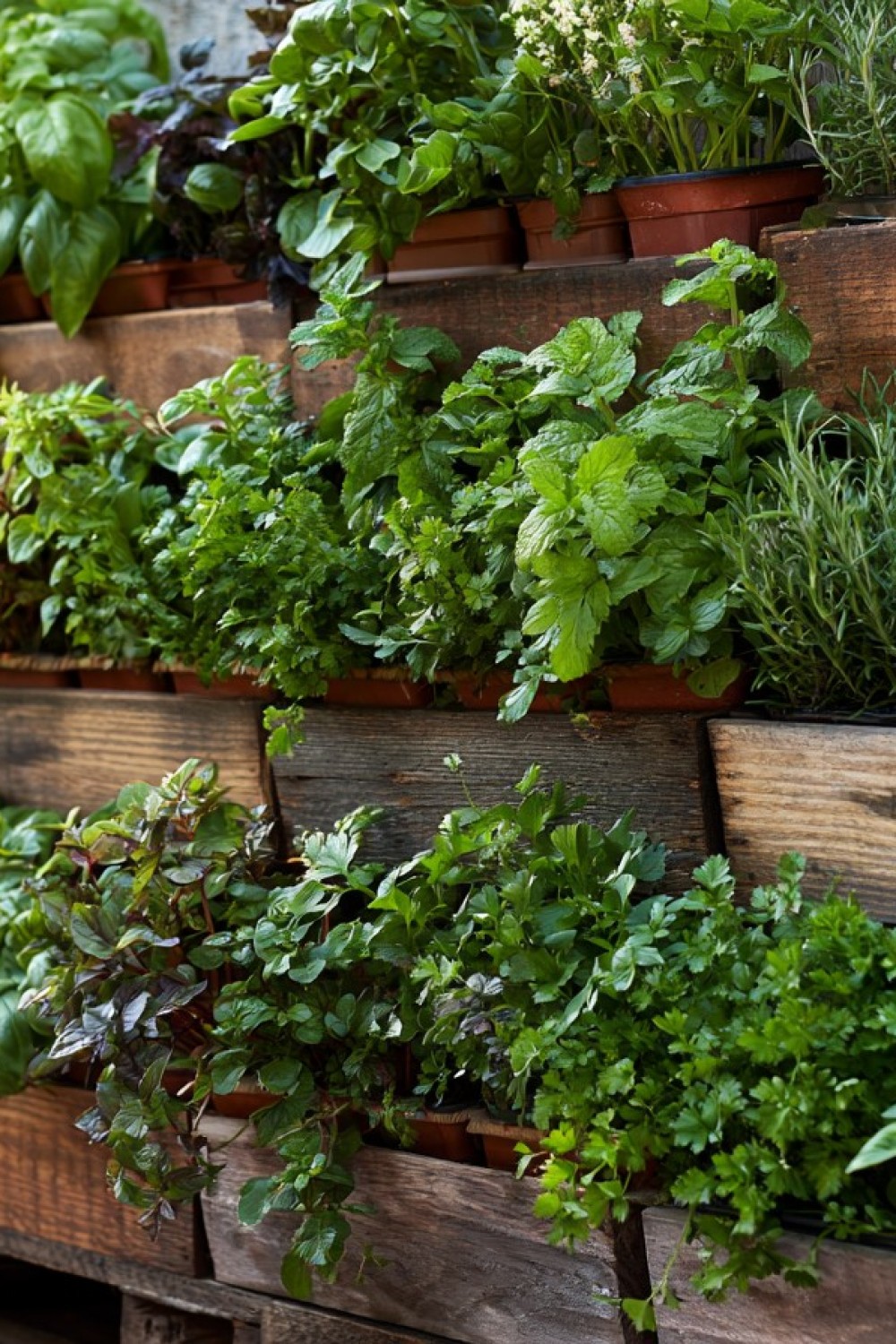
A vertical herb garden uses wall space while keeping the floor available for seating. Select herbs according to the patio’s actual sunlight rather than appearance alone. Place varieties that prefer drier soil toward the top and plants requiring more consistent moisture where they can be checked and watered conveniently.
Every container needs drainage, but runoff should not stain walls or drip onto neighboring property. Add removable trays where appropriate and leave an air gap between planters and the building surface. Wet soil becomes surprisingly heavy, so attach the support system with appropriate exterior hardware. Confirm any balcony or rental restrictions before drilling into walls or railings.
5. Restore Existing Furniture with the Correct Finish
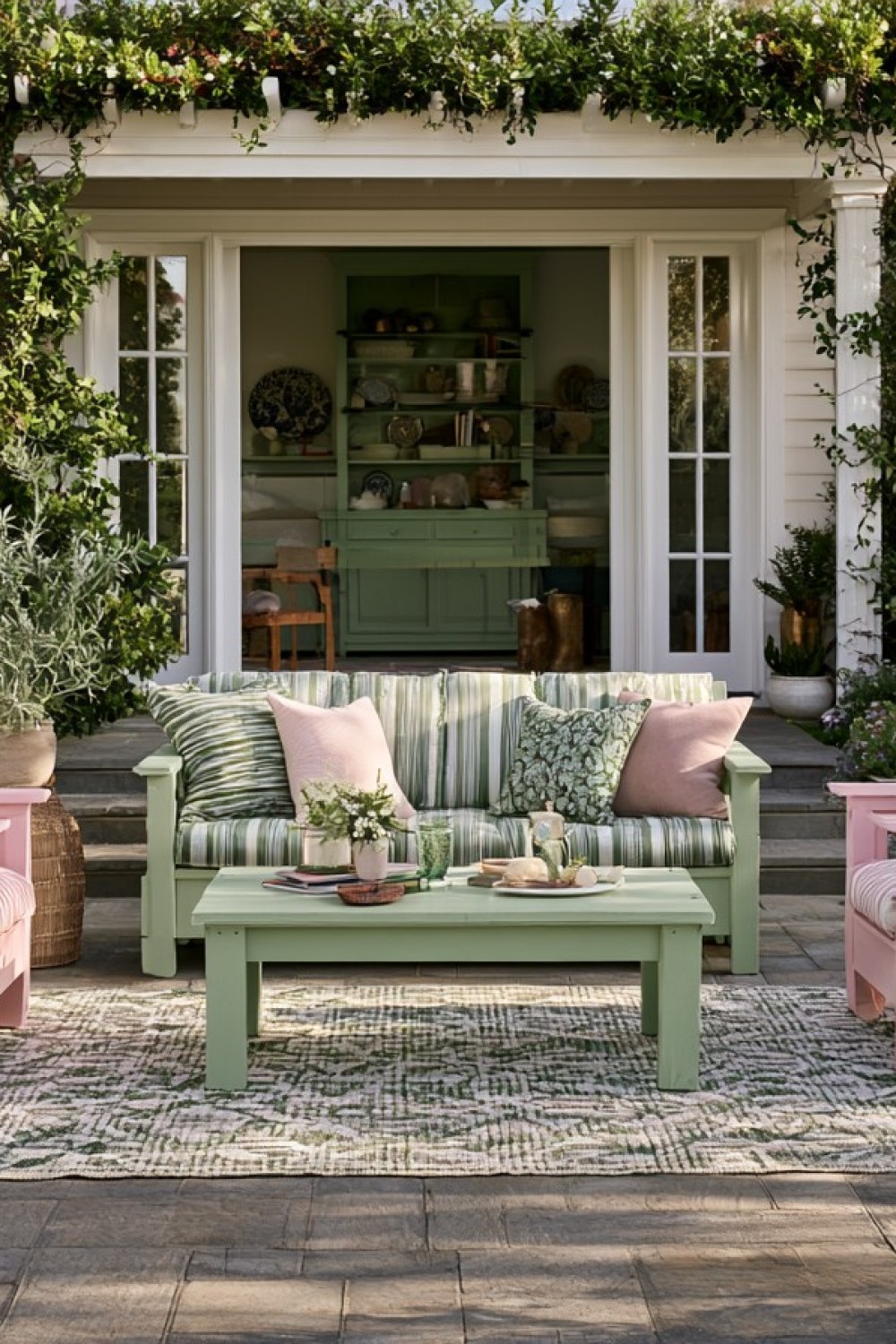
Repainting sound furniture is often more economical than replacing it. Begin by tightening joints, removing loose coatings, treating rust, and repairing damaged surfaces. Primer and paint should be selected for the furniture material—wood, steel, aluminum, and plastic do not require identical preparation. A well-prepared surface usually lasts longer than several hurried coats of decorative paint.
Work in a ventilated area and follow the product’s drying and recoating instructions. Allow the finish to cure fully before placing cushions or heavy objects on the furniture. A restrained palette can make mismatched secondhand pieces feel connected, while one contrasting chair or table may add interest without requiring a completely matched set.
6. Add Planting Space with Secure Railing Boxes
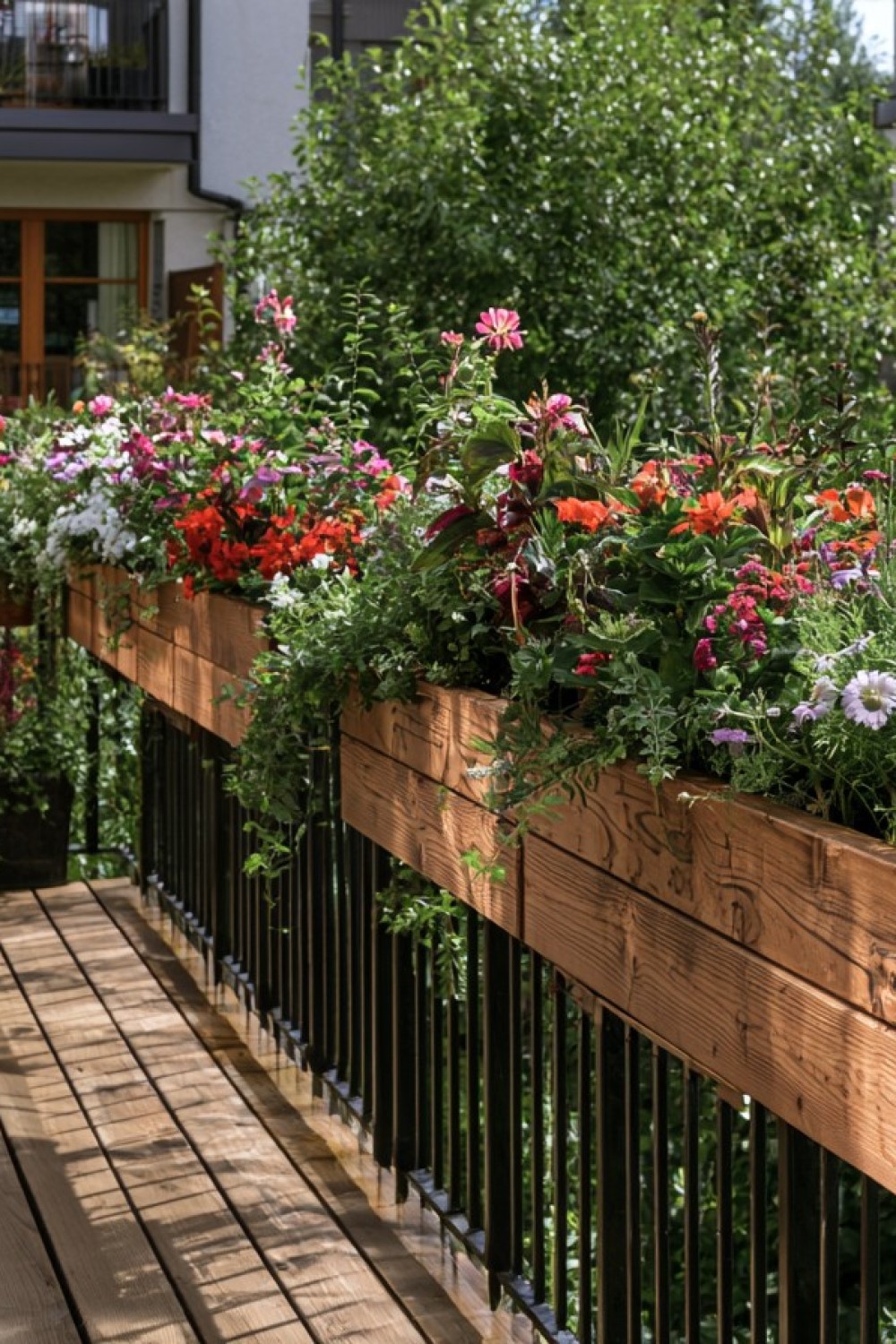
Narrow railing planters introduce greenery without taking space from the patio floor. Shallow-rooted flowers, trailing plants, compact herbs, and seasonal foliage are generally easier to manage than large shrubs. Repeat a limited selection of plants across several containers to create a more cohesive display and simplify watering.
Planters must be attached with purpose-made brackets and secured against wind or accidental displacement. They should not reduce the railing’s safe height, overload it, or create falling-object risks. Consider the combined weight of the container, saturated soil, and mature plants. Position drainage so water does not fall onto pedestrians, furniture, or property below.
7. Define the Seating Area with a Painted Floor Pattern
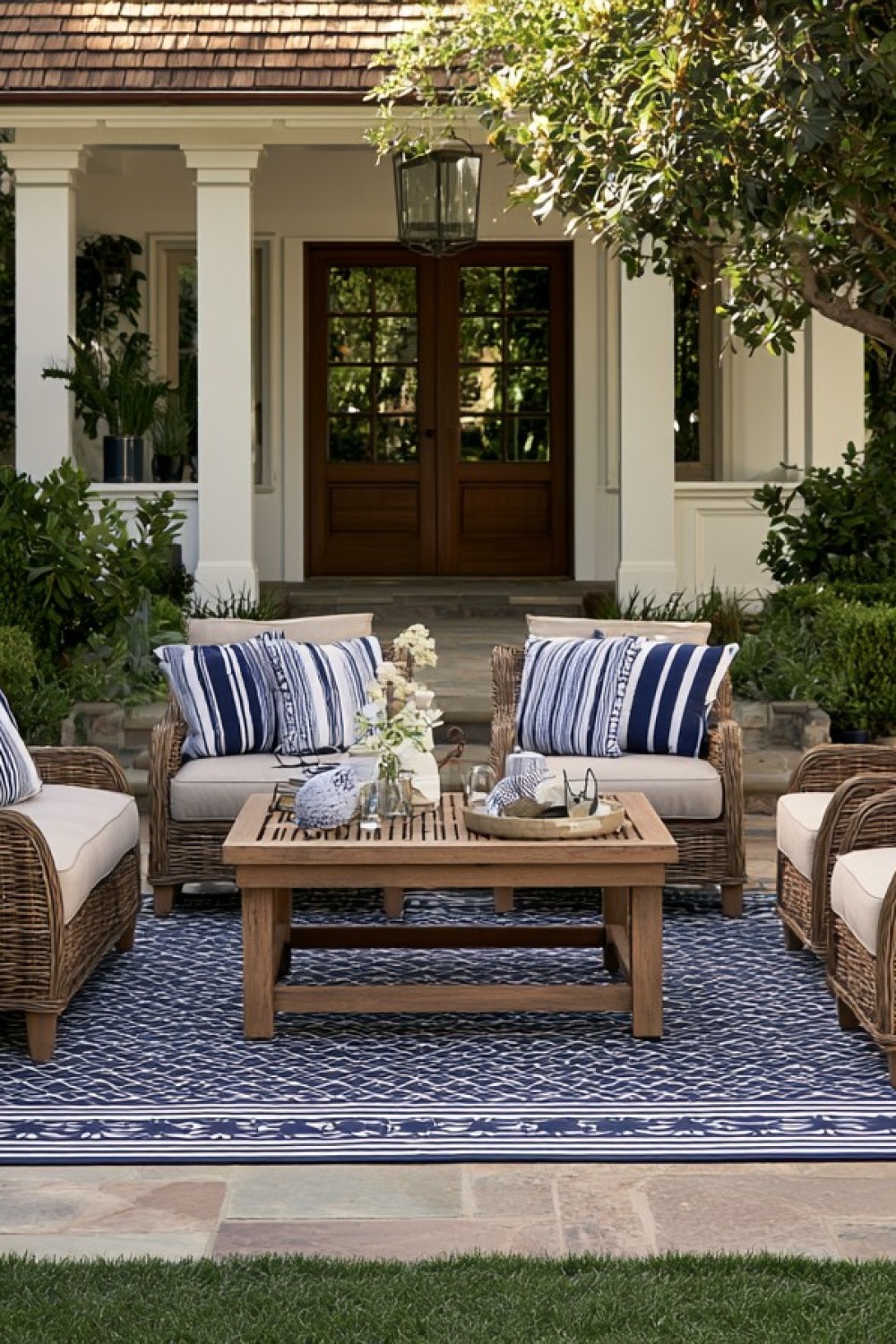
A painted floor design can create the effect of an outdoor rug without introducing fabric that needs to be dried or stored. Simple borders, broad stripes, or repeated geometric shapes are easier to mark accurately than highly detailed patterns. Use painter’s tape and a measured centerline to keep the design aligned with the main seating arrangement.
This treatment is appropriate only for a sound, clean surface and paint approved for the specific flooring material. Moisture trapped beneath an unsuitable coating can lead to peeling. Choose a finish intended for exterior foot traffic and consider its slip characteristics when wet. Test a discreet section first, particularly on rented or previously sealed surfaces.
8. Convert a Suitable Pallet into a Low Coffee Table
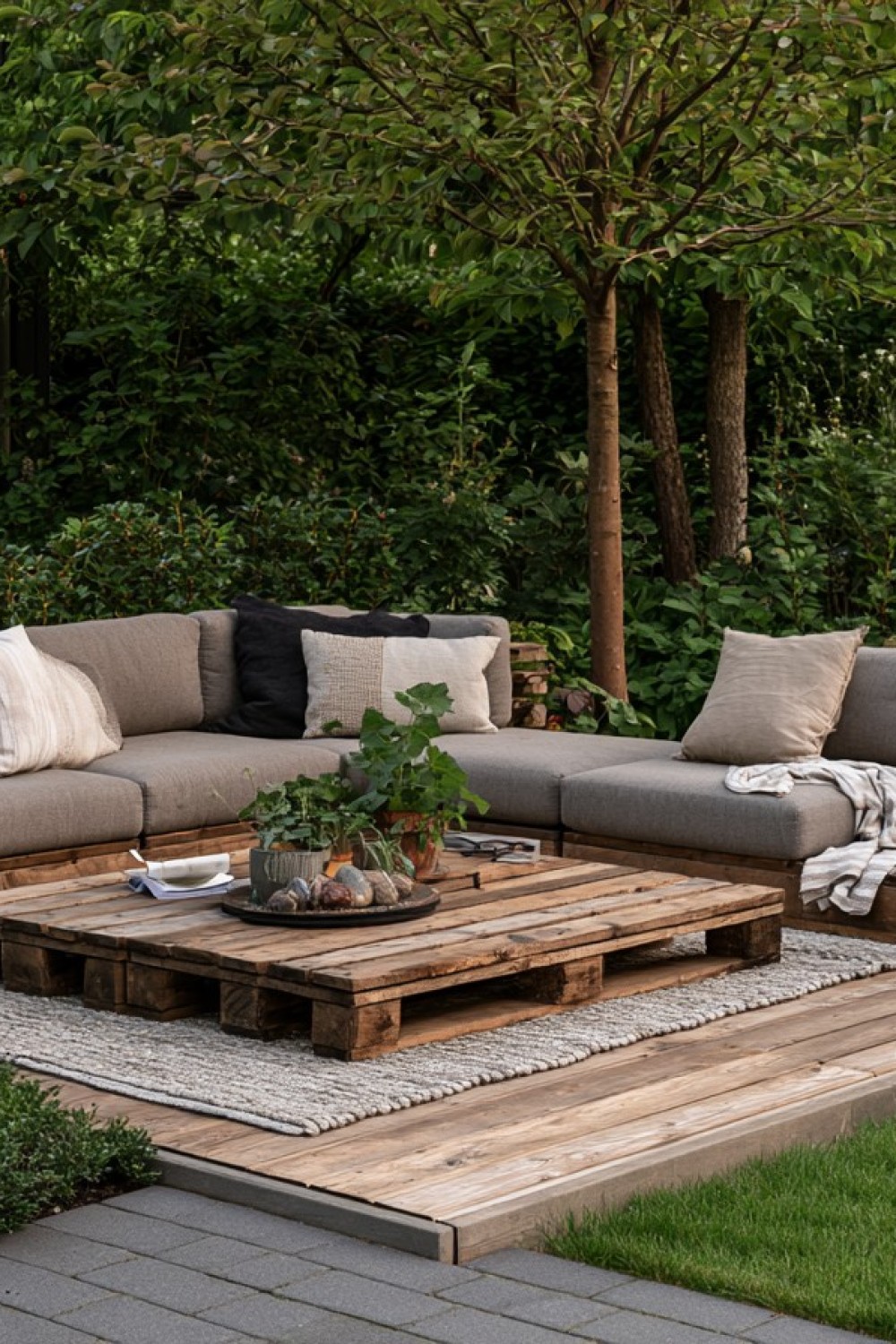
A low pallet table can suit informal seating and provide space for trays, books, or drinks. Select only clean timber with a known history and an appropriate treatment mark; avoid stained, strongly scented, or chemically treated pallets. Disassemble and rebuild the wood when necessary rather than accepting gaps and rough edges that make the original pallet inconvenient as furniture.
Remove protruding nails, sand every contact surface, and reinforce the frame before applying an exterior finish. Lockable casters make the table movable, but they must be rated for outdoor use and the finished weight. If adding a glass top, use properly supported safety glass with finished edges rather than an improvised sheet.
9. Use a Slim Shelf to Organize a Plant Collection
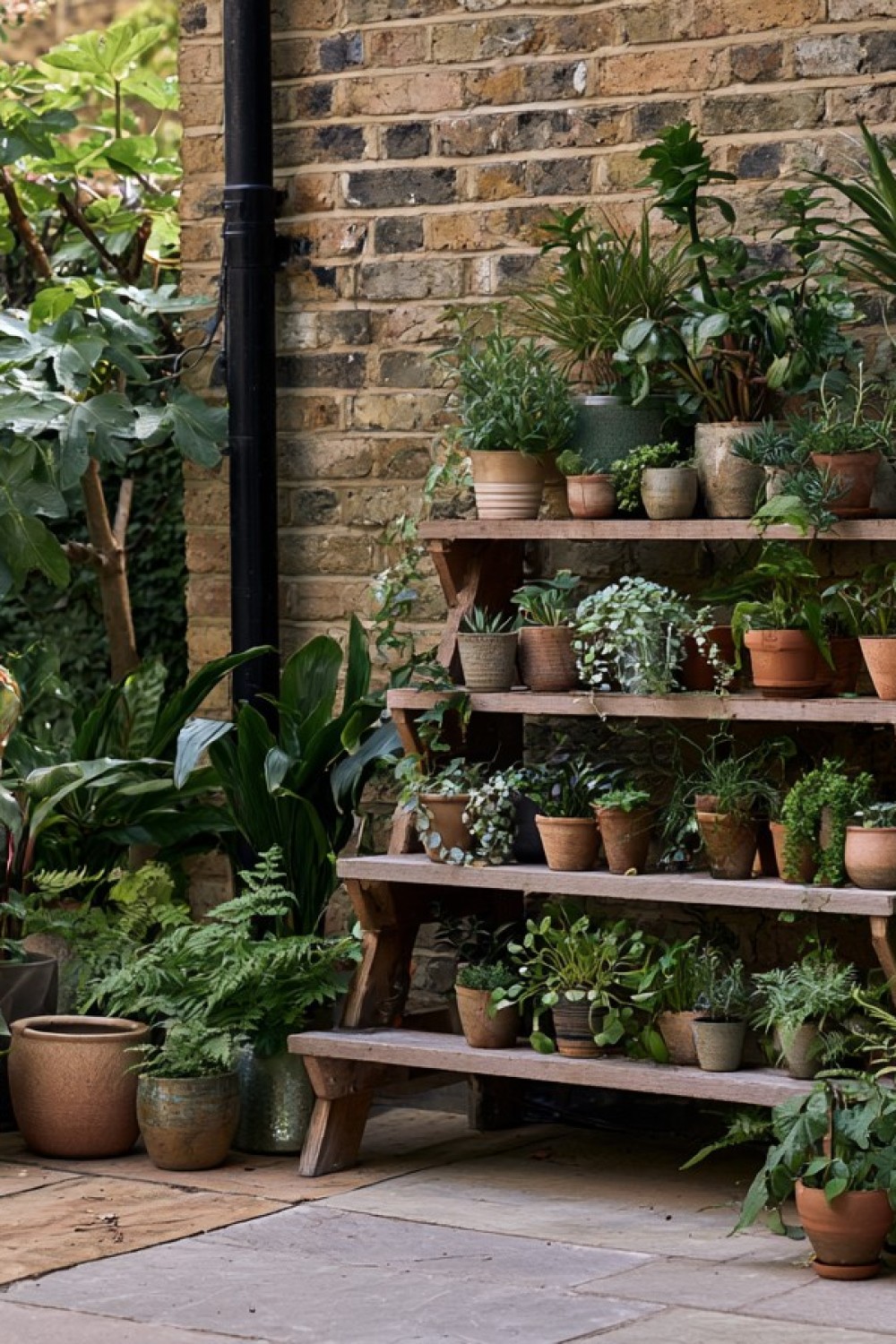
A narrow plant shelf concentrates several pots within a small footprint and can provide each plant with better access to light. Arrange heavier containers on the lowest level and smaller plants above. Varying plant heights creates interest without requiring decorative objects that compete for the same limited shelf area.
The unit should have a broad, stable base or be anchored securely to prevent tipping in wind. Protect wooden shelves from standing water and use trays beneath pots where drainage stains are a concern. Leave enough space between plants for airflow and inspection. A shelf on wheels can be useful, provided the casters lock firmly.
10. Build a Storage Bench for Durable Patio Supplies
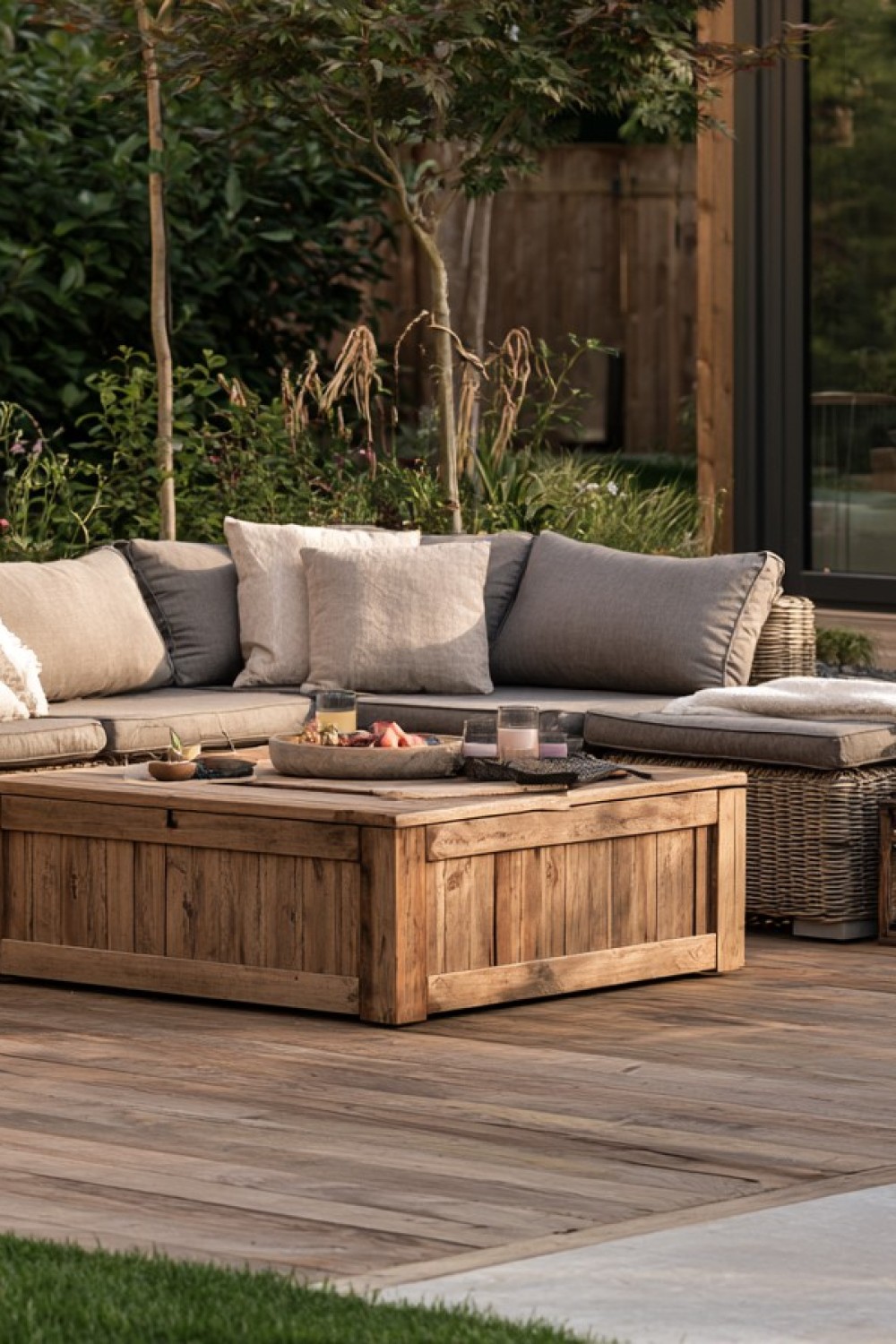
A sturdy box can function as seating while storing gardening tools, outdoor games, or empty plant pots. The frame and lid must be designed to support a seated person rather than treated as a decorative container. A removable cushion allows the surface to switch between a bench and a serving area.
Install lid supports or soft-close hinges to reduce the risk of trapped fingers. Completely sealed timber boxes may collect condensation, so ventilation and drainage should be considered. Textiles will remain drier when stored indoors or inside a separate weatherproof liner. Position the bench where the lid can open without striking a railing or wall.
11. Form a Low-Maintenance Pebble Garden
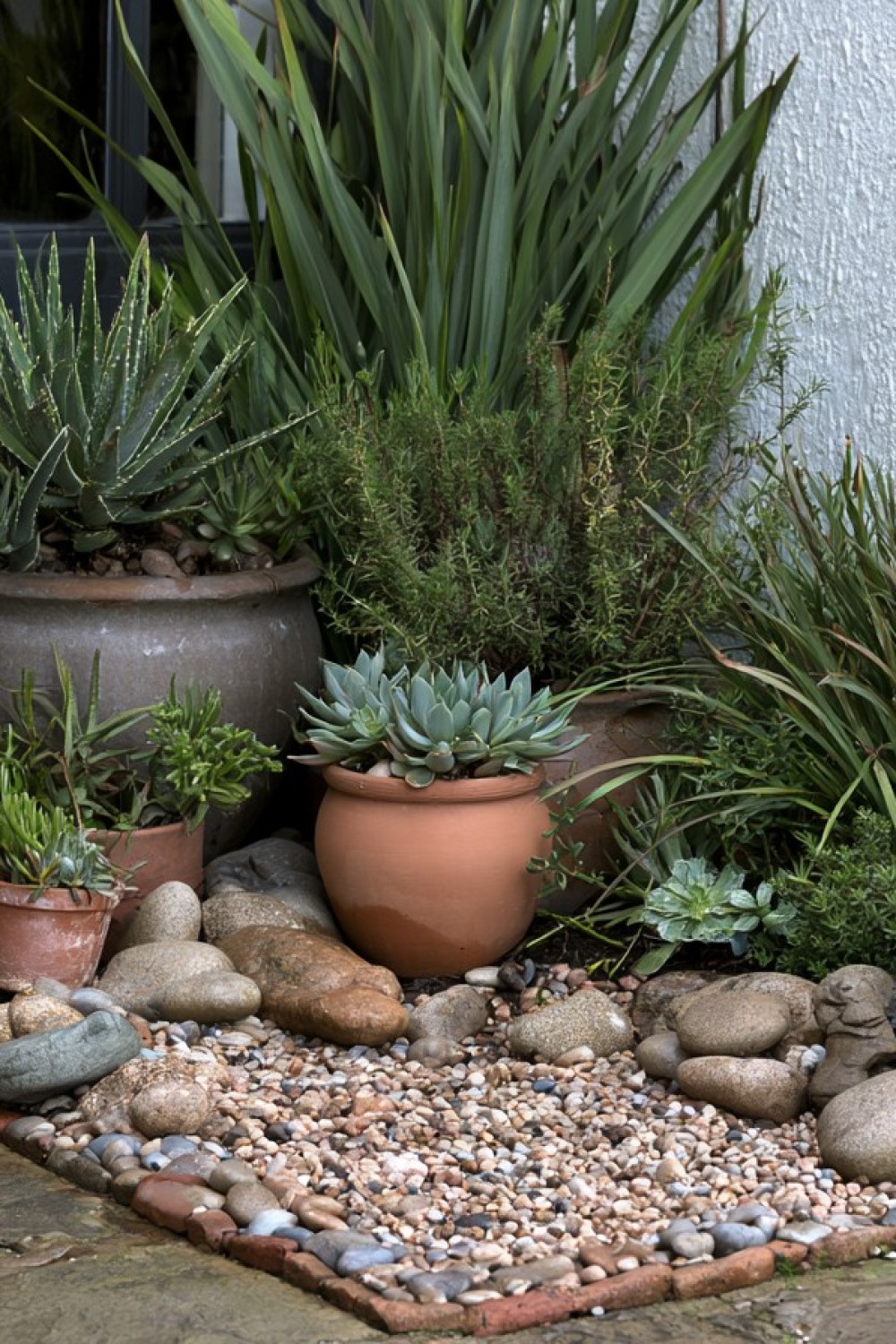
A contained pebble garden can improve an awkward corner that is too small for furniture. Combine one substantial planter, a shallow pebble-filled tray, and a limited group of weather-resistant objects. Restricting the material palette gives the composition greater impact than filling the area with numerous small ornaments.
Loose stones should be contained by an edging strip or shallow base so they do not spread into walking areas or drainage channels. On balconies and raised patios, check weight limits before adding large quantities of stone. Avoid placing loose pebbles where children may throw them or where they could create a slipping hazard.
12. Construct a Narrow Console from Reclaimed Boards
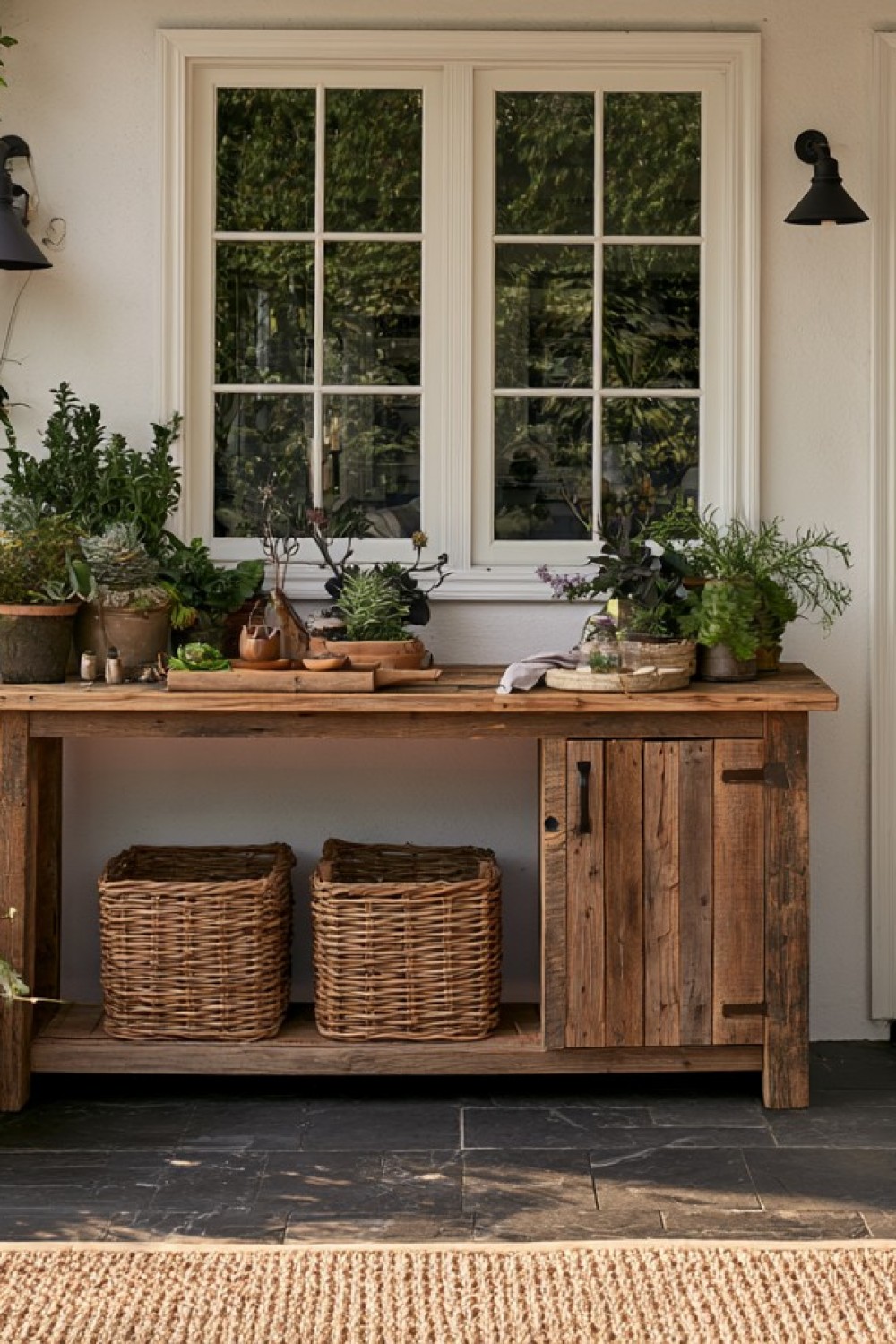
A slim console can provide a landing surface without reducing the main circulation route. It may serve as a plant stand, gardening workstation, or temporary buffet during outdoor meals. Reclaimed boards with minor variations add character, but they should be checked carefully for rot, hidden metal, chemical contamination, and active insect damage.
Design the table with sufficient depth for its intended use while keeping it narrow enough for people to pass comfortably. Cross-bracing or wall anchoring may be necessary because tall, shallow furniture can tip easily. Seal all sides of the wood, including the underside and cut ends, and use corrosion-resistant exterior screws.
13. Repurpose Containers as Movable Planters
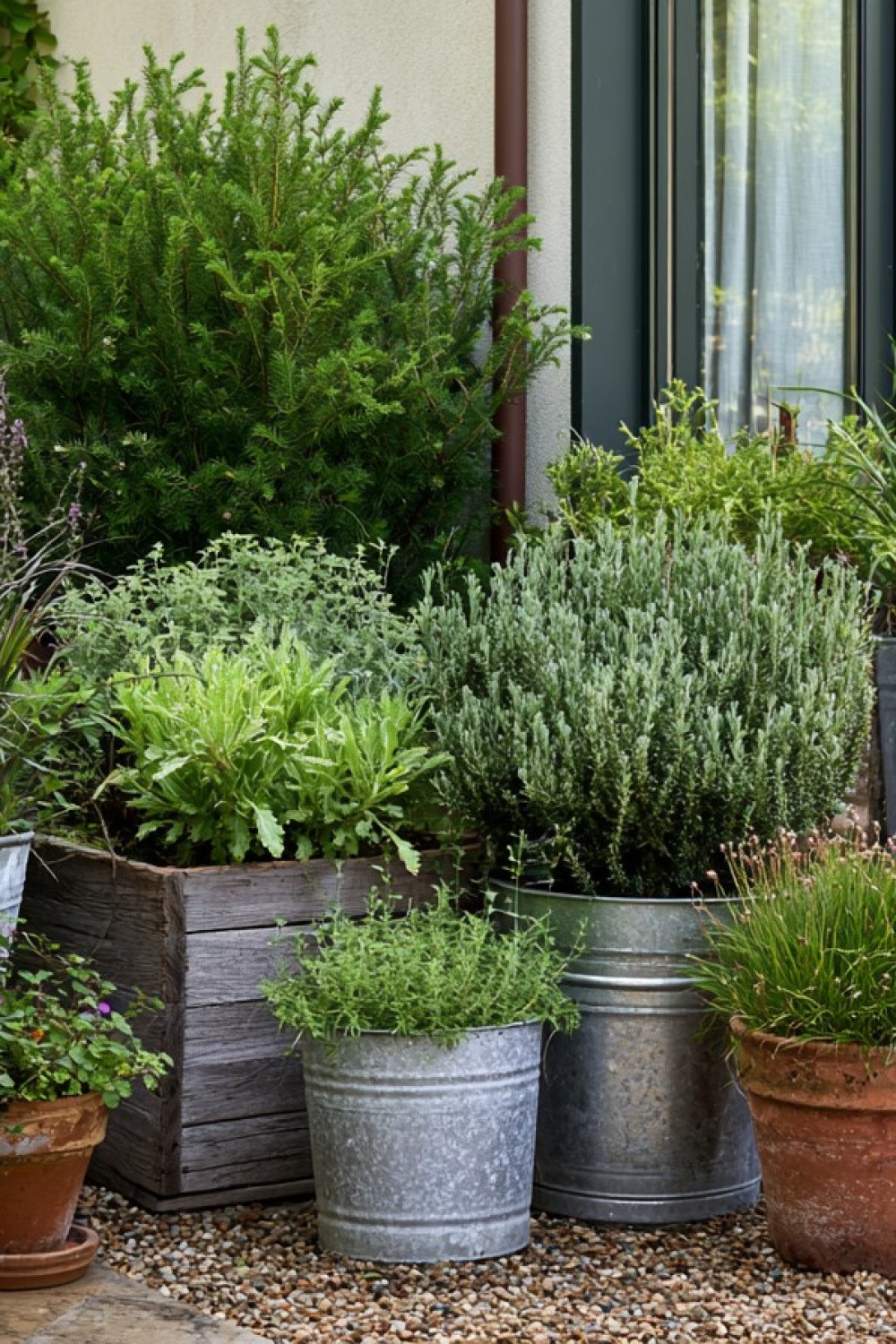
Galvanized tubs, sturdy buckets, wooden boxes, and sound ceramic vessels can become planters when their material and previous use are suitable. Grouping containers in different heights makes a stronger display than lining up many identical pots. Movable arrangements also allow plants to be repositioned as sunlight changes through the season.
Clean every container thoroughly and avoid items that previously held hazardous substances. Add sufficient drainage holes and select potting material appropriate for the plants rather than filling the container with dense garden soil. Large planters can be placed on rated wheeled platforms, but the wheels should lock and remain stable on the patio surface.
Improve the Patio in a Practical Order
A successful low-cost makeover begins with cleaning, repairs, and layout planning before decorative purchases. Decide where people will sit, how they will move through the space, and where rainwater must drain. Once those requirements are clear, choose one substantial improvement—such as a bench, folding table, or storage unit—and build the remaining design around it.
Reusing materials saves money only when those materials are safe, structurally sound, and suitable for outdoor exposure. Investing in dependable hardware, surface preparation, and weather-resistant finishes often prevents repeated repairs. By completing projects gradually and evaluating how each one improves daily use, a patio can become more attractive without accumulating unnecessary decor.
MORE IDEAS


Share
What's Your Reaction?
 Like
0
Like
0
 Dislike
0
Dislike
0
 Love
0
Love
0
 Funny
0
Funny
0
 Angry
0
Angry
0
 Sad
0
Sad
0
 Wow
0
Wow
0