16 Boho Window Decor Styles With Natural Texture

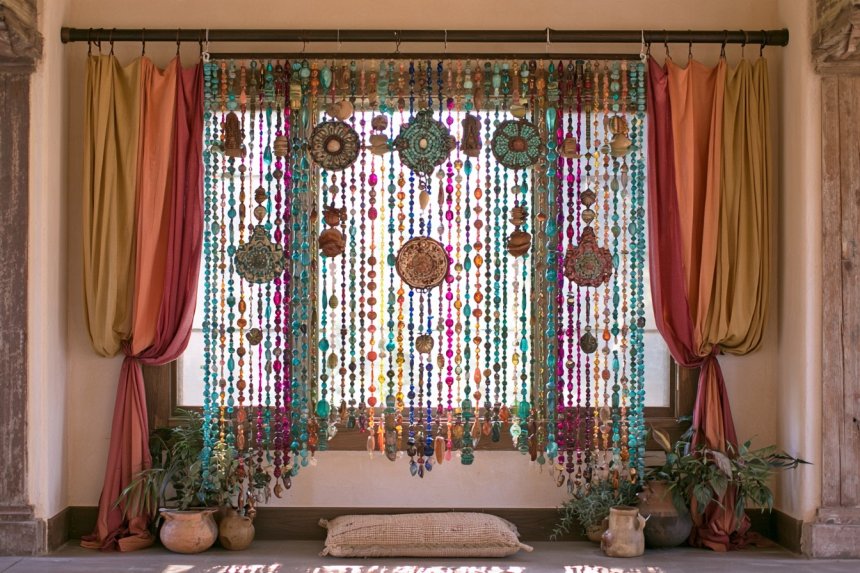
Boho window decor feels most convincing when it combines natural light with texture rather than simply adding more pattern. Woven fibers, airy fabrics, handmade details, plants, warm timber, and collected objects can soften a window while still allowing it to function properly. The strongest treatments also avoid making every element compete for attention. One window might rely on loose linen and carved wood, while another uses hanging plants, translucent beads, or layered textiles to create character. These boho window decor ideas focus on practical ways to introduce warmth, movement, and individuality without overwhelming the glass or turning the room into a collection of predictable macramé accessories.
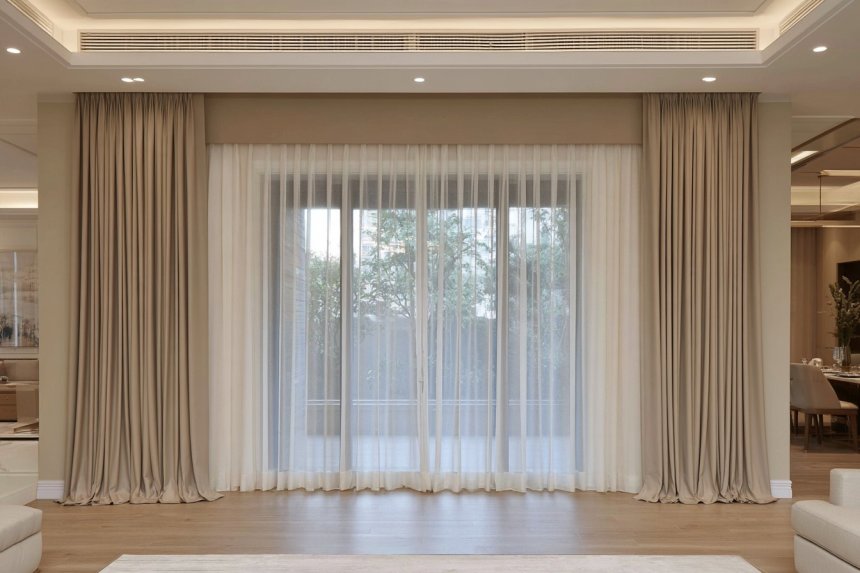
1. Layered Linen Panels
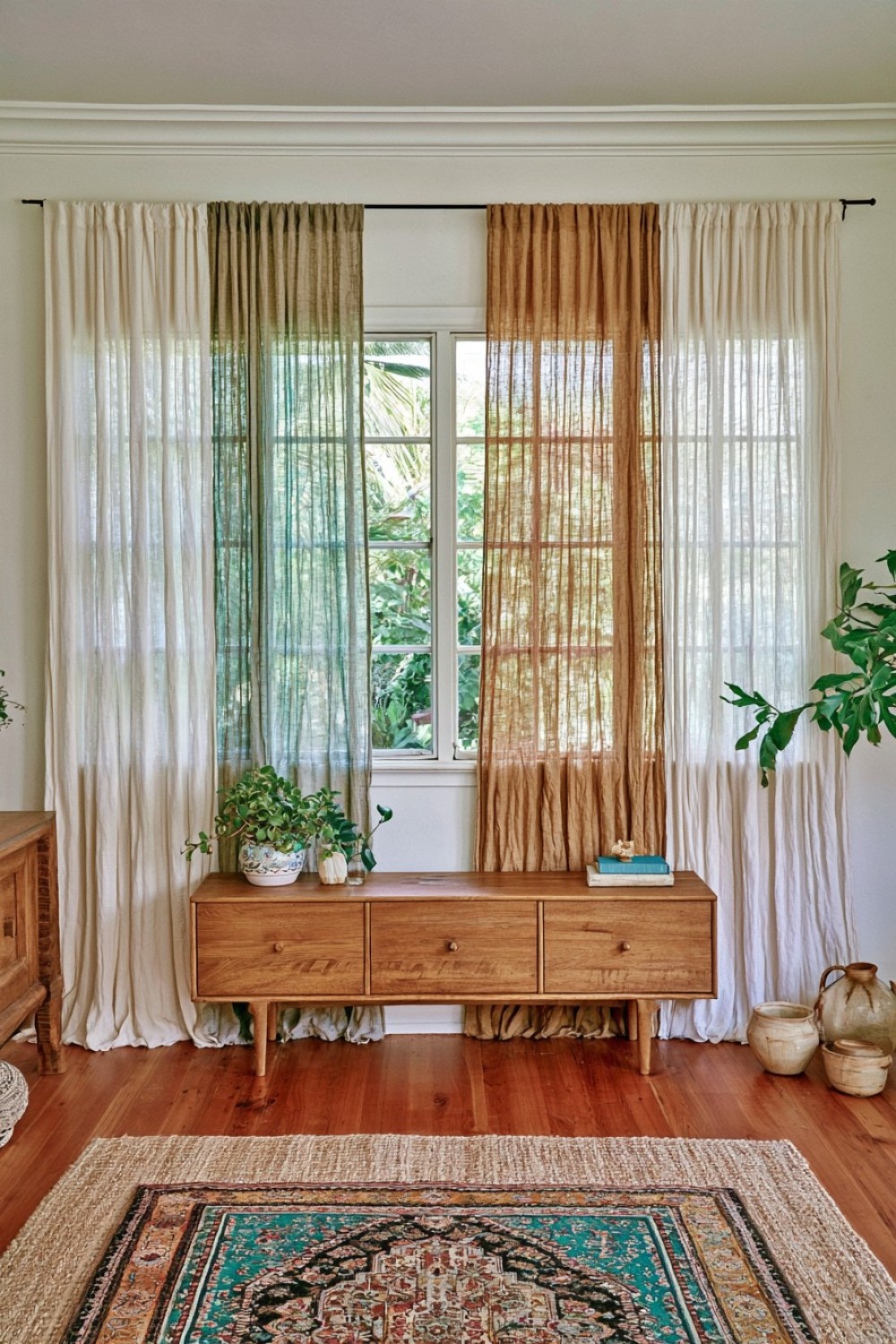
Use two lightweight linen curtains instead of one heavy patterned treatment.
Choose slightly different neutral tones, such as warm ivory and sand, and mount them on separate tracks or rods. Keeping one layer more transparent allows the fabrics to overlap differently throughout the day.
The changing density creates texture without requiring bold prints.
Let the curtains fall naturally rather than arranging them into perfectly symmetrical folds. A slightly relaxed drape works particularly well with boho interiors.
This approach is useful in bedrooms and living rooms where daylight matters but some privacy is still required.
For better nighttime coverage, pair the linen layers with a discreet blind rather than making the decorative curtains excessively heavy.
2. Carved Timber Valance
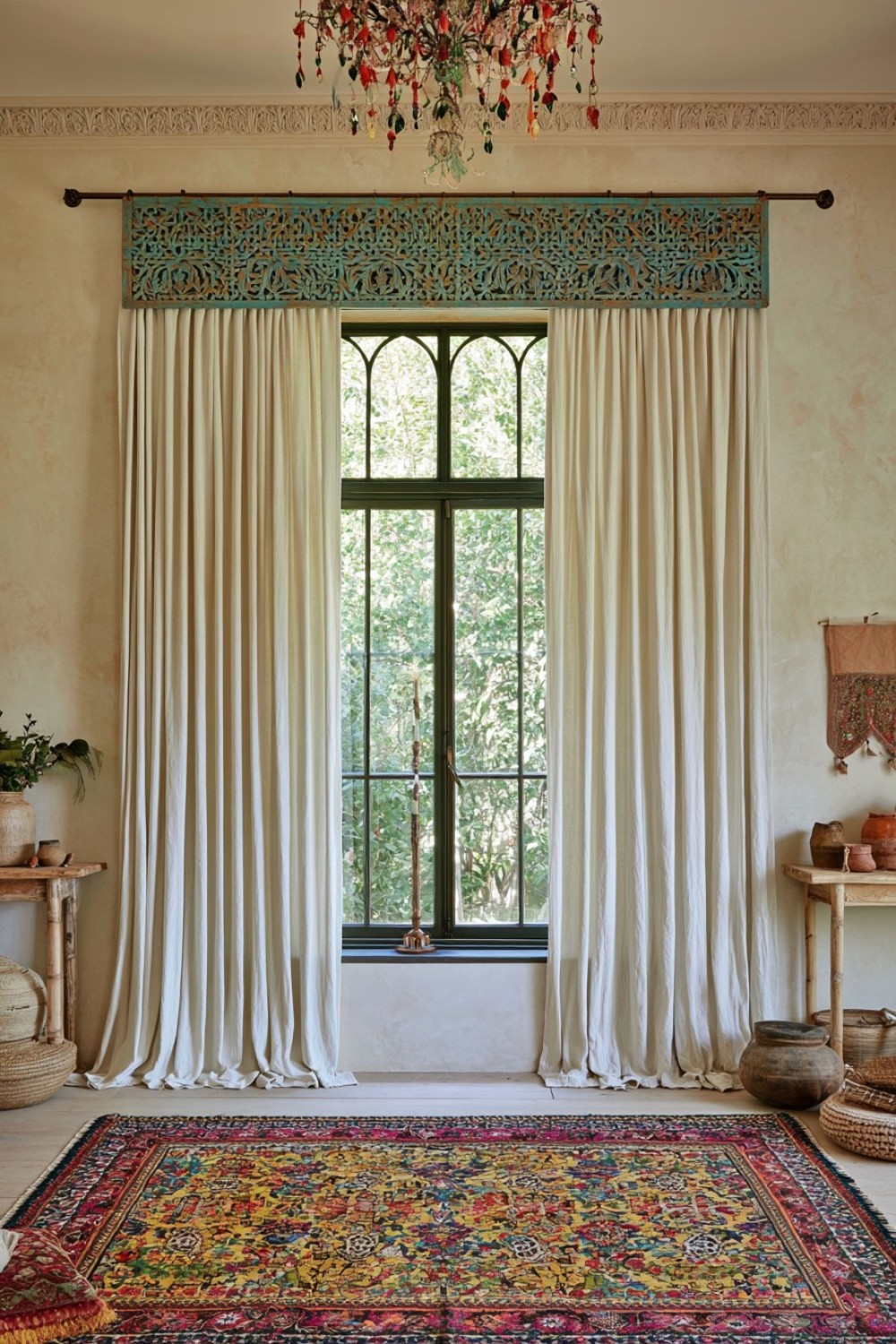
Replace a fabric valance with a narrow piece of carved or pierced timber.
Use reclaimed wood, a carved panel, or a custom-cut strip featuring simple arches, botanical motifs, or geometric openings.
Mount it above the curtain hardware so it acts as a decorative frame.
Keep the finish natural, limewashed, or softly stained rather than highly polished.
The detail introduces craftsmanship without adding more fabric to the window.
For a DIY project, use lightweight plywood and a jigsaw to create a simplified pattern, then sand the edges thoroughly before finishing.
This works particularly well above plain cotton or linen curtains because the contrast between hard carved wood and soft fabric becomes the focal point.
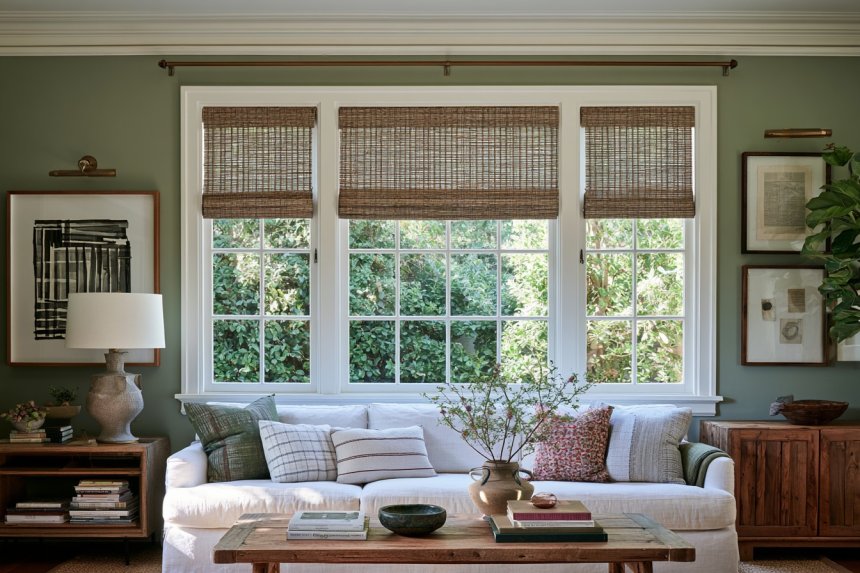
3. Woven Shade Layers
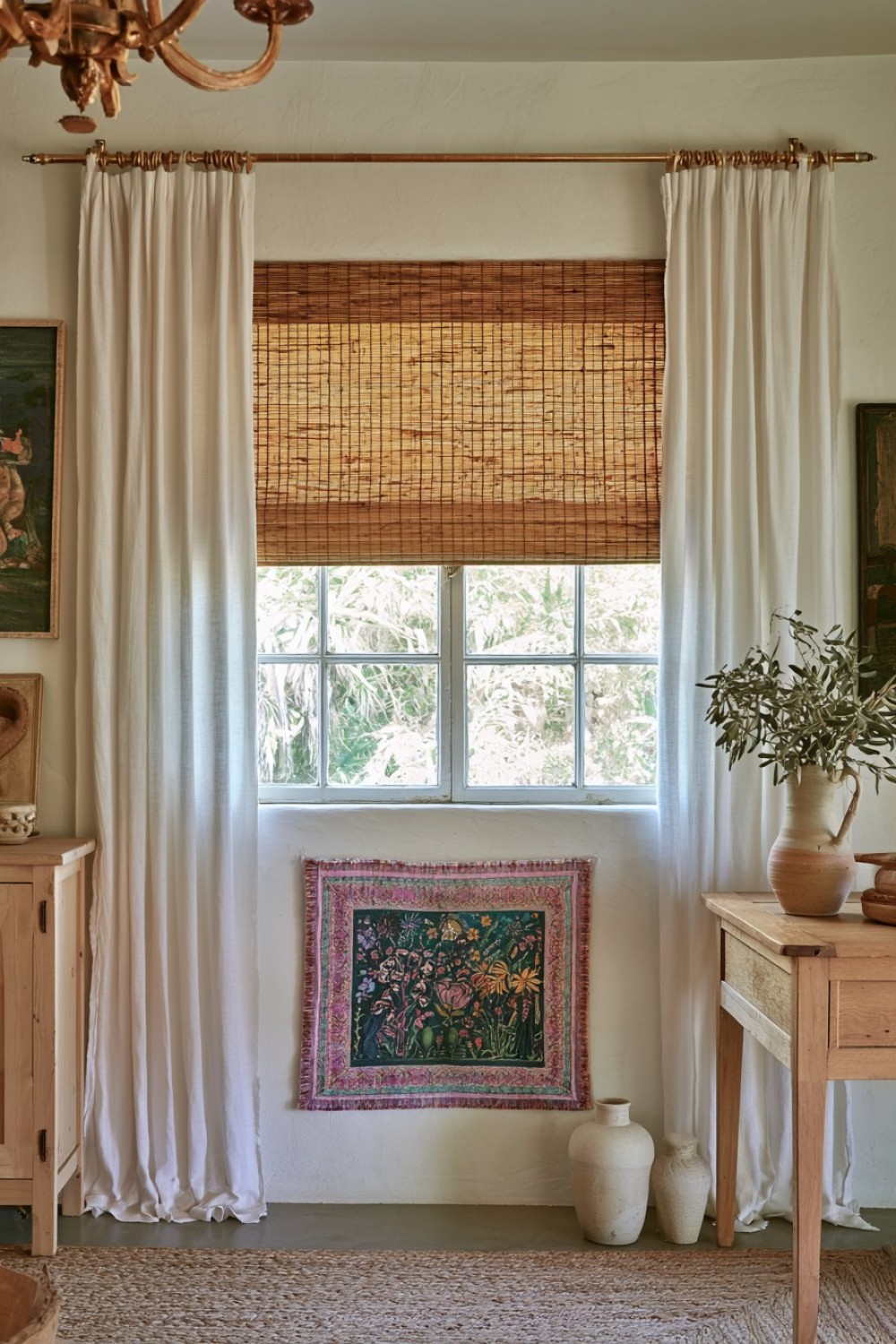
A woven bamboo or grass shade can add warmth behind simple curtains.
Mount the shade inside the window frame, then hang lightweight drapery outside it.
The combination gives you two distinct textures: structured natural fiber and soft fabric.
Use the shade for glare control while leaving the curtains open during the day.
Avoid making every element brown. A pale woven shade with off-white curtains feels lighter, while darker bamboo creates more contrast against cream walls.
Check that the shade operates smoothly before adding decorative curtain layers around it.
This pairing suits bedrooms, dining areas, and relaxed living rooms where you want boho character without relying on busy patterns.
4. Hanging Plant Corner
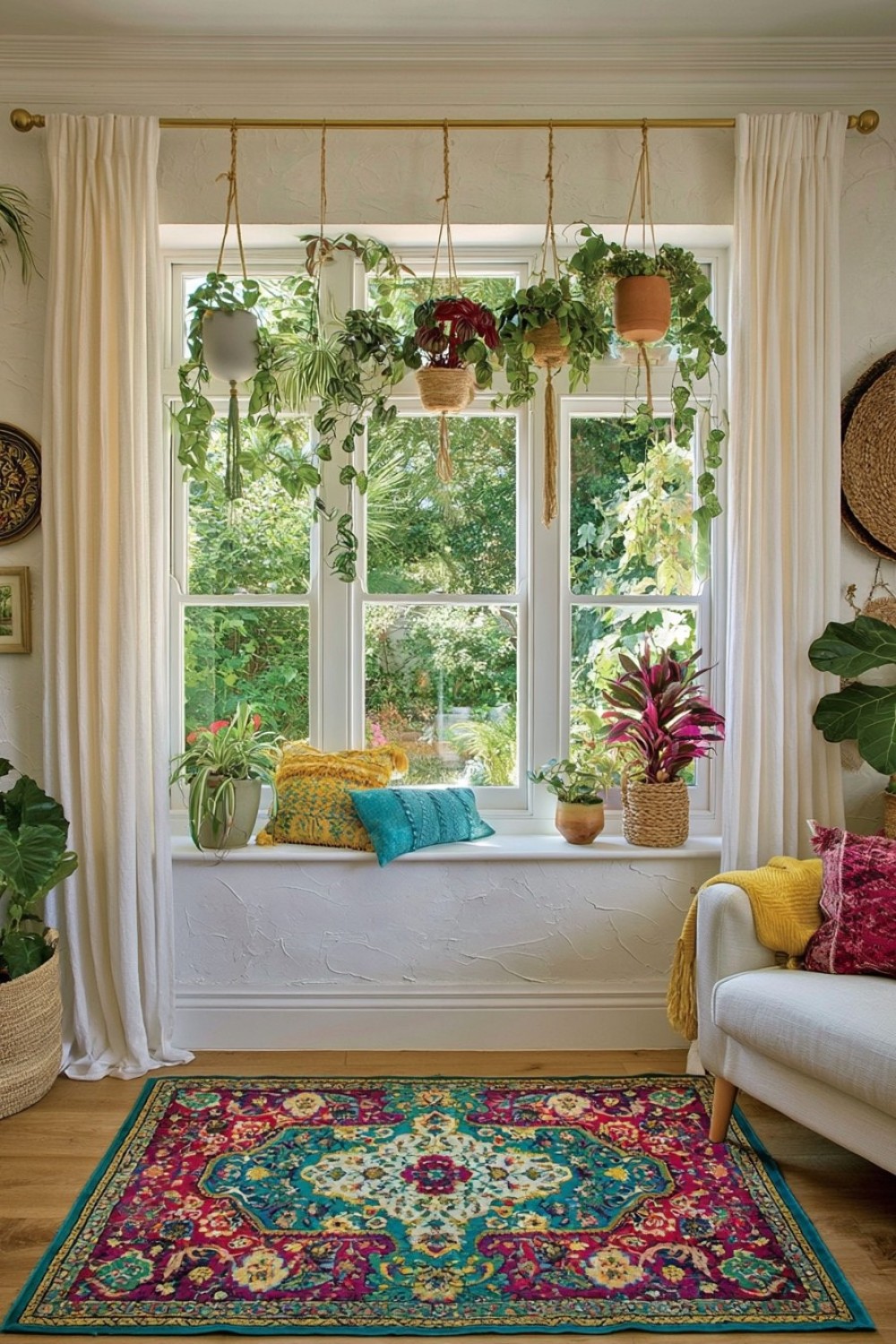
Instead of covering the entire window with plants, concentrate them in one corner.
Hang two or three plants at staggered heights so the leaves partially overlap the window without blocking the main view.
Trailing pothos, hoya, spider plant, or other suitable indoor species can work well depending on light conditions.
Use ceramic, woven, or simple matte planters rather than identical plastic pots.
Make sure ceiling hooks or wall brackets are rated for the full watered weight of each planter.
Keeping the arrangement asymmetrical makes the window feel more relaxed and leaves enough open glass for daylight.
This approach works especially well beside plain curtains that need a little more visual interest.
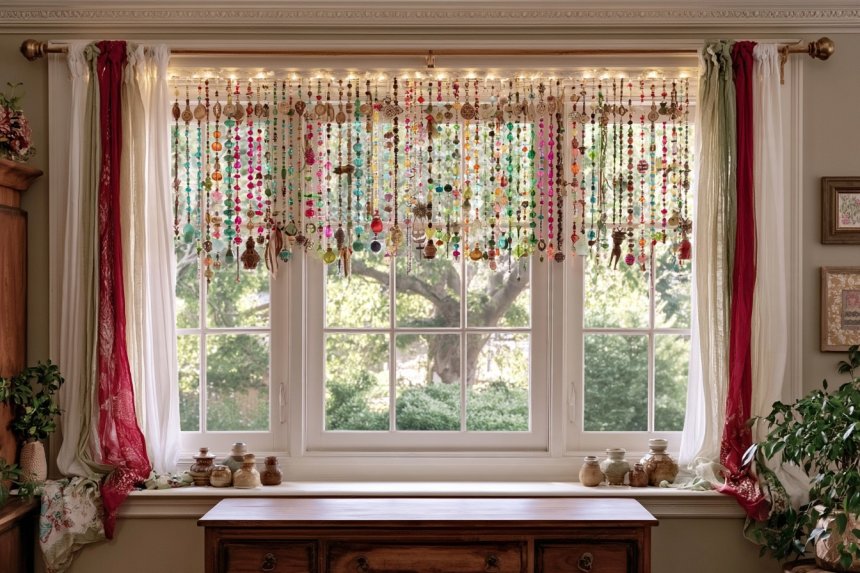
5. Beaded Light Strand
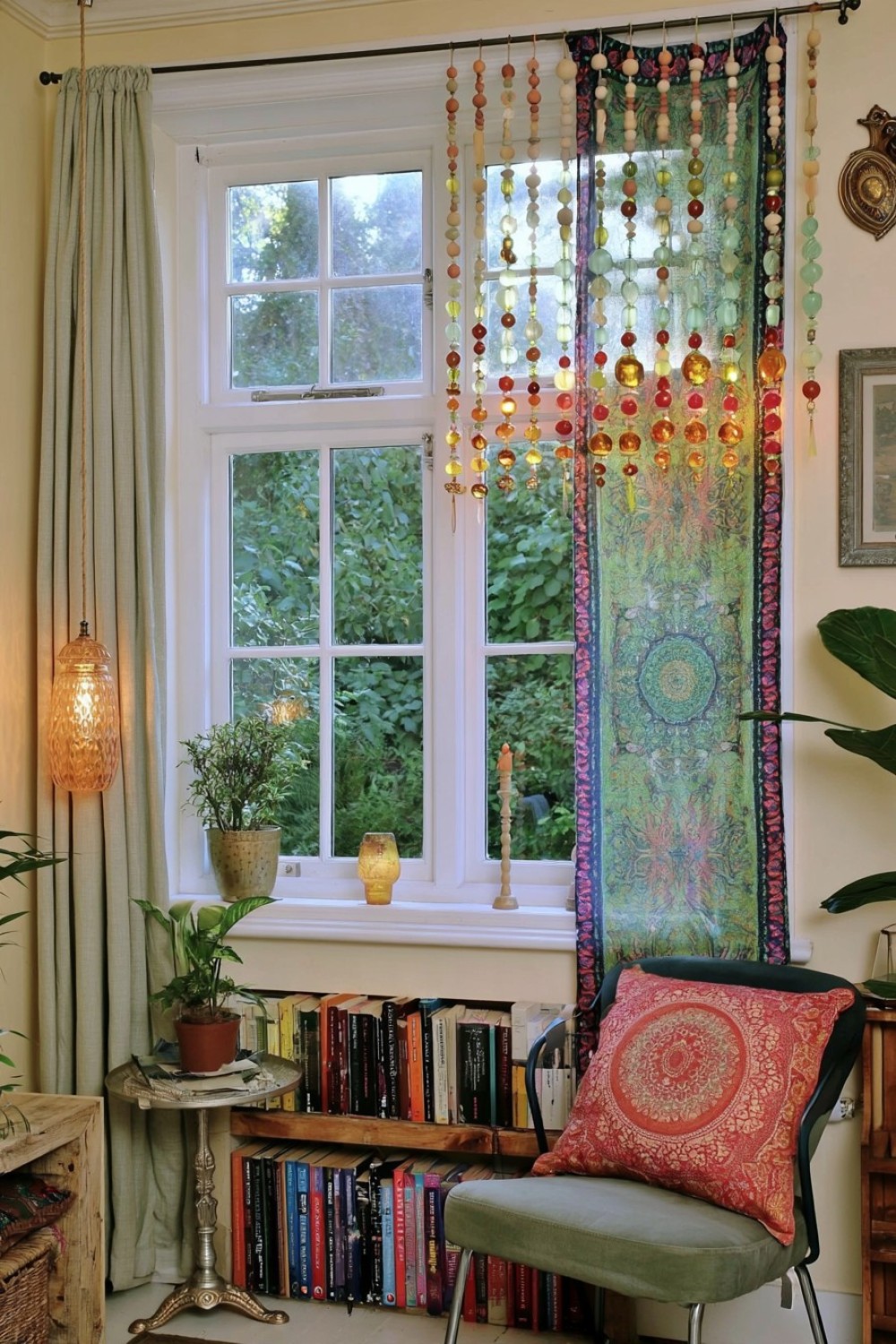
Create a decorative strand from wooden, ceramic, and translucent beads.
Instead of hanging it horizontally like a conventional garland, suspend several short strands from a slim rail across the top corner of the window.
Mix opaque clay beads with clear or amber pieces so some absorb light while others catch it.
Keep the palette earthy—terracotta, cream, wood, smoky glass, and pale green work well together.
Avoid making the strands too dense. The effect should remain delicate enough that the window still feels open.
This DIY is particularly suited to smaller windows, reading nooks, or creative spaces where subtle handmade detail can add character without requiring a full curtain replacement.
6. Block-Printed Curtains
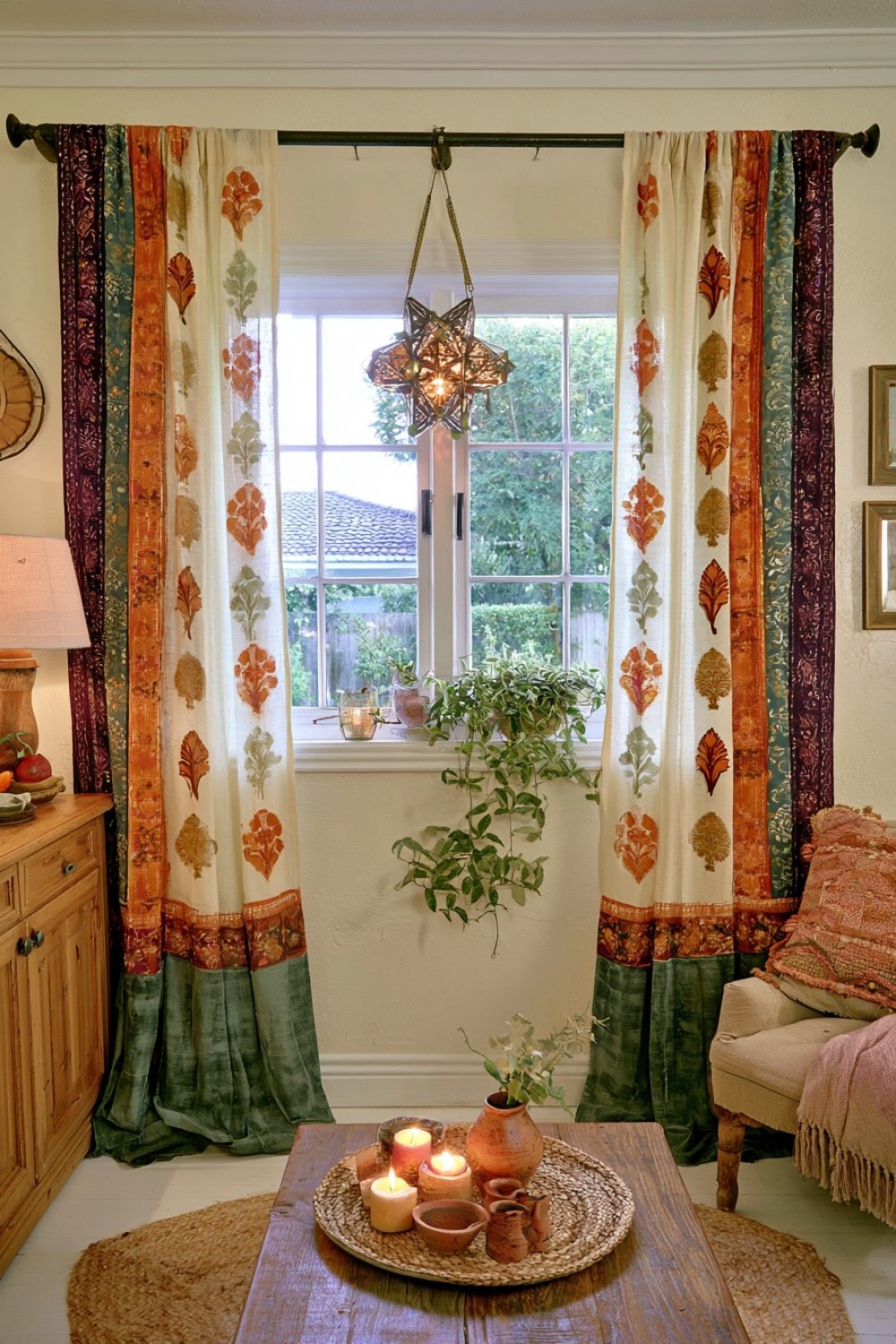
A restrained block print can bring pattern to a boho window without making it visually chaotic.
Choose cotton or linen with a repeating botanical, diamond, stripe, or abstract motif.
For a DIY version, start with plain curtains and use fabric paint with a simple carved printing block.
Print only the lower third, one border, or widely spaced motifs instead of covering the entire panel.
This keeps the fabric from looking overly busy and makes the handmade irregularities part of the design.
Earthy ochre, rust, indigo, olive, or muted charcoal work particularly well.
Heat-set the paint according to the product instructions so the curtains can still be cleaned safely.
7. Fringed Roman Shade
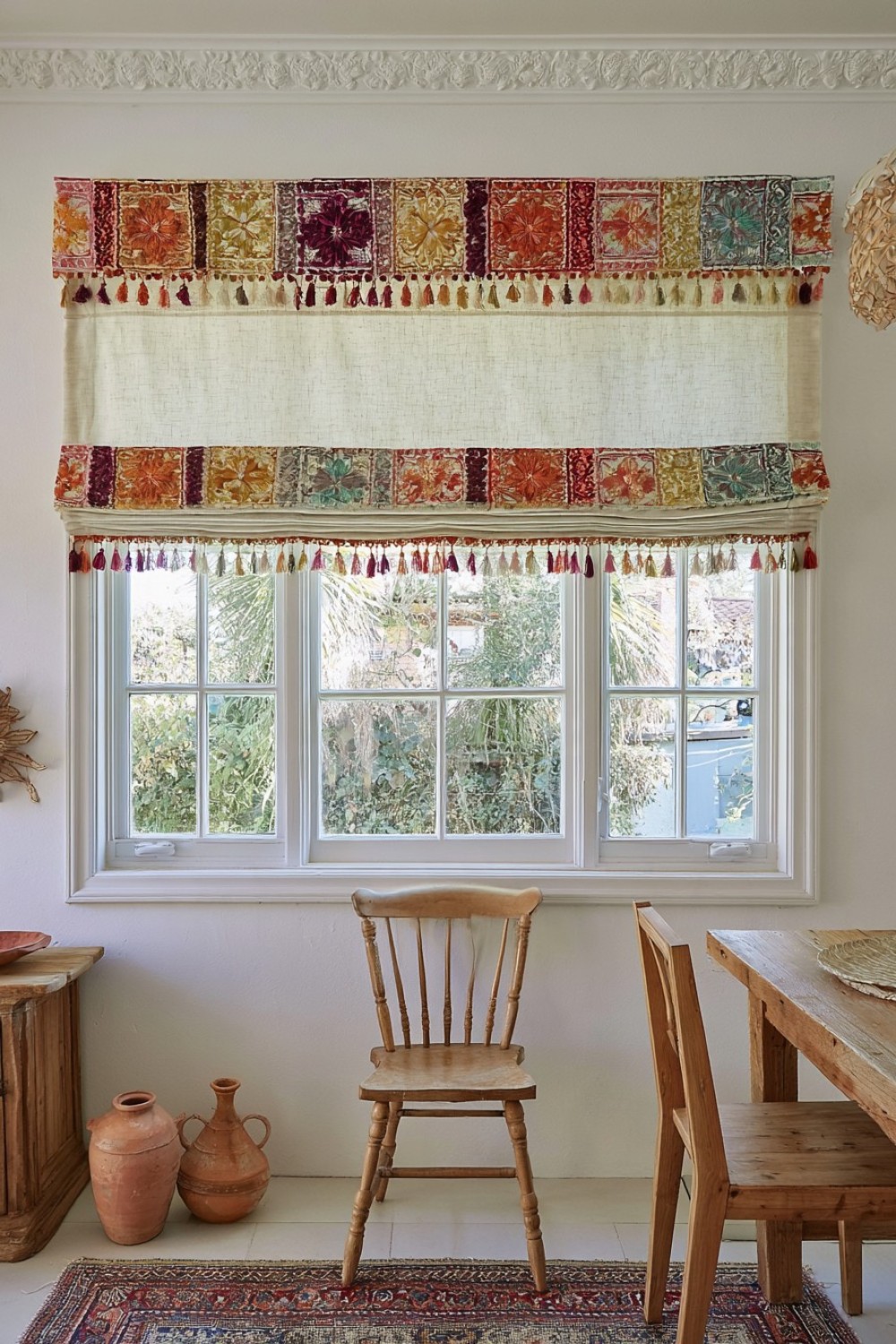
A Roman shade can feel less formal with one carefully chosen textural detail.
Use a natural linen or cotton shade and add a narrow fringe or soft tassel trim along the bottom edge.
Keep the trim small enough that it does not interfere with folding when the shade is raised.
A warm neutral shade with rust, ochre, or faded plum trim can introduce color without covering the entire window in pattern.
This is especially effective in smaller rooms where full-length curtains would consume too much wall space.
If adapting an existing shade, make sure the added trim remains lightweight and does not interfere with cords or mechanisms.
The result feels relaxed but still controlled.
8. Window Sill Textiles
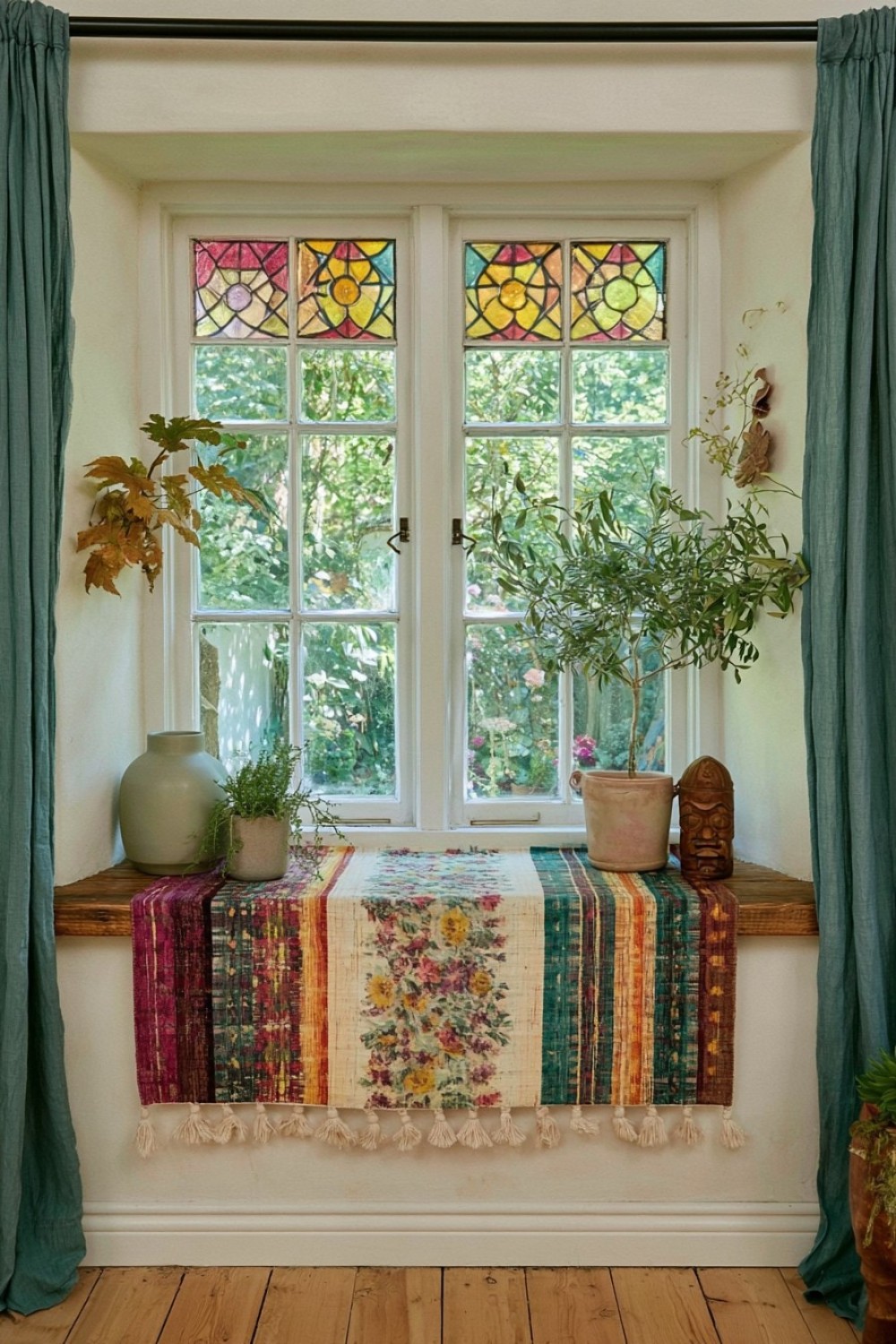
Turn a deep sill into a small textile display rather than filling it with miscellaneous objects.
Lay one narrow woven runner or folded textile across part of the sill and add only a few items—a ceramic vessel, one plant, or a small carved object.
Choose a fabric with visible handwoven texture, tasselled ends, or subtle stripes.
Keep part of the sill exposed so the arrangement does not feel crowded.
This works particularly well with timber or stone window surrounds, where the textile adds softness against a harder surface.
Avoid letting fabric sit against condensation-prone glass, and keep it clear of radiators or heat vents below the window.
9. Asymmetrical Macramé Panel
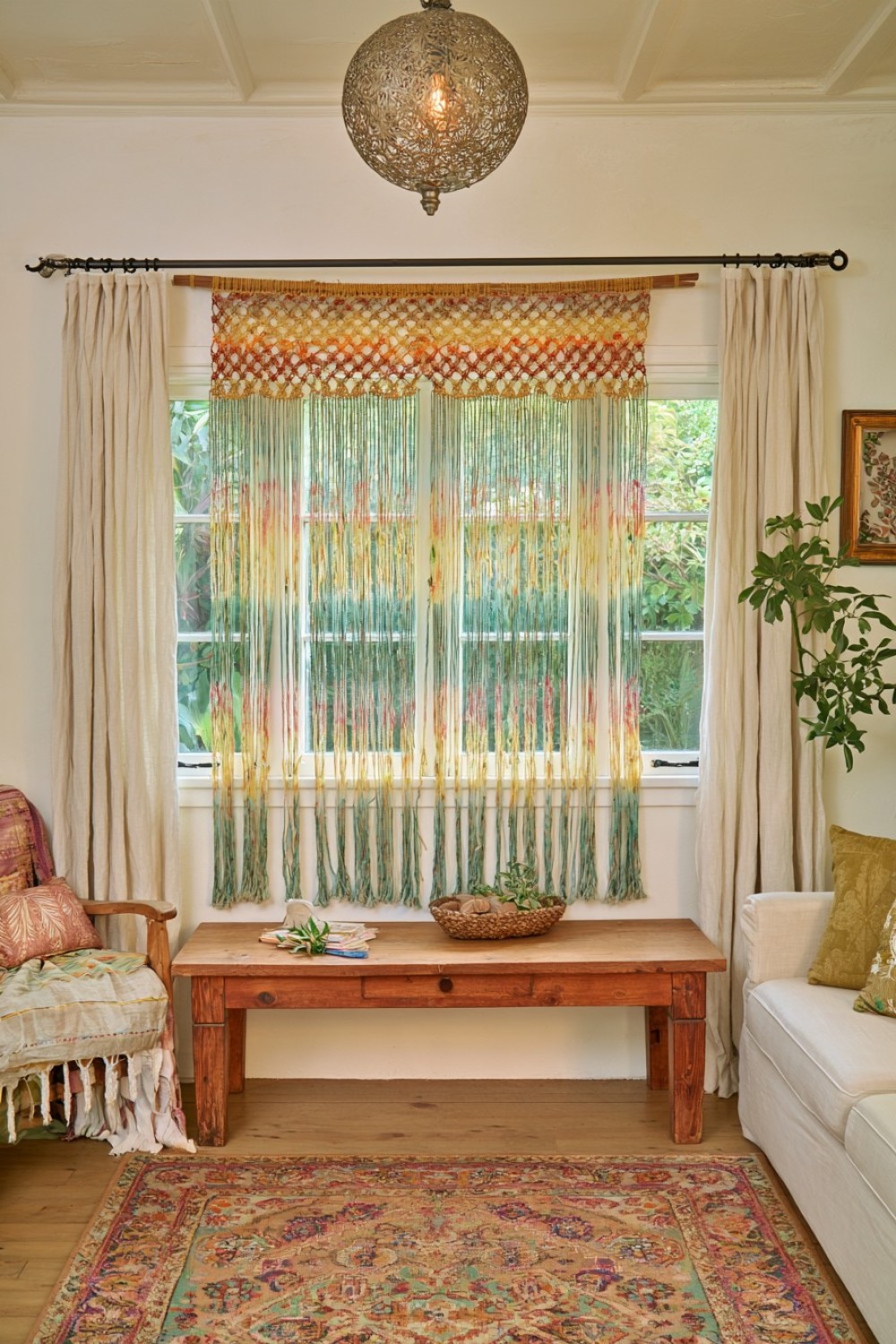
Macramé can still work in boho interiors when it is treated as an accent rather than covering the whole window.
Hang one narrow handmade panel from the upper corner or side of the frame.
Choose an open knot pattern so daylight passes through it.
Natural cotton works well, but dyed ochre, clay, or soft olive cord can make the piece feel less predictable.
The asymmetrical placement keeps the macramé from functioning like a curtain and makes it closer to suspended textile art.
Keep it away from frequently operated handles and make sure it does not become trapped when the window opens.
This idea works best alongside otherwise simple window treatments.
10. Painted Curtain Rod
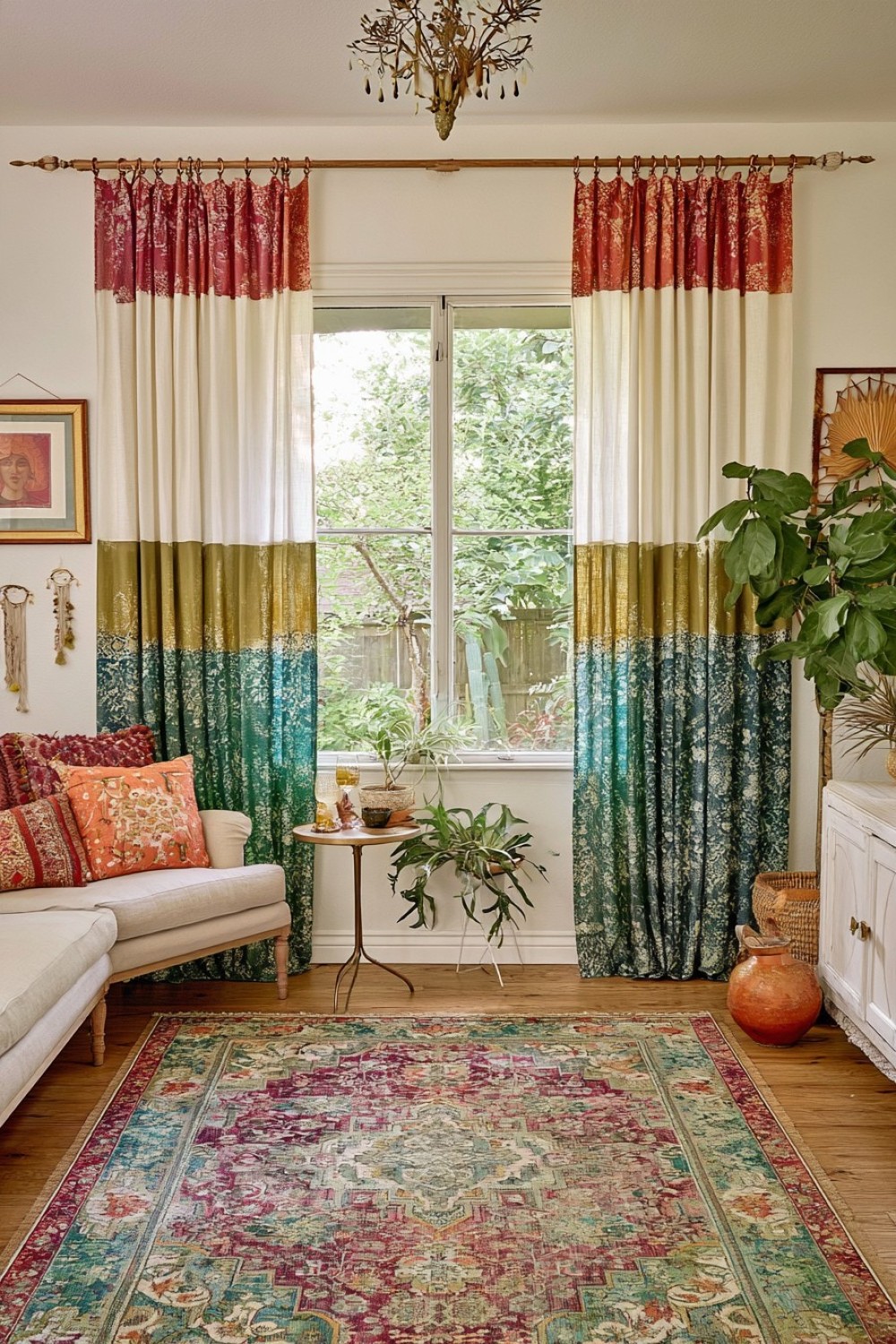
The rod itself can become part of the boho styling.
Use a simple wooden curtain pole and paint selected sections in bands of terracotta, cream, mustard, olive, or charcoal.
Leave some natural timber visible between colors.
Pair the rod with plain curtains so the painted detail remains noticeable.
For a DIY version, lightly sand the pole, mark the sections with painter's tape, apply suitable paint, then seal if needed.
This works particularly well in children's rooms, studios, or casual living spaces where a small handmade detail can introduce personality.
Keep the palette connected to other objects in the room rather than using unrelated colors solely for decoration.
11. Cane Privacy Screen
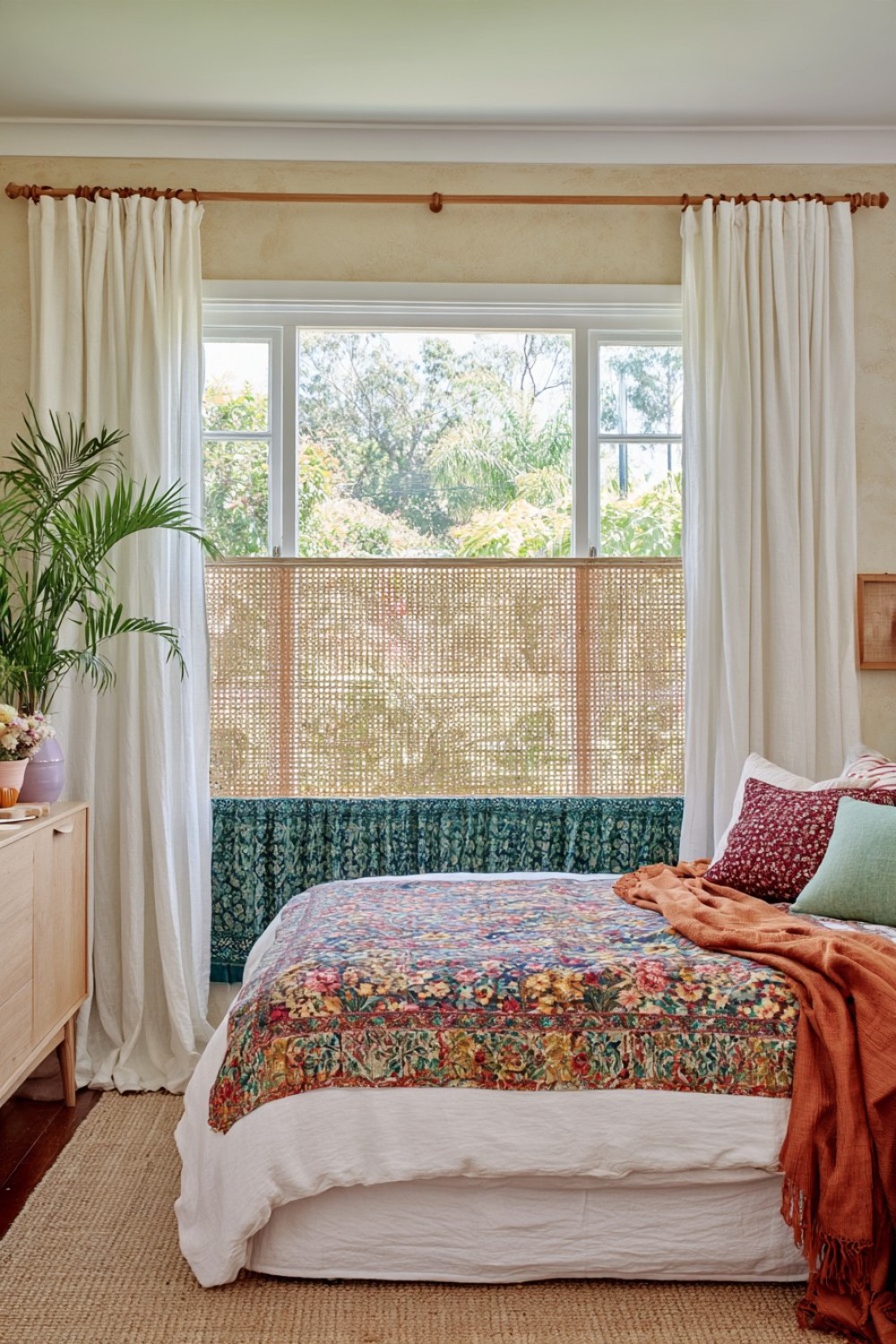
A slim cane screen can soften a window while providing partial privacy.
Build a lightweight timber frame and insert cane webbing, then position it over the lower half of the window or use it as a removable panel.
The woven surface filters views while preserving some natural light.
Keep the upper section of the window uncovered so the room does not become too dark.
This is especially useful for street-facing spaces where full curtains may feel unnecessarily heavy during the day.
Use a fine weave for more privacy and a more open weave where the screen is mainly decorative.
Any removable frame should fit securely without interfering with window locks or ventilation.
12. Terracotta Plant Ledge
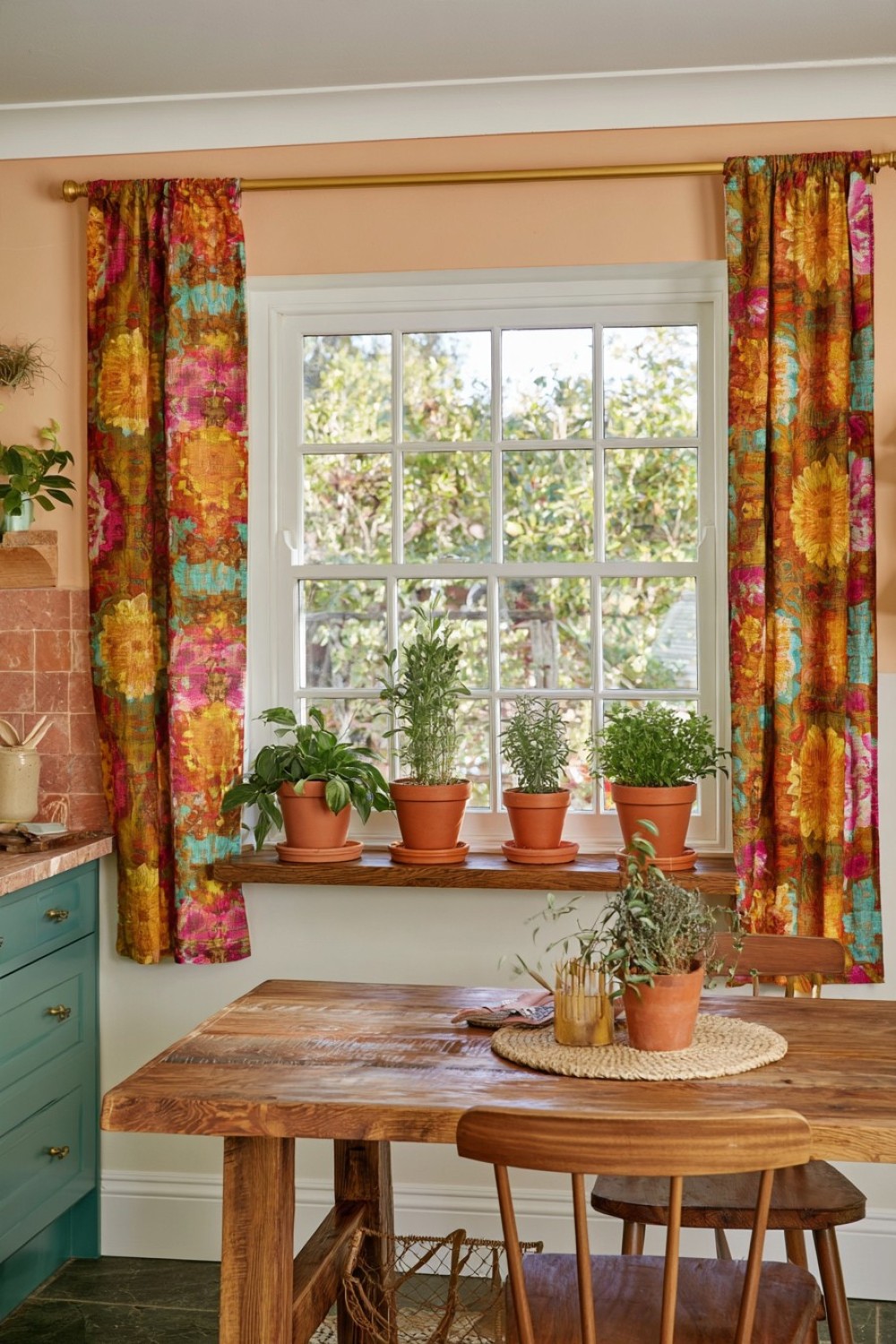
Create a narrow plant ledge beneath or beside the window using a simple timber shelf and a restrained collection of terracotta pots.
Instead of mixing many plant types, repeat one pot material and vary the plant forms.
A trailing plant, one upright herb, and one compact leafy species can create enough contrast.
The repetition of terracotta gives the arrangement visual order.
Make sure the shelf is suitable for the combined wet weight of the planters and use trays to protect timber from water.
This idea works particularly well in sunny kitchens and casual dining areas where plants feel naturally connected to the room's function.
13. Patchwork Café Curtains
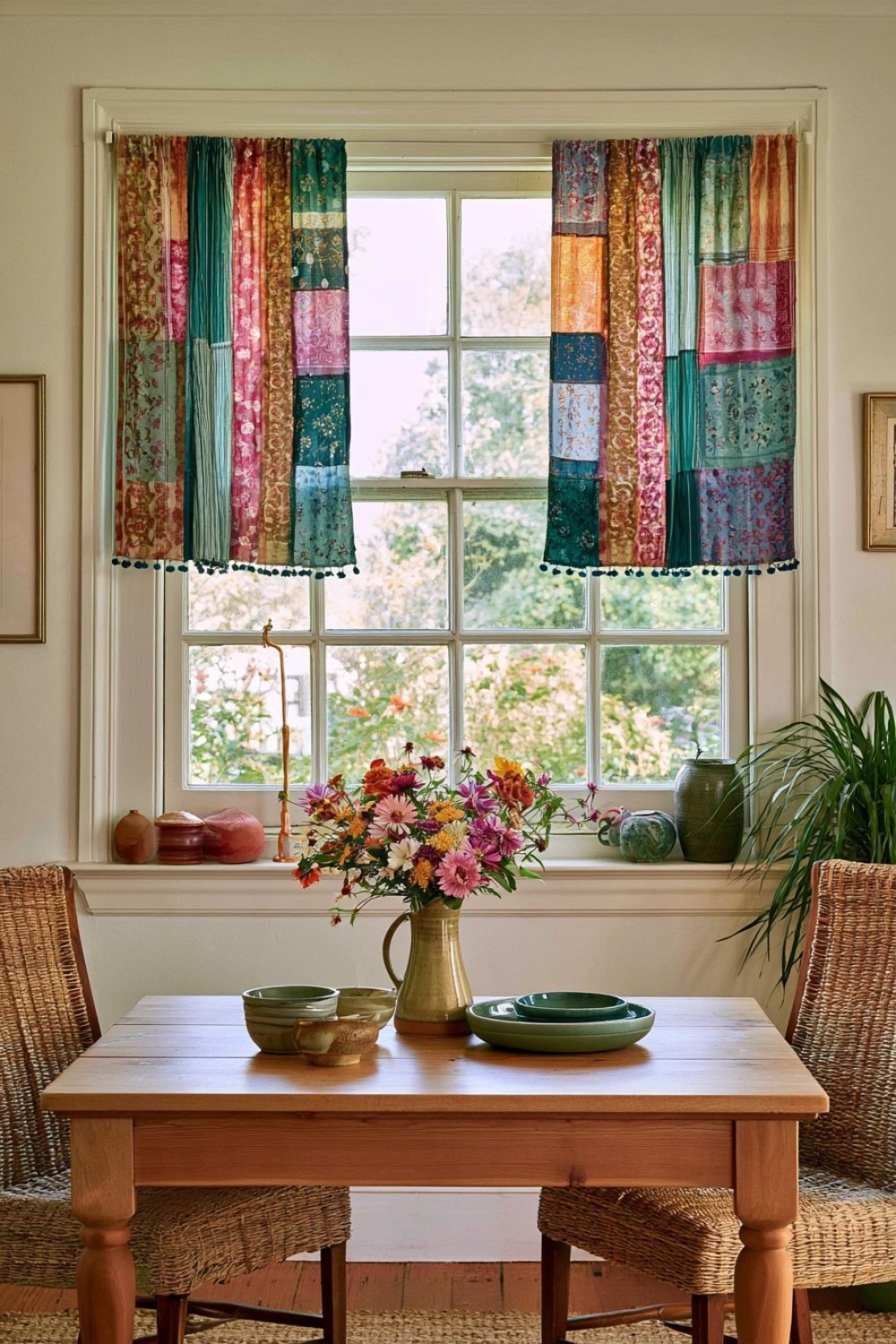
Use small textile remnants to make café curtains that feel collected rather than mass-produced.
Combine narrow pieces of striped cotton, block print, linen, or embroidered fabric into two short panels.
Keep the color palette limited so the patchwork does not become visually noisy.
Mount the curtains halfway up the window so the lower section gains privacy while daylight still enters above.
For a more cohesive result, repeat one fabric on both panels.
This is an effective way to reuse leftover material from other projects.
Wash all fabrics before sewing so differing shrinkage does not distort the finished curtain later.
14. Shell and Clay Details
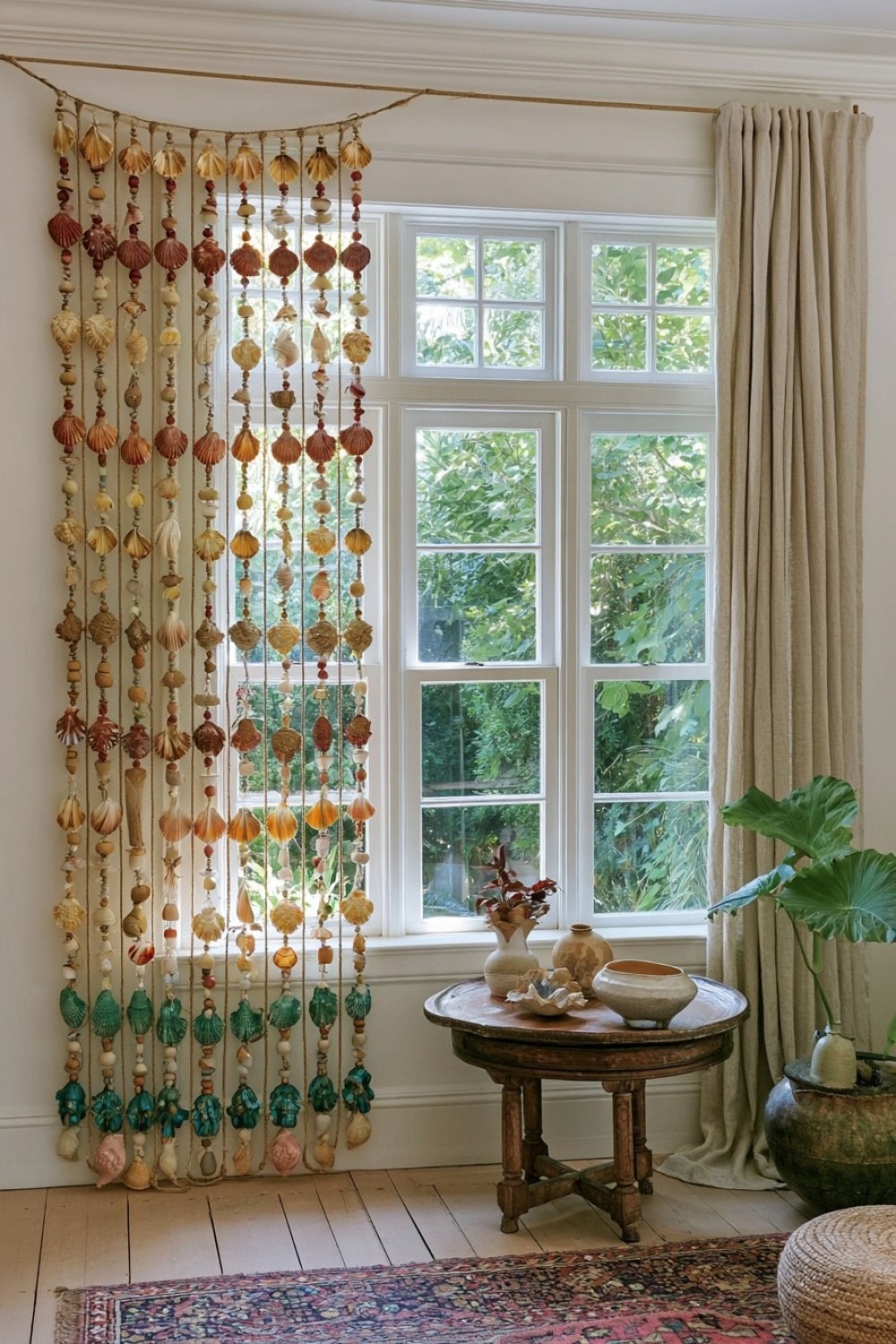
Instead of a full shell curtain, use small natural accents sparingly.
Create a short hanging strand from clay beads, a few shells, and wooden pieces, then position it along one side of the window.
Mixing materials prevents the decoration from feeling overtly coastal.
Use natural cream, terracotta, and warm wood rather than brightly dyed shells.
If using found shells, clean them thoroughly before bringing them indoors.
The finished piece works best as a narrow vertical accent rather than a dense screen.
This is a simple way to introduce handmade boho texture without reducing daylight or competing with nearby curtains.
15. Low Botanical Shelf
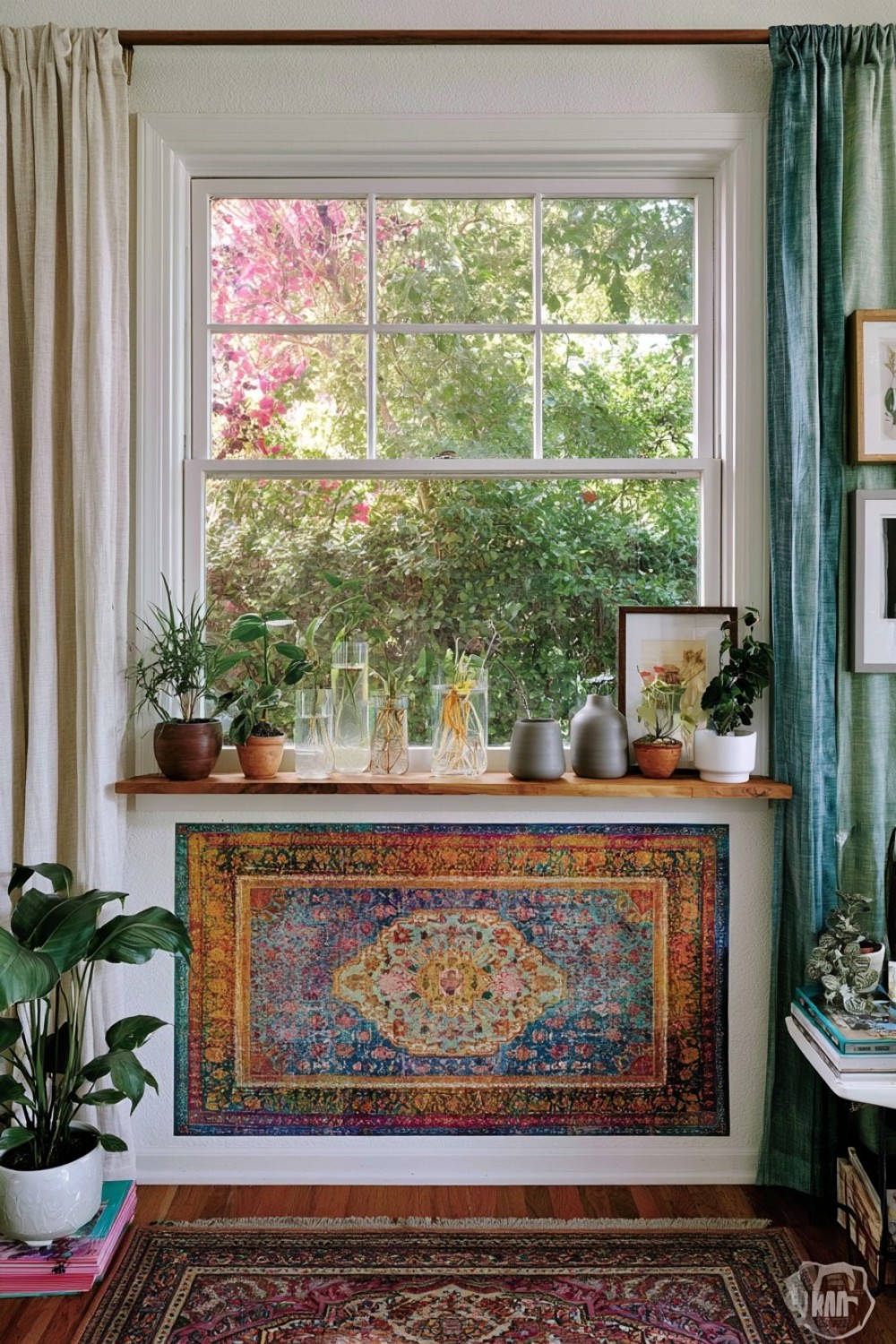
Install a shallow shelf across or just beneath the lower portion of a wide window.
Use it for small plants, propagation vessels, or a rotating collection of natural objects.
Keep the objects low enough that the main view remains visible.
Clear glass propagation bottles can work particularly well because they allow light to pass through, while ceramic pieces add texture.
Do not overcrowd the shelf. Leaving open sections makes the composition feel curated rather than cluttered.
Secure the shelf appropriately for its load, especially if it holds water-filled vessels.
This treatment works best where the window does not need to open inward across the shelf.
16. Layered Textile Tiebacks
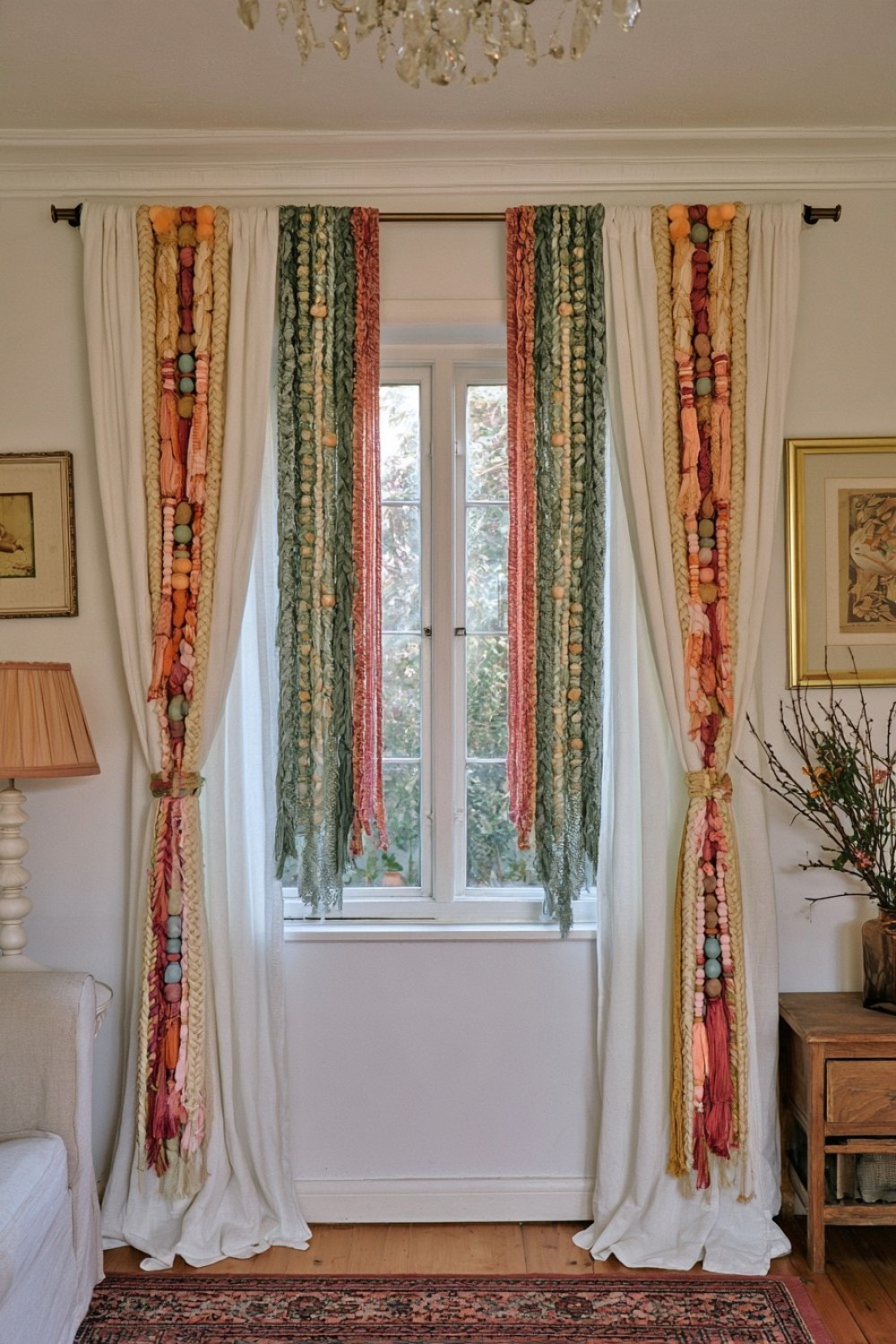
Turn curtain tiebacks into small textile compositions.
Combine braided cord, narrow woven bands, fabric scraps, and a few wooden or ceramic beads rather than using conventional matching holdbacks.
Keep each tieback within the room's palette so the materials provide the interest rather than excessive color.
One side can even differ slightly from the other for a more collected feel.
Make sure the finished tieback is smooth enough not to snag delicate curtain fabric.
This detail works especially well with plain linen or cotton panels because it introduces craftsmanship at a small scale.
It is also easy to change seasonally without replacing the curtains themselves.
Keeping Boho Windows Light
Boho window decor works best when texture and natural light remain in balance. Adding too many woven shades, patterned curtains, plants, garlands, and tassels to one window can quickly make the area feel cluttered rather than relaxed.
Choose one dominant feature and support it with one or two quieter materials. Linen can pair with cane, timber can sit beside block-printed cotton, or plants can soften simple curtains without requiring additional ornament.
Function should remain part of the design. Curtains still need to move, windows need to open, and plants need appropriate light and safe support.
When the materials feel tactile but the glass still has room to breathe, boho window decor can look collected, personal, and comfortable rather than overly styled.
MORE IDEAS


Share
What's Your Reaction?
 Like
0
Like
0
 Dislike
0
Dislike
0
 Love
0
Love
0
 Funny
0
Funny
0
 Angry
0
Angry
0
 Sad
0
Sad
0
 Wow
0
Wow
0