16 French Door Privacy Solutions That Still Let Light In

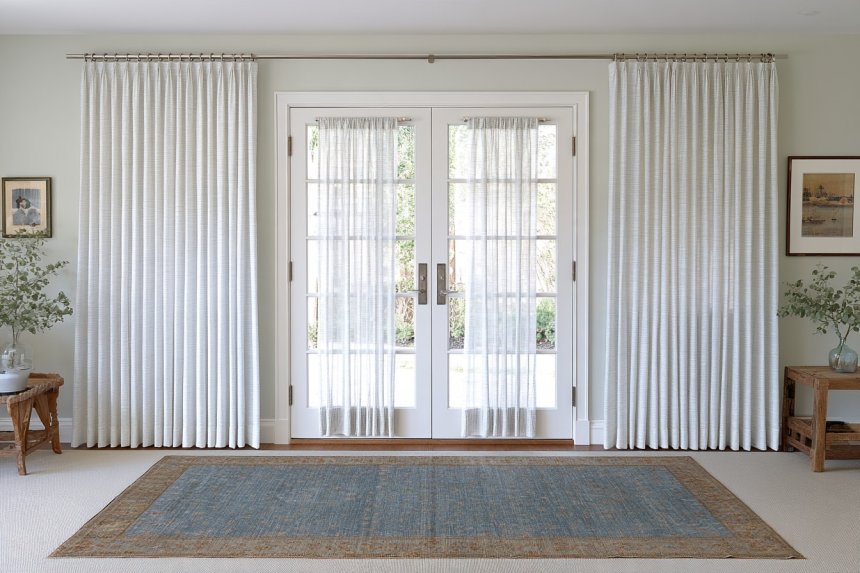
French doors bring light and openness into a room, but their large glass panels can quickly become a privacy problem in bedrooms, home offices, bathrooms, or rooms facing a street or neighboring property. The best solution does not necessarily block the glass completely. Privacy can come from diffusion, layering, movable panels, patterned surfaces, or strategic coverage that hides sightlines while preserving daylight. A well-designed treatment should also respect the proportions of the doors instead of making them feel visually heavy. These French door privacy ideas range from simple DIY upgrades to more architectural solutions, with practical guidance on materials, light control, flexibility, and where each approach works best.
1. Apply Frosted Film Only to the Lower Two-Thirds
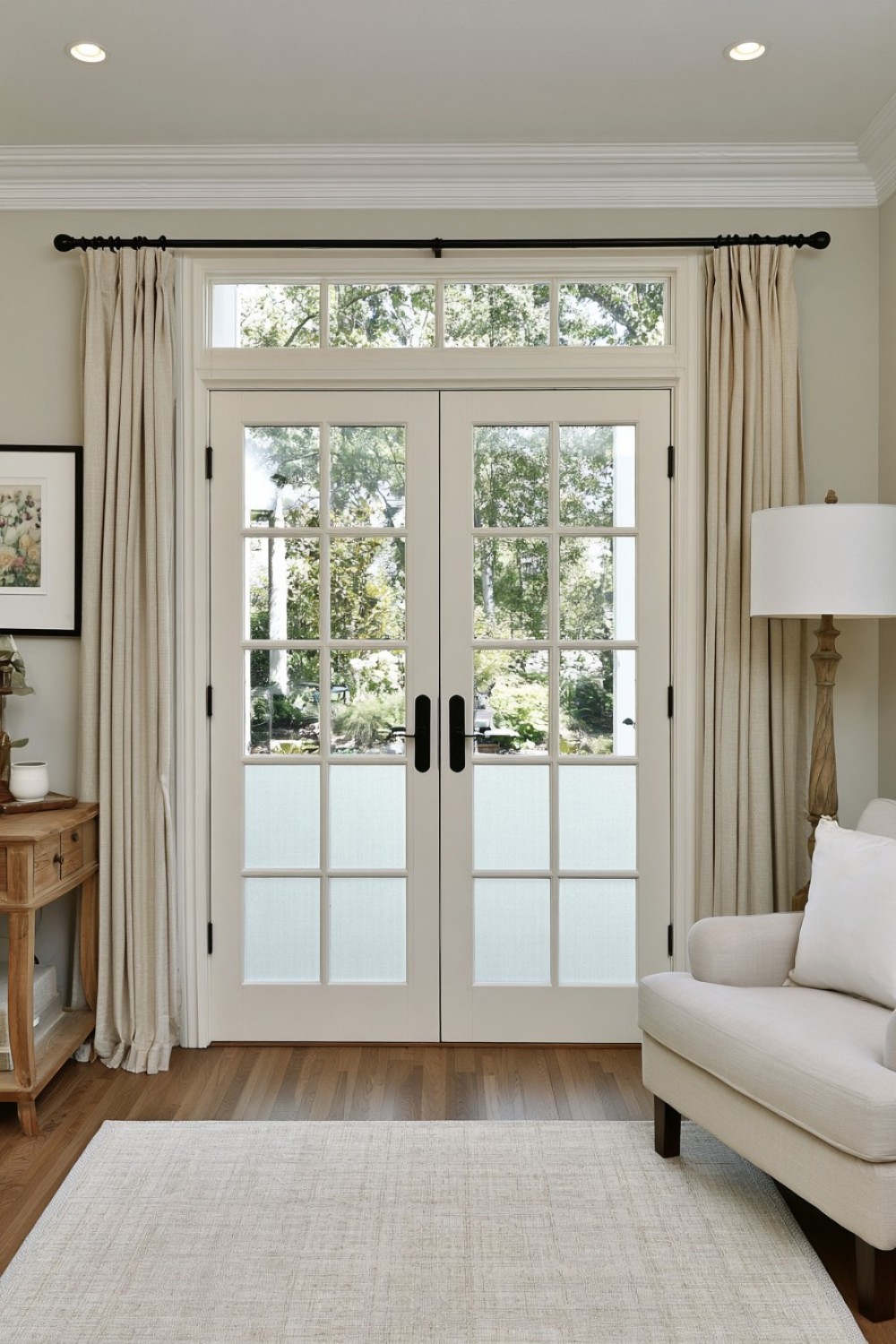
Instead of covering the entire glass panel, frost only the section where privacy is actually needed.
This preserves natural light through the upper portion while blocking direct views from outside.
For a DIY version, use removable static-cling or adhesive privacy film, a spray bottle with water and a small amount of dish soap, a squeegee, craft knife, and metal ruler.
Measure carefully and leave a narrow clear border around the glass if you want a more refined framed effect.
This approach works especially well for street-facing French doors because seated and standing sightlines can be blocked without making the room feel closed in.
A matte etched finish usually looks more architectural than highly patterned plastic film.
2. Create a Gradient Privacy Film
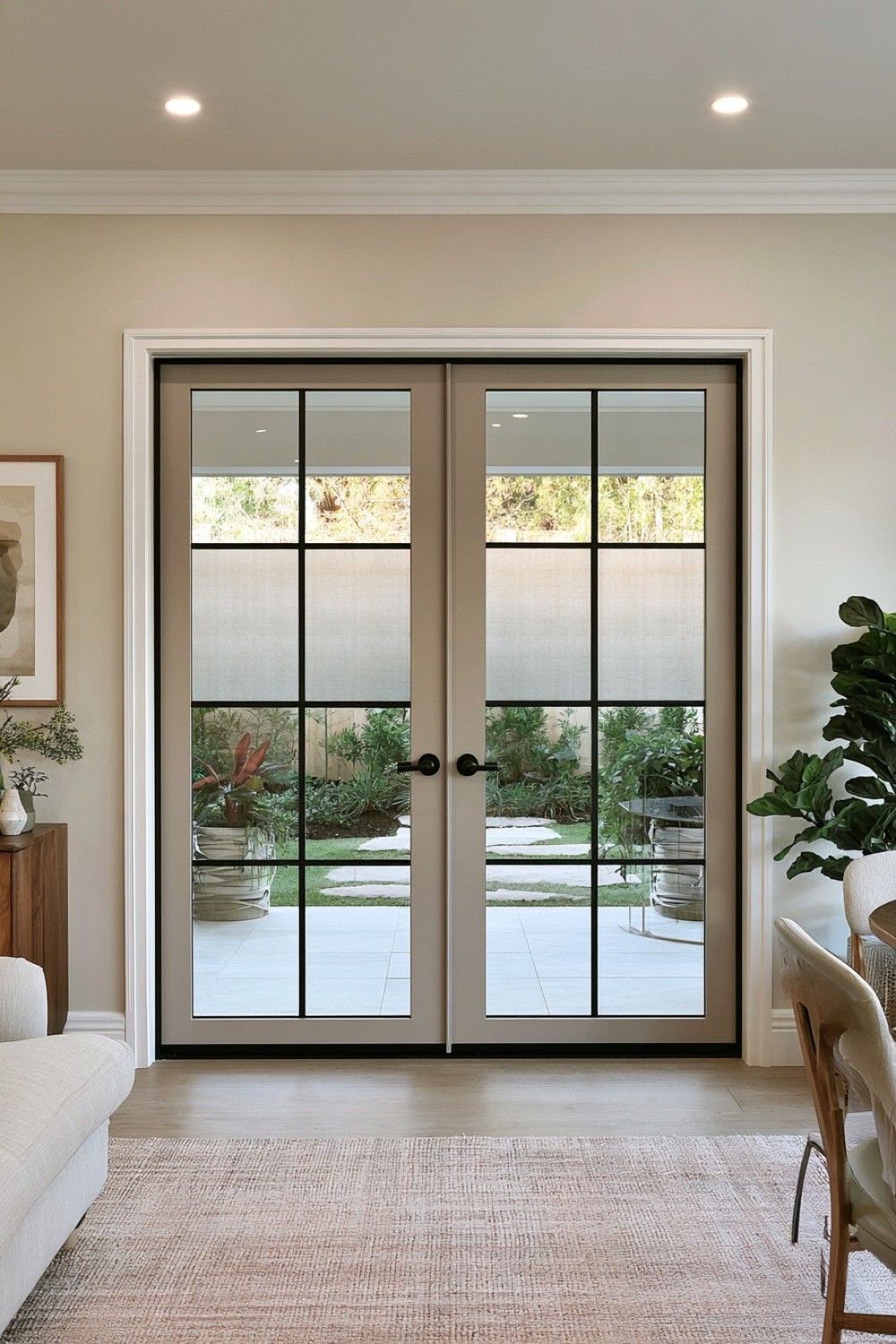
A full sheet of frosted film can feel flat, so create a gradient instead.
Use several strips of privacy film with gradually changing opacity, starting more opaque near the bottom and becoming clearer toward the top.
Another option is to cut narrow horizontal bands with increasing gaps between them.
This gives the door a custom graphic look while maintaining privacy where it matters most.
You will need removable film, measuring tape, craft knife, straightedge, and application squeegee.
The idea works particularly well in modern interiors where a standard café curtain would feel too traditional.
Keep the band spacing consistent so the effect looks intentional rather than improvised.
3. Install Slim Café Curtains at Eye Level
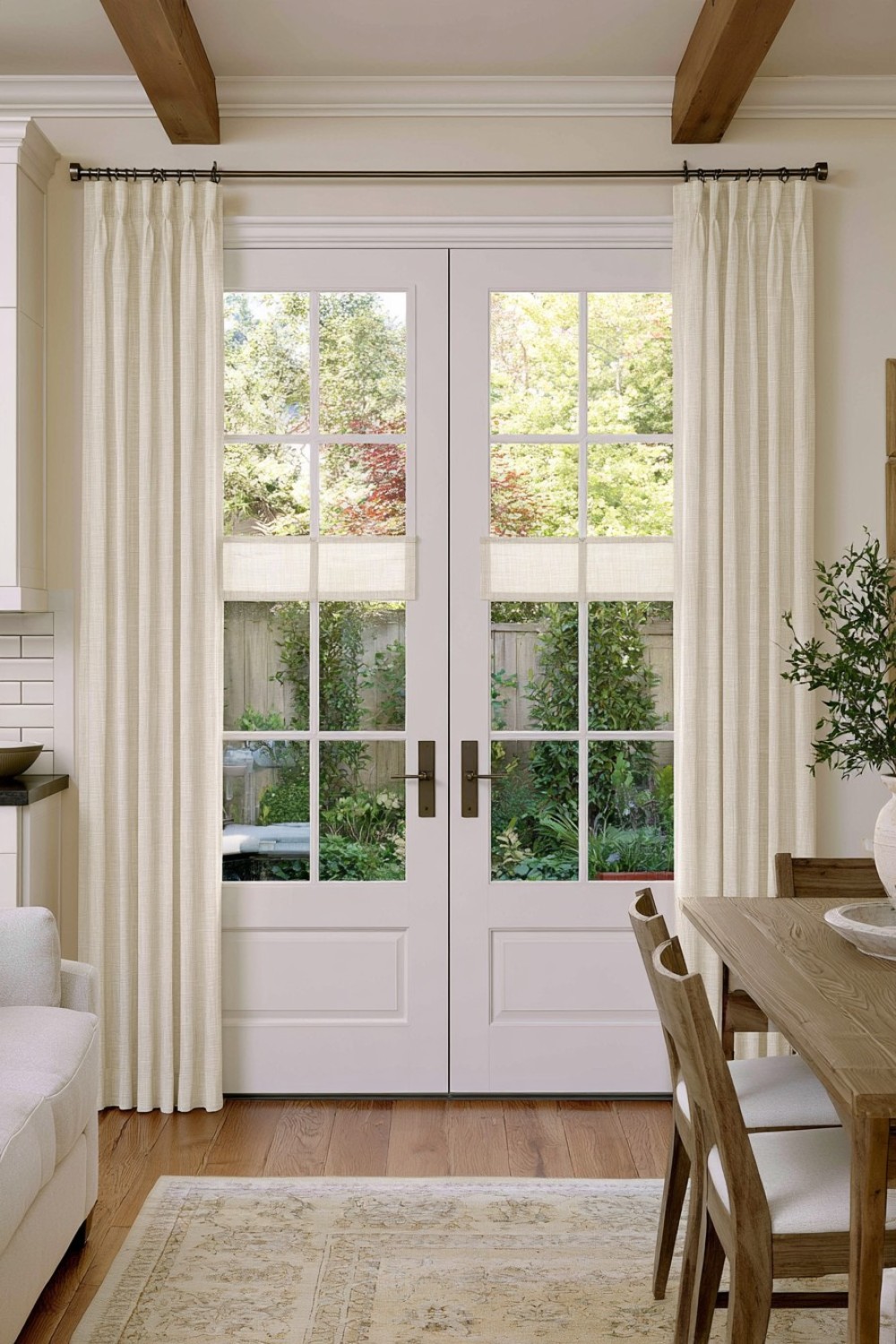
Café curtains can provide privacy without covering the whole door.
Instead of mounting them at the traditional halfway point, position the rod according to actual sightlines from outside.
Use lightweight linen, cotton voile, or a soft textured sheer and let the fabric cover only the middle portion of the glass.
This leaves light entering from both above and below while shielding the most exposed area.
For a cleaner look, use tension rods or slim screw-mounted rods finished to match the door hardware.
Choose fabric with enough weave density to blur silhouettes during the day but not so heavy that the doors feel visually blocked.
For nighttime privacy, remember that many sheer fabrics become more transparent when the room is brighter inside than outside.
4. Make Removable Fabric Panels That Snap Into Place
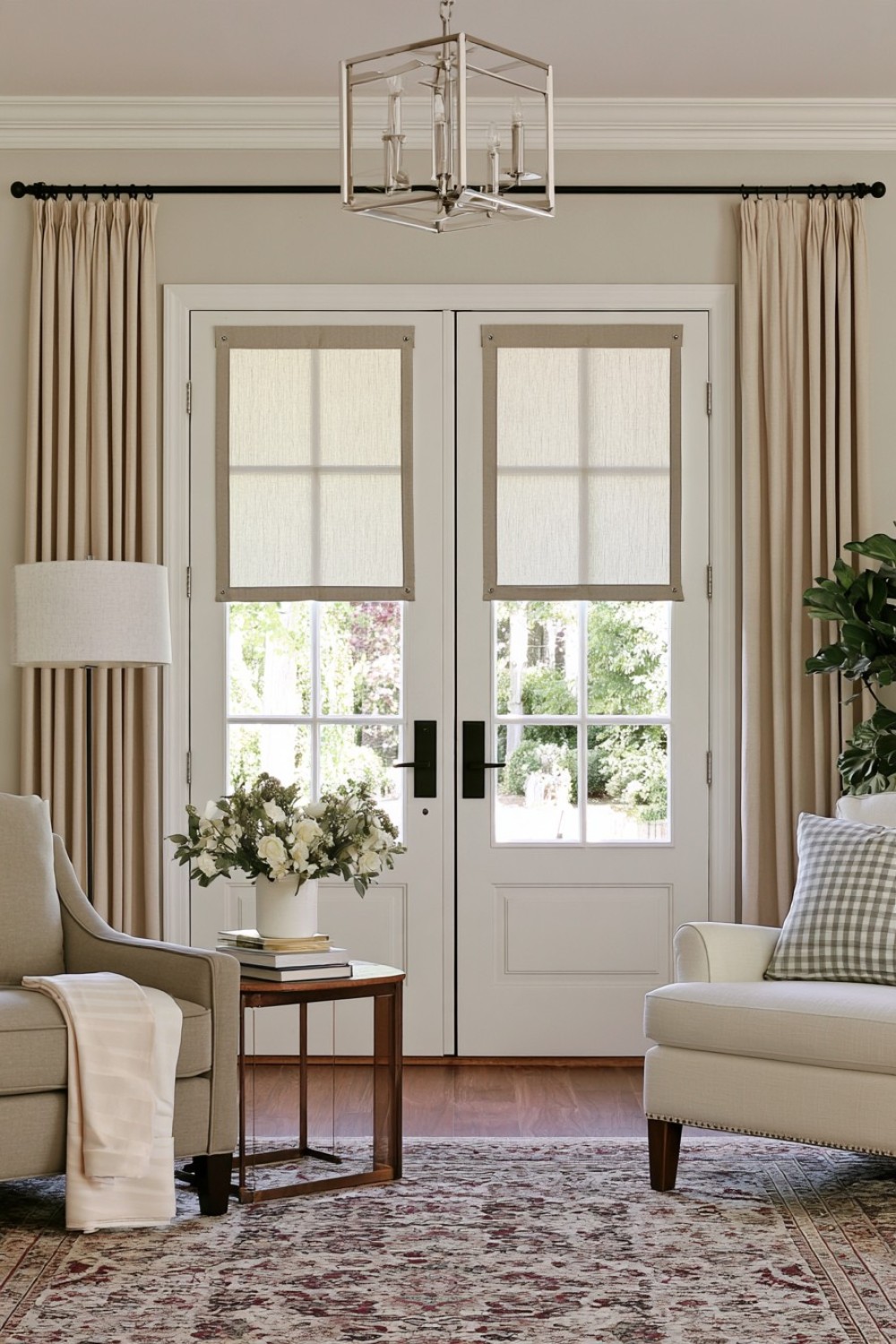
For doors that only need privacy at certain times, create removable fabric screens.
Sew lightweight opaque or semi-opaque fabric into panels sized to fit each glass section, then attach them using discreet snap fasteners, hook-and-loop strips, or magnetic clips if the door construction allows.
You will need fabric, sewing machine or fabric adhesive, measuring tape, fastening system, and optional thin batting for added opacity.
The panels can remain folded in a drawer when not needed and attach in seconds.
This is especially useful for guest rooms, temporary home offices, or rental properties where permanent changes are undesirable.
Use a fabric that coordinates with nearby curtains or upholstery so the privacy treatment feels like part of the room.
5. Add Reeded-Glass Film for a More Architectural Look
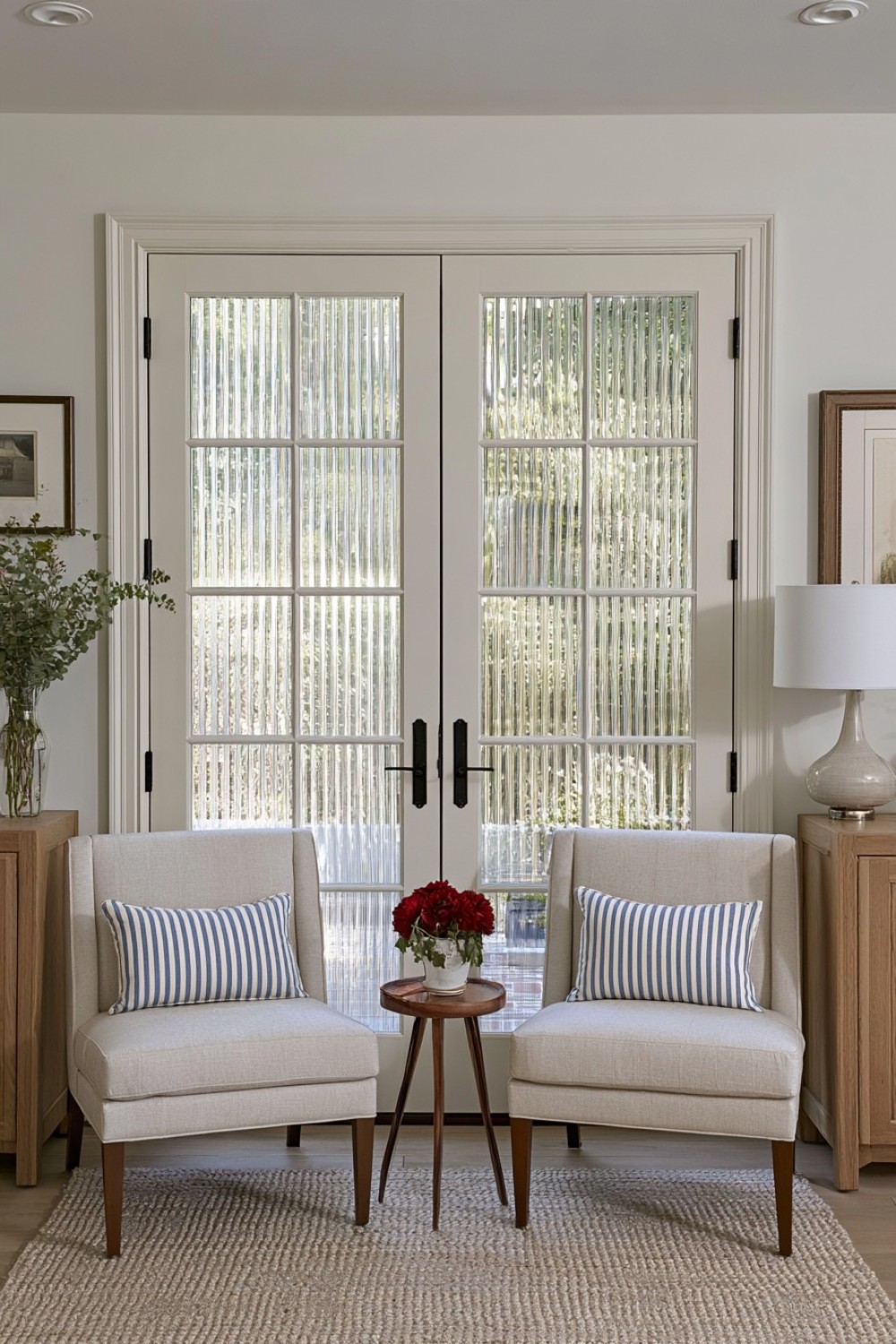
Reeded or fluted privacy film can mimic textured architectural glass.
The vertical lines distort views while still allowing a surprising amount of daylight through.
This works particularly well on black, oak, or painted French doors because the linear glass texture complements the door framing.
For DIY installation, cut film to each pane individually rather than covering the entire door with one oversized sheet.
That makes the result look more like built-in glass than surface film.
Choose a subtle rib width. Very wide patterns can appear decorative, while narrow vertical fluting usually feels more contemporary.
This is an effective option for home offices, dining rooms, or interior French doors where complete blackout is unnecessary.
6. Build a Sliding Cane Screen in Front of the Doors
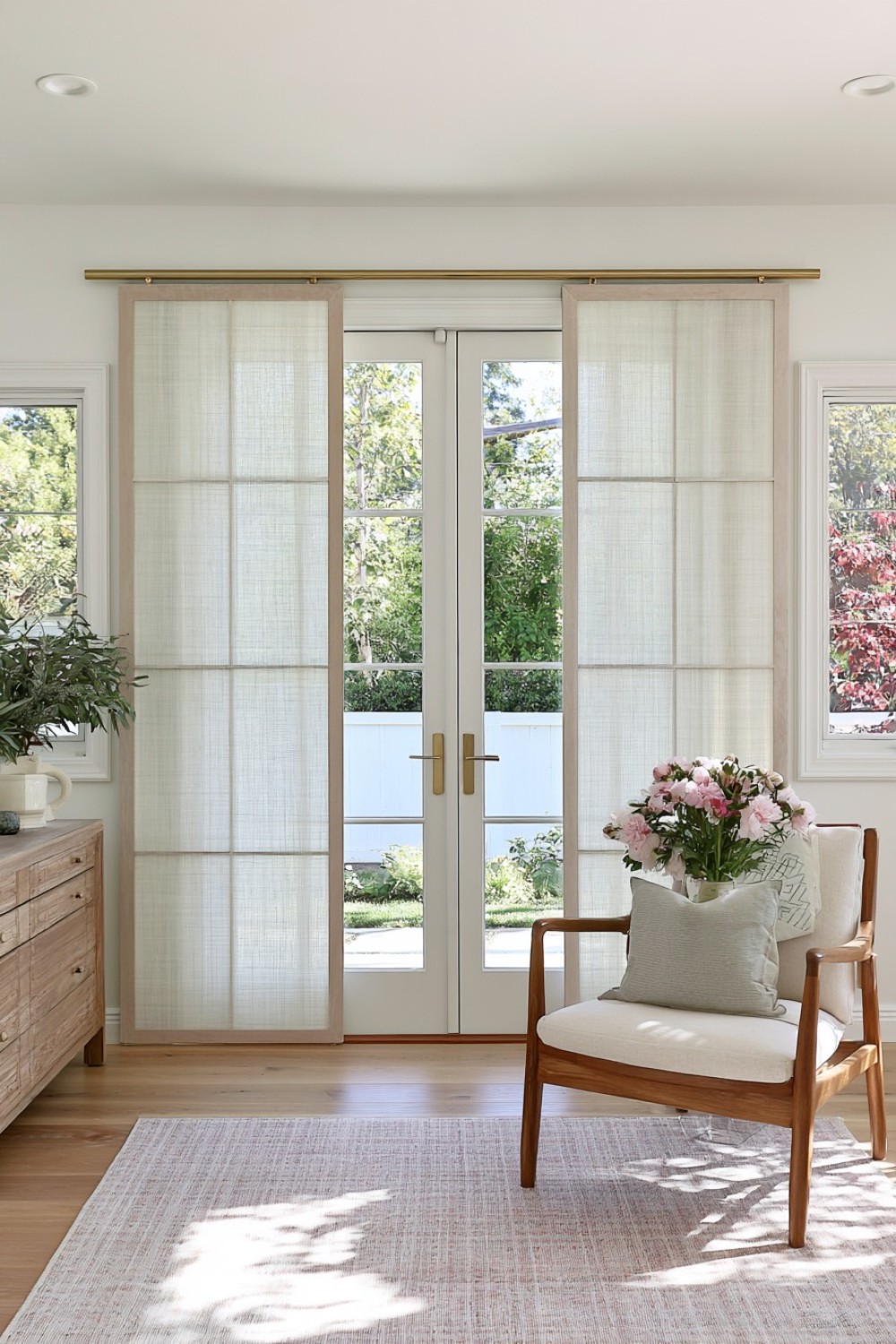
Instead of attaching privacy material directly to the glass, create a movable screen in front of the doors.
Build a slim timber frame filled with cane webbing, perforated wood, or woven rattan and mount it on a ceiling or wall track.
When privacy is needed, slide the panel across the French doors. When not in use, it moves aside and becomes a decorative wall feature.
You will need timber strips, cane webbing, track hardware, fasteners, and a stable mounting surface.
This idea works especially well in bedrooms, dressing areas, or warm natural interiors.
The open weave softens views without blocking all light and feels much more architectural than a temporary curtain.
7. Use Interior Shutters Only on the Lower Panels
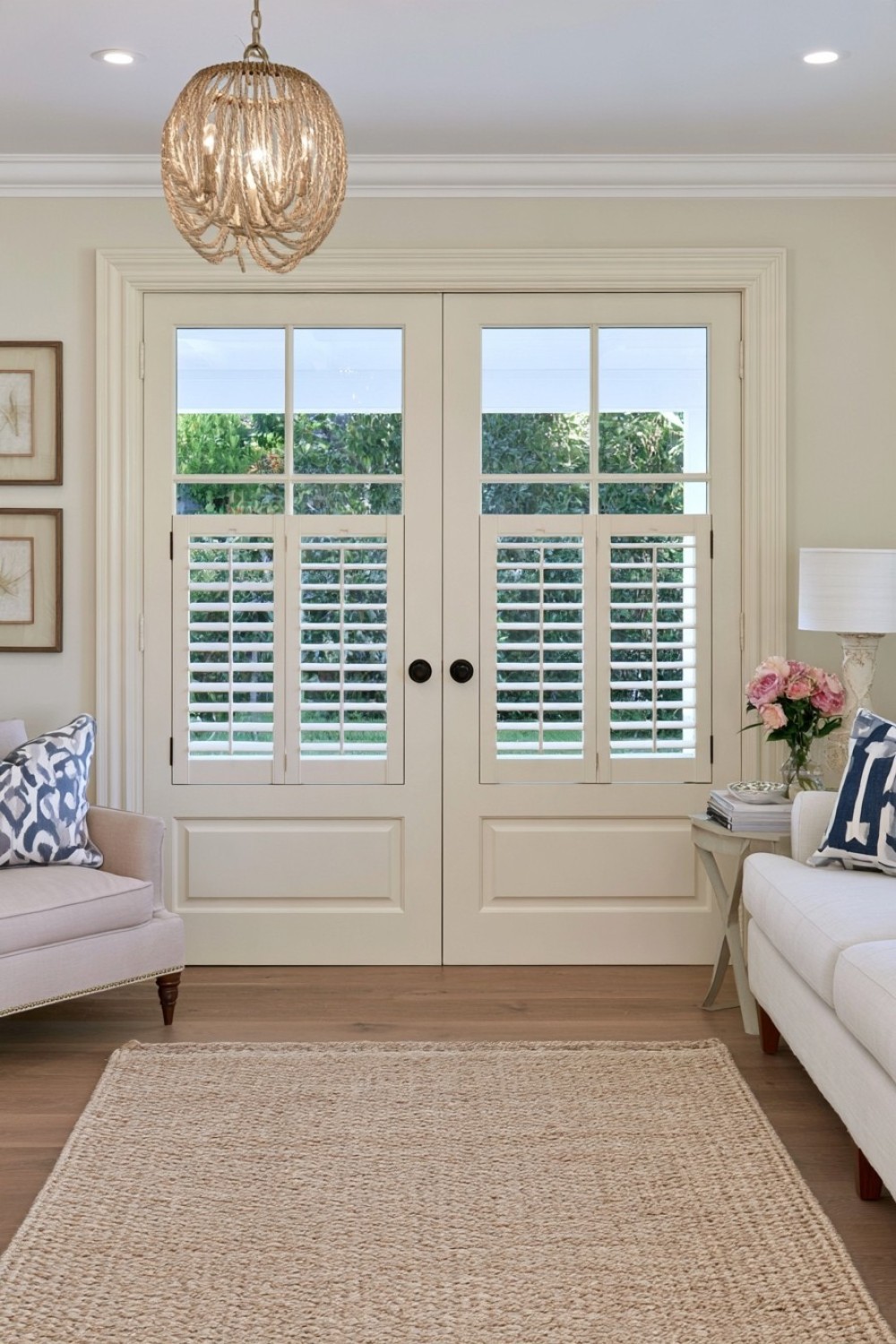
Full-height shutters can make French doors feel bulky.
A more refined approach is to cover only the lower glass panels with slim interior shutters.
Paint them to match the door frame so they appear built in.
Upper glass remains clear, preserving daylight and openness, while the lower portion gains complete privacy.
This works beautifully in traditional, farmhouse, coastal, or European-inspired interiors.
For a DIY installation, use lightweight custom-cut shutter panels with small hinges or magnetic catches.
Make sure the shutters do not interfere with door handles, locks, or opening clearance.
This solution is particularly strong when privacy is needed permanently but you still want the doors to retain their original character.
8. Create a Japanese-Inspired Paper Grid Overlay
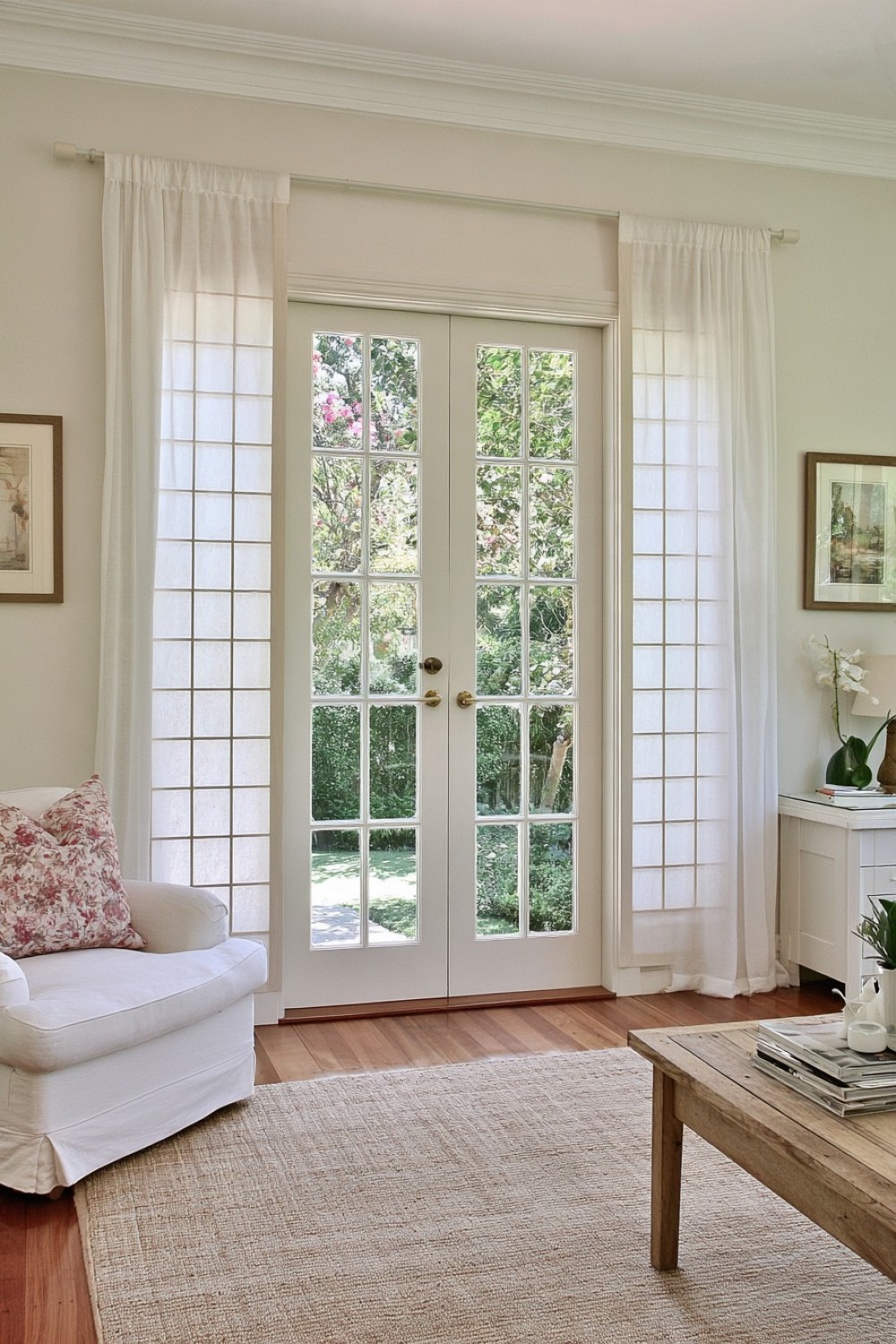
A translucent paper-style screen can give French doors a softer, more architectural appearance.
Build thin removable timber grids sized to sit over the glass panels and back them with shoji-style paper, translucent fabric, or durable synthetic paper designed for interiors.
The grid diffuses shapes while still transmitting light.
For a DIY version, build the frame from lightweight basswood or narrow timber strips, glue the intersections carefully, and attach the translucent backing.
Mount the finished panels with removable clips or small magnetic fittings if suitable.
This approach works especially well in bedrooms, meditation spaces, or minimalist interiors.
The privacy comes from diffusion rather than darkness, so the doors remain visually light.
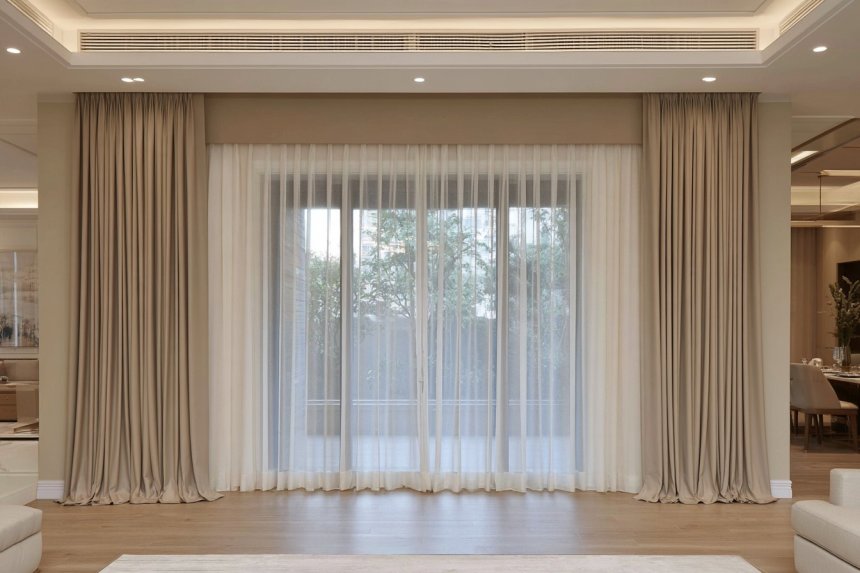
9. Use Sheer and Opaque Layers Together
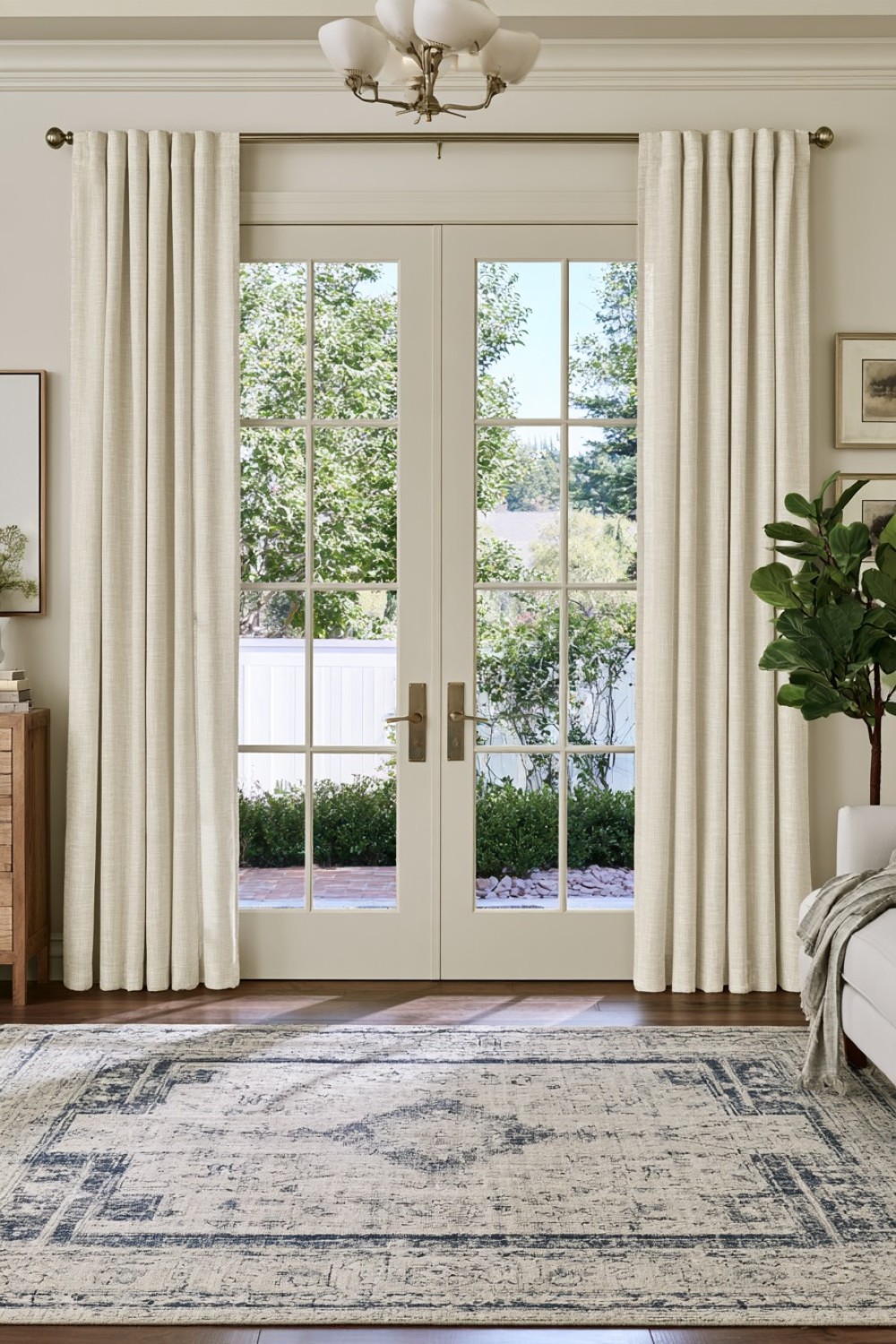
One fabric layer often forces you to choose between light and privacy.
A double-layer system gives more flexibility.
Install a lightweight sheer panel close to the glass and a second, more opaque curtain that can close when stronger privacy is needed.
During the day, the sheer softens views while keeping the room bright. At night, the opaque layer provides complete coverage.
Use slim rods mounted directly to the door or just above the frame.
For a more tailored look, keep both layers narrow and fitted rather than using full wall-to-wall curtains.
This solution works especially well in bedrooms and living spaces where privacy needs change throughout the day.
10. Add Etched-Style Geometric Film Panels
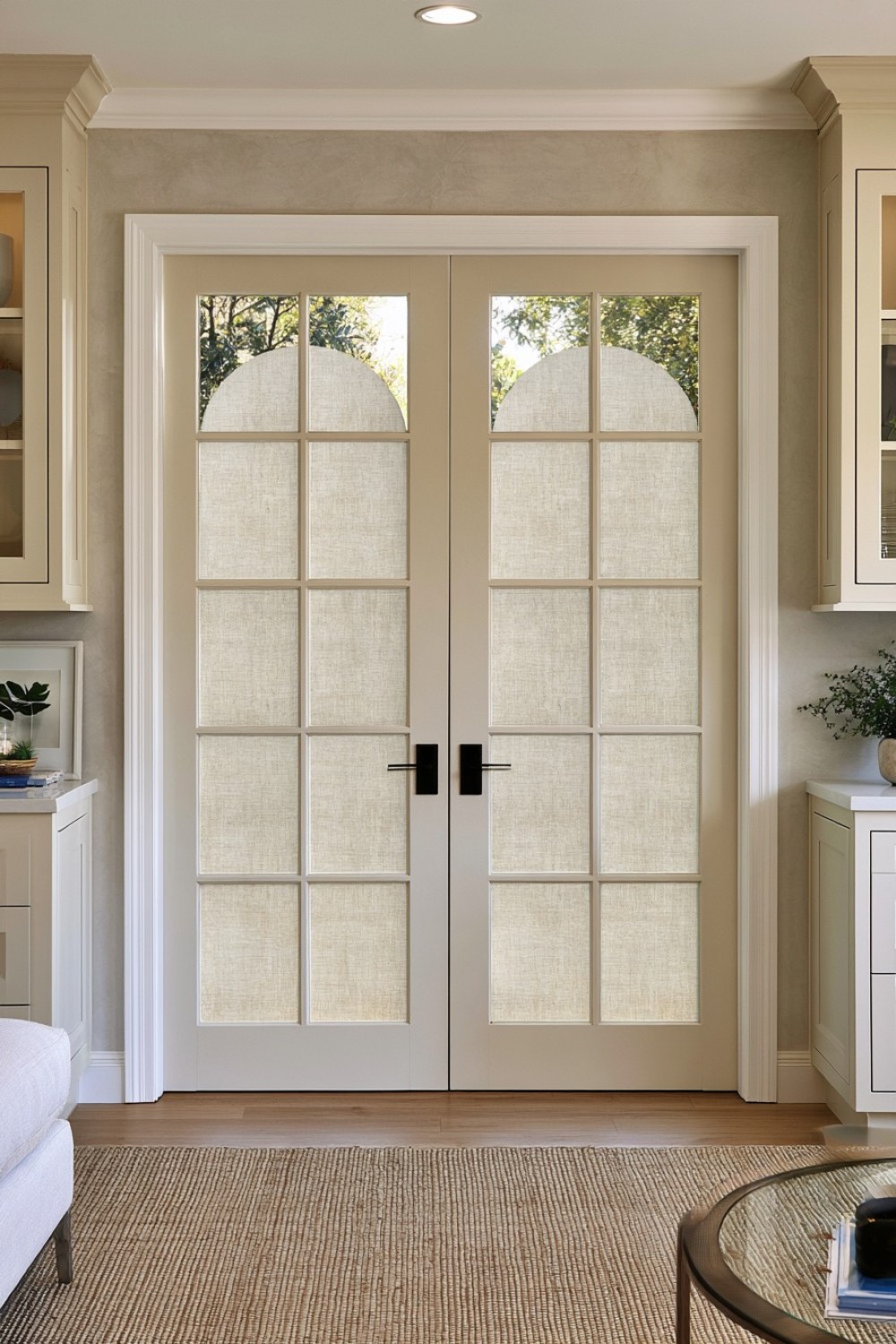
Instead of choosing floral or decorative film, create a restrained geometric design.
Cut frosted film into large arches, rectangles, half-circles, or offset panels and apply them strategically across the glass.
For example, two overlapping frosted arches can block direct sightlines while leaving the corners transparent.
This creates privacy through composition rather than simply opacity.
You will need matte privacy film, cutting mat, craft knife, metal ruler, and paper templates.
Test the layout on the door using removable paper first.
A simple geometric arrangement can make plain French doors look custom-designed while remaining easy to reverse later.
11. Hang a Textile Panel Between Two Door Rails
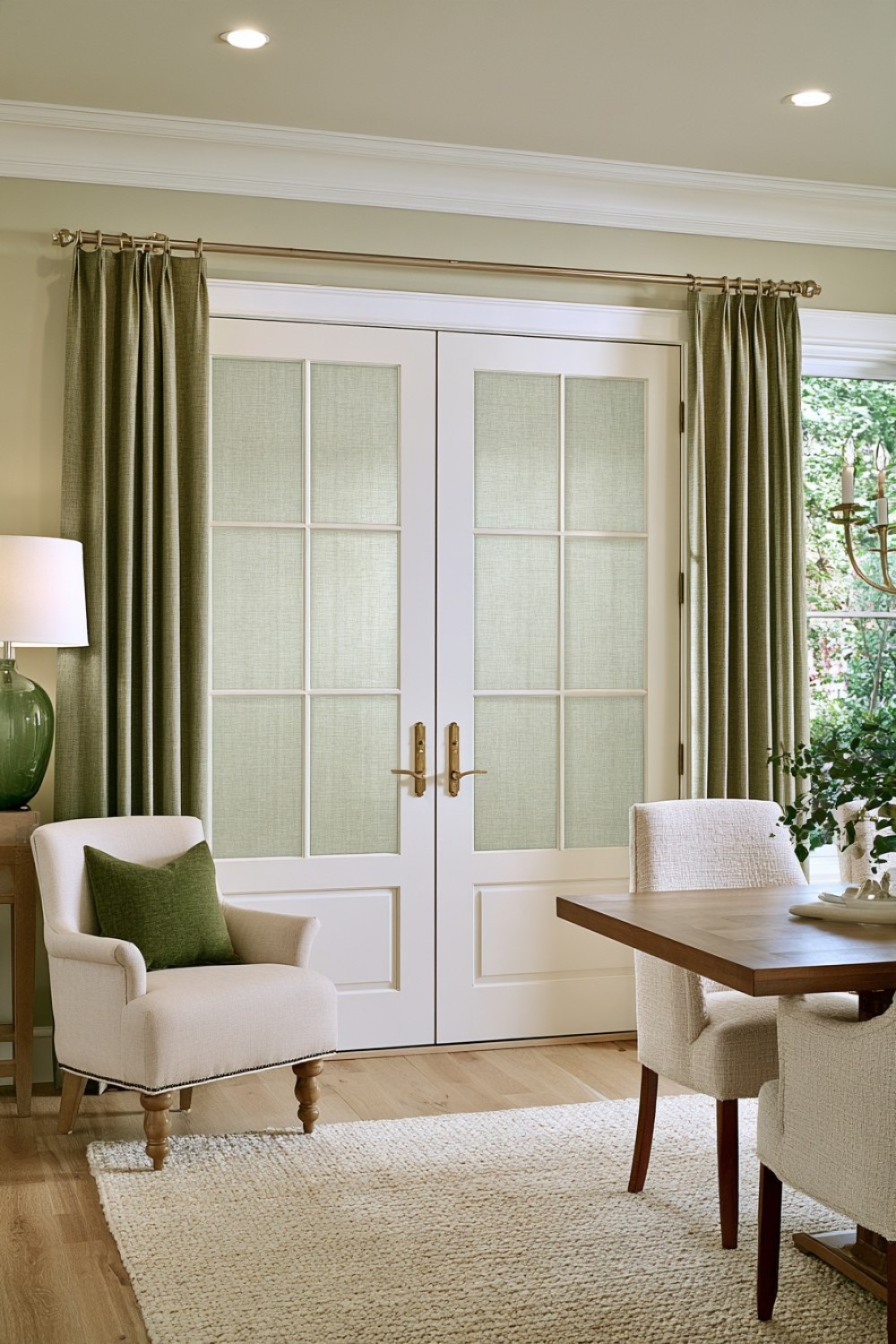
Instead of covering each glass pane individually, stretch one fabric panel between slim upper and lower rails mounted to the door.
The bottom rail keeps the fabric taut, which prevents it from moving every time the door opens.
Use linen, woven cotton, or a lightly textured privacy fabric.
This creates a cleaner appearance than loose curtains and is especially useful for doors that are opened frequently.
For a DIY version, sew narrow channels into the top and bottom of the fabric and slide lightweight rods through them.
Leave enough clearance around handles and lock hardware.
The result feels closer to a tailored panel than a curtain.
12. Add a Decorative Perforated Wood Insert
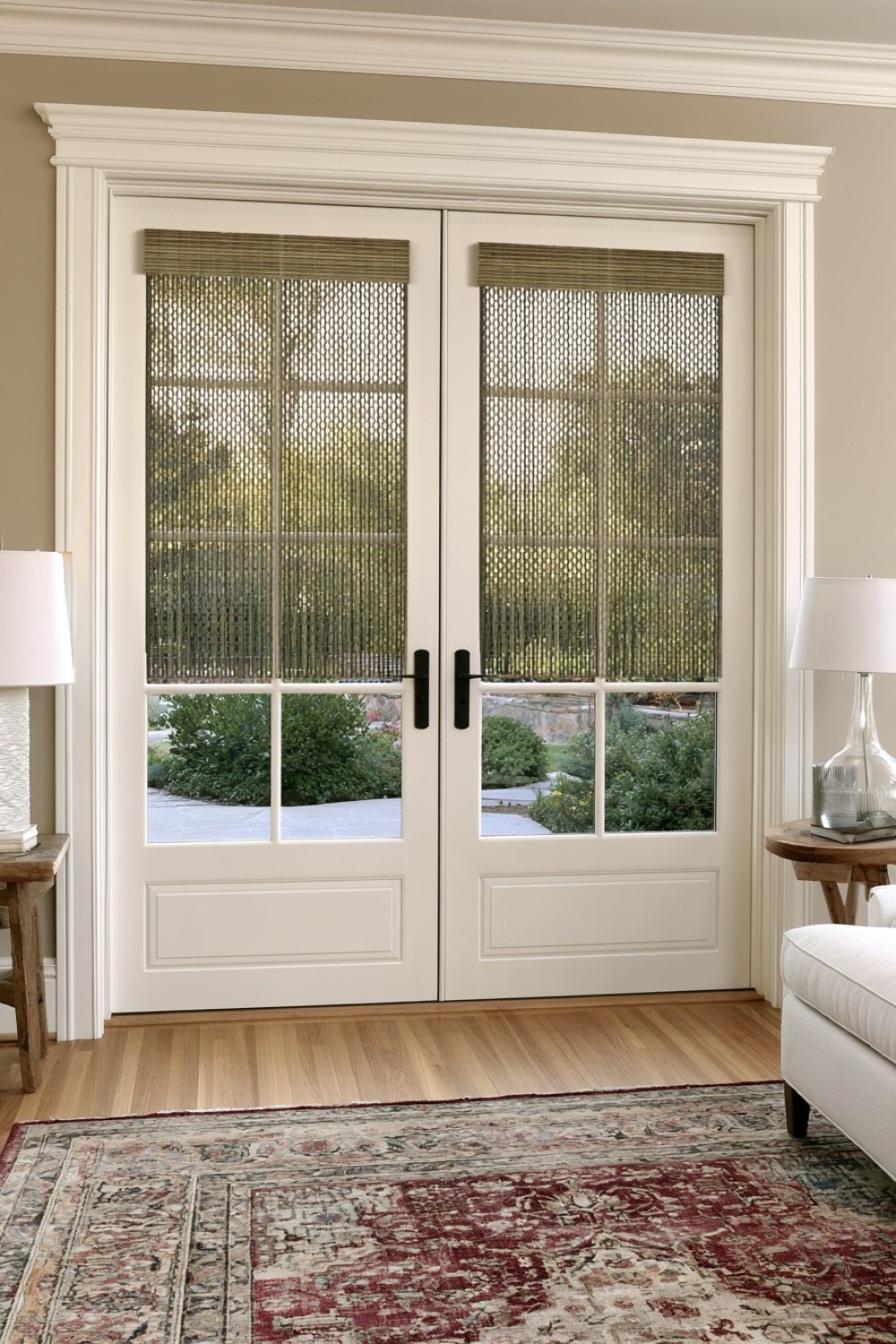
French doors can gain privacy through a removable decorative panel made from perforated plywood or laser-cut wood.
Choose a restrained pattern—vertical slots, small circles, or an abstract geometric motif—rather than ornate cutouts.
Mount the panel slightly away from the glass using slim spacers so it casts subtle shadows.
For a DIY version, use thin plywood, drill or CNC-cut the pattern, sand thoroughly, and finish in the same color as the door.
The panel can cover the lower half or selected sections only.
This works particularly well in modern or organic interiors and creates privacy while making the door itself a stronger design feature.
13. Use Roman Shades Made Specifically for Each Door
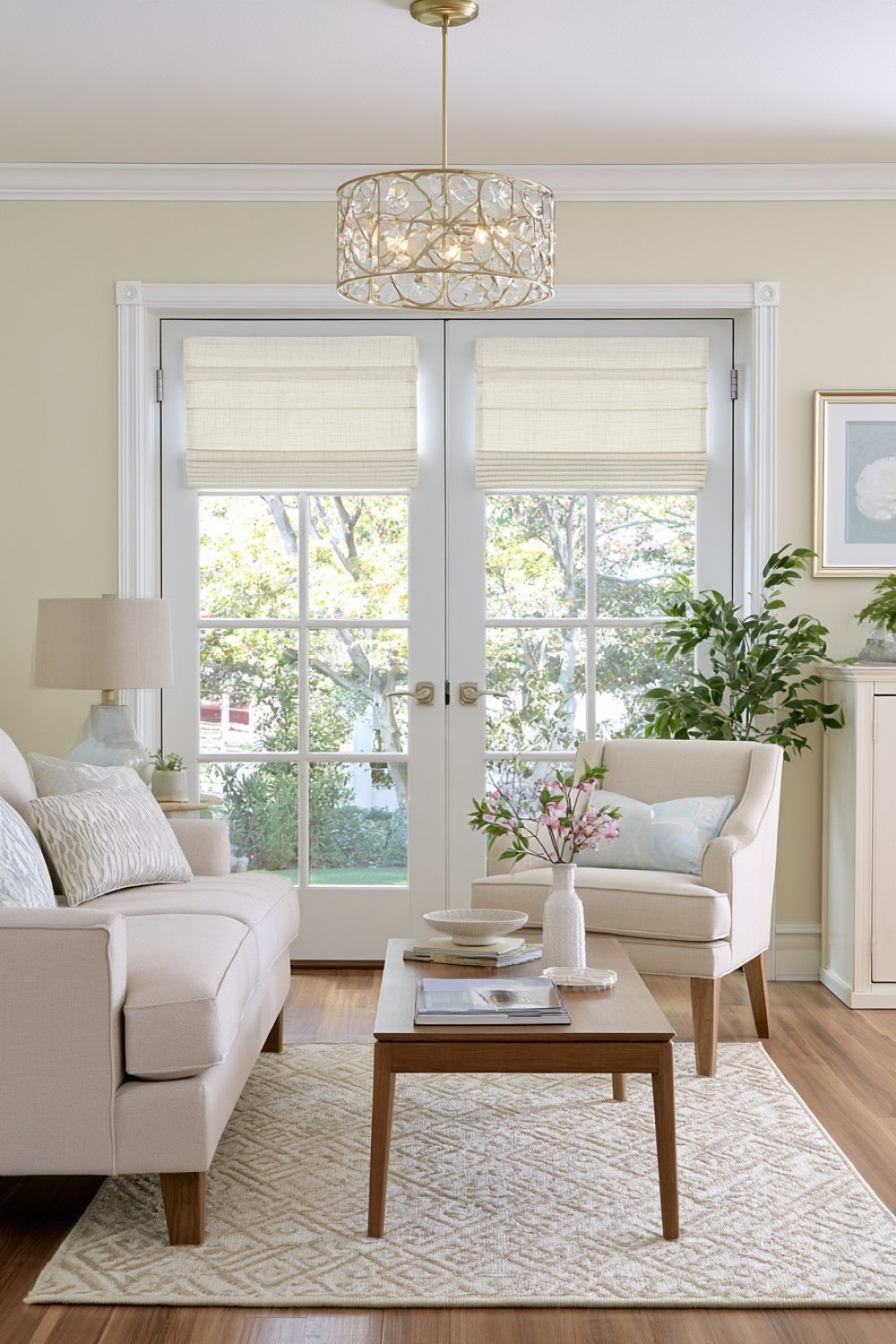
French doors can accommodate compact Roman shades if they are sized carefully.
Instead of one large treatment spanning both doors, mount an individual shade on each leaf.
Choose a light-filtering linen for softer daytime privacy or a lined fabric where full privacy is important.
When raised, the shades fold neatly near the top and leave most of the glass exposed.
When lowered, they cover the entire pane without excess fabric around the frame.
This is particularly useful in bedrooms, offices, or dining rooms where you want privacy to feel polished rather than temporary.
Make sure the shade hardware does not interfere with door movement or handles.
14. Create a Privacy Strip at Standing Eye Level
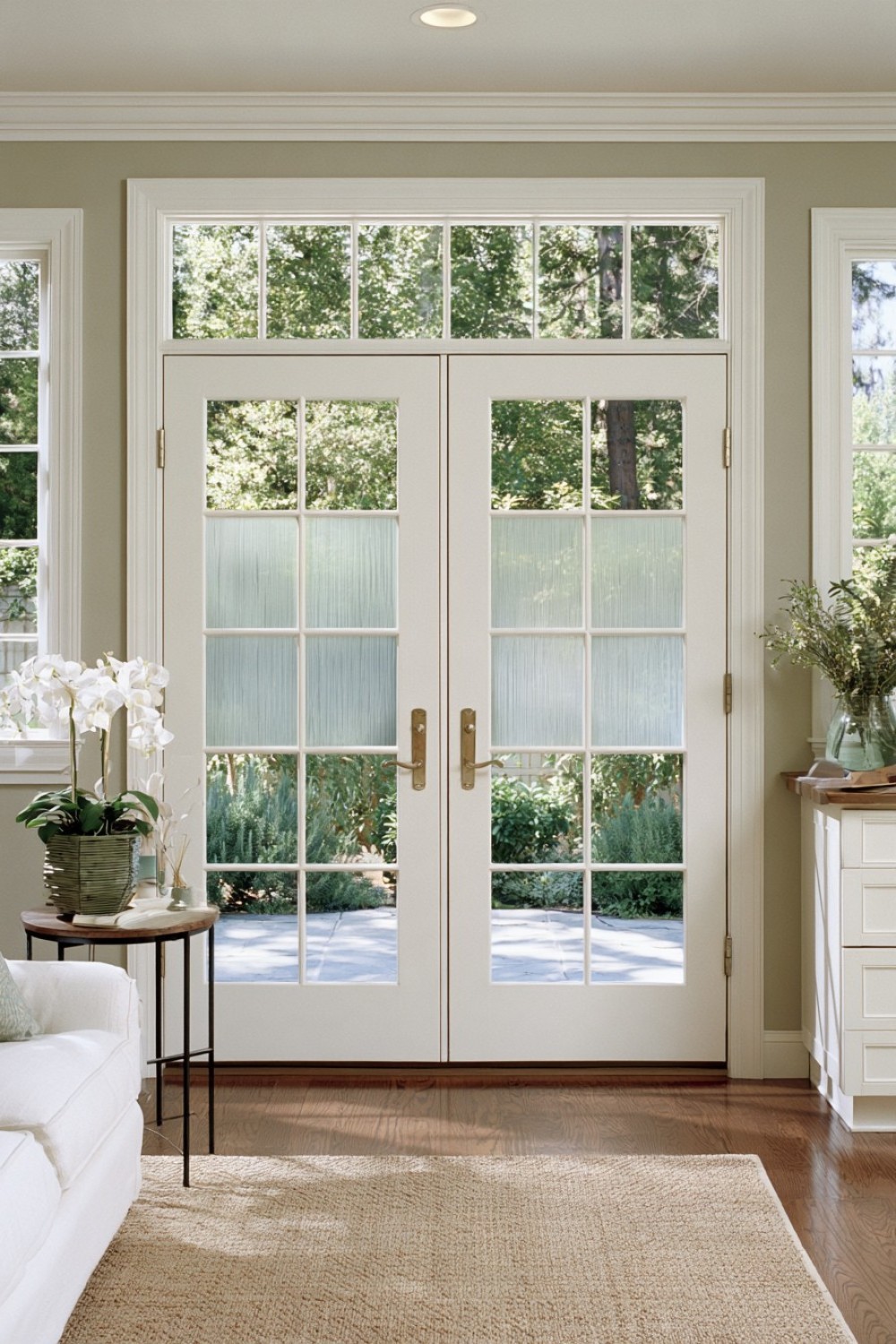
Sometimes only a narrow band of the door needs coverage.
Measure the approximate eye-level sightline from outside and apply one wide strip of frosted, reeded, or patterned film across that zone.
Leave the rest of the glass completely clear.
This is surprisingly effective for interior courtyards, balconies, or urban homes where people typically pass at one predictable height.
A band around 30–50 cm tall can block direct views while preserving most of the door's transparency.
This also creates a strong horizontal design element that can align with chair rails, cabinetry, or nearby window treatments.
It is one of the least visually intrusive privacy solutions.
15. Place a Tall Indoor Screen Behind the Doors
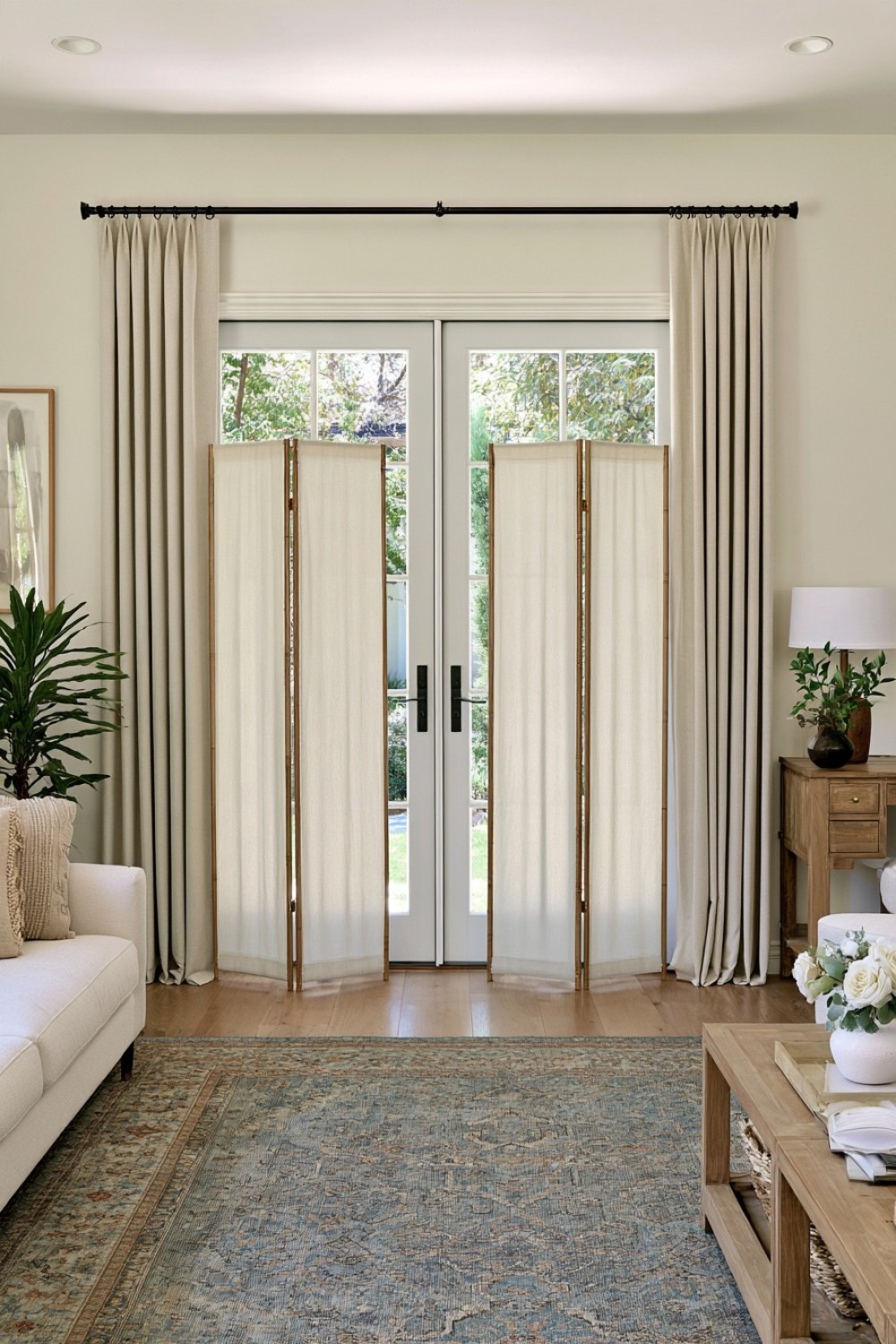
For renters or anyone who does not want to alter the French doors themselves, use a freestanding screen.
Choose a design with translucent panels, slatted timber, cane, fabric, or frosted acrylic.
Position it several inches inside the room rather than directly against the glass.
The gap between screen and door creates depth and allows daylight to filter around the edges.
A folding screen can also be partially closed depending on the time of day.
This works particularly well for bedrooms, dressing rooms, or home offices where privacy may only be needed occasionally.
Choose a screen tall enough to block actual sightlines rather than using one that is purely decorative.
16. Combine Clear Glass Above With a Custom Privacy “Landscape” Below
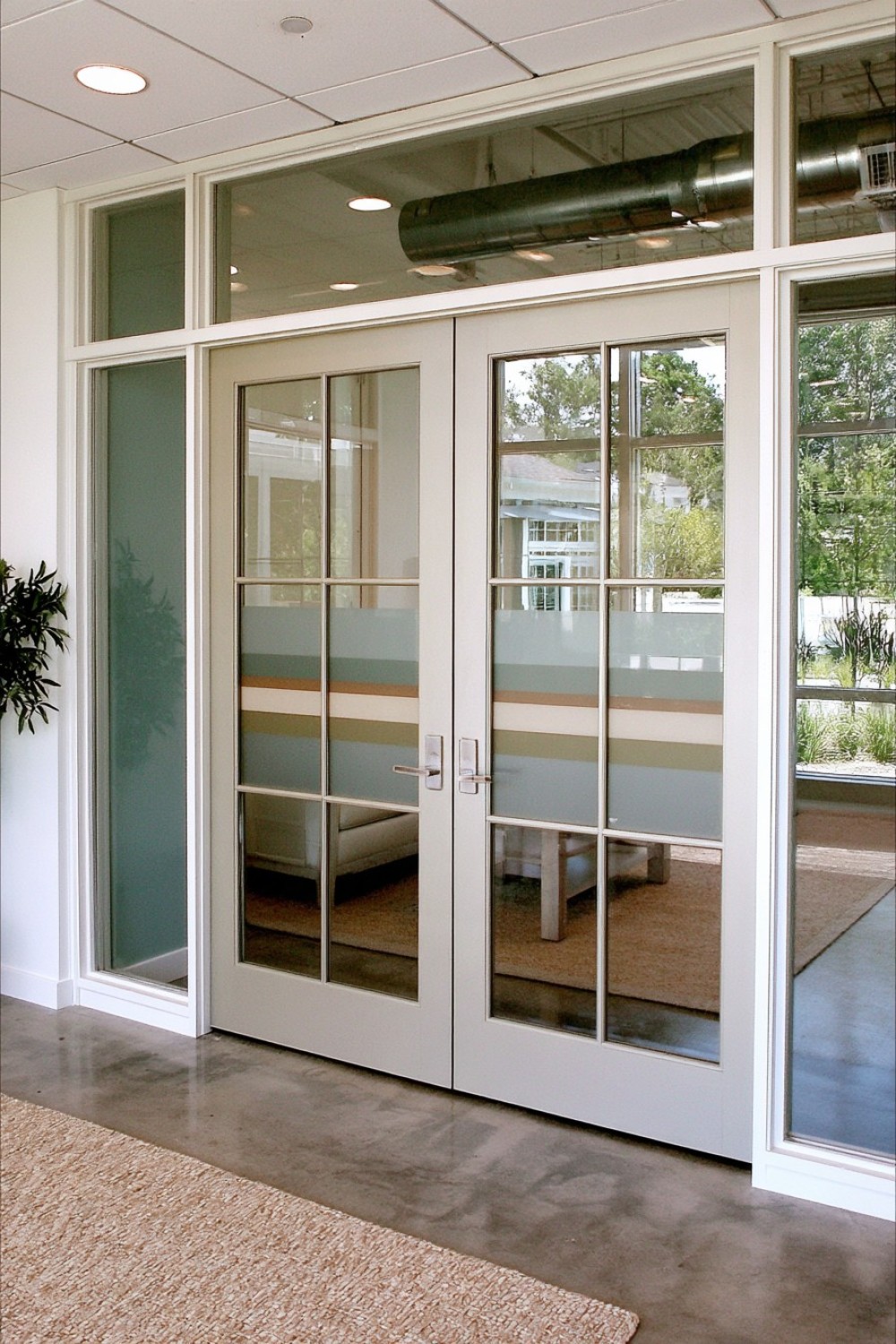
For the most distinctive solution, treat the lower glass like a canvas.
Create a layered privacy composition using two or three materials: perhaps frosted film as the base, narrow timber strips over selected sections, and one band of translucent colored acrylic or textured film.
The design could form abstract hills, arches, or overlapping geometric planes across the bottom half of the doors.
From inside, it becomes decorative wall art. From outside, it obscures views without looking like a standard privacy treatment.
Keep the colors muted—smoke gray, warm white, pale amber, soft green—so the design remains connected to the interior.
This approach is especially effective when French doors are a major architectural feature and you want privacy to enhance rather than hide them.
Choosing Privacy Without Losing the Best Part of French Doors
The main advantage of French doors is light, so the strongest privacy solution usually protects that quality rather than covering every pane automatically. Start by identifying where the actual sightline problem occurs. Sometimes only the lower half needs treatment; in other rooms, nighttime privacy requires full coverage.
Film works well when you want a permanent-looking but relatively simple solution. Fabric offers more flexibility, while shutters, cane panels, or perforated screens can become architectural features in their own right.
Also think about how the doors move. Anything attached directly to them should remain lightweight, secure, and clear of handles, hinges, and locking mechanisms.
A successful treatment should make the glass feel considered—not hidden. By combining selective coverage, diffusion, movable layers, and materials that suit the room, French doors can stay bright and elegant without sacrificing privacy.
MORE IDEAS


Share
What's Your Reaction?
 Like
0
Like
0
 Dislike
0
Dislike
0
 Love
0
Love
0
 Funny
0
Funny
0
 Angry
0
Angry
0
 Sad
0
Sad
0
 Wow
0
Wow
0