15 Home Bar Table Styling Ideas With a More Collected Look

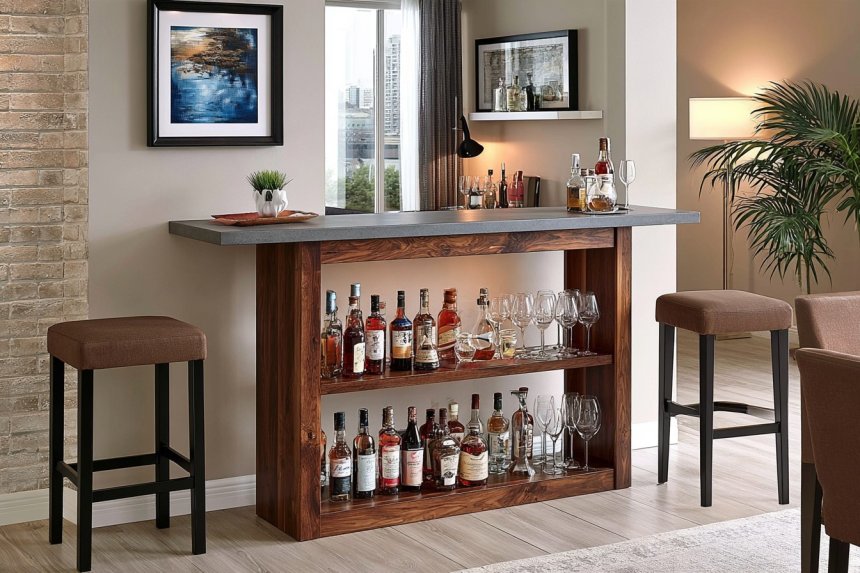
A home bar table can easily become a place where bottles, glasses, tools, and decorative objects compete for space. The more polished approach is to treat the surface like a small hospitality zone: part storage, part serving station, and part visual focal point. Instead of filling every corner, use a few strong materials and let height, reflection, texture, and negative space create the atmosphere. Smoked glass, stone, aged metal, timber, linen, and sculptural objects can all make an ordinary console or bar table feel more intentional. These bar table decor concepts focus on ideas that remain practical enough for real drinks service while giving the setup a distinctive identity.
1. Build a Smoked-Glass Drink Station
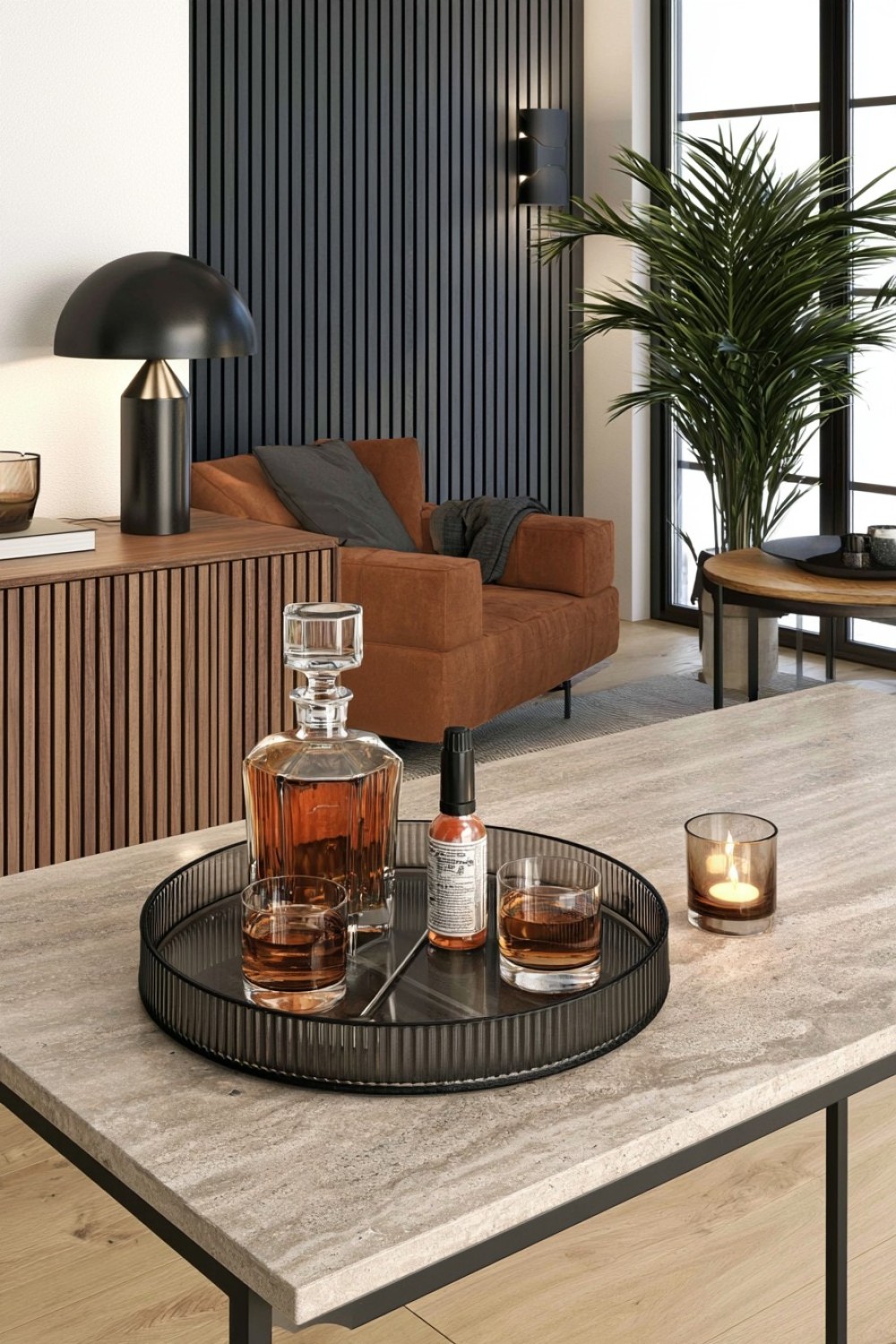
Clear glass can disappear visually, but smoked glass introduces depth without making a small bar table feel heavy.
Start with a shallow smoked-glass tray and use it to contain only the pieces needed for one type of drink: perhaps a decanter, two tumblers, bitters, and a small mixing spoon.
Keep the rest of the table relatively empty.
Dark transparent glass works particularly well against walnut, black-stained timber, travertine, or pale stone because the reflective surface changes depending on the background.
For a more layered setup, add one small amber or clear vessel rather than matching every piece perfectly.
The tray also has a practical role: it protects the tabletop from condensation and makes the entire setup easy to move when more serving space is needed.
This approach feels more considered than displaying every bottle in the collection at once.
2. Turn an Ice Bucket Into the Sculptural Centerpiece
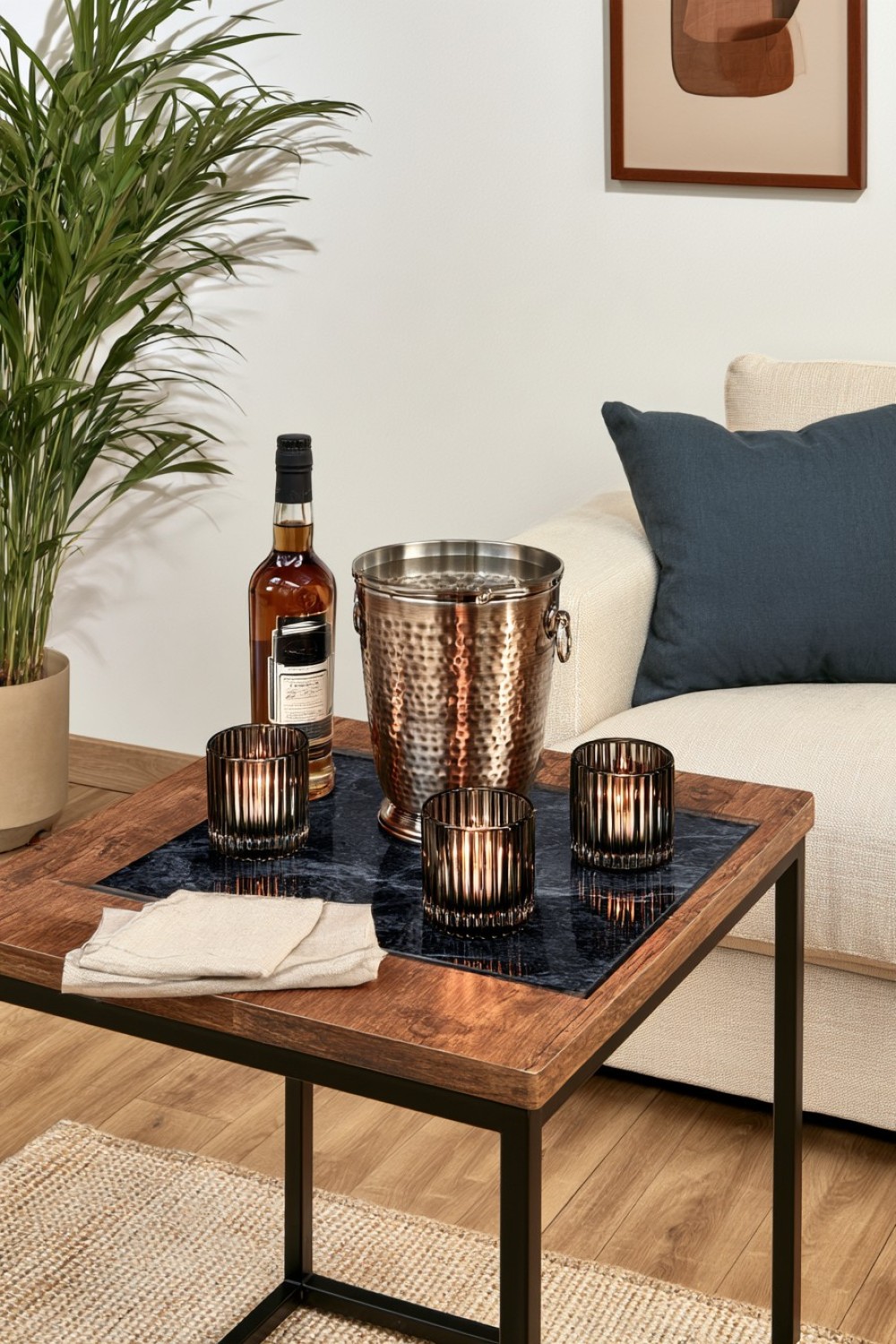
An ice bucket is usually treated as functional equipment, but a strong shape can make it the visual anchor of the whole bar table.
Look for brushed stainless steel, hammered metal, stone-look composite, or ribbed glass rather than overly ornate finishes.
Position it slightly off-center and build the rest of the arrangement around its height.
A pair of low glasses, folded linen napkins, and one bottle can sit nearby without competing for attention.
The effect works especially well on narrow tables because one large object creates more impact than six small accessories.
If the bucket is rarely used, it can temporarily hold bar tools or sealed cocktail napkins between gatherings.
Avoid using it as permanent miscellaneous storage, though. The object looks most intentional when it still reads clearly as part of the drink ritual.
3. Create a Backlit Bottle Plinth
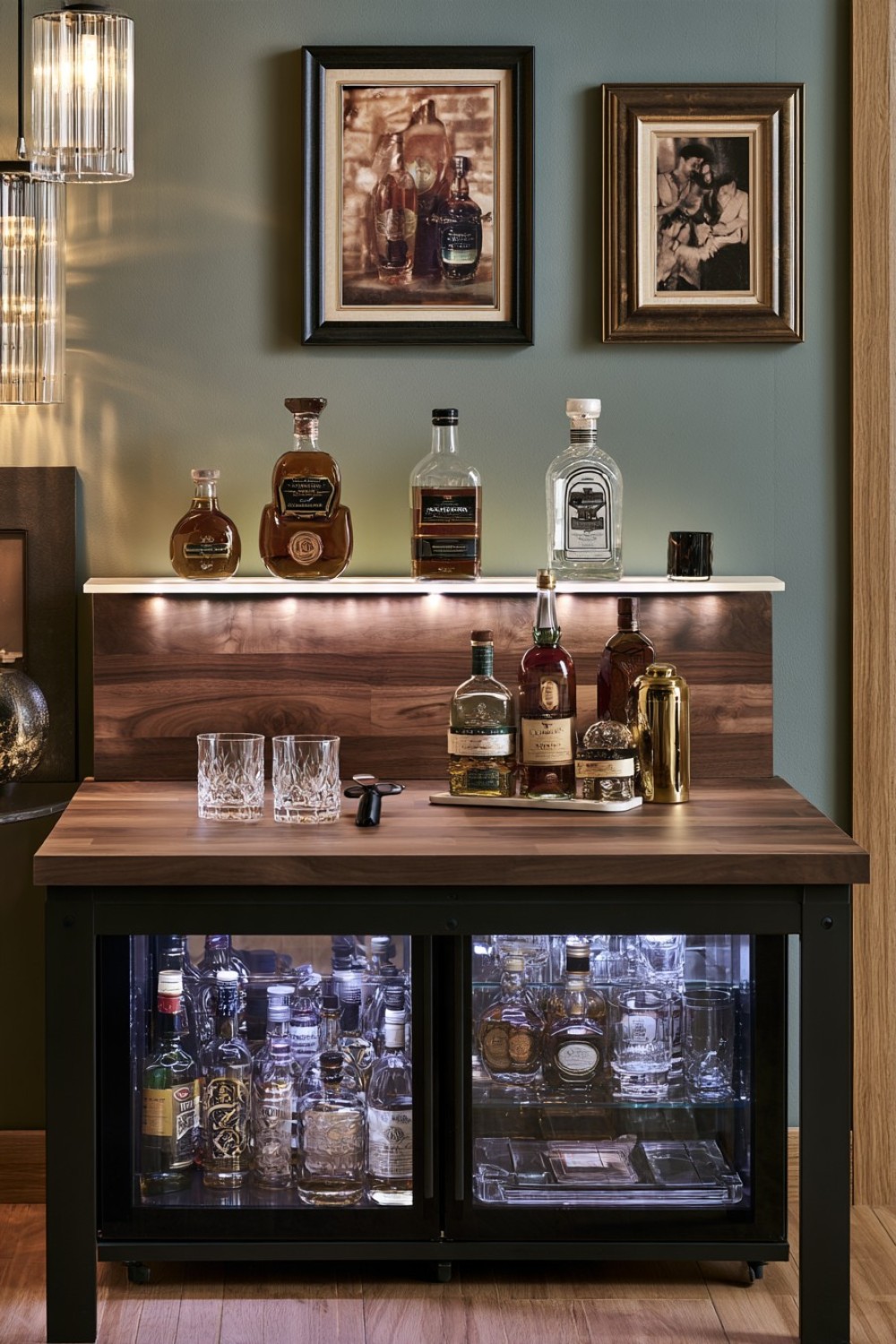
Instead of lining bottles across the rear of the table, raise a small selection on one illuminated platform.
For a DIY version, use a shallow timber or acrylic box with a frosted top panel and a low-heat LED strip concealed inside. The light should be soft enough to glow through translucent bottles rather than illuminate the entire room.
Place only two or three visually interesting bottles on the platform.
Amber spirits, colored glass, and clear bottles with sculptural silhouettes work particularly well.
The plinth can sit against the back edge of the bar table so working space remains open in front.
Keep electrical components protected from spills and use a certified low-voltage LED system. The lighting should remain an accent rather than a bright display effect.
Done carefully, this turns ordinary bottles into part of the evening atmosphere without making the bar feel like a commercial shelf.
4. Use a Stone Slab as a Mixing Zone
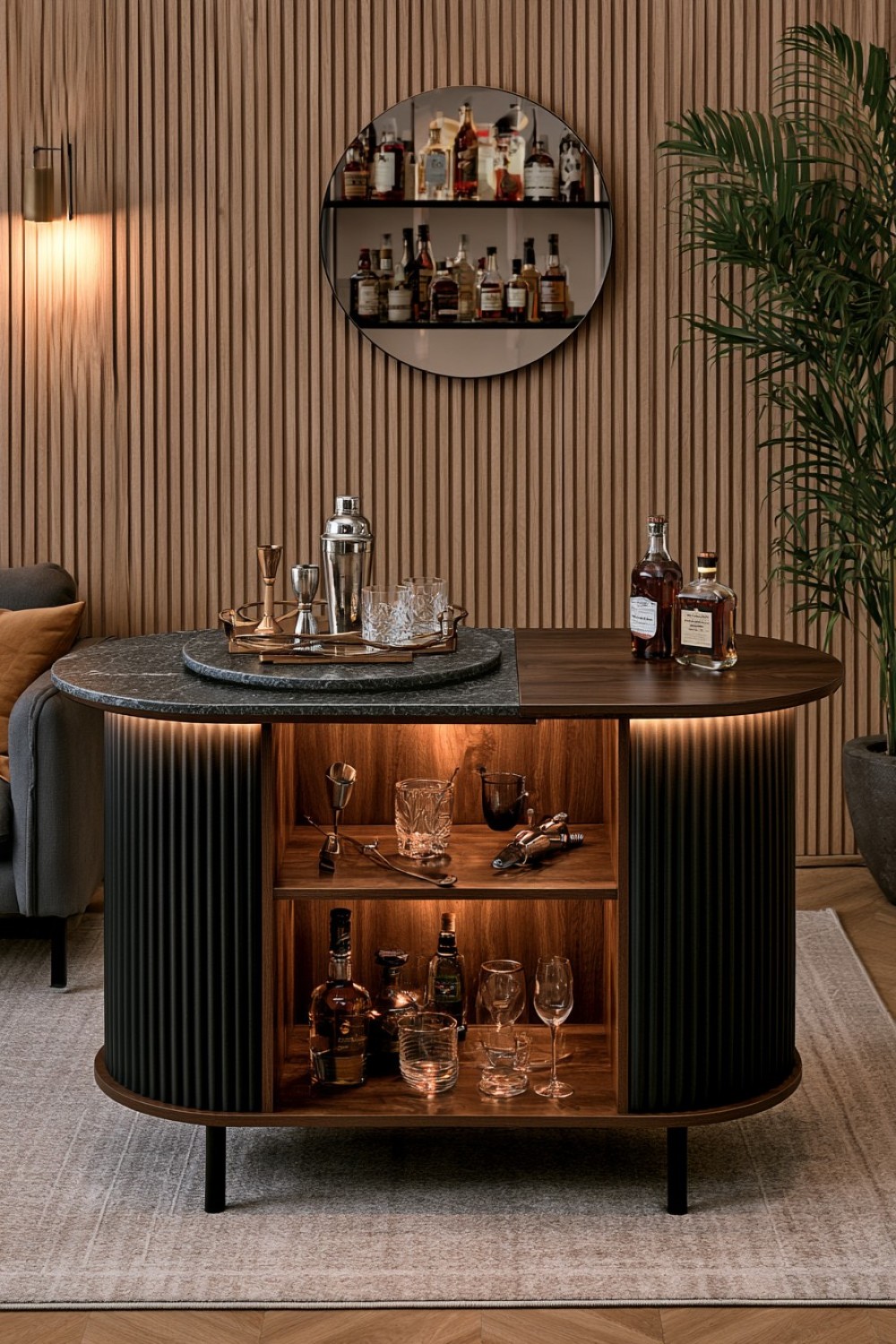
A loose stone slab can create a practical work surface while giving the bar table stronger material contrast.
Use a removable piece of marble, soapstone, granite, or stone-look composite large enough for a shaker, jigger, and two glasses.
Instead of covering the entire table, let the stone occupy only one-third of the surface.
The visual shift between timber and stone naturally divides the bar into a preparation zone and a display zone.
It also provides a stable surface for cold drinks and makes minor spills easier to contain.
For a DIY approach, have a remnant stone piece cut and its edges finished rather than buying a full countertop section.
Choose a material that suits how you actually use the bar. Porous stone may require sealing, while engineered or dense surfaces can be easier to maintain.
5. Display Cocktail Tools Like a Small Instrument Set
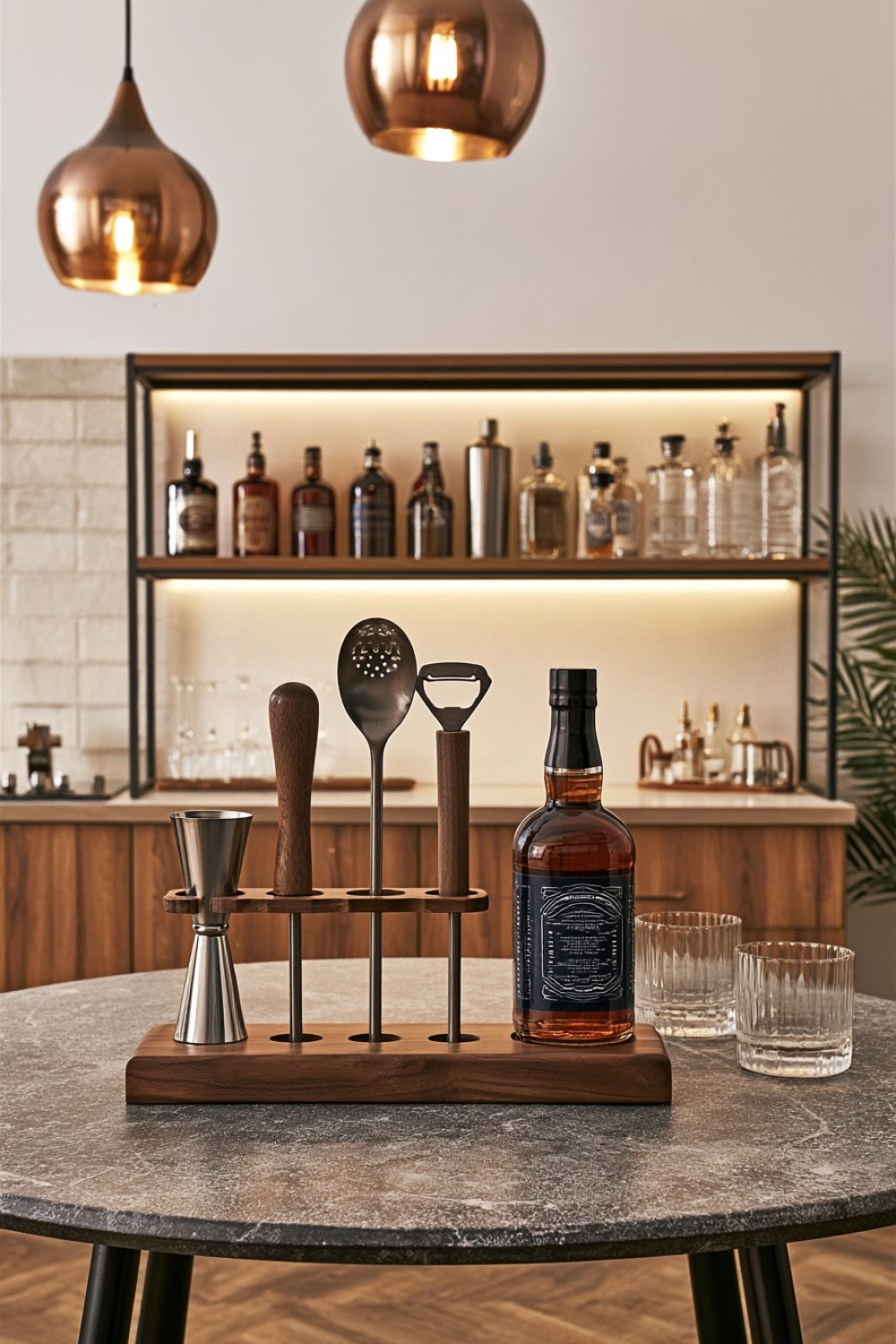
Bar tools often end up hidden in drawers or scattered in cups.
Instead, create one dedicated holder that presents them vertically and neatly.
A low block of hardwood can be drilled with custom-sized holes for a jigger, muddler, bar spoon, peeler, and bottle opener.
Walnut or oak works especially well because the tool shapes stand out against the grain.
For a DIY version, mark each opening according to the actual tool diameter, drill carefully, then sand and finish the block with a suitable food-contact-safe finish if it may encounter spills.
Keep the holder compact. The goal is not to display every accessory but to keep the most-used tools visible and easy to reach.
This creates a much more refined impression than a generic utensil cup while giving the bar table a small element of craftsmanship.
6. Build a Mini Citrus and Herb Prep Tray
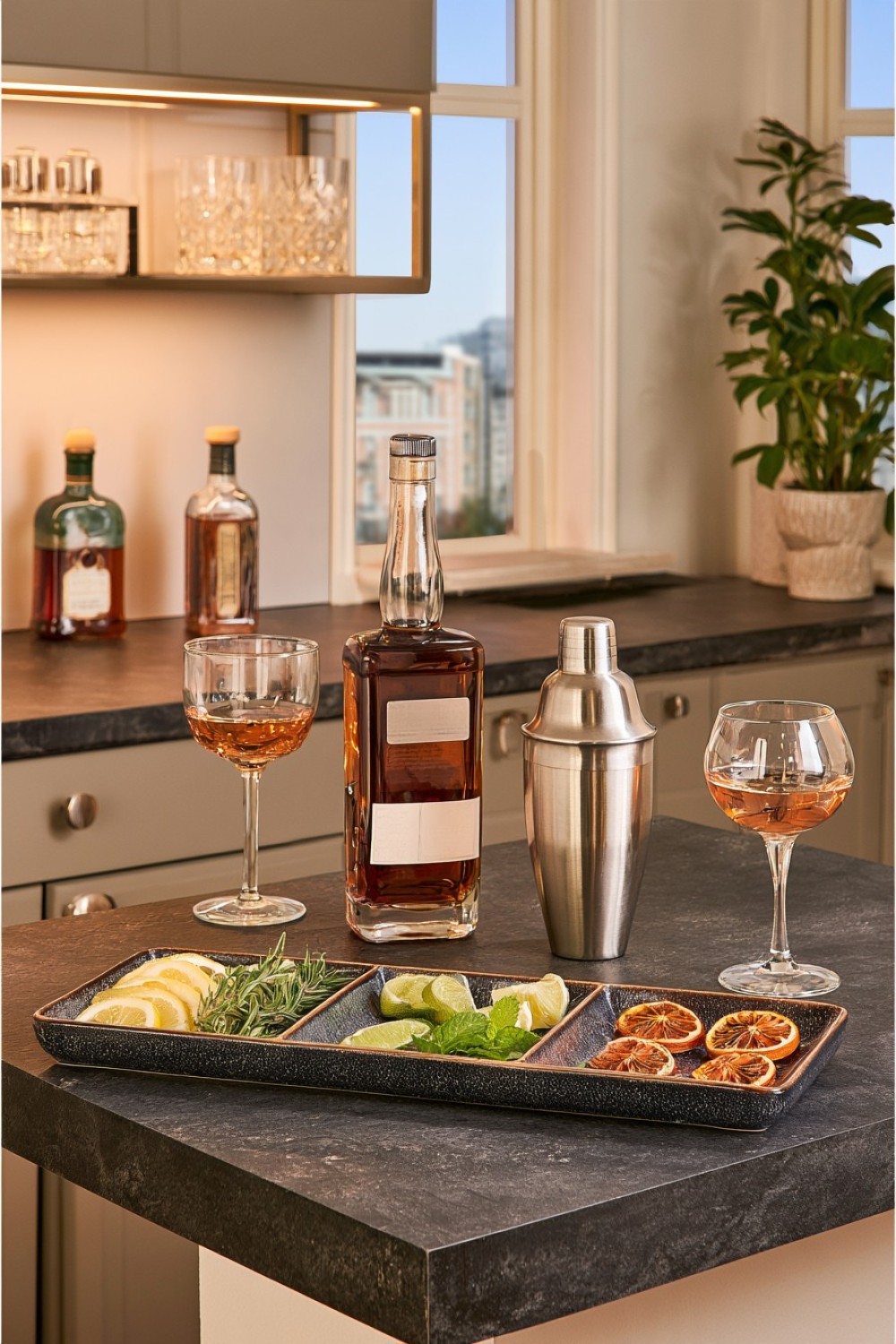
Fresh garnishes can become part of the decor when they are organized intentionally.
Use a divided ceramic or stainless-steel tray for lemon, lime, rosemary, mint, or dehydrated citrus slices.
Choose only what you plan to use during the evening rather than leaving fresh produce out permanently.
A long narrow tray works well because it sits neatly along the back or side of the table without taking over the serving surface.
Pair it with small tongs or cocktail picks in one compact holder.
During everyday use, the same tray can remain empty or hold sealed garnish jars.
This idea makes the bar feel active and hospitality-focused rather than purely decorative.
It also introduces natural color without relying on unrelated ornaments.
7. Add One Oversized Artwork Instead of Many Small Objects
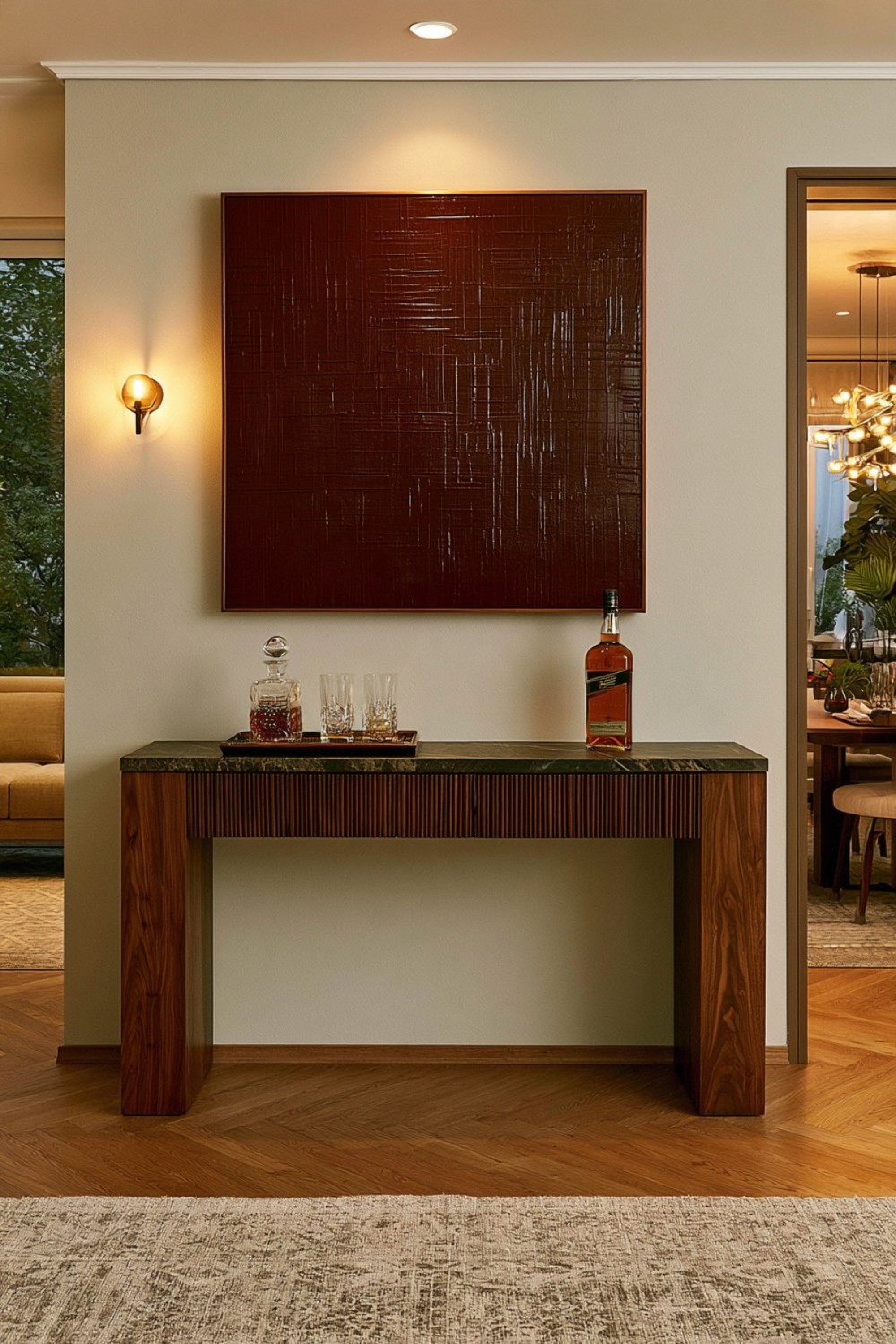
A crowded bar table often benefits more from something happening behind it than from more objects on top.
Hang one oversized artwork, framed textile, or abstract print above the table and keep the surface below restrained.
A strong painting with burgundy, olive, charcoal, or warm neutral tones can provide the visual atmosphere while bottles and glassware remain functional.
Leave enough space between the artwork and the tallest bottle or decanter so the two layers do not visually merge.
This approach is especially effective when the table itself is narrow and there is not enough depth for decorative accessories.
The artwork should establish mood, not literally depict cocktails or bar signs unless that suits the room.
A home bar often feels more sophisticated when it relates to the rest of the interior instead of announcing itself with themed decor.
8. Create a Two-Level Display With a Narrow Riser
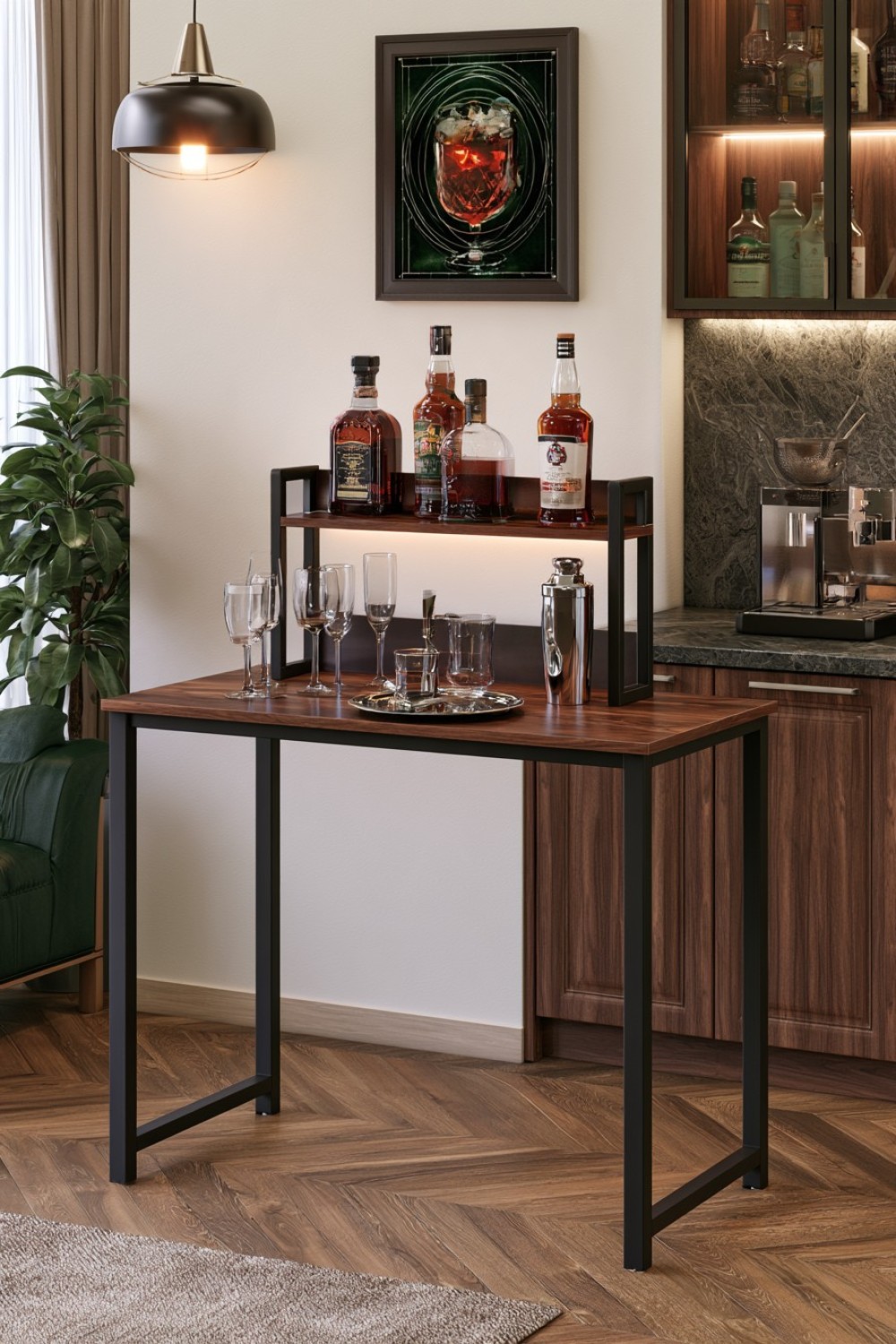
Height can organize a bar table without adding visual clutter.
Use a low riser at the back for bottles and keep glasses or tools directly on the tabletop in front.
The riser can be made from solid timber, stone, powder-coated metal, or a narrow acrylic block.
For a DIY version, build a simple hardwood platform around 5–10 cm high and finish it in the same tone as nearby cabinetry.
The difference in height makes each object easier to see and prevents shorter glassware from disappearing behind bottles.
Avoid creating multiple tiers unless the table is unusually deep. One level change is usually enough.
This setup works particularly well on compact home bars because it increases visual order without requiring additional wall shelving.
9. Use a Decanter as the Only Decorative Glass Object
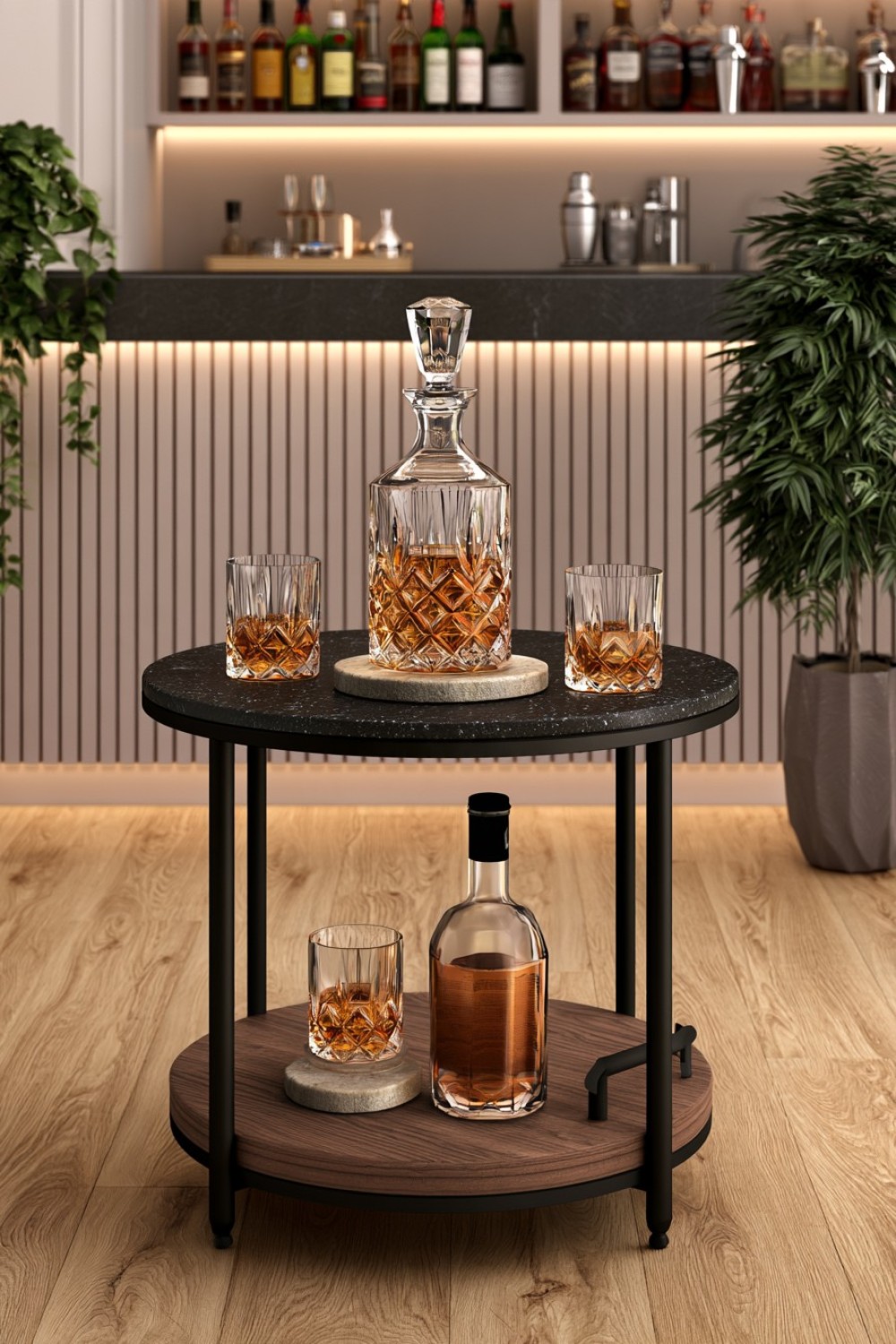
Instead of filling the table with glass accessories, choose one decanter with enough shape to function almost like sculpture.
A wide geometric base, fluted surface, or unusually tall stopper can create visual interest even when the decanter is not being used.
Place it on a small coaster or stone base and give it space.
Pair it with simpler glasses rather than matching everything to the same elaborate pattern.
This contrast prevents the setup from feeling like a purchased set.
If you use the decanter for spirits, store contents according to the beverage's needs and keep the vessel clean and tightly sealed.
The idea is to let one object carry the decorative weight while the remaining pieces stay practical.
10. Build a Rotating Bottle Base for a Corner Bar
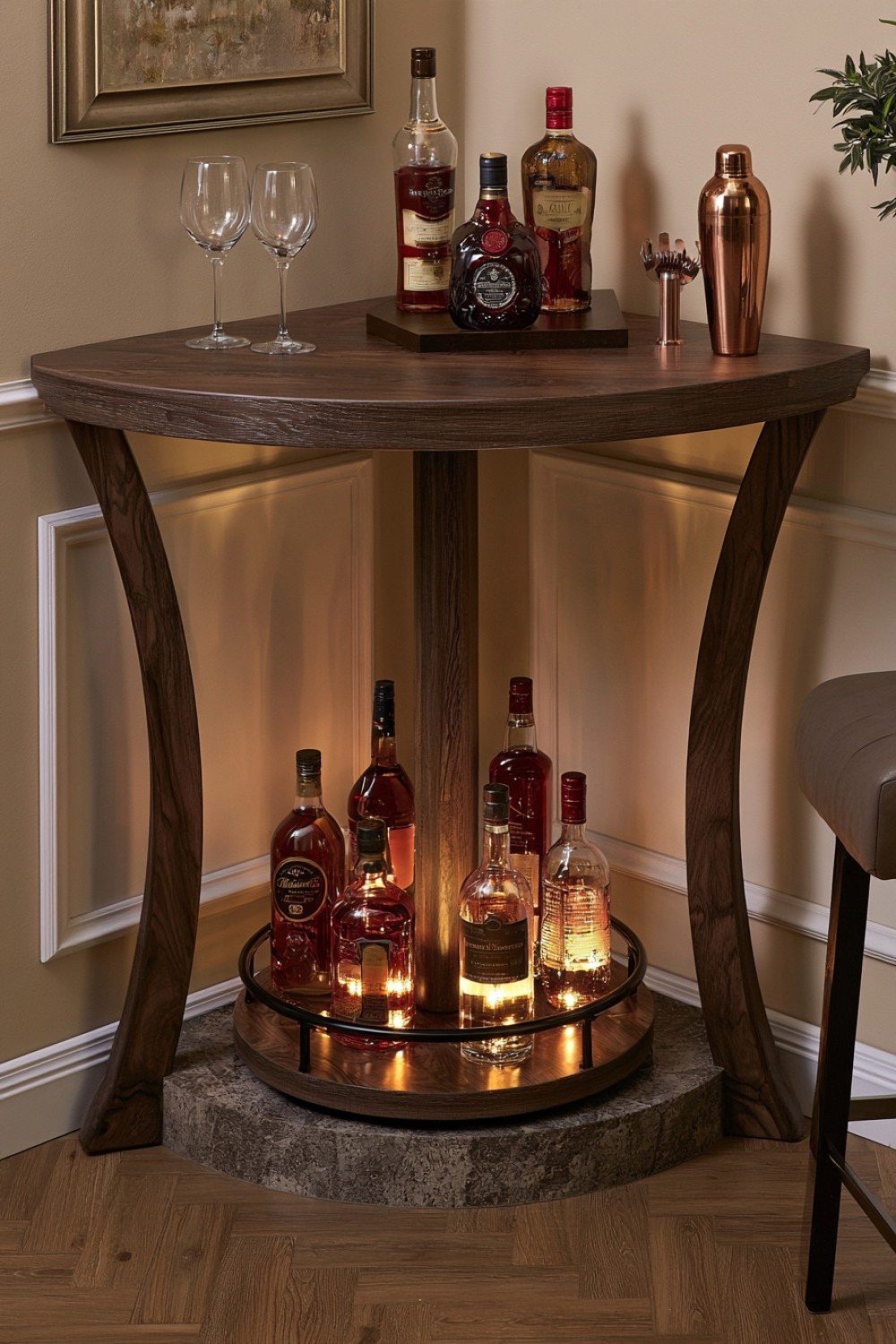
A lazy Susan can become far more elegant when designed specifically for the bar.
Use a circular timber or stone-look platform large enough for four to six bottles and mount it on a sturdy turntable bearing.
The rotating base allows bottles at the rear to come forward without rearranging the entire table.
For a DIY version, cut a hardwood disc, round the edge, sand it carefully, and install a concealed bearing underneath.
Keep the platform low so it feels like part of the tabletop rather than a raised cake stand.
This is particularly effective in a corner setup where access from both sides is limited.
Organize bottles by use rather than by color—frequently used spirits at the easiest positions and occasional bottles farther around the circle.
The movement itself makes the setup feel more considered and functional.
11. Introduce a Fabric Element With Folded Bar Linens
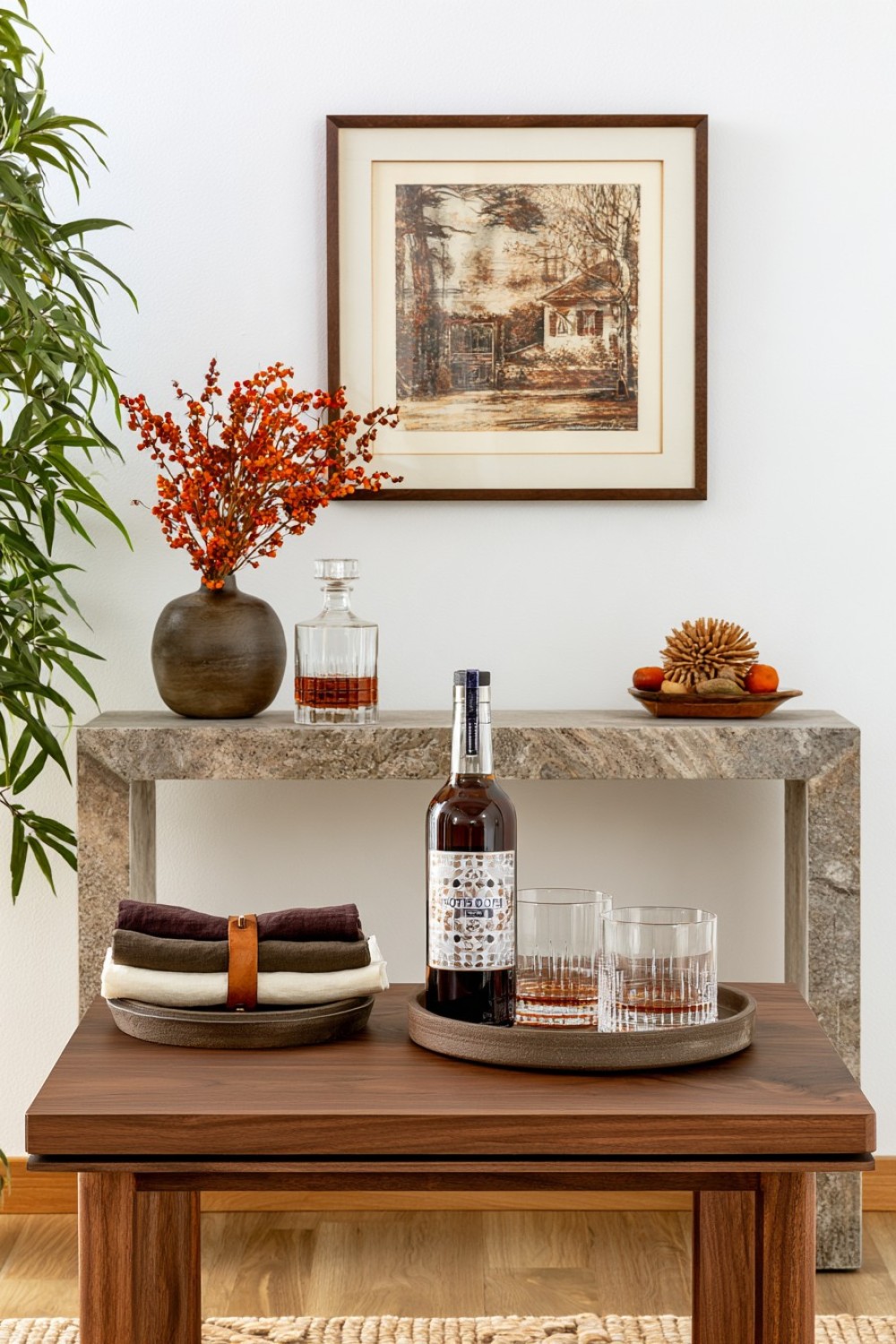
Hard surfaces dominate most home bars: glass, metal, stone, and timber.
A small textile element can soften that mix.
Instead of paper cocktail napkins, keep two or three neatly folded linen or cotton bar cloths in a shallow tray or under a small weight.
Choose colors related to the room—deep olive, tobacco, charcoal, cream, or burgundy can all feel more refined than novelty prints.
The cloths can be used for serving, wiping condensation, or protecting the table beneath a bottle.
A narrow leather strap or metal clip can keep the stack compact.
This is a small detail, but it makes the bar feel more tactile and lived-in.
12. Create a Seasonal Cocktail Object Instead of Seasonal Decor
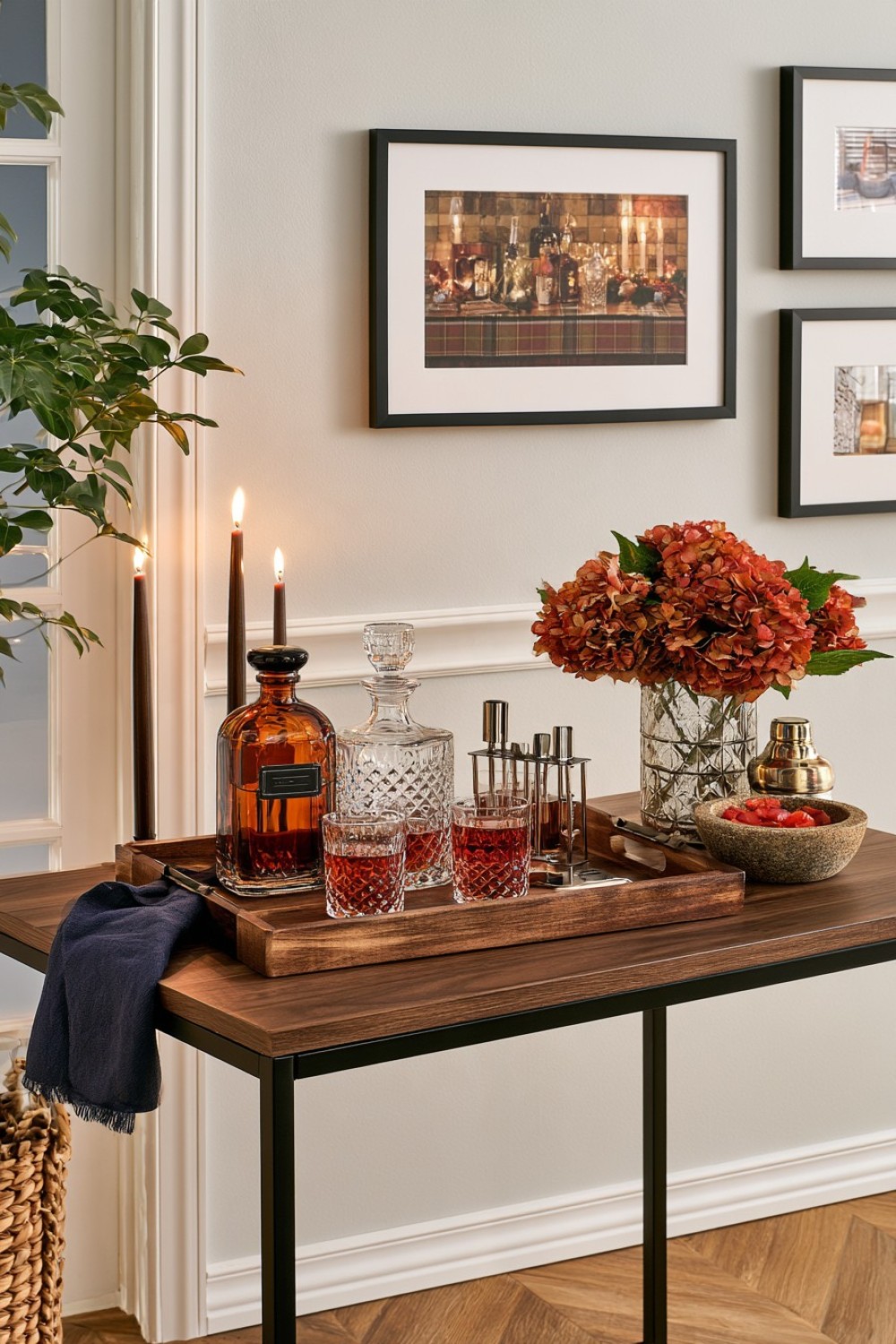
Rather than decorating the bar with pumpkins, holiday figurines, or unrelated seasonal objects, change one functional detail with the season.
In summer, use a pale stone garnish bowl and clear glass carafe. In autumn, switch to amber glass and darker linen. Winter might introduce brushed metal and deeper tones, while spring can bring pale ceramic and fresh herbs.
The actual layout stays the same.
This creates seasonal variety without making the bar feel themed.
It is also easier to maintain because only a few small components need to be rotated.
The approach works especially well in homes where the bar table sits in the main living area and needs to stay visually connected to the room year-round.
13. Turn the Back Edge Into a Botanical Strip
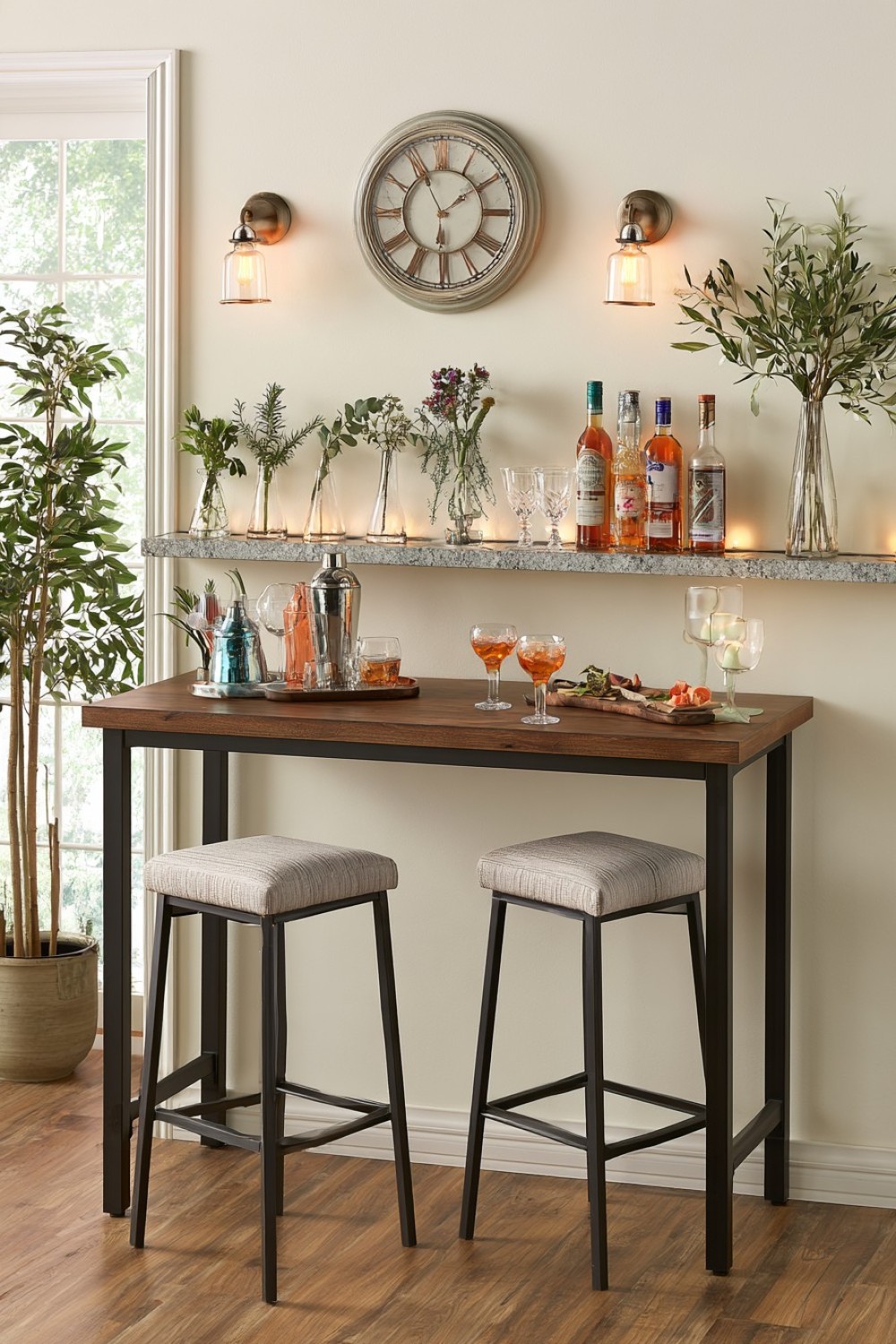
A bar table can support greenery without becoming another plant shelf.
Use one long narrow vessel or several tiny bud vases along the back edge and fill them with restrained botanical material.
Olive branches, rosemary, eucalyptus, or one sculptural stem per vessel works better than a full mixed bouquet.
Keep the plants low enough that they do not interfere with bottles or access.
Fresh herbs can even have a practical role in cocktails if they are food-safe and handled appropriately.
A dark bar table with pale green stems can feel particularly elegant, while a timber table pairs beautifully with more silvery foliage.
This adds movement and softness without occupying valuable working depth.
14. Build a Hidden Bottle-Cap and Tool Drawer Under the Table
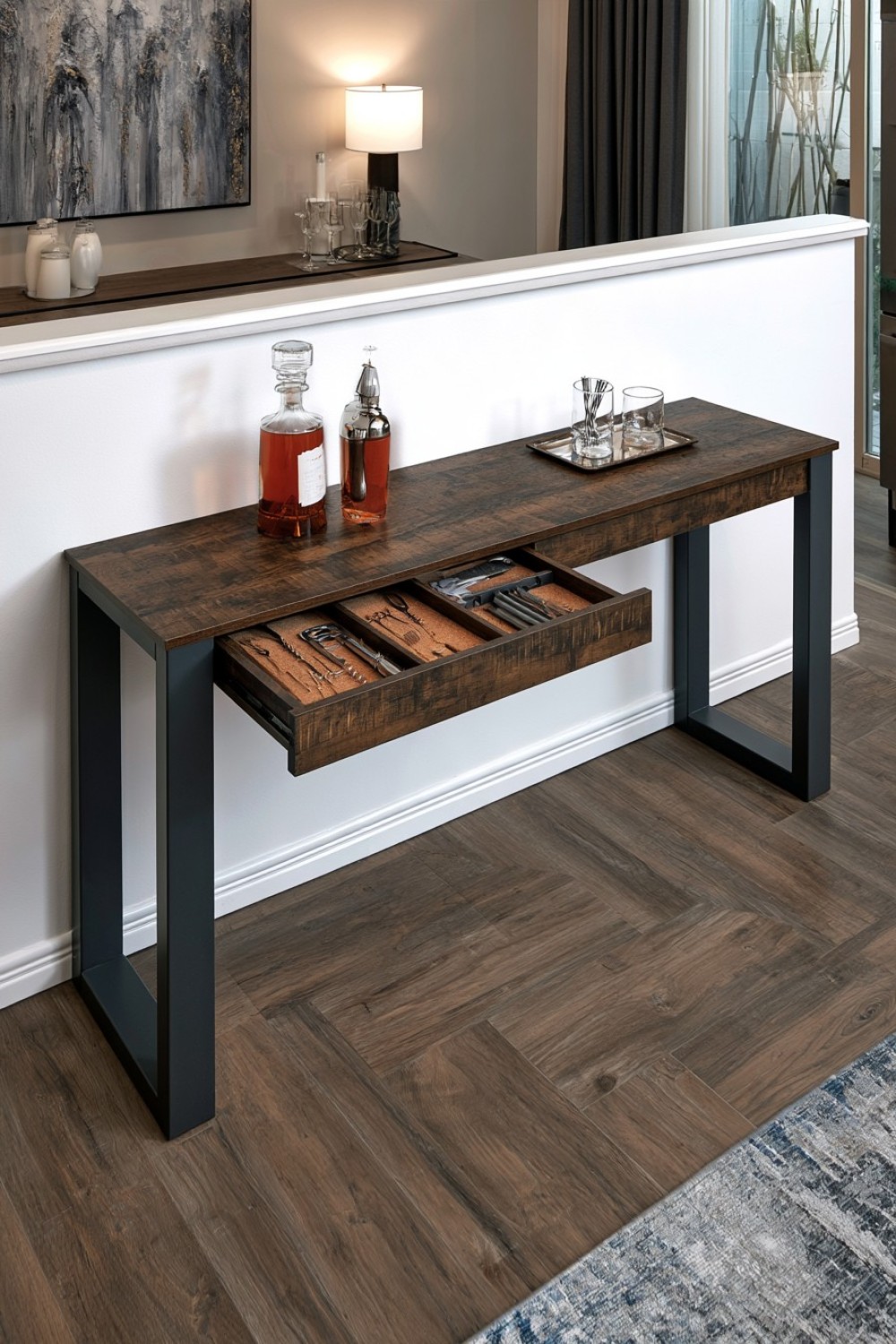
Not every useful bar accessory should remain visible.
For a DIY upgrade, add a shallow under-table drawer for openers, cocktail picks, corkscrews, reusable straws, and other small tools.
Use a slim plywood box on compact drawer slides and keep internal dividers shallow.
The drawer can sit just below the tabletop so frequently used pieces stay within easy reach without cluttering the display above.
A felt or cork liner helps prevent metal tools from rattling.
This idea is especially useful for narrow console-style bar tables where surface area is limited.
The improvement is subtle because guests may never notice the storage exists, but the table looks better precisely because unnecessary objects have somewhere to go.
15. Design the Bar Table Around One Signature Drink
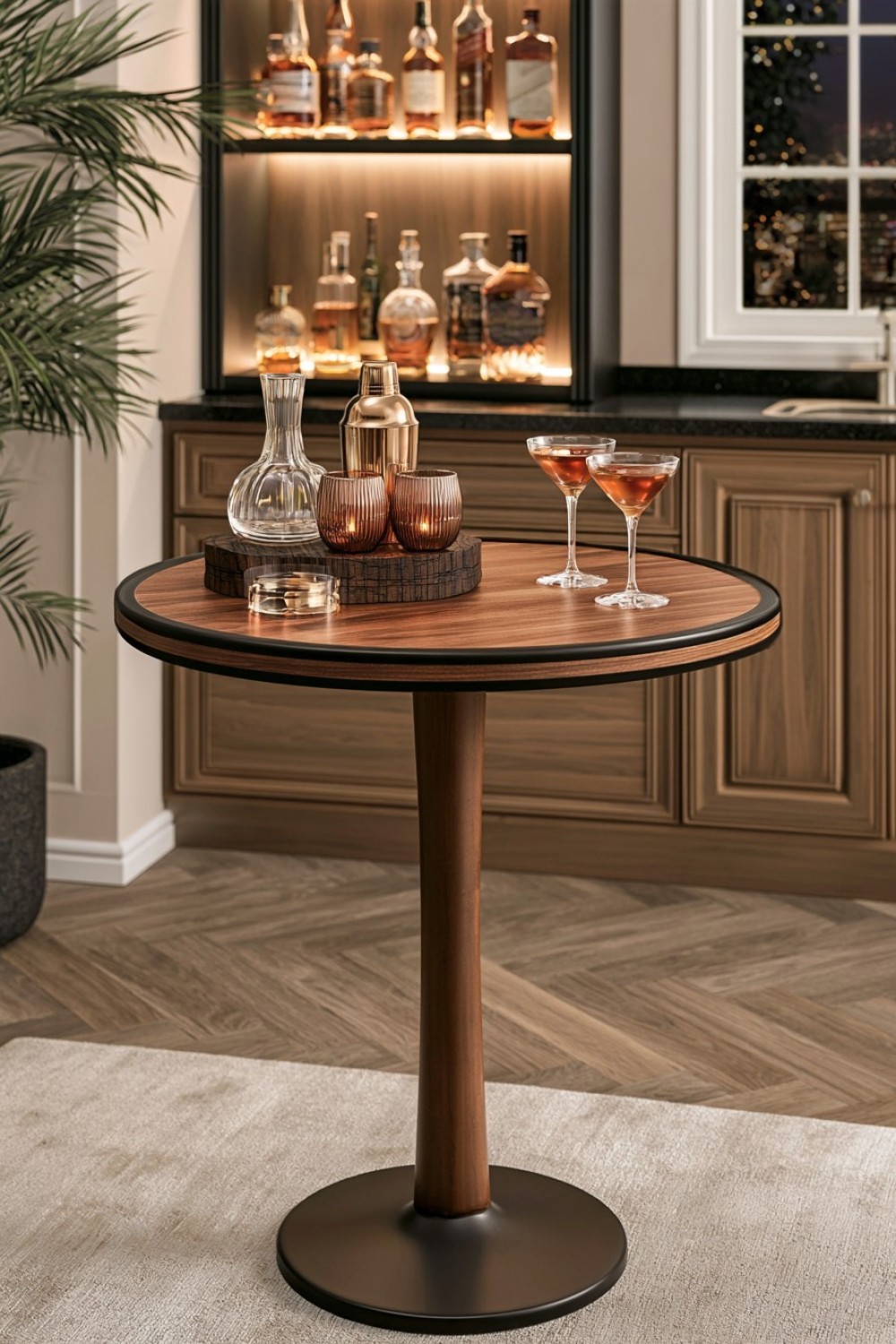
For a more personal setup, let one favorite drink determine the styling.
A martini station might use a chilled metal tray, coupe or martini glasses, olives, a slim mixing glass, and one sculptural bottle. A whiskey-focused setup could use heavy tumblers, a dark timber riser, a small water carafe, and a single decanter.
The goal is not to permanently limit what the bar can serve, but to give the table a clear visual identity.
Rotate the signature setup occasionally rather than displaying every possible drink ingredient simultaneously.
This also makes entertaining easier because the table is already arranged around a simple serving ritual.
A clear concept generally looks more memorable than a surface filled with unrelated bar accessories.
Making a Home Bar Table Feel Collected Rather Than Crowded
A stylish bar table usually needs fewer objects than expected. Start with what is actually used—bottles, glasses, tools, ice, and garnishes—then decide which of those pieces can also provide visual interest. A beautiful decanter, a stone mixing surface, or a handmade tool holder can do the work of several decorative accessories.
Height and material contrast help keep the arrangement readable. A low riser separates bottles from glassware, while stone, timber, metal, and linen introduce enough variation without relying on excessive color.
Most importantly, preserve a clear working area. A bar should still be easy to use when guests arrive. The strongest home setups balance display with service, giving each object a reason to remain on the table.
MORE IDEAS


Share
What's Your Reaction?
 Like
0
Like
0
 Dislike
0
Dislike
0
 Love
0
Love
0
 Funny
0
Funny
0
 Angry
0
Angry
0
 Sad
0
Sad
0
 Wow
0
Wow
0