17 Scarf Display Concepts for Organized and Engaging Boutique Merchandising

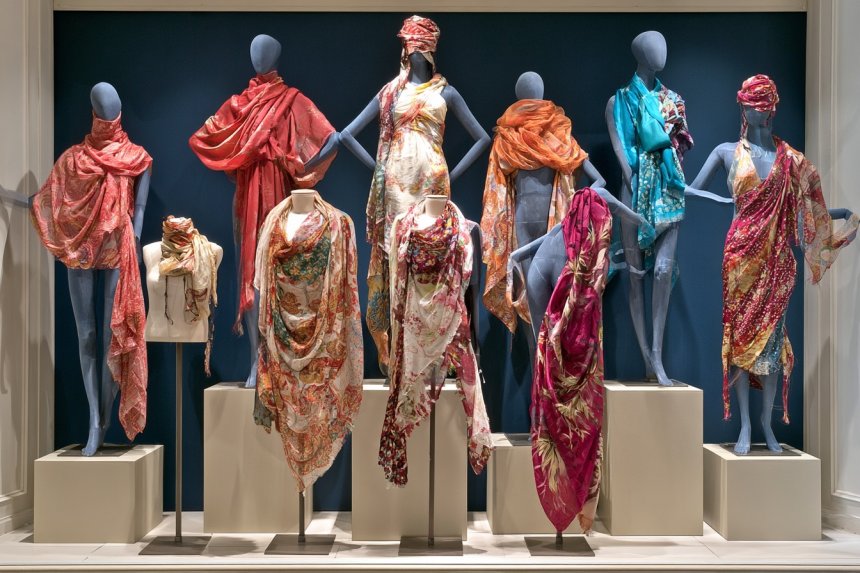
A successful scarf display should reveal color, pattern, texture, and scale without making the collection difficult to browse. Because scarves are lightweight and visually detailed, placing too many pieces in one area can quickly create clutter. Begin by grouping products according to a clear system such as color, material, season, size, or styling purpose. Customers should be able to understand that organization without unfolding every item.
Fabric care is equally important. Rough hooks, unfinished timber, sharp clips, direct sunlight, and overcrowded rails can snag, crease, fade, or distort delicate scarves. Displays must remain stable, accessible, and clear of circulation routes while allowing employees to restore products efficiently. Lighting should show colors accurately without producing excessive heat or glare. The following scarf display concepts balance visual storytelling with practical merchandising, safer installation, manageable stock rotation, and a more comfortable customer experience.
1. Arrange a Cascading Scarf Wall With Individual Wooden Pegs
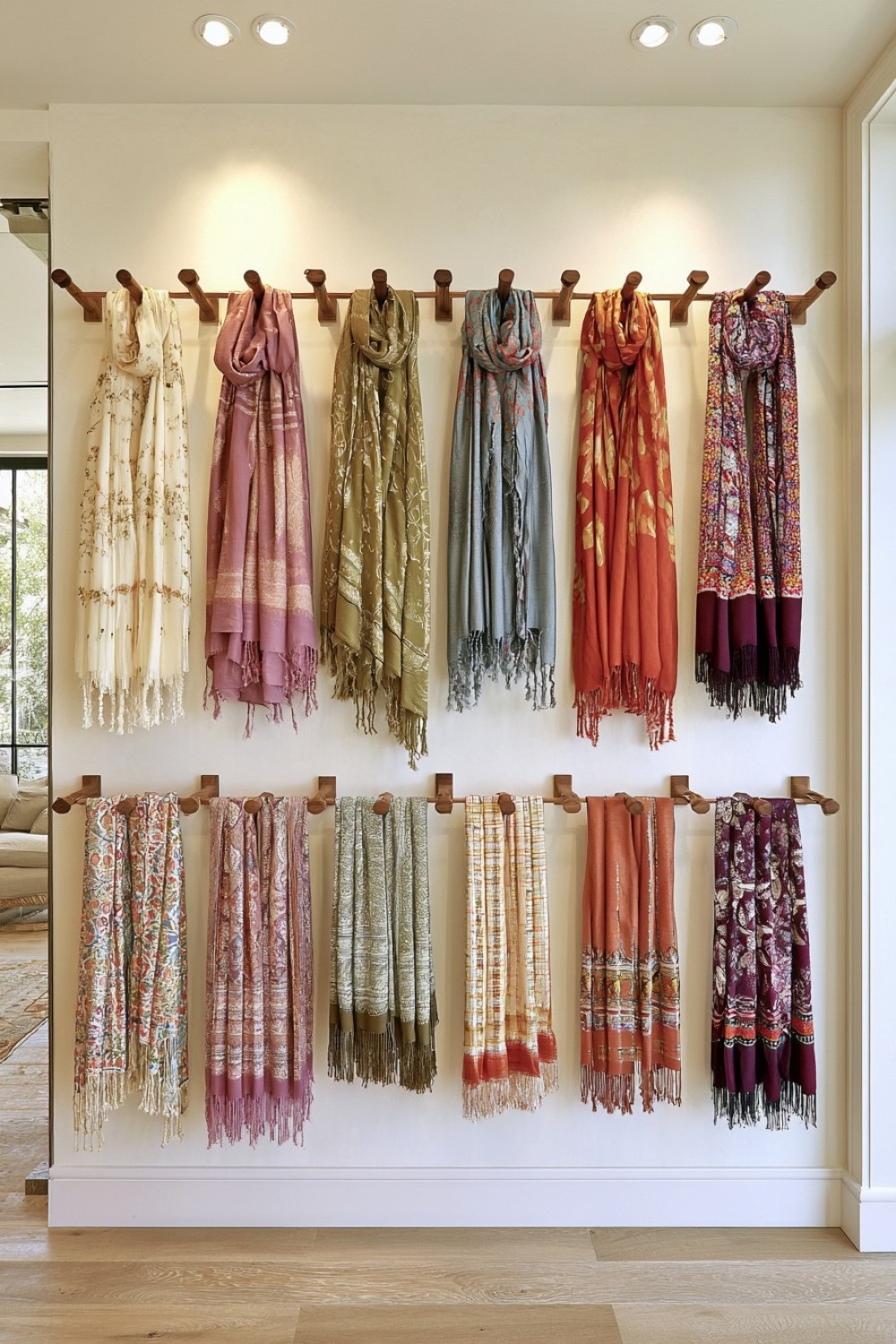
Individual pegs allow scarves to fall naturally, making their length, border, and movement visible from across the boutique. Arrange the pegs at staggered heights to create a cascading composition while keeping frequently handled products within comfortable reach. One scarf per peg provides the clearest presentation; additional stock can remain folded in drawers or labeled compartments below.
Use smooth, rounded pegs with sufficient projection to support the fabric without creating a tight pressure point. Every fixing should suit the wall construction and expected handling. Avoid installing merchandise above customers’ heads or close to a doorway where fabric can catch on bags and clothing. Leave enough separation between scarves to prevent neighboring pieces from concealing each other. A small product label beneath each position can identify material, price, or collection while allowing staff to return the scarf to the correct peg after a customer tries it.
2. Guide Browsing With a Carefully Planned Color Gradient
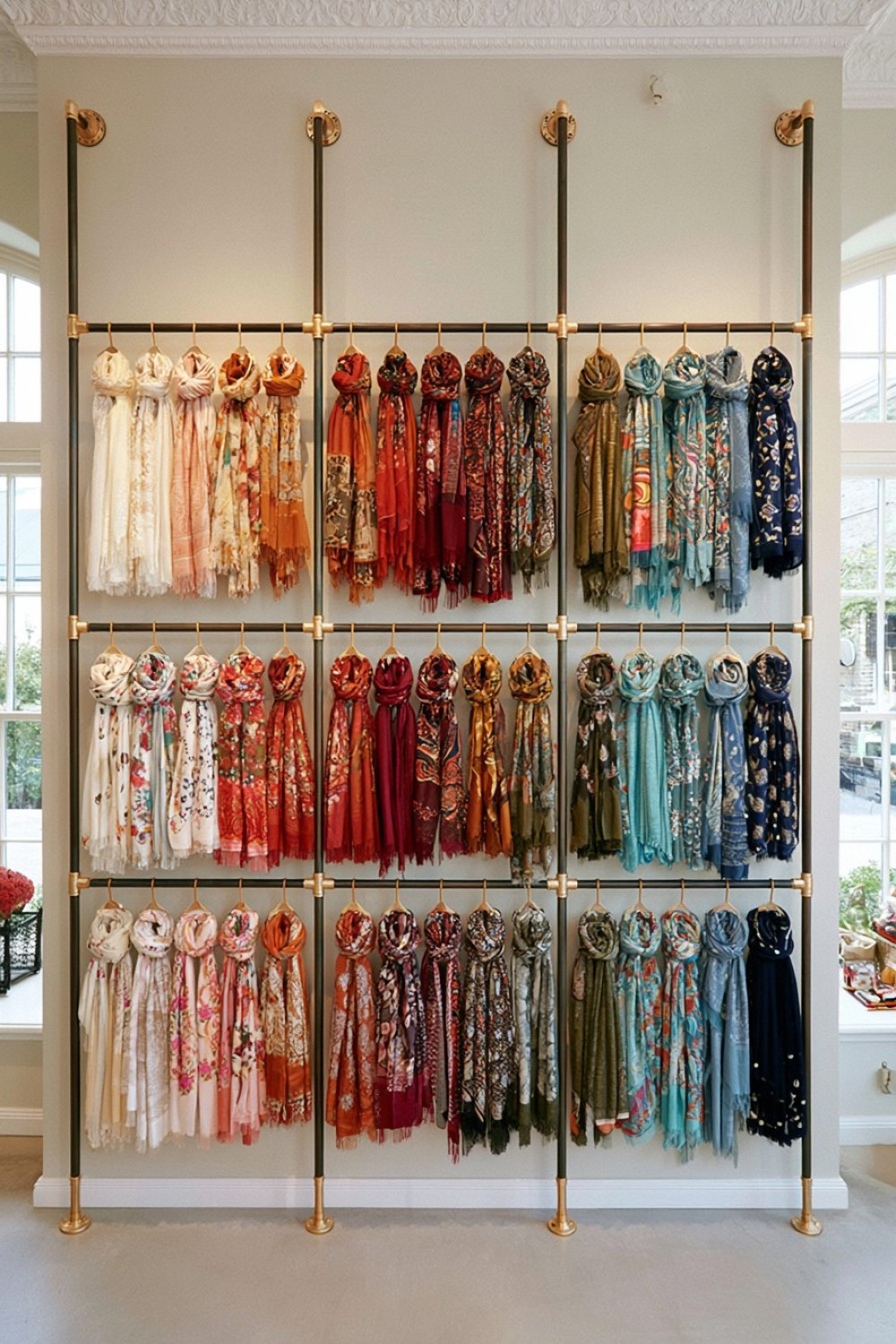
A color gradient helps customers locate preferred shades and turns a varied scarf collection into one continuous visual feature. The progression can move from pale neutrals through warm and cool tones to deeper colors. Alternatively, create several smaller color families when the assortment contains too many prints for a single uninterrupted spectrum. Keep multicolored scarves beside the shade that occupies the largest visible area.
Color organization requires regular maintenance because products returned to the wrong position quickly disrupt the effect. Add discreet rail markers or shelf labels that help employees restore the sequence. View the display under the store’s actual lighting, since warm or cool lamps can change how subtle colors appear. Avoid crowding similar dark scarves together without enough light to distinguish their patterns. Reorganize the gradient as inventory sells instead of leaving empty gaps, and keep replacement stock nearby so the display remains complete during busy periods.
3. Build a Scarf Library With Narrow Open Compartments
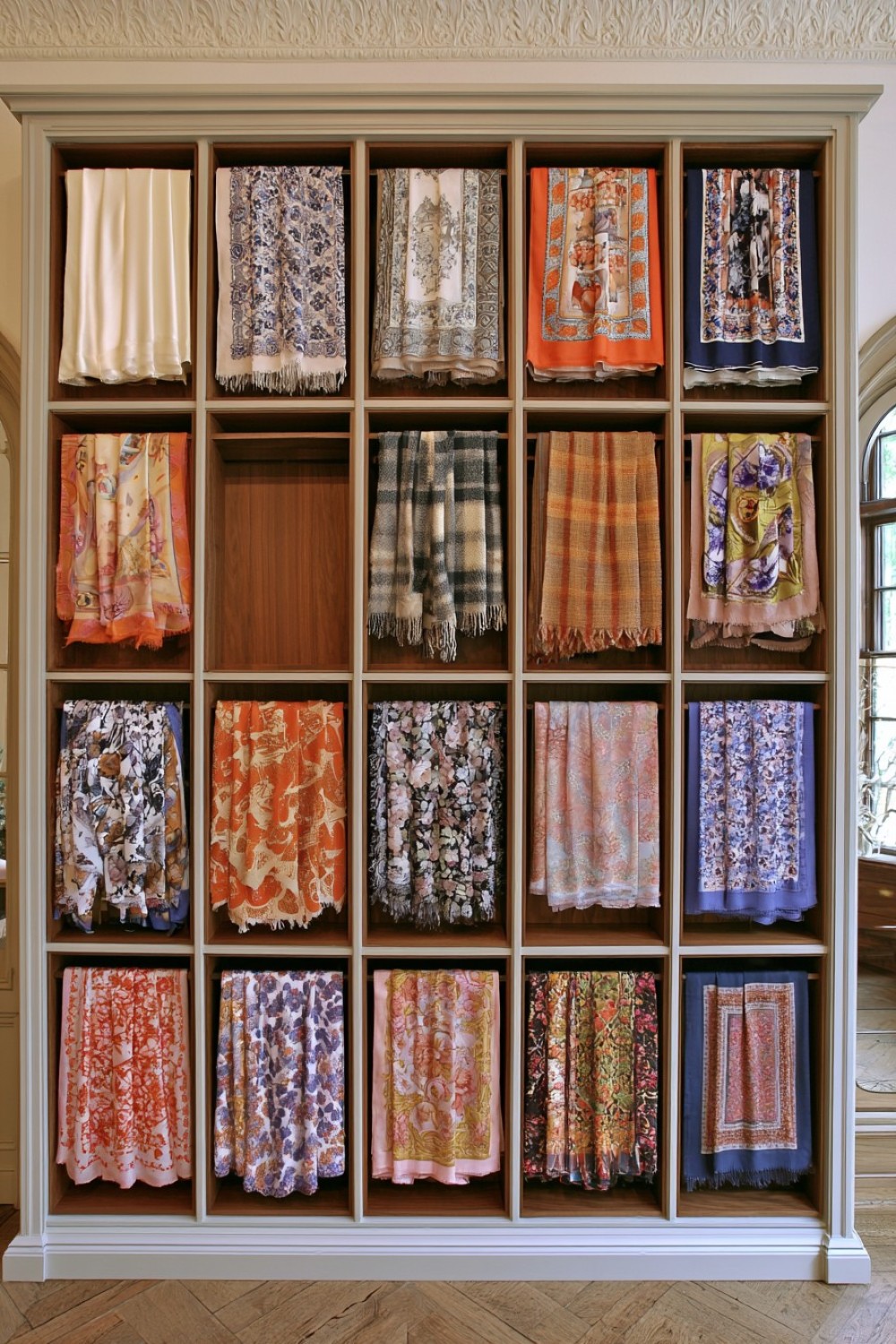
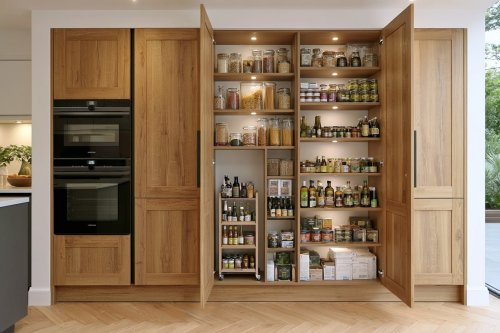
A library-style wall works well for square silk scarves, lightweight wraps, and products that are best stored folded. Divide the shelving into narrow compartments so stacks remain upright and separated by collection. Folding each scarf to a consistent visible size allows its dominant color or border to function like a book spine while preventing tall piles from collapsing.
Compartment depth should support the folded product without allowing it to disappear behind the shelf edge. Keep delicate fabrics away from rough surfaces, exposed fasteners, and unfinished corners. The lowest and highest shelves can hold reserve stock or decorative packaging, while primary products remain within an accessible browsing range. Use removable dividers so the layout can adapt as inventory changes. A reference card showing the fully opened pattern can reduce unnecessary unfolding, but customers should still have an appropriate surface where they can inspect the actual scarf with staff assistance.
4. Present Selected Scarves on Oversized Display Rings
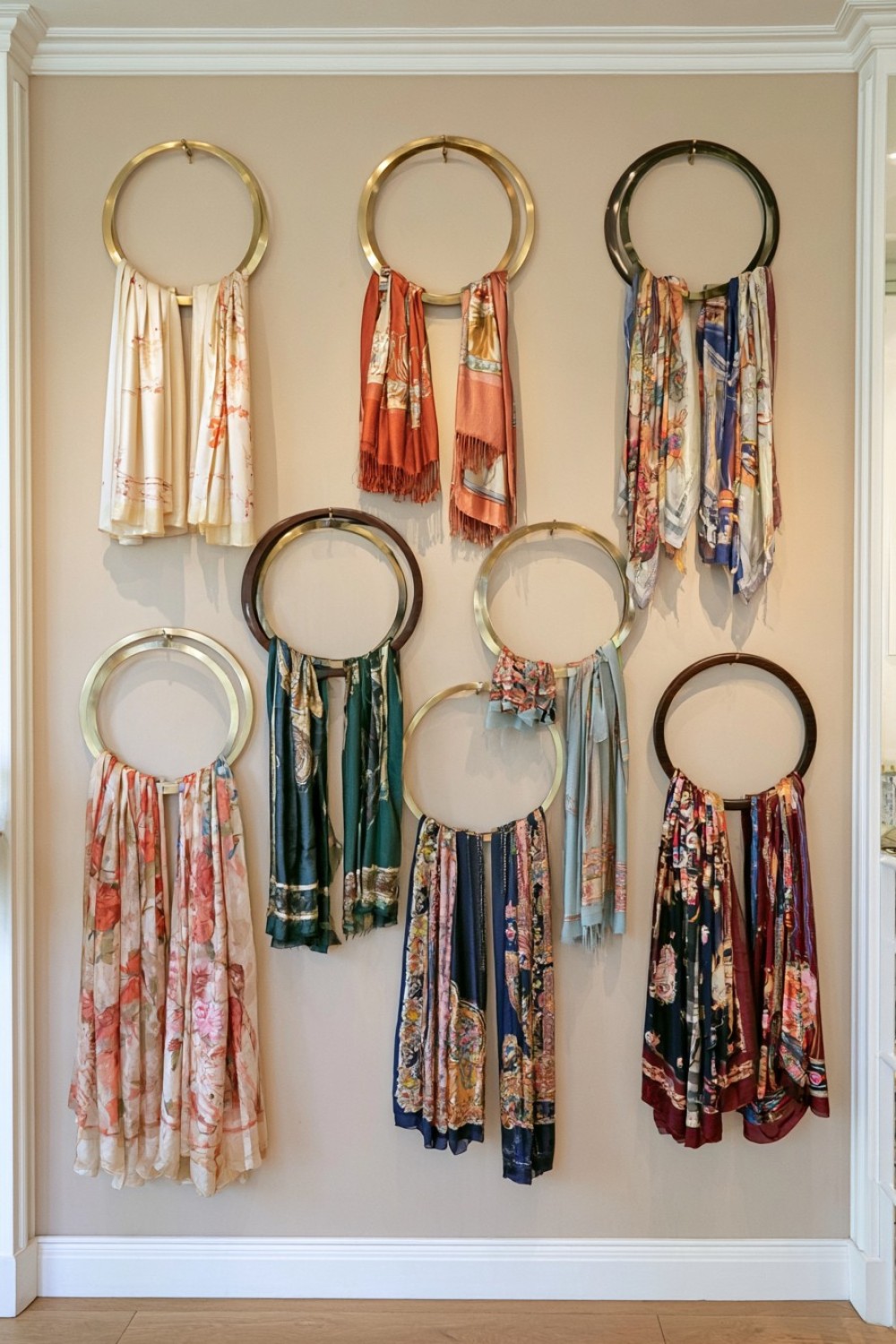
Large wall-mounted rings can transform a small selection of scarves into a sculptural feature. Drape one product through each ring so the textile remains visible without being tightly knotted. Varying ring diameters creates movement, but repeating one metal or timber finish keeps the installation cohesive. This display is most effective for a featured collection rather than the boutique’s entire inventory.
Every ring must have a smooth surface without open joints or sharp edges that could catch fine fibers. Mounting points should withstand frequent handling and remain stable when customers remove and replace products. Position the rings so the scarves do not touch the floor, obstruct signage, or extend into a narrow path. Keep reserve stock folded nearby and rotate the featured pieces to prevent prolonged light exposure. A small diagram showing one or two ways to wear the displayed scarf can add useful styling context without overwhelming the wall.
5. Adapt a Freestanding Ladder Frame for Flexible Merchandising
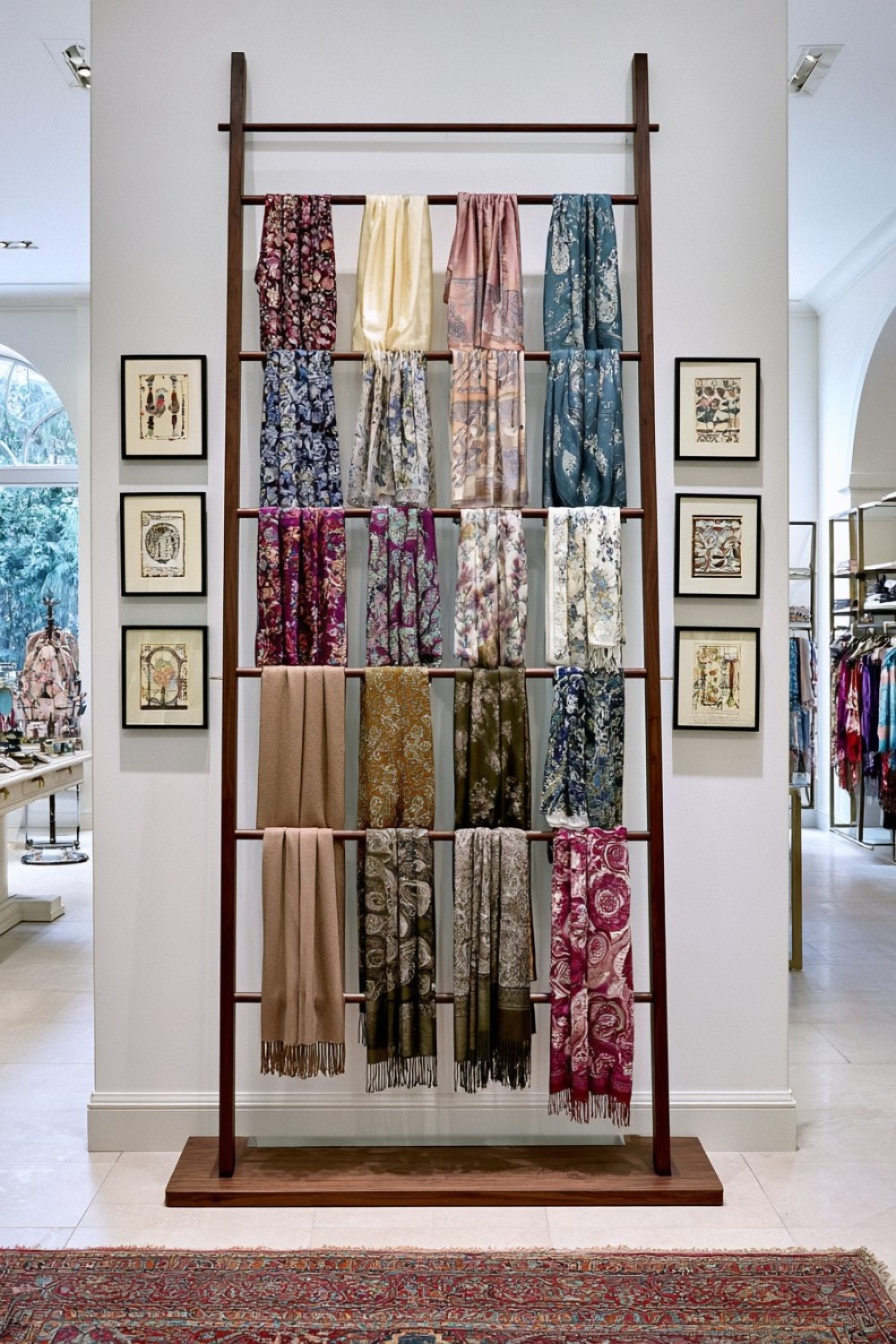
A ladder-inspired display provides several horizontal rails while occupying less visual space than a solid cabinet. Scarves can be draped once over each smooth rung, arranged from shorter styles at the top to longer pieces below. A double-sided frame may serve customers approaching from two directions, while a single-sided version can sit against a wall.
Use a purpose-built retail fixture rather than an unstable household ladder. The frame needs a broad base, non-slip feet, and sufficient resistance to tipping when products are pulled from one side. Timber surfaces should be sanded and sealed so they do not transfer residue or catch threads. Maintain clear space around the fixture and avoid positioning it near stairs, entrances, or emergency routes. Because the display is freestanding, it can support seasonal changes, temporary promotions, and revised floor layouts without requiring permanent wall installation.
6. Create a Scarf Styling Bar With Accessible Mirrors
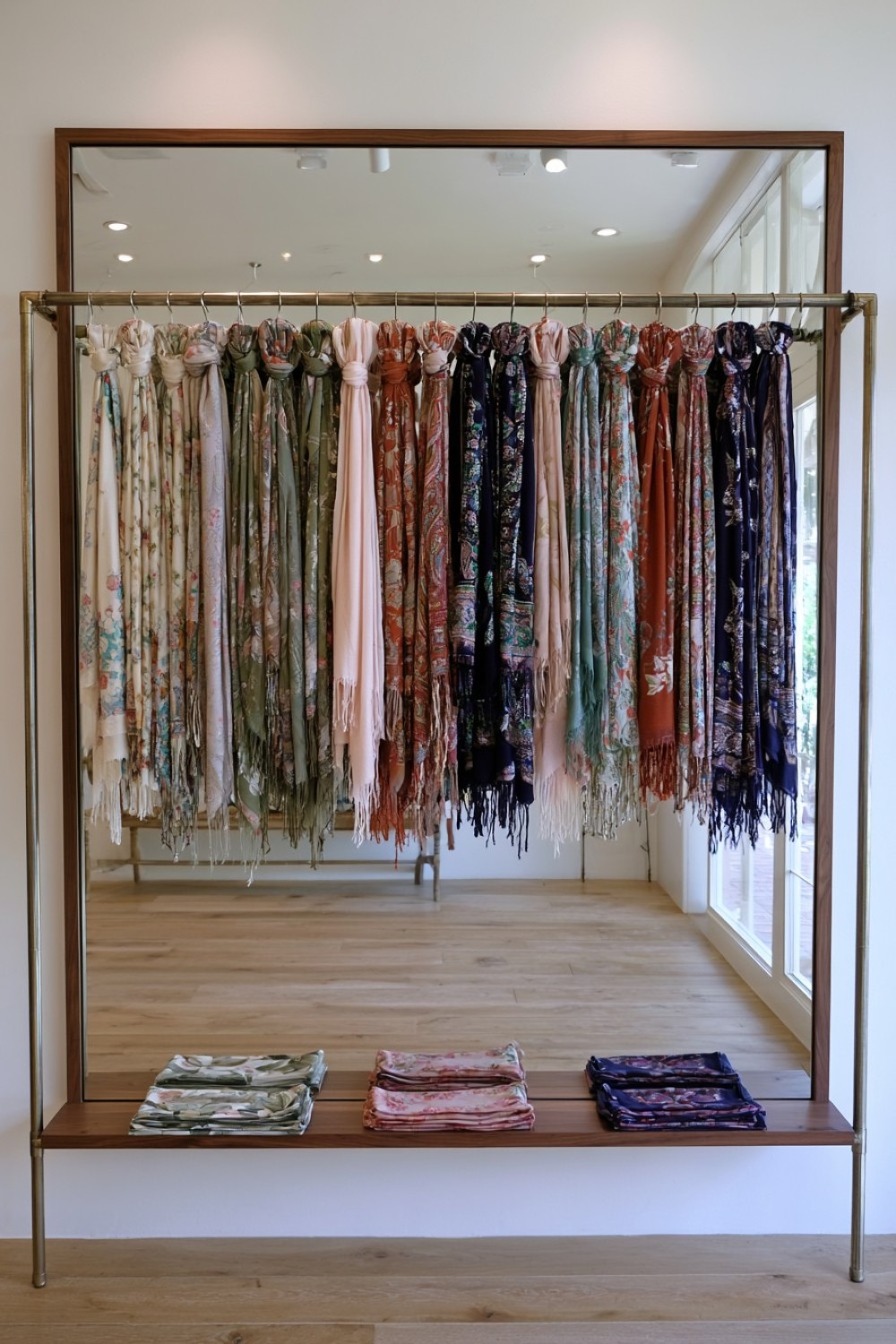
A styling bar gives customers a dedicated place to compare colors and experiment with different ways to wear a scarf. Install a clear mirror beside a counter or narrow shelf where selected products can be placed without falling to the floor. Display only a few prepared examples, such as a neck wrap, hair accessory, bag detail, or shoulder drape, so the station remains easy to understand.
The mirror should be securely fixed and positioned for use by customers of different heights. Maintain adequate open floor space and avoid locating the station where someone trying a scarf blocks the main aisle. Keep pins, sharp clips, and small accessories under staff control rather than leaving them loose on the counter. Provide a separate tray for products that have been tried so employees can inspect, refold, and return them properly. Regular cleaning of mirrors and the styling surface will keep this interactive zone presentable.
7. Use Vintage Drawers for Protected Folded Displays
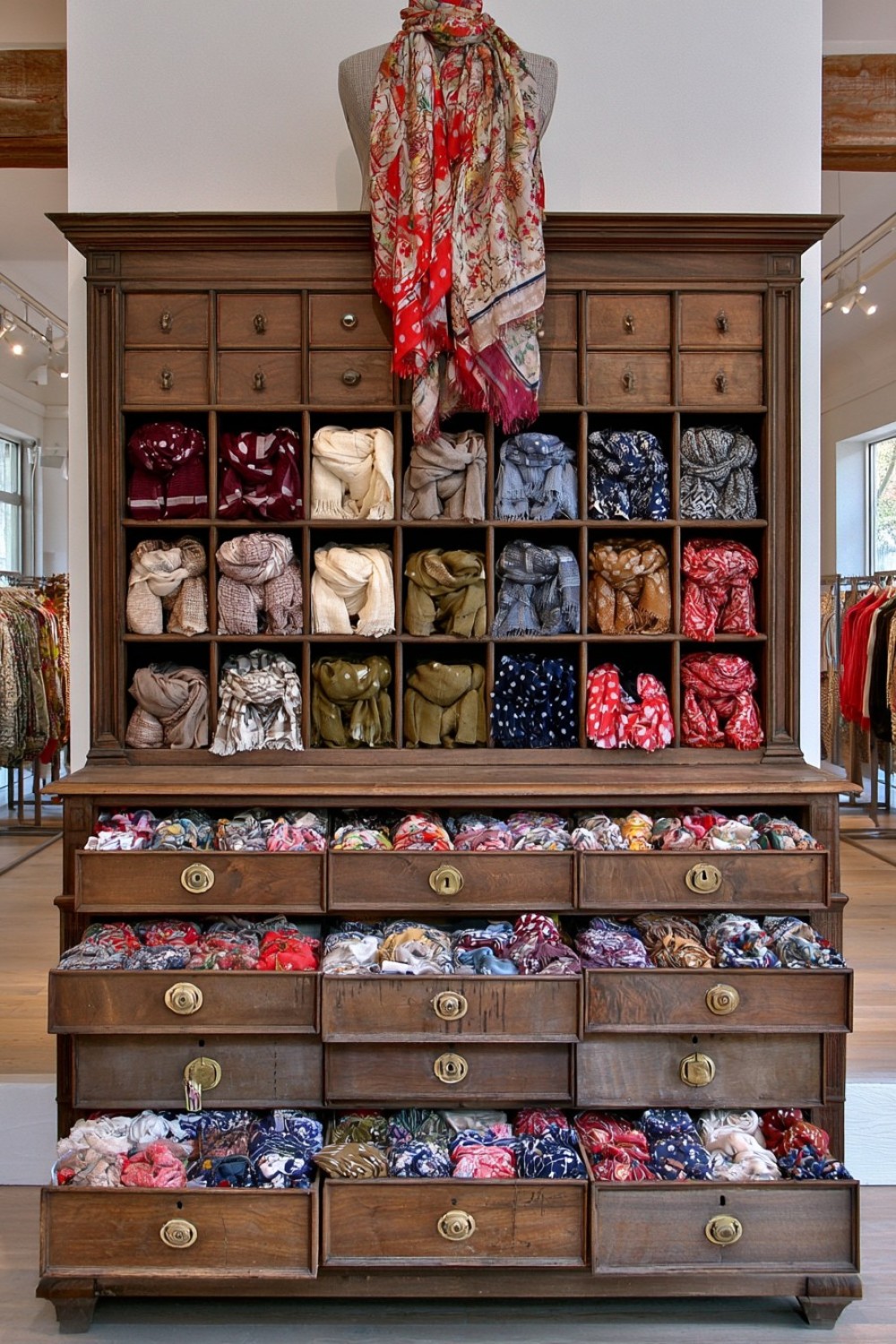
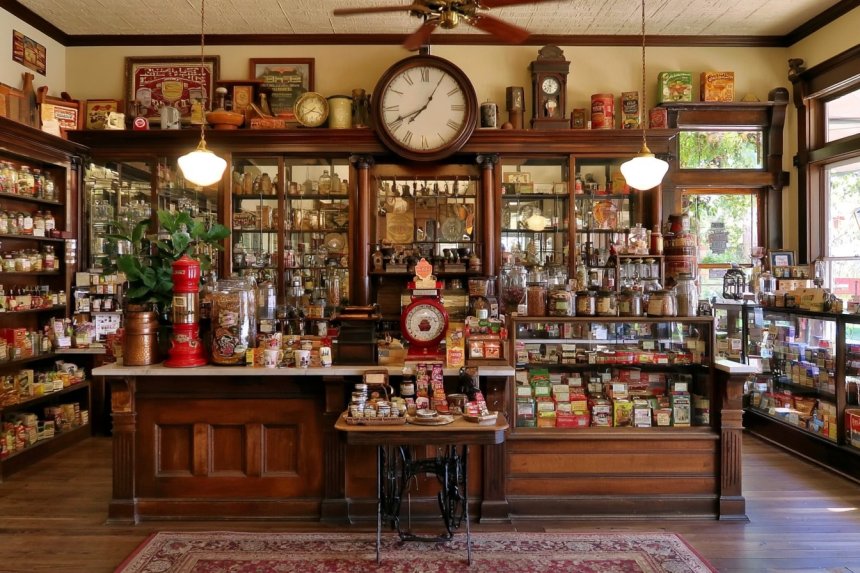
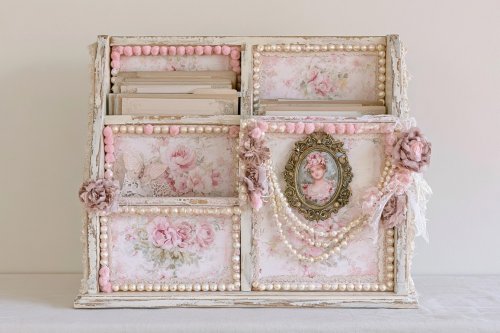
Shallow vintage drawers can present folded scarves in a way that feels collected while protecting them from dust and excessive handling. Line each drawer with a clean, colorfast material and divide the interior into sections by fabric, color, or collection. Open only selected drawers for browsing and use the remaining units for reserve stock.
Inspect older furniture for rough wood, sticking runners, odors, unstable joints, and finishes that could transfer to textiles. Drawers need stops so they cannot be pulled completely out accidentally, and the cabinet should be anchored if opening several units could cause it to tip. Clear labels on the drawer fronts help customers understand the organization without searching through every compartment. Avoid overfilling; scarves should lift out without being dragged across hardware. A restored cabinet works best as one distinctive feature rather than part of an excessively themed interior.
8. Install a Vertical Rail for Long Scarves and Wraps
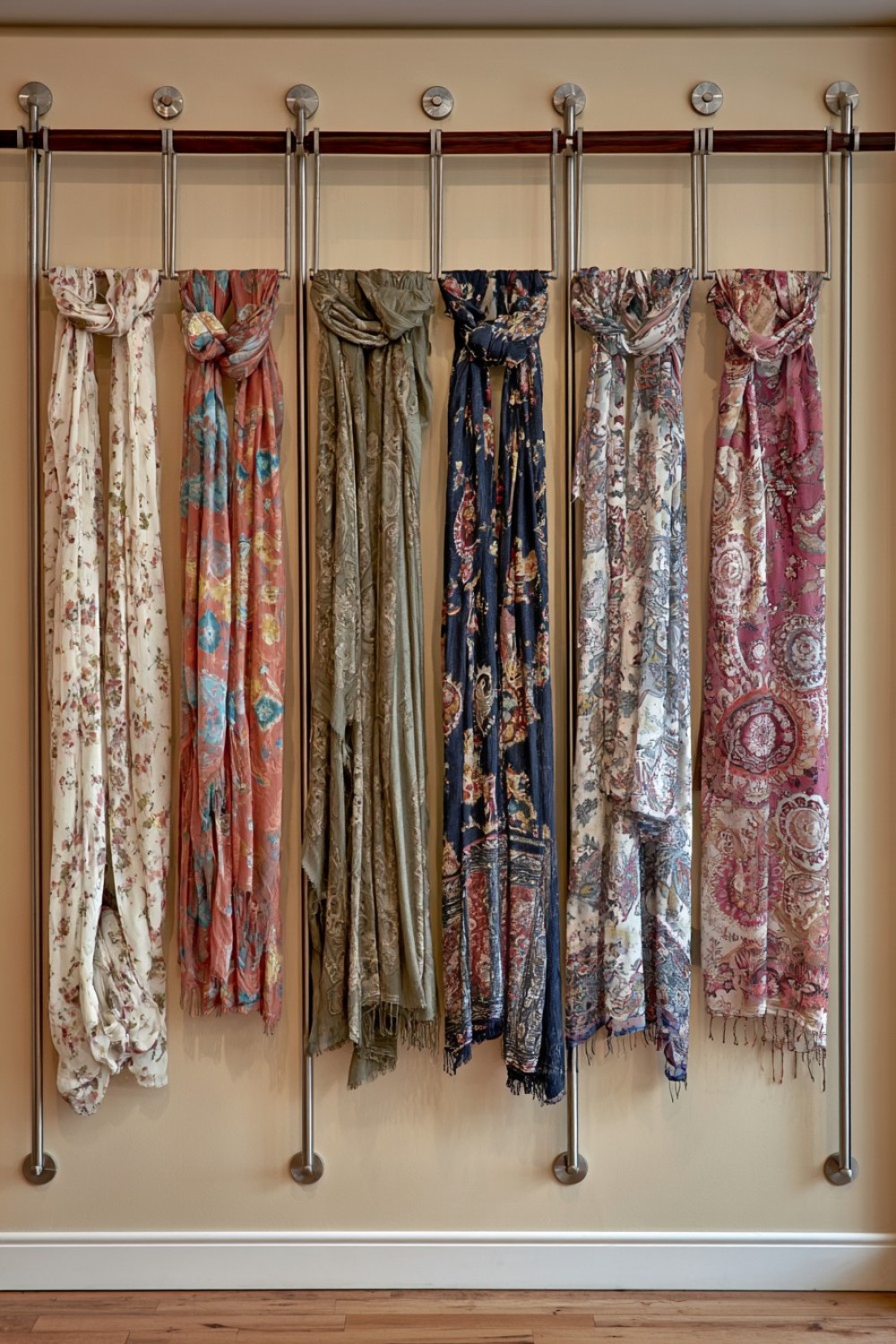
A vertical rail allows long scarves to hang with fewer folds, revealing their length, border, and overall pattern. Use padded or smoothly rounded supports and provide enough space between pieces for customers to separate them without pulling several products down. Organize the rail by color or material and place the longest items where they will remain clear of the floor.
Wall-mounted rails should be secured to suitable structural support because repeated handling creates more force than a static decorative display. Keep the lowest fabrics away from cleaning equipment, damp floors, and footwear. If the rail is tall, place products intended for customer handling within an accessible range and use the upper section only for visual samples. Product cards can explain size and material where labels would otherwise remain hidden. Periodically change fold or hanging positions on delicate textiles to reduce prolonged pressure on one section.
9. Organize a Central Scarf Island With Layered Heights
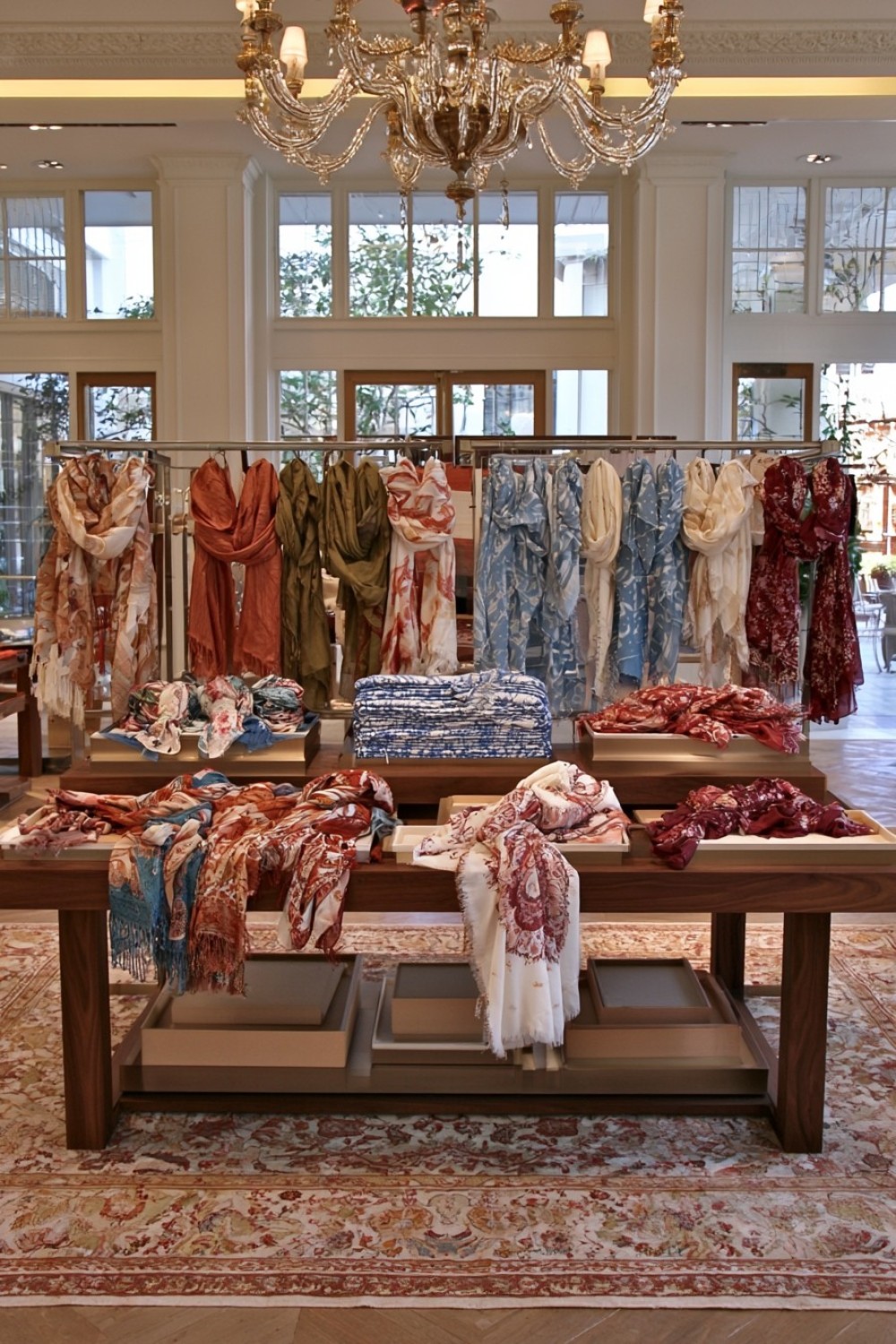
A central island can combine folded stock, featured products, and styling information within one compact fixture. Use a lower outer level for merchandise that customers can browse and a slightly raised central platform for a limited visual story. Drawers or cupboards beneath the display can hold replacement stock, packaging, and supplies used to restore the presentation.
The fixture must not interrupt required circulation or create a hidden obstacle in the boutique. Rounded corners can reduce impact in busy environments, and the base should remain stable when drawers are opened. Avoid building the central tier so high that it blocks sightlines across the store. Group products in shallow stacks and use dividers to prevent them from spreading across the surface. Because customers approach from several directions, prices and product information should be visible on more than one side. Review the island frequently during busy periods, as central displays become disordered faster than protected wall shelving.
10. Compose a Window Feature With Suspended Scarves
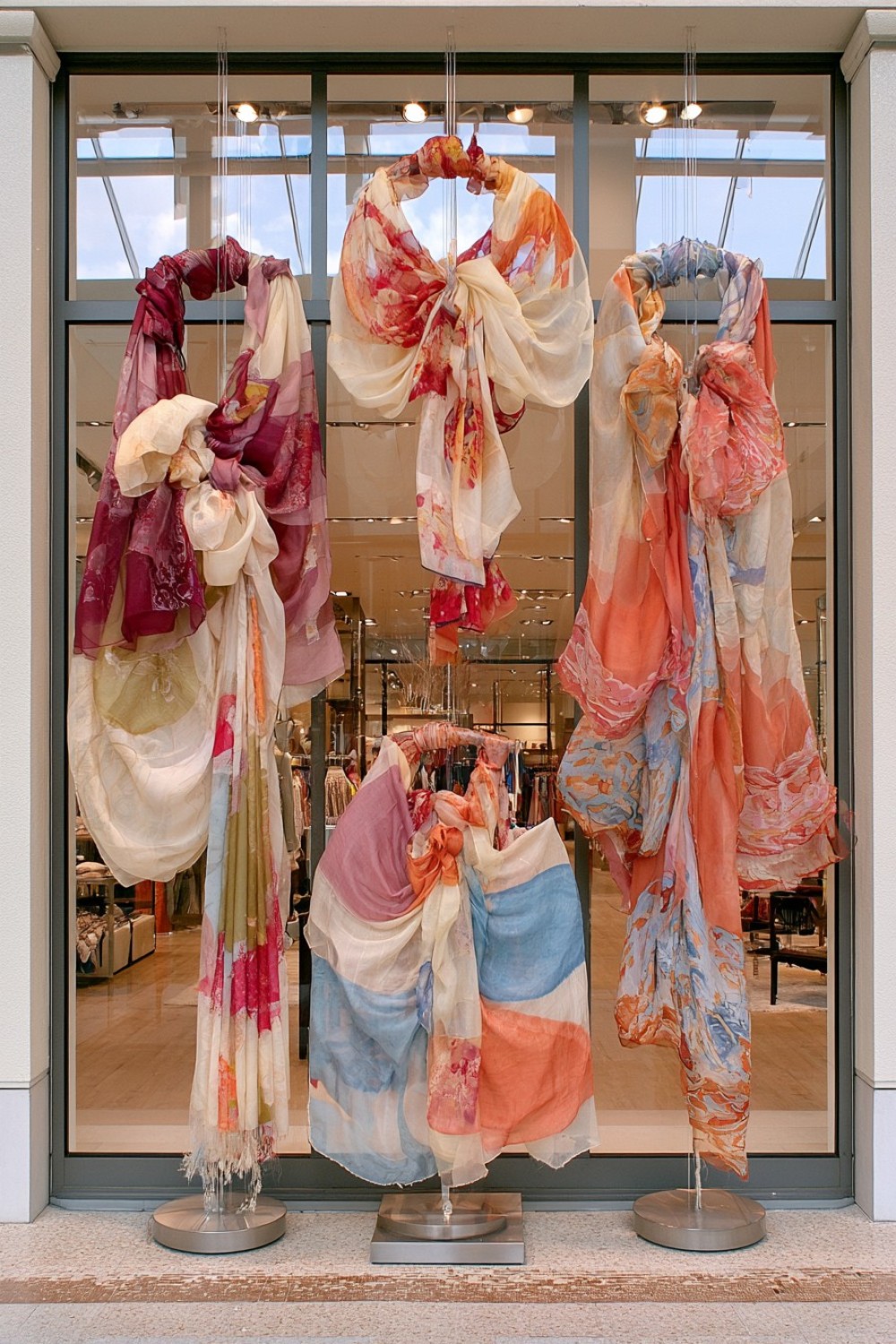
Suspended scarves can demonstrate movement and pattern in a window without requiring large props. Arrange a limited number at different heights, allowing each textile to form a gentle curve rather than stretching it tightly. Use display samples when possible so sale inventory is not exposed to prolonged sunlight, dust, or tension.
Clips and supports should be fabric-safe, and suspension points must be properly secured. Keep all material away from lamps, heaters, ventilation equipment, sprinkler components, and electrical wiring. Direct sun can fade textiles unevenly, so rotate the display regularly or use appropriate light-control measures. The composition should remain visible from outside without completely blocking views into the store. A clear focal scarf supported by two or three quieter pieces is usually more legible than a window filled with many overlapping patterns.
11. Mount Featured Scarves on Fabric-Covered Display Boards
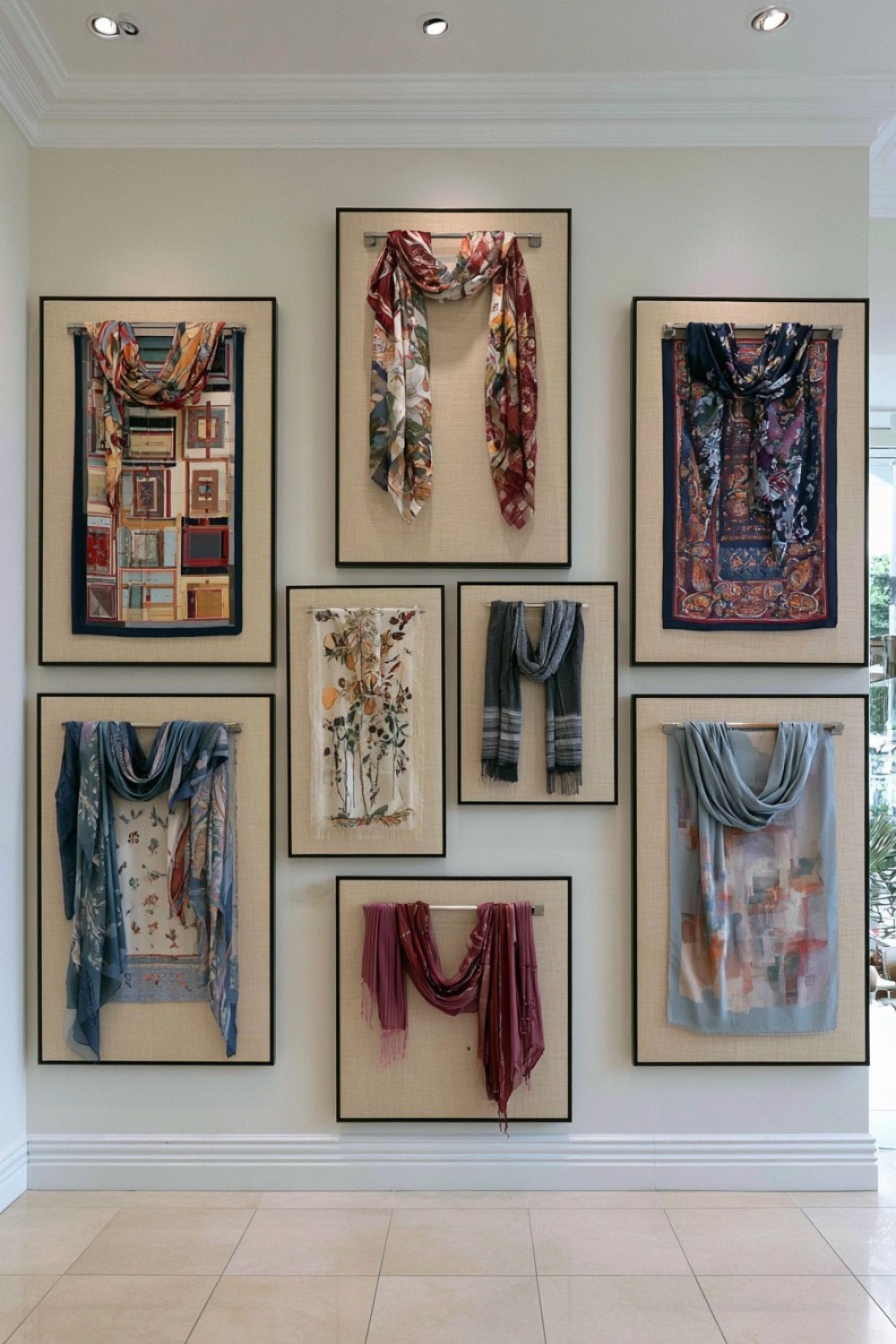
A fabric-covered board provides a soft background for showing the complete pattern of a square scarf. Select a neutral covering that contrasts with the product without altering how its colors are perceived. Scarves can be supported with padded, concealed, or fabric-safe attachments rather than sharp pins placed through delicate material.
Reserve this method for visual samples or pieces that can be displayed without damage. Pulling a scarf tightly may distort its edges, while loose folds can conceal the design. Lightweight boards can be changed between collections, but they must still be mounted securely and kept clear of walkways. Include the product name, dimensions, material, and location of available stock beside the display. If the board covering becomes dusty or marked, replace or clean it so it does not transfer residue. Leaving space around each mounted scarf allows the pattern to be understood from a distance.
12. Use a Circular Rack as an Accessible Boutique Centerpiece
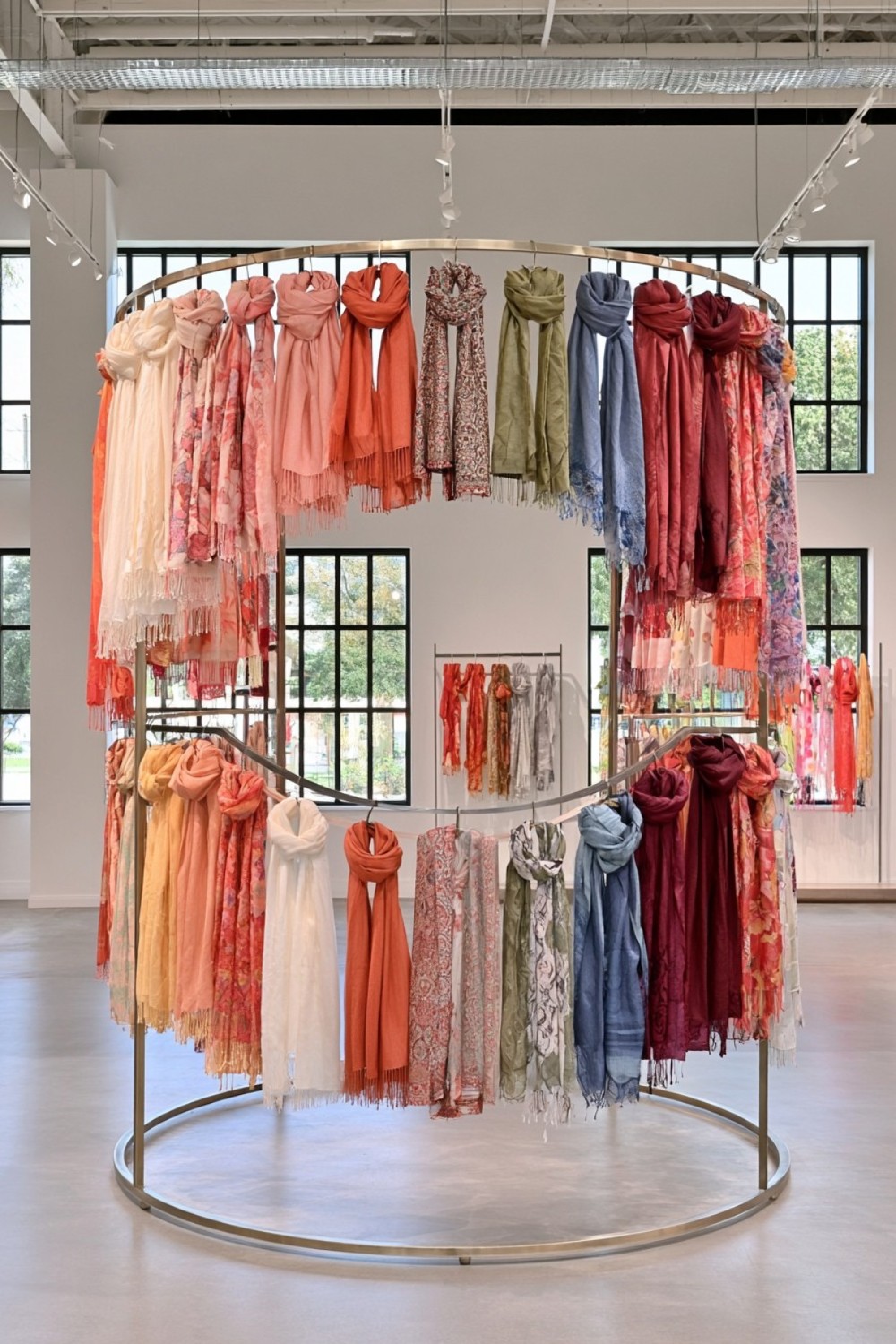
A circular rack allows customers to browse a broad assortment from several directions and can help guide movement through an open retail floor. Divide the circumference into clear categories such as solids, prints, lightweight styles, and larger wraps. Consistent hangers or smooth loops will make the display look organized even when product colors vary considerably.
The base must remain stable when customers pull from one side, and any rotating mechanism should move smoothly without trapping fingers or fabric. Allow sufficient open space around the entire rack in accordance with the boutique’s applicable accessibility and safety requirements. Keep the fixture low enough to preserve sightlines and employee supervision. Avoid filling every position; compressed scarves are harder to inspect and more likely to slide onto the floor. Category markers placed above or within the rack can reduce unnecessary searching while helping staff restore products correctly.
13. Highlight Textile Artwork With a Framed Pattern Gallery
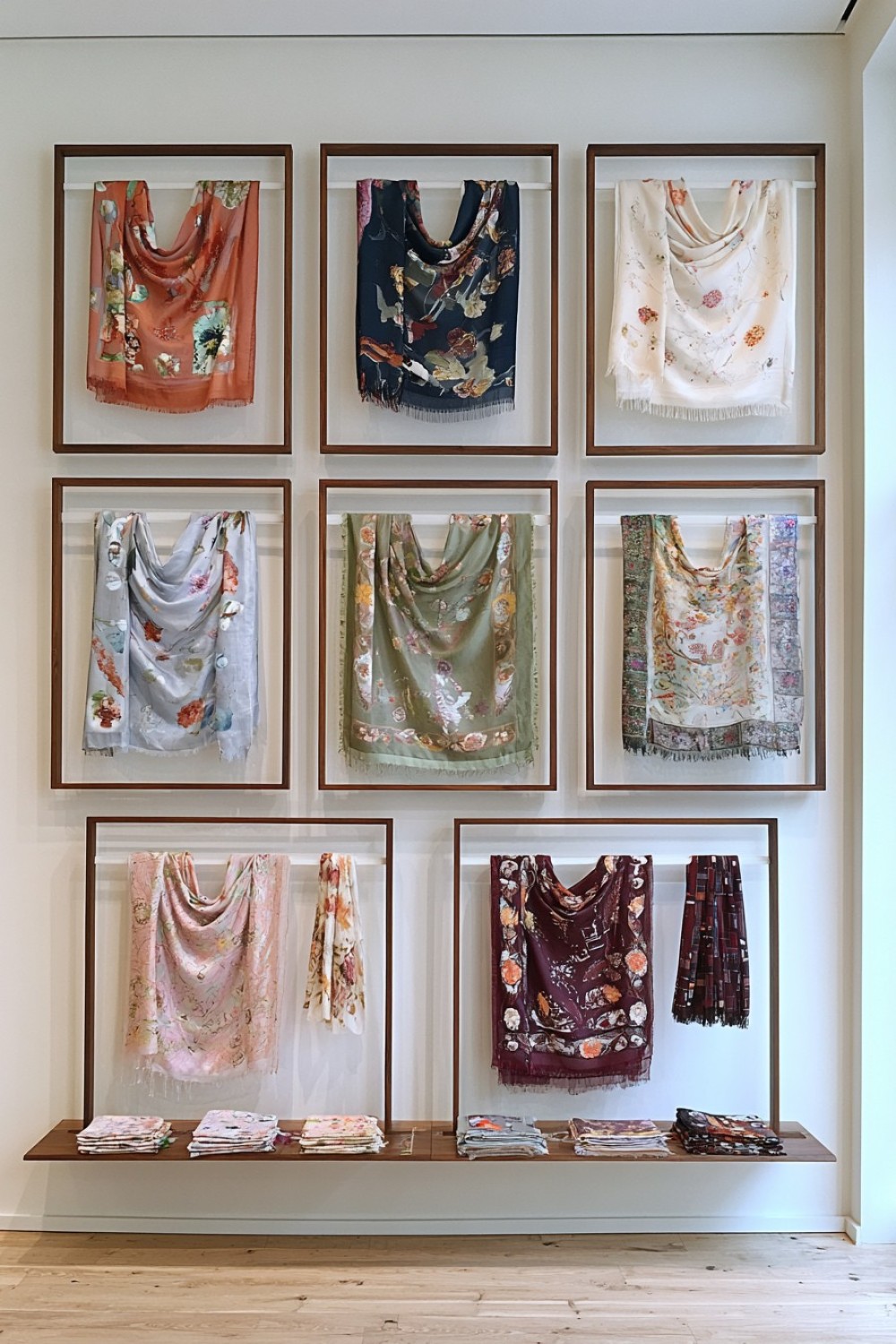
A framed gallery can draw attention to original prints, craftsmanship, or the story behind a collection. Display complete samples, approved fabric sections, or high-quality images of the patterns rather than cutting saleable products. Group frames using consistent spacing and restrained finishes so the textiles remain the focus. A short caption can identify the designer, technique, material, or inspiration.
Textiles should be mounted using methods appropriate for their value and long-term preservation. Avoid adhesives or pressure that may permanently mark delicate fabric. UV-filtering glazing and reduced direct sunlight can help limit fading, although window exposure should still be monitored. Hang frames securely and keep their lower edges clear of merchandise rails where customers might knock them. Connecting each displayed pattern with clearly identified stock below allows the gallery to support purchasing rather than functioning as unrelated wall decoration.
14. Build a Seasonal Story Table Around Real Styling Needs
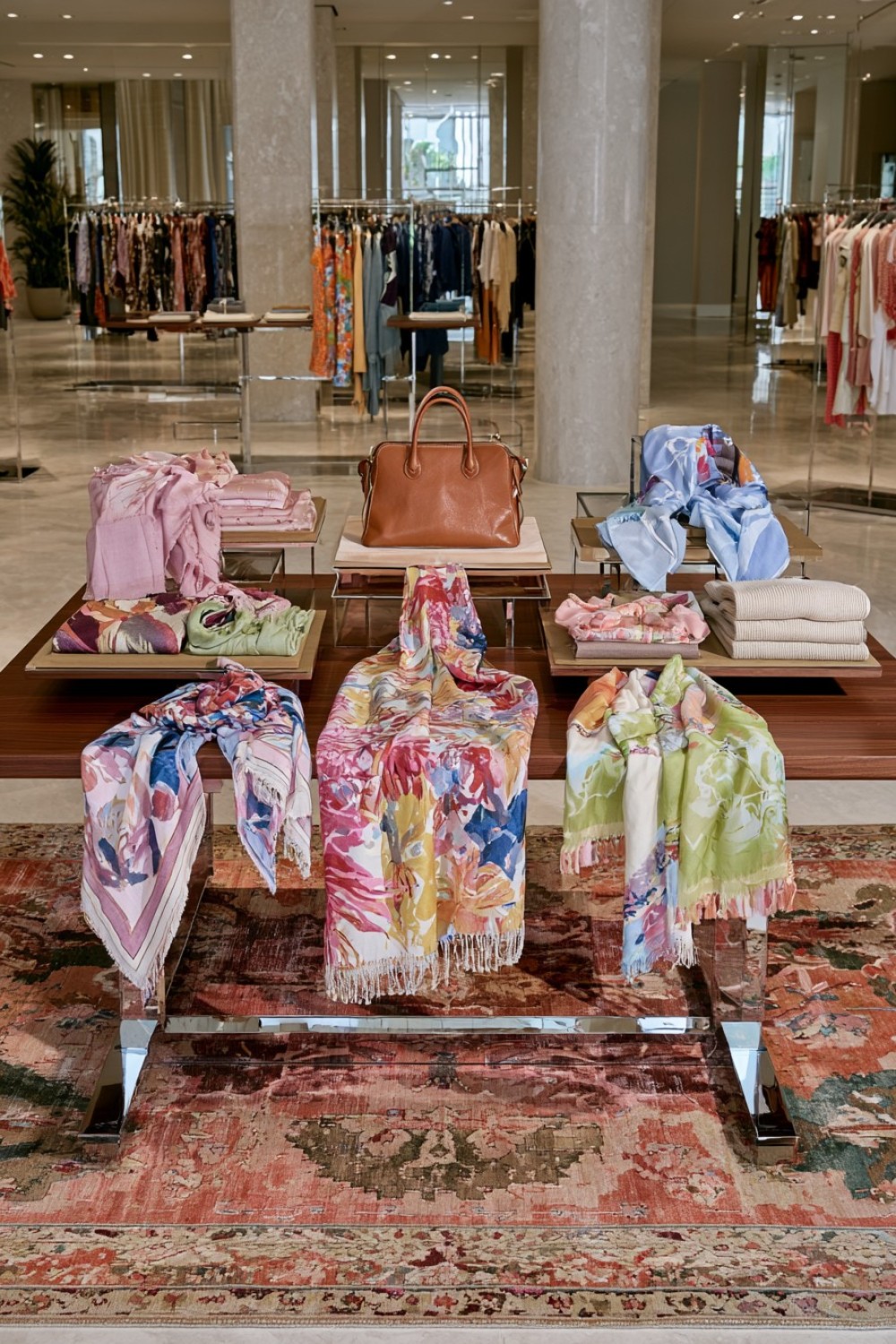
A seasonal table can show customers how scarves coordinate with clothing, bags, or gift packaging. Instead of relying on generic seasonal props, build the story around a practical need such as lightweight travel layers, warm winter wraps, occasion accessories, or gift-ready silk scarves. Use one dominant color direction and include only supporting objects that clarify how the products can be worn.
Keep folded scarves in shallow groups so customers can lift one without disturbing the entire arrangement. Reserve decorative objects for raised areas or protected sections where they cannot be confused with merchandise. Every scarf should have visible pricing or a clearly associated label. Update the table as inventory changes rather than leaving a displayed sample with no available stock. The surface should remain accessible from at least one comfortable browsing side and should not project into the main circulation route.
15. Introduce Organic Character With Smooth Branch-Inspired Rails
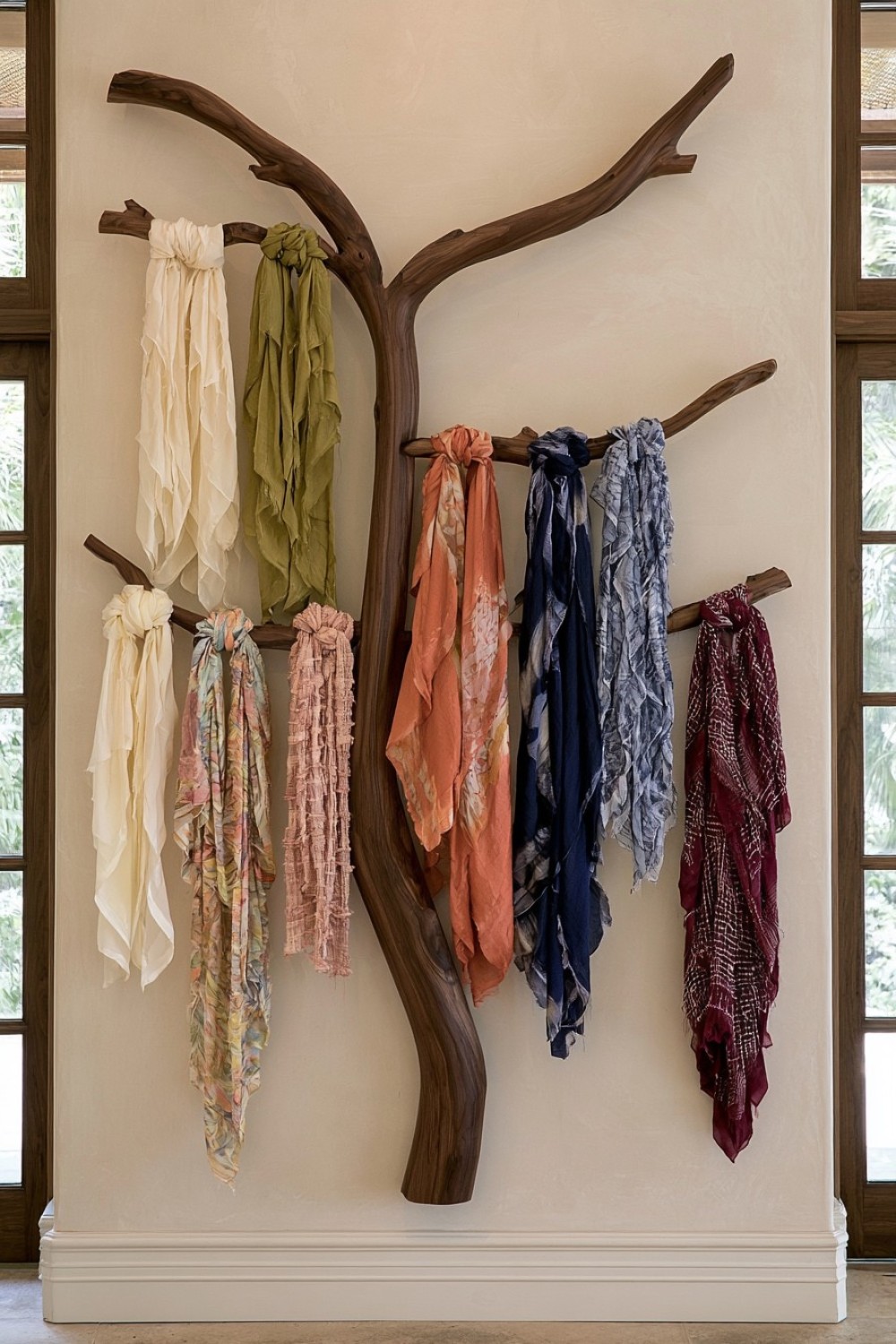
Branch-inspired rails can support a natural or handcrafted boutique identity while creating an irregular hanging rhythm. Purpose-made timber bars are safer for delicate fabrics than untreated branches because their shape, strength, and finish can be controlled. Use only a few branching points so customers can remove individual scarves without pulling neighboring products with them.
Every surface needs to be sanded, sealed, and inspected for cracks, splinters, resin, insects, or loose bark. The rail must be fixed to an appropriate structural support and tested for repeated handling. Avoid projecting ends at face or shoulder height and maintain clear passage around the installation. Pair the organic fixture with simple wall finishes and understated labels so it does not resemble temporary craft decoration. Scarves in natural fibers, botanical patterns, or earthy colors can reinforce the visual connection without making the entire collection overly themed.
16. Rotate One Focused Color Story at a Time
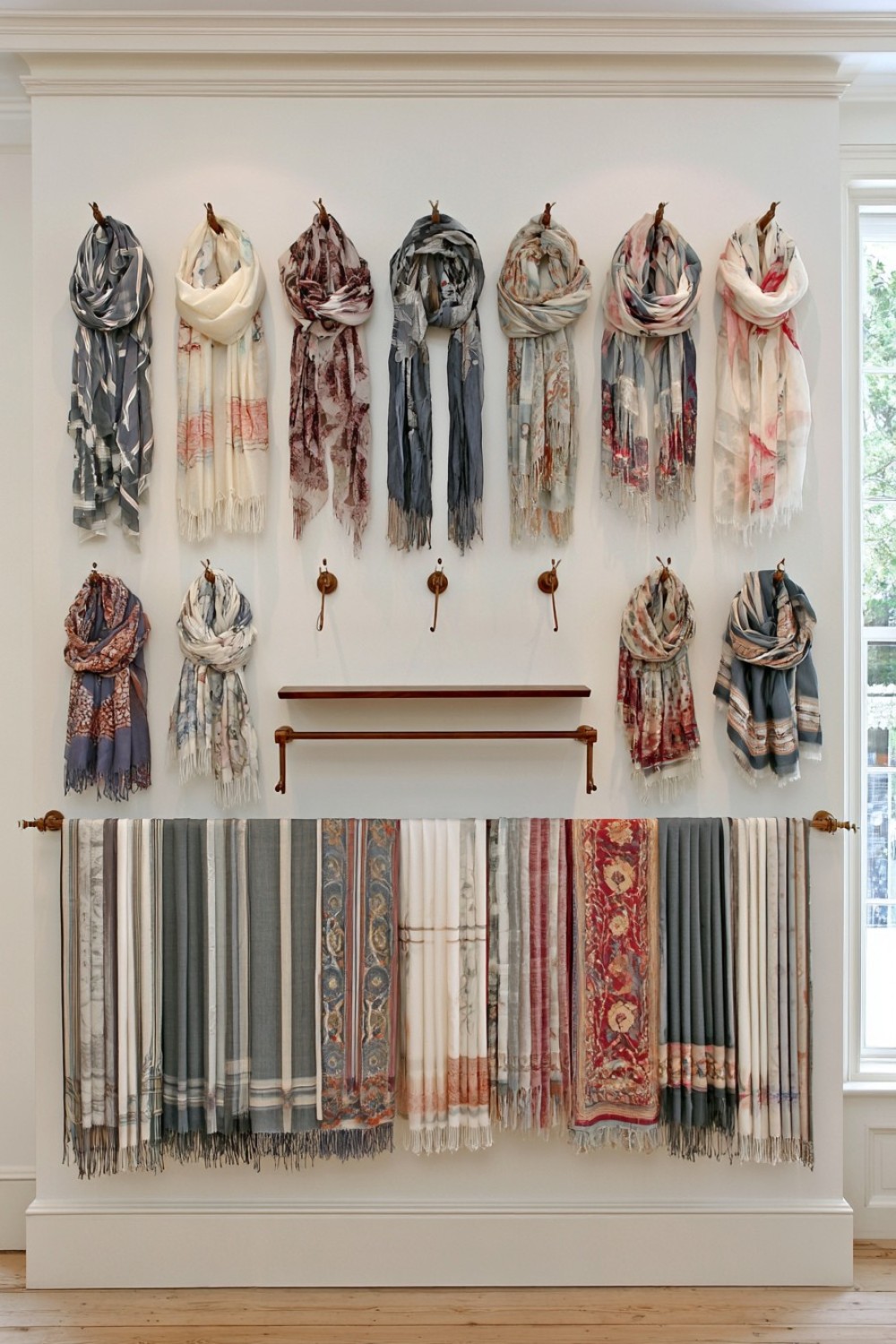
A regularly changing color feature gives returning customers something new to explore without requiring the whole store to be rearranged. Select one color family and show how it appears across silk, wool, cotton, patterned, and solid scarves. Include lighter and deeper variations so the display demonstrates range rather than repeating nearly identical products.
Set a practical rotation schedule based on stock levels, promotions, and season rather than changing the display so frequently that staff cannot maintain it. Keep a plan or photograph of each arrangement to simplify restoration after customer handling. Products removed from the feature should return to their permanent categorized locations. Track which color stories generate engagement or sales to make future rotations more informed. A small mirror and one styling image can help customers imagine the featured shade in use without adding unrelated props.
17. Add a Consultation Station With Organized Material Samples
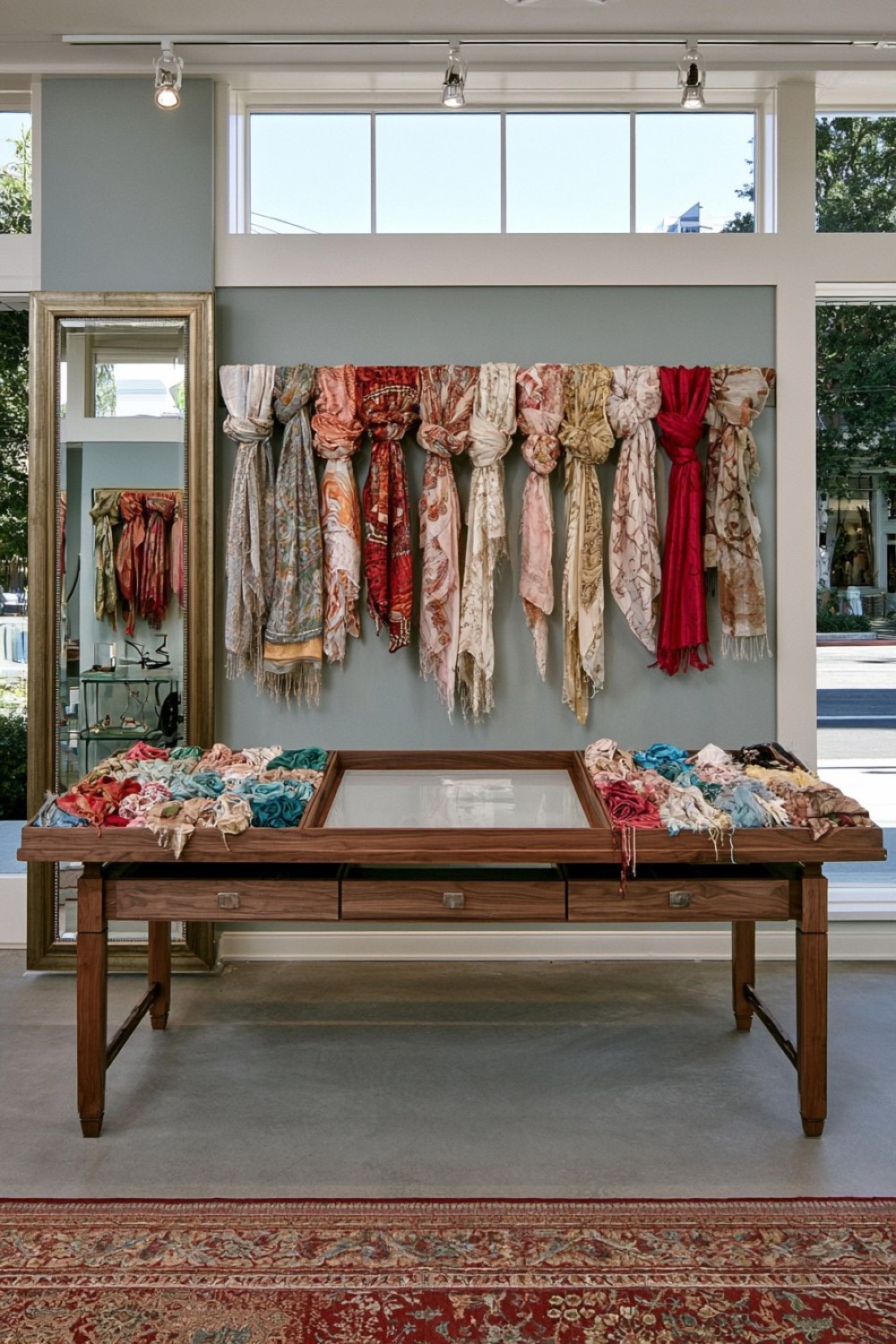
A consultation station is useful for customers comparing fabric weight, color, size, care needs, or gift options. Provide a clear counter, comfortable mirror, and organized samples showing available materials or finishes. Swatch cards can help explain differences between silk, wool, cotton, linen blends, and synthetic textiles, but product information should accurately reflect the actual scarf rather than making unsupported quality claims.
Store full inventory in labeled drawers behind or beneath the station and bring out a manageable selection based on the customer’s preferences. Keep the counter free from unrelated paperwork and provide a separate area for scarves that have already been handled. Care instructions, dimensions, and return information should be easy to access. The station must not obstruct the checkout queue or main aisle, and seating should be offered only where sufficient space remains. This service-focused display can turn scarf selection into a useful guided experience rather than a purely decorative presentation.
MORE IDEAS


Share
What's Your Reaction?
 Like
0
Like
0
 Dislike
0
Dislike
0
 Love
0
Love
0
 Funny
0
Funny
0
 Angry
0
Angry
0
 Sad
0
Sad
0
 Wow
0
Wow
0