13 Window Treatment Updates That Improve Light, Privacy, and Proportion

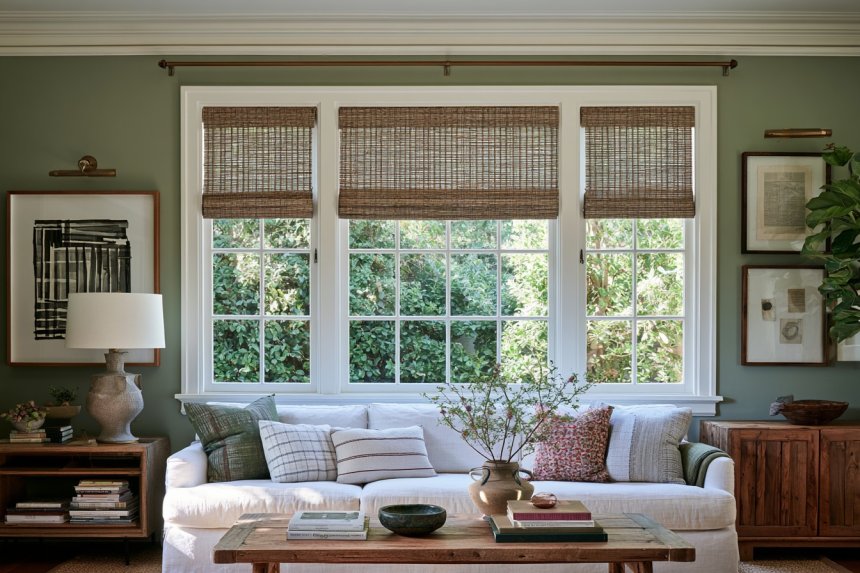
Window treatments influence much more than the appearance of a room. Curtains, shades, blinds, and films determine how daylight enters, when privacy is available, and how large or balanced a window appears. The right solution should respond to the direction of the sun, the room’s purpose, the need for insulation, and the amount of cleaning the material will require.
Begin by measuring every window individually because openings that appear identical can vary slightly. Record the width and height at several points, identify handles and radiators that may interfere with the covering, and decide whether the treatment will sit inside or outside the frame. These practical decisions should be resolved before selecting colors, patterns, or decorative hardware.
1. Give Living Room Curtains Separate Day and Night Functions
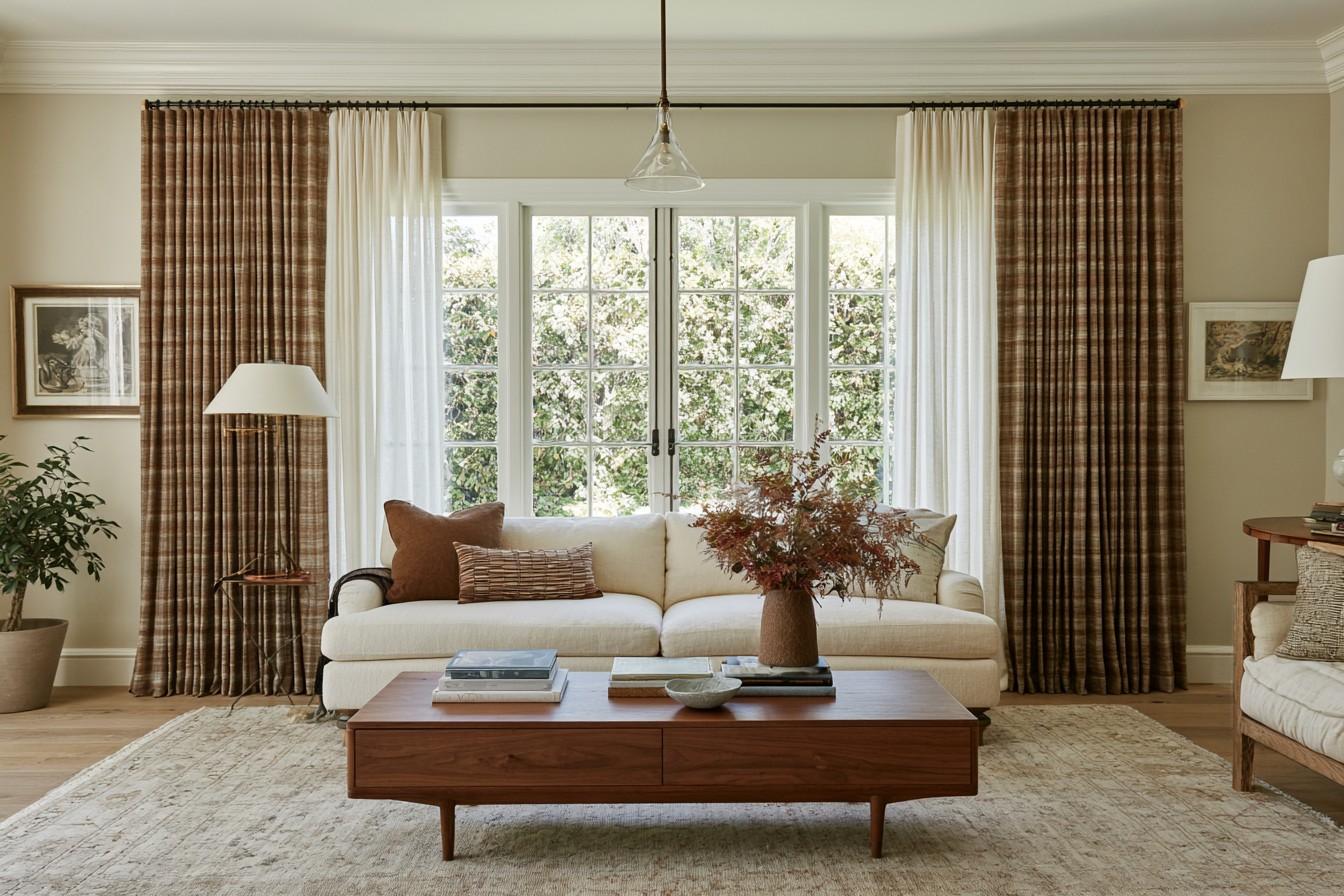
Layering a light-filtering curtain with a denser outer panel allows a living room to serve different needs throughout the day. The inner layer can soften direct sunlight while preserving brightness, and the outer curtain can provide privacy after dark. Choose fabrics in related undertones so the two layers feel intentional when viewed together.
A double track usually creates a cleaner arrangement than placing both fabrics on one rod. Check that the outer curtains can close without catching on the inner layer and that neither fabric rests against a heater. Fullness also matters: panels that barely meet in the center may look flat and can leave privacy gaps.
2. Match Bedroom Coverings to Actual Sleep Needs
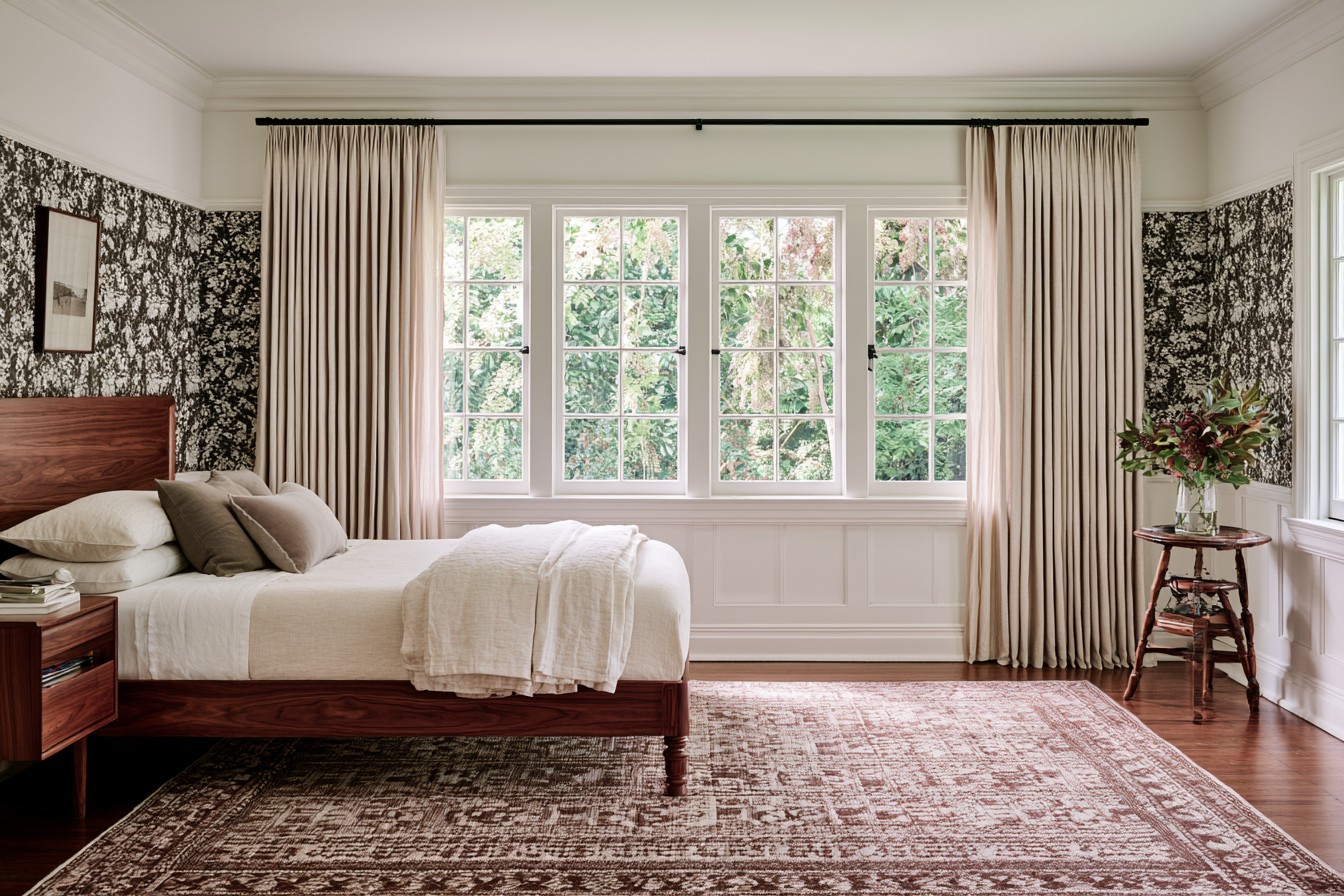
Bedrooms exposed to streetlights or early morning sun may benefit from a blackout-lined curtain or an opaque shade. Darkness is most effective when the covering extends beyond the glass rather than ending precisely at its edges. Side channels or generously overlapping curtain panels can reduce the bright lines that often remain around a standard blind.
Blackout material does not require a dark decorative fabric. Pale curtains can contain a concealed lining and still support a calm color scheme. Ensure windows remain easy to open for ventilation and keep fabric clear of radiators. Select cordless shades or properly secured operating cords, particularly in rooms used by children.
3. Keep Kitchen Windows Clear of Heat and Work Surfaces
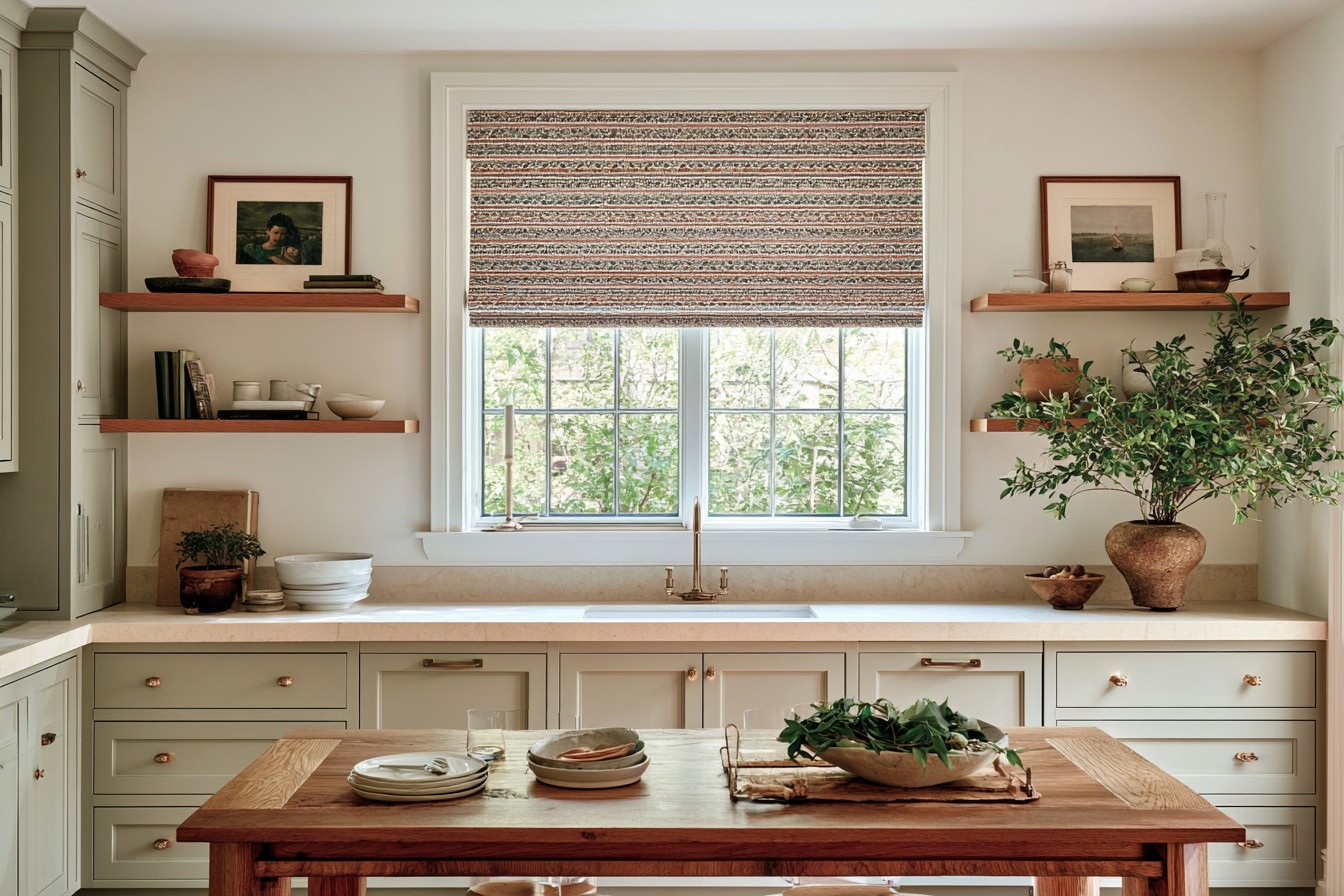
A kitchen treatment should operate easily without touching the sink, counter, or food-preparation area. Roller shades, washable café curtains, and compact blinds generally occupy less space than floor-length fabric. Materials with smooth surfaces are easier to wipe when exposed to cooking residue or water splashes.
Do not position loose fabric close to a cooktop, open flame, or another heat source. Before choosing an inside-mounted shade, check whether window handles will prevent it from closing correctly. Moisture-resistant hardware and washable materials are useful near sinks, but regular ventilation is still necessary to limit condensation around the frame.
4. Protect Bathroom Privacy with Moisture-Suitable Materials
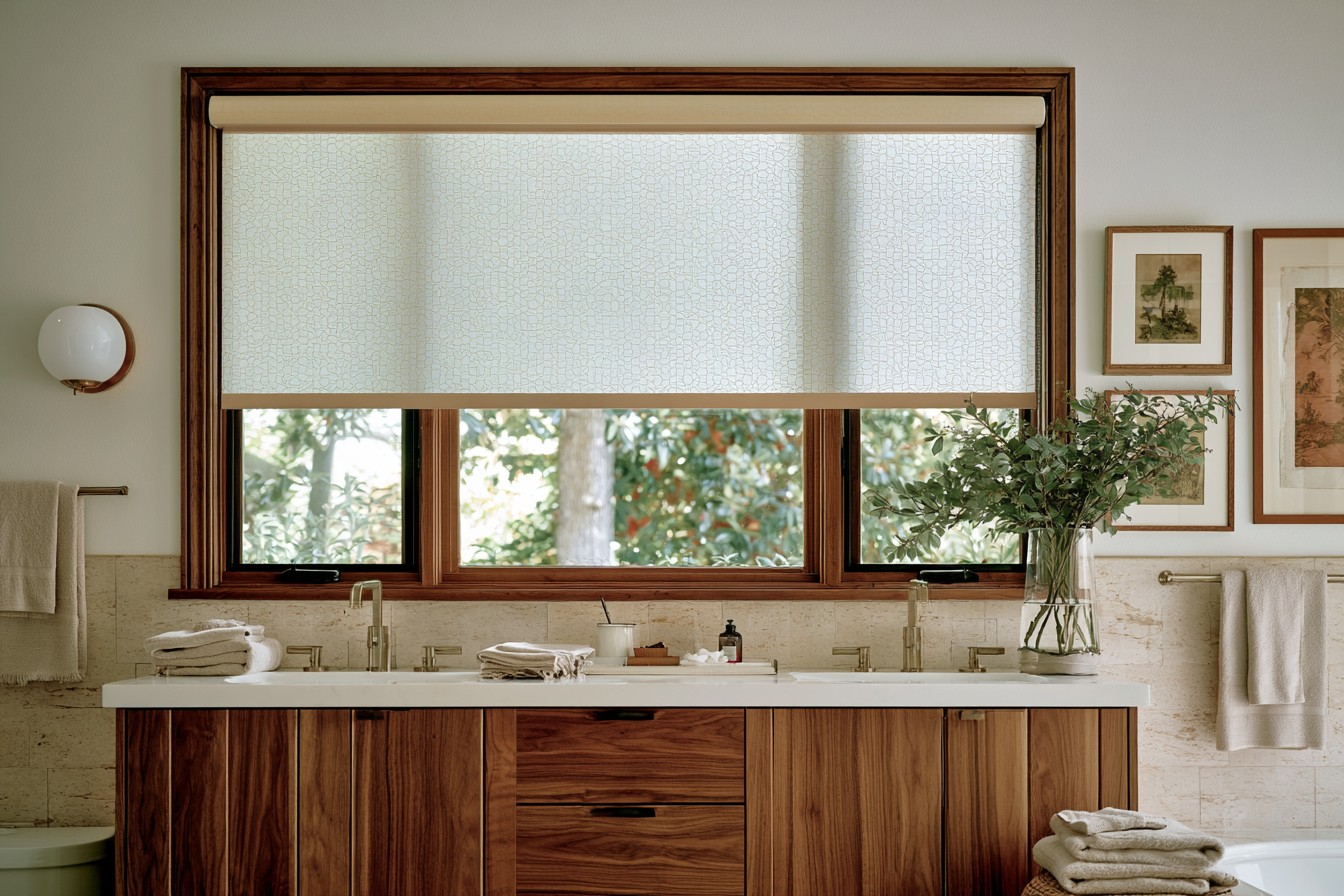
Bathroom window treatments must balance privacy with humidity and daylight. Frosted film can obscure the lower part of a window while leaving the upper glass open to light. Moisture-resistant roller shades and suitable synthetic blinds are often easier to maintain than absorbent, heavily lined fabrics.
A privacy film should be applied to clean, compatible glass according to its installation instructions. It should not prevent the window from opening or conceal deterioration around the frame. Keep blinds and curtains outside direct shower spray wherever possible and use effective ventilation to reduce mildew and condensation.
5. Control Screen Glare in the Home Office
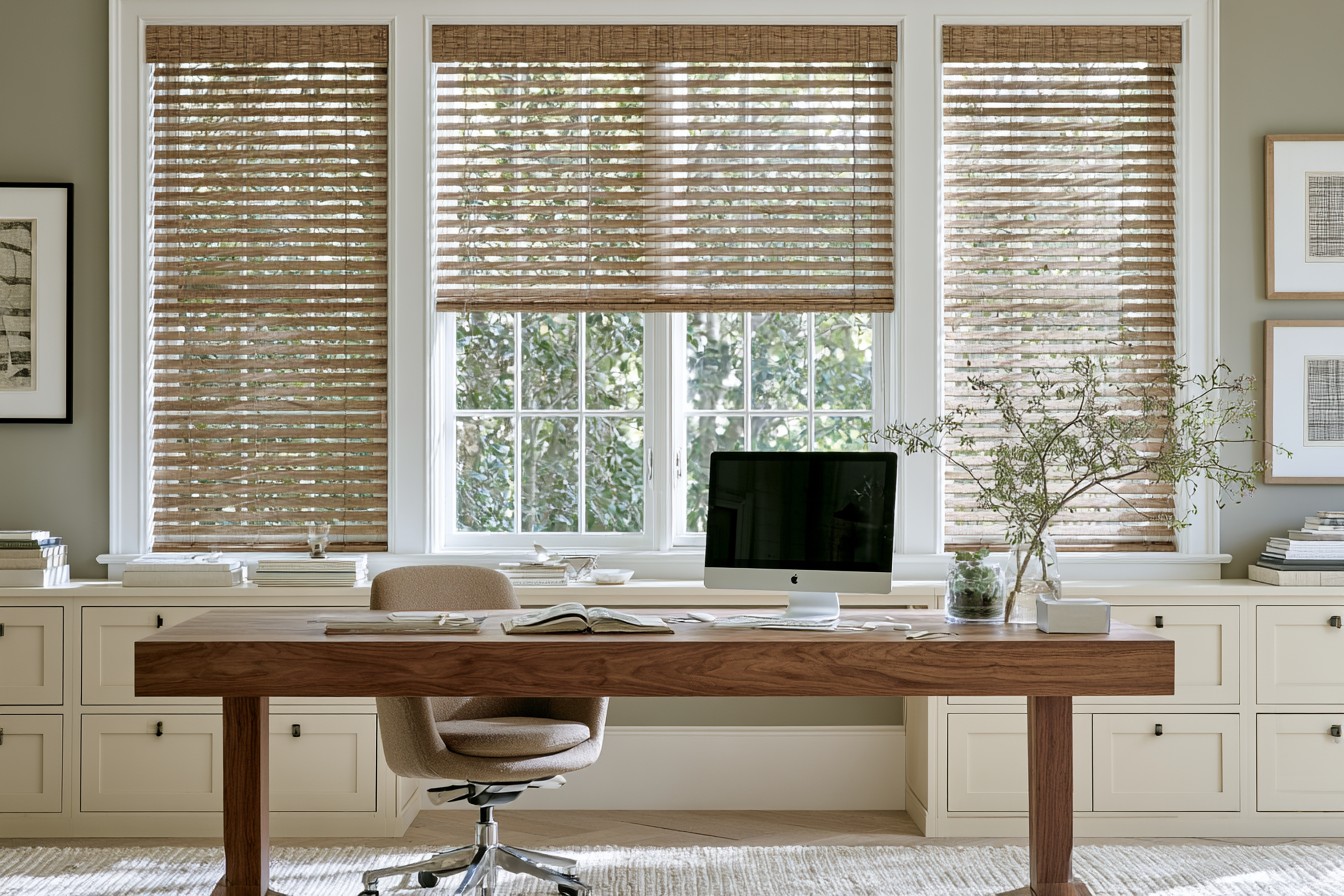
An office window covering should reduce glare without leaving the workspace unnecessarily dark. Adjustable blinds, solar shades, or lined curtains allow light levels to change throughout the working day. Position the desk so the brightest window is neither directly behind the screen nor directly in the user’s field of vision when possible.
Solar-shade fabrics are available with different degrees of openness, which affects both outward visibility and light control. Examine a sample against the actual window before ordering. A shade that works well during daylight may not provide privacy after dark when the room is illuminated, so an additional layer may be required.
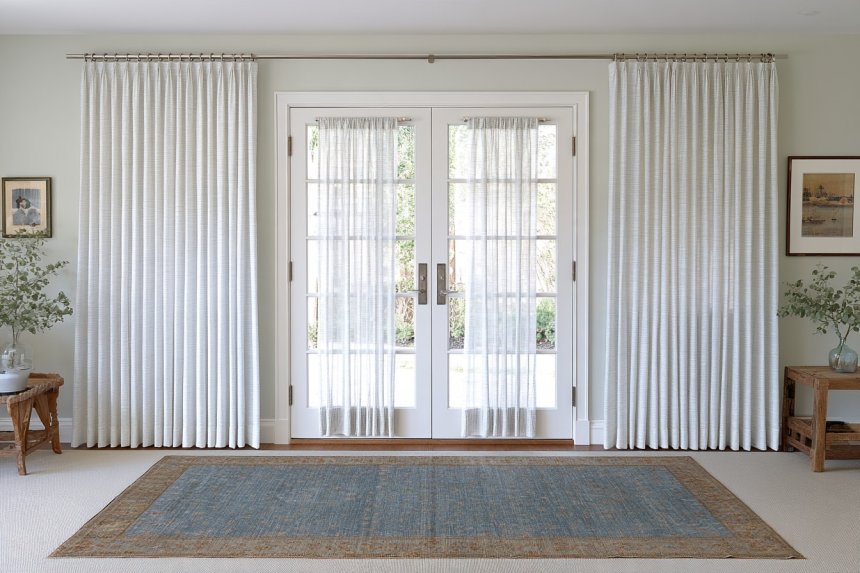
6. Use Pale Fabric to Support a Small Room’s Proportions
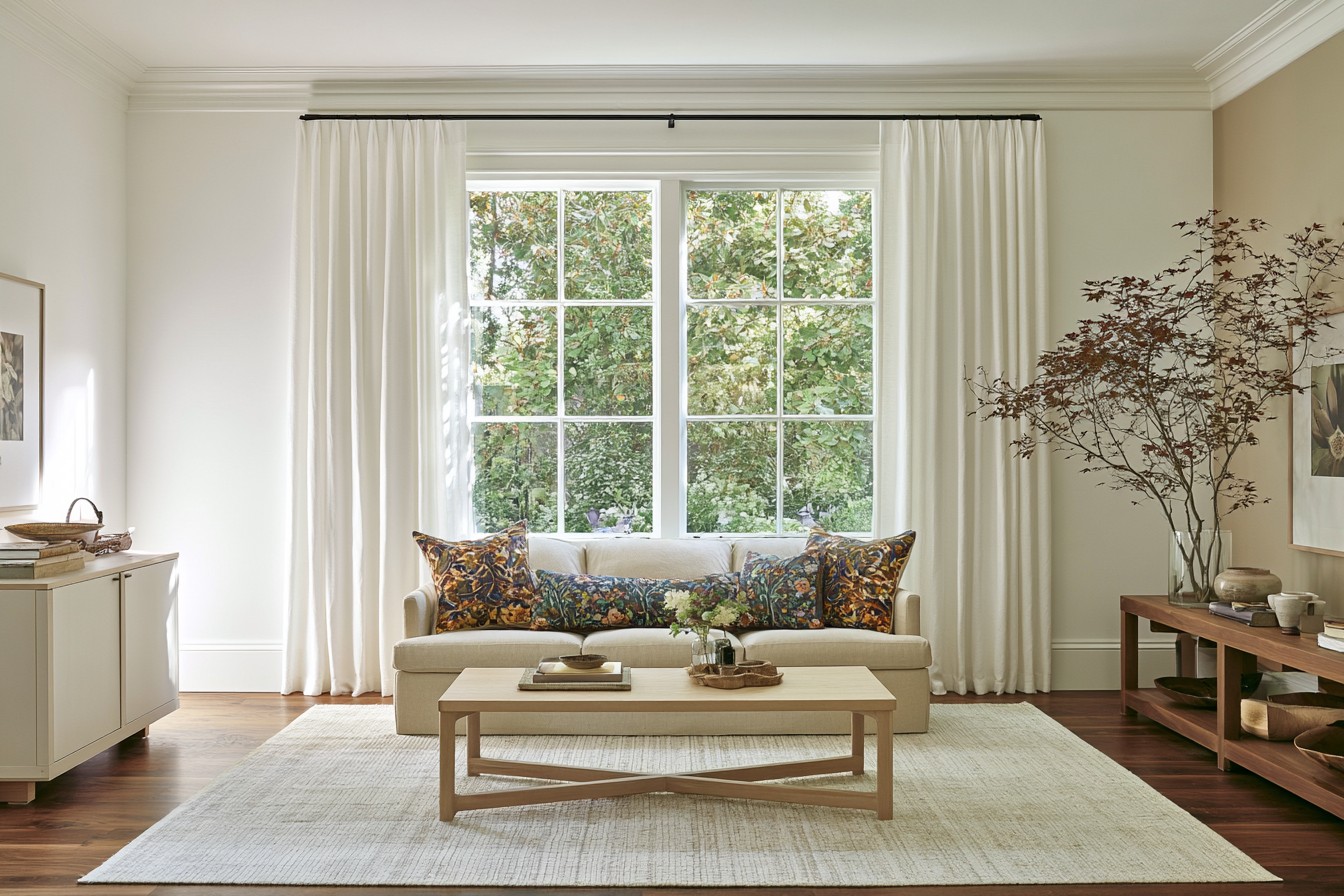
White, cream, flax, and light gray window treatments can maintain visual continuity with pale walls. This reduces contrast around the opening and helps the room feel calmer. A fine texture or subtle woven pattern adds interest without creating the weight of a large, high-contrast print.
Light-colored fabric can become transparent when strongly backlit, so evaluate privacy before making a final choice. A lining or concealed shade can provide coverage without changing the visible color. Keep the treatment close to the floor but avoid excessive pooling, which occupies visual space and collects dust.
7. Personalize Plain Curtains with Fabric Paint
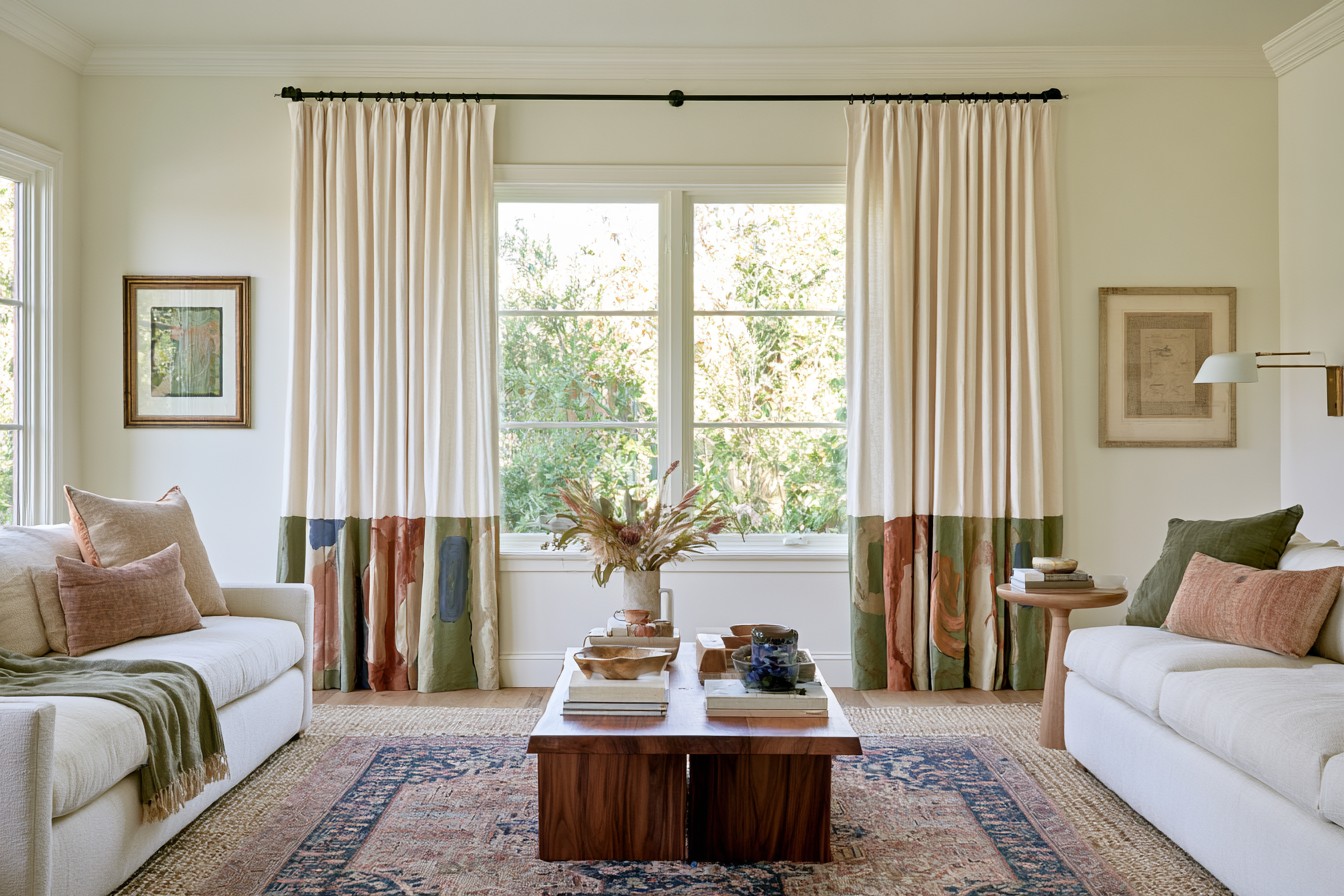
Fabric painting can update an inexpensive or existing curtain without replacing the entire treatment. A narrow border, repeated stencil, or restrained geometric motif is usually easier to execute consistently than a detailed full-panel design. Borrowing one color from the room’s rug or upholstery helps the finished curtain belong to the wider scheme.
Wash and dry the fabric before painting to remove finishes that could prevent adhesion. Test the paint on a spare piece or hidden section to check bleeding, opacity, and flexibility. Follow the product instructions for setting and washing the design, and protect the work surface because paint may pass through lightweight fabric.
8. Introduce Warmth with Timber Blinds and Hardware
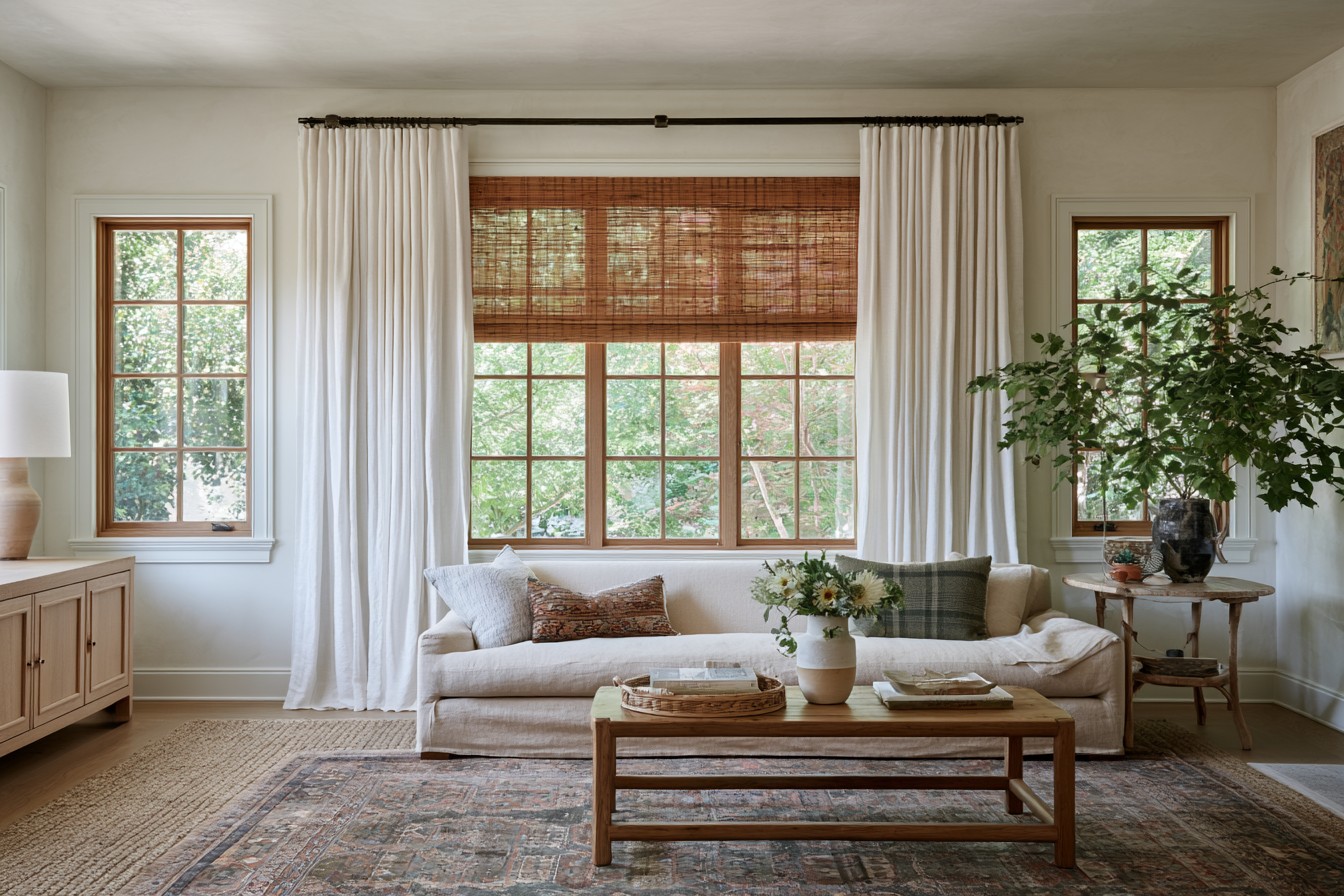
Wooden blinds, bamboo shades, and timber curtain poles can introduce natural warmth to neutral interiors. Match the undertone rather than trying to duplicate every wood finish precisely. A medium warm timber can connect pale walls with darker furniture, while a painted pole may be more appropriate when the room already contains several wood species.
Real wood may change when repeatedly exposed to humidity, making suitable composite alternatives worth considering in kitchens and bathrooms. Heavy blinds require dependable mounting points and properly sized hardware. Check that the window frame and handles remain accessible and select a safe operating system without loose cords.
9. Make Safety the First Decision in Children’s Rooms
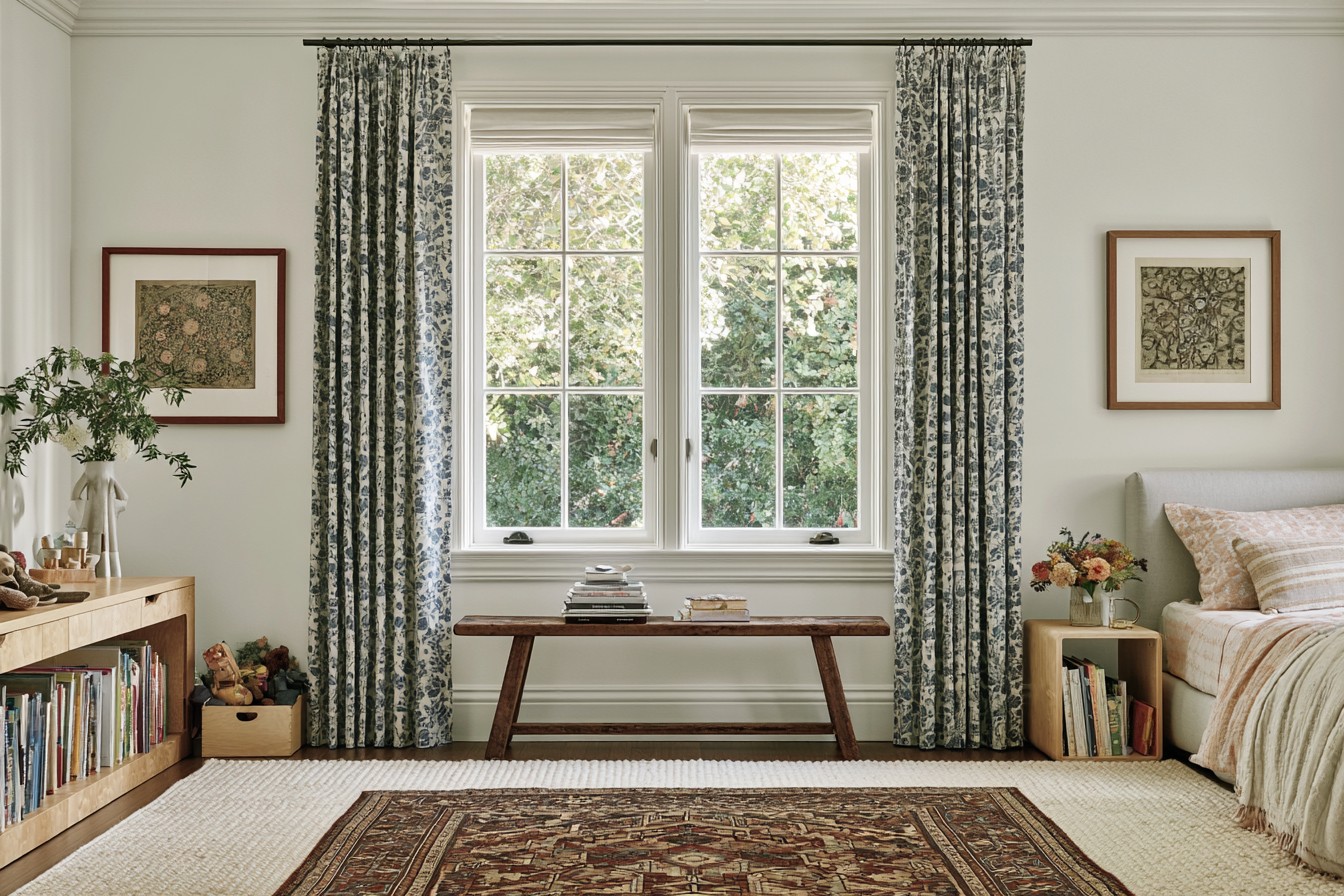
A child’s window treatment should be selected for safe operation before its color or pattern is considered. Cordless blinds and shades eliminate dangling loops, while securely fixed curtain hardware reduces the risk of components being pulled loose. Position beds, chairs, and climbable furniture away from windows whenever the room layout allows.
Soft green, blue, peach, cream, or muted yellow can provide color without making the treatment difficult to coordinate as the room changes. Washable fabric and replaceable panels are practical for long-term use. The covering must not interfere with window locks, ventilation, or any required emergency opening.
10. Give Dining Rooms Texture with Tailored Fabric
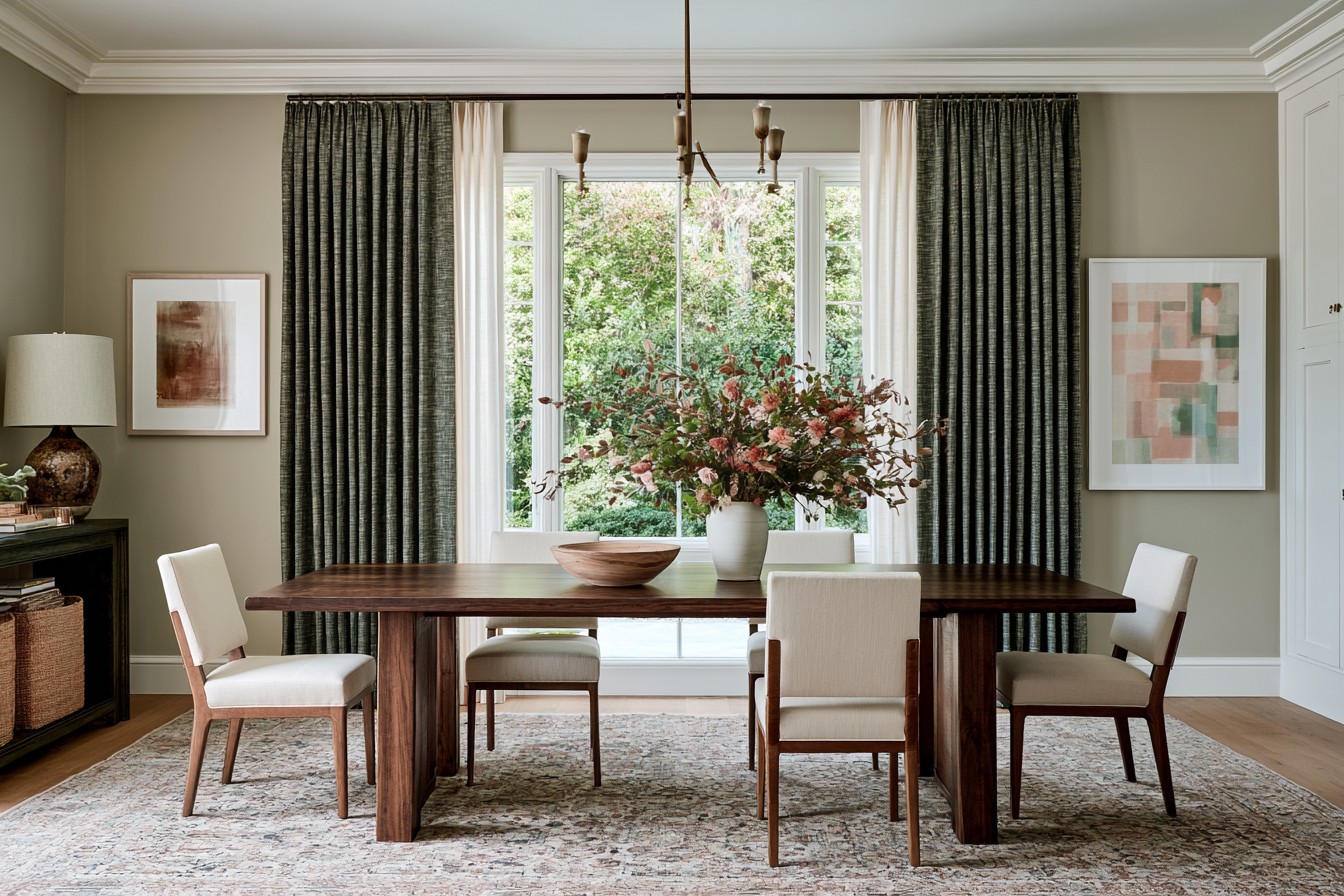
Dining rooms can support fuller curtains and more structured fabrics because they often contain fewer soft furnishings than living rooms. Linen-look weaves, subtle stripes, or gently pleated panels introduce texture while framing the table. If the wallpaper or upholstery is already patterned, use a quieter curtain to avoid competing focal points.
Plan the stack-back space so open curtains do not cover a large portion of the glass. Panels should also remain clear of sideboards, radiators, and food-serving surfaces. A lining can improve the way lightweight fabric hangs while providing evening privacy and reducing fading caused by strong sunlight.
11. Change Small Components Instead of Replacing Every Curtain

A seasonal update does not require storing several complete sets of curtains. Keep the functional shade or main neutral panels in place and change smaller elements such as tiebacks, a narrow decorative border, or nearby cushion covers. This approach reduces cost and prevents the window treatment from becoming disconnected from the rest of the room.
During warmer months, unobstructed ventilation and manageable glare may be the priorities. In cooler periods, a properly fitted lining can help reduce drafts around inefficient windows, although fabric should never cover a heat source. Clean and dry stored textiles completely before placing them in breathable containers.
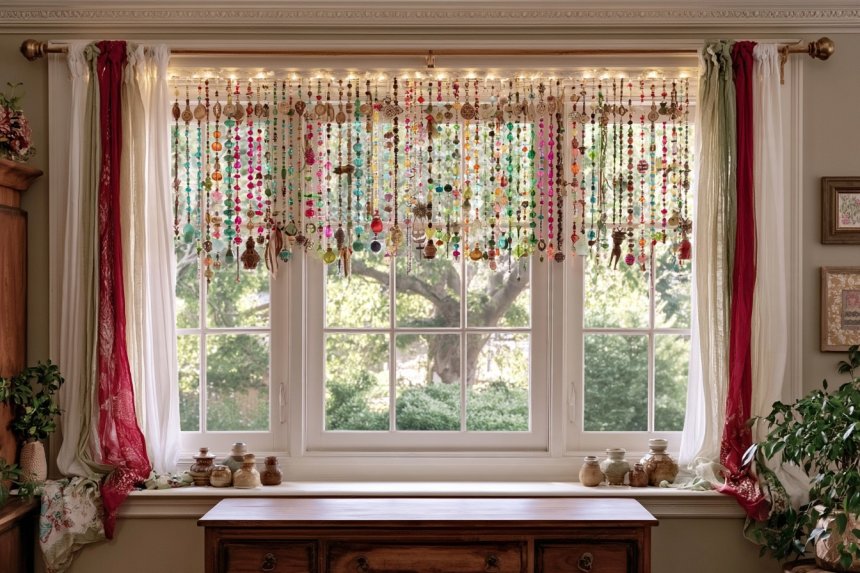
12. Convert Suitable Vintage Textiles into Short Curtains
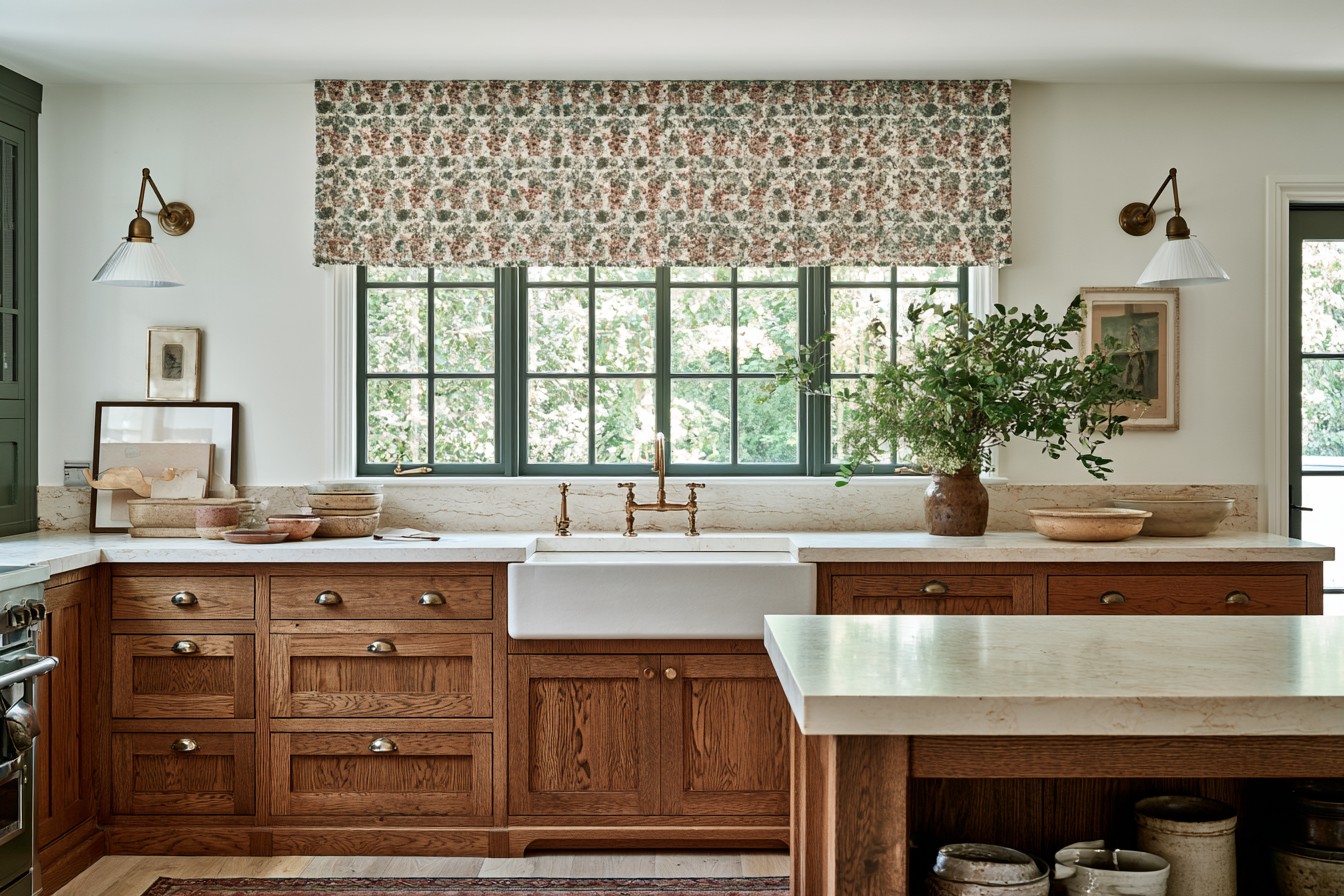
Large tablecloths, embroidered panels, and good-quality fabric remnants can become café curtains or compact window panels. Inspect the textile for weak areas, fading, and permanent stains before cutting. Center any existing embroidery or border carefully so the original detail appears deliberate when the curtain is closed.
Wash or professionally clean the material before measuring because some fabrics may shrink. Reinforce the upper edge to support clips, rings, or a rod pocket, and finish cut edges neatly. Delicate or historically valuable textiles should not be altered; a removable display method or reproduction fabric is a safer choice.
13. Adjust Curtain Placement to Improve Window Proportions
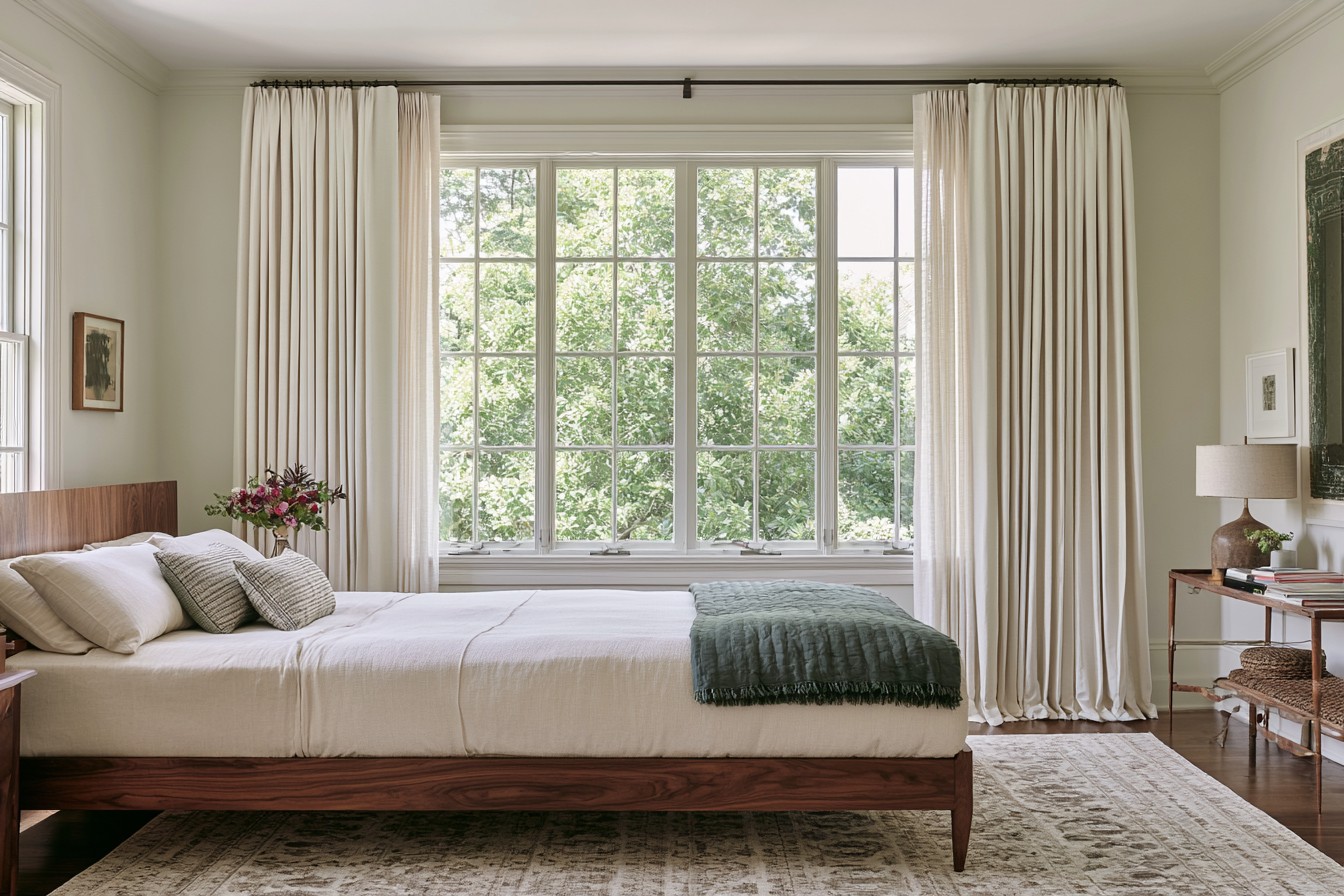
Installing a curtain rod above the window frame can visually increase the room’s height, while extending it beyond both sides allows open panels to reveal more glass. This technique works best when the dimensions relate to the wall rather than following a fixed rule. Mark the proposed rod position with removable tape and inspect it from across the room before drilling.
Wider installation requires a longer, properly supported rod. Add a center bracket when recommended for the rod span and curtain weight. Check for concealed wiring or pipes before drilling, use fixings suited to the wall construction, and make sure the finished panels can close fully without leaving gaps at the edges.
Choose Function Before Fabric
The best window treatment begins with a clear understanding of the problem it needs to solve. A bedroom may require darkness, an office needs glare control, and a bathroom demands privacy from a moisture-tolerant material. Defining that function first narrows the choice of operating system, mounting position, and fabric.
Accurate measurements, dependable hardware, safe controls, and realistic cleaning requirements contribute more to long-term satisfaction than a temporary trend. Once these fundamentals are resolved, color and pattern can be used to connect the window with the rest of the room while preserving comfortable daylight and privacy.
MORE IDEAS


Share
What's Your Reaction?
 Like
0
Like
0
 Dislike
0
Dislike
0
 Love
0
Love
0
 Funny
0
Funny
0
 Angry
0
Angry
0
 Sad
0
Sad
0
 Wow
0
Wow
0