17 Balcony Garden Transformations for Lush and Practical Outdoor Living

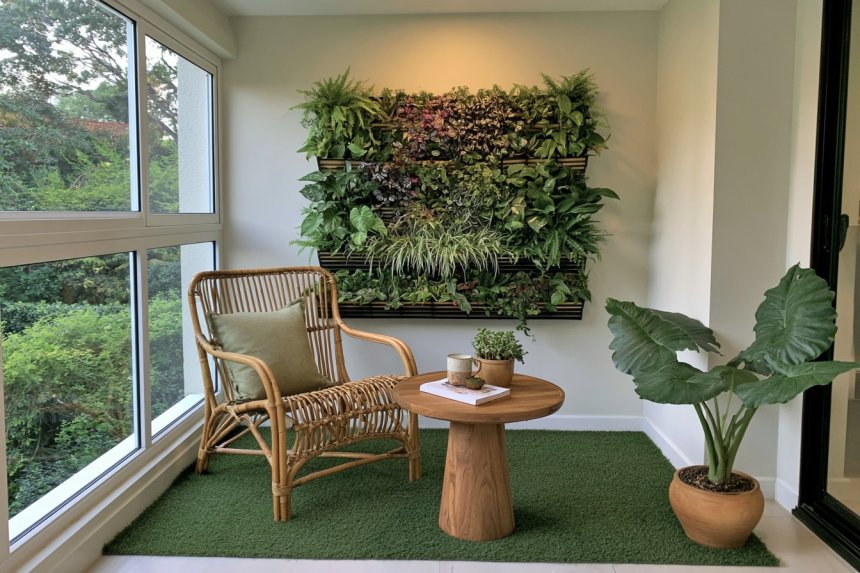
A balcony garden can provide greenery, privacy, fragrance, and even fresh ingredients without requiring a large outdoor area. Successful results depend on understanding the balcony before buying plants. Observe how many hours of direct sunlight it receives, where rainwater drains, and which sections are exposed to strong wind. Building regulations, railing safety, container weight, and access routes should also influence the layout.
Choose plants according to the actual conditions rather than appearance alone. Containers need drainage holes, suitable growing material, and enough root space for the selected species. Lightweight pots can reduce unnecessary load, but they must be secured where wind is a concern. A balanced design usually combines taller structural plants, medium foliage, and smaller seasonal accents while preserving room for watering, maintenance, and comfortable movement. These balcony garden transformations approach small-space planting from different practical and decorative directions.
1. Build a Layered Plant Wall With Staggered Containers
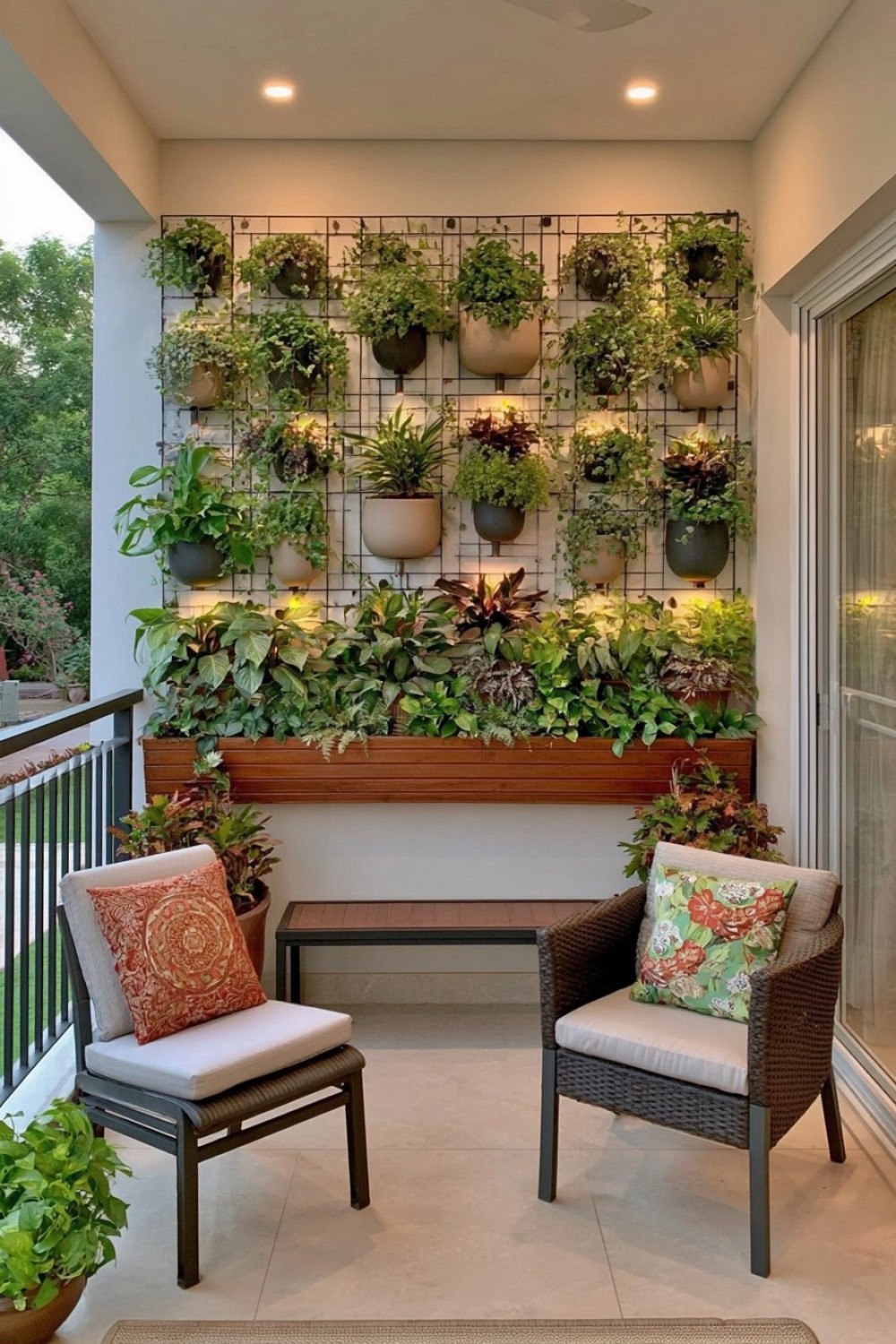
A staggered plant wall uses vertical space while leaving more of the balcony floor available for seating. Combine wall-mounted rails, individual brackets, or a freestanding planting frame at several heights. Place trailing plants near the upper level, compact foliage in the middle, and herbs or frequently handled plants within easy reach. Leaving visible space between containers prevents the arrangement from becoming a heavy block of greenery.
Fixings must suit the wall material and the combined weight of pots, wet soil, and mature plants. If drilling is prohibited, choose a stable freestanding frame with a broad base rather than attaching containers to an unsuitable surface. Position water-sensitive walls behind a protective panel and make sure drainage does not run onto neighboring balconies. Removable drip trays simplify maintenance, but standing water should not be allowed to collect around roots. Select plants with similar light and watering requirements when they share the same irrigation line.
2. Grow a Fragrant Herb Garden Near the Kitchen Door
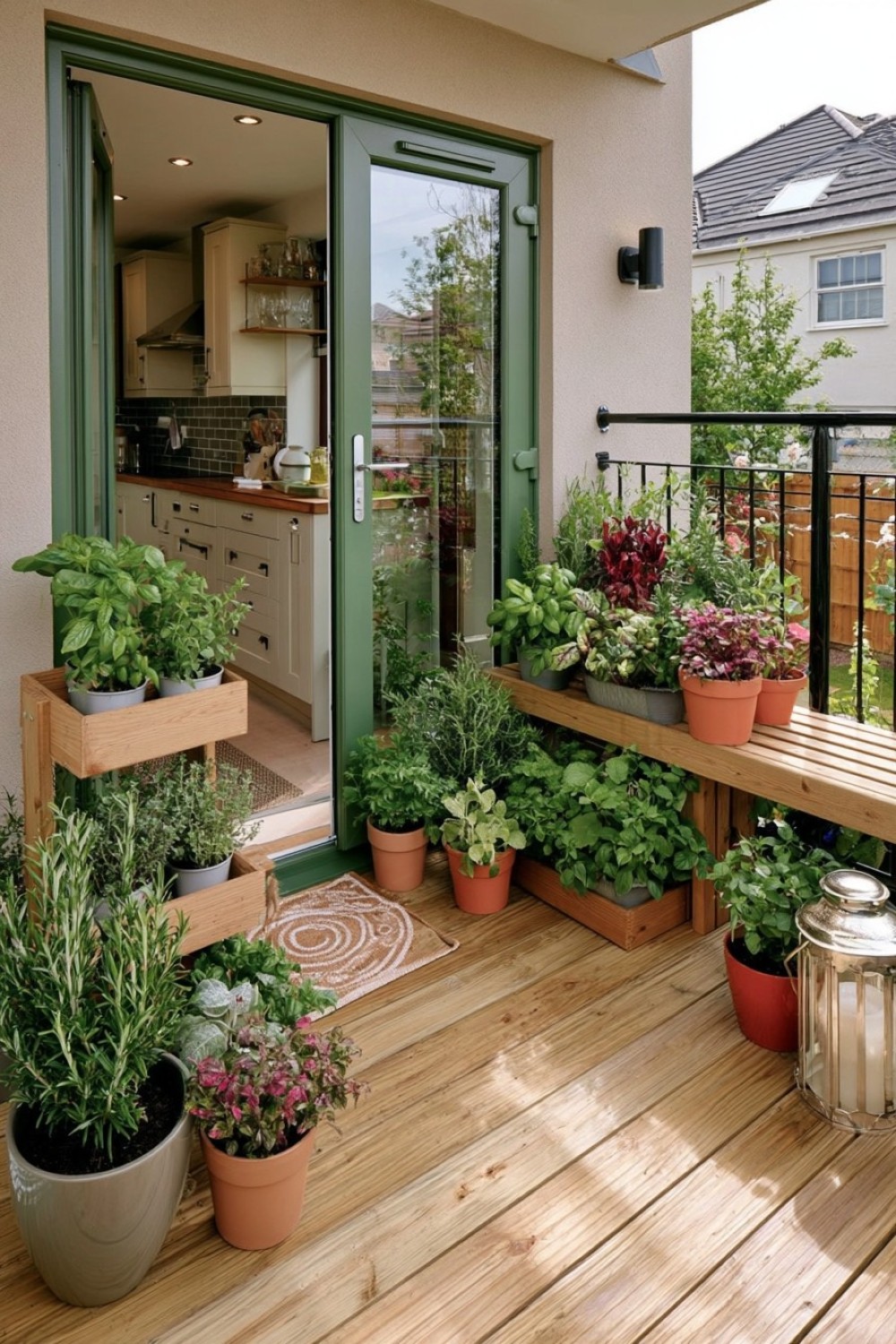
Positioning culinary herbs close to the kitchen makes them easier to harvest and more likely to be used regularly. Rosemary, thyme, sage, oregano, chives, parsley, basil, and mint can form a productive arrangement, but they should not all be treated identically. Mediterranean herbs generally prefer brighter light and freely draining soil, while parsley and mint tolerate more consistent moisture.
Use separate pots or group only herbs with compatible growing needs. Mint is particularly vigorous and is usually easier to control in its own container. Place shorter plants where taller varieties will not shade them, and rotate pots occasionally if light reaches the balcony from only one direction. Harvest small amounts frequently to encourage compact growth, but avoid removing too much foliage from a struggling plant. Food-safe containers, clean growing material, and careful pesticide choices are important when plants will be eaten. Keep the doorway and threshold clear so watering tools and containers do not create a tripping hazard.
3. Form a Green Privacy Border With Tall Narrow Plants
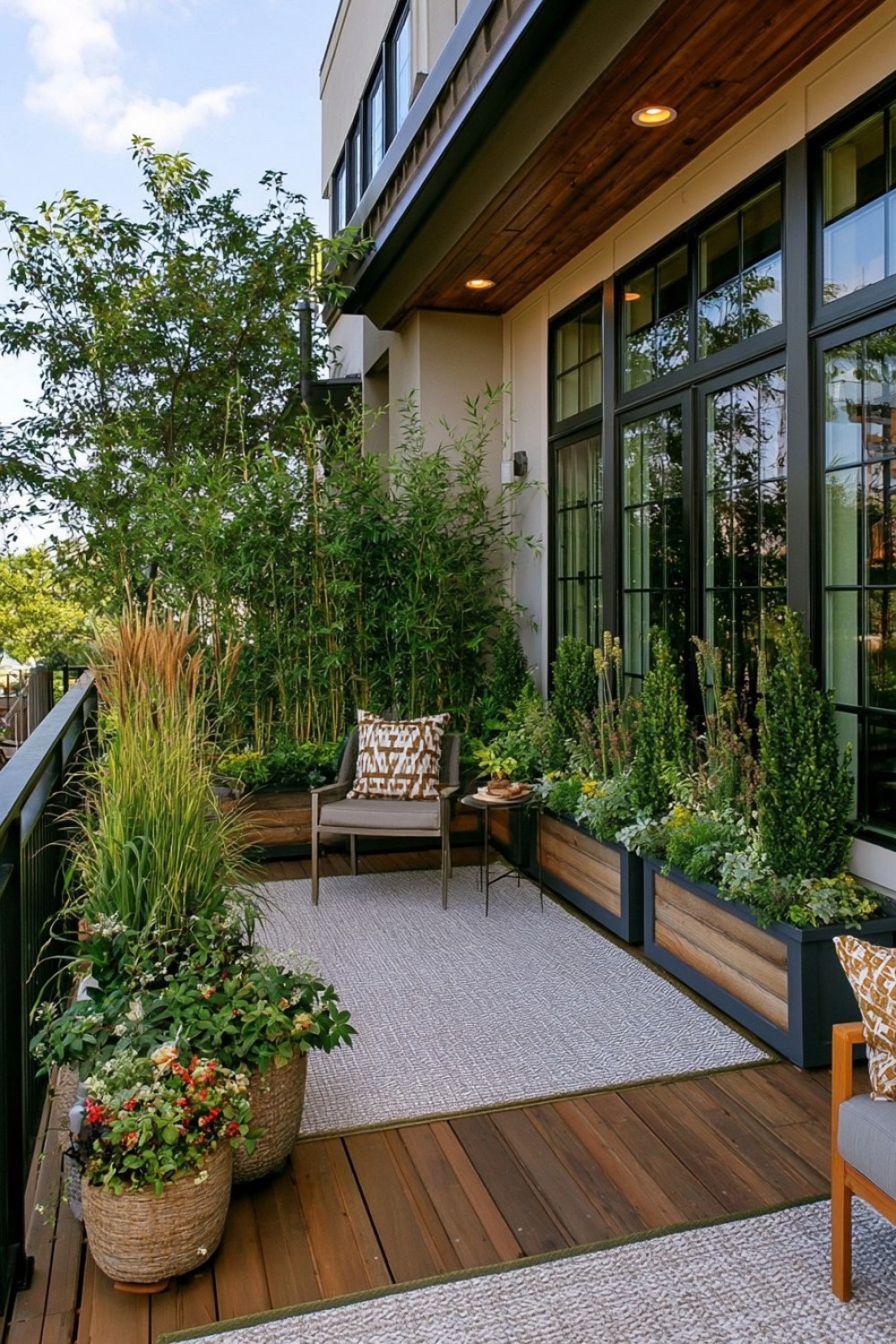
Tall, upright plants can create privacy without consuming as much floor space as broad shrubs or solid screens. Use a continuous rectangular planter or several narrow containers positioned along the exposed edge. Suitable varieties depend heavily on climate, sunlight, wind, and winter conditions, so select plants that can remain healthy in the balcony’s actual microclimate rather than relying on appearance alone.
Avoid allowing foliage or supports to extend beyond the railing where falling material could create a risk. Tall plants become top-heavy as they mature, especially after watering, so containers need sufficient stability and may require discreet anchoring. Check the mature height and width before planting; overcrowding reduces airflow and increases maintenance. A lower layer of compact foliage can conceal bare stems while providing a fuller appearance. Privacy planting should soften views without blocking essential ventilation, emergency access, or all available daylight from the interior room.
4. Create a Shaded Miniature Woodland With Ferns
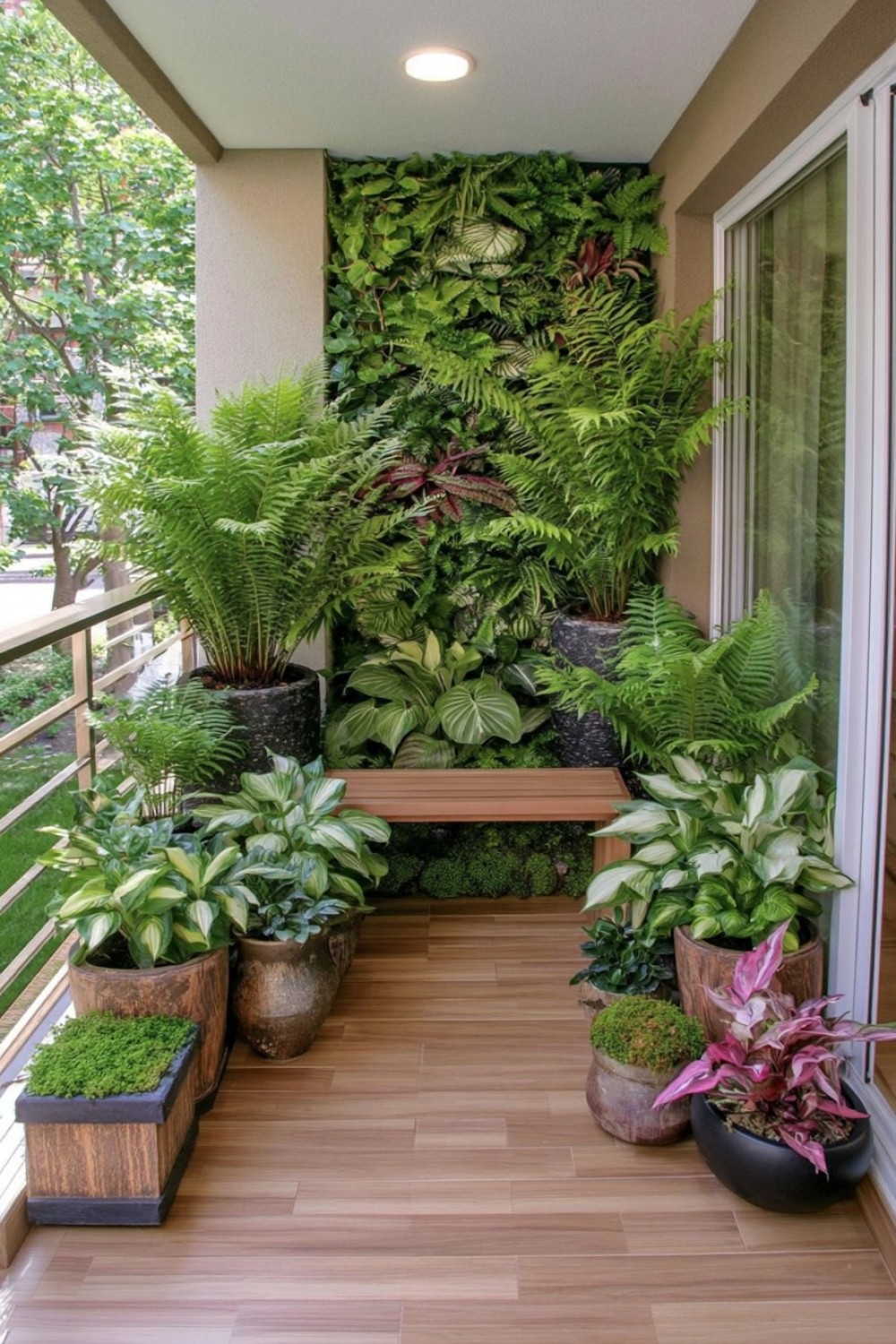
A balcony that receives limited direct sunlight can become a layered foliage garden rather than an unsuccessful imitation of a sunny flower border. Ferns, heuchera, hostas, compact grasses, and other shade-tolerant plants can provide contrasting leaf shapes and tones. Plant availability and suitability vary by climate, and some varieties may require winter protection when grown in exposed containers.
Arrange the plants in loose groups instead of placing one identical pot at regular intervals. A taller fern can establish the background, medium foliage can fill the center, and a low trailing plant can soften the edge. Use containers in restrained earthy colors to keep attention on the leaves. Shaded pots may dry more slowly, so test the growing material before watering instead of following a fixed schedule. Adequate drainage remains essential, particularly during cool weather. Remove damaged leaves and maintain airflow to prevent the humid arrangement from becoming congested.
5. Support Pollinators With a Sequence of Seasonal Flowers
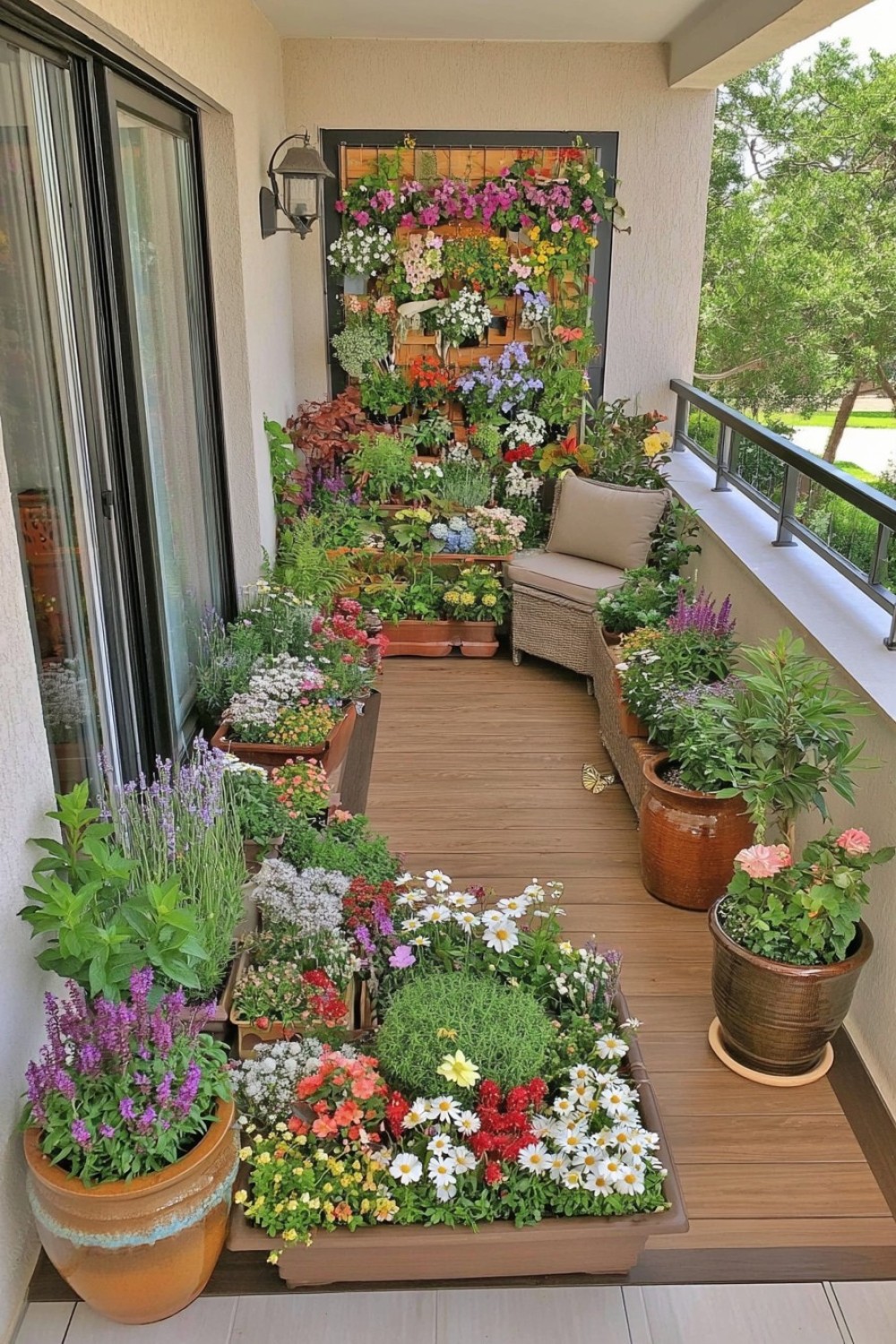
A pollinator-friendly balcony works best when something is flowering across more than one short period. Select several locally suitable plants with overlapping bloom times rather than filling every container with one seasonal variety. Flowers with accessible centers and different shapes can serve a wider range of visiting insects. Native or regionally adapted choices are often useful, but suitability should be checked against the balcony’s exposure and container conditions.
Place flowering containers where they receive the light required by the selected plants and where falling petals will not block drains. Avoid routine pesticide use, particularly while plants are blooming. A shallow water source is sometimes suggested for insects, but it requires frequent cleaning and should never become stagnant. Deadhead selected flowers to prolong blooming where appropriate, while leaving a small number of seed heads can provide seasonal texture. Keep highly scented or bee-attracting plants away from narrow doorways if household members are uncomfortable passing close to visiting insects.
6. Turn the Railing Into a Secure Cascading Garden
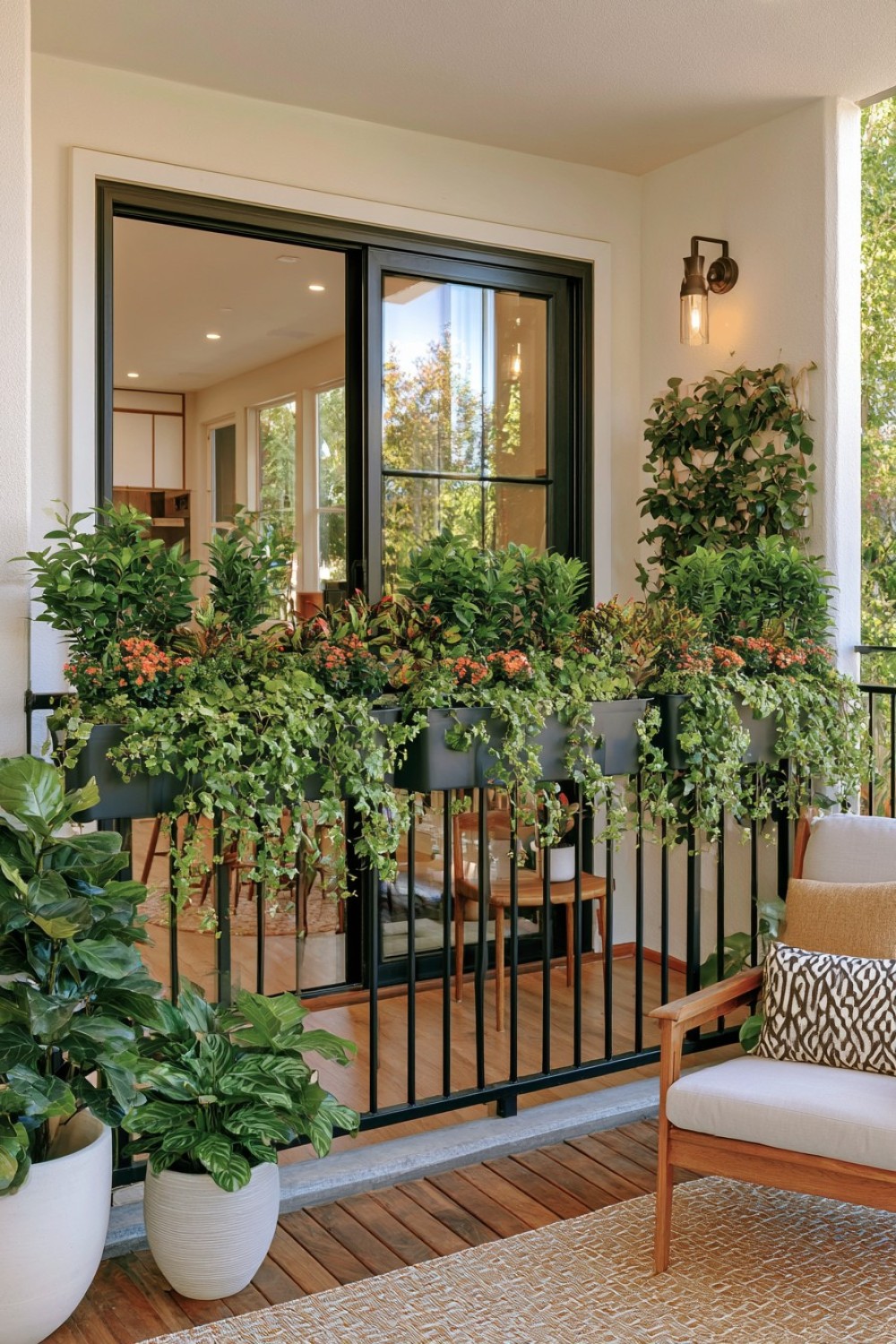
Railing containers bring plants closer to eye level and allow trailing foliage to soften hard balcony edges. Use purpose-designed brackets that fit the railing profile rather than balancing ordinary pots on the top rail. Whenever possible, position containers on the inside of the balcony. This makes watering easier and reduces the danger of pots, soil, or tools falling to the area below.
Choose compact trailing plants that tolerate the balcony’s wind and sunlight. Lightweight growing mixes reduce weight, although filled containers still become substantially heavier after watering. Secure brackets according to their instructions and inspect them periodically for loosened fasteners or corrosion. Drip trays or self-contained reservoirs can help control runoff, but drainage must not be completely blocked. Keep foliage trimmed away from neighboring property and ensure planters do not reduce the safe height or function of the railing. Building or landlord rules should be checked before installing anything over an exterior edge.
7. Grow a Small Salad Garden in Productive Containers
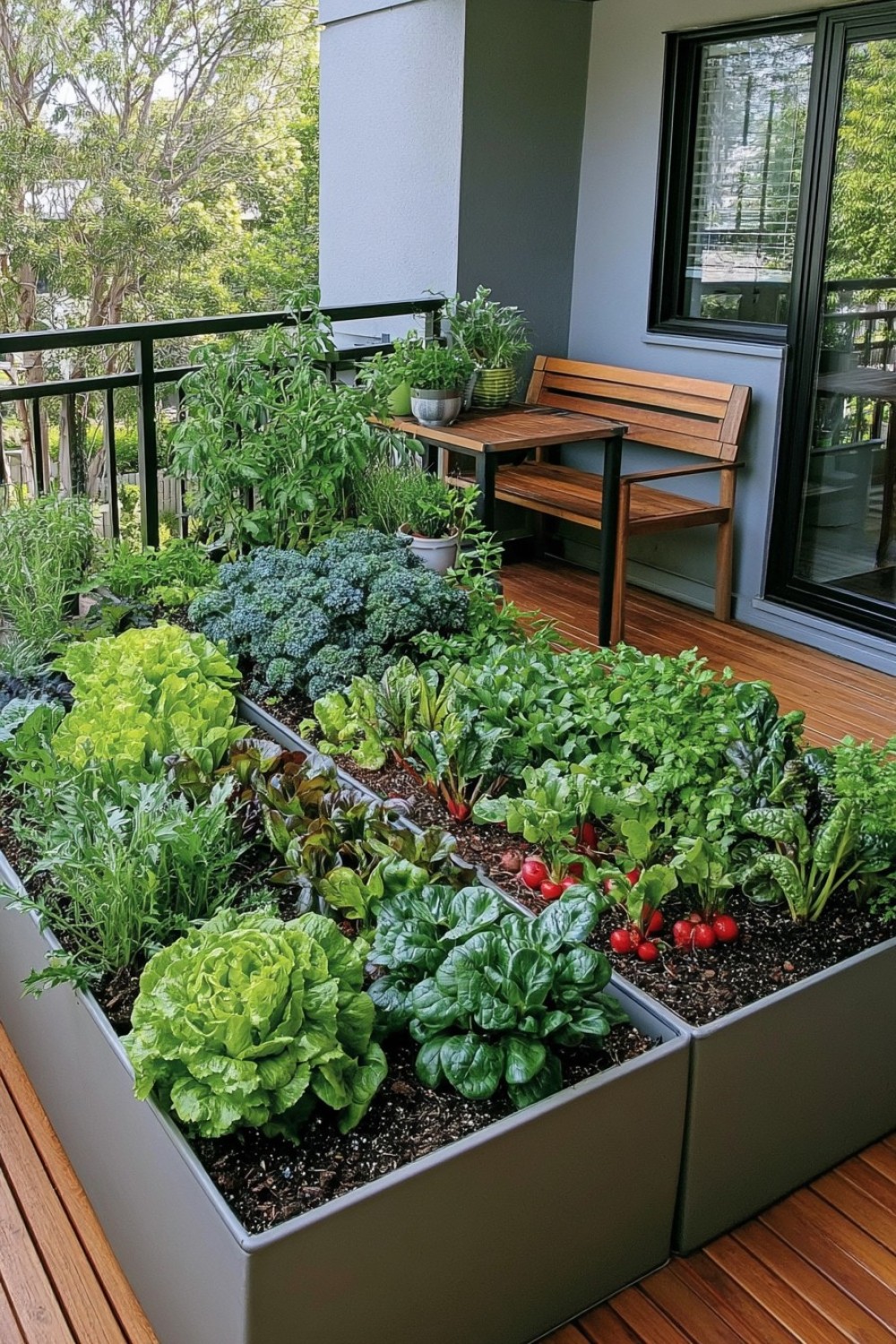
Lettuce, arugula, radishes, compact tomatoes, leafy herbs, and other small edible crops can turn a sunny balcony into a useful growing space. Match container depth to the crop instead of placing every vegetable in a shallow window box. Leafy greens generally require less root depth than tomatoes or other fruiting plants, which also need stronger support and more consistent feeding.
Use clean containers with drainage holes and a growing medium formulated for pots. Edible plants in containers can dry quickly during warm weather, so check moisture regularly and water the soil rather than repeatedly wetting the foliage. Succession sowing—planting small quantities at intervals—can provide a steadier harvest than sowing everything on one day. Position supports when planting tomatoes or climbing crops so roots are not damaged later. Before growing food, consider the cleanliness of the location, potential runoff from upper floors, and whether nearby traffic or building treatments could contaminate exposed leaves.
8. Compose a Japanese-Inspired Garden With Controlled Simplicity
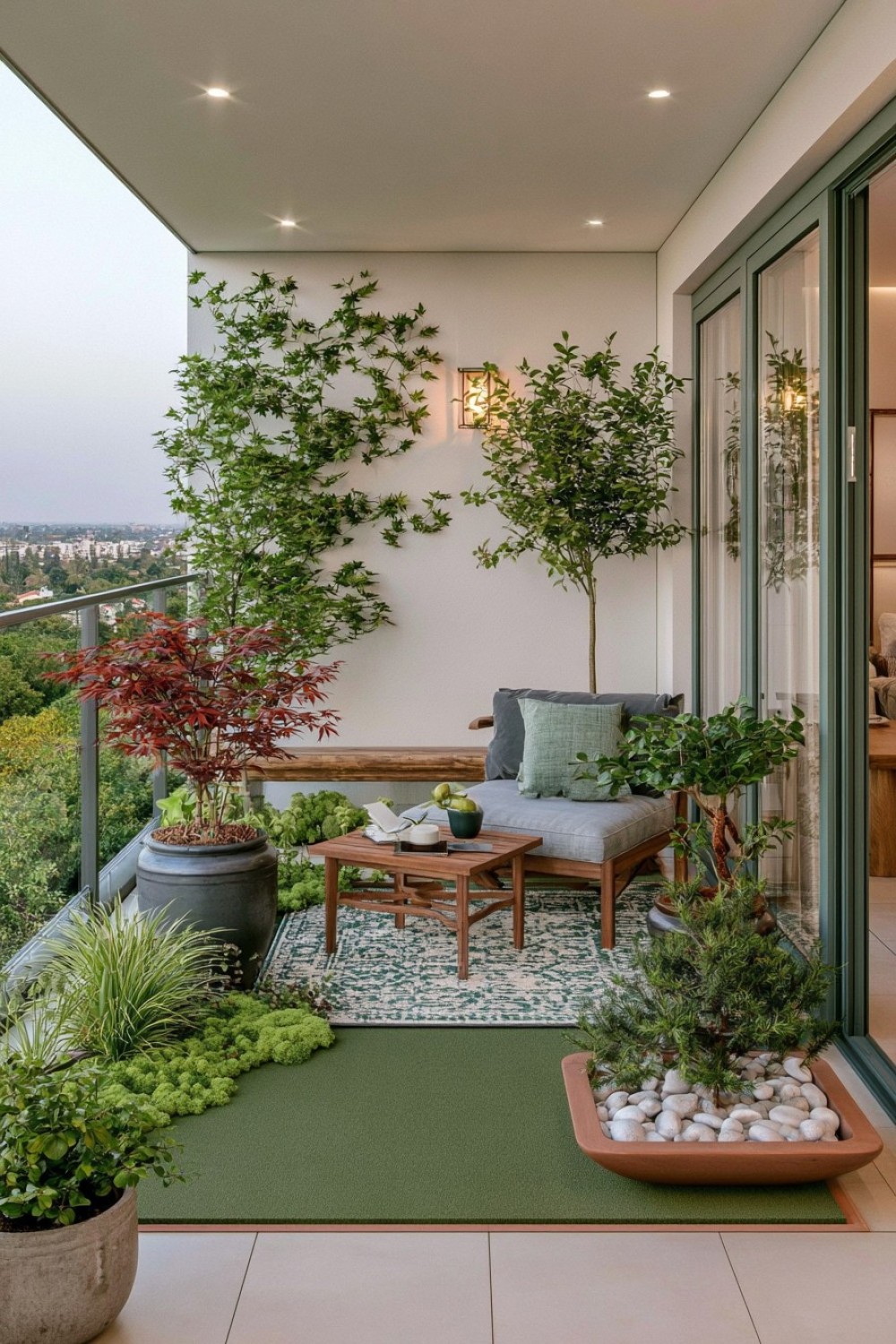
A Japanese-inspired balcony does not require miniature ornaments or a large collection of themed accessories. A restrained composition can be created with one sculptural plant, a low ground-covering form, natural stone texture, and carefully placed empty space. Choose species that genuinely suit the local climate and balcony conditions rather than selecting plants solely because they are associated with a particular landscape style.
Limit the material palette to two or three finishes, such as dark ceramic, weathered timber, and pale gravel used as a pot dressing. Loose stones should remain inside stable containers rather than being spread across the balcony floor, where they can enter drains or create a slipping hazard. Avoid overcrowding; the visible space between elements is part of the composition. A compact bench or single chair can reinforce the calm atmosphere while preserving movement. Regular pruning should maintain the intended shape without forcing unsuitable plants into extreme forms.
9. Establish a Balcony Orchard With Dwarf Fruit Trees
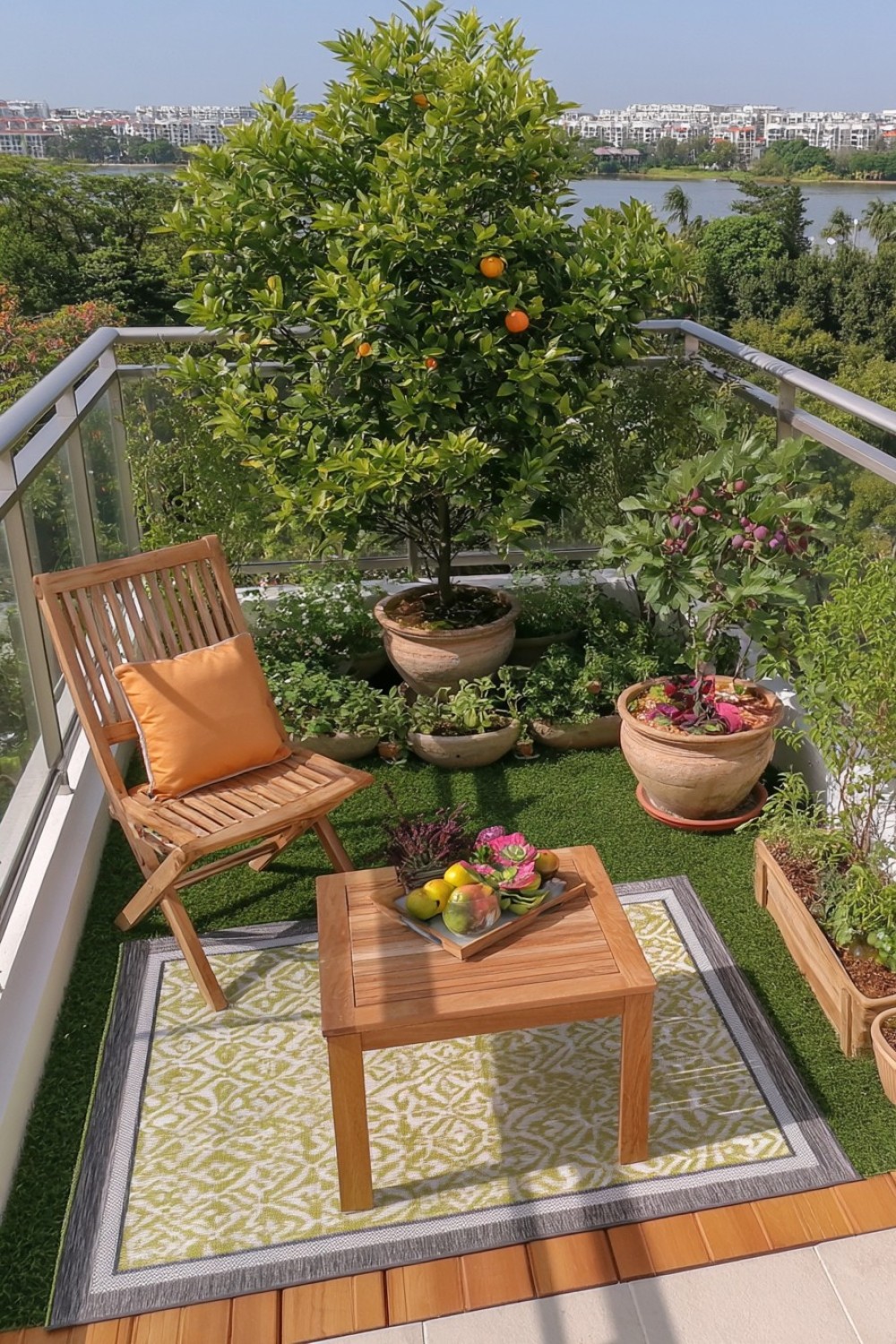
Grafted dwarf or patio fruit trees can produce an orchard-like effect on a balcony with adequate sunlight. Before purchasing, confirm the plant’s mature container size, pollination requirements, winter hardiness, and expected yield. Labels such as “dwarf” do not mean that a tree will remain small without appropriate rootstock, container management, feeding, and pruning.
Fruit trees need stable pots that will not overturn in wind, but large containers filled with wet soil can be extremely heavy. Confirm the balcony’s permitted load and distribute weight rather than concentrating several trees in one corner. Place containers on feet so drainage openings remain clear and use saucers only when runoff can be emptied promptly. Some fruit varieties are self-fertile, while others require a compatible pollinating partner. Regular watering is especially important during flowering and fruit development. Protect branches from strong exposure without attaching supports to an unsafe railing component.
10. Assemble a Mediterranean Culinary Garden in Terracotta
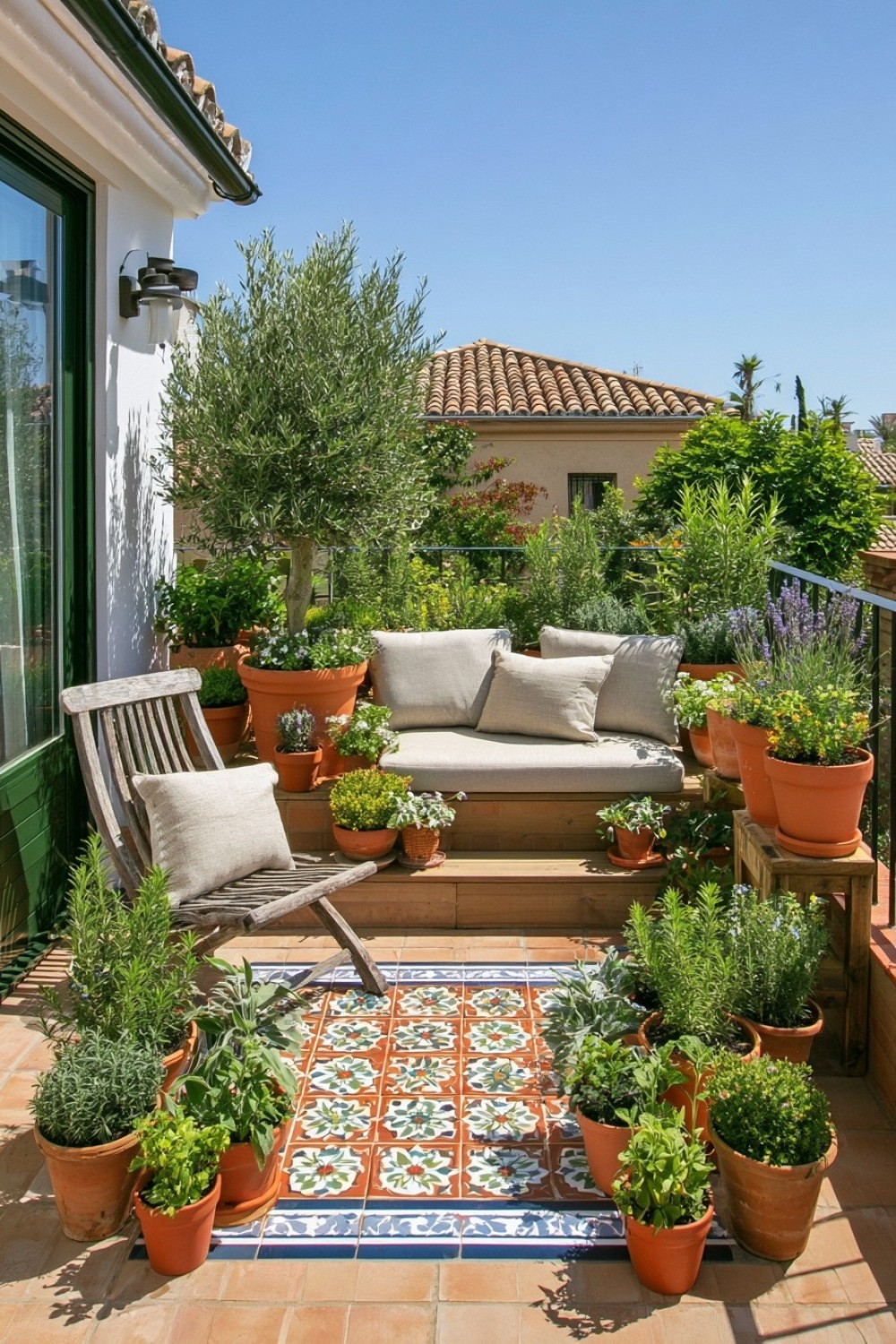
Rosemary, thyme, oregano, sage, lavender, and a compact olive or citrus tree can create a Mediterranean character on a bright balcony. Group the pots informally at different heights while repeating terracotta as the unifying material. Confirm that every plant suits the local winter climate; tender trees may require seasonal protection or movement indoors.
Unglazed terracotta allows moisture to evaporate through its surface, which benefits some drought-tolerant herbs but also means containers can dry quickly in hot or windy conditions. Check soil moisture individually rather than watering the entire arrangement at once. Use pot feet to keep drainage holes open and to reduce prolonged contact with the balcony surface. Where weight is a concern, mix genuine terracotta feature pots with lighter frost-resistant containers in a similar color. Avoid decorative top layers that hold excessive moisture around the crown of Mediterranean plants.
11. Use One Large Planter as a Complete Miniature Landscape
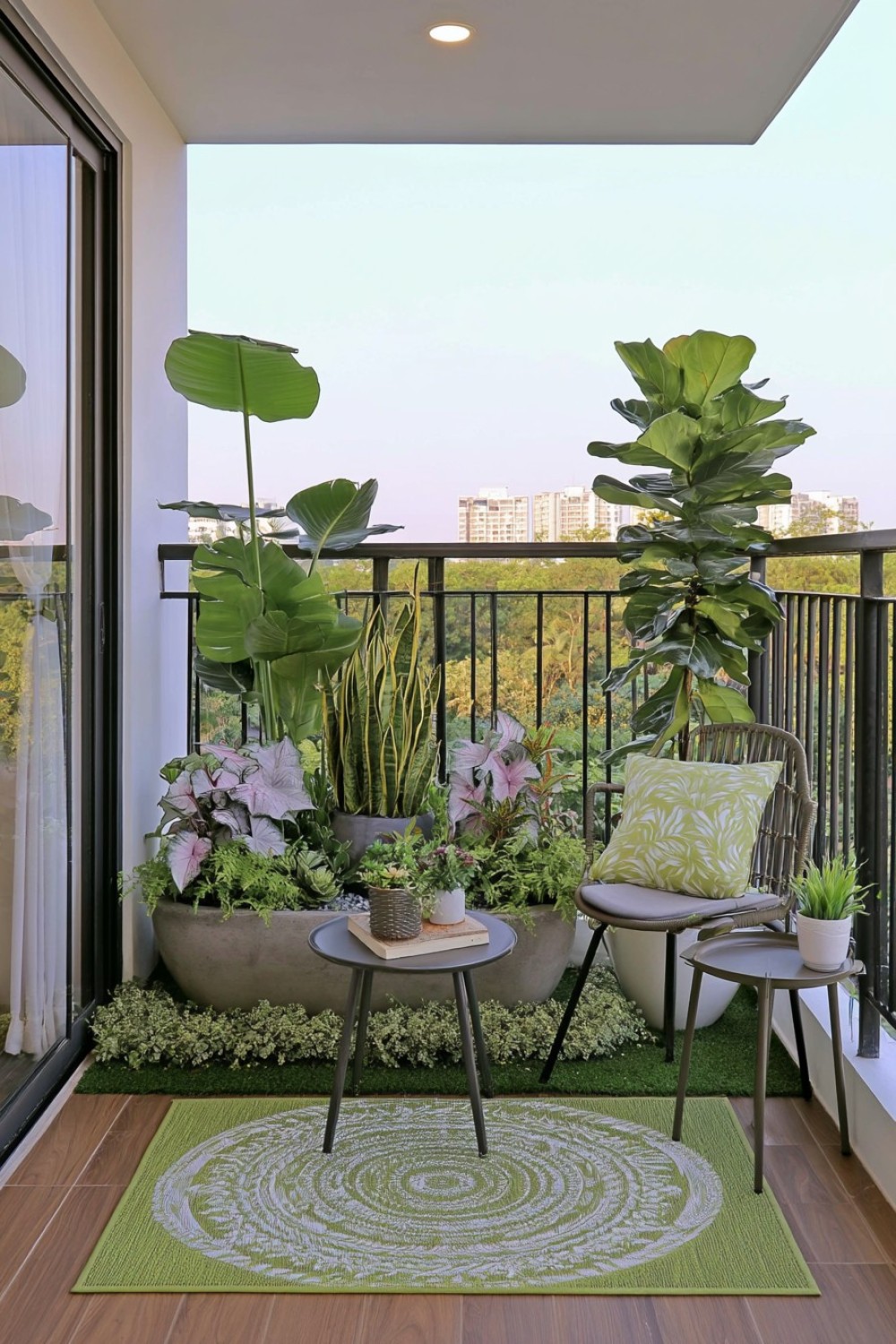
One generously sized planter can look calmer than numerous unrelated small pots. Build the arrangement around a central structural plant, surround it with medium-height foliage, and finish with a trailing or low-growing edge. Plants sharing a container must have compatible requirements for sunlight, water, drainage, and seasonal care. Avoid combining a moisture-loving plant with one that requires consistently dry soil merely because their colors coordinate.
Large containers retain moisture longer and provide greater root volume, but their finished weight needs careful consideration. Position the empty planter before adding growing material because it may become difficult to move afterward. A false base or lightweight filler should only be used when compatible with the container design and required root depth; drainage must remain unobstructed. Leave room for plants to reach mature size rather than filling every gap immediately. Seasonal accents can be replaced without disturbing the central planting if they are grouped near the accessible outer edge.
12. Create Order Through Repeated Planter Shapes
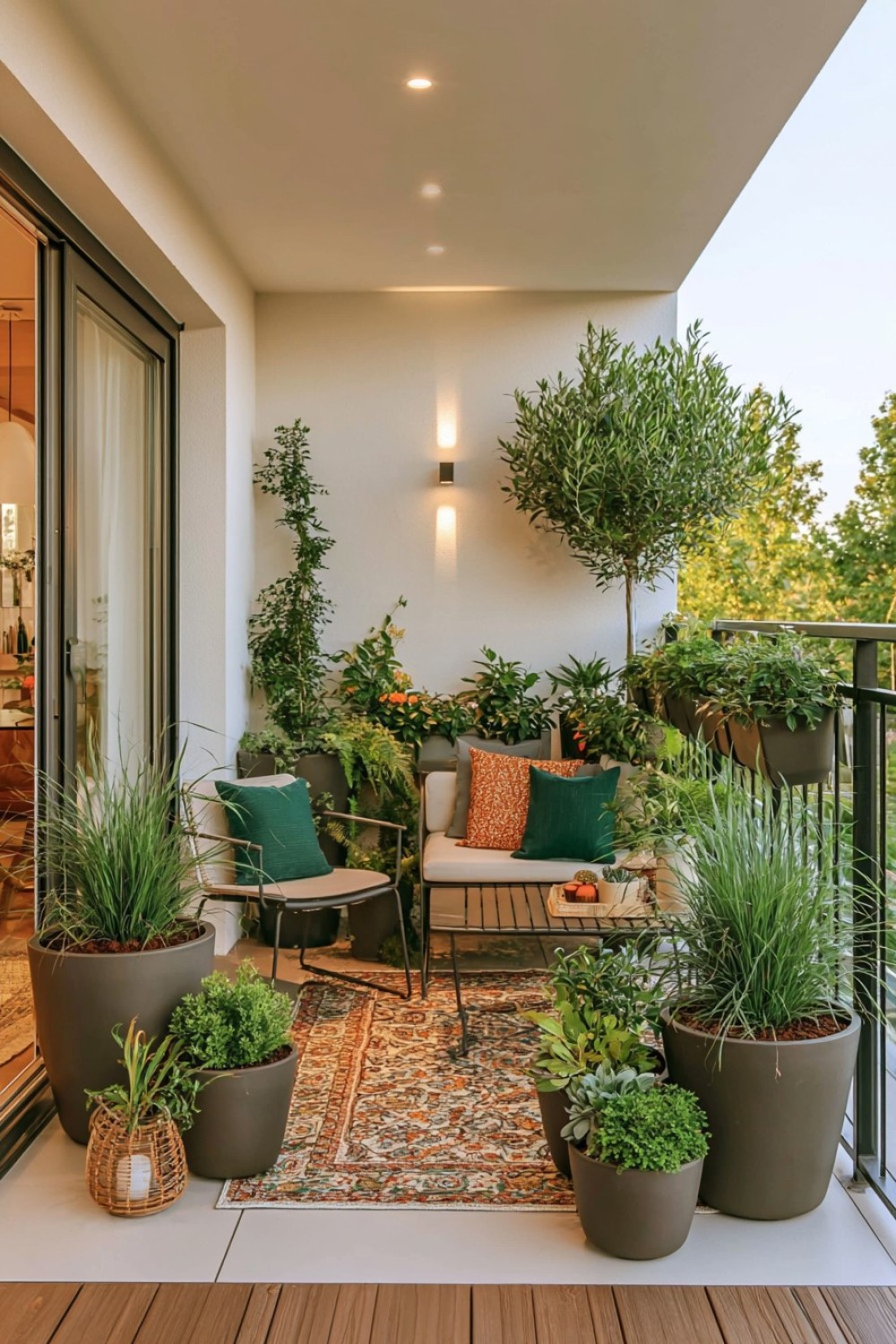
Repeating one planter shape or material can give a collection of different plants a unified appearance. A row of rectangular boxes suits a narrow contemporary balcony, while rounded pots in several sizes can create a softer arrangement. The containers do not need to be identical; maintaining a consistent color family or geometric form is usually enough to establish visual order.
Vary plant heights and leaf shapes so repetition does not become rigid. Taller greenery can mark the corners, medium plants can establish rhythm, and low or trailing varieties can soften selected edges. Do not sacrifice horticultural needs for symmetry: a pot in deep shade should not contain the same sun-loving plant as one at the exposed end. Keep the main walking route clear and avoid creating narrow gaps that are difficult to clean. Matching saucers and concealed risers can complete the organized look while allowing every container to drain properly.
13. Develop an Aromatic Garden for Evening Use
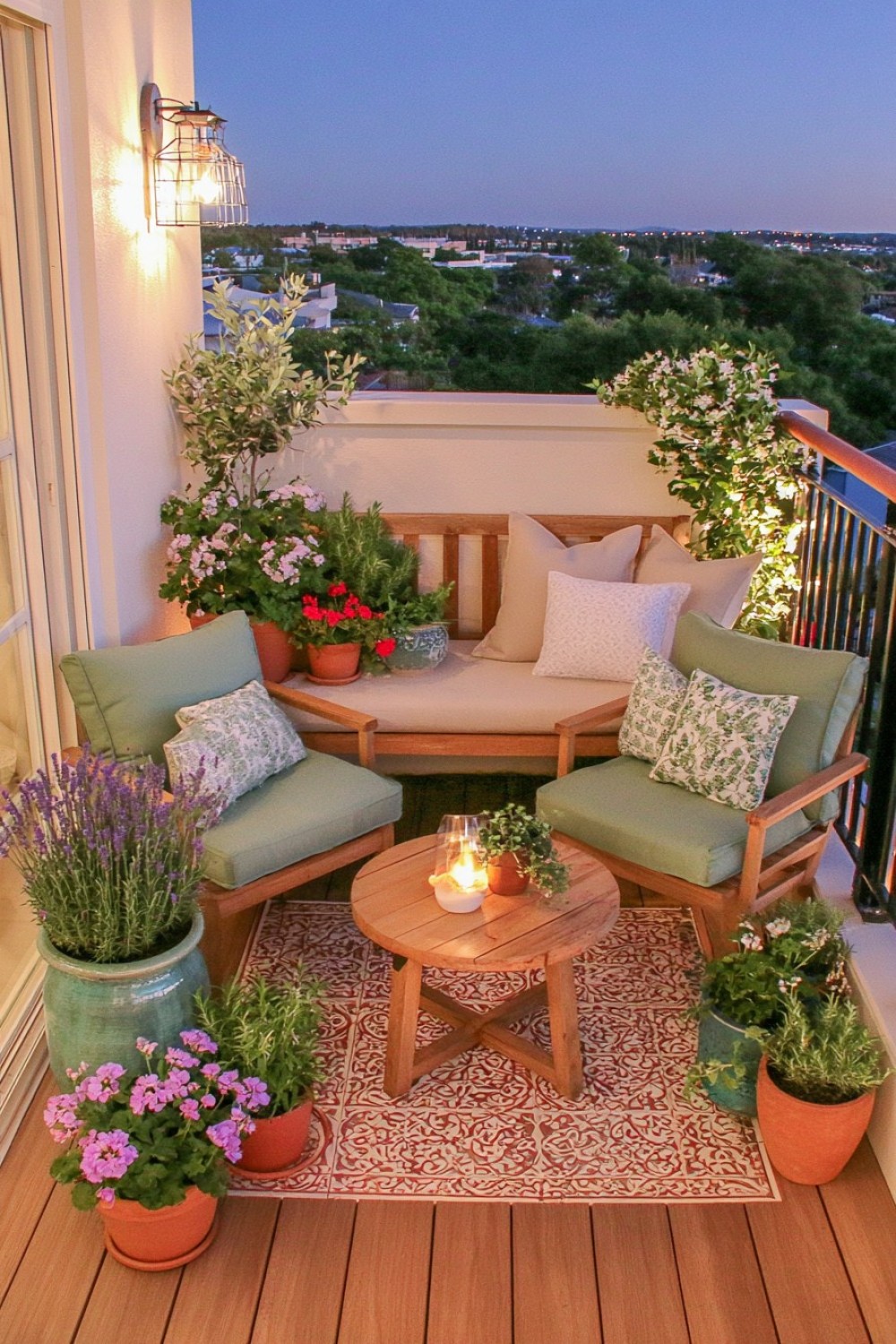
An evening balcony can gain atmosphere from scented foliage and flowers placed close enough to appreciate without filling the entire space. Lavender, rosemary, scented geraniums, jasmine, mint, and other fragrant plants may be suitable depending on exposure and climate. Fragrance intensity varies, so begin with a limited selection rather than combining many strongly scented species.
Place aromatic plants near seating but avoid crowding the doorway or brushing thorny, irritating, or bee-attracting varieties against a narrow path. Some highly fragrant plants may be uncomfortable for people with sensitivities, and certain species can be unsafe for pets if chewed. Confirm individual plant suitability for the household. Gentle illumination can make foliage visible after sunset, but outdoor-rated fixtures and protected electrical connections are essential. Regular trimming encourages many herbs to remain compact and releases fragrance when leaves are lightly touched.
14. Train Climbing Plants Around the Balcony Door
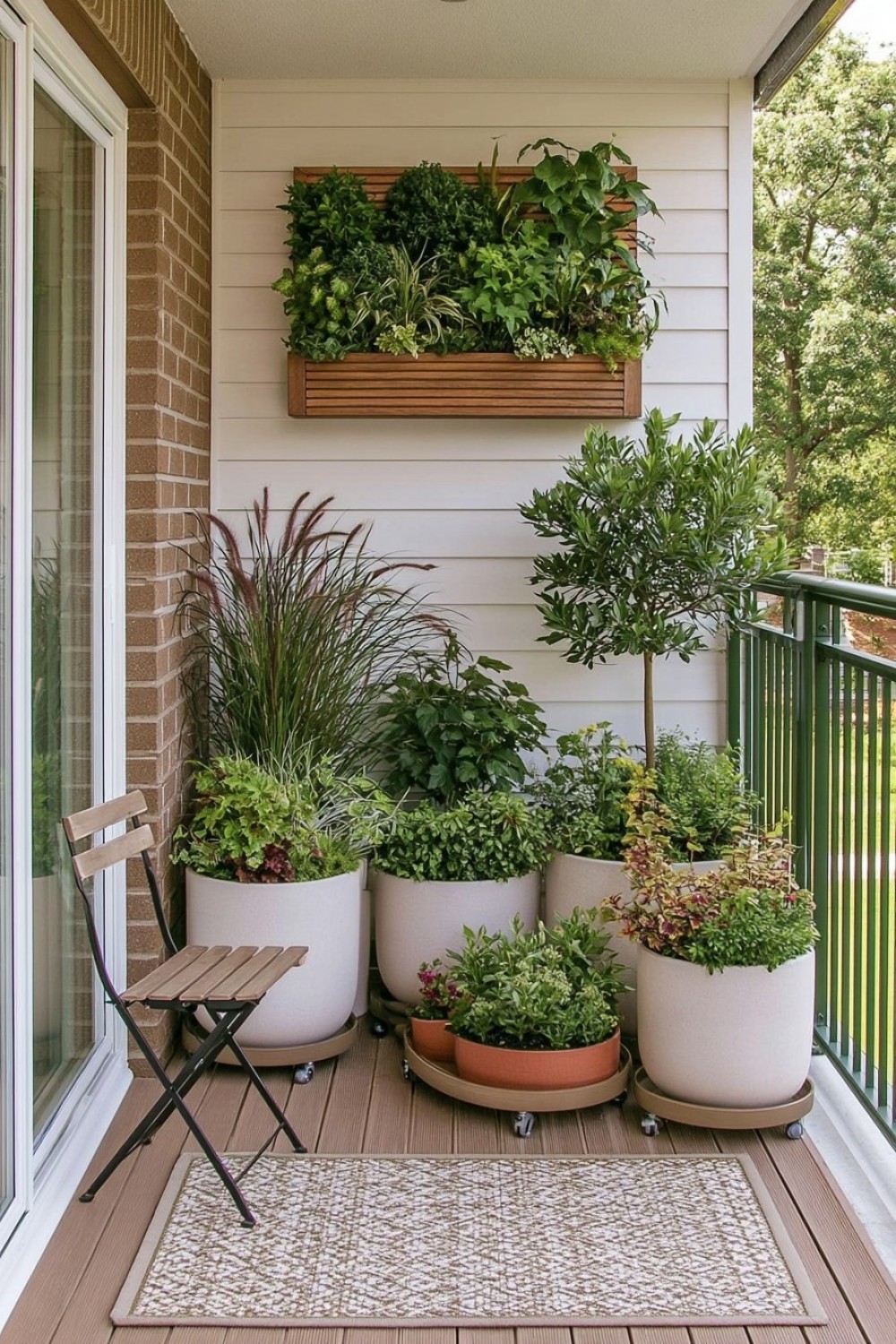
A narrow trellis positioned around the balcony entrance can create a green frame without covering the usable floor. Select a climber whose mature weight, growth rate, and attachment method suit the support. Twining plants wrap around slender structures, while other climbers require regular tying. Self-clinging species may damage painted surfaces or enter small building joints and therefore are not appropriate for every location.
Keep the door mechanism, handle, drainage channel, and ventilation openings free from stems. The support should be attached to an approved structural surface or placed in a stable freestanding container. Lightweight decorative trellises may not withstand the wind load created by mature foliage. Guide new growth regularly instead of allowing it to reach neighboring balconies, gutters, or overhead structures. Pruning also helps maintain airflow and prevents the entrance from becoming dark or difficult to use.
15. Plan a Drought-Tolerant Display With Sculptural Plants
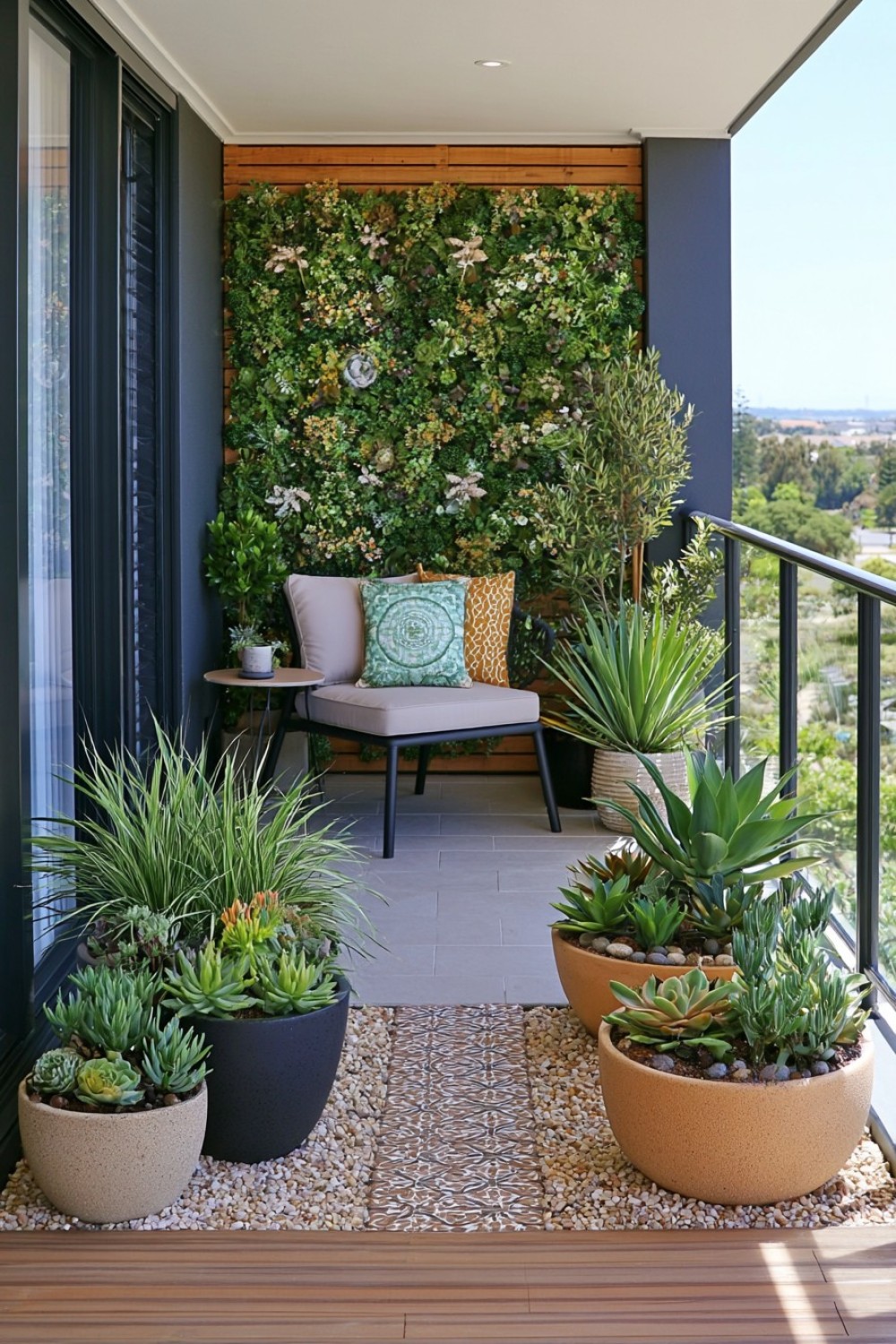
A hot, exposed balcony may be better suited to drought-tolerant plants than to delicate flowering varieties that require constant watering. Succulents, ornamental grasses, compact Mediterranean shrubs, and other resilient plants can create strong silhouettes with relatively restrained foliage. Drought tolerance develops after establishment and does not mean a newly planted container can be ignored.
Use a fast-draining growing medium suited to the selected plants and containers with unobstructed drainage holes. Deep but less frequent watering is often more useful than repeatedly wetting only the surface, although requirements vary by species and weather. Group plants with comparable needs and avoid leaving drought-tolerant varieties in water-filled saucers. Sharp agaves, cacti, or rigid leaves should remain away from seats and narrow paths, especially where children or pets use the balcony. A limited palette of sand, stone, muted green, and weathered terracotta will reinforce the sculptural character without additional ornament.
16. Make the Layout Flexible With Planters on Concealed Casters
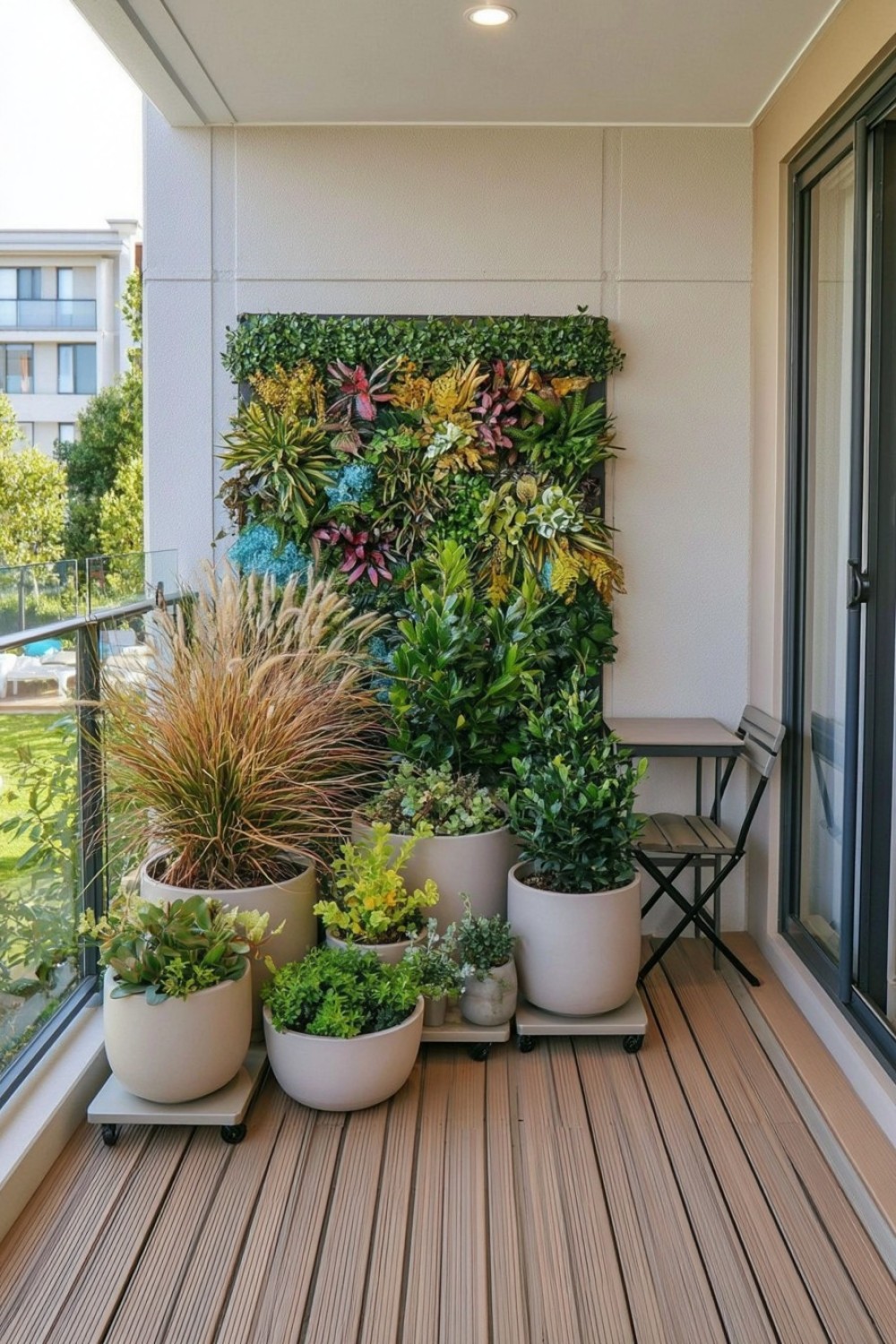
Movable planters allow a balcony to change between everyday gardening, dining, and entertaining. Low platforms with concealed outdoor-rated casters can support larger containers while keeping the mechanism visually discreet. Use locking wheels so planters remain stationary during normal use, and select hardware rated for more than the combined weight of the container, wet growing material, and mature plant.
Casters work best on a reasonably smooth, level surface and should never allow a planter to roll toward an open edge. Provide stops or fixed parking positions where the balcony has any slope. Moving plants can help adjust seasonal sunlight or temporarily widen a walkway, but frequent repositioning may stress species sensitive to changing exposure. Check that mobile platforms do not obstruct drainage channels or trap moisture beneath them. Handles or reinforced edges make heavier units safer to control than pulling directly on foliage or weak container rims.
17. Design a Seasonal Garden That Evolves Through the Year
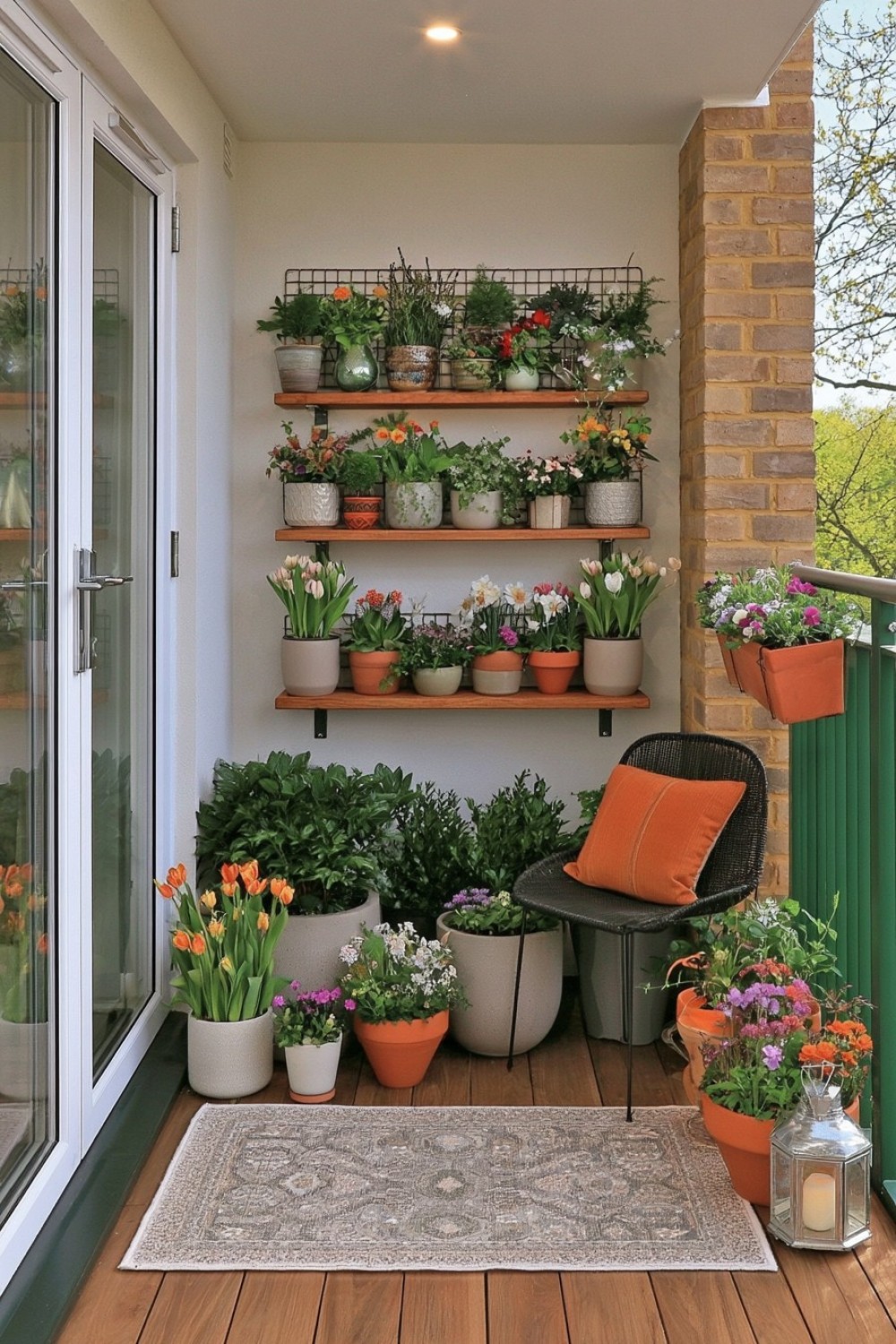
A year-round balcony does not need to look identical in every season. Begin with a small framework of permanent plants or durable structural containers, then reserve selected pots for flowers, herbs, bulbs, or foliage that can be changed as conditions shift. This approach creates variety without requiring the entire garden to be dismantled several times a year.
Choose seasonal plants according to local temperature, daylight, and wind rather than the calendar alone. Store empty containers clean and dry, and remove exhausted plants before pests or disease spread to permanent specimens. Tender plants moved indoors should be inspected carefully, while outdoor containers need frost resistance where winter temperatures fall below freezing. Evergreen foliage, seed heads, textured branches, and attractive pots can maintain interest when flowers are absent. Keeping a simple record of successful varieties, watering patterns, and seasonal exposure will make the balcony garden easier to improve each year.
MORE IDEAS


Share
What's Your Reaction?
 Like
0
Like
0
 Dislike
0
Dislike
0
 Love
0
Love
0
 Funny
0
Funny
0
 Angry
0
Angry
0
 Sad
0
Sad
0
 Wow
0
Wow
0