17 Wedding Aisle Details That Create a Memorable Entrance

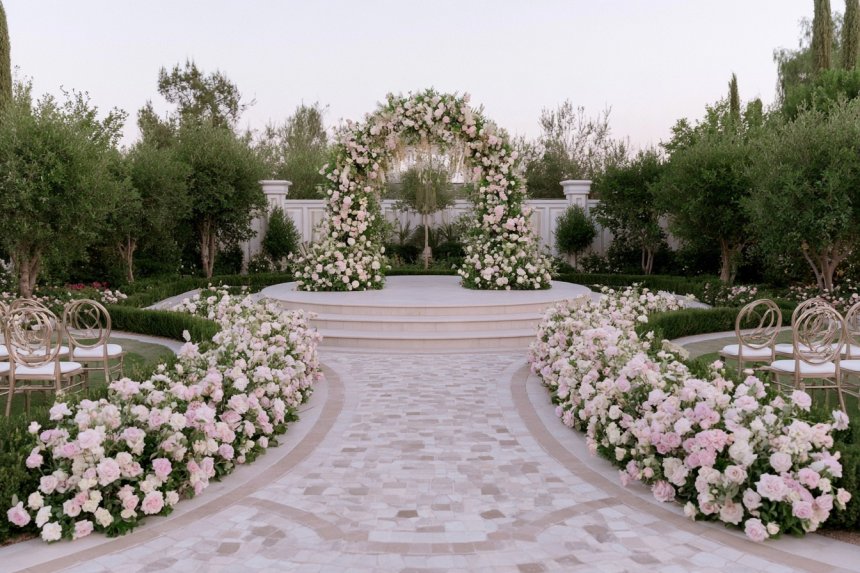
The wedding aisle is more than a route to the ceremony backdrop. It is one of the first design elements guests experience and one of the most photographed parts of the day. Instead of decorating both sides with identical flowers, a memorable aisle can use height, repetition, texture, shadow, and material contrast to create a sense of movement toward the altar. Some settings benefit from dramatic sculptural installations, while others look stronger with just one carefully repeated detail. The goal is to make the walk feel connected to the venue and ceremony style rather than covered in decoration for its own sake. These wedding aisle designs explore less predictable ways to shape that journey from entrance to vows.
1. Create an Aisle From Floating Floral Islands
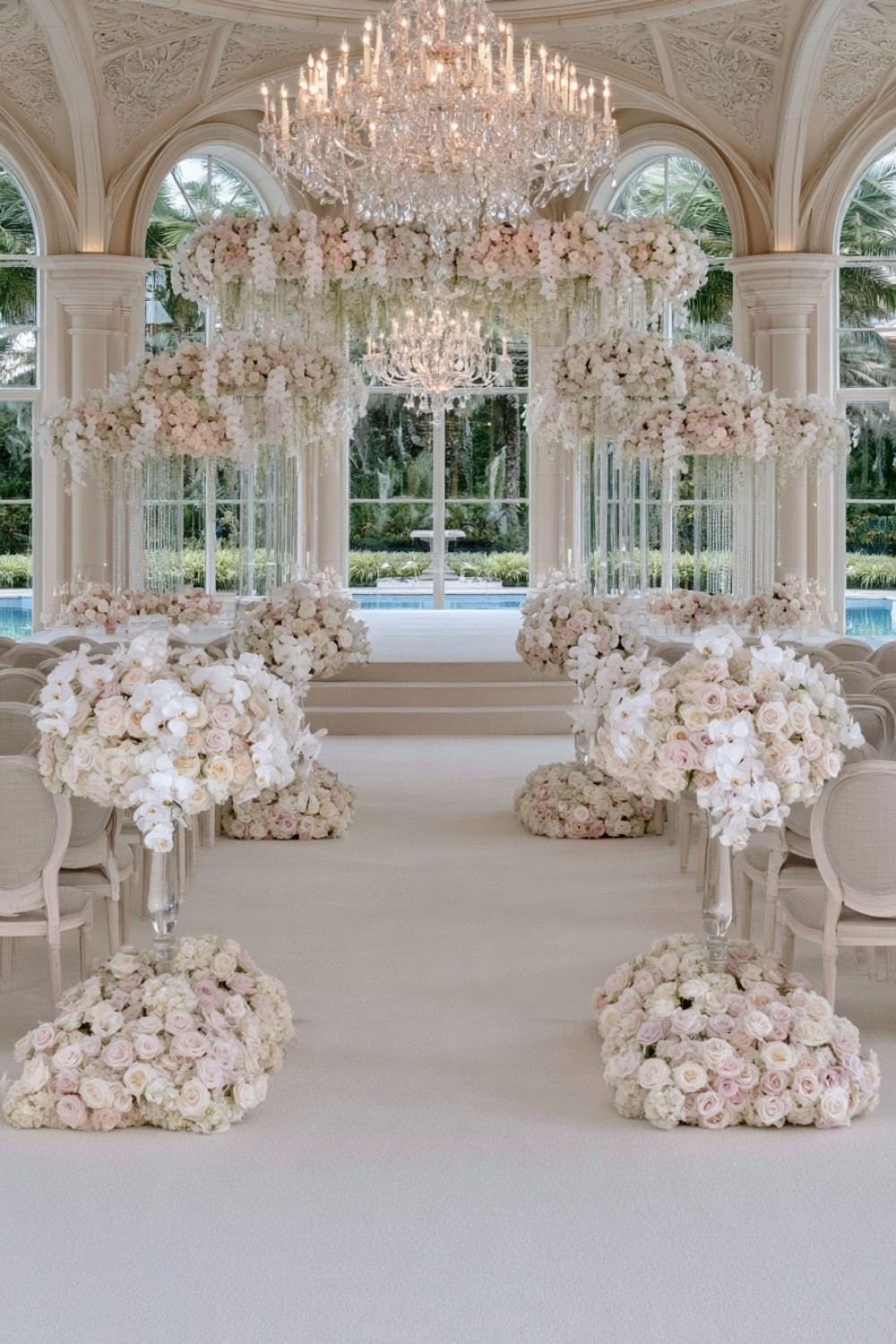
Instead of attaching flowers to every chair, build low floral “islands” that appear at irregular intervals along the aisle.
Use clusters of one or two dominant flowers rather than mixed bouquets. White anthuriums, garden roses, delphiniums, hydrangeas, orchids, or sculptural greenery can each create a completely different effect.
The key is leaving generous space between arrangements. This allows each composition to feel intentional and keeps the aisle from becoming visually congested.
Place some clusters slightly closer to the chairs and others nearer the aisle edge so the design does not form two rigid parallel lines.
For outdoor weddings, low weighted vessels hidden beneath the flowers can provide stability. Indoors, shallow floral mechanics can keep the installation close to the floor.
The asymmetry creates a more editorial look while still guiding the eye naturally toward the ceremony focal point.
2. Use Curved Aisle Lines Instead of a Straight Path
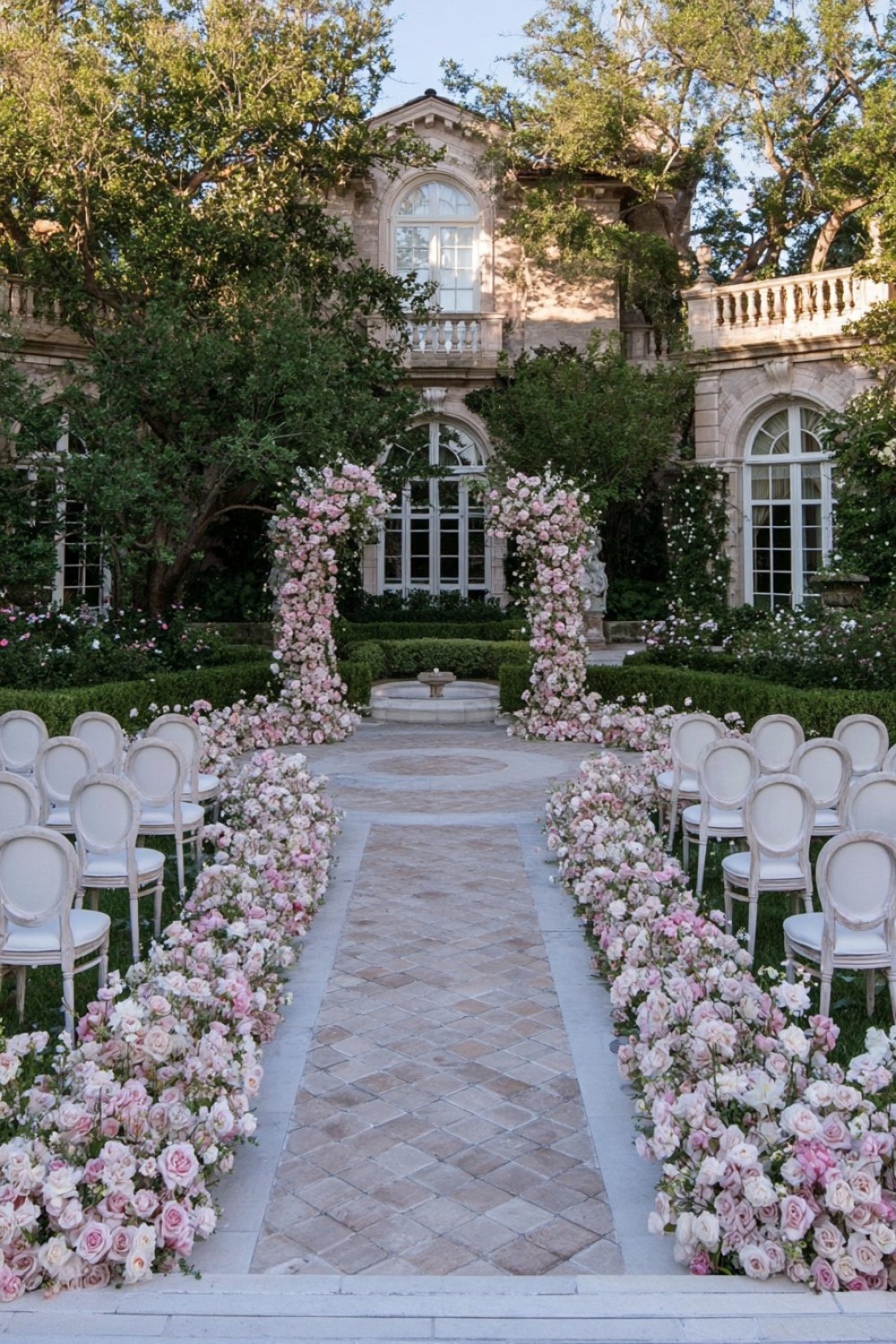
A ceremony aisle does not always need to be perfectly straight.
In a large garden, courtyard, or open venue, create a gentle curve using low floral arrangements, stone markers, or subtle ground-level decor.
The change in direction creates a sense of discovery because the ceremony backdrop is not revealed all at once.
This works particularly well when the venue contains an architectural feature such as an old tree, fountain, sculpture, or column that can become part of the journey.
Keep the curve broad enough for comfortable walking and enough clearance for dresses, photographers, and attendants.
A curved aisle can also make a wide open space feel more intimate because it creates a defined route without requiring heavy decoration.
3. Frame the Aisle With Tall Transparent Pedestals
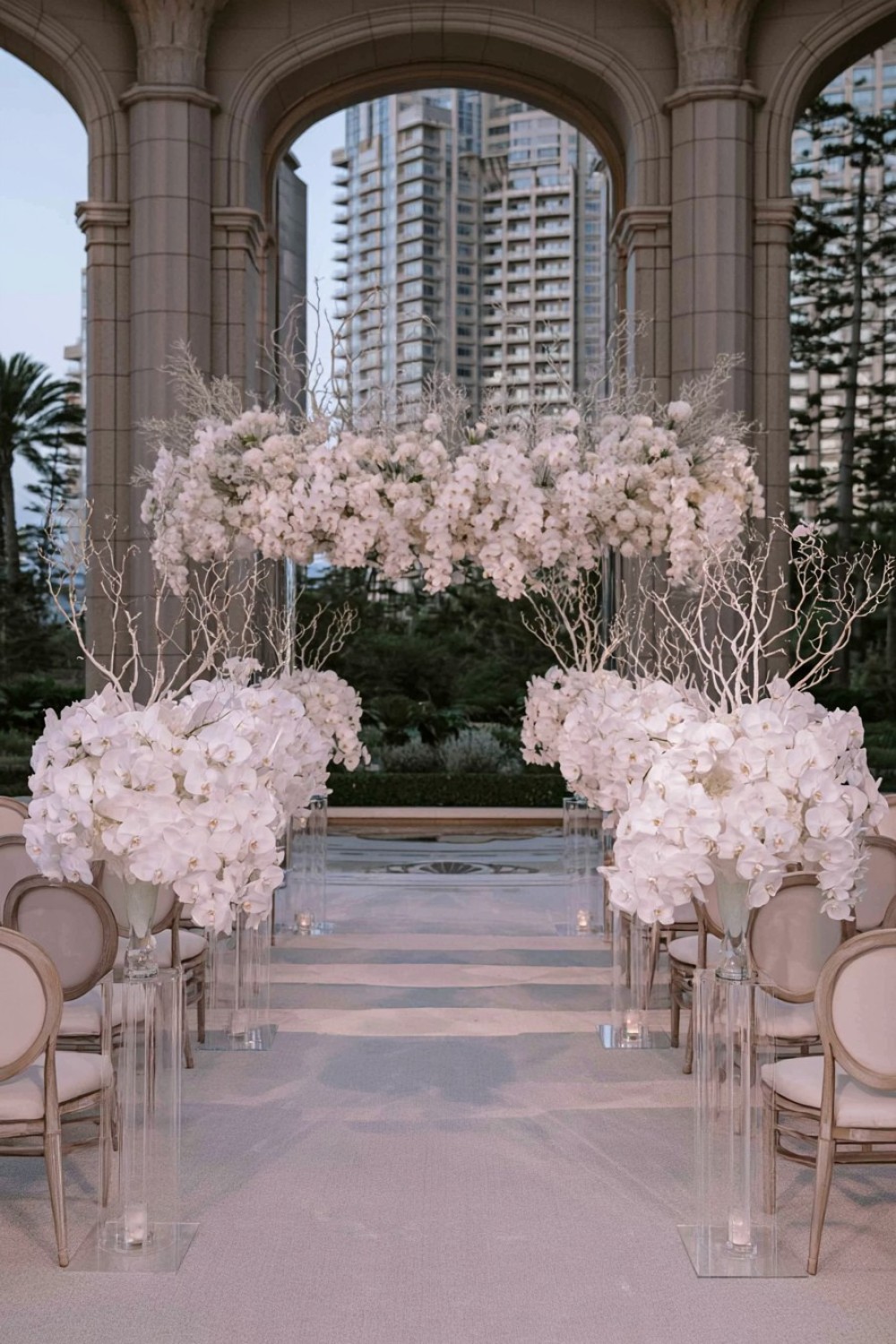
Clear acrylic pedestals can add height without visually narrowing the aisle.
Place them at selected points rather than beside every row. Top each pedestal with a restrained floral arrangement, sculptural branch, or translucent vessel.
Because the base almost disappears, the flowers appear to hover above the floor.
This technique is particularly effective in modern venues where solid columns might feel too heavy.
For a softer version, alternate transparent pedestals with frosted ones. The subtle material shift adds depth without introducing another color.
Keep the lower half of the aisle relatively empty so guests can walk comfortably and the floating effect remains visible.
4. Let Fabric Flow Along Only One Side
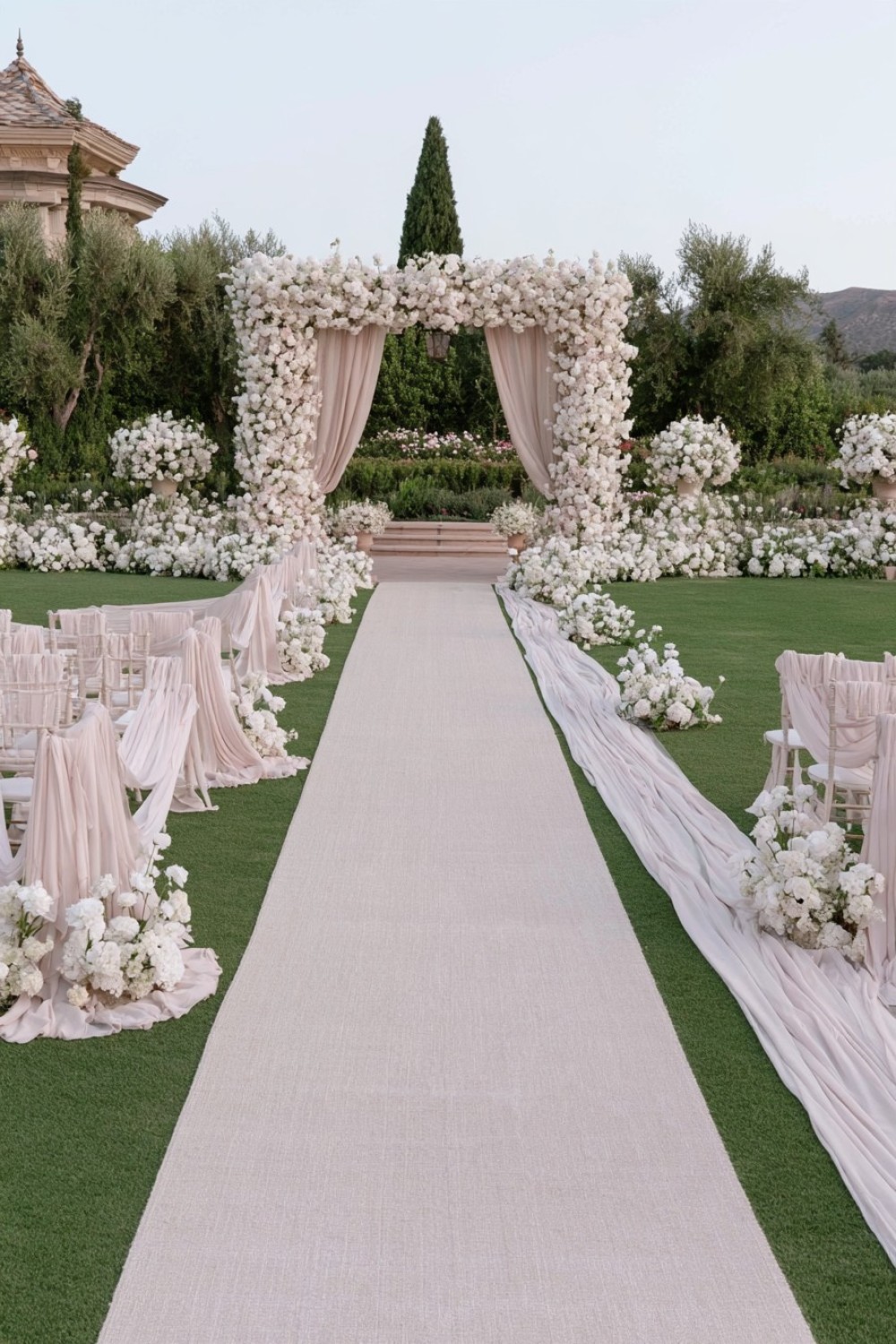
Instead of draping both sides symmetrically, run a long piece of fabric along just one side of the aisle.
Soft silk, chiffon, linen, or voile can pass loosely around chair legs, floral bases, or low structural supports.
The asymmetry gives the ceremony a more natural sense of movement.
Choose fabric that relates to the environment. Ivory linen can suit a rustic setting, while translucent white organza feels lighter in a modern venue.
Avoid pulling the fabric perfectly straight. Gentle folds and sections of pooled material create more visual depth.
For outdoor weddings, secure the textile discreetly so wind cannot pull it into the walking path.
5. Build a Botanical Gradient Toward the Altar
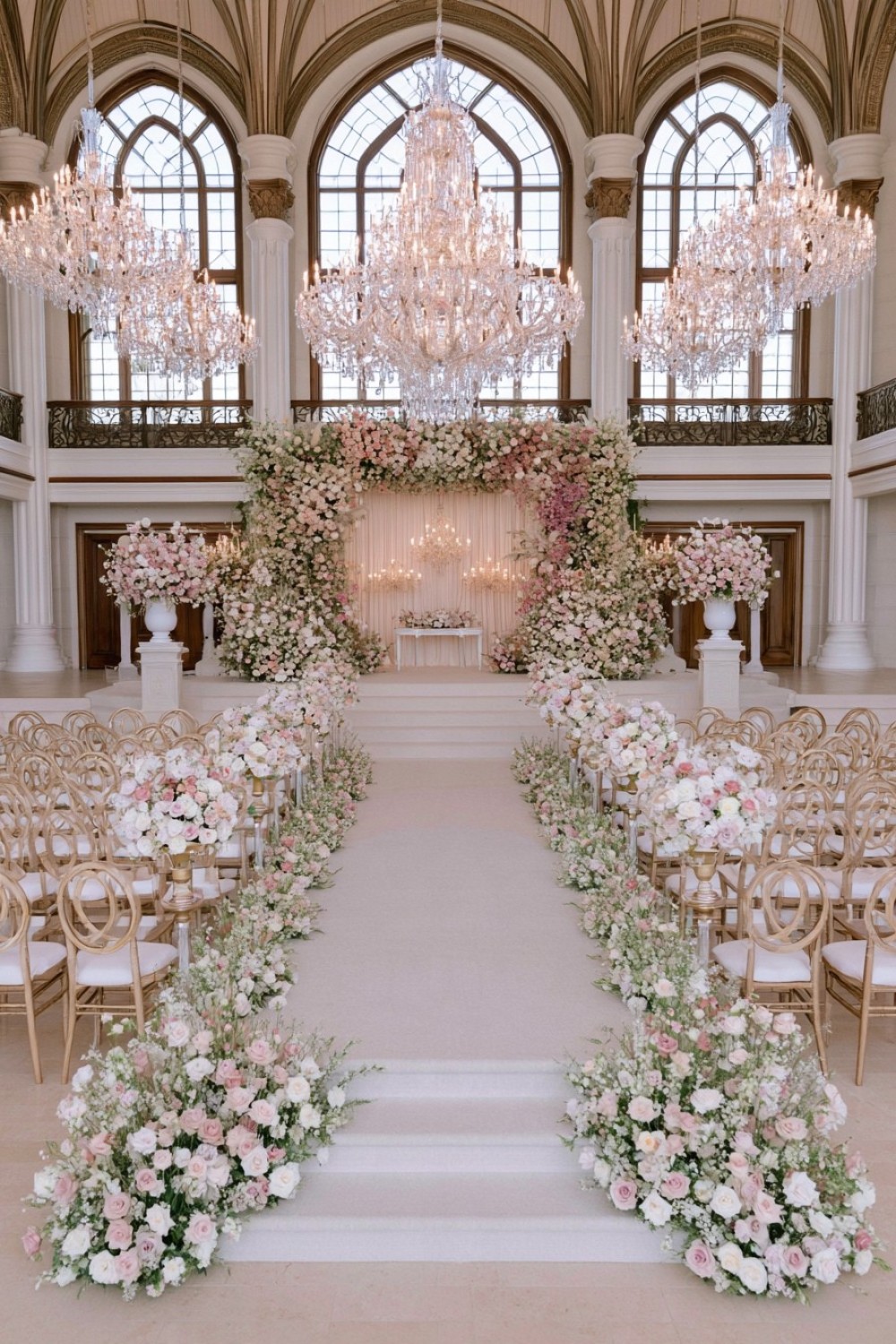
Instead of repeating identical arrangements from beginning to end, allow the aisle decor to become progressively fuller as it approaches the ceremony backdrop.
Begin with small clusters or single stems near the entrance. Midway down the aisle, increase the arrangement size. Near the altar, allow flowers or greenery to become more abundant.
This creates a visual crescendo and naturally directs attention toward the vows.
The same approach can work with color. Start with almost-white flowers and gradually introduce blush, pale lavender, or deeper botanical tones toward the front.
Because the transition happens slowly, the design feels cohesive rather than multicolored.
This strategy also allows more of the floral budget to be concentrated where it will appear most often in ceremony photographs.
6. Use Sculptural Branches Instead of Traditional Flowers
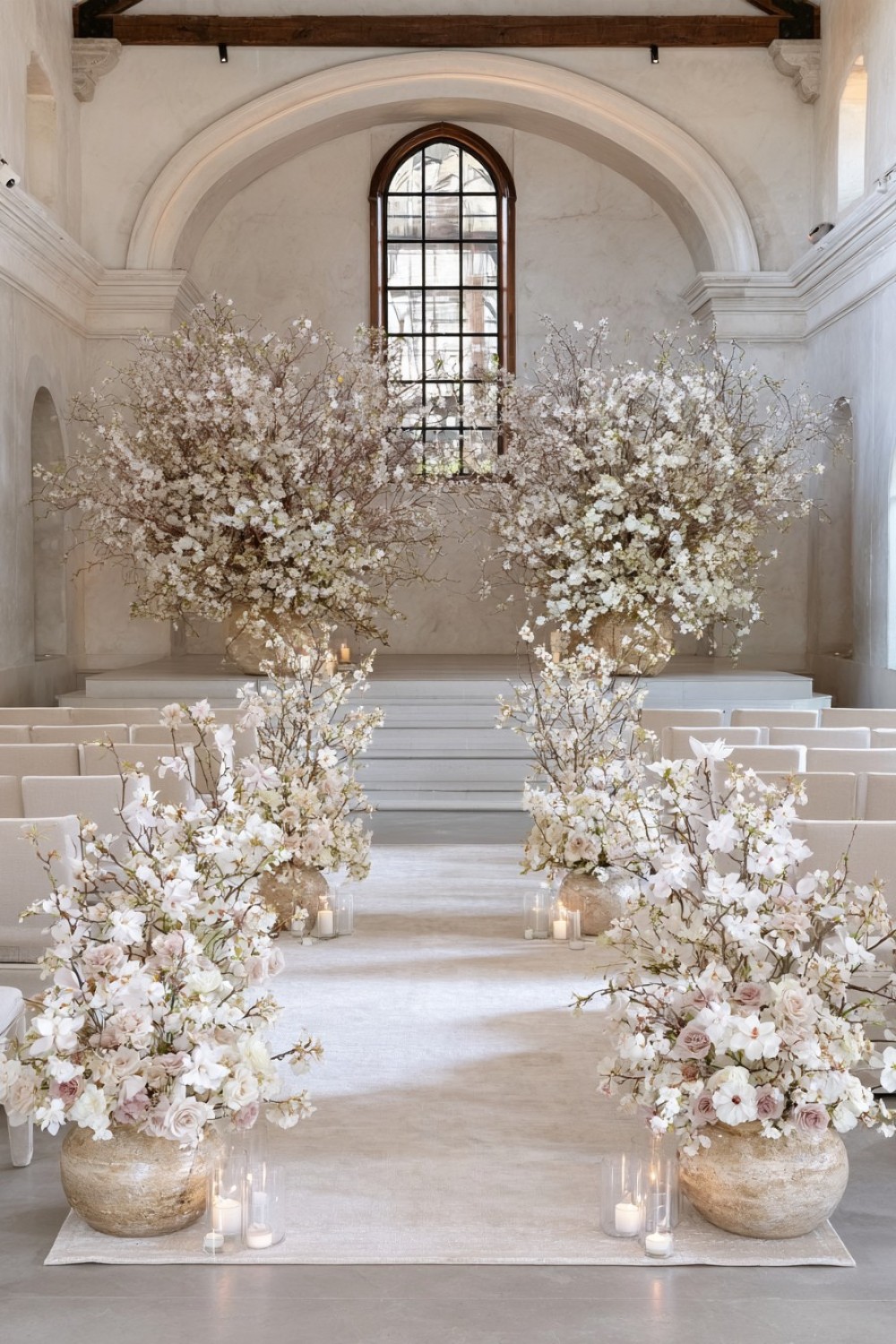
Bare or minimally foliated branches can create a much stronger silhouette than conventional arrangements.
Manzanita-style branches, willow, olive, magnolia, or carefully selected natural forms can be placed in weighted vessels at intervals along the aisle.
Keep them relatively sparse so their shapes remain visible.
A few small flowers can be added selectively, but the branches themselves should remain the main feature.
This type of aisle works especially well in architectural venues, winter weddings, minimalist ceremonies, and celebrations with a strong natural-material palette.
Always ensure branches are stable and positioned far enough from the aisle that they cannot catch clothing.
7. Create a Patterned Floor Runner Without Using Carpet
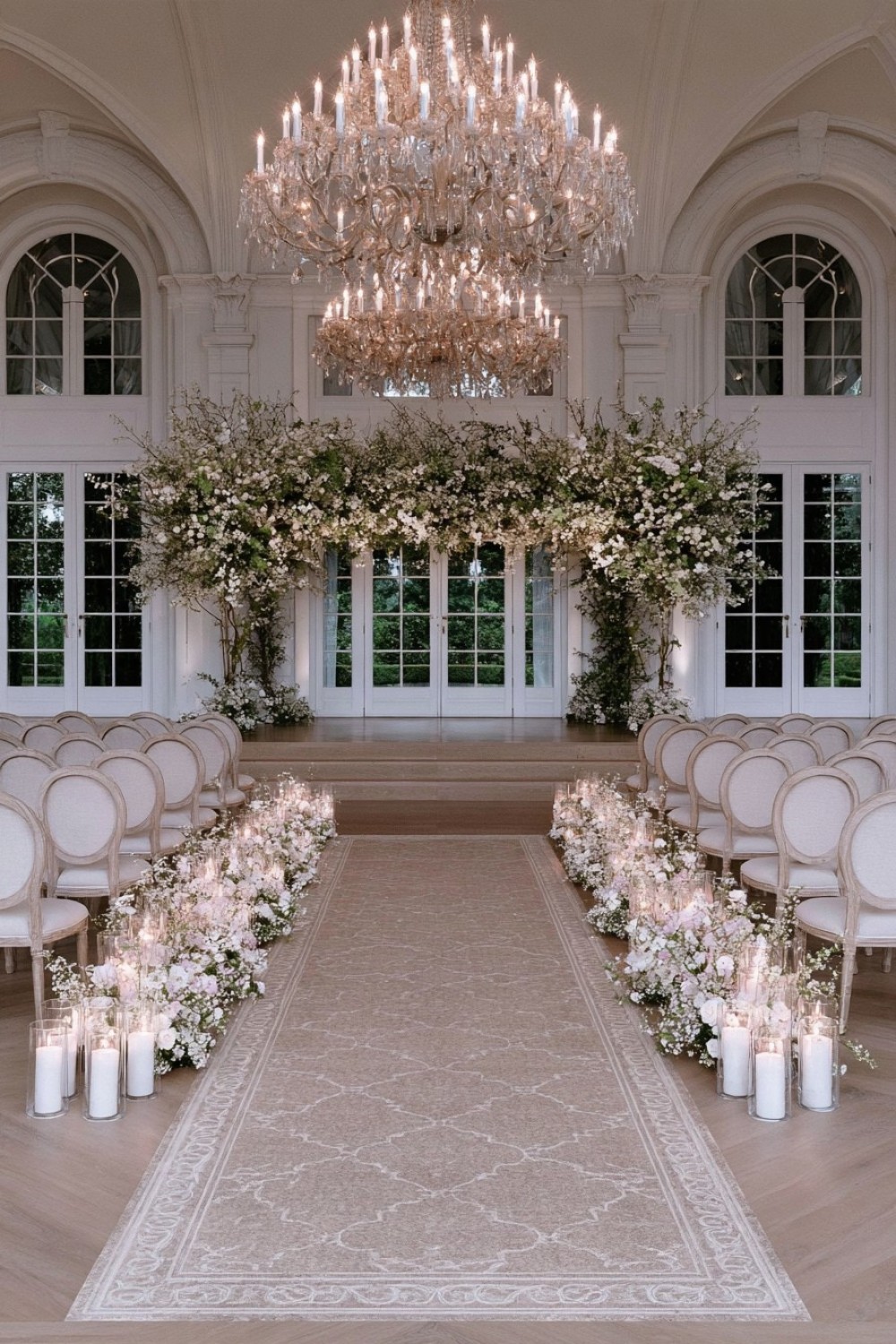
Instead of a standard fabric runner, turn the aisle floor itself into part of the design.
Removable vinyl, temporary floor graphics, or venue-approved painted panels can create oversized botanical outlines, abstract curves, geometric borders, or a subtle tonal pattern.
The design can begin sparsely at the entrance and become more detailed toward the altar.
This approach is particularly striking in venues with plain floors where florals alone might not define the aisle strongly enough.
Choose a matte finish whenever possible. Highly glossy surfaces can reflect lighting unpredictably and may become distracting in photographs.
The material should also be slip-resistant and approved by the venue.
8. Use Low Stone Plinths for a Quiet Architectural Look
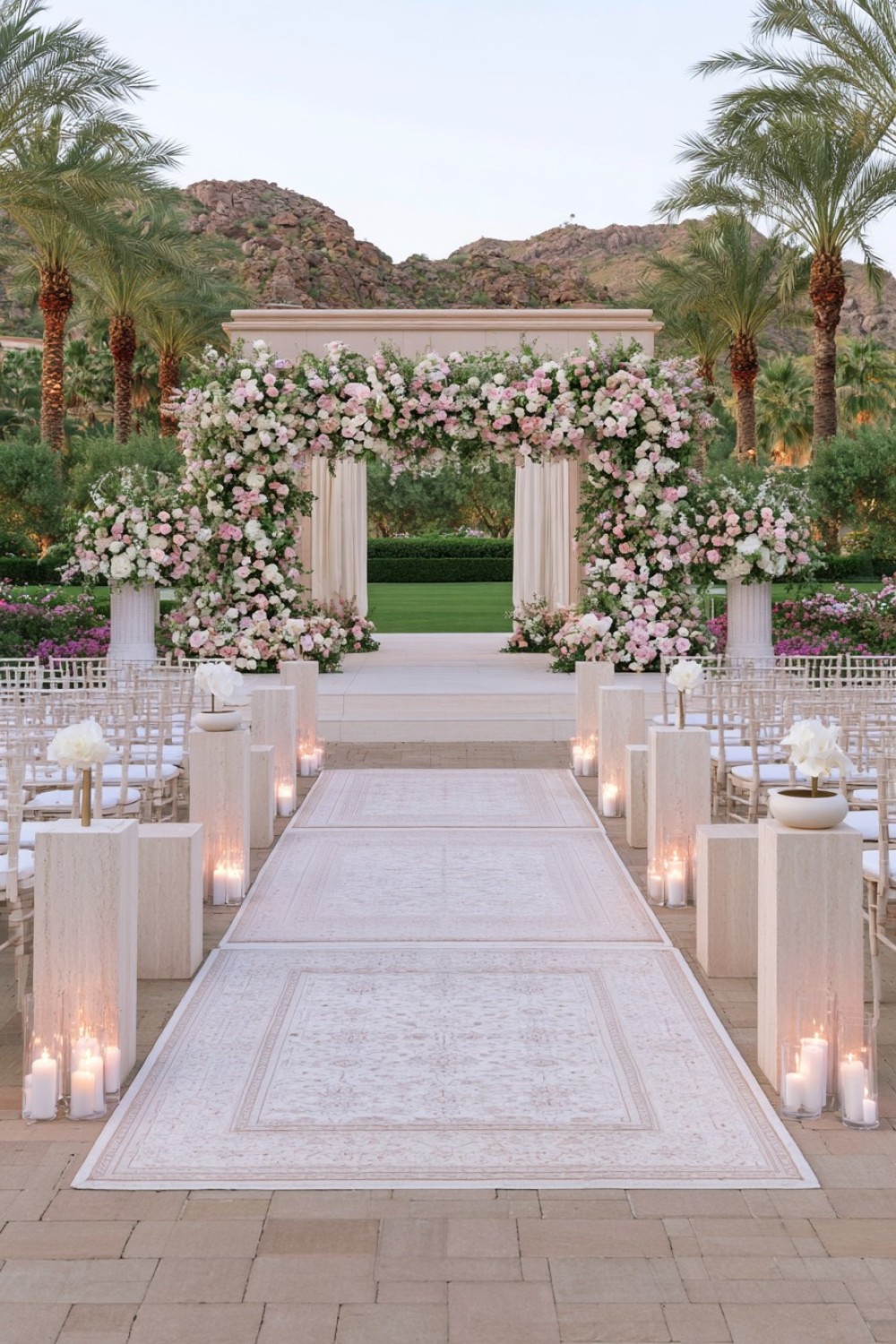
Low blocks of stone, faux stone, or plaster can create an aisle that feels architectural rather than purely floral.
Place irregularly sized plinths at selected points and top them with one sculptural flower, shallow bowl, or small arrangement.
Travertine, limestone tones, or pale plaster work beautifully with white, cream, blush, and green palettes.
The blocks should remain low enough not to obstruct views from the guest seating.
This design is especially effective when the ceremony backdrop also uses stone or architectural forms, allowing the aisle to feel connected to the rest of the setting.
9. Create a Meadow That Breaks Into the Aisle
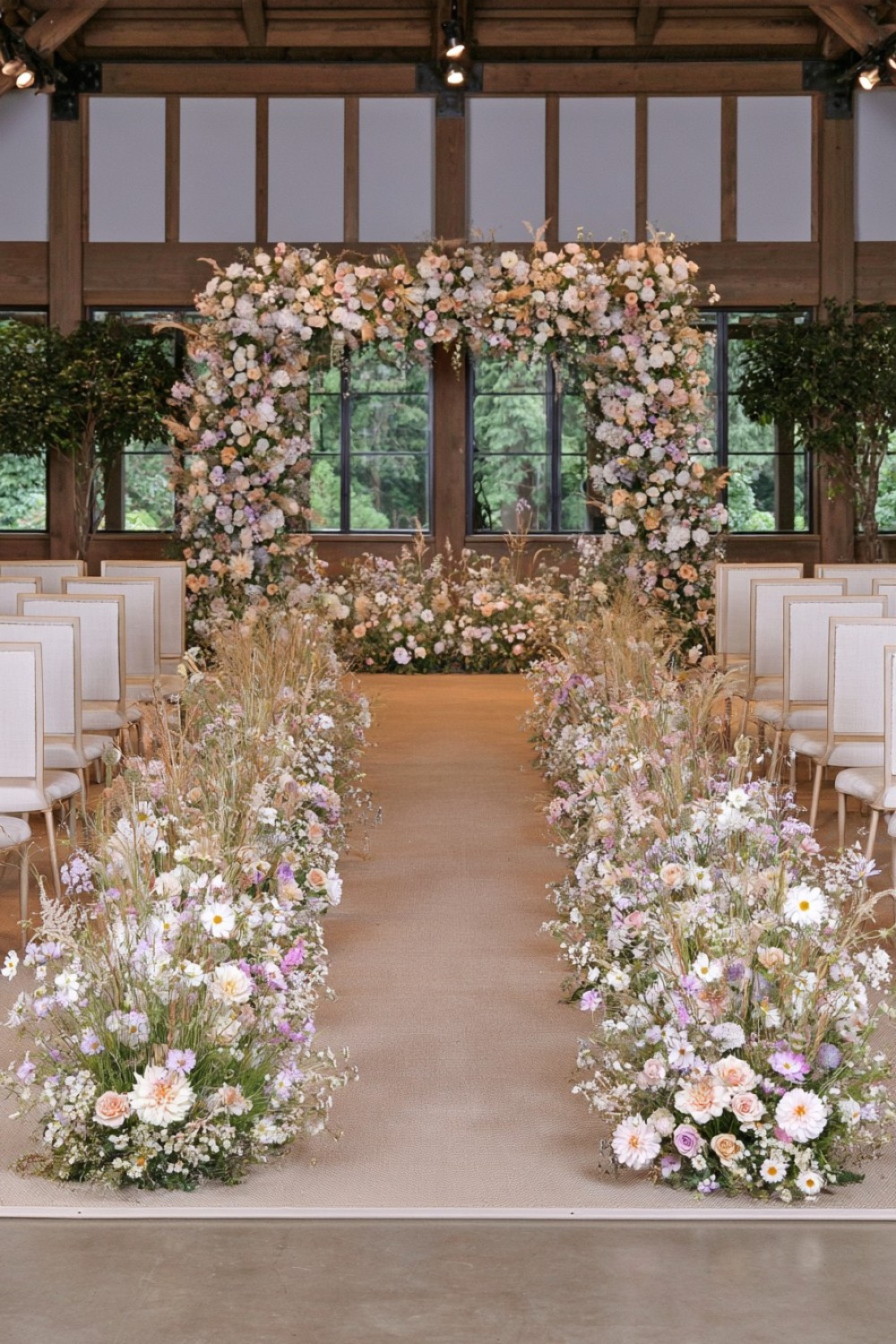
Instead of placing flowers neatly beside the chairs, let low meadow-style arrangements extend slightly into the aisle.
Use fine grasses, small seasonal flowers, and airy stems at varied heights.
The goal is not to create a dense wall but to make the aisle feel as though it passes naturally through a landscape.
This works beautifully for garden weddings, barns, countryside venues, or ceremonies where a relaxed botanical look feels appropriate.
Keep the central walking path clearly defined and avoid placing stems where dresses or shoes can catch them.
The irregular edge is what makes the design feel organic.
10. Mark Rows With Hanging Glass Forms
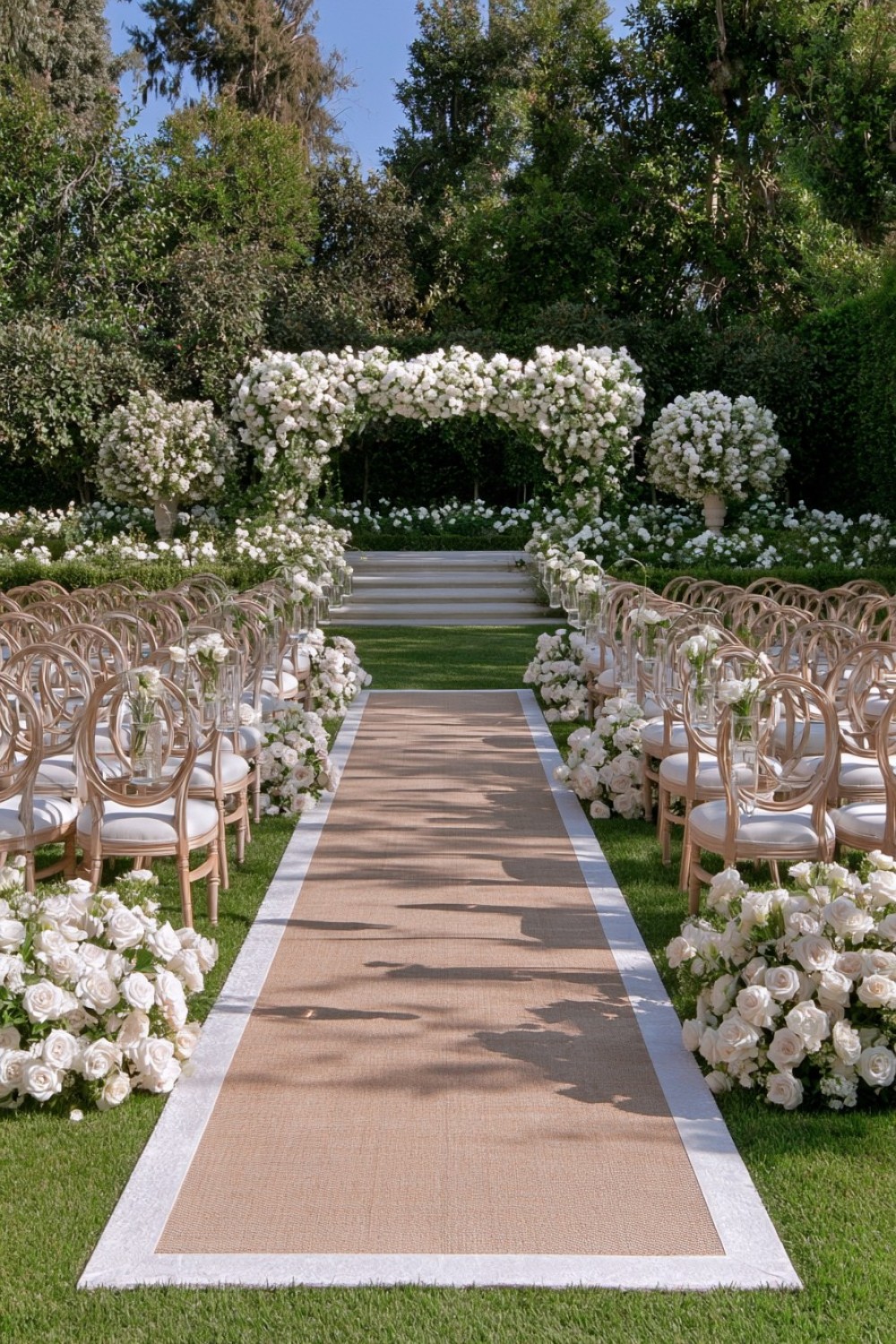
Small glass vessels suspended from the aisle-side chairs can add decoration without occupying floor space.
Instead of filling every vessel with flowers, alternate between single stems, tiny botanical clippings, and empty glass.
The repetition of transparent objects creates rhythm while remaining visually light.
Different glass shapes can be mixed as long as their scale remains similar.
For a more contemporary interpretation, use smoked or lightly tinted glass instead of clear.
Secure each vessel carefully and keep hanging pieces away from the actual walking path.
11. Create Pools of Light Along an Evening Aisle
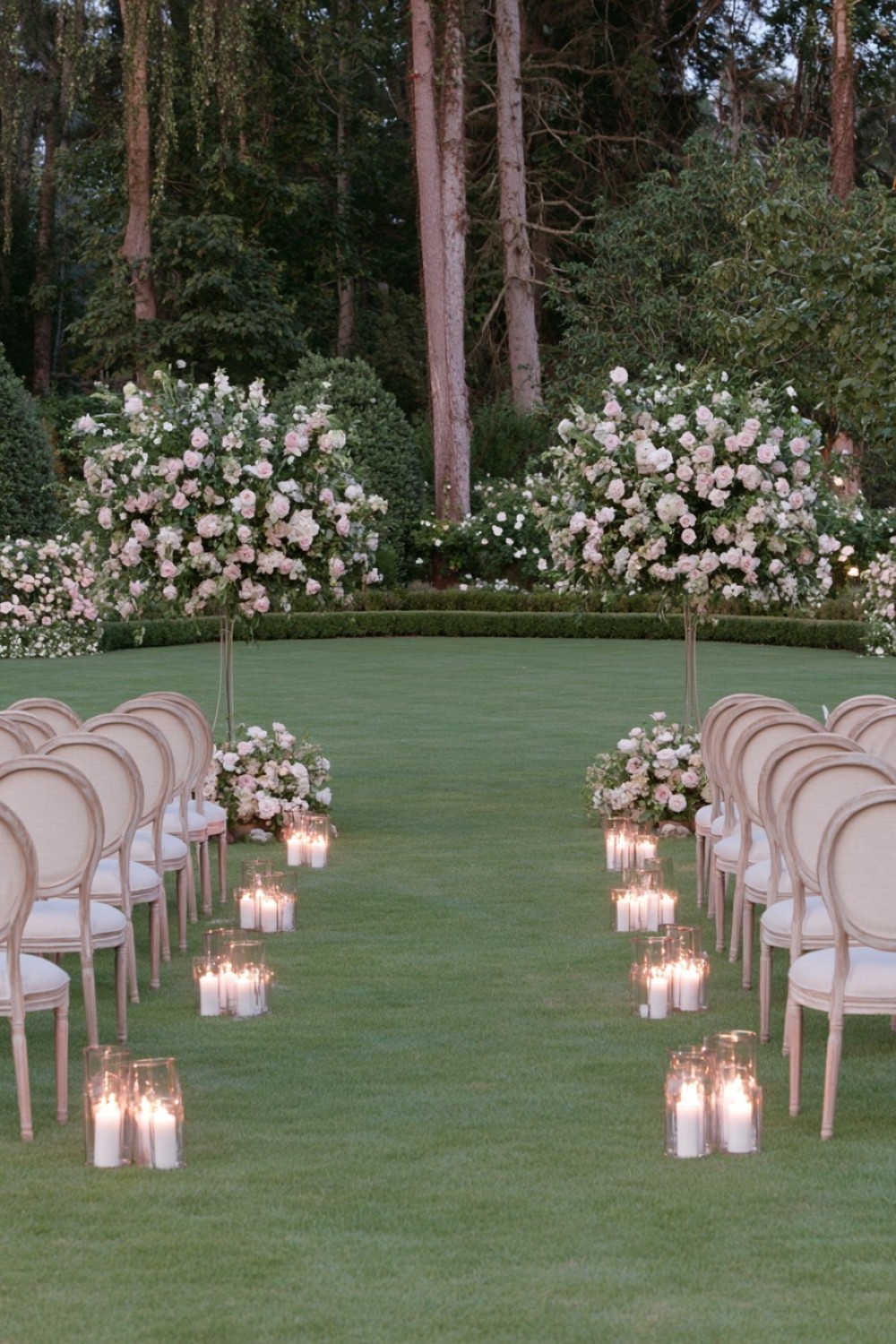
For an evening ceremony, treat light as the main aisle decoration.
Use discreet floor-mounted fixtures to create soft overlapping pools of warm light rather than a continuous illuminated line.
Selected floral arrangements or sculptural elements can sit within those pools so they become visible gradually as guests look down the aisle.
This can feel much more refined than rows of visible lanterns.
Keep the fixtures shielded so guests do not see the light source directly.
For outdoor use, all equipment should be rated for the setting and installed so cables do not cross walking areas.
12. Use Reflective Discs to Catch the Surroundings
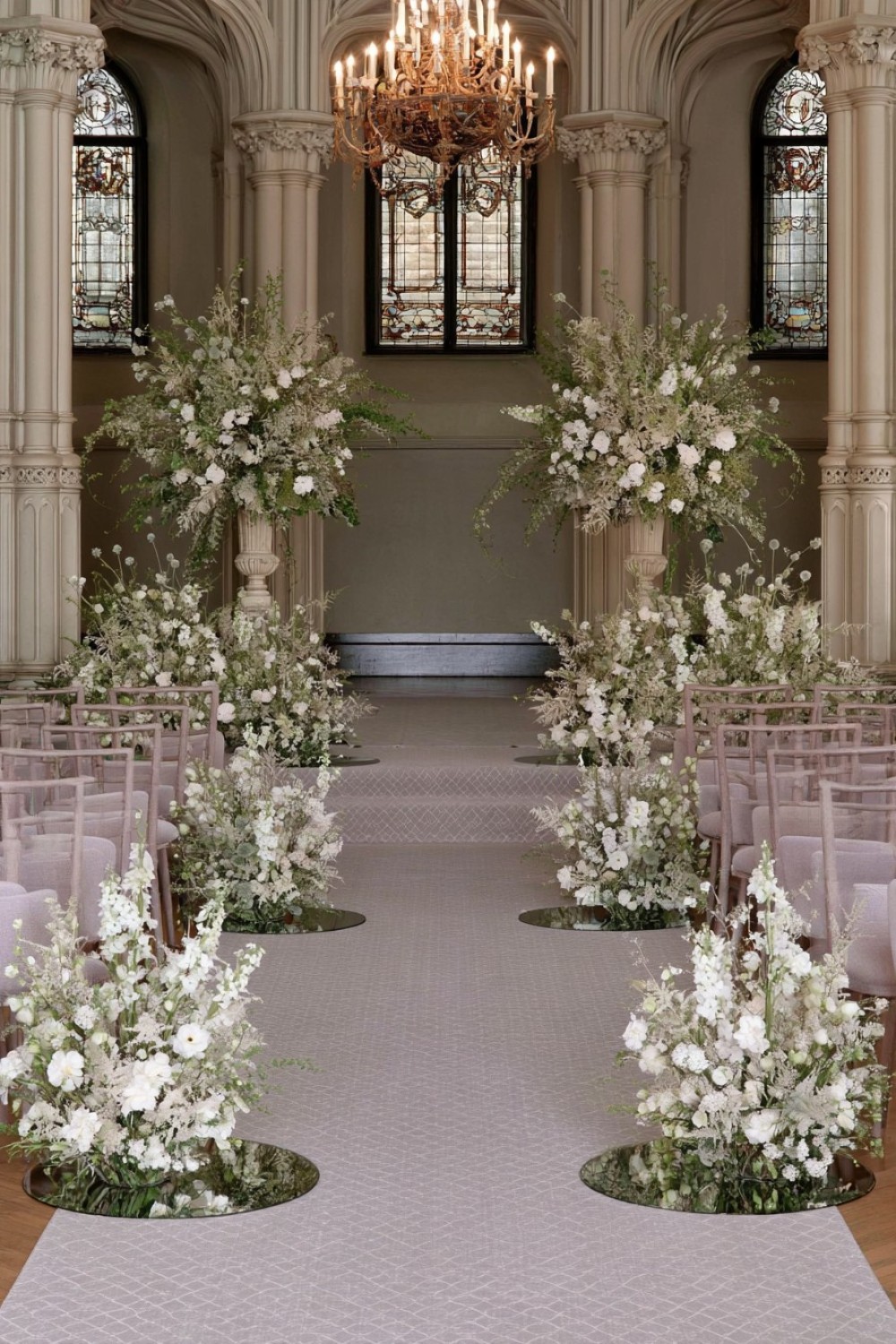
Small mirrored or polished-metal discs placed beneath selected aisle arrangements can reflect flowers, sky, architecture, or lighting.
Instead of using obvious mirror pedestals, keep the reflective surfaces low and partially hidden.
This creates flashes of movement as guests walk past.
Irregular shapes work better than perfectly matching circles if the goal is a more artistic look.
Because reflective surfaces can become visually busy, pair them with simple florals and restrained colors.
13. Build Tiny Floral Niches Into the Seating
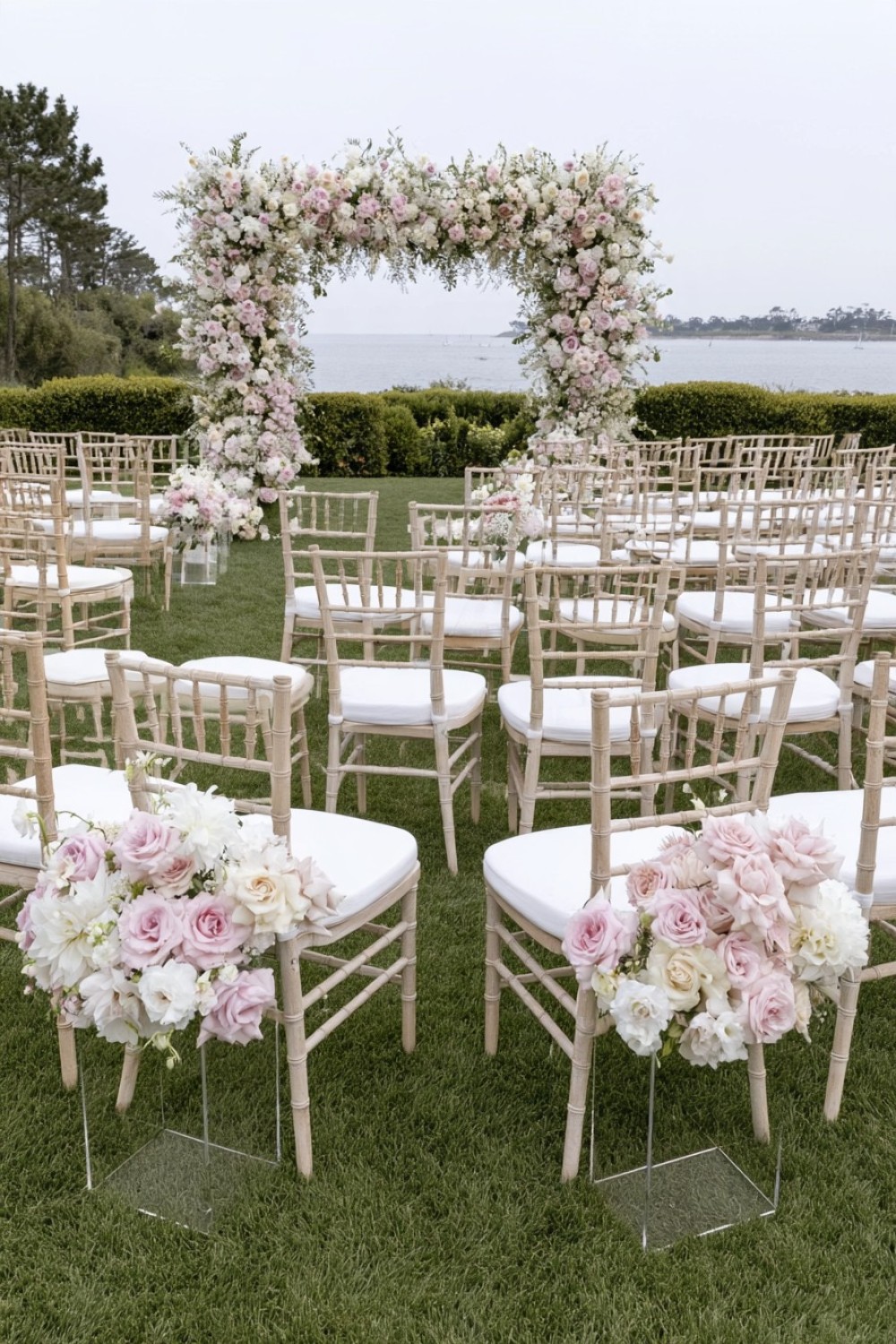
Rather than attaching flowers to the outside of chairs, create small framed floral niches between selected rows.
These could be narrow metal rectangles, wooden frames, or clear acrylic structures holding only a few stems.
The frames introduce architectural repetition along the aisle while still allowing guests to see through them.
A different flower can appear in each niche while the color palette remains consistent.
This idea works particularly well for couples who want flowers to feel curated rather than abundant.
14. Use Suspended Petals Above the Aisle
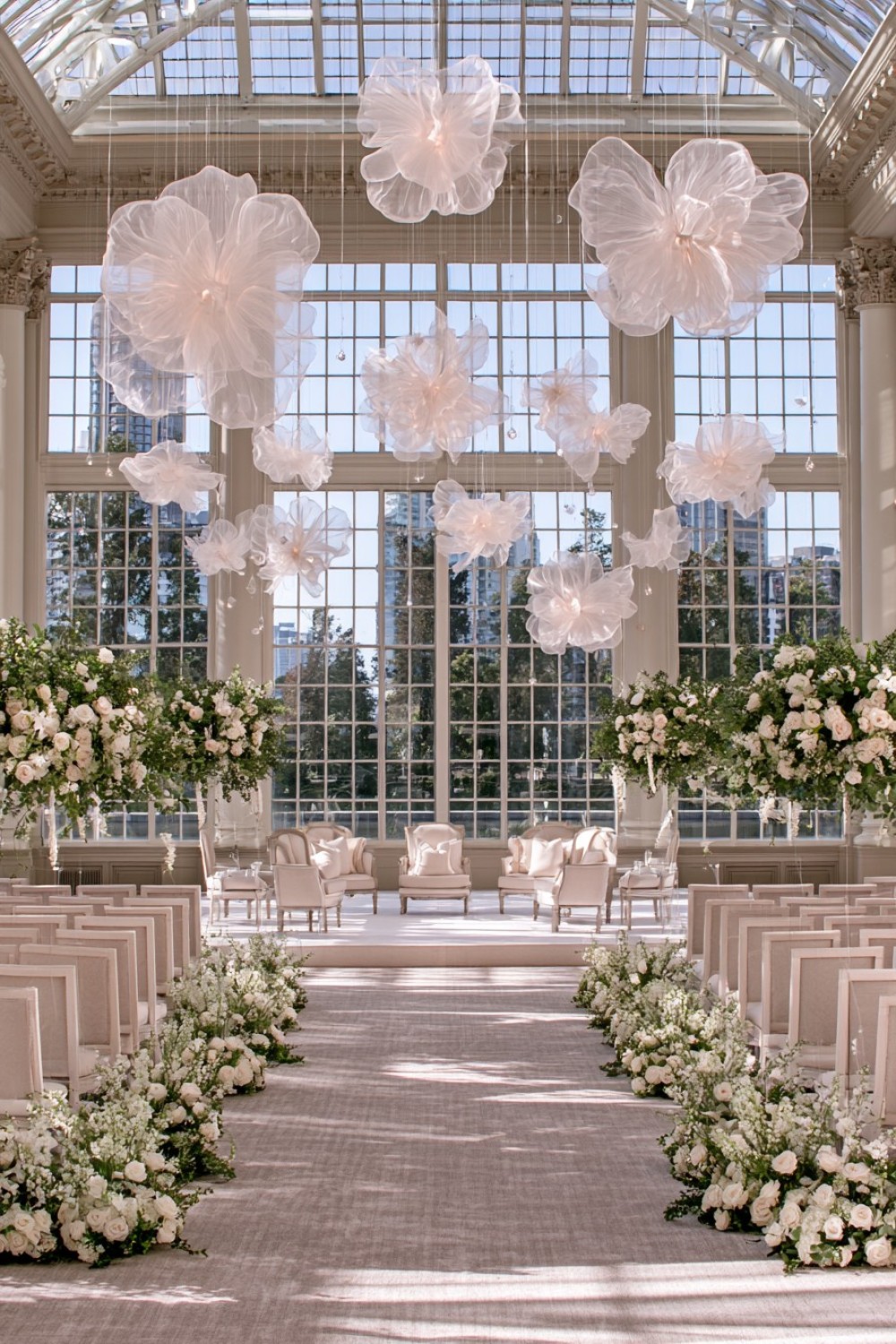
Instead of placing petals on the ground, suspend lightweight petals or petal-shaped forms overhead.
Use fine transparent line and vary the heights so the pieces appear to float.
This can create a striking effect in indoor venues with sufficient ceiling height.
Fresh petals may be impractical for longer installations, so lightweight fabric or paper forms can provide more control.
Keep the installation sparse enough that it does not resemble a dense ceiling decoration.
Professional rigging should be used for any overhead installation, especially in public venues.
15. Create an Aisle From Oversized Ceramic Vessels
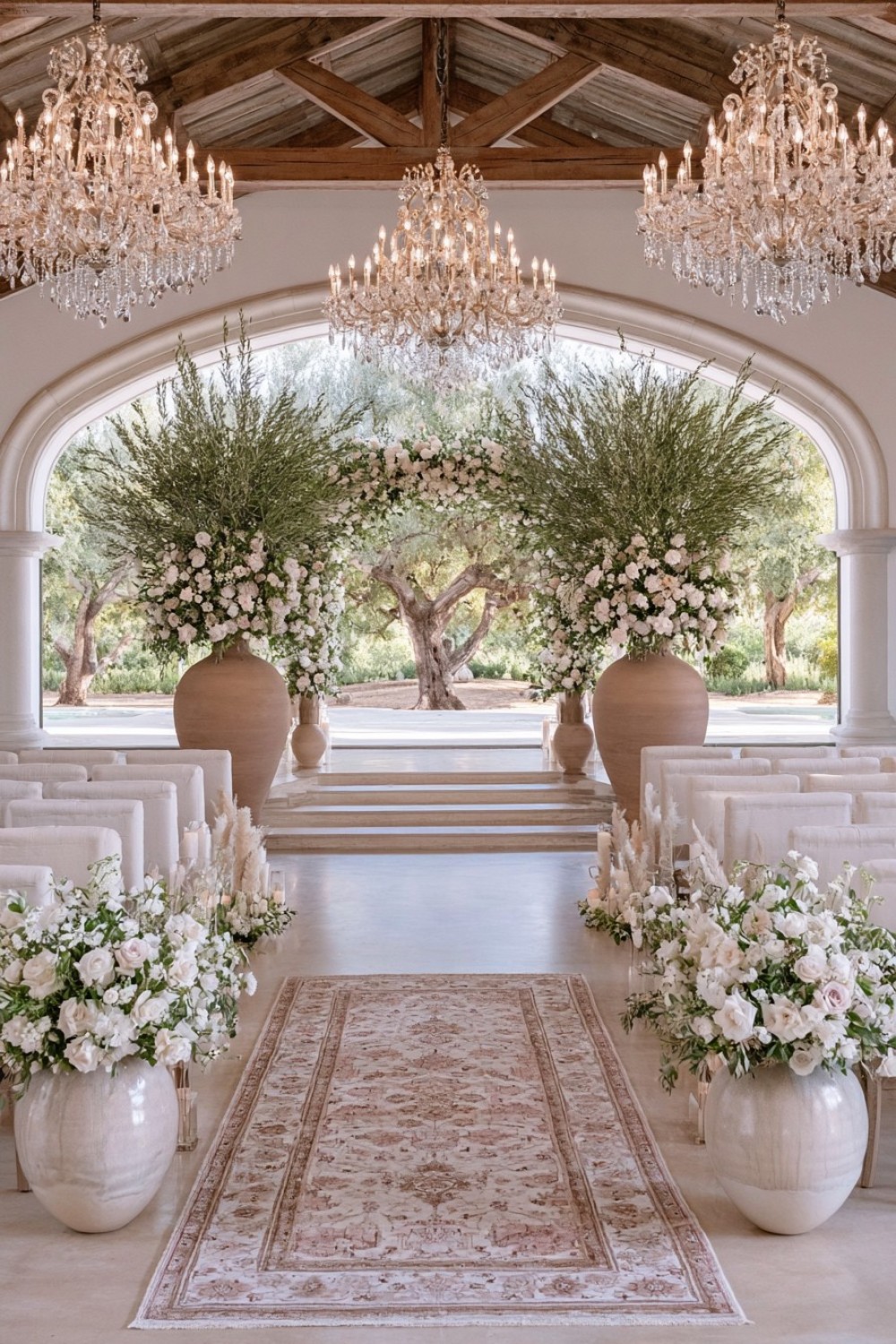
Large handmade-style vessels can give the aisle a completely different character from conventional flower arrangements.
Use off-white, stone, terracotta, or softly glazed ceramics at selected points.
Some vessels can hold tall branches, while others remain empty.
The empty vessels are important because they allow shape and material to become part of the design rather than treating every object as a flower container.
This works particularly well for Mediterranean, rustic, organic-modern, and destination weddings.
The vessels must be heavy enough to remain stable but positioned far enough from the aisle to prevent accidental contact.
16. Let the Aisle Transform Near the Ceremony Front
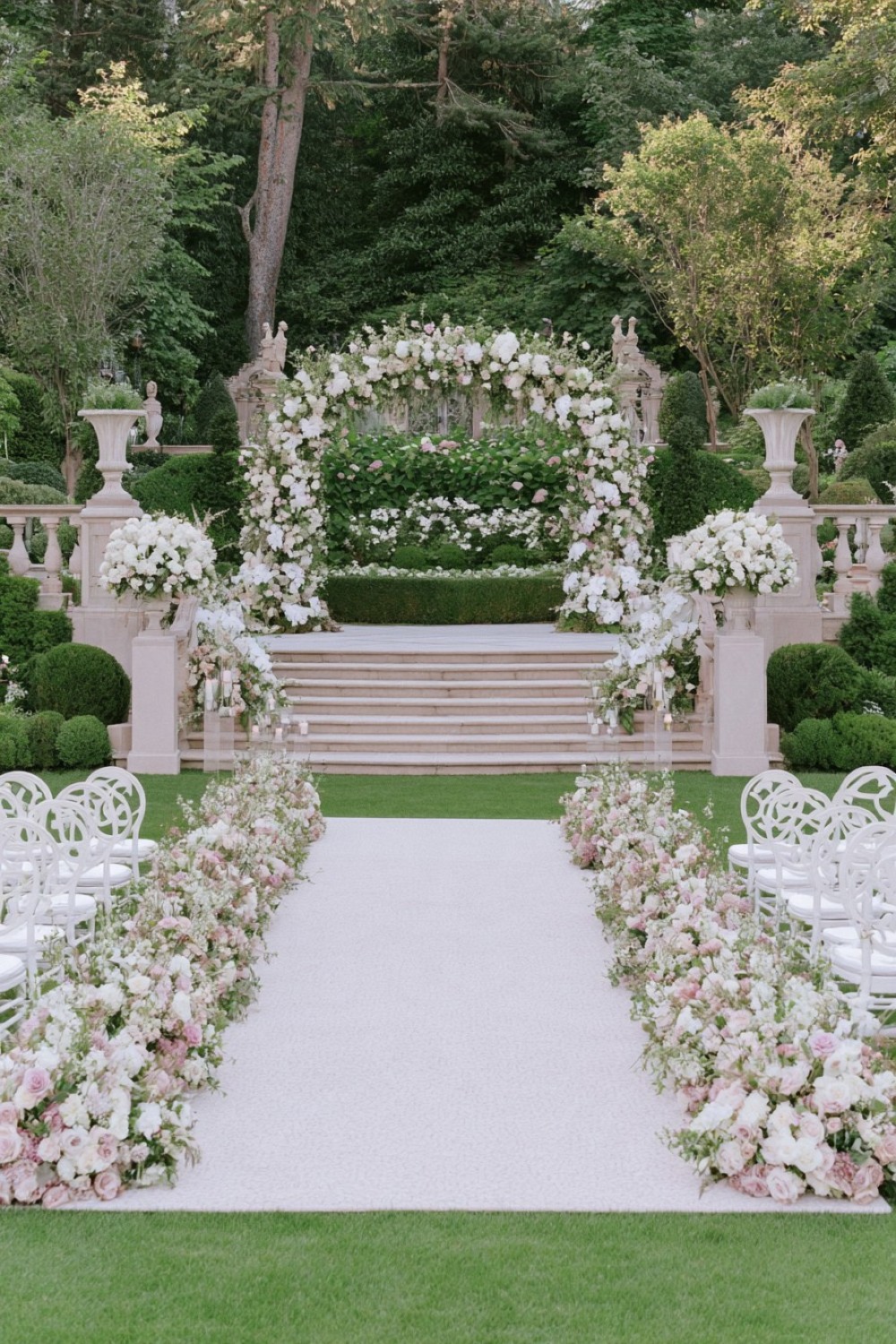
Create a noticeably different final section rather than decorating the entire aisle uniformly.
The first two-thirds might remain minimal, using only small botanical markers. In the final few rows, the flowers become taller, denser, or more sculptural.
This creates a sense of arrival as the couple approaches the ceremony space.
The transformation can also happen through material: transparent vessels might gradually shift into stone plinths, or white florals might slowly transition into deeper tones.
This gives the ceremony a visual narrative without requiring every meter of the aisle to be heavily decorated.
17. Use One Repeated Object as the Entire Aisle Language
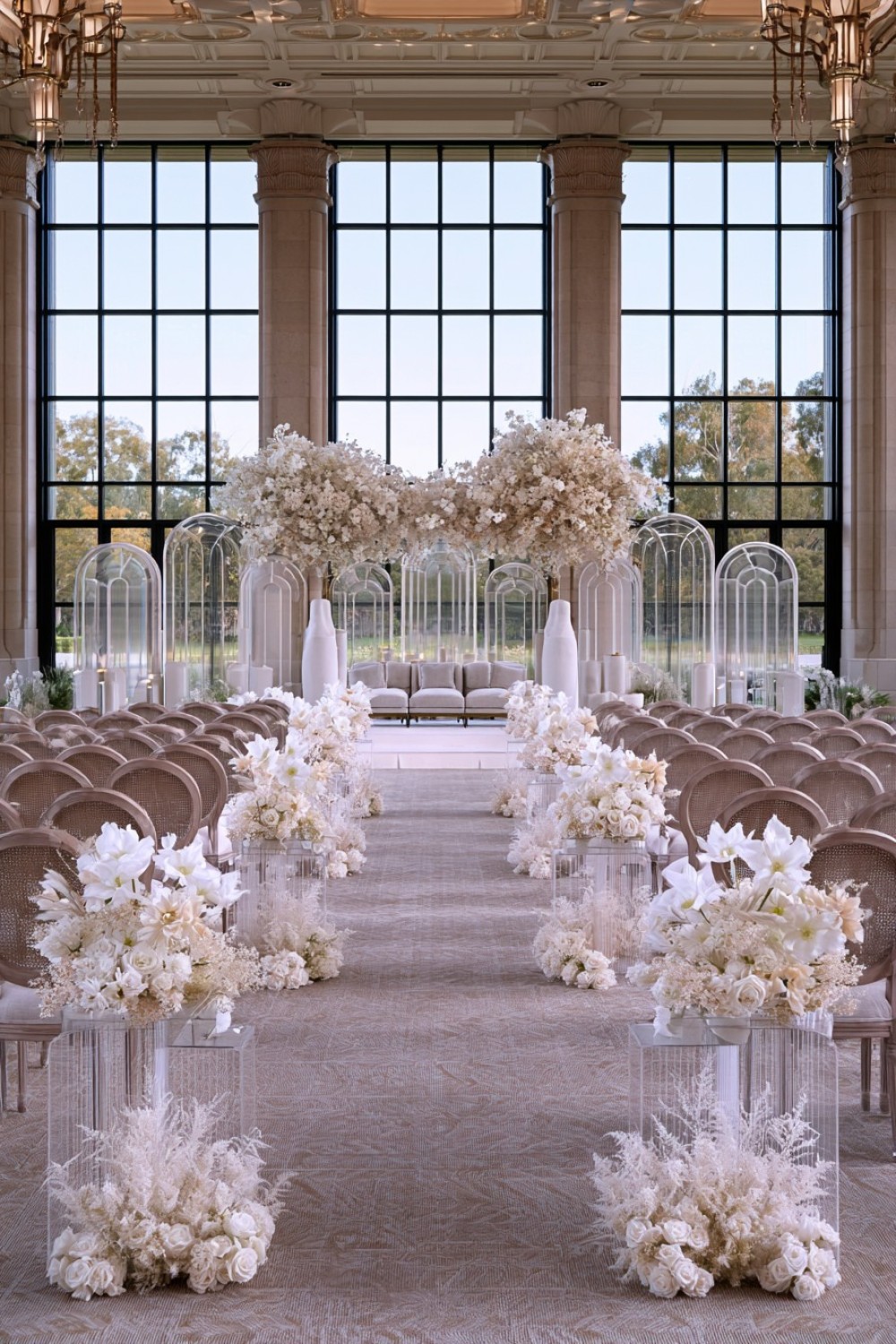
Sometimes the most distinctive aisle comes from repeating one unusual object rather than combining multiple decorations.
That object could be a sculptural ceramic form, slim mirrored column, curved metal frame, oversized paper flower, stone sphere, or translucent panel.
Repeat it every few rows with small variations in height or orientation.
This creates strong visual rhythm and makes the ceremony feel intentionally designed.
For example, a series of white ceramic arches could line the aisle with only a single flower inserted into each one. The repetition becomes the decoration, while the flowers remain secondary.
This approach works especially well in contemporary ceremonies where too many decorative elements would weaken the architecture.
Making the Aisle Feel Like Part of the Ceremony
A wedding aisle becomes more memorable when it does more than separate two rows of chairs. It can reveal the ceremony gradually, introduce the floral language, echo the architecture, or create a visual transition from the guest entrance to the vows.
Before adding decoration, consider the venue itself. A garden may need only subtle intervention, while a ballroom can benefit from stronger floor, lighting, or structural elements. Also think about how the aisle will function: dresses need space, guests need clear sightlines, and every decorative object should remain stable throughout the ceremony.
The most effective designs usually rely on one clear idea rather than several competing ones. Whether that idea is a botanical gradient, floating flowers, sculptural vessels, or a patterned floor, repetition and restraint can turn the aisle into one of the ceremony's strongest visual moments.
MORE IDEAS


Share
What's Your Reaction?
 Like
0
Like
0
 Dislike
0
Dislike
0
 Love
0
Love
0
 Funny
0
Funny
0
 Angry
0
Angry
0
 Sad
0
Sad
0
 Wow
0
Wow
0