17 Mobile Coffee Cart Concepts Designed for Style Service and Flexibility

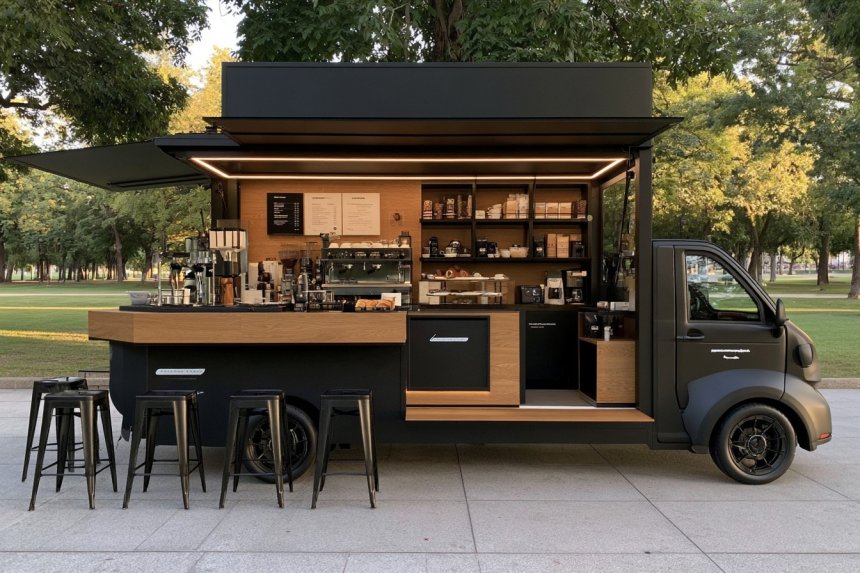
A mobile coffee cart must support safe, efficient service before decorative finishes are considered. Start by listing the exact equipment, supplies, water requirements, electrical connections, storage needs, and menu items the cart will support. Measure every machine with its trays, handles, lids, and ventilation clearances included. Then map the order in which drinks are prepared, from taking payment to grinding, brewing, finishing, and customer pickup. The cart’s total weight, wheel capacity, transport route, cleaning access, and local food-service requirements also need to be resolved before construction. The following concepts combine a recognizable visual identity with practical planning, helping each cart function as a realistic service station rather than serving only as an attractive display.
1. Build a Warm Walnut Coffee Cart With Fold Out Side Counters
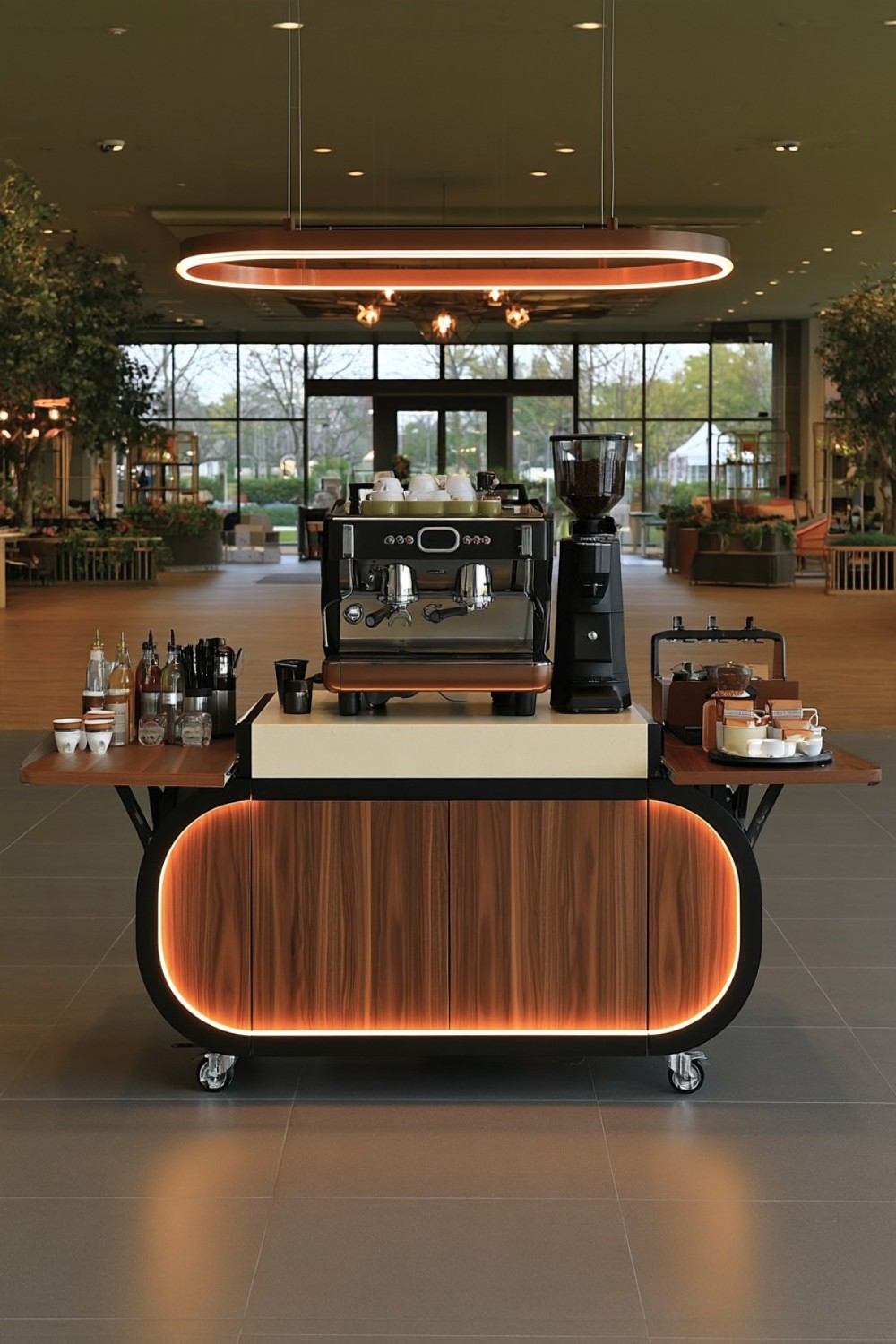
A walnut finish can give a coffee cart a warm, established appearance, while folding side counters provide additional working space only when needed. Begin by deciding what each extension will support. One side might hold cups and completed drinks, while the other provides space for payment or light preparation. Place the intended objects on a temporary table to determine the required dimensions instead of making both extensions unnecessarily large.
The hinges, brackets, and locking supports must be selected according to the expected load. A fold-out counter carrying a payment terminal has different structural requirements from one expected to hold filled drinks or equipment. Confirm that every section locks firmly in its open position and cannot collapse if a customer leans against it. When folded, the panels should remain secured against the cart and protect their exposed edges during transport. Use a moisture-resistant worktop over the walnut body, and seal joints where spills could enter. Test the complete folded width against doors, elevators, vehicle openings, and storage areas before final construction.
2. Create a Fluted Cream Cart With a Curved Front
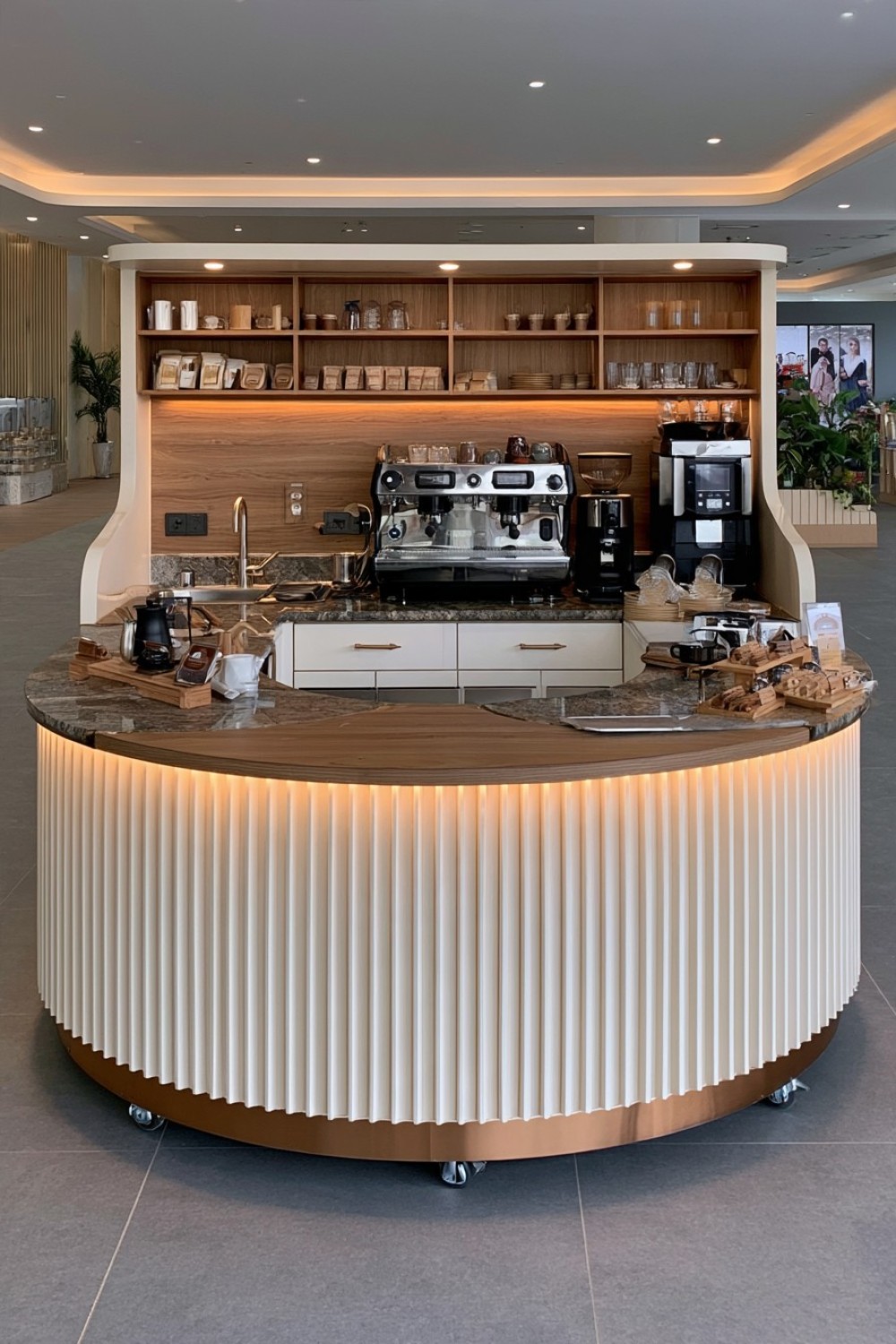
A curved front can make a mobile cart feel like custom furniture and remove sharp corners from customer-facing areas. Before choosing the radius, create a cardboard template and test it against the internal storage plan. A dramatic curve may look appealing while reducing the cabinet depth needed for water containers, waste bins, drawers, or electrical components. The curve should support the layout rather than consume essential working space.
Fluted panels need careful material selection because deep grooves can collect dust, splashes, and fingerprints. Use a durable, wipeable finish and avoid placing difficult-to-clean texture on the preparation side. Warm cream or soft beige can brighten the exterior, although pale surfaces will reveal coffee marks quickly and require a realistic cleaning routine. Keep the worktop simple and nonporous where food and drinks are handled. Protect exposed lower edges from impacts caused by shoes, cases, and transport equipment. If the cart moves frequently, use replaceable corner or base protection in the areas most likely to become damaged.
3. Design an Industrial Coffee Cart With Black Metal and Oak
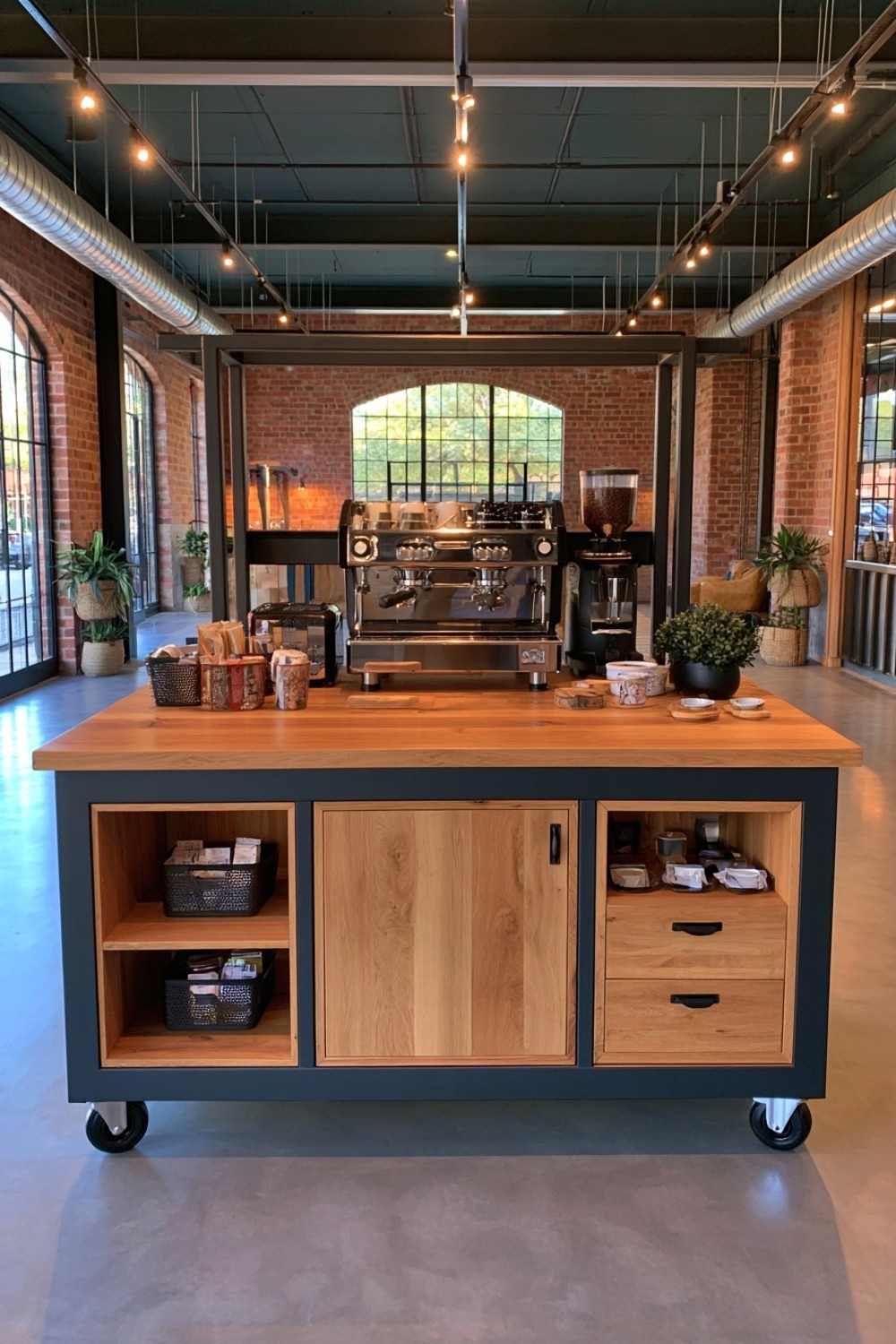
Black metal framing and oak can create a strong industrial identity, but the frame should be designed around equipment weight and movement. List the espresso machine, grinder, water supply, stock, batteries, and waste containers before selecting tubing or profiles. Ask the fabricator to account for the combined working load and the stresses created when the cart crosses thresholds or uneven surfaces. Decorative metal framing should not be treated as structural support unless it has been designed for that purpose.
Use a suitable protective finish on the metal and seal the timber according to where the cart will operate. Oak veneer over a stable panel may reduce weight compared with thick solid timber, although edges and joints still require protection from moisture. Open shelves provide quick access but need restraints to prevent baskets and supplies from moving during transport. Route cables through protected channels instead of loosely following the frame. Locking casters should match the cart’s loaded weight and floor conditions. Test the wheel brakes on the actual service surface before placing hot equipment on the cart.
4. Build a Compact Two Sided Cart for Faster Service
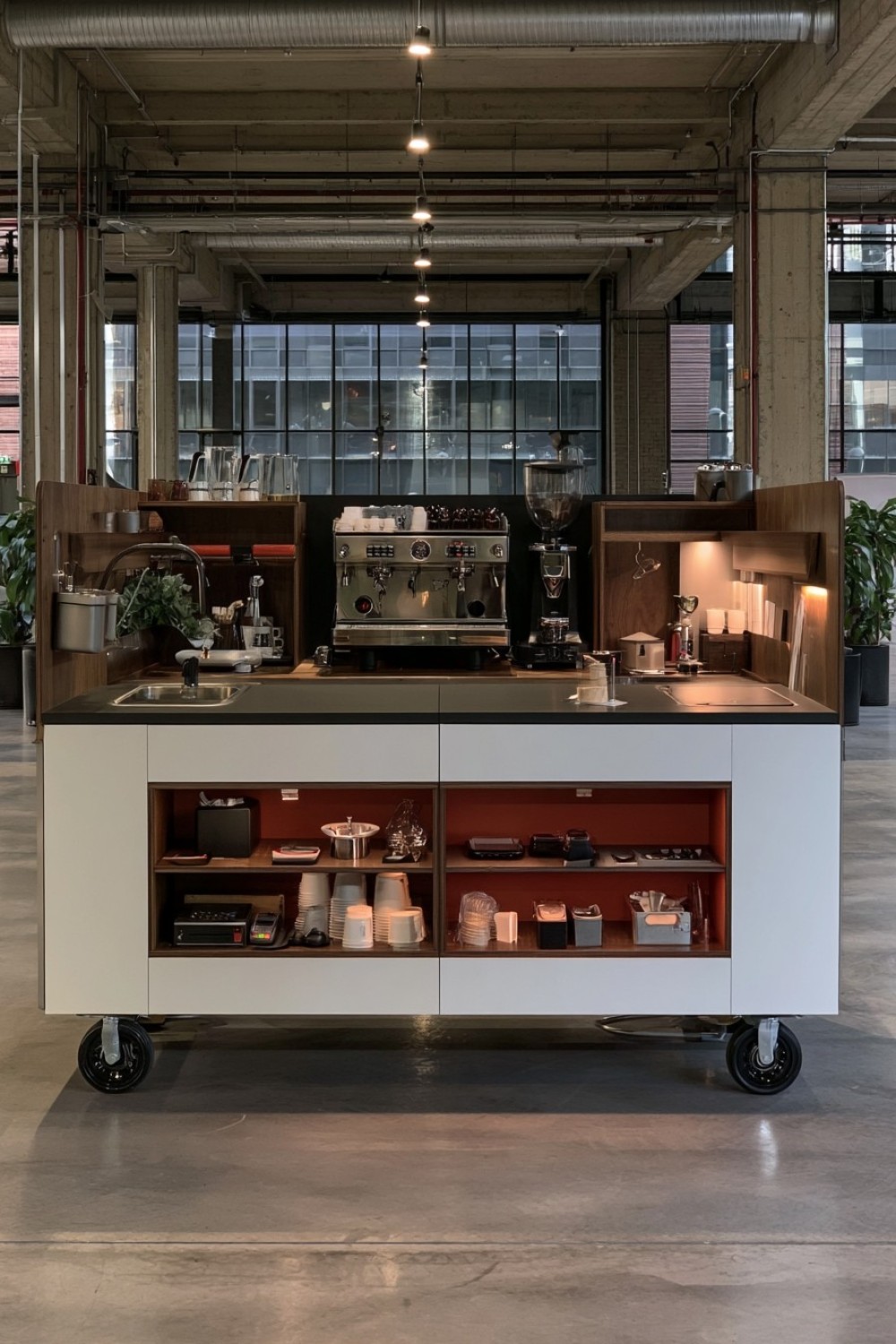
A two-sided layout can separate ordering from drink pickup, reducing congestion during busy service. Draw the customer route before arranging the equipment. Mark where people will queue, pay, wait, collect drinks, and leave. The pickup point should be visible without encouraging customers to reach into the preparation area. If the cart operates against a wall at some events, confirm that both service sides will remain usable or create an alternative configuration.
Organize internal storage according to the same workflow. Cups, lids, and sleeves belong near final drink assembly, while receipts, payment supplies, and order labels should remain near the ordering point. The espresso machine, grinder, milk area, and waste opening need to stay within an efficient working zone for the barista. Use a temporary full-size layout to rehearse several orders before building cabinets. Include space for used cloths, waste, cleaning tools, and replacement stock. Faster service should come from a clear sequence and reduced movement rather than placing every item on the countertop.
5. Create a Soft Green Coffee Cart With Natural Wood Details
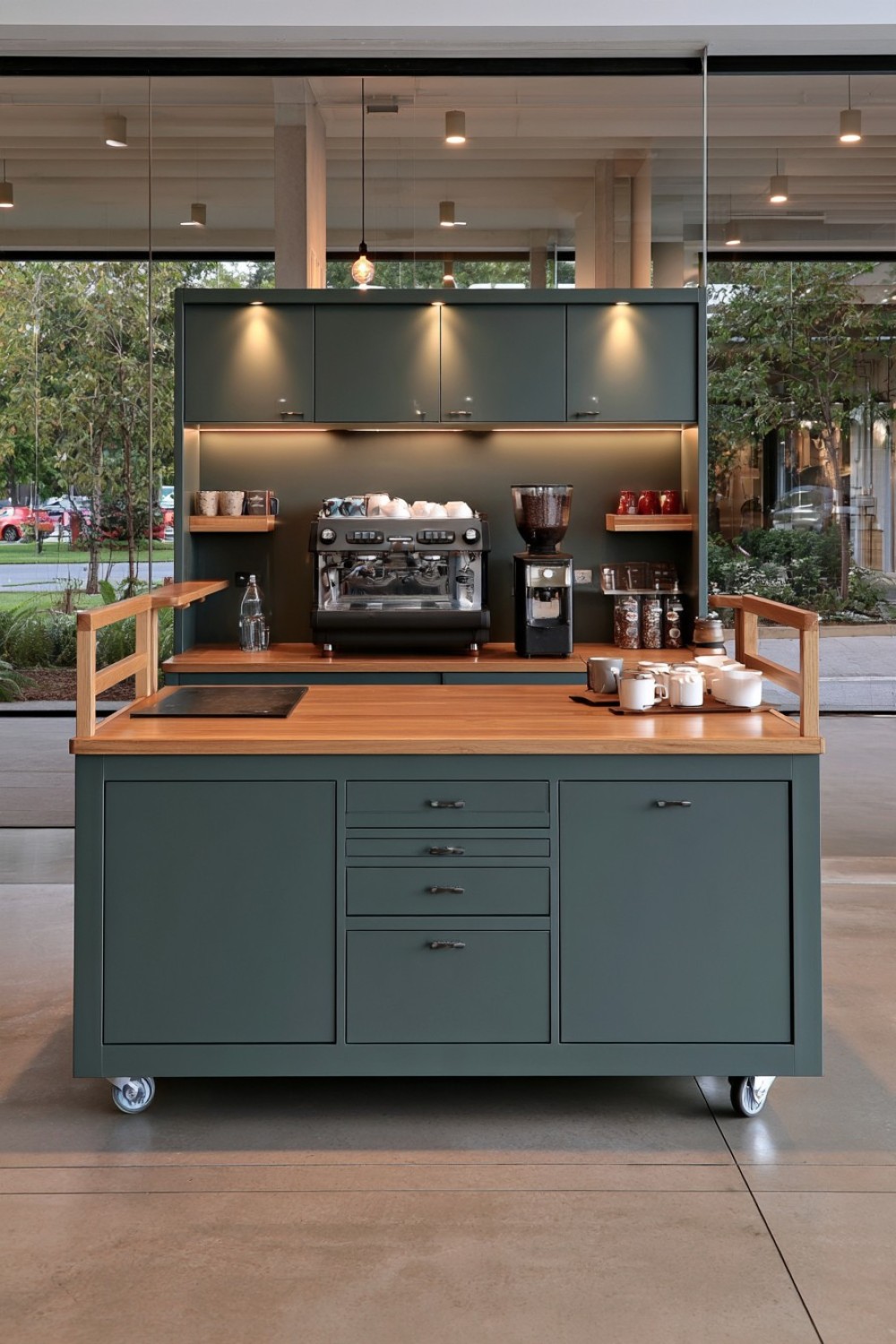
Muted green can create a recognizable identity without overwhelming a compact cart. Test sage, olive, and gray-green samples beside the planned timber because wood undertones can change how the paint appears. Warm oak may make the green look softer, while pale ash can create a cleaner contemporary combination. View the samples under the artificial lighting used at indoor events as well as daylight.
Apply natural wood where it can be maintained easily, such as a serving ledge, handle detail, or protected outer panel. The main preparation surface should be chosen for durability, stain resistance, and suitability for the intended service. Do not depend on an attractive timber coating where frequent hot spills and repeated sanitizing could damage it. Use replaceable or repairable panels on high-contact areas. Keep branding and menu colors within the same restrained palette so customers can recognize the business from a distance. The green finish should support the identity while the layout continues to prioritize equipment access and efficient cleaning.
6. Design a Mobile Coffee Cart With a Built In Pastry Display
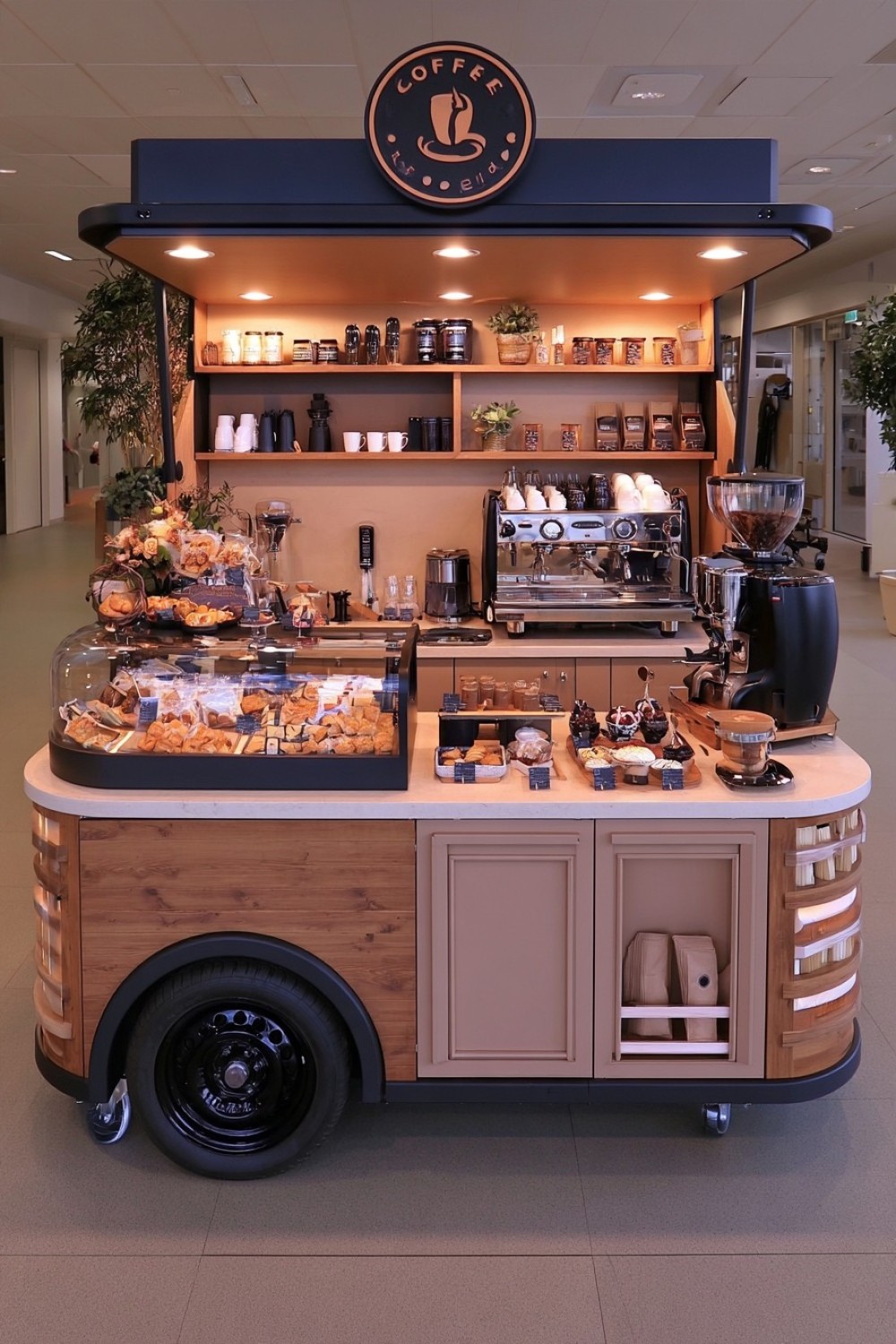
An integrated pastry section can encourage additional purchases, but food protection and temperature requirements must guide the design. Decide which products will be offered and confirm their storage and display conditions before choosing a case. Items requiring refrigeration need suitable equipment and power, while other products may still require protection from handling, dust, weather, and contamination. Follow the applicable local food-service rules for the location where the cart operates.
Keep the display low enough to preserve communication between the customer and barista. Hinges, covers, trays, and serving tools should be accessible without reaching across finished drinks. Use removable trays and smooth internal surfaces so crumbs can be cleared between service periods. Separate pastry handling from the grinder, knock box, and areas exposed to milk splashes. Replacement stock should remain in suitable enclosed storage rather than beneath an open decorative shelf. Test the customer view using real product packaging and label positions. A small, clearly presented selection is usually easier to manage than a crowded display.
7. Build a Minimal White Cart With Hidden Equipment Storage
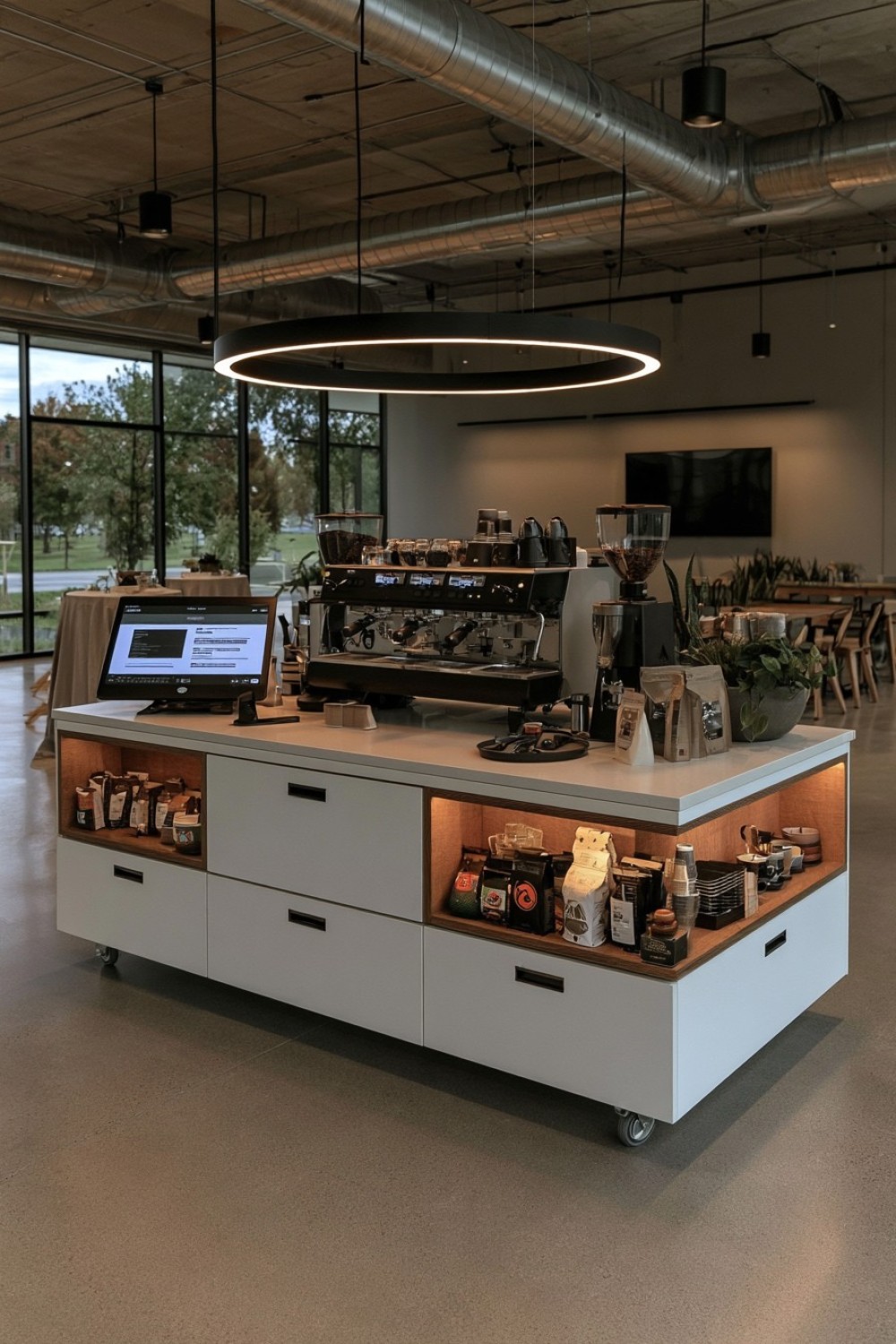
A minimal white cart succeeds when concealed storage remains easy to access during service. Make a complete inventory of cups, lids, syrups, cleaning products, tools, spare parts, payment supplies, and personal items. Assign each group a drawer or cabinet before finalizing the exterior. Frequently used items should open toward the barista and remain accessible without stepping away from the espresso machine.
Choose white surfaces that tolerate repeated wiping and the cleaning products approved for the material. Matte finishes may disguise fingerprints but can retain dark stains if the surface is porous or delicate. Test a sample with coffee and the intended cleaner before committing to the finish. Use removable drawer liners and organized containers to reduce spills inside cabinets. Equipment that produces heat requires the clearances and airflow stated by its manufacturer, even when a seamless exterior is desired. Add one restrained contrast, such as a timber edge or brushed metal handle, while keeping service controls visible enough for efficient use.
8. Create a Rustic Market Cart With Removable Wooden Crates
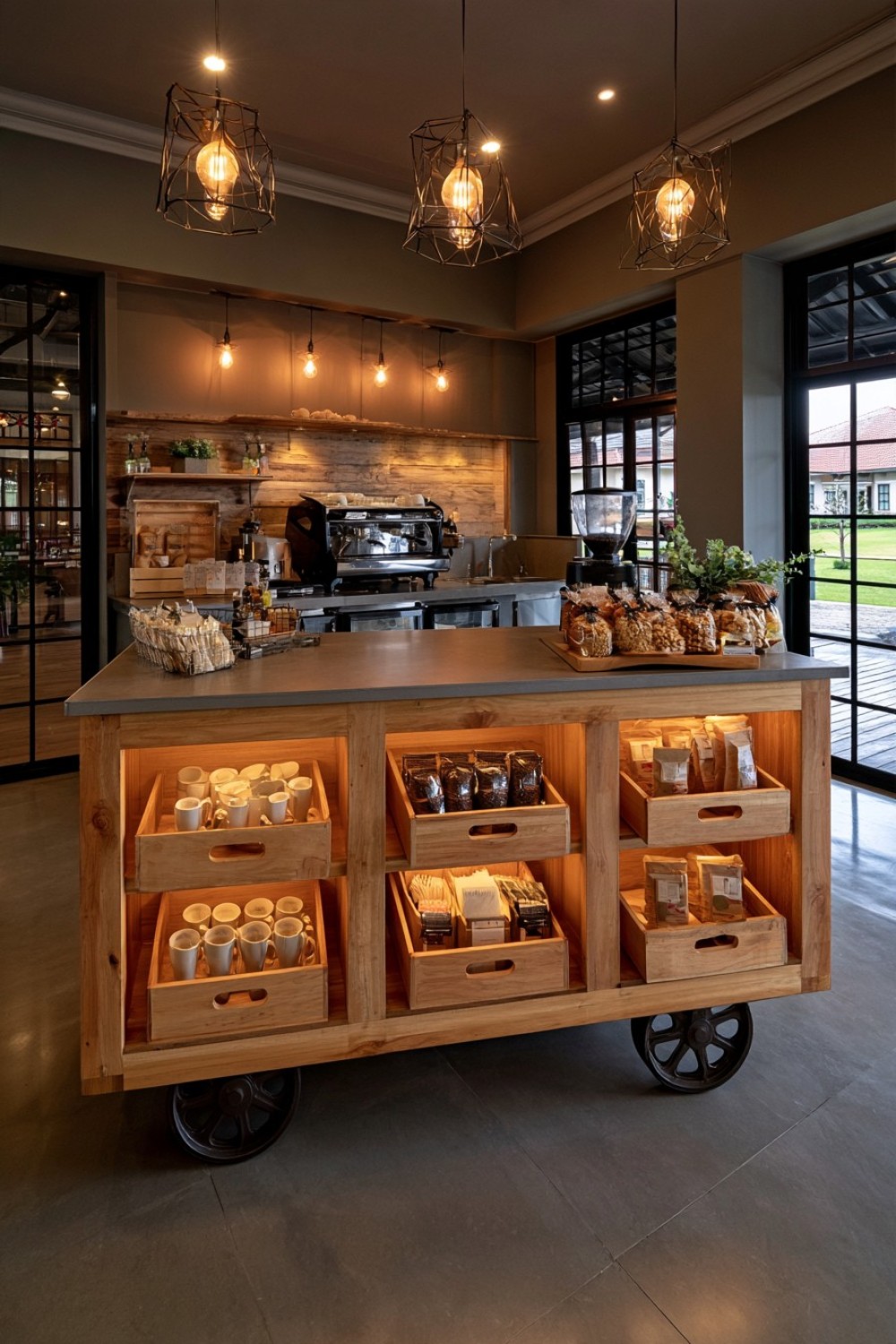
Removable crates can speed up loading and restocking when their dimensions are standardized. Decide what each crate will contain and weigh it when full. Cups and napkins create a different load from bottled drinks or bags of coffee. The supporting rails, stops, and handles should suit the heaviest intended use. Crates must remain secured while the cart moves and should not slide into the barista’s legs during service.
Use smooth, sealed timber instead of heavily distressed surfaces around food and drink operations. Deep cracks and rough finishes are harder to wipe and can catch cloth fibers. Keep preparation surfaces separate from decorative crate storage and follow the cleaning requirements that apply to the business. Label crate positions discreetly so stock returns to the same location after every event. A replacement crate should fit without requiring adjustments, which is why consistent external dimensions matter. Test removal while the cart is fully positioned; nearby wheels, open doors, or customer barriers should not prevent a crate from sliding out.
9. Design a Narrow Coffee Cart for Hallways and Office Corridors
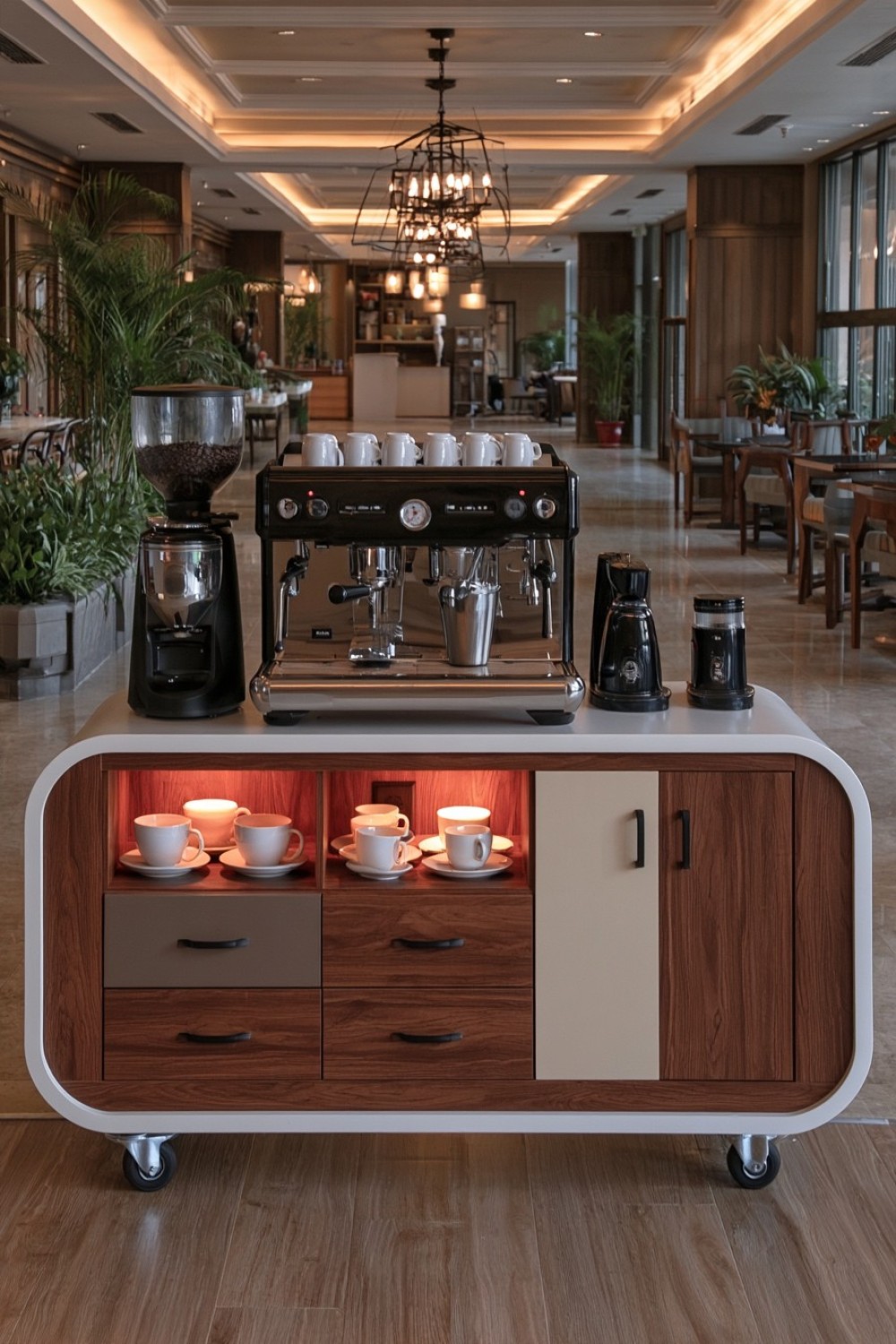
A corridor cart should be planned around the remaining passage, not only the available wall length. Measure the cart at its widest point with drawers, doors, handles, menu panels, and customers included. Building access, emergency routes, accessibility requirements, and property rules must remain satisfied. Obtain approval from the venue before assuming that an apparently empty hallway can be used for commercial service.
Arrange equipment in the sequence drinks are prepared, using length to compensate for limited depth. Shallow drawers can hold tools and flat supplies, while taller enclosed sections store cups and replacement stock. Avoid projecting shelves or wheels that could catch clothing and feet. Rounded end panels can reduce sharp corners but do not replace adequate circulation space. Power and water lines should not cross the public route. If connections cannot reach the cart without creating a trip hazard, choose a different location or service setup. Rehearse the queue with temporary floor markings to see whether waiting customers block nearby rooms or doors.
10. Create a Double Height Counter for Barista Work and Customer Pickup
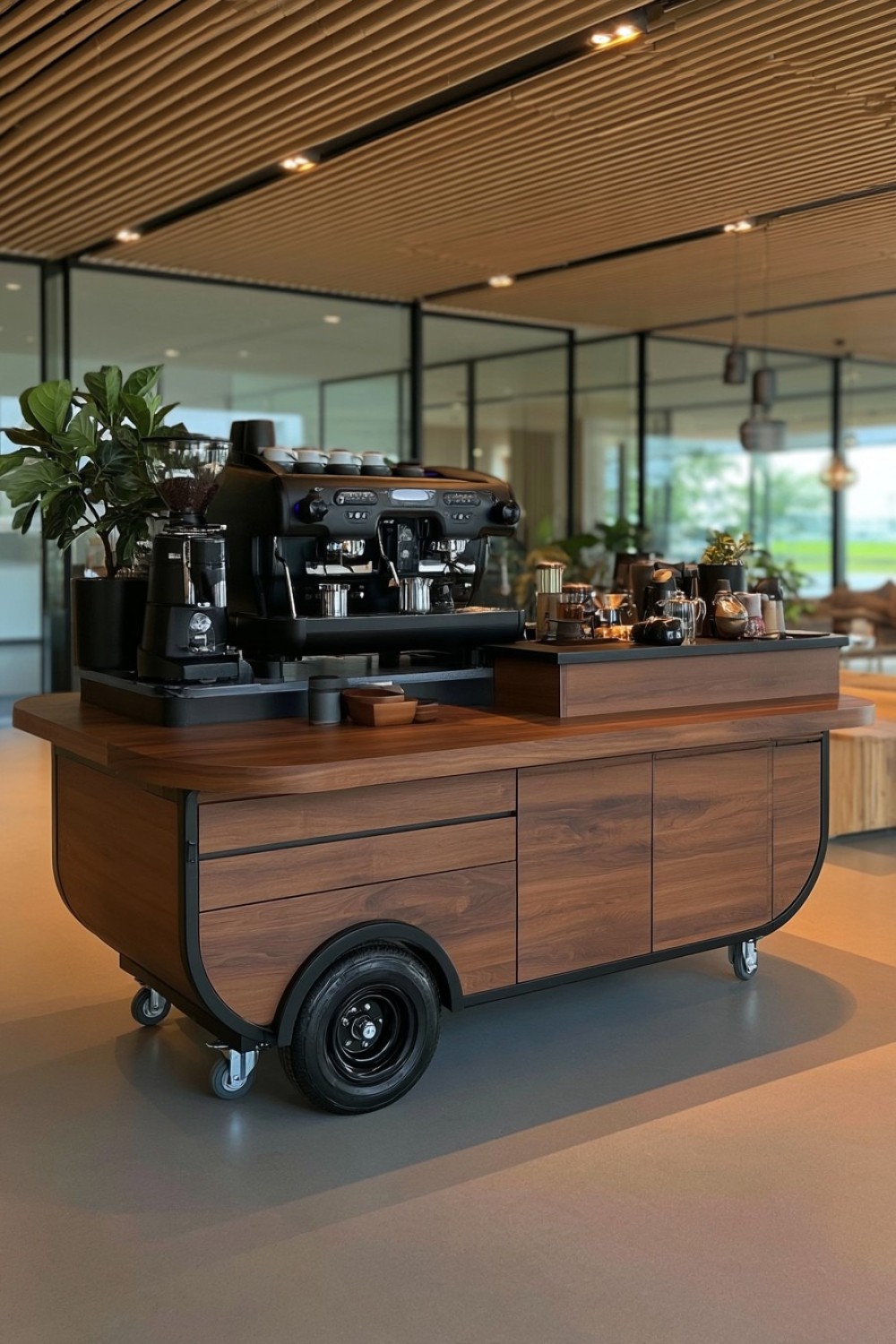
Two counter levels can separate drink preparation from customer pickup and conceal part of the working surface. Establish the barista’s practical work height using the people who will operate the cart and the equipment being installed. The espresso machine may already add considerable height, so evaluate portafilter movement, cup placement, and access to controls before raising any surrounding ledge.
The customer shelf should be deep enough to hold finished drinks securely without inviting customers to place bags or lean into the service zone. Consider how people with different reach requirements will collect an order and ensure the final design follows applicable accessibility rules. Keep a clear handover section rather than filling the entire ledge with menus and merchandise. Seal the joint between the two levels so spills cannot enter the structure. Use a durable worktop on the preparation side and a coordinated finish on the public ledge. Test whether the higher front affects communication, payment terminal visibility, or the barista’s view of the queue.
11. Build a Mobile Espresso Cart With Vertical Cup Storage
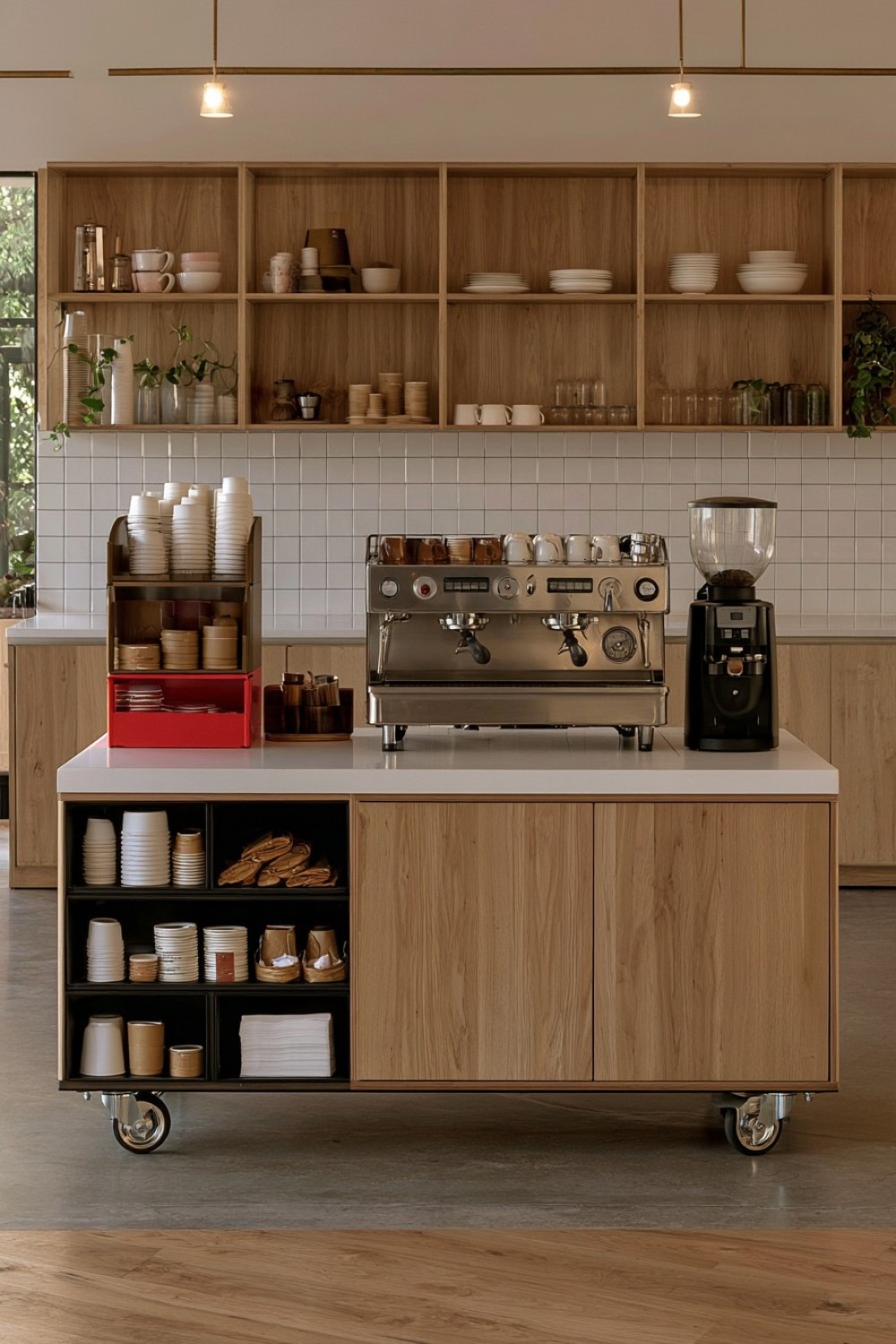
Vertical cup storage can release valuable worktop space when it remains stable, clean, and easy to refill. Count the cup sizes, lids, sleeves, and estimated service quantity before drawing the compartments. Cups should be reachable near the drink-finishing area without requiring the barista to stretch across hot equipment. Store only immediate service stock in the upper rack and keep bulk replacements in lower enclosed storage.
A tall storage tower changes the cart’s center of gravity, particularly when it is full. Keep heavy supplies low and have the structure evaluated for stability during movement. Add retainers so cups and lids cannot fall when the cart crosses thresholds. Enclosed or partially protected compartments may be more suitable than open racks in outdoor or dusty locations. Design each section so it can be wiped and inspected instead of creating narrow spaces that trap debris. Ensure the tower does not block customer sightlines, menu visibility, ventilation, or access to machine controls. Test it at the shortest and tallest expected staff reach.
12. Create a Foldable Coffee Cart for Pop Up Events
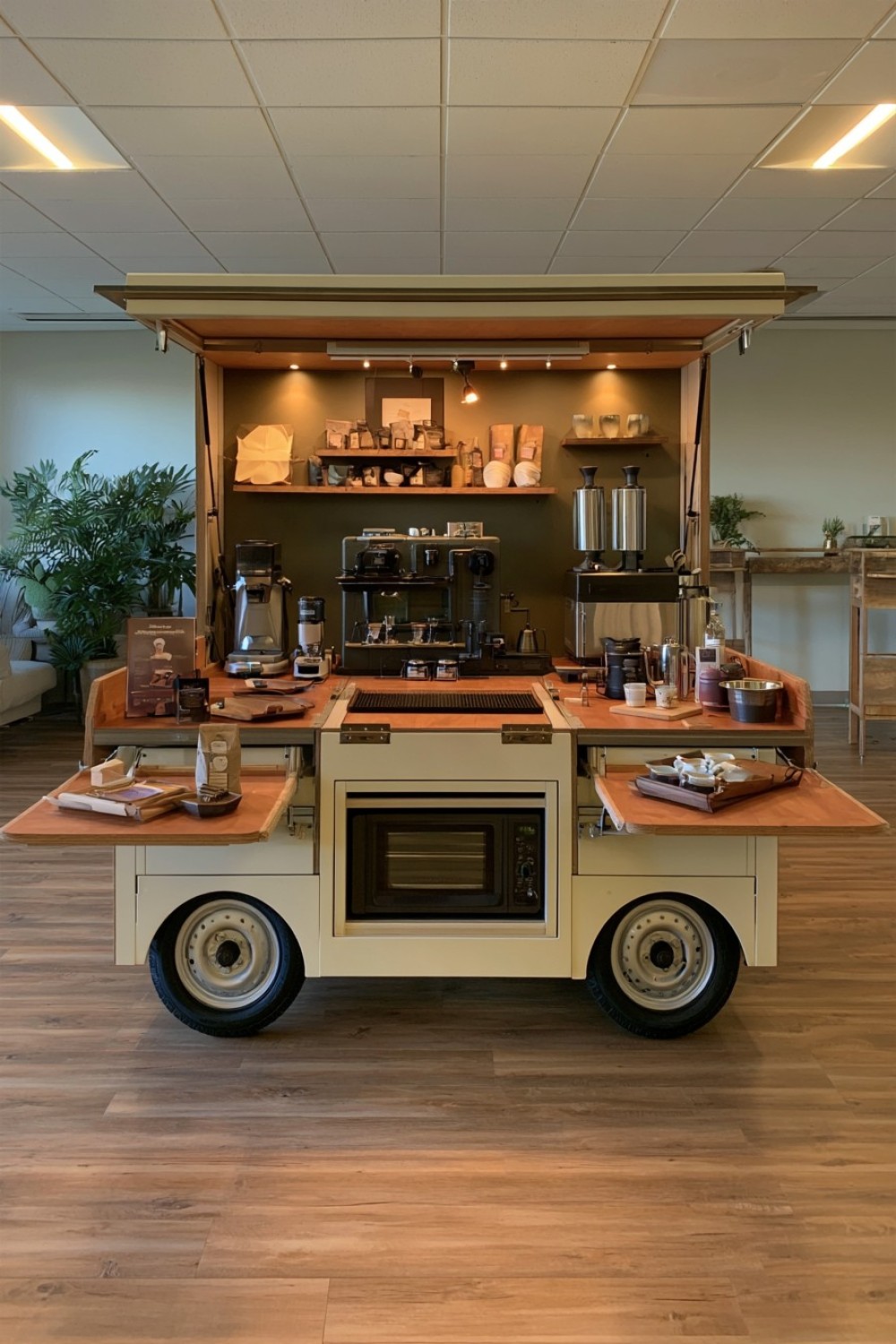
A folding cart should be designed from the transport process backward. Measure the vehicle opening, internal cargo space, venue doors, elevators, and storage area. Record the folded height, width, depth, and loaded weight instead of relying only on the cart’s open dimensions. Decide which equipment travels inside the cart and which pieces require separate protective cases.
Every moving panel needs a positive lock in both its service and transport positions. Hinges and supports should be rated for their expected loads, while fingers and cables must stay clear of folding joints. Add handles only after identifying safe pushing or lifting points. A lighter material can simplify transport, but it still needs enough rigidity for equipment and repeated assembly. Number or label removable parts so setup remains consistent. Perform a complete practice cycle: load the vehicle, unload, unfold, connect equipment, serve sample drinks, clean, refold, and reload. This exposes access problems more effectively than evaluating the finished appearance alone.
13. Design a Rounded Retro Coffee Cart With Two Tone Color
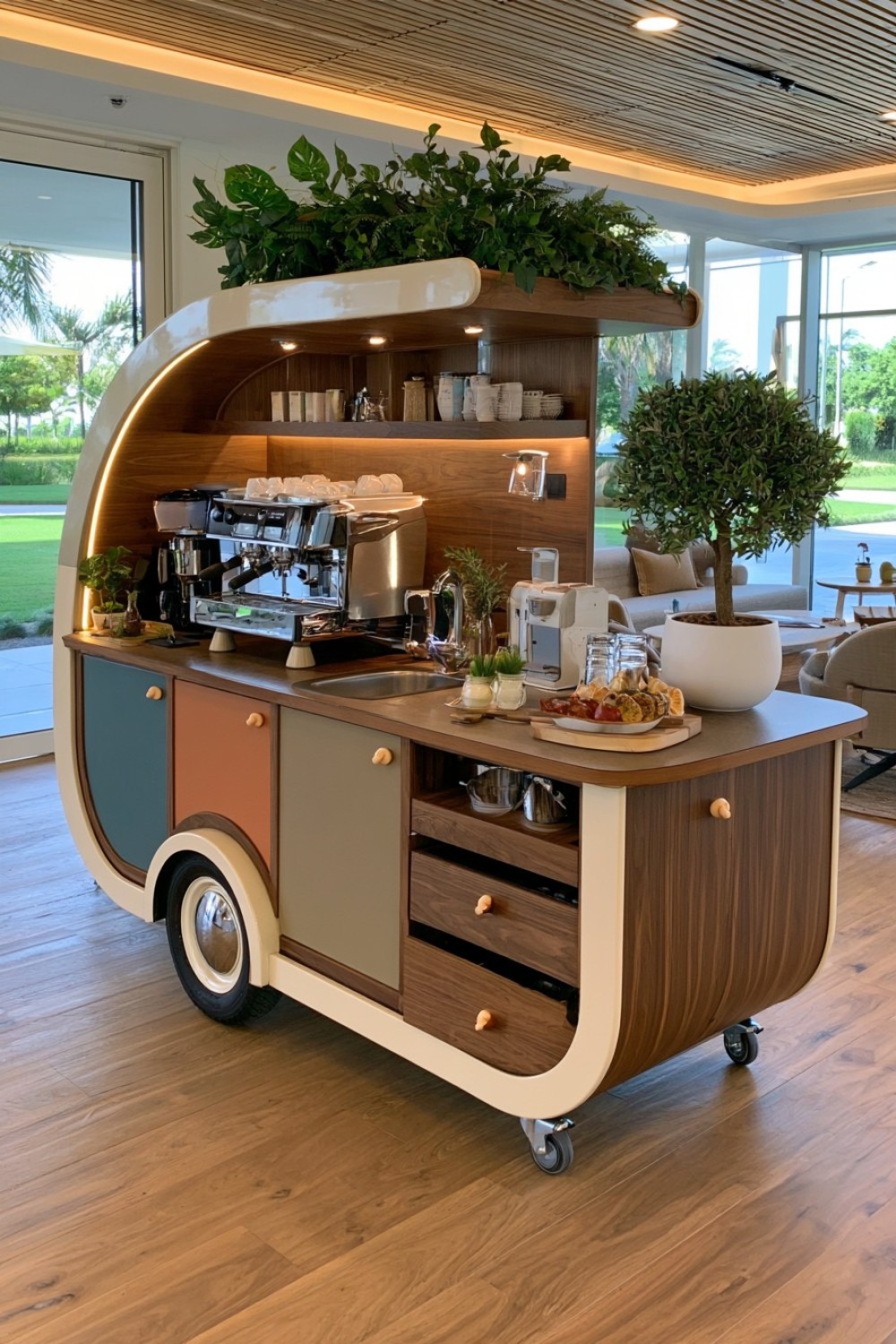
A retro cart can use rounded geometry and a controlled two-color palette while keeping the internal operation contemporary. Test combinations such as cream and muted teal, warm beige and terracotta, or dusty blue and walnut on physical samples. Venue lighting and surrounding colors can change their appearance, so evaluate the palette in conditions similar to actual events.
Curved cabinet components may cost more and reduce internal volume. Create a full-scale corner template to see how the radius affects drawers, bins, water containers, and equipment clearances. A raised worktop edge may restrain small objects during gentle movement, but loose equipment must still be secured before transport. Choose hardware that can be replaced if damaged rather than depending on rare decorative fittings. Keep the menu typography and packaging within the same visual family without covering every surface in themed details. The result should remain easy to clean, repair, and operate after the initial visual impression has passed.
14. Build a Mobile Coffee Cart With a Side Facing Menu Panel
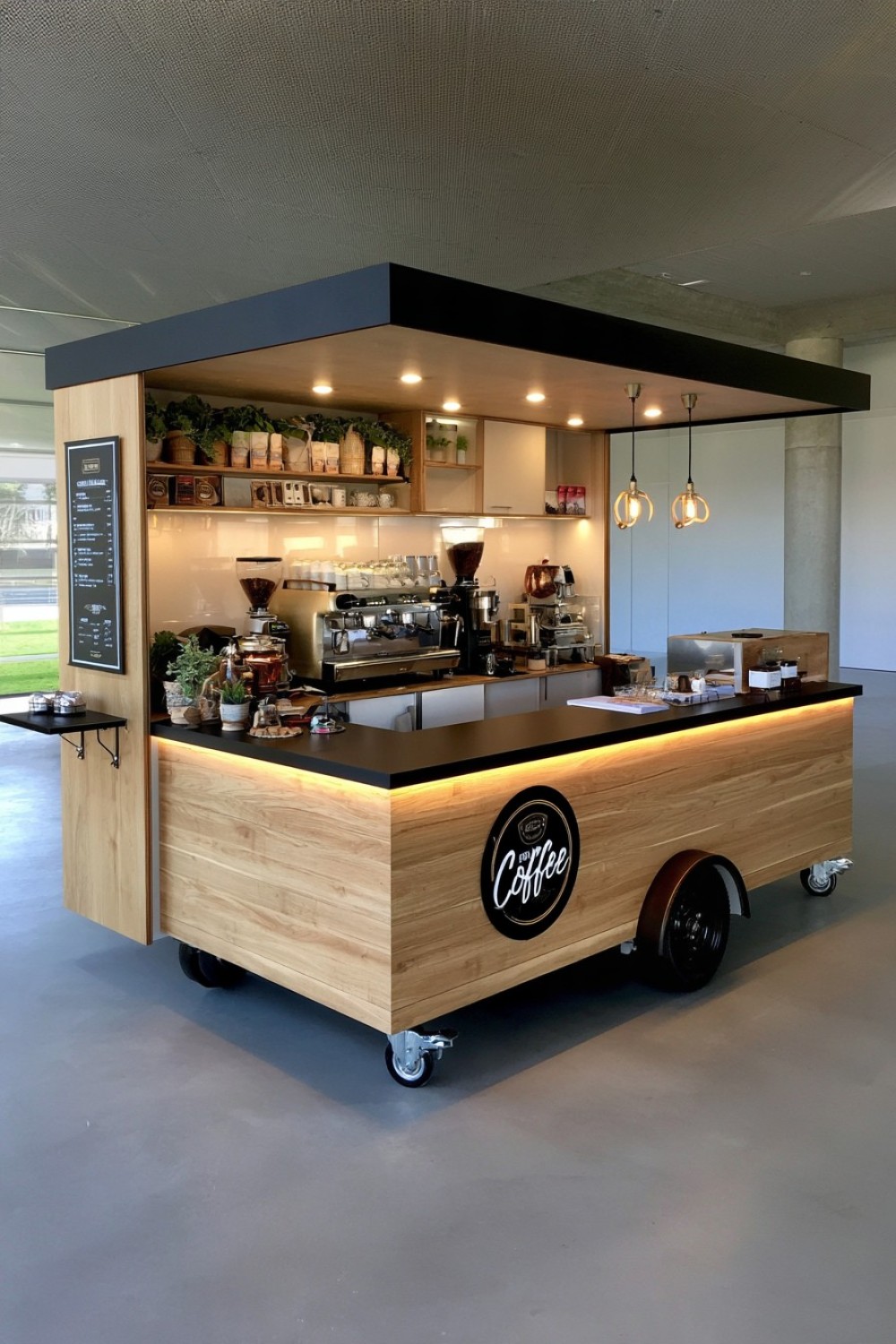
A side-facing menu lets customers make decisions before reaching the ordering point. Position it according to the queue direction rather than choosing a side only for symmetry. The text should remain readable from the normal approach distance, with clear prices and a limited hierarchy. Frequently changing items need an update method that does not require rebuilding the panel, such as replaceable inserts or a suitable writeable surface.
Include the menu panel when calculating the transport width and turning radius. A permanent projection can prevent the cart from passing through doors, while a removable panel needs secure fittings and a protected storage location. The panel should not block the barista’s view or create a sharp edge in the customer route. If illumination is included, route power within the cart and avoid loose cables. Test the menu in daylight and indoor lighting for reflection and contrast. Keep allergen and product information available in the form required for the business rather than assuming the decorative menu alone contains every necessary detail.
15. Create a Coffee Cart With a Dedicated Bean Retail Section
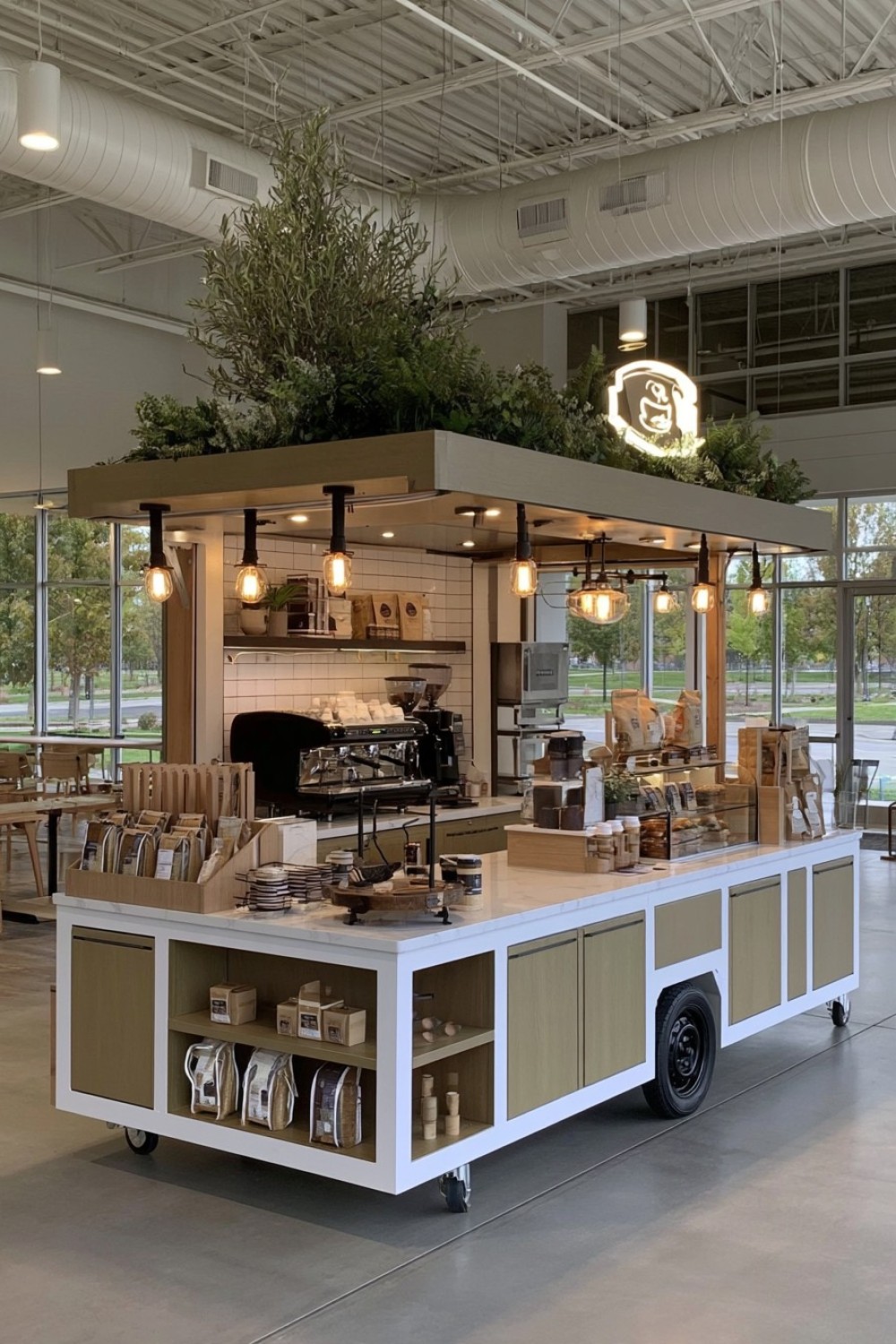
A bean retail section should make packaged products easy to browse without reducing the efficiency of drink service. Select the range first, then measure the actual bags in their filled condition. Flexible packaging can lean or spread beyond its listed dimensions, so test it inside a temporary divided shelf. Position retail products close to payment while keeping them outside areas exposed to splashes, steam, or customer handling of completed drinks.
Use dividers or front rails to keep bags upright during service and secure all products before moving the cart. Avoid storing excess inventory on an open display; replacement bags should remain protected in suitable lower storage. Rotate stock according to its labeling and maintain accurate product information. If several origins or roast types are offered, use short, readable descriptions rather than filling the cart with competing signs. The retail shelf should be removable for events focused only on drinks. This preserves worktop space and makes the cart adaptable without leaving an empty decorative compartment.
16. Design an Outdoor Ready Cart With Weather Resistant Surfaces
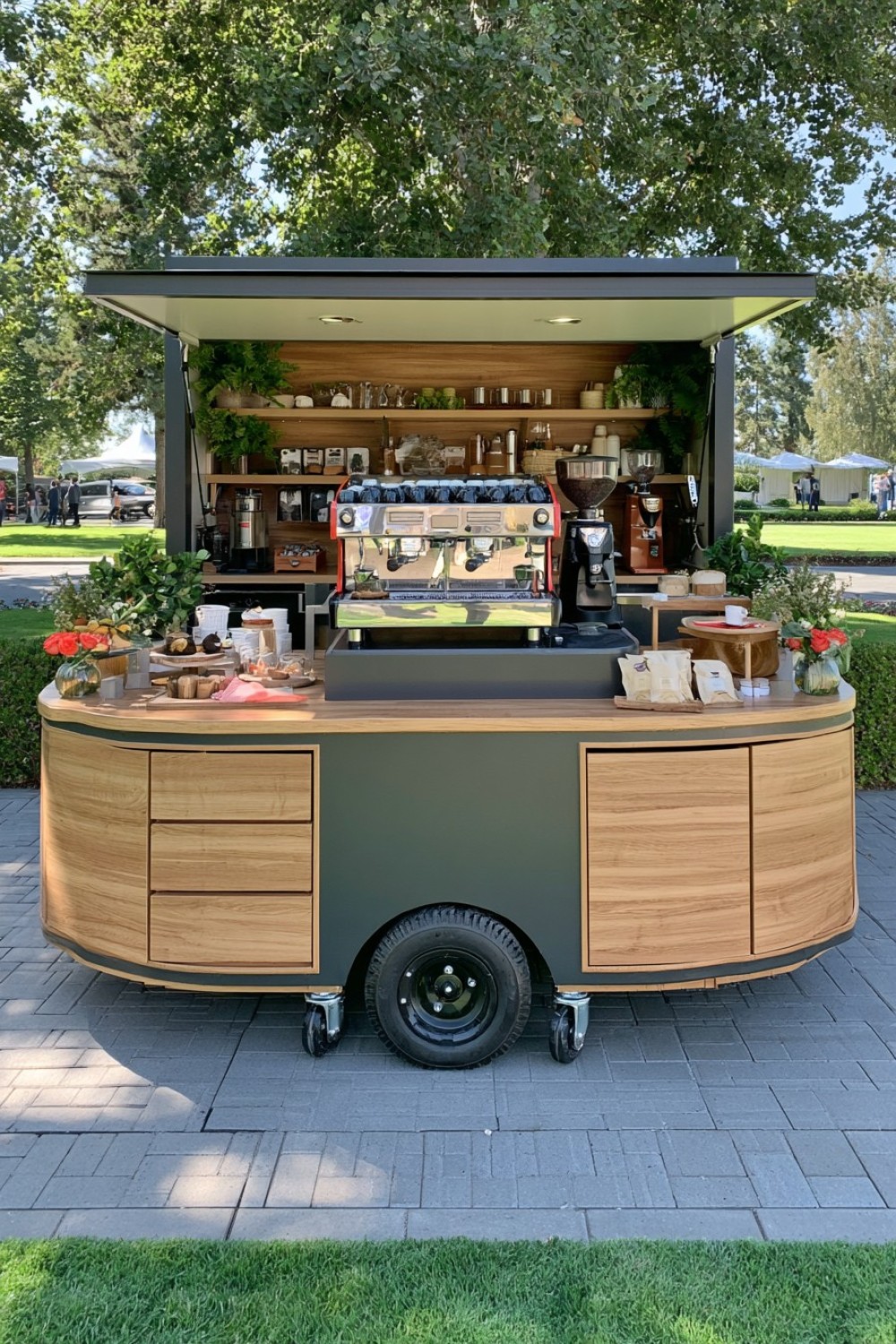
Outdoor operation requires a site and weather plan in addition to durable finishes. Determine the conditions in which service will stop, how equipment will be protected from rain and wind, and where the cart will be stored afterward. A weather-resistant exterior does not make indoor electrical appliances safe for unprotected outdoor use. Follow equipment instructions and the requirements of the venue and qualified electrical providers.
Choose sealed edges, corrosion-resistant fittings, stable worktops, and wheels suitable for the intended surface. Large casters may cross paving joints more easily, but the cart must still remain level and securely braked during service. Test the route while the cart is loaded because grass, slopes, gravel, and thresholds can change handling significantly. Keep cups, beans, packaging, and electrical connections in protected storage. Any canopy or sign must be secured appropriately and should not make the cart unstable in wind. Plan drainage and drying so trapped moisture does not remain inside cabinets after cleaning or unexpected weather.
17. Build a Modular Cart That Changes for Different Events
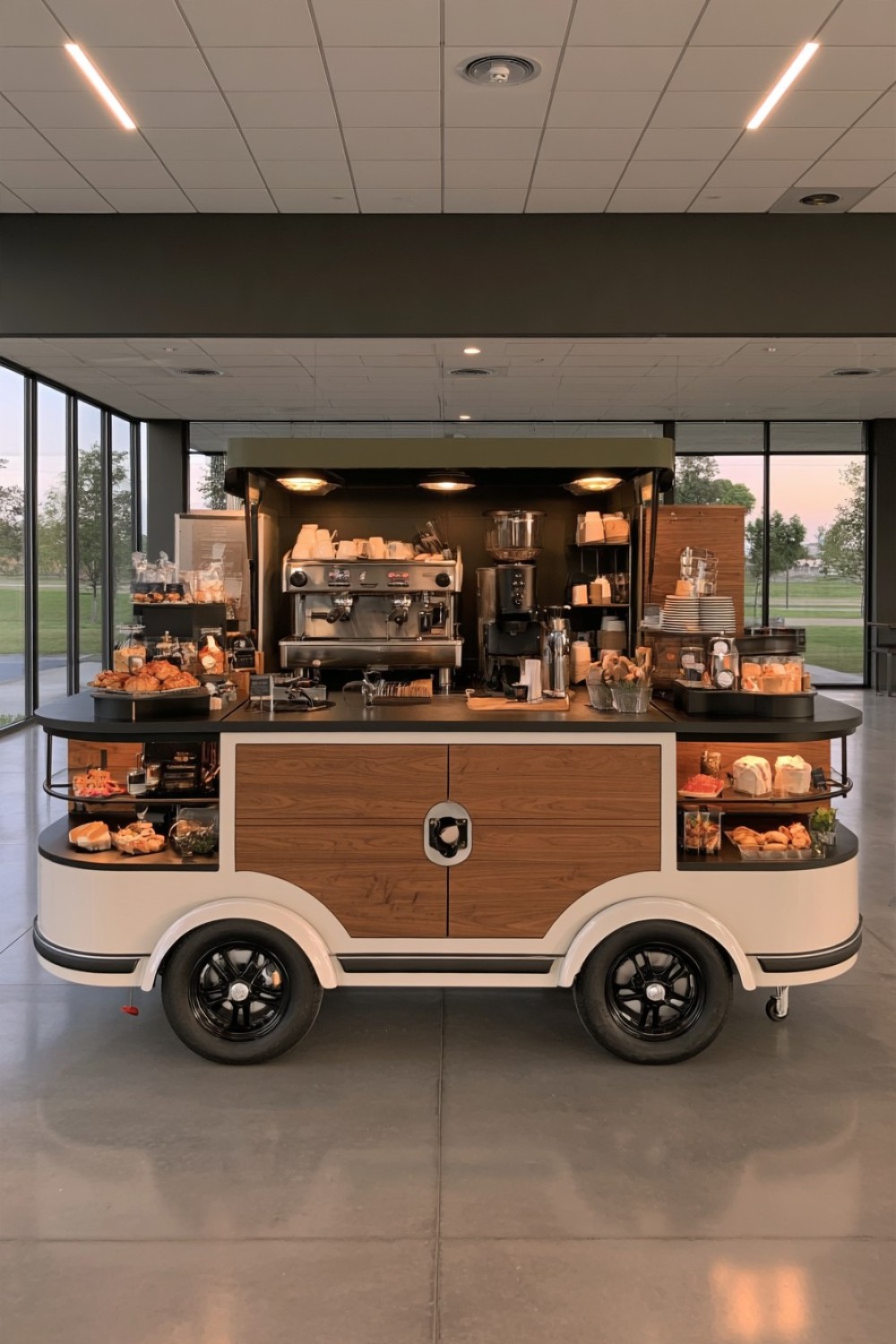
A modular cart can support different menus when the central unit contains everything required for basic service. Keep essential brewing equipment, water handling, waste storage, cleaning supplies, and payment functions in the main body. Add side modules for pastries, retail beans, extra cups, or customer pickup according to the event. This prevents the cart from depending on optional pieces for safe normal operation.
Standardize module height, depth, connection points, and finishes so new sections can be added later. Every attachment needs a secure mechanical connection and should remain stable when customers use the outer counter. Avoid relying on friction or decorative hooks for load-bearing parts. Record the loaded weight and transport dimensions of each configuration. Label connections and create a setup checklist so staff assemble modules consistently. Test every planned arrangement for access to drawers, brakes, cables, and cleaning points. Modular design provides real value when changing the layout takes little time and does not introduce new hazards or interrupt the established drink-making sequence.
MORE IDEAS


Share
What's Your Reaction?
 Like
0
Like
0
 Dislike
0
Dislike
0
 Love
0
Love
0
 Funny
0
Funny
0
 Angry
0
Angry
0
 Sad
0
Sad
0
 Wow
0
Wow
0