16 Old-Fashioned General Store Interior Ideas With Timeless Character

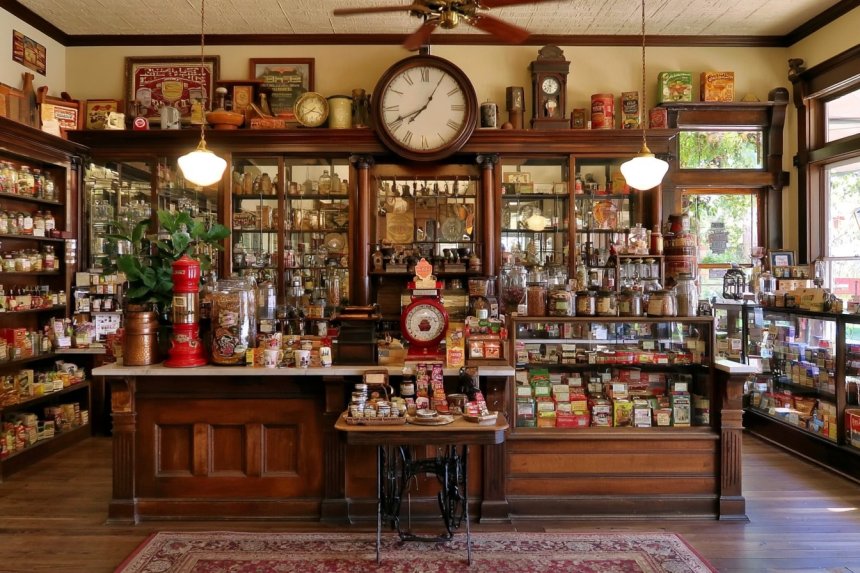
An old-fashioned general store interior should evoke history while still supporting modern retail operations. Warm timber, glass jars, labeled drawers, woven baskets, metal tins, and traditional counters can establish the character, but customer flow and product visibility must guide the layout. Shelving should remain stable, merchandise needs clear pricing, and aisles must accommodate local accessibility and fire-safety requirements. Food displays also require appropriate containers, hygiene procedures, and stock rotation. Rather than filling the shop with unrelated vintage props, use a consistent material palette and let practical fixtures create the atmosphere. These ideas combine nostalgic general store design with safer, more organized, and commercially useful merchandising.
1. Build a Floor-to-Ceiling Wooden Provision Wall
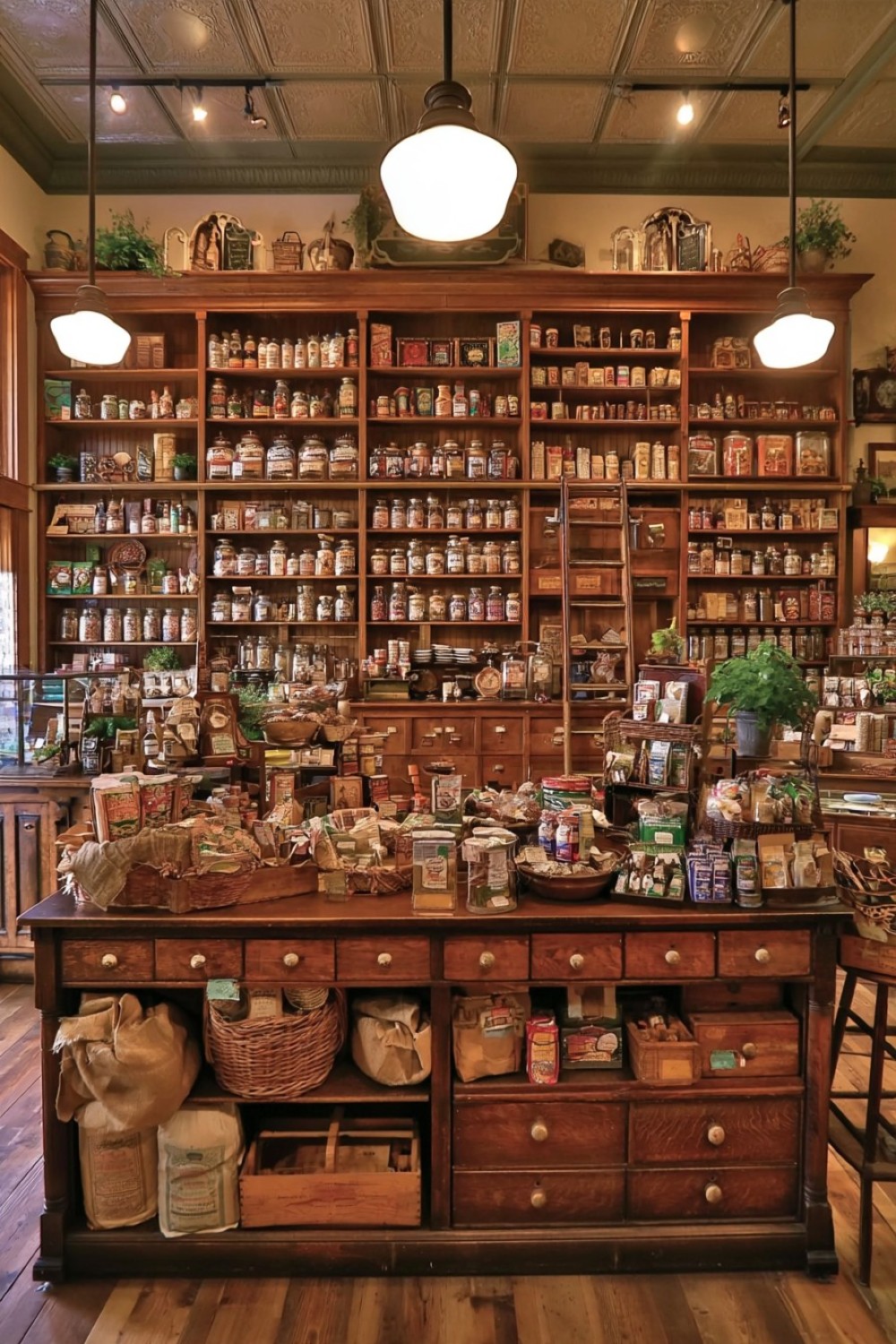
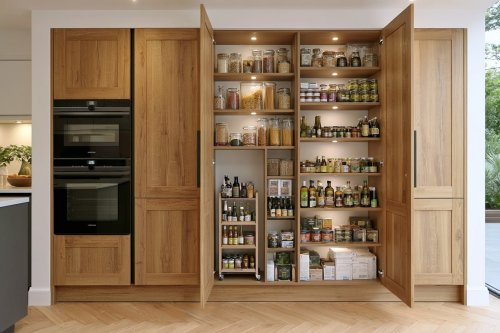
A tall provision wall can establish the store’s visual identity while keeping packaged goods organized. Divide it into adjustable shelves, labeled compartments, and a few closed cabinets for reserve stock. Place frequently purchased products between waist and eye level, with lighter decorative items above and heavier merchandise below. Repeating shelf widths and label styles creates order even when the products vary in color and shape.
The structure must be properly anchored and rated for the expected load. Tall ladders should not be left available for customer use, and staff access to upper storage needs a safe procedure. Maintain required clearance around sprinklers, alarms, ventilation, and electrical equipment. Deep shelves can hide stock and make rotation difficult, so choose a depth suited to the packages being displayed rather than maximizing capacity at every level.
2. Create an Apothecary Drawer Counter for Small Goods
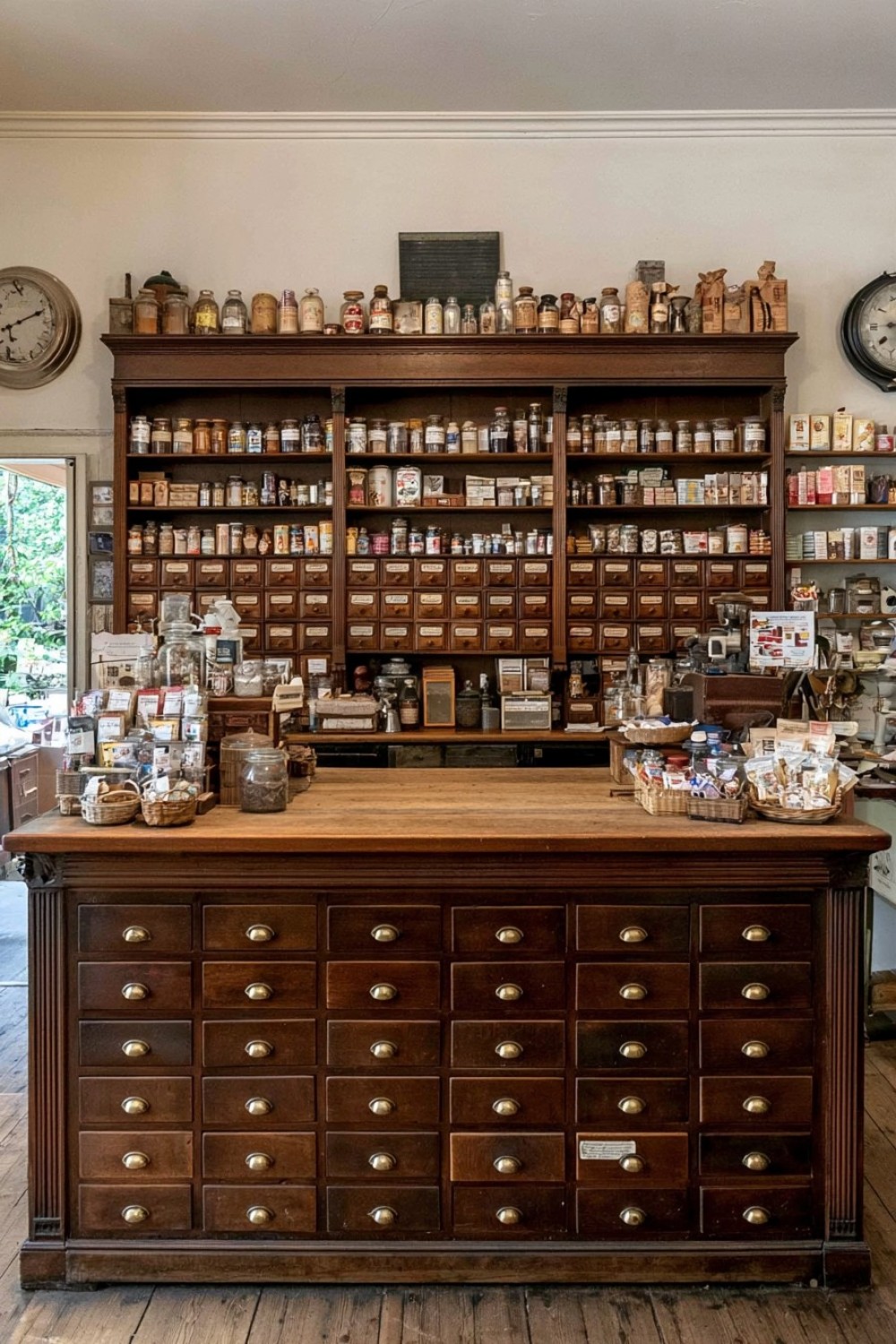
An apothecary-style counter can organize tea, stationery, hardware, craft supplies, or other compact products while reinforcing the traditional atmosphere. Use label holders on each drawer and develop a consistent naming system so staff can locate stock quickly. A durable countertop can serve as a wrapping or consultation surface, while selected sample products remain visible in shallow trays above.
Numerous drawers are only useful when their contents are inventoried accurately. Fit stops that prevent drawers from being pulled out accidentally and check that handles do not project into customer walkways. Food, cosmetics, and other regulated products should remain in suitable packaging rather than being stored loosely in decorative drawers. Provide an accessible counter section if customers are expected to complete transactions or consultations at the fixture.
3. Design a Central Dry-Goods Table With Wooden Crates
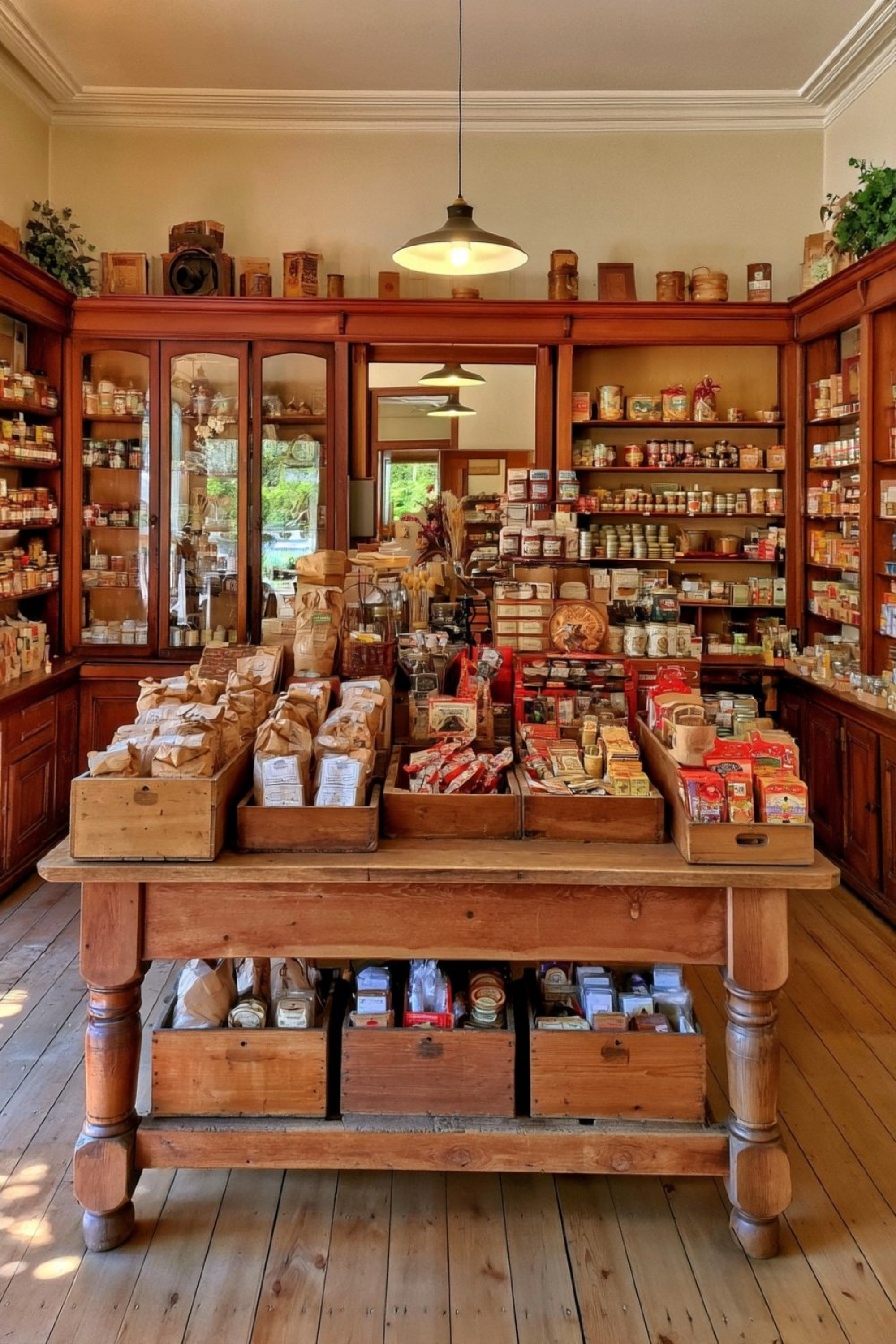
A central table encourages customers to circulate around seasonal products, packaged foods, or household goods. Use wooden crates to create two or three levels so smaller products are not hidden behind larger packages. Keep the tallest elements near the center and lower merchandise around the edges to preserve sightlines. The display should communicate one clear theme rather than combining unrelated excess stock.
Measure the surrounding aisles before selecting the table and allow adequate turning space according to local accessibility requirements. Crates should be clean, smooth, stable, and intended for retail use rather than taken directly from agricultural storage. Do not create unstable stacks or allow merchandise to project over the table edge. A modular arrangement makes it easier to reduce the display when customer traffic increases.
4. Use Glass Jars for a Traditional Pantry Display
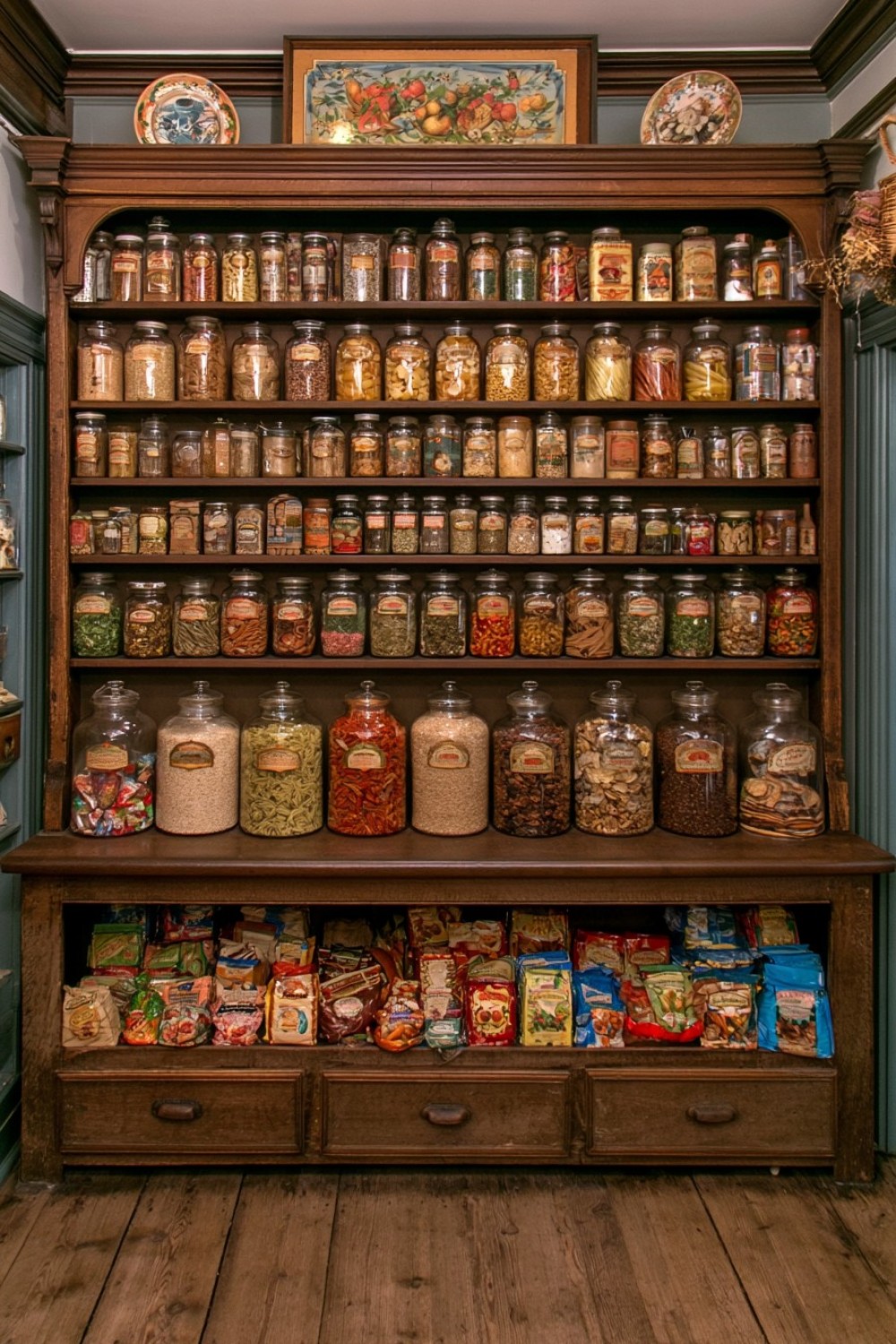
Rows of glass jars can provide color and repetition while making dry products easy to identify. Use matching containers with clearly printed labels and arrange them by product family. Frequently handled jars belong on lower, accessible shelves, while decorative or reserve containers can sit higher. Leaving space between groups prevents the display from appearing like an overcrowded storeroom.
Products sold by weight must follow applicable food-handling, allergen, labeling, and measurement regulations. Containers require airtight lids, scheduled cleaning, traceable stock information, and separate utensils where customers or staff dispense food. Keep glass away from shelf edges and high-traffic corners. Where breakage presents an unacceptable risk, food-safe transparent containers can create a similar appearance with easier handling.
5. Create a Traditional Fabric and Ribbon Corner
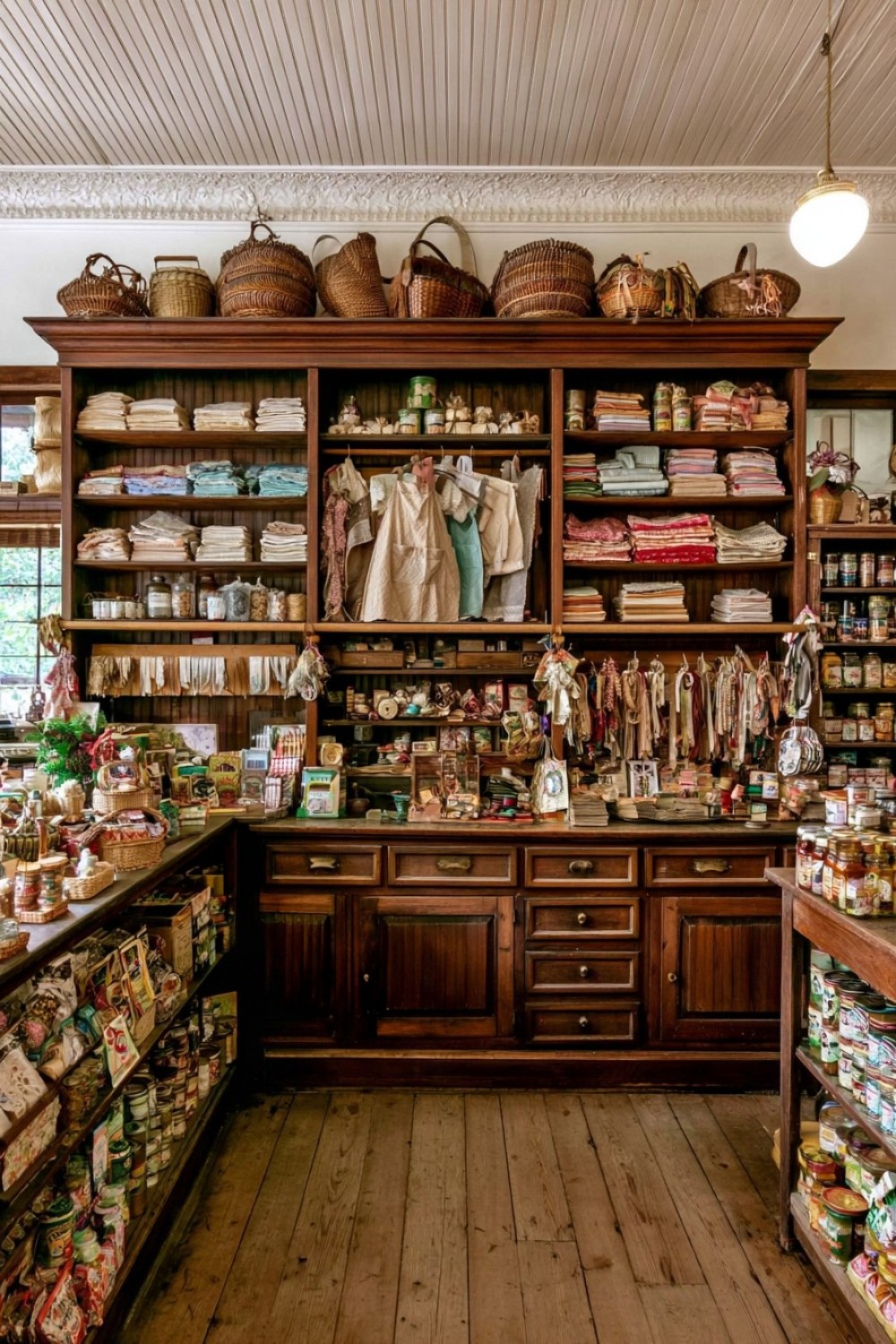
A fabric and ribbon corner can introduce pattern without changing the store’s permanent finishes. Store folded fabric on open shelves and organize ribbon spools by color, material, or width. A small cutting counter with concealed drawers keeps measuring tools and packaging supplies nearby. Displaying a limited seasonal palette at the front helps customers understand current combinations without searching through every option.
Protect textiles from dust, fading, moisture, and direct contact with the floor. Heavy fabric rolls require strong horizontal supports and should not be stacked where they could fall. Cutting equipment belongs behind the service counter or in staff-controlled storage. Pricing should explain whether products are sold by length, roll, or piece, and measuring tools used for transactions may require compliance with local commercial regulations.
6. Build a Long Wooden Checkout Counter With Display Compartments
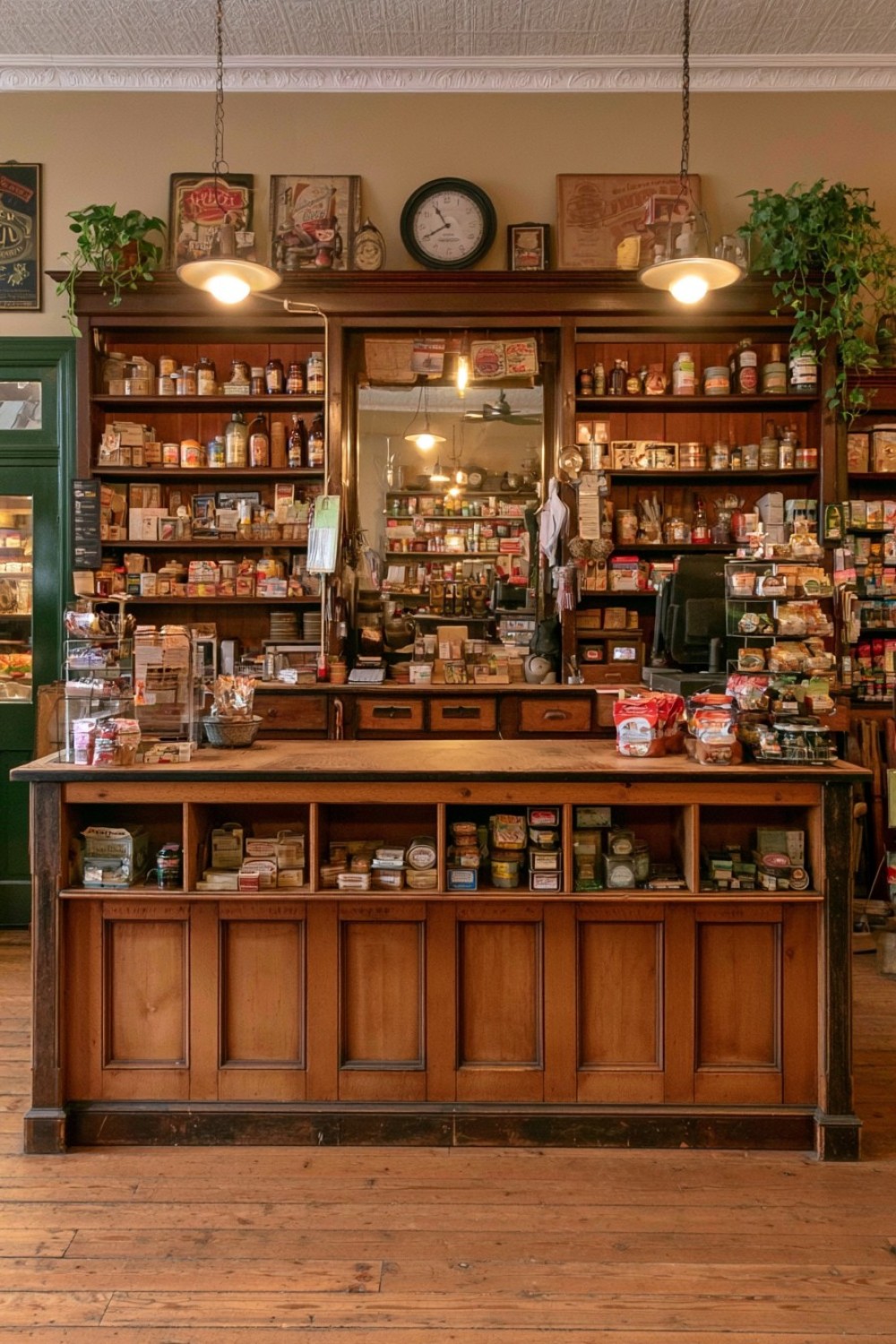
A substantial timber checkout counter can anchor the store and conceal modern equipment within a traditional form. Integrate compartments for bags, wrapping paper, receipt rolls, and frequently used supplies. Customer-facing cubbies may hold a small selection of impulse products, but they should not make the transaction area look cluttered. Route cables discreetly while keeping devices accessible for maintenance.
Plan the counter around staff ergonomics, queuing space, payment security, and an accessible service section. Staff should be able to move between the register, packaging area, and storage without repeated twisting or lifting. Keep exits and main aisles clear even when a queue forms. Timber surfaces need a durable commercial finish that tolerates cleaning, spills, and constant contact without becoming excessively slippery or easily damaged.
7. Arrange Vintage-Style Metal Tins as a Controlled Display
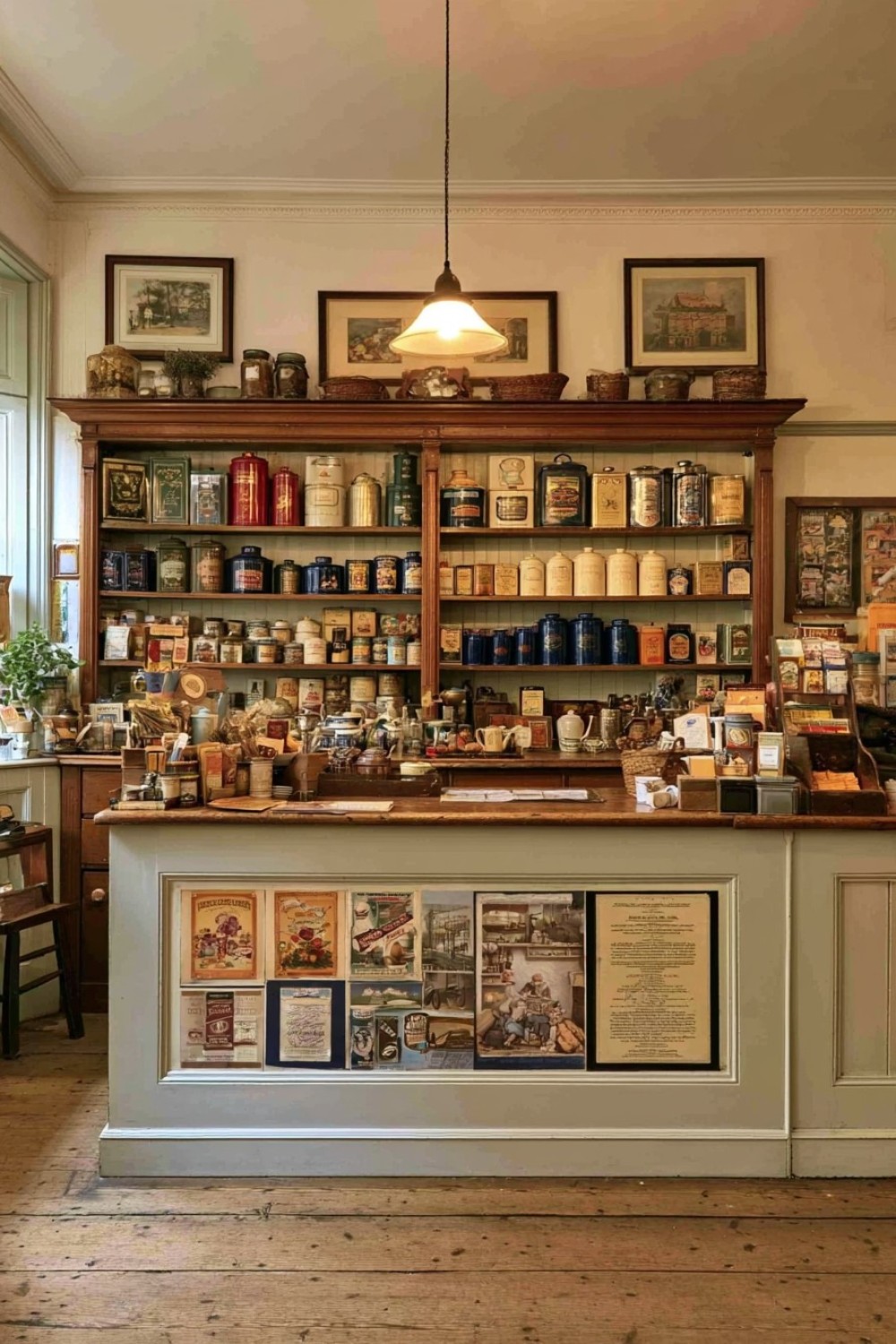
Metal tins and boxes can introduce color, typography, and historic character to a general store wall. Arrange them in repeated rows or grouped color families instead of scattering them throughout the shop. Mix merchandise with a limited number of decorative containers so customers can distinguish products for sale from display props. Plain timber shelving gives detailed packaging a calmer background.
Inspect genuine vintage tins for sharp edges, corrosion, unstable lids, and old residues. They should not hold unpackaged food unless their material and condition meet current food-safety requirements. Place valuable or fragile examples beyond casual handling and secure items on high shelves. Reproduction tins may provide a cleaner, safer option while allowing the store to maintain consistent branding and replenishment.
8. Create a Produce Corner With Slanted Wooden Bins
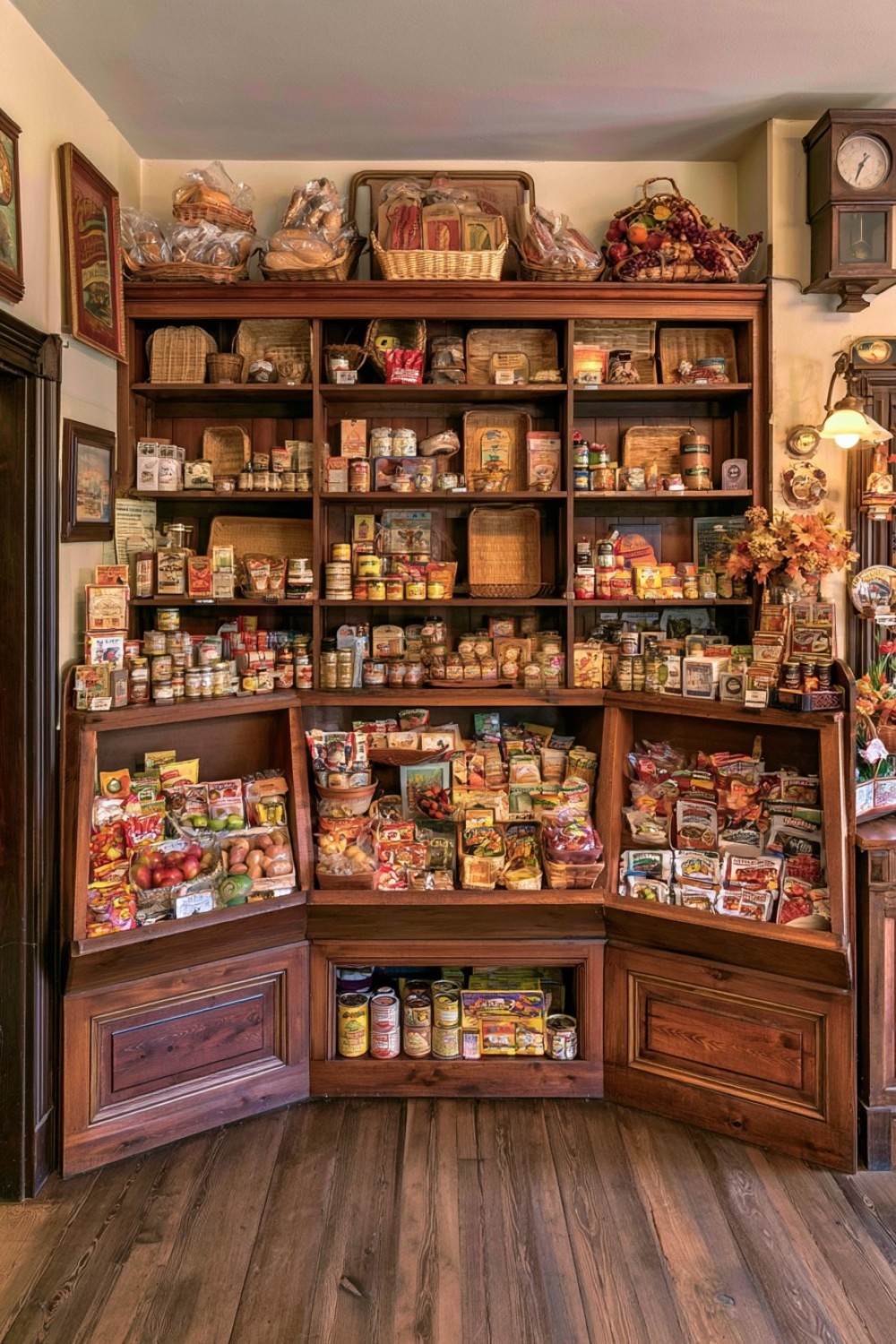
Slanted bins make fruit and vegetables visible while creating the abundant appearance associated with traditional markets. Divide the fixture into manageable sections and place heavier produce on the lower levels. Removable food-safe liners or trays can protect the timber and simplify cleaning. Clear product names, origins, prices, and any required labeling should remain readable without covering the produce.
The angle must not allow round items to roll onto the floor, and retaining edges should remain smooth and easy to clean. Follow appropriate temperature, hygiene, pest-control, and stock-rotation procedures. Avoid piling delicate produce deeply merely to make the display appear full. Regularly remove damaged items and clean spills promptly, since decorative timber cannot compensate for poor food handling or maintenance.
9. Design a Country Store Wall With Open Plate Racks
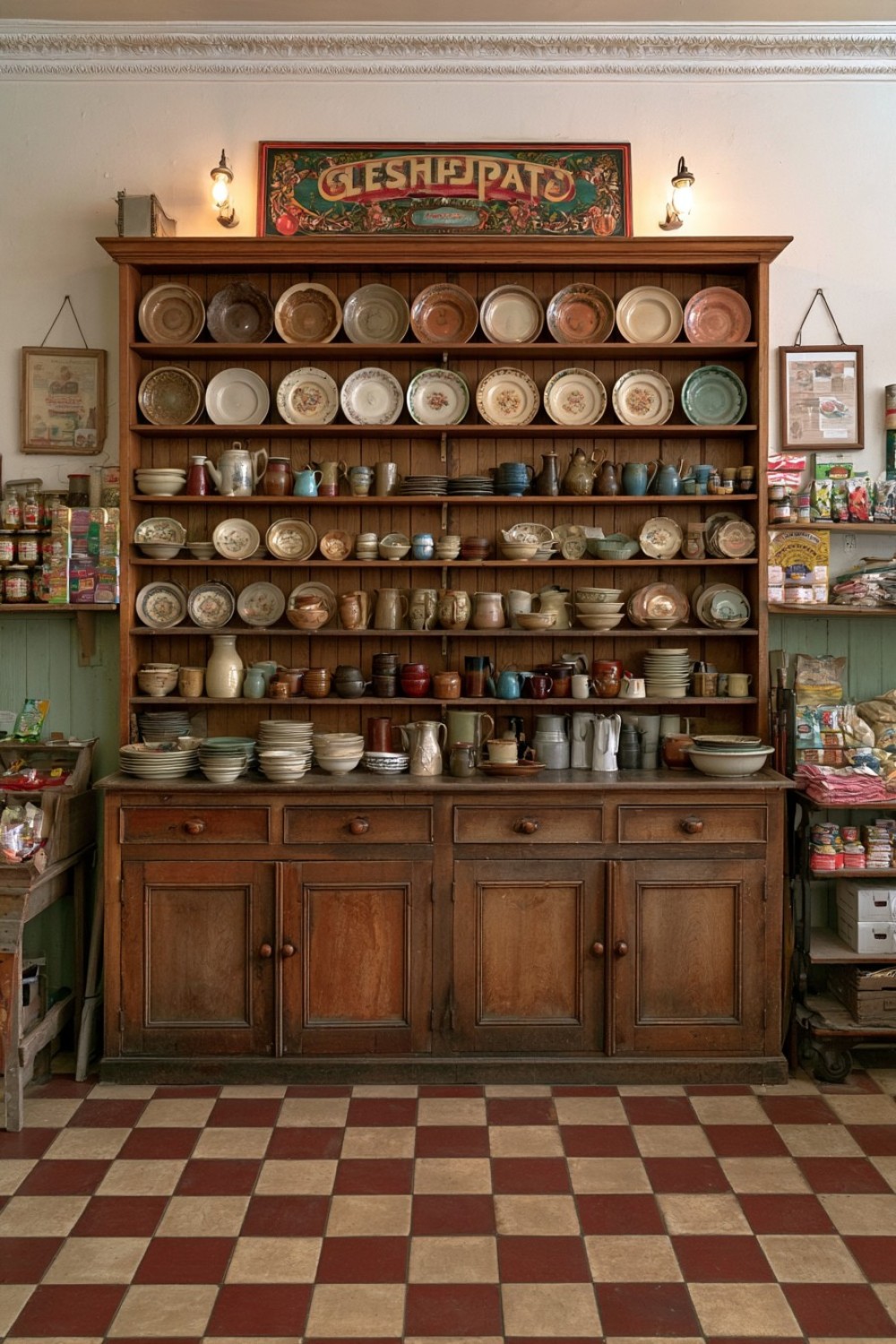
Open plate racks can display ceramics vertically, making patterns visible without requiring deep shelving. Organize collections by color or style and leave open space between groups. Lower shelves may hold bowls or serving pieces, while narrow grooves support individual plates above. A painted backing can create contrast and connect the display with the store’s overall color palette.
Measure plate diameters, thicknesses, and weights before building the rack. Each groove or retaining rail must prevent merchandise from sliding forward. Avoid placing fragile items above customer seating, checkout queues, or children’s product areas. Staff should be able to reach and replenish the display safely. Stable product samples can be placed at an accessible height so customers do not need to remove items from high shelves.
10. Organize an Old-Style Household Supply Section
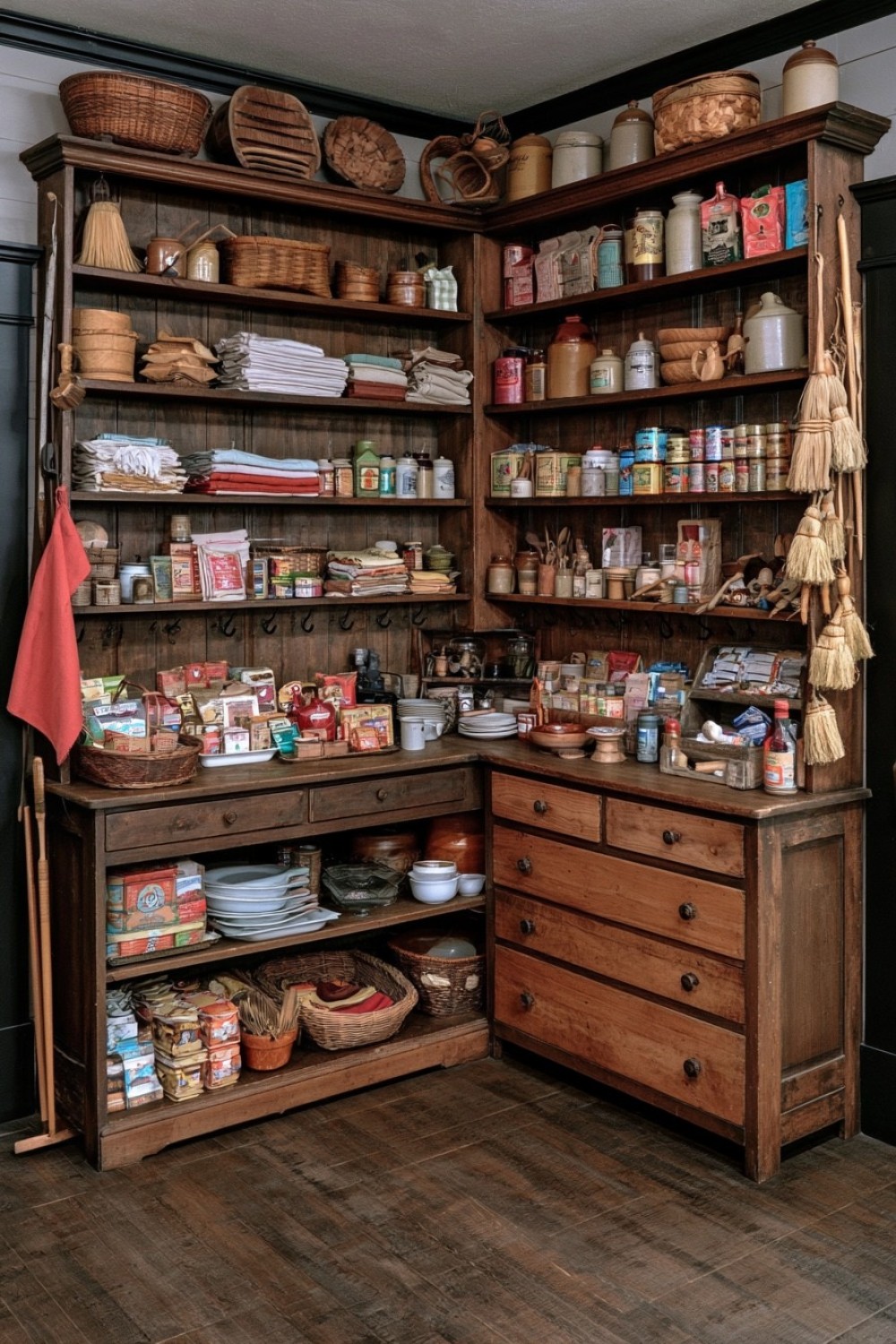
A household section can combine brushes, cleaning cloths, enamelware, wooden utensils, and practical storage products. Arrange merchandise by task rather than material so customers can quickly understand where to find related items. Peg rails, shallow shelves, and labeled drawers provide traditional character while keeping products visible. Leave enough empty space for packaging and prices to be read clearly.
Cleaning chemicals, sharp tools, matches, and other controlled products require storage and labeling appropriate to local regulations. Do not decant modern products into unlabeled vintage containers for appearance. Hooks must be secured and positioned so merchandise does not extend into the aisle or fall when one item is removed. Keep heavy cast iron and glass products on stable lower shelving.
11. Develop a Barrel and Basket Merchandising Zone
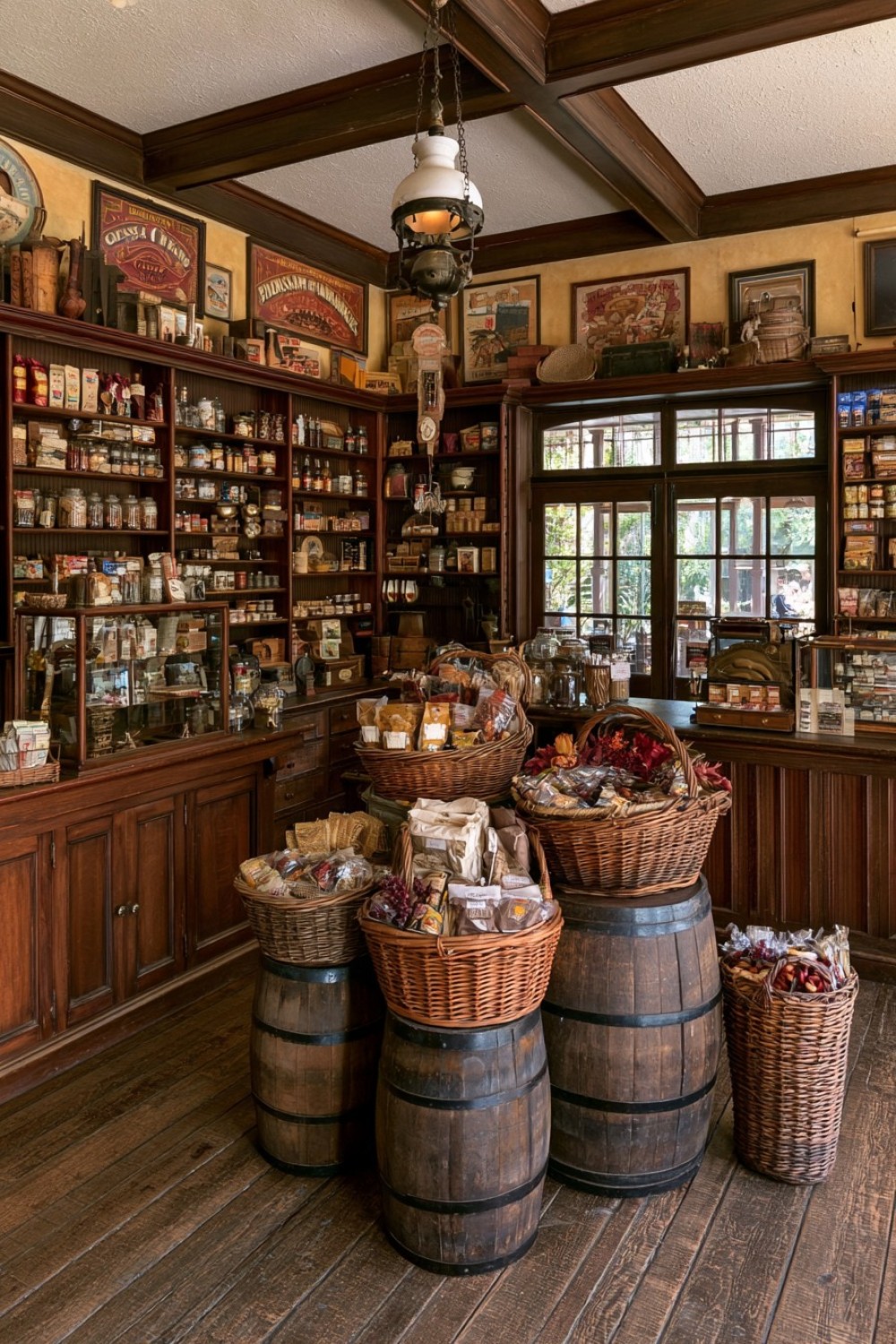
Barrels and woven baskets introduce curved shapes among straight shelving and counters. Use a barrel as a stable display pedestal and baskets for packaged bread, textiles, or lightweight goods. Varying the heights can improve product visibility, but the grouping should remain compact enough to preserve customer circulation. Repeat similar materials elsewhere so the feature relates to the broader interior.
Barrels must have stable bases and should not roll, rock, or contain sharp metal bands. Natural baskets require regular inspection for broken fibers that may snag customers or packaging. Unwrapped food needs food-safe containers and appropriate hygiene controls rather than direct contact with decorative baskets. Keep merchandise below a safe stacking height and ensure that no container narrows an accessible aisle.
12. Build a Narrow Candy and Confectionery Counter
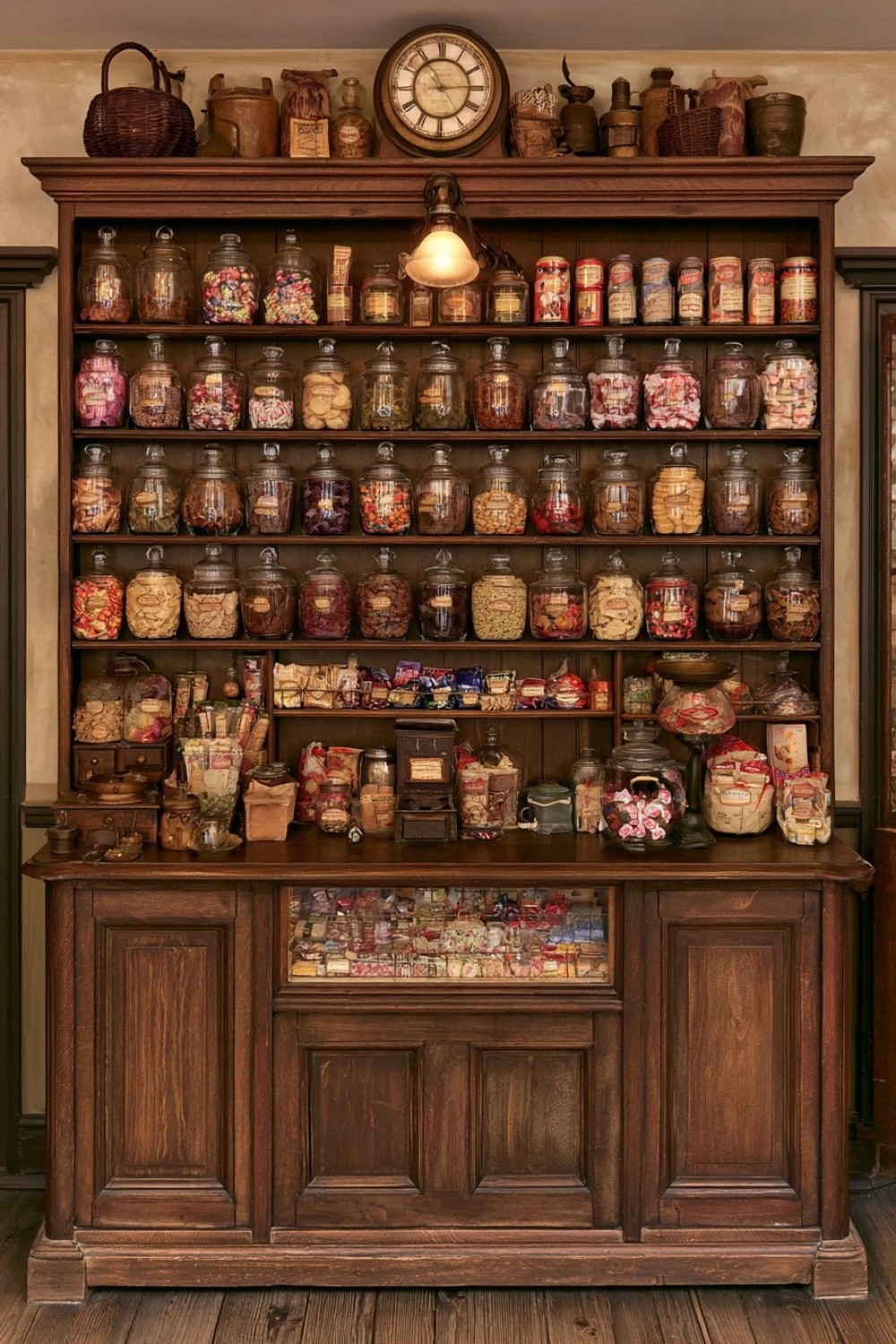
A narrow confectionery counter can create a colorful destination without occupying a large portion of the shop. Use tiered shelves, lidded containers, and divided trays so individual products remain visible. Organize sweets by type or packaging color, and reserve the counter’s most accessible area for best-selling products. Clear pricing reduces handling and helps customers make decisions quickly.
All unpackaged products require appropriate allergen information, utensils, containers, and contamination controls. Place delicate glass jars where staff can supervise them, or use durable food-safe alternatives. Consider the reach of children when arranging small objects and fragile containers. Maintain stock rotation and protect products from heat, direct light, pests, and excessive customer contact.
13. Use High-Level Storage With Woven Baskets
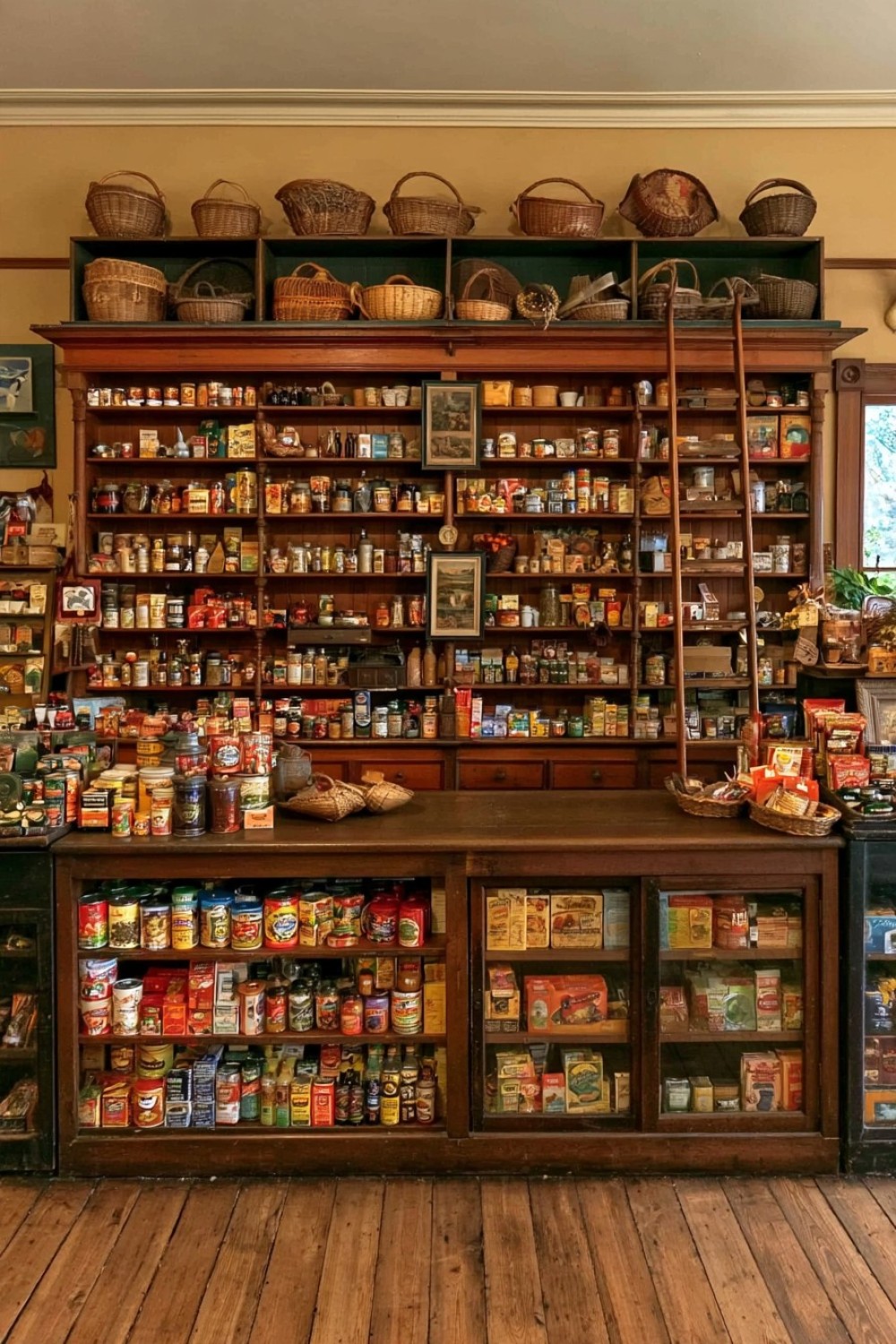
High shelving can hold lightweight reserve stock or empty display baskets while drawing attention to the room’s height. Use baskets of related size and color so the upper level appears organized. Discreet labels help staff identify contents without repeatedly removing containers. Keep active stock at reachable levels and treat high storage as secondary rather than essential to daily operations.
Never place heavy, fragile, liquid, or frequently handled products overhead. Shelves must be anchored and installed within relevant commercial and fire-safety requirements. Staff should use approved access equipment rather than chairs or decorative ladders. Maintain clearance around sprinklers, detectors, lighting, and ventilation. Inspect baskets for dust and damage because neglected high-level storage can undermine the otherwise curated appearance.
14. Design the Front Window as a Miniature General Store Scene
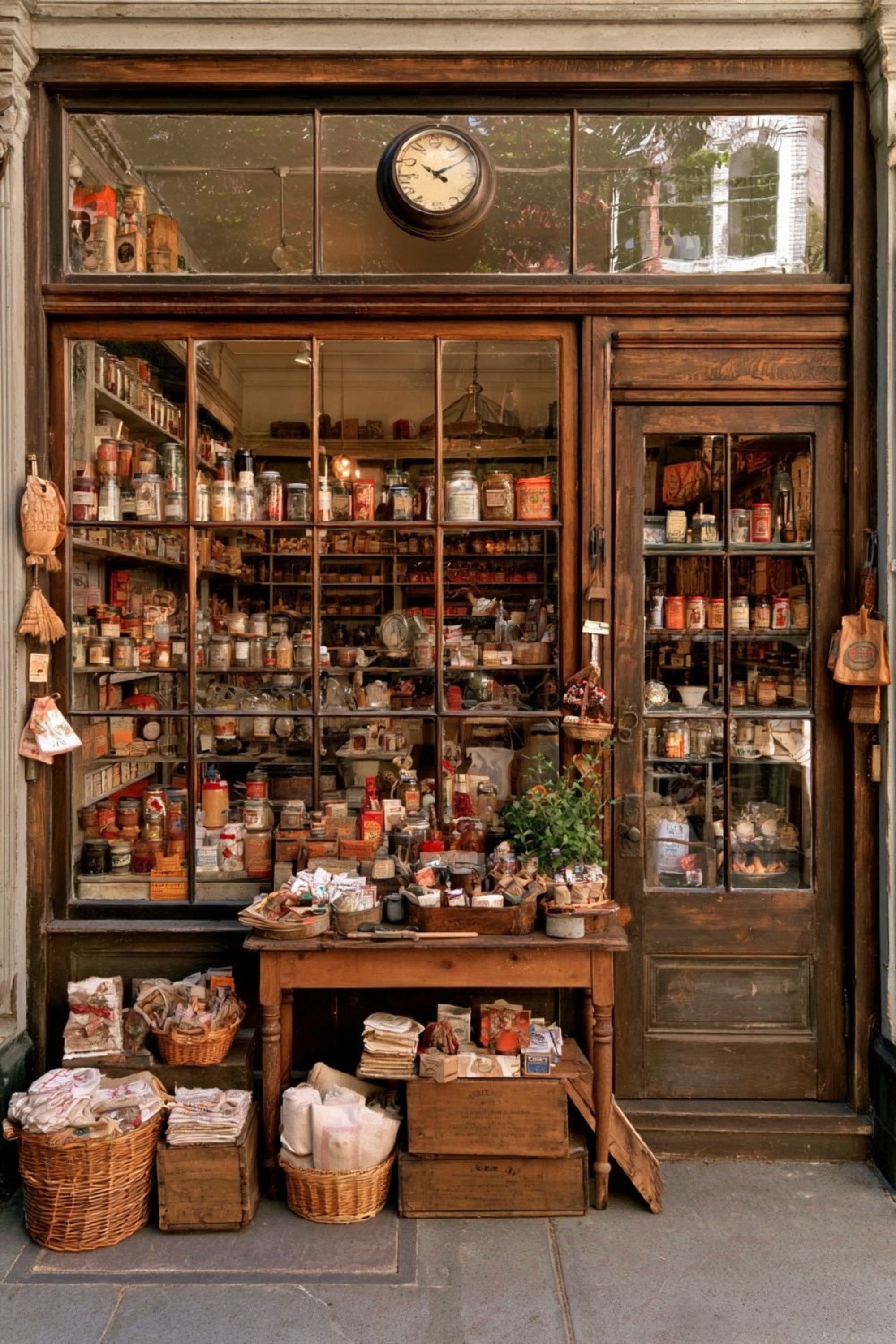
A miniature shop scene can introduce the store’s identity before customers enter. Build the display around one seasonal story using a small counter, stacked packages, baskets, or a limited product collection. Vary object heights and leave negative space so the arrangement remains legible from outside. The featured merchandise should also be available and easy to locate inside the store.
Protect products from fading and heat caused by prolonged light exposure. Fixtures must remain stable, and nothing should rest insecurely against the glass. Preserve visibility where security, accessibility, or local regulations require a clear view through the storefront. Include simple pricing or a concise promotional message rather than filling the glass with multiple signs that compete with the display.
15. Create a Back Counter With Drawers and Open Cubby Storage
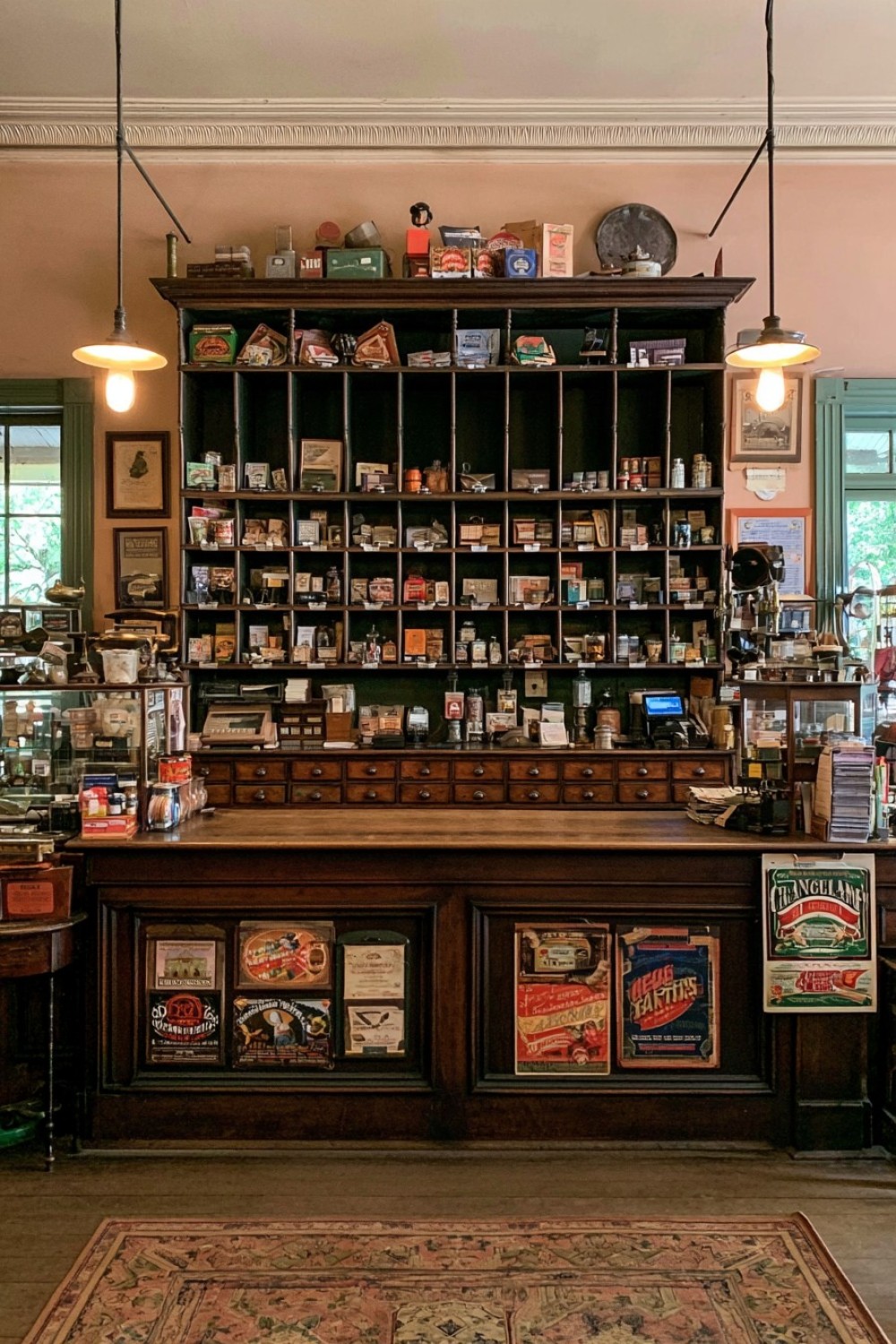
A back counter can combine visible merchandising with staff storage and transaction support. Use open cubbies for attractive packaged products and labeled drawers for supplies that would otherwise create visual clutter. Aligning the counter with the main checkout area gives staff quick access to bags, receipts, reserve stock, and customer orders. Integrated lighting can improve visibility within deeper compartments.
Keep cash, personal belongings, documents, and high-value merchandise in secure storage rather than decorative open drawers. Electrical and data cables should be managed safely and remain accessible for servicing. The worktop height and depth need to support comfortable staff use. Drawers must not open into circulation paths, and heavy stock should remain within a safe lifting range.
16. Build the Interior Around Timber and Warm Cream
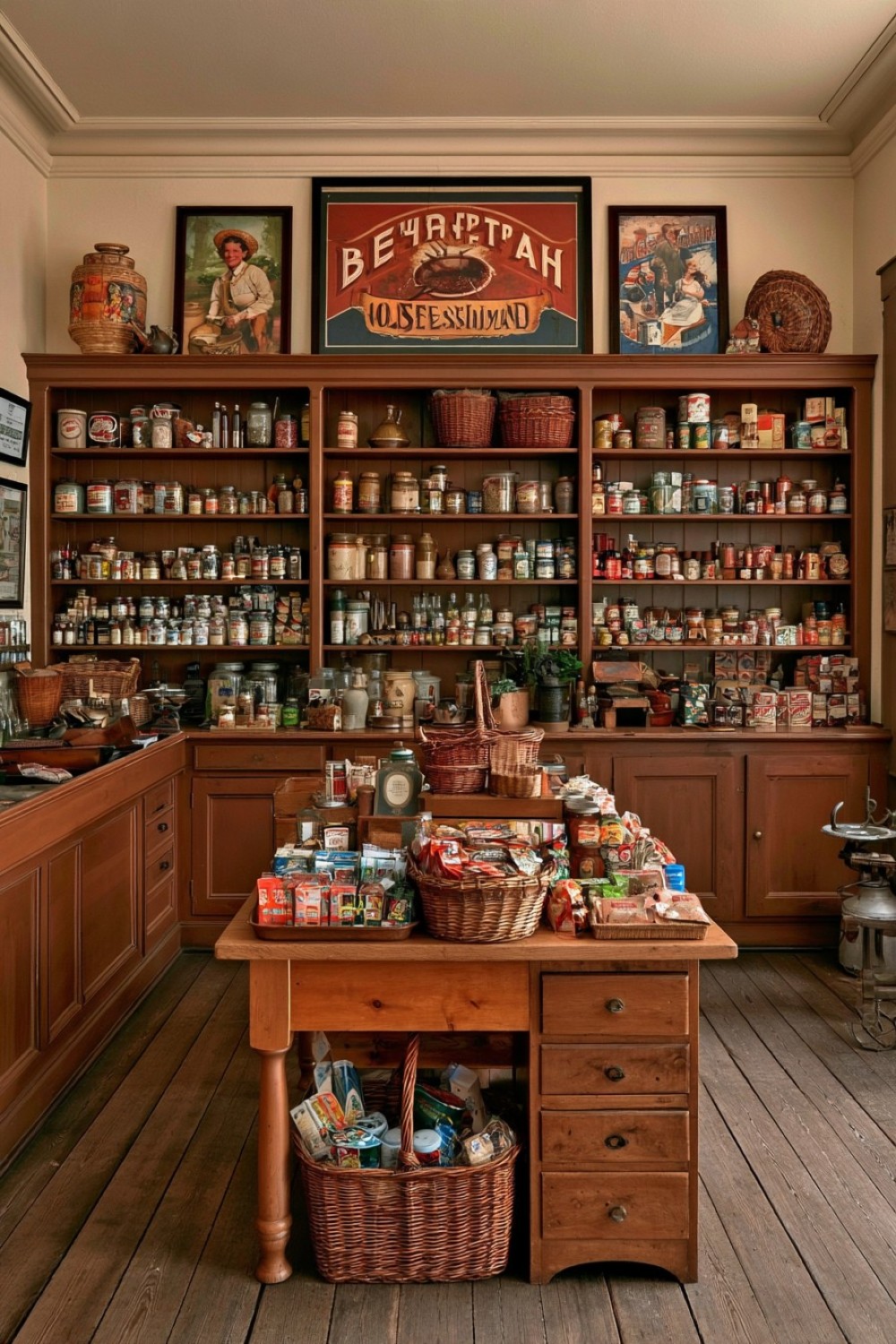
Warm timber and cream provide a flexible foundation for changing products and seasonal displays. Use timber on the primary counters and shelves, then apply cream to walls or selected cabinetry to prevent the interior from becoming too dark. Blackened metal, muted green, burgundy, or dusty blue can appear as restrained secondary accents through signage and small fixtures.
Compare material samples under the store’s actual lighting before selecting finishes. Timber tones that look balanced in daylight may become orange or dull beneath unsuitable bulbs. Commercial surfaces should tolerate frequent cleaning, knocks, and product movement. Create enough contrast between floors, walls, steps, and fixtures to support safe navigation. Historical character works best when lighting, accessibility, fire safety, security, and maintenance are integrated into the design from the beginning.
MORE IDEAS


Share
What's Your Reaction?
 Like
0
Like
0
 Dislike
0
Dislike
0
 Love
0
Love
0
 Funny
0
Funny
0
 Angry
0
Angry
0
 Sad
0
Sad
0
 Wow
0
Wow
0