17 Valentine Poster Projects With Clever Handmade Details

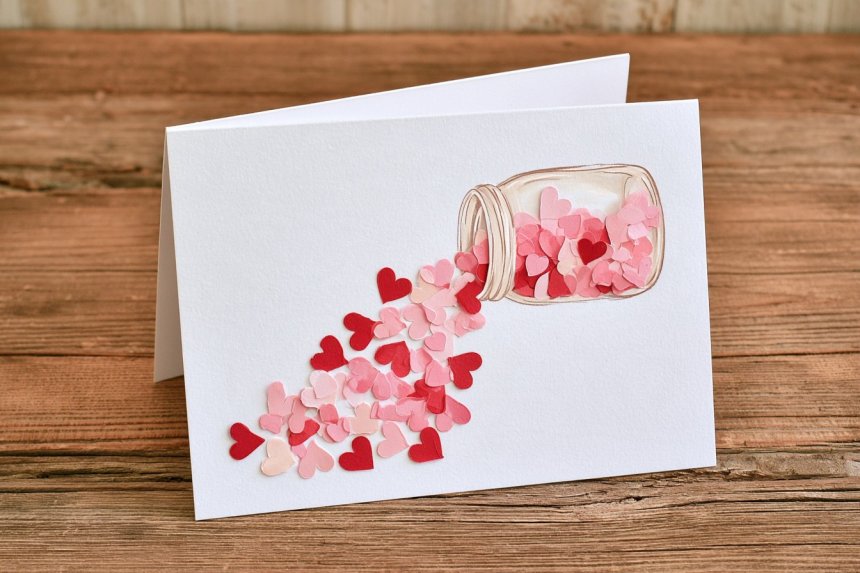
Valentine’s Day posters do not have to rely on oversized red hearts and predictable love quotes. Paper can become much more interesting when it is layered, stitched, folded, embossed, cut, painted, or combined with unexpected materials. A poster can look like a miniature quilt, a pressed-flower specimen sheet, a retro matchbook collection, or even a tiny paper window that reveals a hidden message underneath. These projects are designed to feel decorative enough to frame while still being approachable as DIY crafts. Most can be made with inexpensive materials such as cardstock, tracing paper, thread, fabric scraps, watercolor, recycled packaging, or photographs. The goal is simple: create Valentine wall art that feels personal, playful, and original rather than something pulled from a generic seasonal template.
1. Build a Paper Patchwork Heart From Fabric-Like Patterns
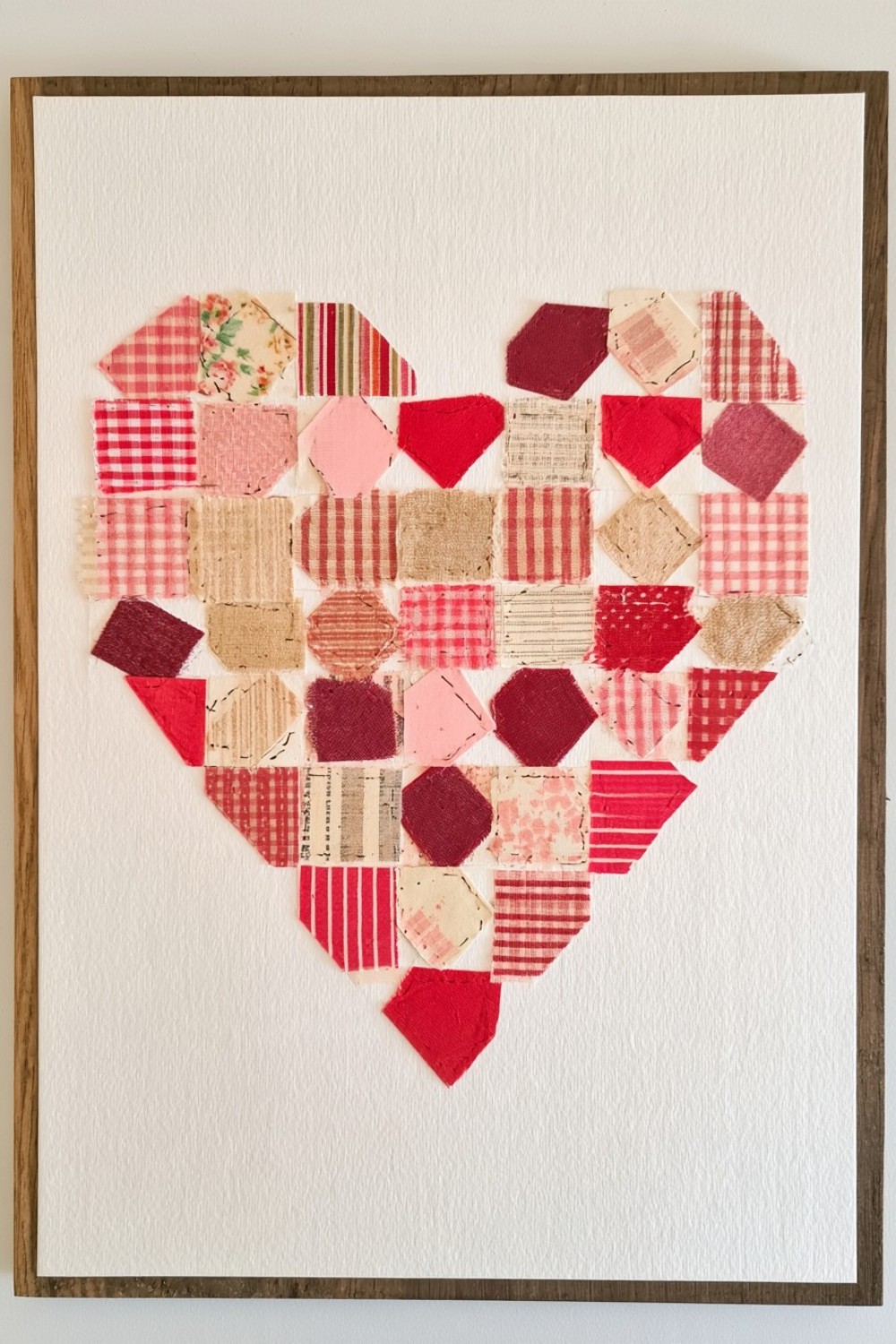
Instead of drawing one large heart, construct it from dozens of small paper “fabric” pieces.
You will need heavy cardstock for the base, patterned scrapbook paper, wrapping-paper scraps, old book pages, scissors, ruler, glue stick, and a heart template.
Cut the decorative papers into tiny squares, diamonds, and triangles. Arrange them inside the heart shape like a patchwork quilt, mixing checks, florals, stripes, gingham, and solid colors. Leave thin gaps between some pieces so the white backing becomes part of the design.
For a more handmade finish, draw tiny fake stitch marks around selected pieces with a fine pen.
This poster works especially well in cottage, craft-room, or romantic interiors because it borrows the warmth of textile design without needing actual sewing. Reusing paper scraps also makes every version different.
2. Stitch a Heart Constellation With Real Thread
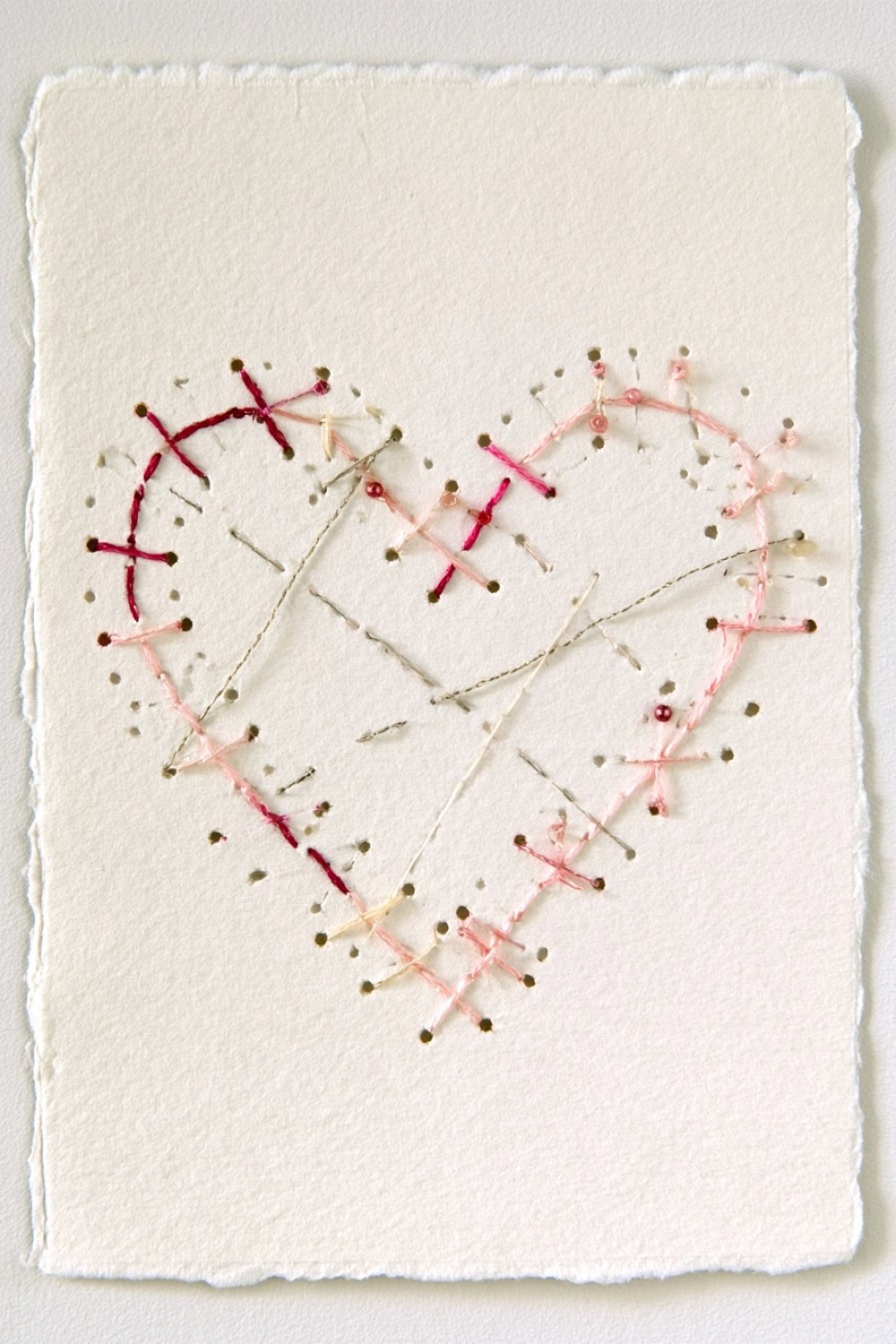
A flat poster can become surprisingly tactile with a little embroidery.
Use thick watercolor paper or cardstock, embroidery thread, needle, pencil, pushpin, cutting mat, and small beads if desired.
Draw a loose heart outline, then mark small points along the shape as though they were stars. Pierce each point carefully before stitching thread between them in irregular directions. The finished design should look more like a constellation than a neatly outlined heart.
Use pale pink, burgundy, cream, or metallic silver thread depending on the mood you want.
For extra detail, add tiny handwritten “star names” around selected points using initials, dates, or meaningful words.
Because the thread physically rises from the paper, the poster catches shadows differently throughout the day. It feels less like a printed Valentine decoration and more like a small piece of textile artwork.
3. Create a Mini Vintage Matchbook Collection
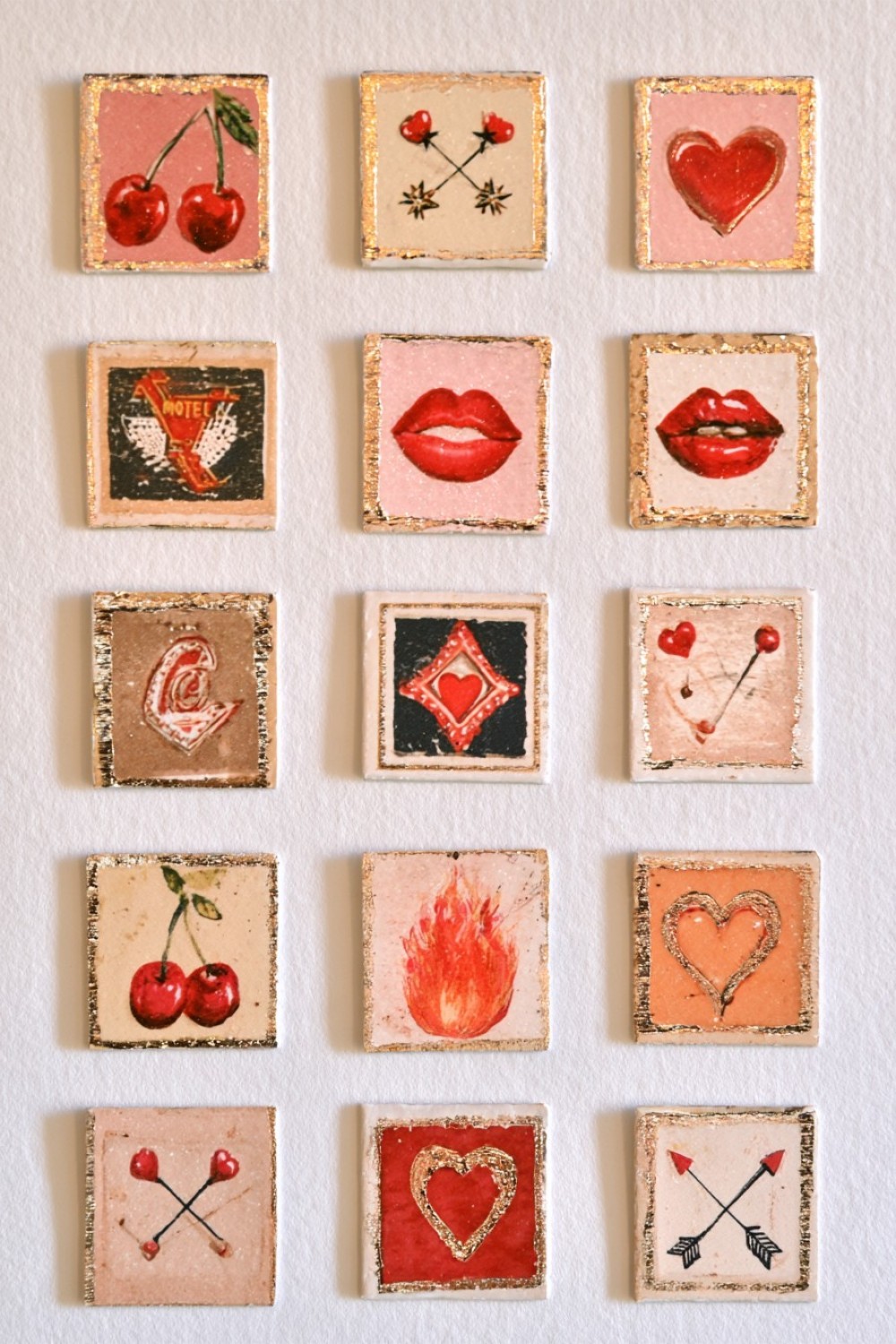
Instead of one central illustration, design the poster as if it were a collector’s sheet of fictional Valentine matchbooks.
You will need cardstock, colored paper, fine markers, glue, scissors, and optional metallic foil or letter stickers.
Create 12 to 20 tiny matchbook fronts, each with a different invented design. One might say “Burning for You,” another could show two cherries, a tiny motel sign, lips, stars, or a heart-shaped flame.
Keep the colors coordinated so the poster still feels unified. Dusty red, pale pink, cream, dark brown, and faded orange can give it a nostalgic 1960s or 1970s look.
Mount each matchbook shape in a tidy grid, but vary the illustrations enough that viewers want to inspect every piece.
This is a strong option for a kitchen, hallway, or gallery wall because it feels playful without looking like standard holiday decor.
4. Make a Pressed-Flower Heart Specimen Poster
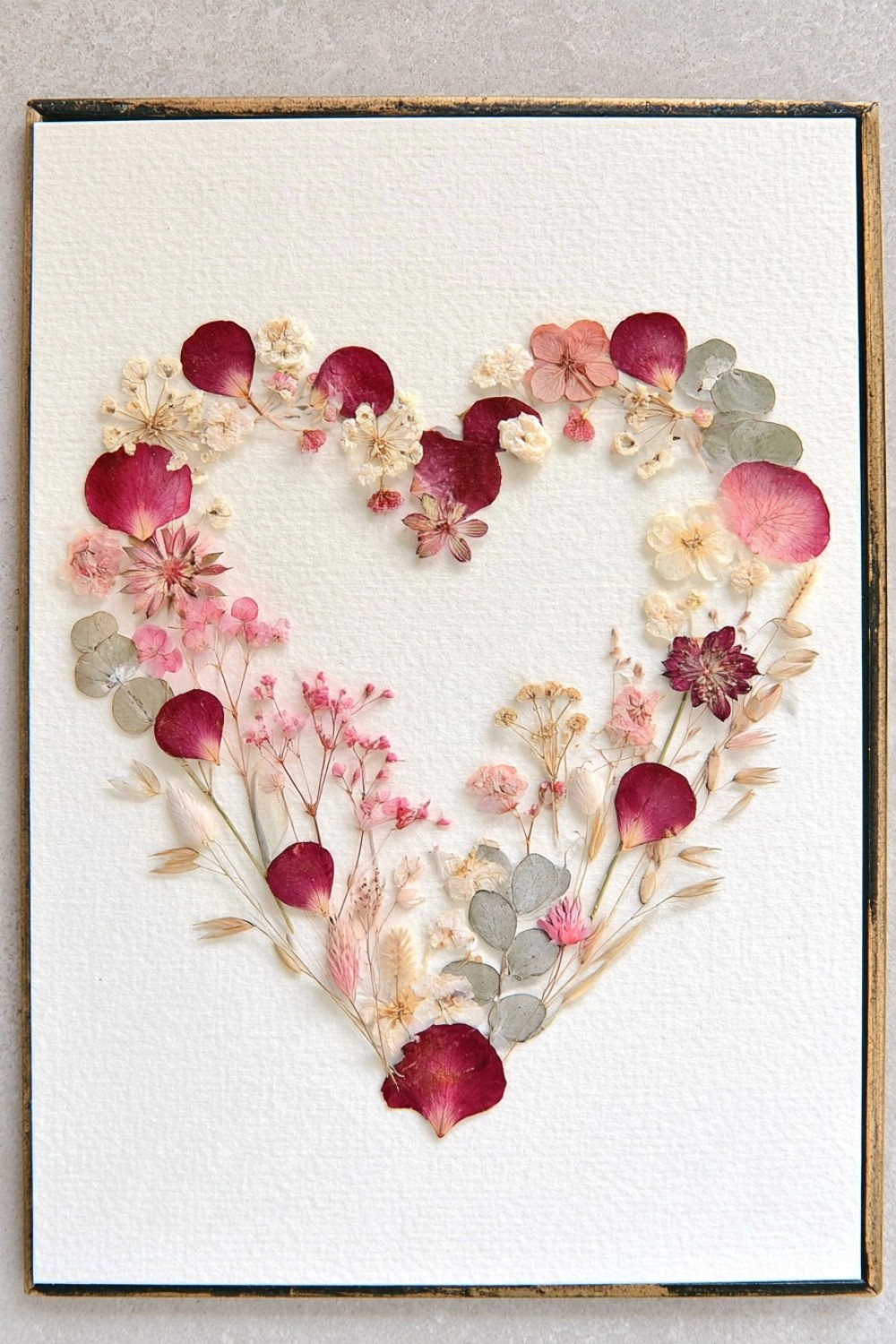
A botanical poster can feel romantic without using conventional Valentine graphics.
Use pressed flowers or leaves, heavyweight paper, archival glue, pencil, ruler, and a simple frame.
Arrange small dried petals and stems into the outline of a heart, but leave the center mostly empty. This negative space keeps the composition lighter and more sophisticated.
Burgundy petals, tiny white flowers, eucalyptus, dried grasses, or pale pink botanicals all work well.
Underneath, add small specimen-style labels such as the flower name, date pressed, or place collected. The scientific presentation creates an interesting contrast with the romantic shape.
If you do not have real pressed flowers, hand-cut paper botanicals can produce a similar effect.
Keep the arrangement away from strong direct sunlight once framed because natural plant material can fade over time.
5. Build a Hidden-Message Poster With Paper Windows
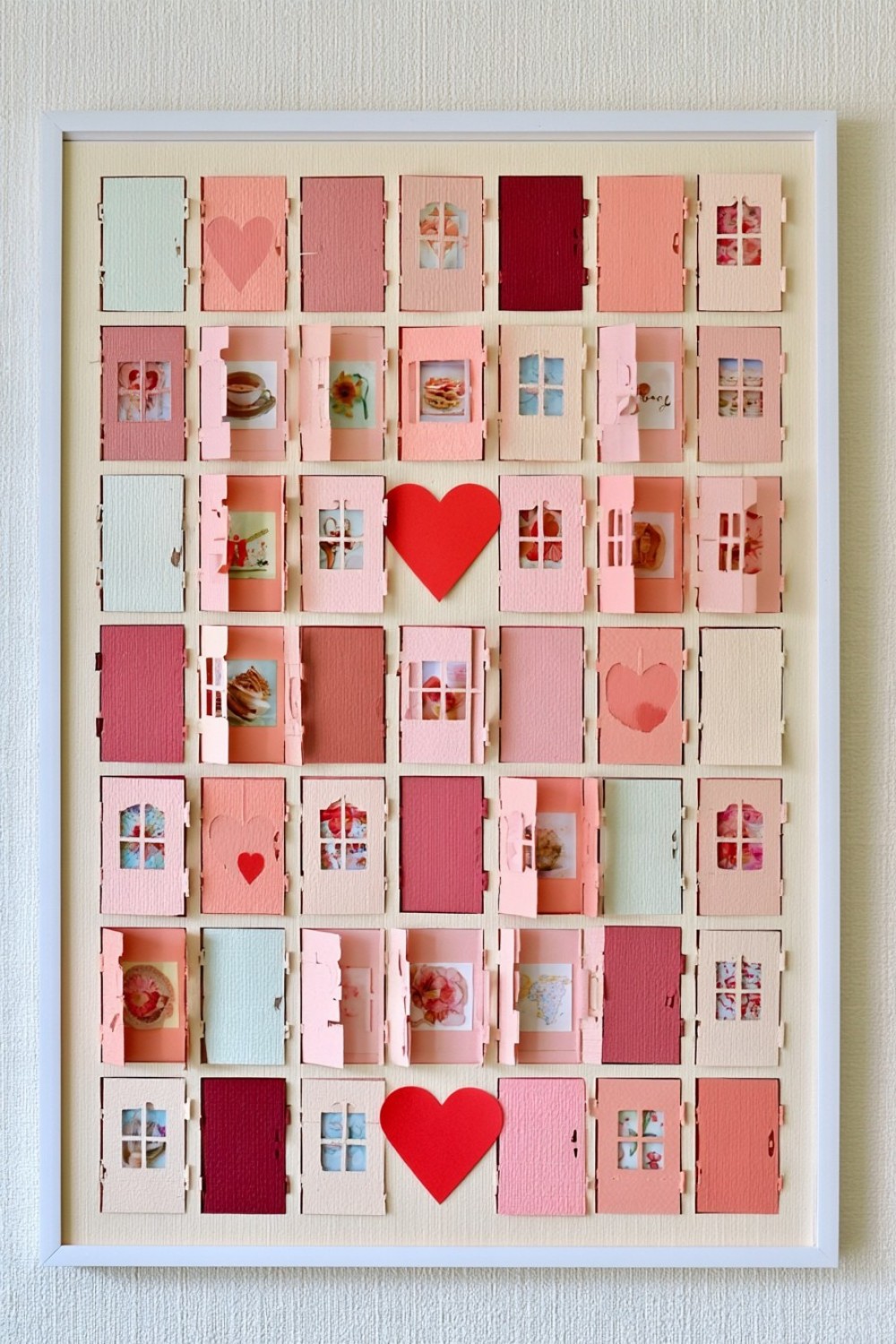
Turn the poster into something interactive.
You will need two sheets of cardstock, craft knife, cutting mat, ruler, glue, and colored paper for the background.
On the front sheet, cut a grid of small doors or window flaps. Behind each opening, place a tiny symbol, word, illustration, photograph, or handwritten message.
From a distance, the poster can look almost minimal. Up close, visitors can open each flap and discover what is hidden inside.
Instead of filling every window with romantic phrases, mix in small visual jokes, favorite foods, places, song references, or shared memories.
For a cleaner finish, number the windows subtly like an archive or advent calendar.
This project works especially well as a personalized gift because the decoration becomes more meaningful as each section is discovered.
6. Turn Old Tickets and Receipts Into a Memory Map
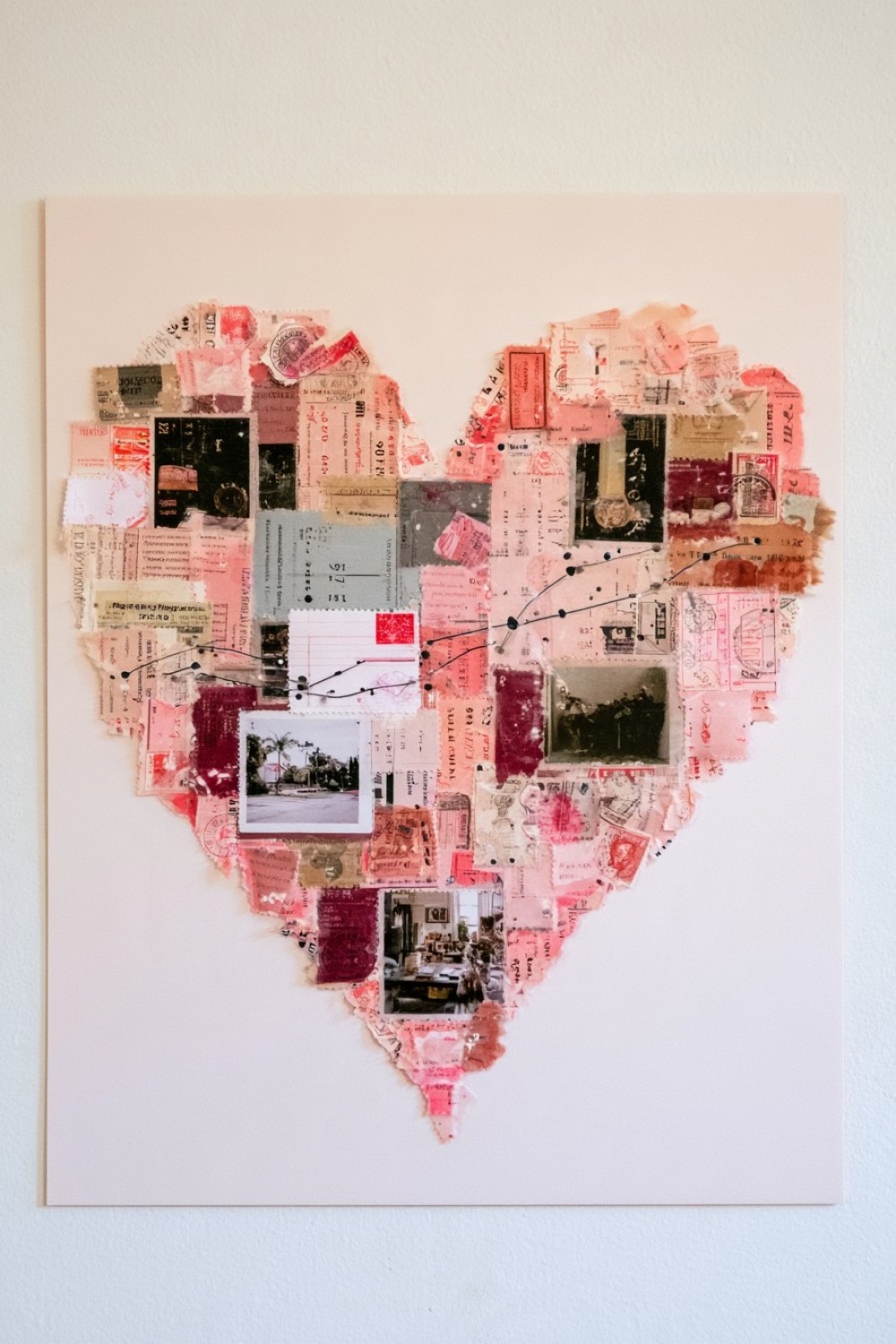
Ephemera from ordinary days can become more emotional than decorative Valentine paper.
Gather copies of old café receipts, movie tickets, train stubs, museum passes, handwritten notes, or small printed photographs. Use copies rather than irreplaceable originals if possible.
Arrange them loosely across a poster board to form the rough silhouette of a heart or a geographic map.
Add thin connecting lines between selected pieces and write short notes explaining why each memory matters.
You can also create fictional “ticket-style” labels for moments that never came with physical memorabilia, such as “First Sunday Breakfast” or “Rainy Walk Home.”
The result feels part scrapbook, part graphic poster.
This idea works best when the materials remain visually mixed rather than perfectly color-coordinated. Slight inconsistency is what makes it feel authentic.
7. Paint Two Color Fields That Meet in the Middle
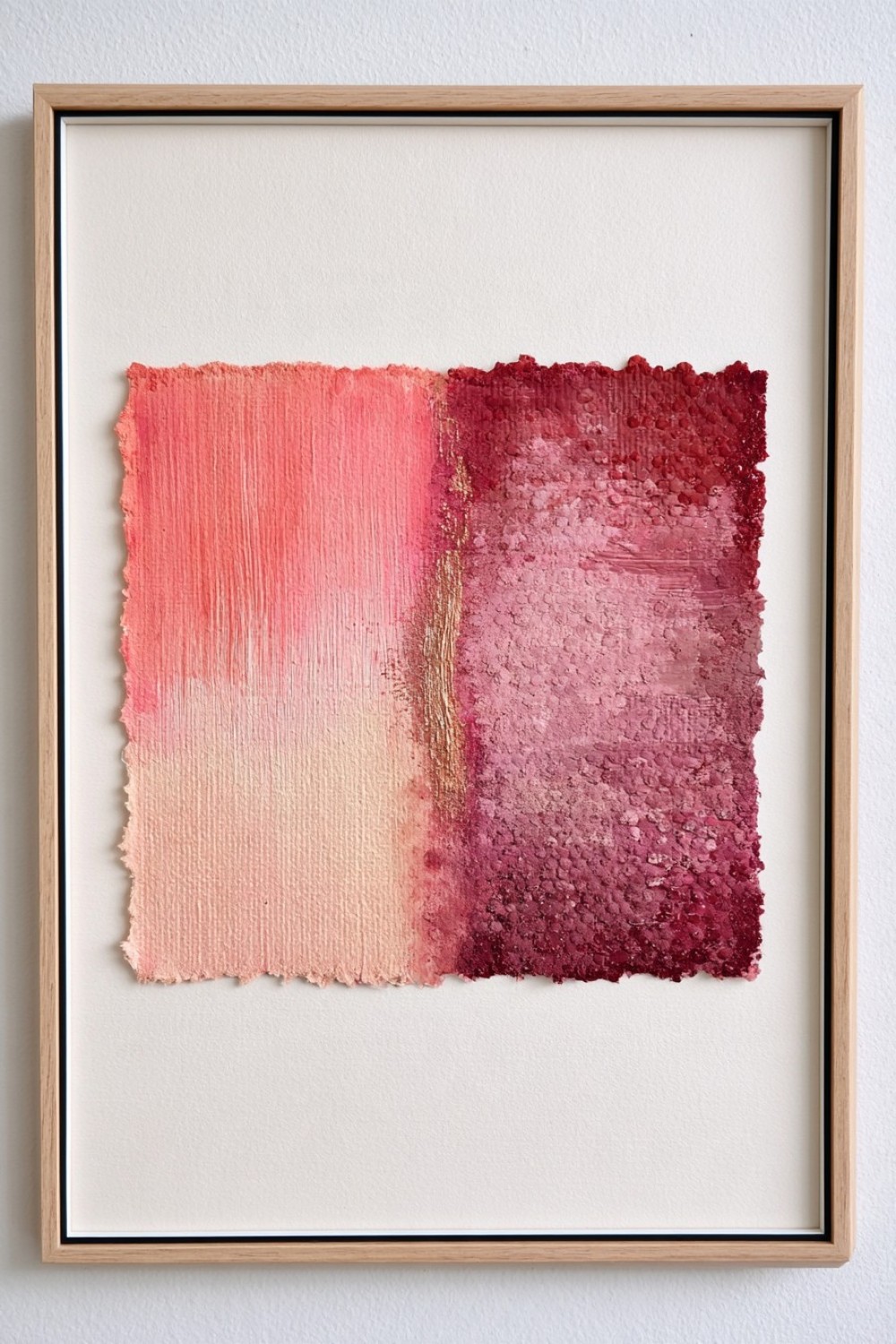
A Valentine poster does not have to look obviously romantic.
Start with thick watercolor paper, masking tape, acrylic or gouache paint, wide brush, and pencil.
Divide the page into two large abstract color areas that overlap near the center. One side might be coral and soft peach, while the other uses burgundy and dusty rose.
Where they overlap, paint a narrow third tone or metallic line.
Instead of drawing a heart, let the meeting point itself represent connection.
Add a tiny handwritten phrase at the bottom, or leave the artwork completely text-free.
This approach works especially well in modern interiors where conventional Valentine's graphics would feel too playful.
For an even stronger visual effect, use contrasting brush directions on each side so the two color fields retain their own identities even where they meet.
8. Create a Valentine “Museum Label” Poster
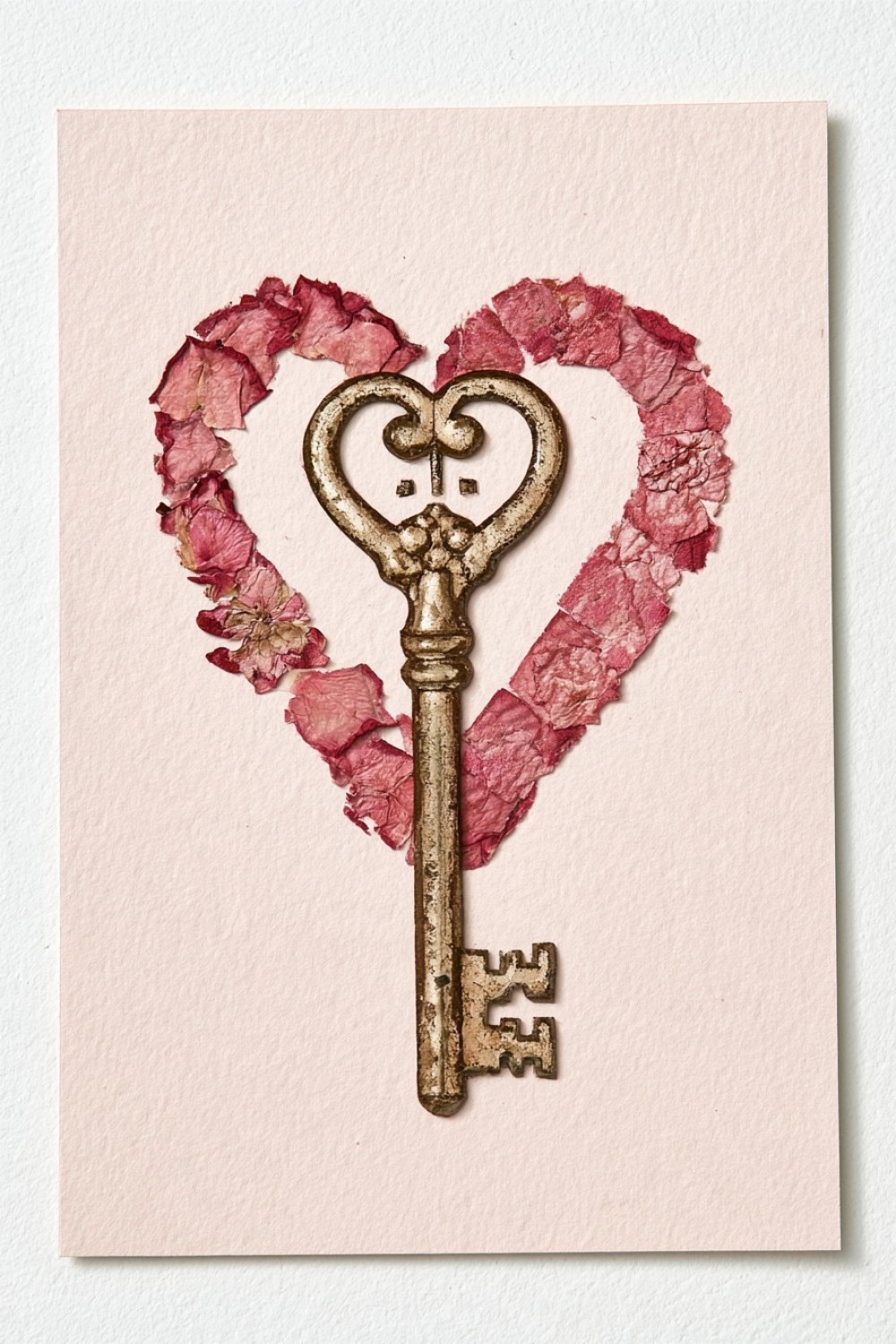
Turn an everyday romantic object into something that looks like it belongs in an art museum.
Photograph or draw one object—a handwritten note, coffee cup, old key, flower, candy wrapper, or small gift—and place it in the center of the poster.
Below it, create a museum-style caption with a humorous title, date, material description, and fictional provenance.
For example:
“Two Coffee Cups, Sunday Morning, 2026
Ceramic, caffeine, questionable sleep schedule.”
Use ivory or warm white paper, black serif lettering, and lots of negative space.
The contrast between formal museum language and ordinary romantic life makes the poster feel witty rather than sentimental.
This is easy to personalize and can become part of a gallery wall long after Valentine’s Day.
9. Make a Woven Paper Poster
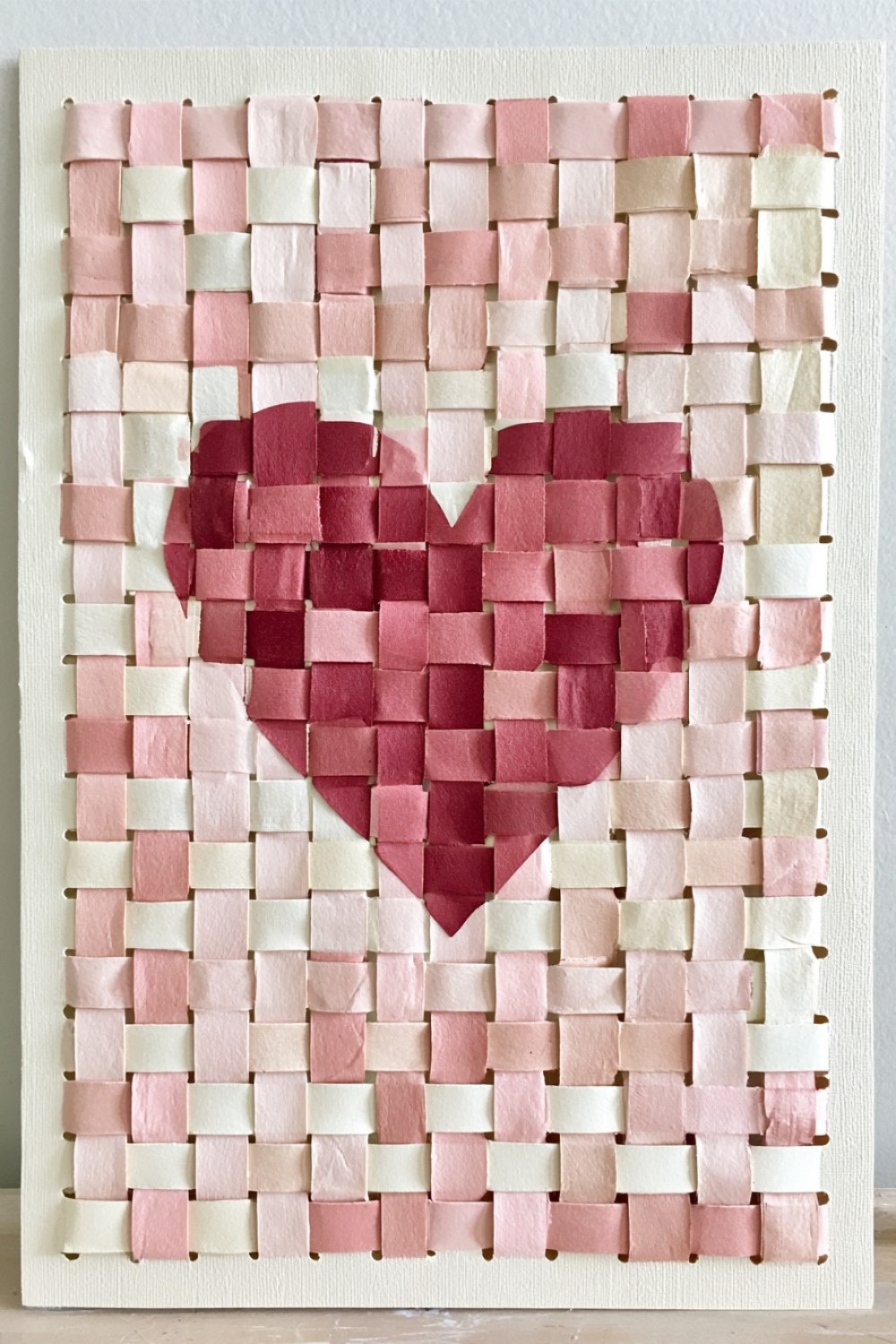
Instead of drawing a pattern, physically weave the poster surface.
Use two or three sheets of colored paper, craft knife, ruler, cutting mat, and glue.
Cut parallel slits into the main sheet, stopping before the edges. Then cut long strips from contrasting paper and weave them over and under the openings.
Create a heart shape by changing the strip colors only in the center section.
For example, weave cream and pale pink across the entire page, then introduce burgundy only where the heart appears.
Once the pattern is finished, glue the strip ends to the back.
The texture makes the poster look almost like a textile sample and gives it more depth than a printed design.
A large-scale version in muted colors can feel especially striking in a bedroom or craft space.
10. Create a Retro Conversation-Heart Typography Grid
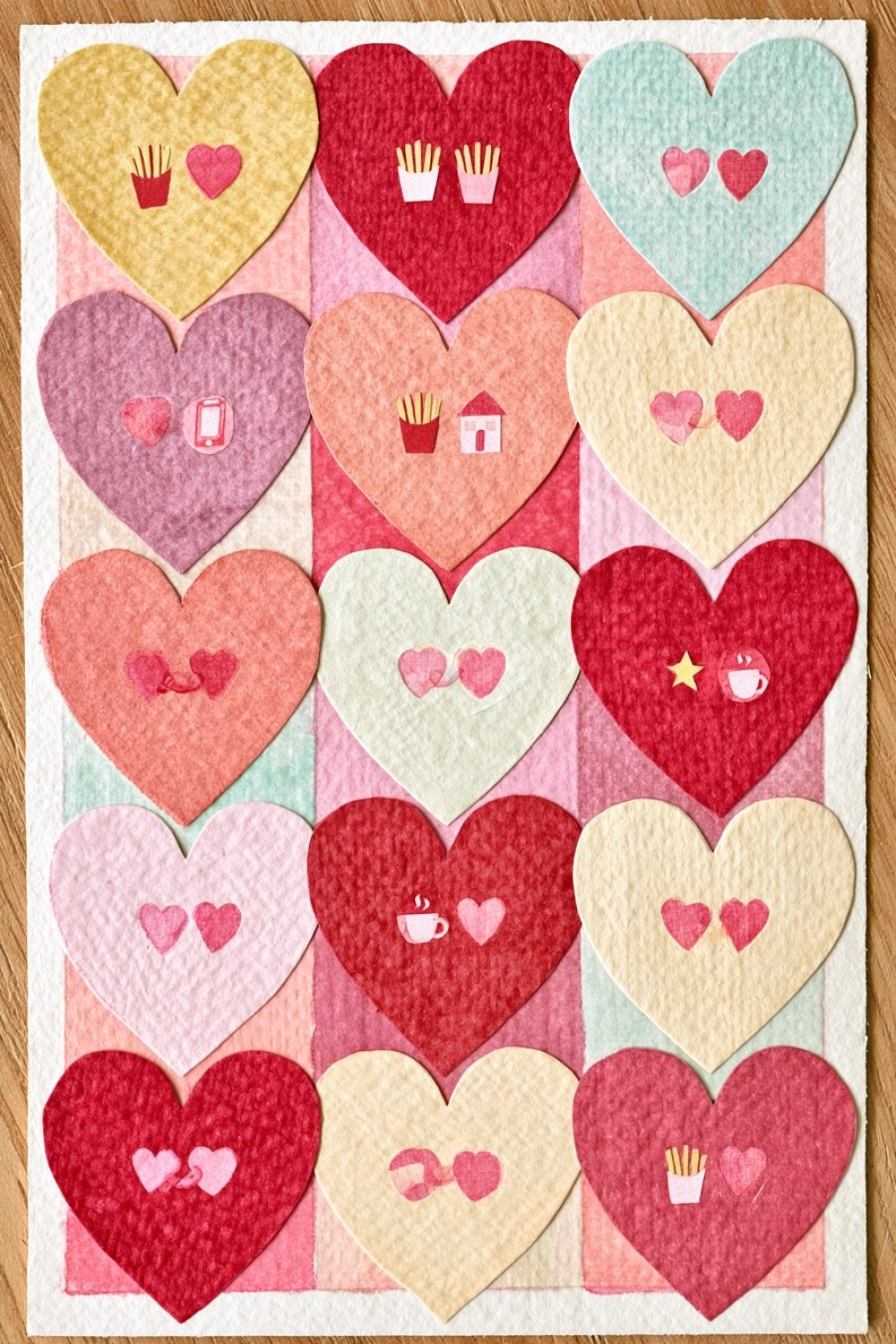
Conversation hearts are familiar, but the poster can be redesigned to feel much more graphic.
Cut oversized rounded heart shapes from matte cardstock in muted colors such as butter yellow, dusty lilac, powder blue, faded peach, and cream.
Instead of traditional phrases, write unexpected short messages: “Saved You Fries,” “Still Weird,” “Text Me When Home,” “Best Seat Taken,” or “Same Team.”
Arrange the hearts in a strict grid so the typography and repetition become the main design.
Use one simple type style throughout to prevent the poster from looking like children's craftwork.
For a handmade version, rubber stamps or transfer letters can produce a more imperfect vintage effect than computer printing.
This poster works particularly well in kitchens, entryways, dorm rooms, or playful gallery walls.
11. Build a Layered Paper Portal With a Tiny Scene Inside
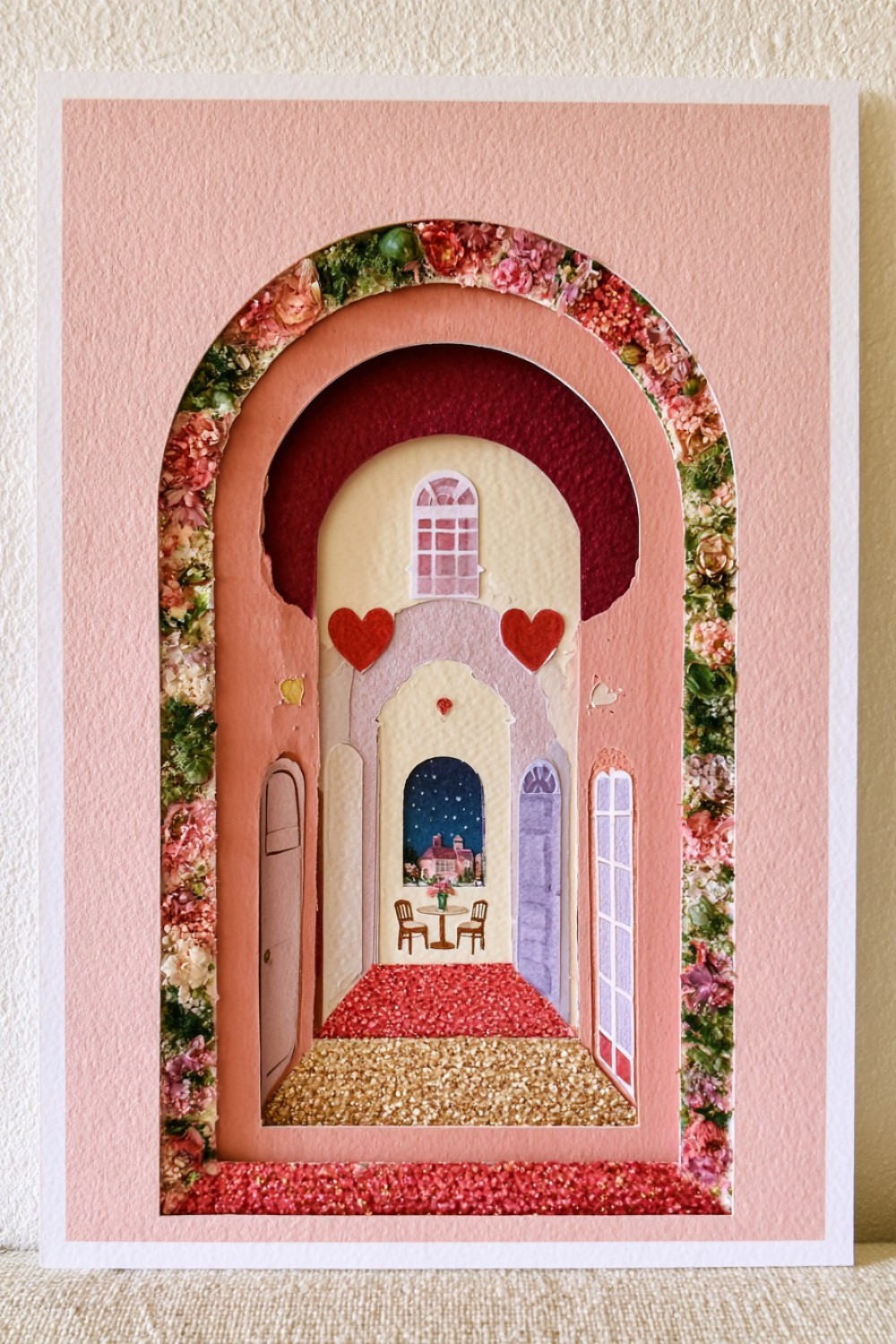
Turn the poster into a shallow tunnel rather than a flat sheet.
Use several layers of cardstock, foam spacers, craft knife, cutting mat, and a deep frame.
Cut a different opening into each layer—large arch on the front, smaller heart or doorway behind it, and finally a miniature illustrated scene at the back.
That scene could show two tiny chairs, a moonlit house, flowers, a dinner table, or a simple handwritten message.
As the layers stack, they create depth and shadow.
Use closely related colors such as blush, burgundy, cream, and muted lavender for a soft gradient.
Because the artwork changes depending on the viewing angle, it becomes more engaging than a standard print.
A shadow-box frame protects the delicate paper edges and makes the piece easier to display year after year.
12. Make a “Things We Always Share” Illustrated Inventory
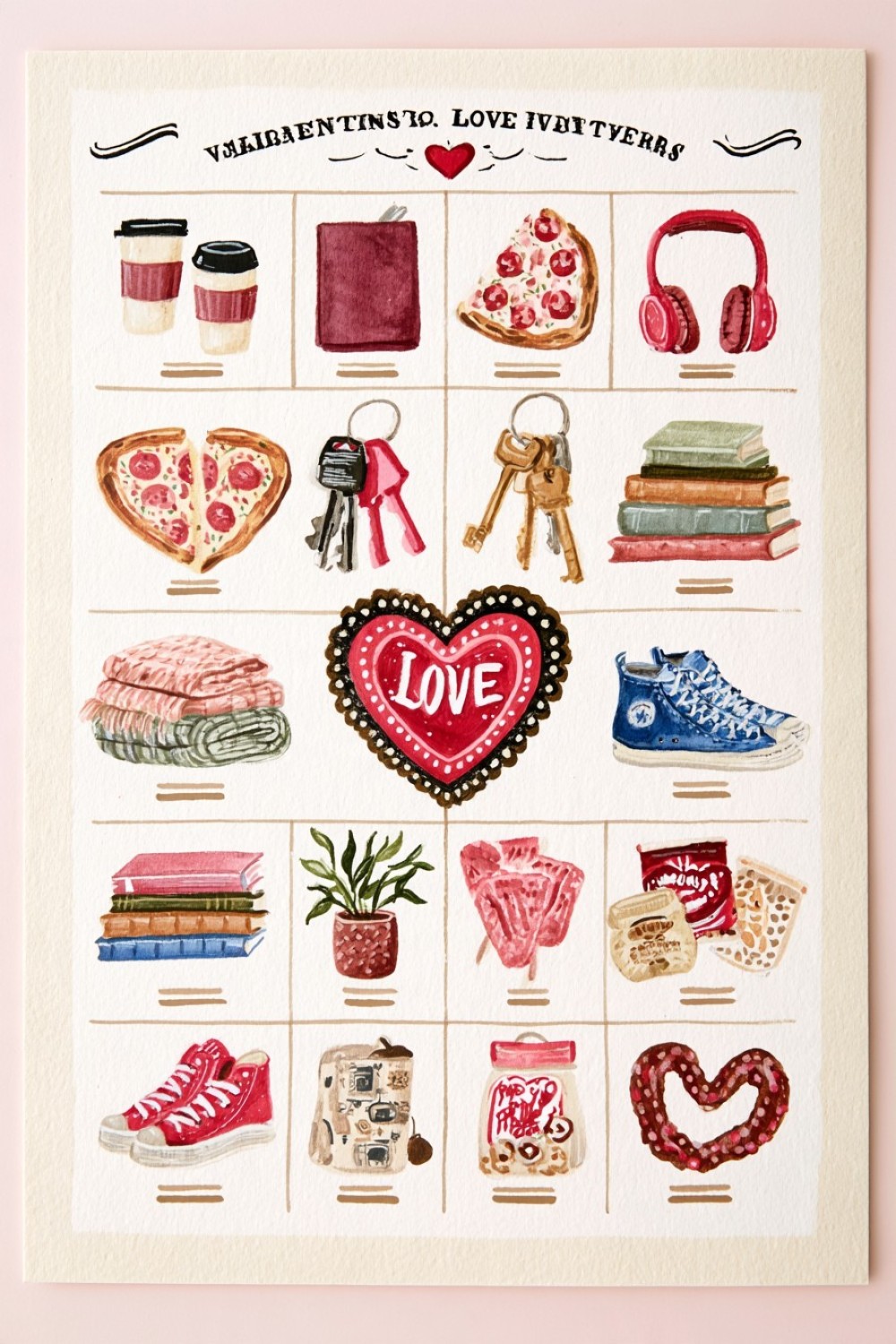
Create a poster that looks like a catalog page rather than a Valentine's card.
Choose eight to twelve small objects connected to everyday life: pizza slices, headphones, coffee cups, keys, blankets, books, houseplants, sneakers, or favorite snacks.
Draw or paint each object separately and arrange them in a neat inventory grid.
Under each illustration, add a tiny label explaining the shared connection: “your side / my side,” “always ordered twice,” or “never returned.”
The humor comes from treating ordinary shared habits like important artifacts.
Watercolor, colored pencil, or simple marker illustrations all work well.
This makes a particularly good gift for couples who prefer personal humor over sentimental quotes.
13. Create a Heart From Torn Color Gradients
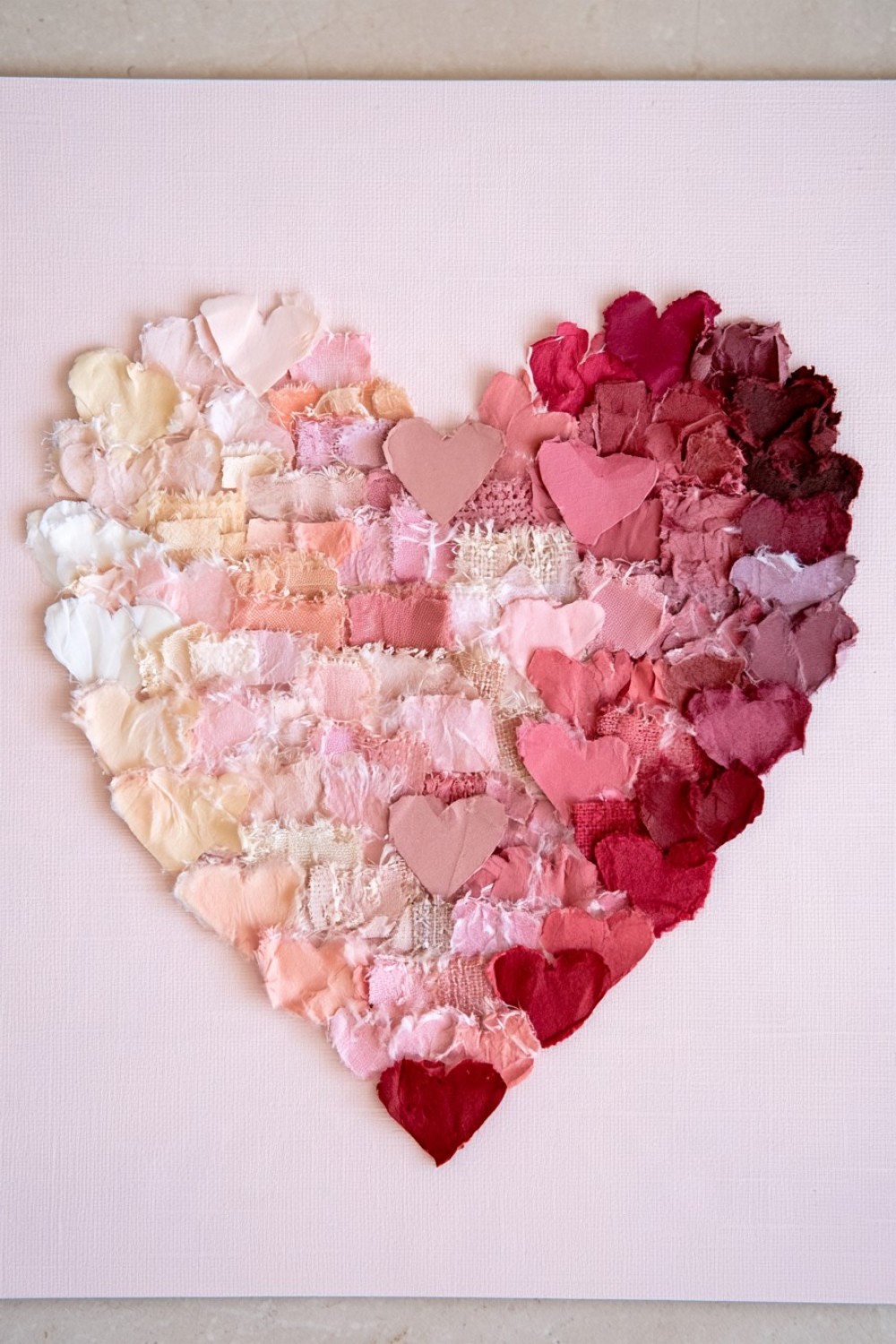
Instead of cutting clean shapes, use torn paper to build a soft, imperfect heart.
Gather magazine pages, handmade paper, tissue paper, paint swatches, and colored scraps within one palette.
Tear them into irregular fragments and sort them from light to dark.
Arrange the pieces so the heart transitions gradually from pale blush at one edge to deep wine at the other.
Overlap pieces slightly but allow some torn white edges to remain visible.
The rough edges create more texture than scissors would, while the gradient gives the composition structure.
This project is particularly effective at larger poster sizes because viewers can appreciate both the overall heart and the small paper details up close.
It is also an easy way to reuse packaging, old catalogs, or leftover craft paper.
14. Print a Fake Valentine Newspaper Front Page
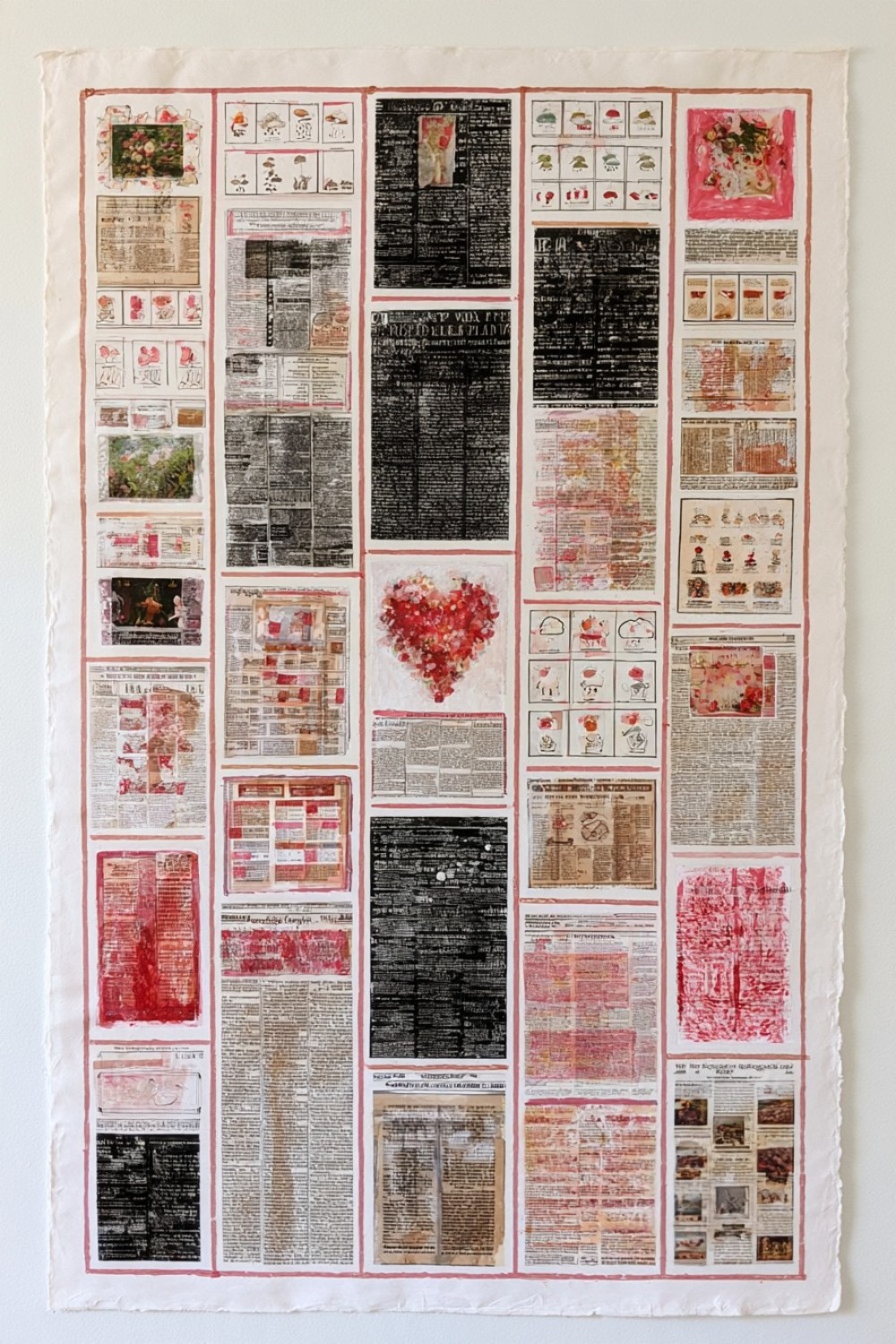
Design a poster that resembles the front page of a fictional newspaper devoted entirely to one relationship, friendship, or family.
Use a bold masthead such as “The Daily Valentine,” then divide the page into mock articles, tiny photos, weather reports, classified ads, and humorous headlines.
A headline might read “Local Couple Still Cannot Decide What to Eat,” while the weather section predicts “100% Chance of Dessert.”
You can make it digitally and print it, or create the whole layout by hand using rulers, pens, and glued photographs.
Keep most of the design black and white, adding only one red or pink accent color.
This restrained palette makes the humor feel more editorial and less like a novelty card.
Frame it like a real print for a finished look.
15. Make a Tiny Paper Quilt Inspired by Love Letters
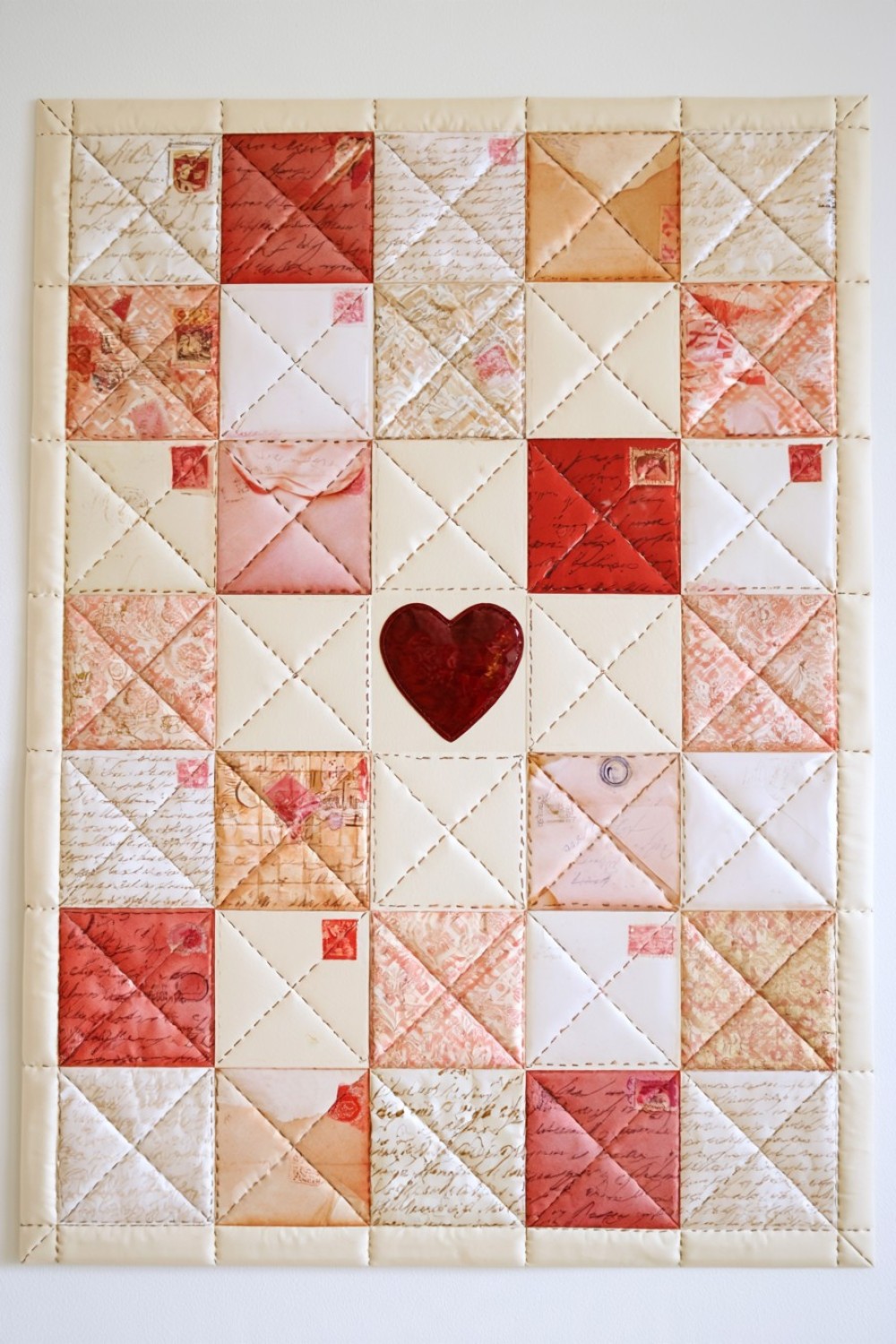
Instead of using written love letters directly, turn their visual details into patchwork.
Use copies of handwriting, envelopes, postage marks, old stamps, patterned paper, and plain cardstock.
Cut each into small squares and arrange them like a traditional quilt block pattern.
Some squares can show handwriting fragments while others contain only color or texture.
At the center, place one small red square or tiny heart as the focal point.
Add thin drawn stitch lines between blocks to reinforce the textile illusion.
The finished poster feels sentimental without displaying entire private messages.
It also works beautifully with family letters, friendship notes, or inherited correspondence rather than romantic letters alone.
16. Create a Cut-Paper Shadow Portrait
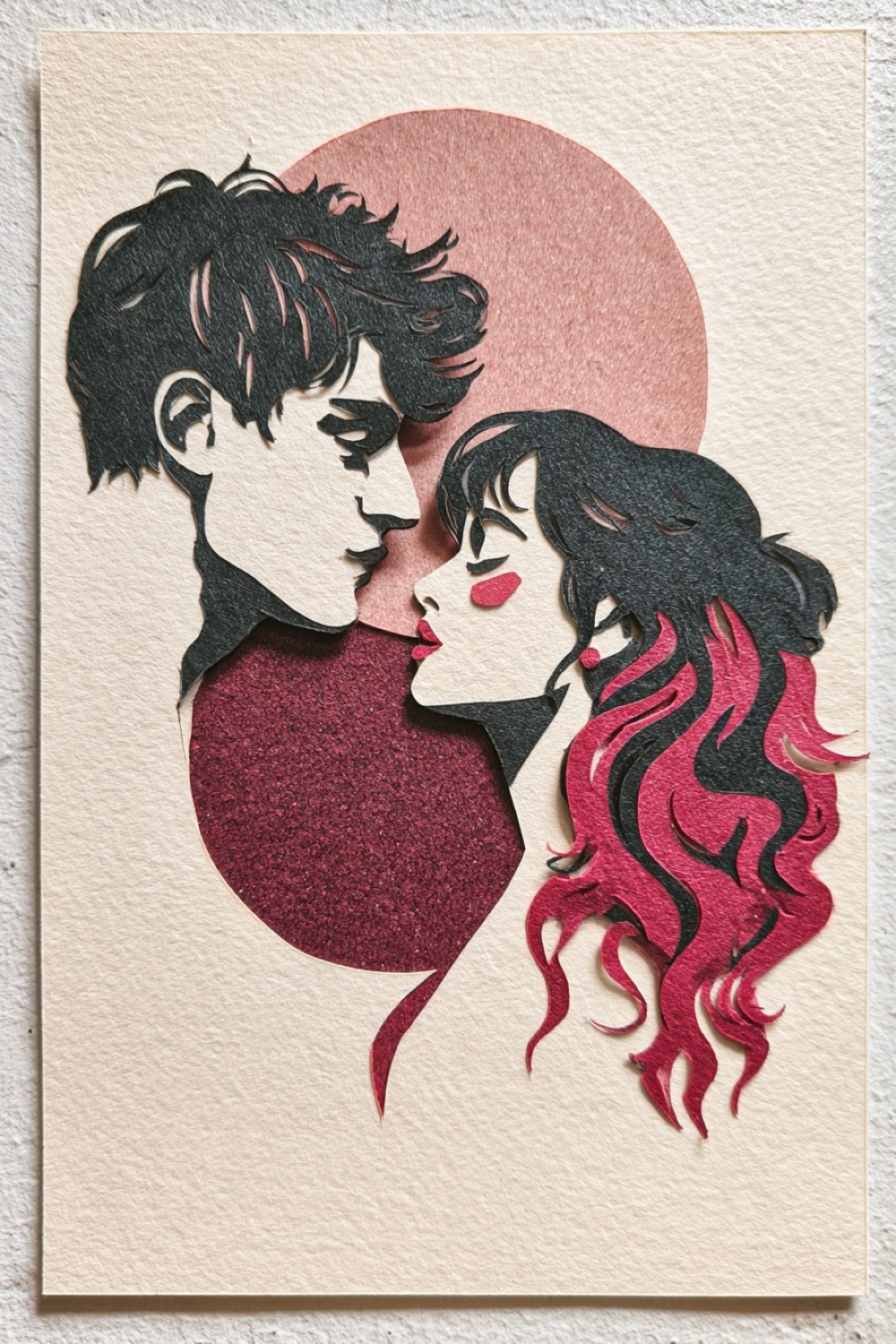
A silhouette can feel much more personal than a generic heart motif.
Use a photograph as reference and trace two simplified side profiles onto dark cardstock.
Cut them carefully and mount them slightly above the backing paper using thin foam spacers.
Angle the profiles toward each other but leave a small gap between them.
Behind the silhouettes, add a muted circular shape in blush, rust, or burgundy so the faces remain clearly visible.
Because the cutouts sit away from the paper, real shadows appear around their edges during the day.
This project can also feature children, pets, or family members, making it flexible beyond romantic Valentine decor.
A simple black, ivory, and muted-red palette keeps the finished poster sophisticated enough to display year-round.
17. Build a Poster That Changes Under a Transparent Overlay
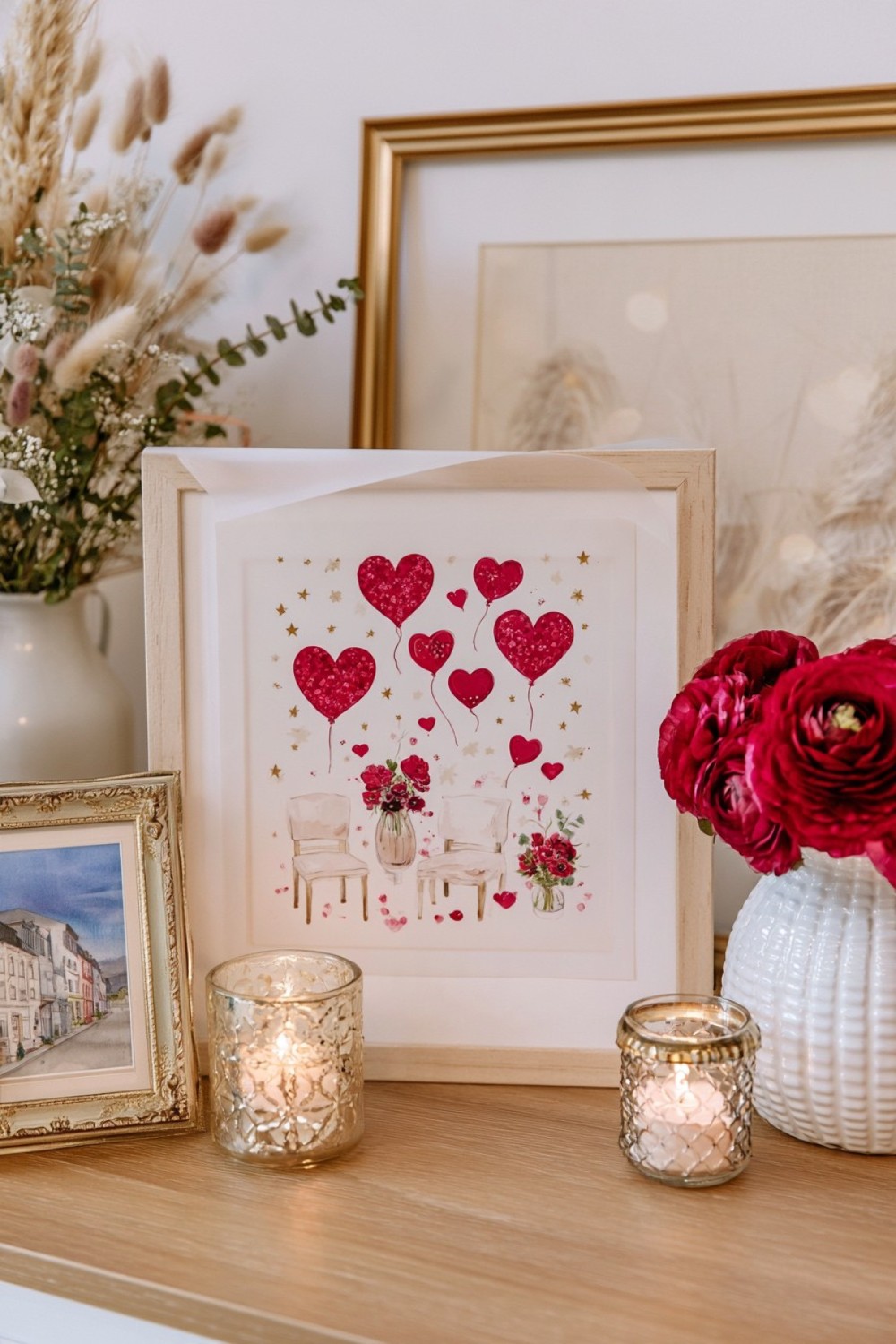
Create two artworks in one by layering tracing paper over a base illustration.
On the bottom sheet, draw a simple room, landscape, street scene, or collection of objects.
On the tracing-paper overlay, add Valentine details that align with the scene beneath: hearts becoming balloons, flowers growing from empty vases, stars appearing in the sky, or handwritten messages floating above buildings.
Attach the tracing paper only along the top so it can be lifted.
When the overlay is down, the scene becomes festive. Lift it and the original artwork appears underneath.
You will need heavyweight paper, tracing paper or vellum, fine pens, paint or pencils, ruler, and removable tape or binding.
This interactive element makes the poster feel more like a designed object than seasonal wall art.
Making Valentine Posters Feel Personal Rather Than Predictable
The most interesting Valentine posters usually begin with a concept rather than a heart shape. A collection of old tickets can tell a story, stitched thread can turn paper into something tactile, and layered cutouts can make a flat poster feel architectural. Even familiar symbols become more distinctive when the material or construction method changes.
When planning a poster, decide what makes the piece worth looking at after February 14. Personal memories, handmade textures, unusual typography, and interactive details tend to give the artwork more longevity than generic romantic phrases.
You also do not need to use red and pink in every project. Burgundy, tobacco, cream, lavender, pale blue, coral, and muted metallics can create a Valentine mood while fitting more naturally into existing home decor.
A strong poster should feel like a small piece of art first and seasonal decoration second.
MORE IDEAS


Share
What's Your Reaction?
 Like
0
Like
0
 Dislike
0
Dislike
0
 Love
0
Love
0
 Funny
0
Funny
0
 Angry
0
Angry
0
 Sad
0
Sad
0
 Wow
0
Wow
0