16 Apartment Balcony Designs for Comfortable and Flexible Outdoor Living

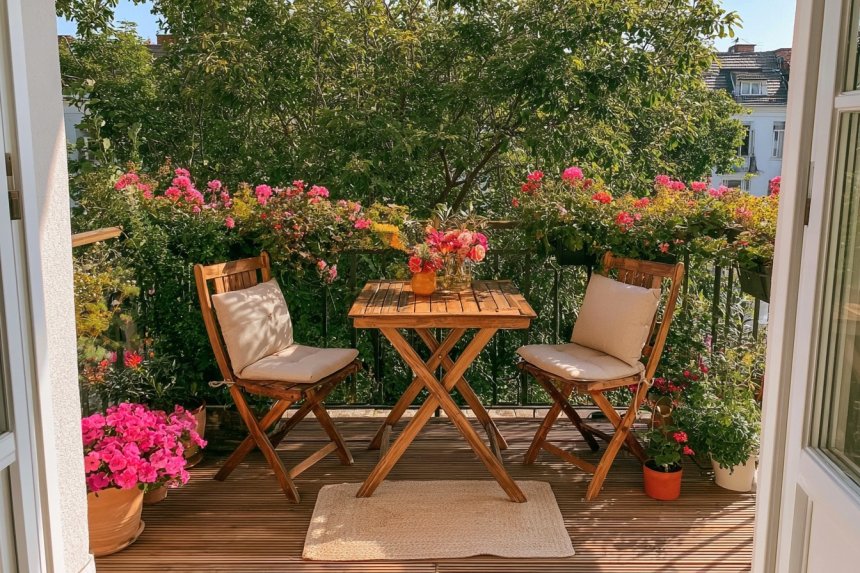
An apartment balcony can support dining, gardening, reading, or occasional work when every element responds to the available space. Before purchasing furniture, measure the usable floor area, door movement, railing height, drainage points, and the narrowest circulation route. Observe direct sunlight, prevailing wind, rain exposure, and any water arriving from balconies above. These conditions should guide material and plant choices.
Building management or rental agreements may limit drilling, railing attachments, privacy screens, floor coverings, and the weight placed on the structure. Furniture and containers must remain stable in wind, while nothing should project over an edge or interfere with drainage and emergency access. Weather-resistant products still require cleaning and seasonal care. The following balcony designs combine visual character with adaptable layouts, safer placement, and practical solutions for compact apartment living.
1. Suggest a Sunken Lounge With Low-Profile Seating
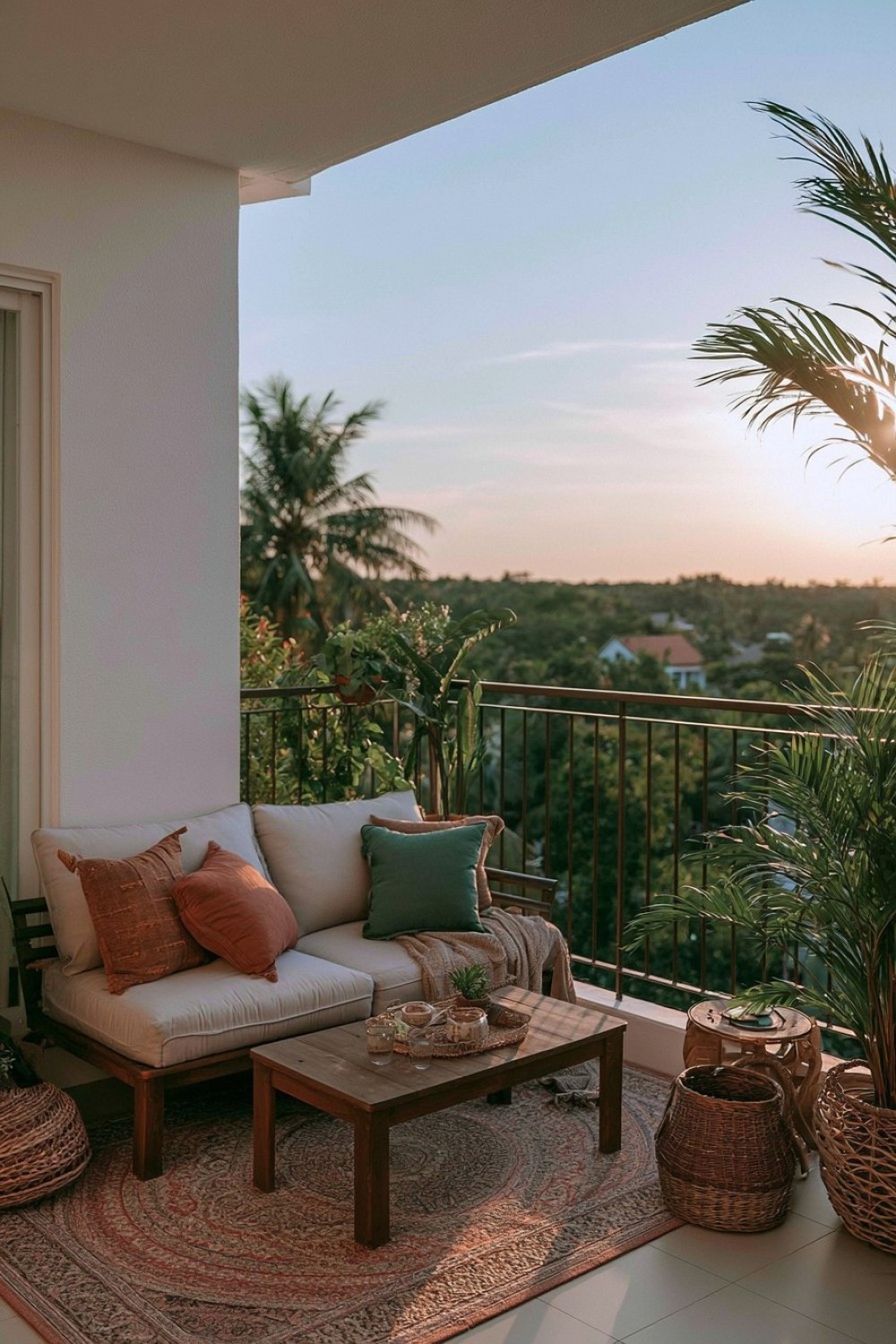
Low seating can create the sheltered feeling of a sunken lounge without changing the balcony floor. Use a compact outdoor sofa, modular corner seat, or two broad lounge chairs arranged around a low table. Keeping furniture backs below or close to railing height may preserve outward views and prevent the small space from feeling enclosed.
Low furniture must still provide sufficient support and be comfortable to enter and leave. Measure seat depth as carefully as total width because oversized cushions can consume the central walkway. Choose outdoor-rated frames and removable, quick-drying covers, then store cushions during severe weather according to their care instructions. Do not construct a raised platform merely to imitate a recessed seating area; additional levels can create tripping hazards and add unnecessary weight. A fitted rug may define the lounge, but it should drain freely and not conceal standing water.
2. Add a Secure Narrow Counter Inside the Railing
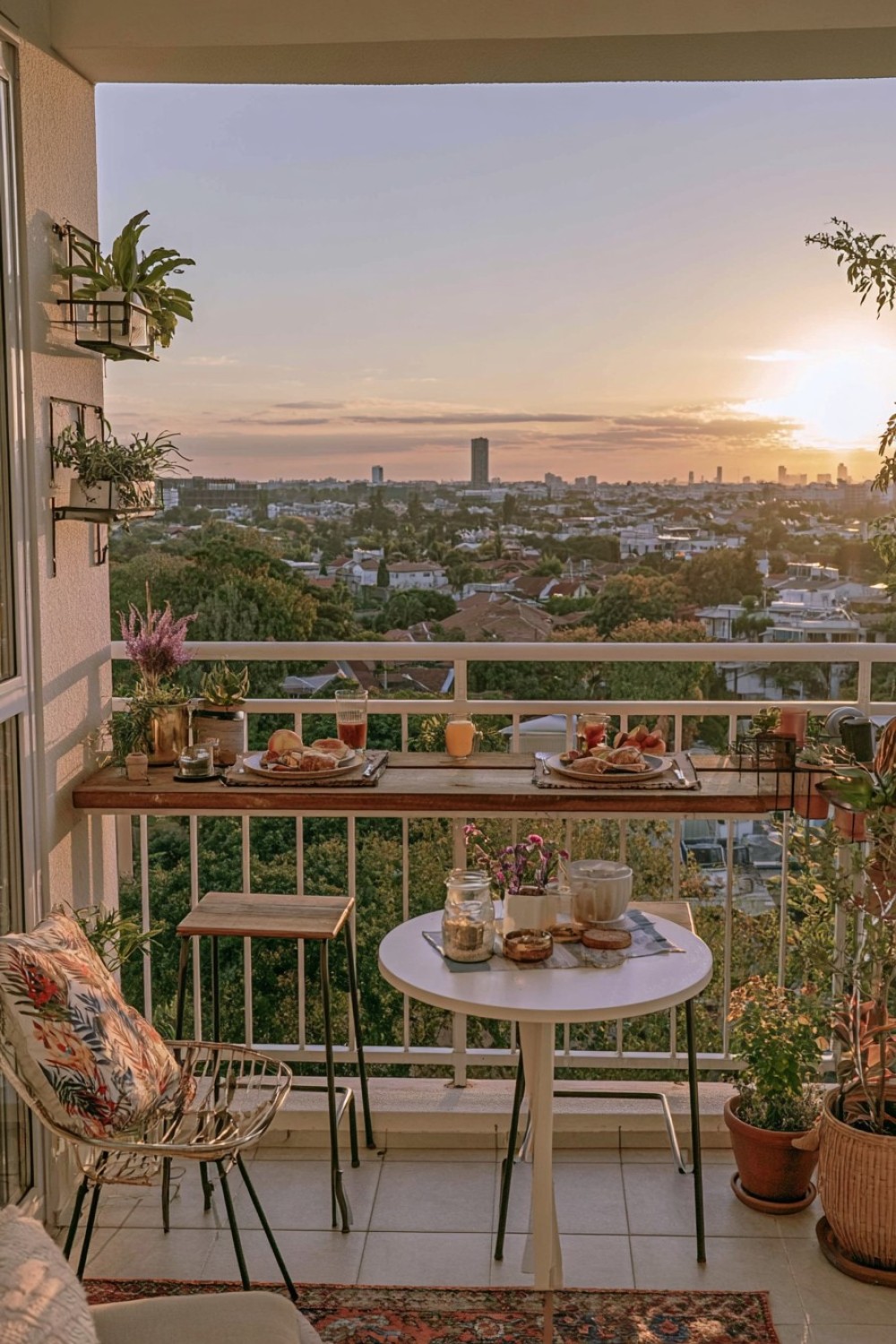
A slim counter positioned along the inside of the railing can create space for breakfast, reading, or a laptop without requiring a full dining table. Use a purpose-designed freestanding console or an approved mounting system that does not compromise the railing. Keep the depth modest while preserving enough surface for the intended activity.
Never balance a shelf loosely on the railing or extend objects beyond the balcony edge. The structure should resist movement, wind, and uneven loading, and stools must not create a climbing opportunity where children use the space. Check building rules before attaching anything to the railing. Position the counter so people can sit without blocking the doorway or required route. Rounded corners and a weather-resistant finish make a narrow design easier to use and maintain. Remove lightweight objects when the balcony is unattended during windy conditions.
3. Concentrate Plants in One Layered Green Corner
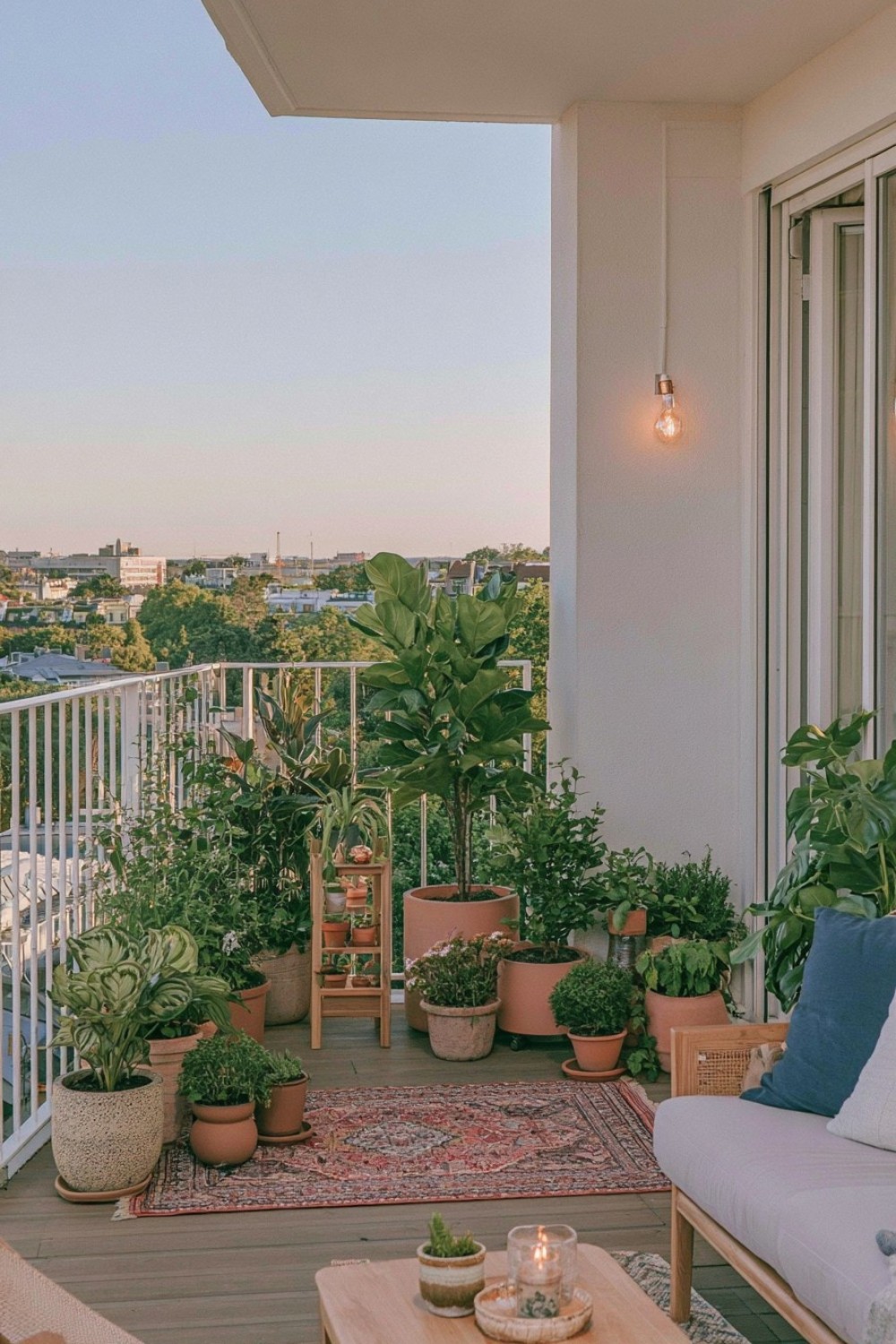
Grouping plants in one corner can produce a fuller garden effect while leaving the rest of the balcony open. Begin with one taller structural plant, place medium foliage around it, and use smaller or trailing varieties at the edge. Select species with compatible light, wind, and watering needs rather than grouping plants only by appearance.
Containers become considerably heavier after watering, so distribute weight and confirm any building limitations before creating a dense cluster. Use stable pots with drainage holes and trays that prevent runoff without holding water around the roots. Place the tallest containers against a protected internal wall rather than near an exposed edge. Preserve access for watering, pruning, and cleaning behind the arrangement. Lightweight stands can create height, but they need broad bases and should not allow plants to overturn in wind.
4. Develop a Mediterranean Mood With Restrained Texture
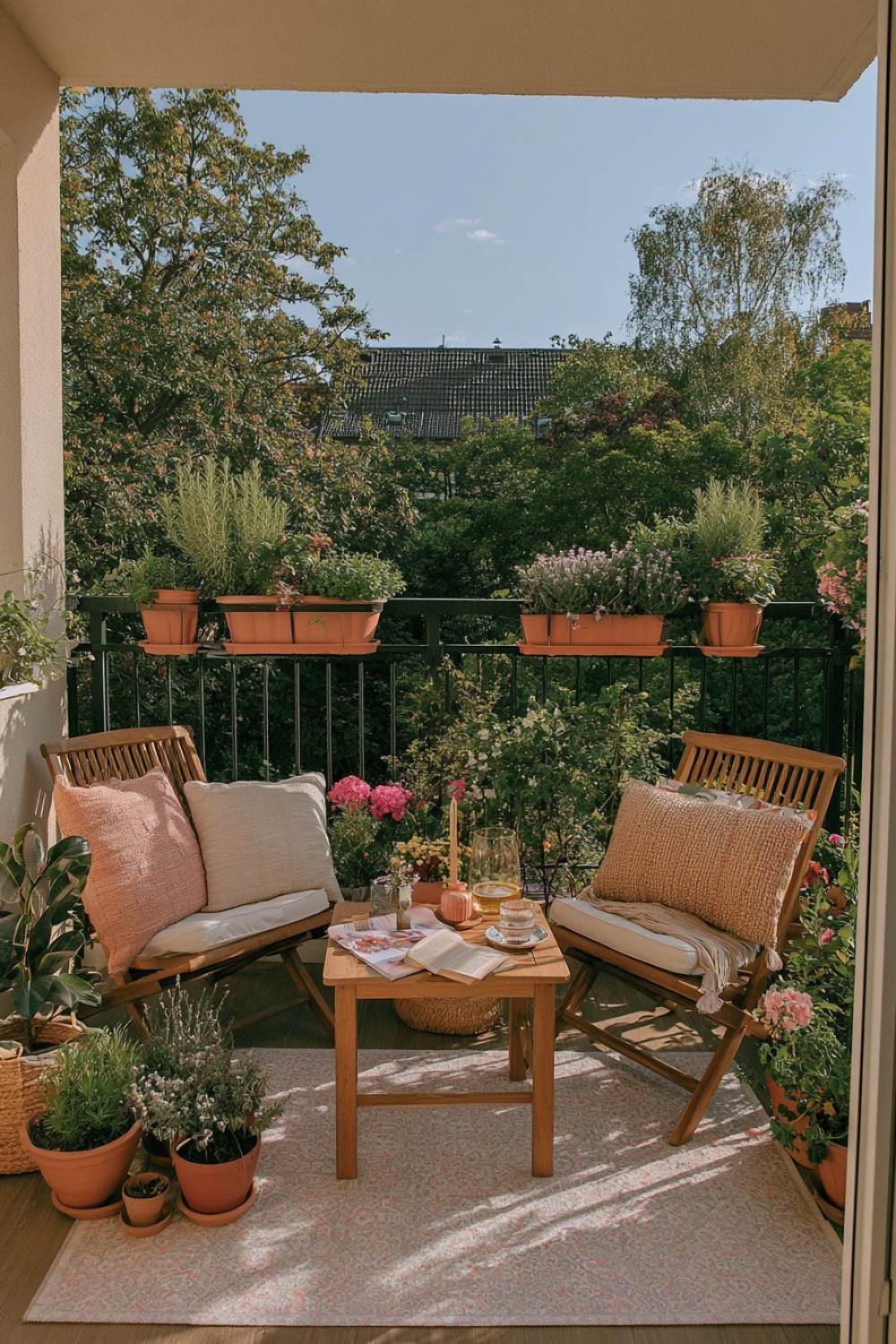
Terracotta tones, pale textured surfaces, striped textiles, and aromatic plants can suggest Mediterranean character without permanent architectural changes. Use terracotta on a few feature pots and repeat its color through washable cushion covers or a small outdoor rug. Rosemary, thyme, lavender, or a compact olive may suit a sunny balcony, depending on local climate and exposure.
Unglazed terracotta can dry quickly and may crack in freezing conditions, so choose containers appropriate for the weather and watering routine. Avoid attaching heavy decorative tile or plaster directly to rented walls without approval. Outdoor floor tiles that interlock can provide a removable surface, but they must not block drainage or trap persistent moisture underneath. Limit the material palette to prevent a compact balcony from becoming crowded with themed accessories. Keep all loose textiles and lightweight objects secured during windy weather.
5. Soften a Rectangular Balcony With a Curved Bench
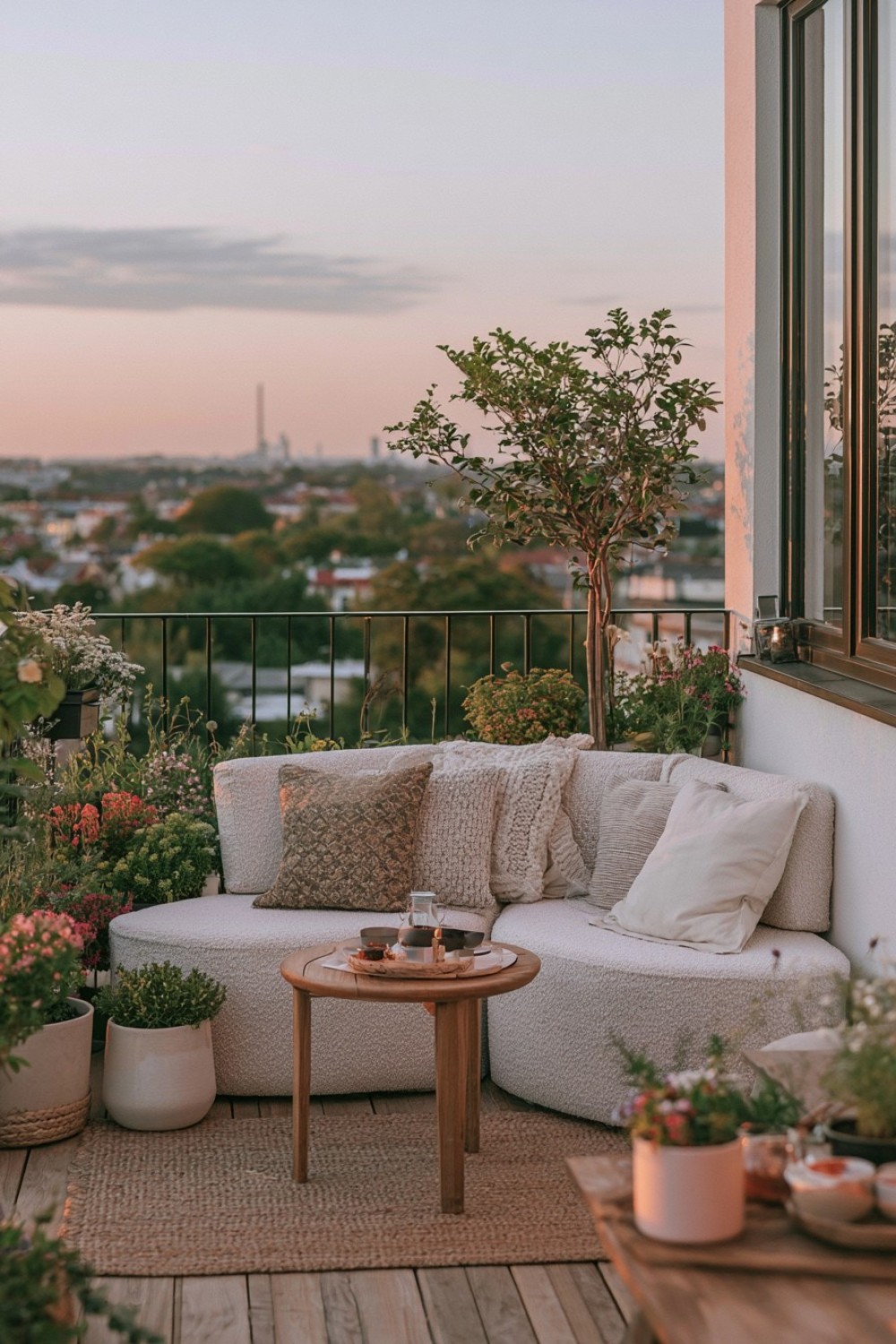
A curved bench can introduce movement into a narrow rectangular balcony and create a more social seating arrangement. A gentle arc works better than a dramatic semicircle when floor space is limited. Position the widest part where it does not interfere with the door or circulation, and use a small round table to repeat the softened geometry.
Custom curved furniture may occupy more depth than expected, so mark its footprint on the floor before ordering. The frame should use outdoor-suitable materials and include drainage beneath the cushions. Built-in storage can be useful, but the compartment needs ventilation and should not collect rainwater. In a rental, a freestanding modular bench offers a more reversible option than permanent construction. Keep the furniture away from the railing if its height could make it easy to climb.
6. Establish a Reading Nook With a Stable Cocoon Chair
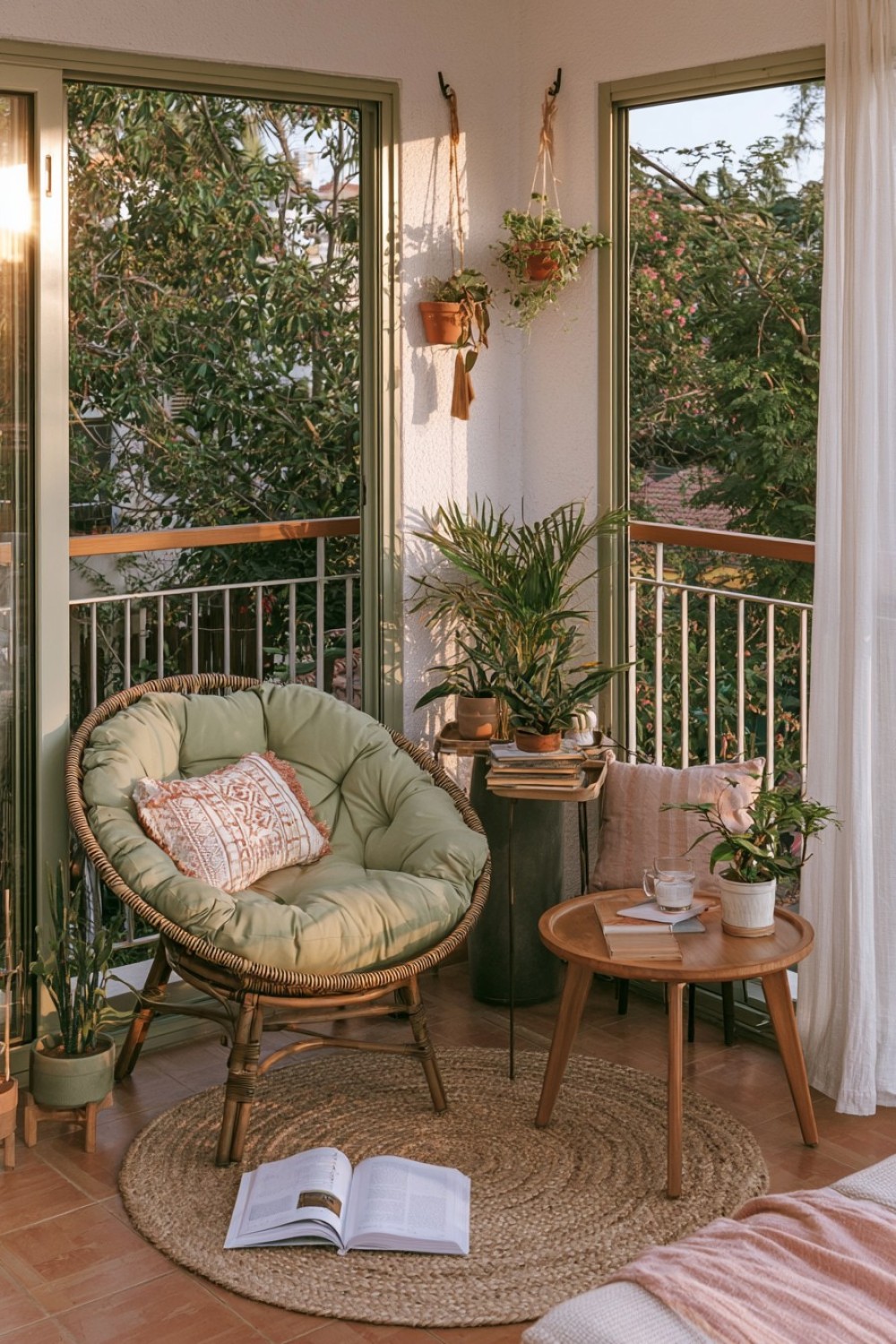
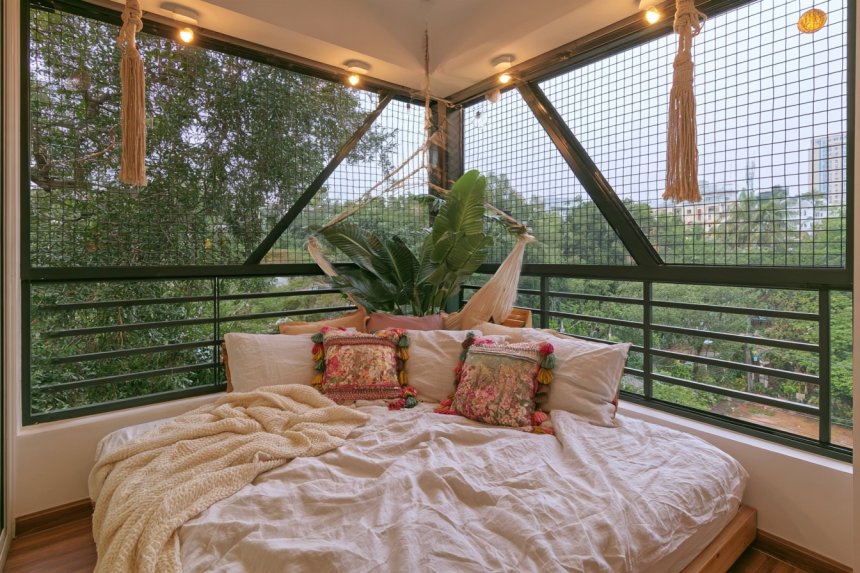
A cocoon-style chair can create a defined reading corner while offering a sense of enclosure. A freestanding model is often more appropriate for an apartment than a ceiling-suspended chair because it does not require attachment to an unknown overhead structure. Measure both the base and the chair’s full movement before deciding where it belongs.
The frame and stand must be rated for the user and remain stable on the balcony surface. A swinging chair needs extra clearance from railings, glazing, walls, and furniture. Do not place it where movement blocks the doorway or causes the chair to strike the edge. Outdoor-rated cushions should be removable for cleaning and weather protection. Pair the chair with a narrow side table rather than adding unnecessary furniture. If the balcony is exposed to strong wind, follow the manufacturer’s storage guidance or choose fixed lounge seating instead.
7. Preserve Flexibility With Fold-Away Furniture
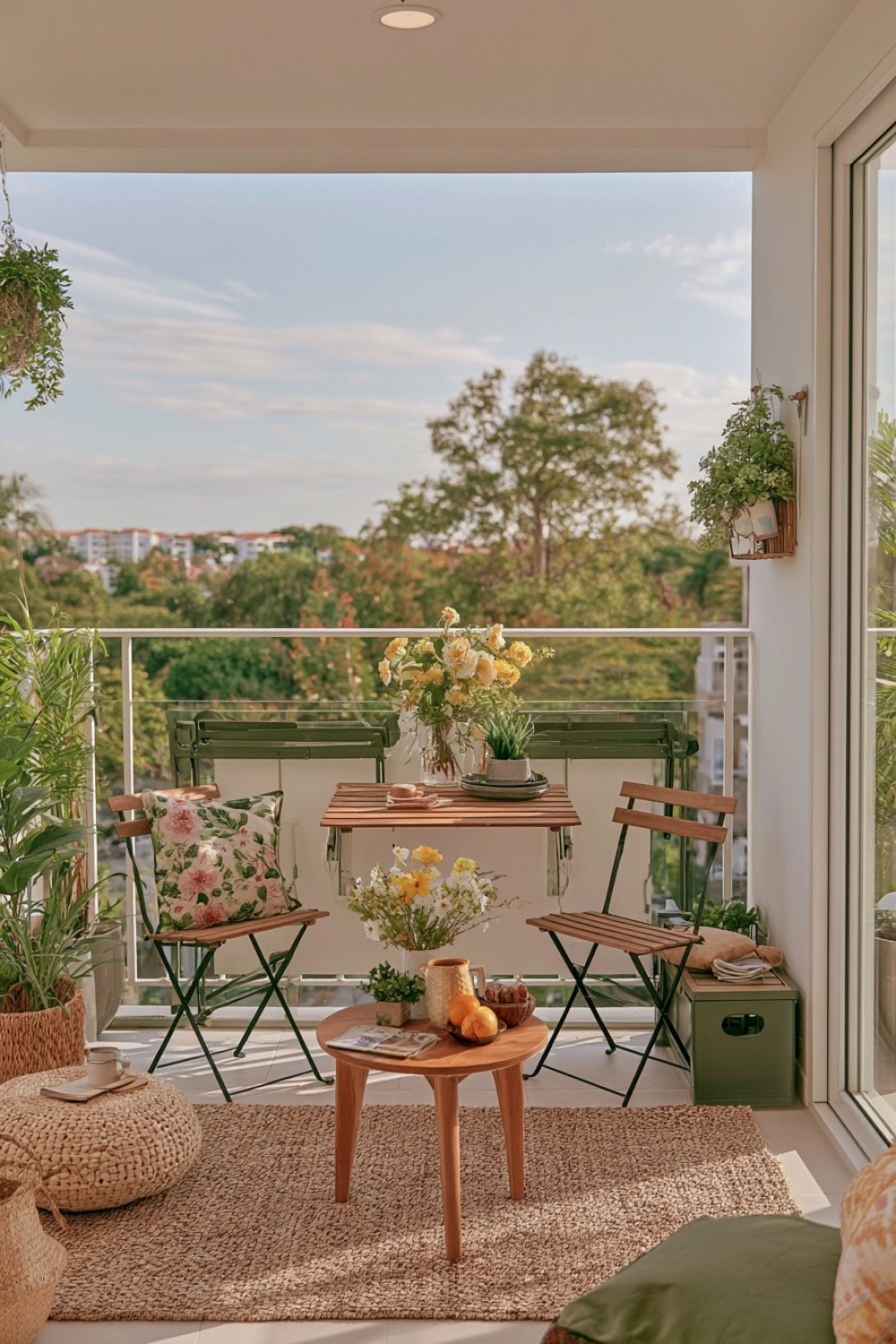
Folding chairs and tables allow the balcony to change between dining, exercise, gardening, and open circulation. Choose furniture that can be operated easily and has locks or braces that prevent accidental folding during use. When open, chair legs and table supports should remain stable on the existing floor surface.
Plan where folded pieces will be stored before buying them. A narrow weather-resistant cabinet, approved wall hook, or indoor closet can prevent furniture from leaning loosely against the railing. Inspect hinges and fasteners periodically for corrosion or looseness. Lightweight furniture is convenient to move but may also shift in strong wind, so store or secure it when unattended. A consistent material or color across the folding pieces keeps the space visually organized even when their positions change frequently.
8. Create a Sculptural Desert-Inspired Balcony
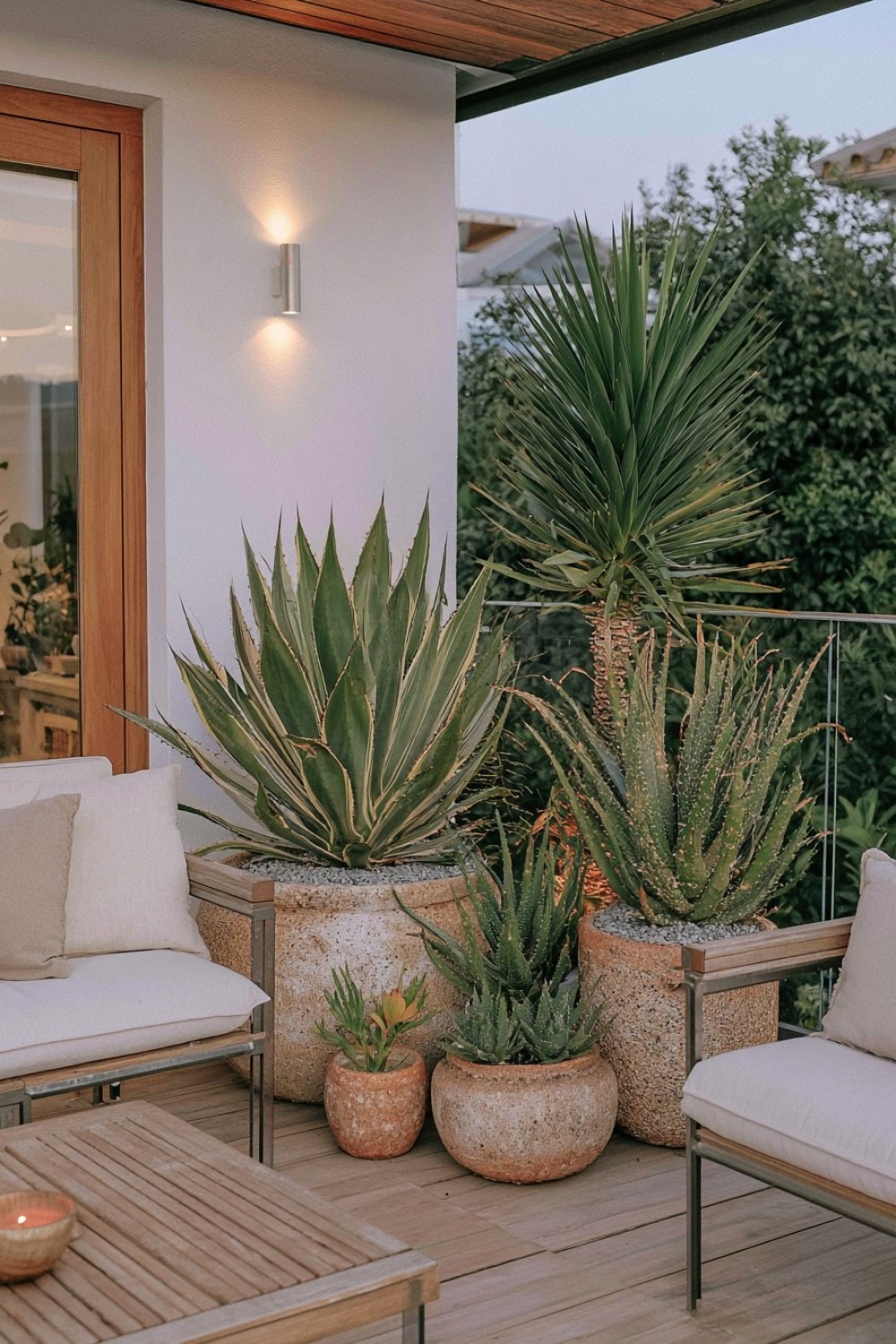
A hot balcony with strong direct sun may suit drought-tolerant plants and a restrained desert palette. Combine sculptural foliage with sand, clay, muted green, and weathered stone tones. Group only plants with compatible water and exposure needs, leaving enough room for each one to reach its mature form.
Drought-tolerant plants still require careful watering while becoming established. Use freely draining growing material and containers with open drainage holes. Sharp agaves, cacti, and rigid leaves should remain away from seating, doors, and narrow paths, especially where children or pets use the balcony. Pale containers may absorb less heat than very dark pots in intense sun, but suitability varies by material. Avoid spreading loose gravel over the floor, where it can enter drains or create a slipping hazard; keep decorative stone contained inside stable planters.
9. Turn One Interior Wall Into Compact Outdoor Storage
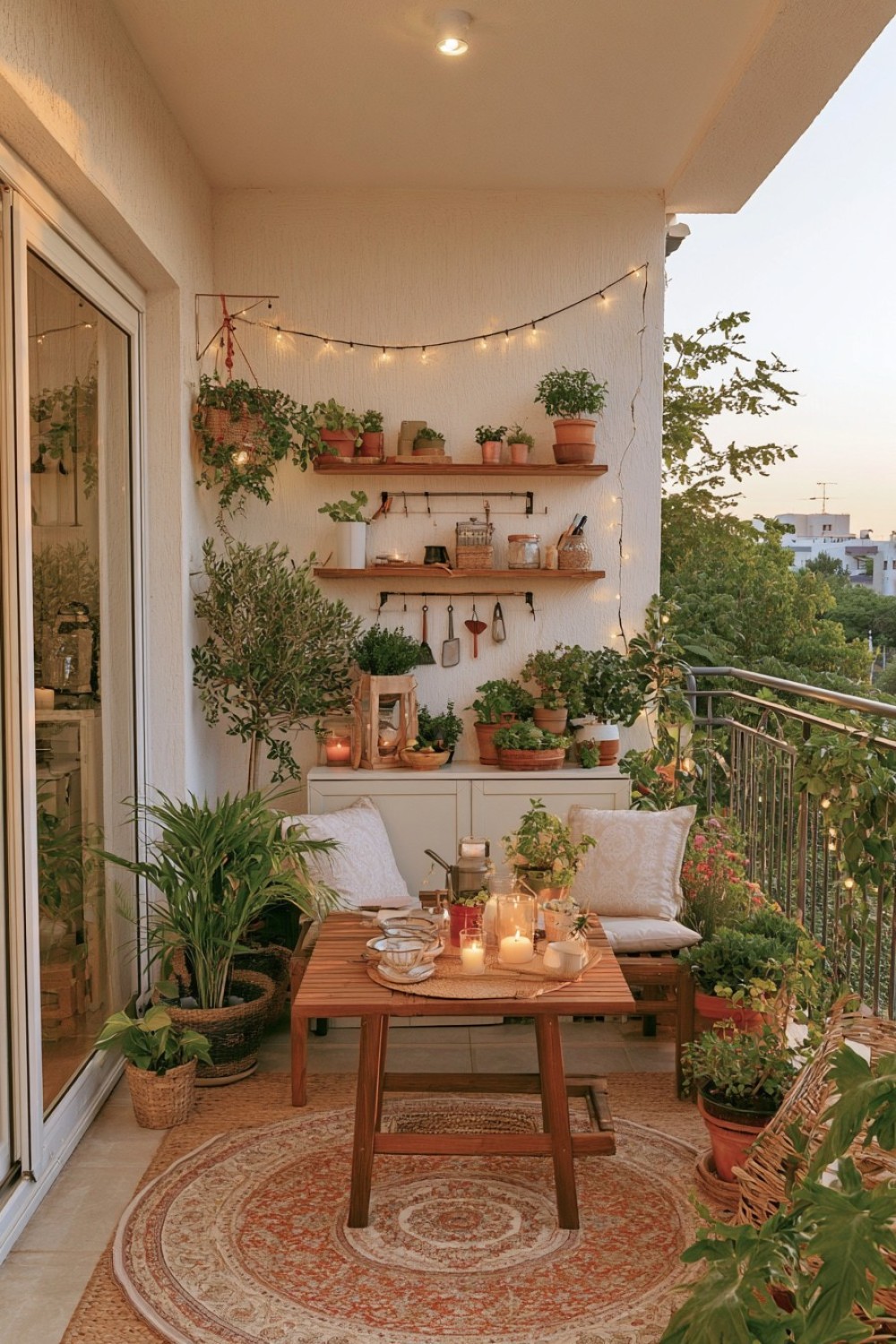
A shallow storage cabinet can hold gardening tools, cushion covers, watering equipment, and small outdoor accessories without spreading them across the balcony. Position it against an internal wall where it receives less direct weather exposure. Adjustable shelves and hooks make a narrow cabinet more useful than one deep undivided compartment.
Use materials designed for outdoor or damp conditions and raise the base slightly so water can drain and air can circulate underneath. Tall units need secure anchoring with a method permitted by the building. Storage should not cover vents, utility points, drains, or inspection access. Keep heavy items low and avoid storing hazardous chemicals in heat or direct sunlight. Doors and lids must latch securely so they cannot open in wind. Measure their full swing to ensure they do not block the balcony entrance.
10. Build an Edible Tea and Herb Garden
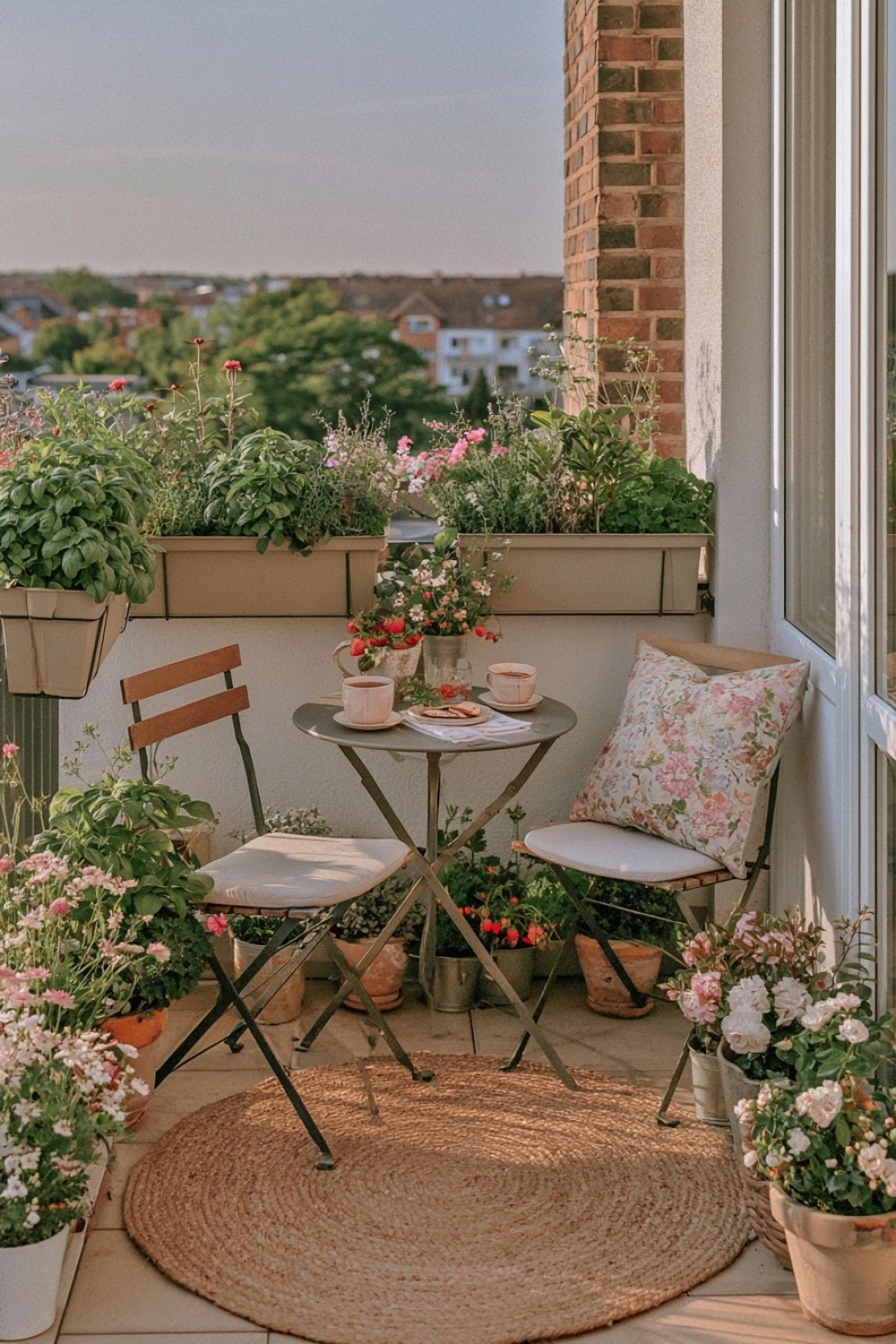
Mint, lemon balm, thyme, sage, and other culinary herbs can create a fragrant balcony area for preparing drinks and food. Plant selection should reflect local conditions and the amount of direct sun. Mint and lemon balm can spread aggressively, so separate containers make them easier to manage. Drought-tolerant herbs should not share constantly moist soil with plants requiring regular water.
Use clean, food-suitable containers and growing material intended for edible plants. Consider potential contamination from upper-floor runoff, nearby traffic, or building treatments before consuming exposed leaves. Avoid routine pesticide use and follow product guidance carefully when treatment is necessary. Place frequently harvested plants within easy reach and label similar varieties. A small folding table can provide space for serving tea without becoming a permanent obstruction. Empty drainage trays regularly so water does not remain stagnant.
11. Let Removable Graphic Flooring Carry the Pattern
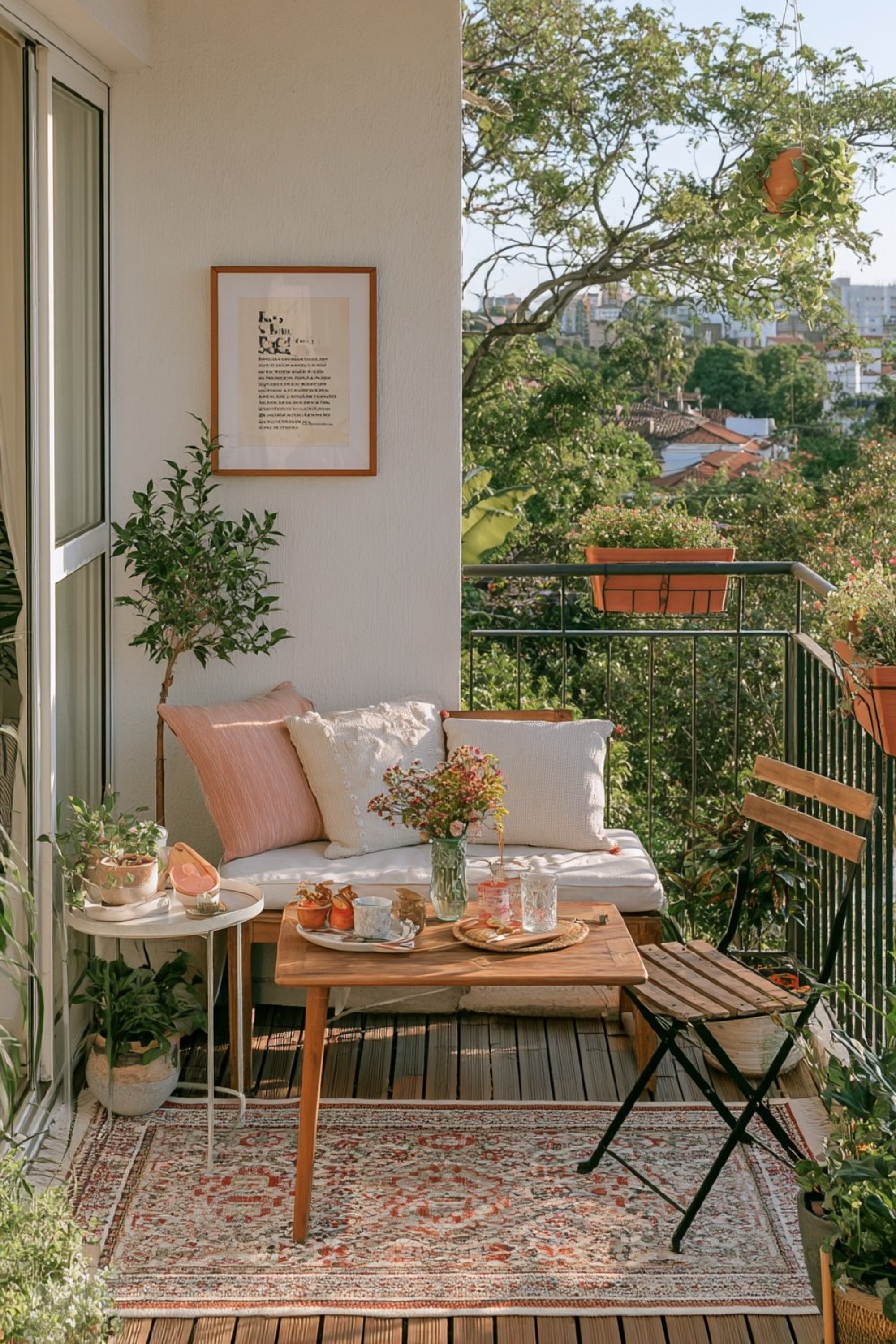
Graphic outdoor tiles or a patterned weather-resistant rug can give a balcony character without adding numerous decorations. Choose one geometric or restrained botanical pattern and pair it with simple furniture. Removable interlocking tiles may suit a rental, provided the existing floor, threshold height, and drainage conditions allow their use.
The covering must not block drains, trap persistent moisture, create unstable edges, or prevent the door from opening. Lift removable flooring periodically to inspect and clean beneath it. Select a product appropriate for outdoor exposure and consider surface grip when wet. A rug needs non-slip performance and a size that will not curl into the walkway. Keeping planters and furniture comparatively plain allows the floor to remain the main visual feature without making the compact space feel overly busy.
12. Divide a Long Balcony Into Two Functional Zones
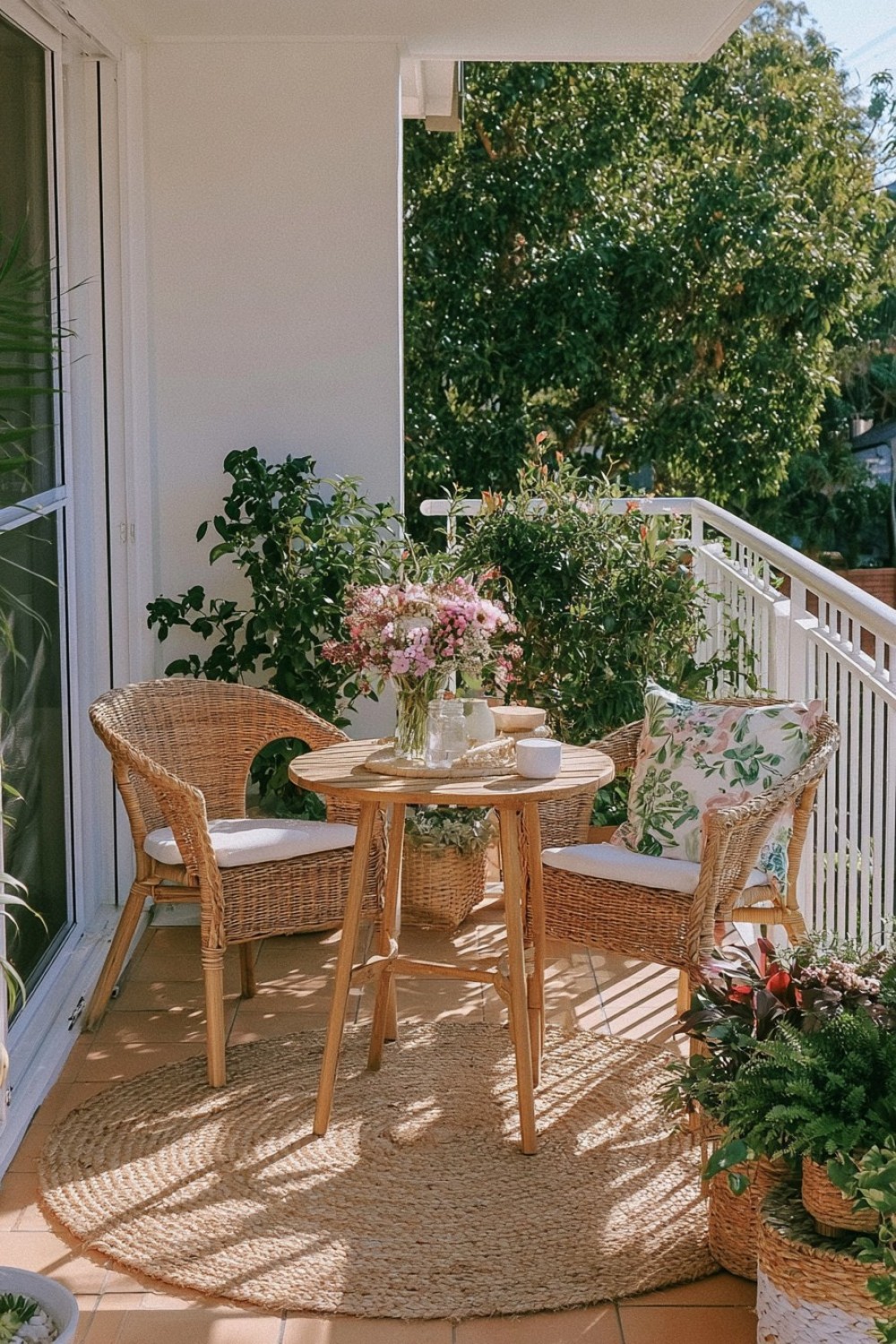
A long narrow balcony can support more than one activity when it is divided without solid partitions. Place a compact seating or dining area near the door and use the farther end for planting, reading, or storage. Repeating one material or color across both zones keeps them visually connected.
Maintain one continuous circulation route rather than forcing users to weave around furniture. A change in rug, planter arrangement, or seating direction can mark each area without adding physical barriers. Keep frequently used objects closer to the entrance, particularly when carrying food or watering equipment. Furniture at the distant end should not block drains or required access. If the balcony is extremely narrow, one primary zone and a small secondary feature may work better than trying to fit two complete outdoor rooms.
13. Combine Privacy and Planting in One Stable Screen
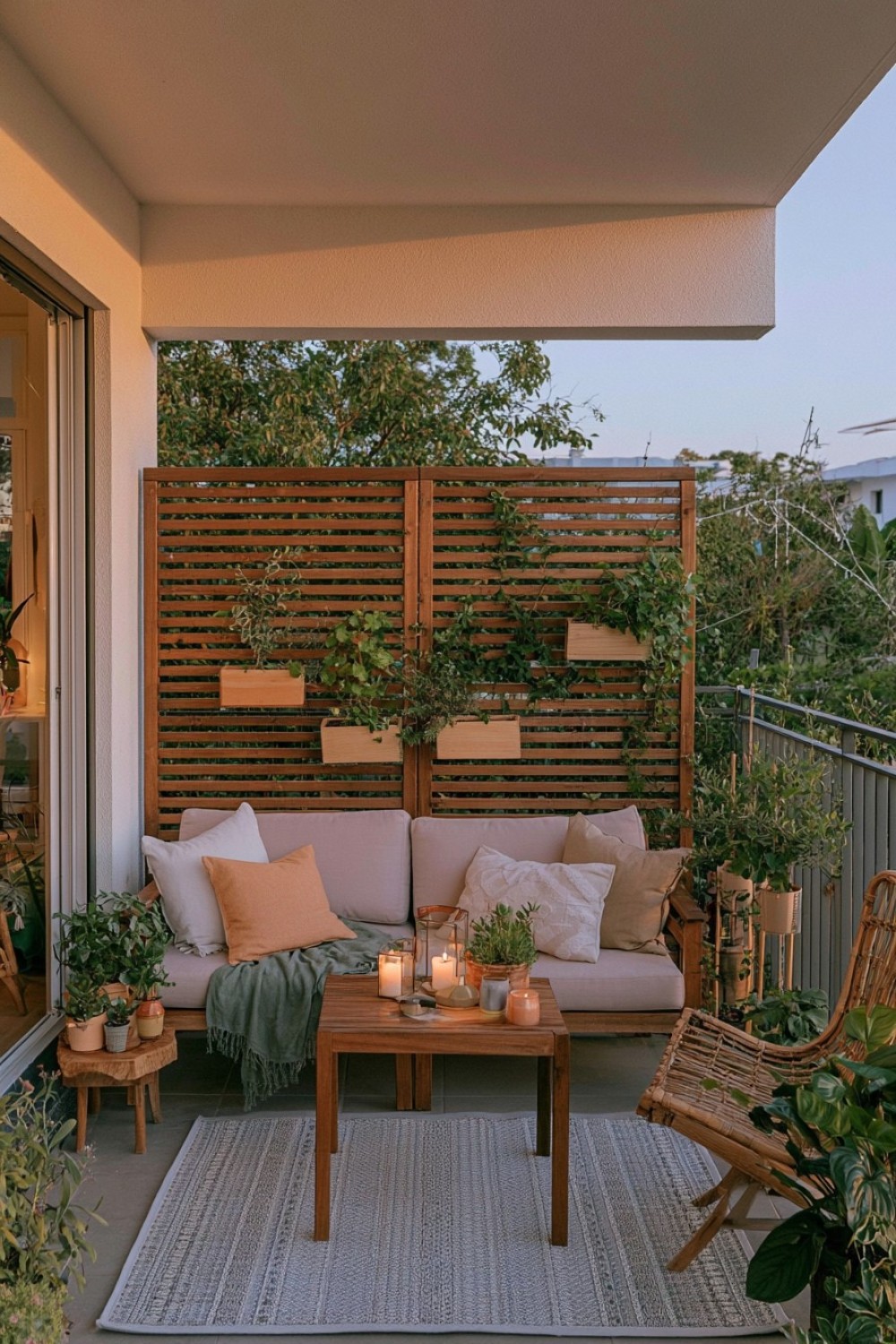
A slatted screen or freestanding trellis can reduce side views while supporting lightweight climbing plants. Position it only where building rules permit and where it does not block essential daylight, ventilation, drainage, or emergency access. Partial screening often provides adequate privacy with less wind pressure than one completely solid panel.
Wind load increases significantly as a screen becomes taller, denser, or covered with mature foliage. A planter alone may not provide sufficient support, so use an approved fixing method or a purpose-designed stable base. Keep containers and vines inside the balcony and trim growth before it reaches neighboring property. Avoid attaching screening to railings unless the system and building rules specifically allow it. Select plants according to exposure and mature weight, and leave enough access for watering and maintenance behind the screen.
14. Use Tonal Materials for a Soft Minimalist Balcony
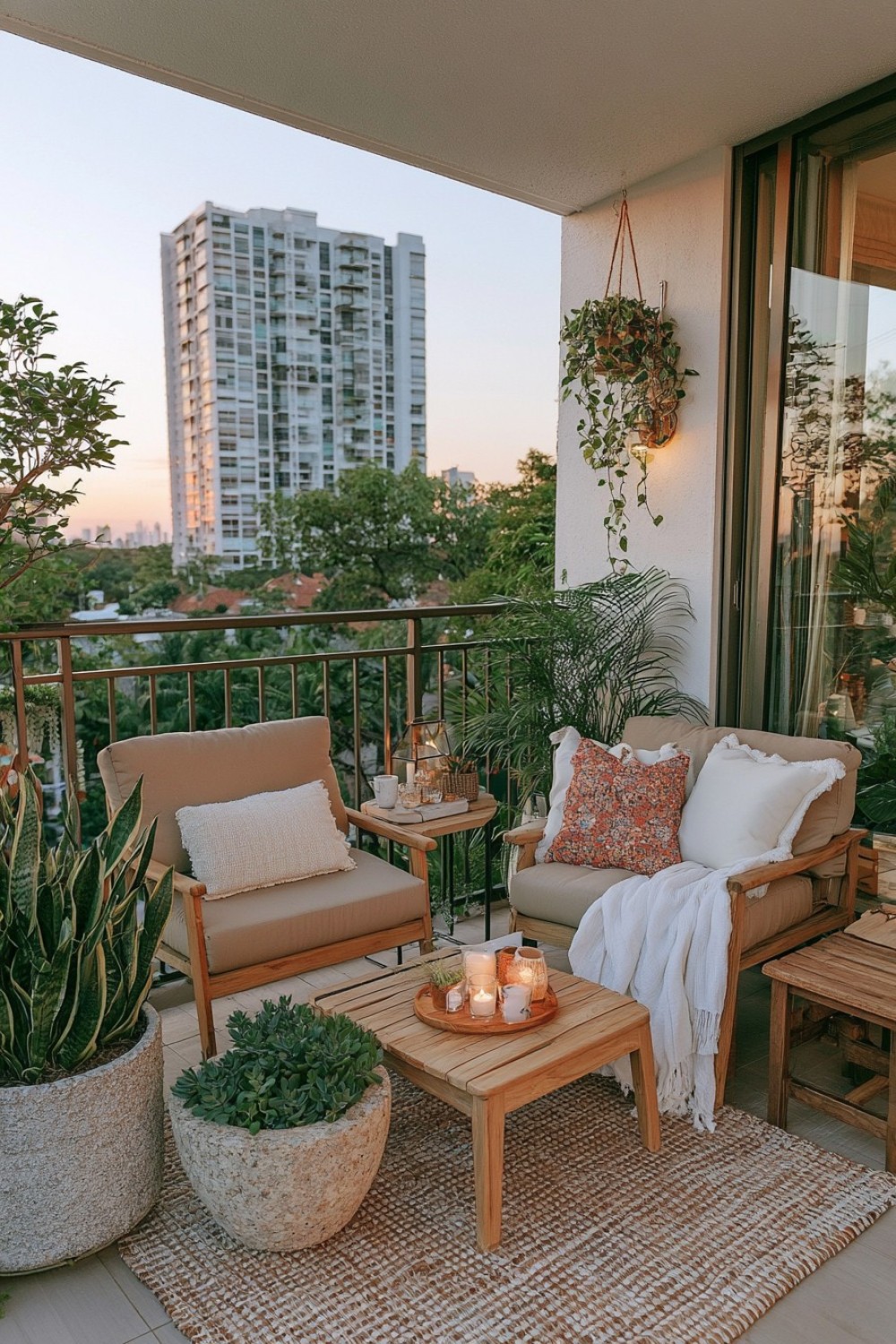
A minimalist balcony can feel warm rather than empty when a limited palette includes varied textures. Combine warm gray, oat, sand, pale timber, and muted stone across the furniture, planters, and textiles. One deeper accent can outline the arrangement and prevent similarly colored surfaces from blending together.
Keep only objects that serve seating, planting, shade, or storage. Outdoor textiles need removable washable covers and should be stored during unsuitable weather. Pale finishes may show pollution and water marks more readily, so consider cleaning requirements before selecting them. Use containers in two or three related shapes instead of many identical decorative accessories. Preserving visible floor around the furniture makes the balcony feel more spacious and simplifies routine cleaning and drainage inspection.
15. Set Up a Temporary Balcony Workstation
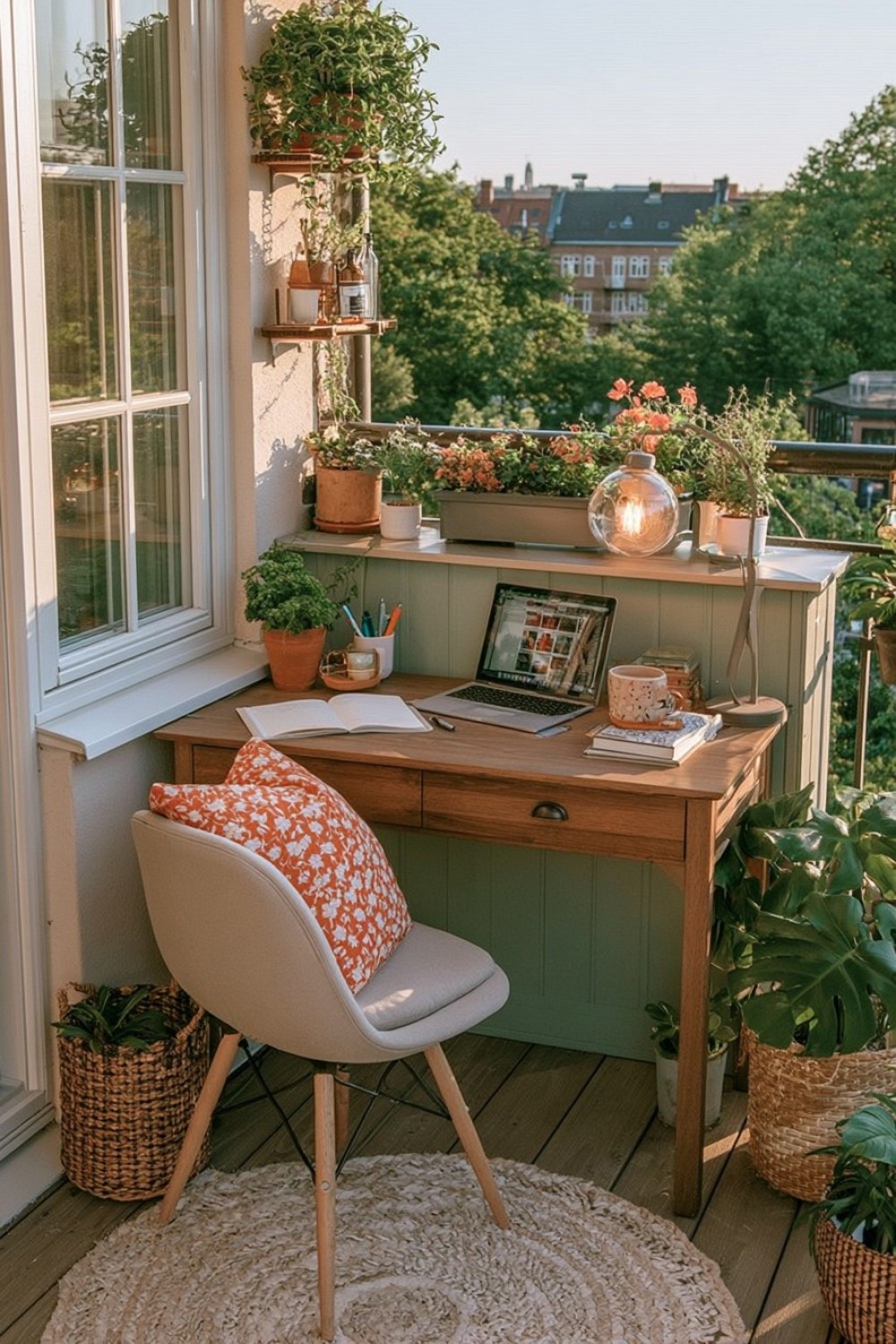
A balcony may serve as an occasional work area when shade, weather, noise, and seating conditions are suitable. Use a folding table or secure narrow console with enough depth for a laptop and notebook. The chair should provide more support than a low lounge seat if the workspace will be used for longer periods.
Electronics must remain protected from rain, condensation, excessive heat, and direct sun. Outdoor extension cords and improvised power arrangements should not replace a properly planned supply. A charged laptop can eliminate cables for shorter sessions. Position the screen to reduce glare without placing the user in an unstable or obstructed location. Bring all electronics indoors after use and keep documents secured against wind. The workstation should fold away so the balcony can return to its primary function without leaving equipment exposed.
16. Create Hotel-Like Order Through Balanced Placement
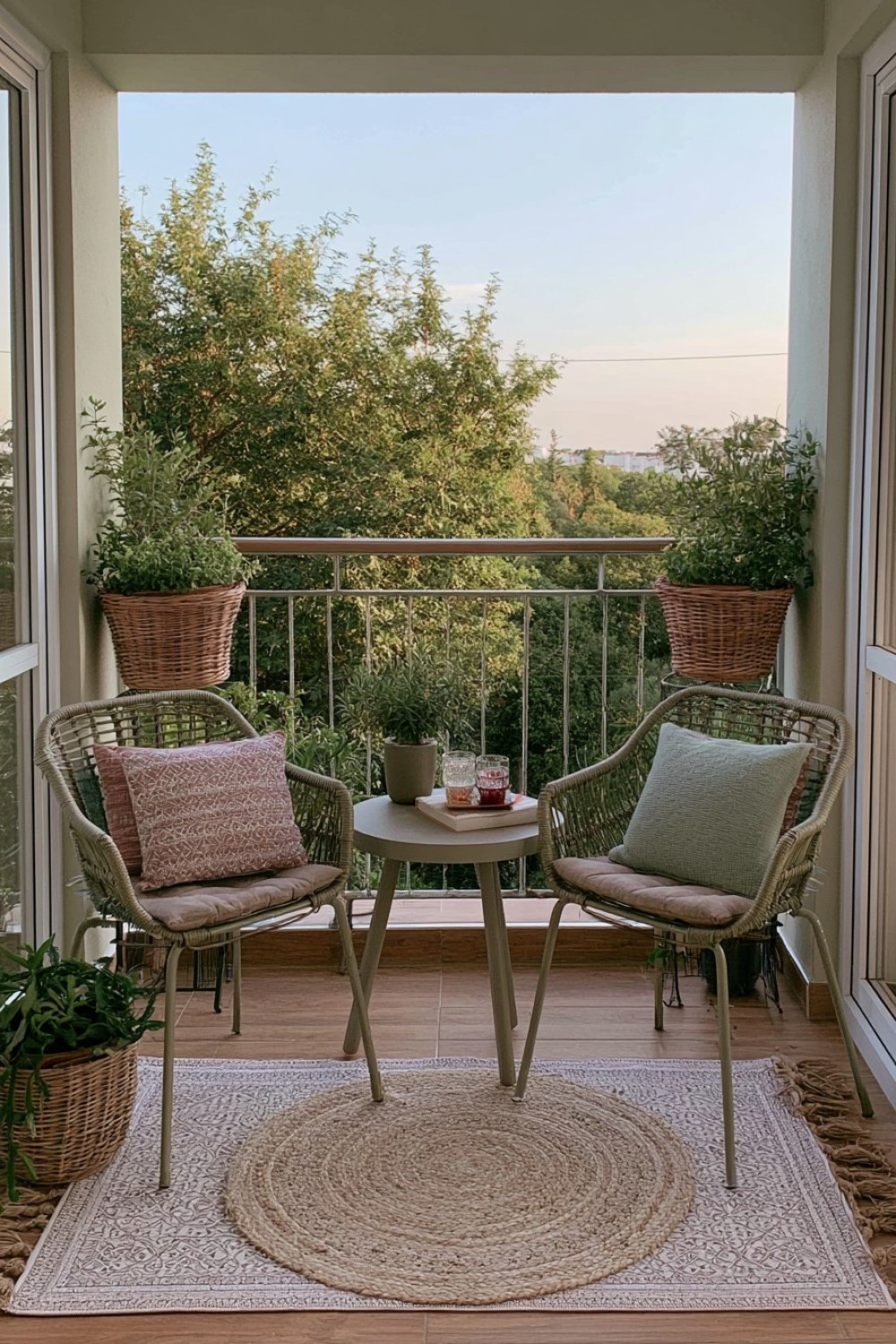
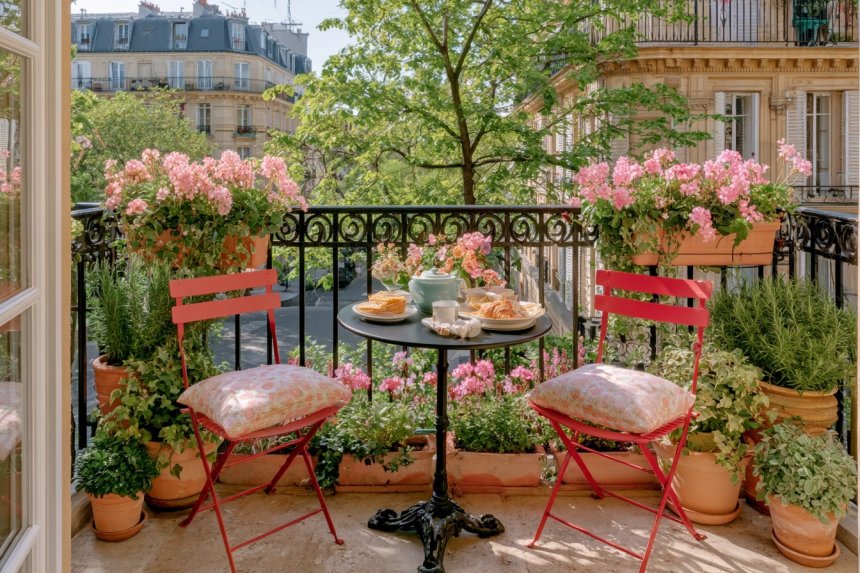
A boutique-hotel atmosphere can come from consistent furniture placement, repeated materials, and controlled accessories rather than expensive pieces. Where space permits, arrange two matching chairs around a compact table and repeat the same planter shape on both sides. On an asymmetrical balcony, use visual balance rather than forcing identical placement that restricts movement.
Choose outdoor furniture that fits the measured area and provides practical comfort. Keep table surfaces mostly clear and use one durable decorative element instead of several lightweight objects. Seat cushions, planters, and flooring can share related tones without matching exactly. Symmetry should never block the doorway, drain, railing, or required circulation. A well-maintained arrangement with clean surfaces and healthy plants will create a more convincing hotel-like impression than a crowded collection of themed accessories.
MORE IDEAS


Share
What's Your Reaction?
 Like
0
Like
0
 Dislike
0
Dislike
0
 Love
0
Love
0
 Funny
0
Funny
0
 Angry
0
Angry
0
 Sad
0
Sad
0
 Wow
0
Wow
0