16 Stylish Balcony Decor Ideas for Small Outdoor Spaces

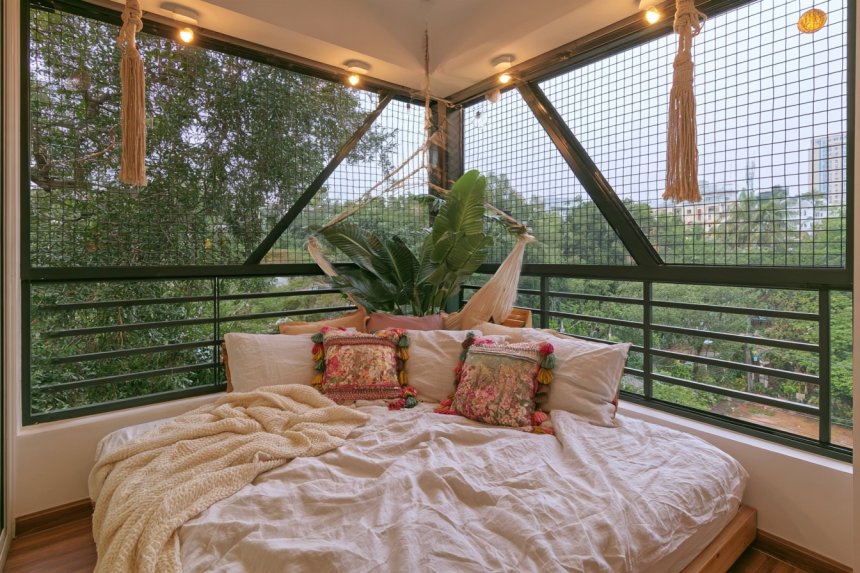
A well-designed balcony should feel connected to the home while remaining practical in changing weather. Begin by measuring the usable floor area, observing sunlight and wind, and checking building rules before selecting furniture, planters, screens, or flooring. The strongest arrangements leave a clear route to the door and drainage outlets instead of filling every corner. Outdoor-rated materials, secure accessories, and manageable planting will also make the space easier to maintain. Whether the preferred look is neutral, botanical, vintage, or contemporary, these balcony decor ideas show how color, texture, furniture, and greenery can create a more intentional outdoor space without sacrificing safety or everyday comfort.
1. Layer Natural Textures Across a Soft Neutral Balcony
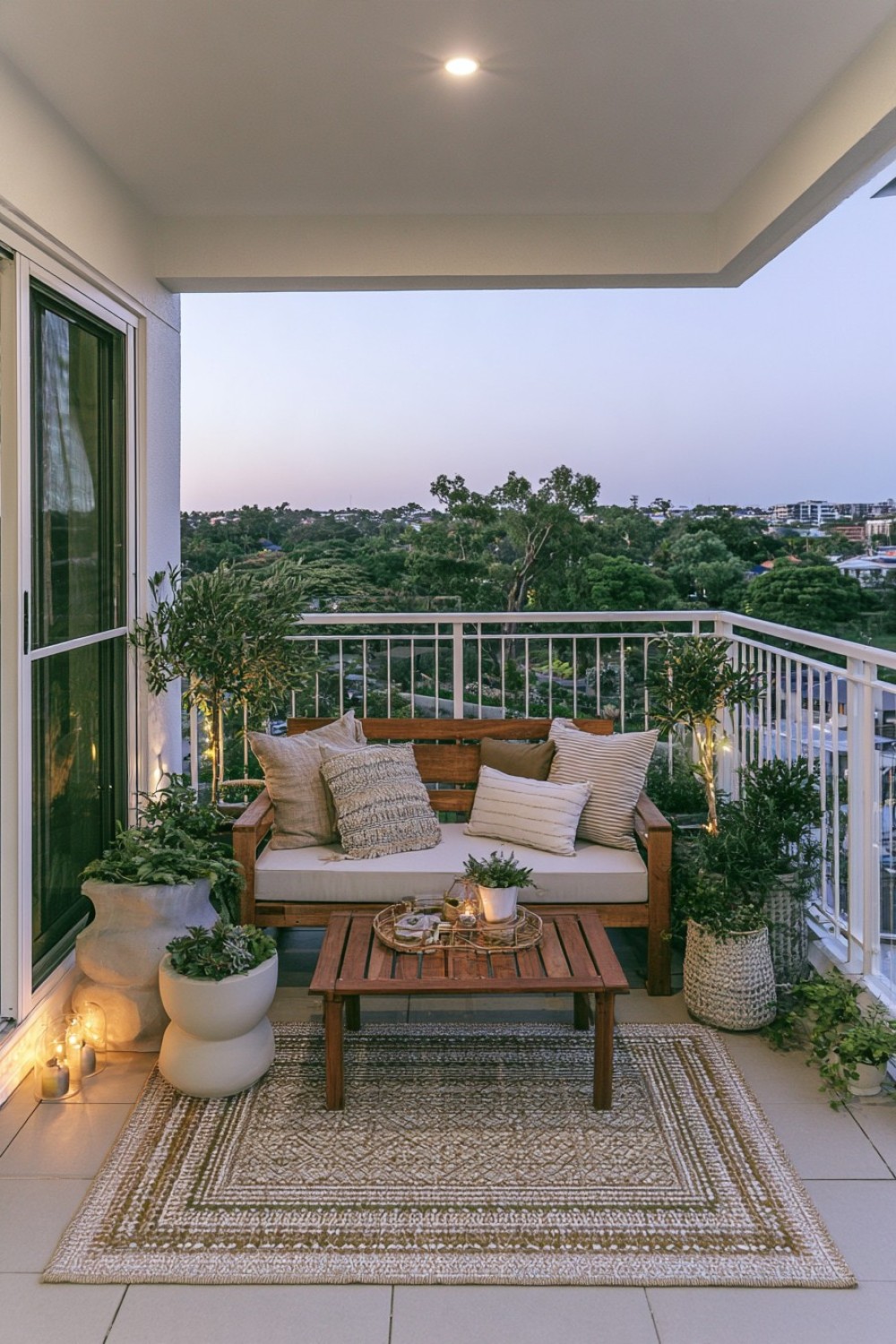
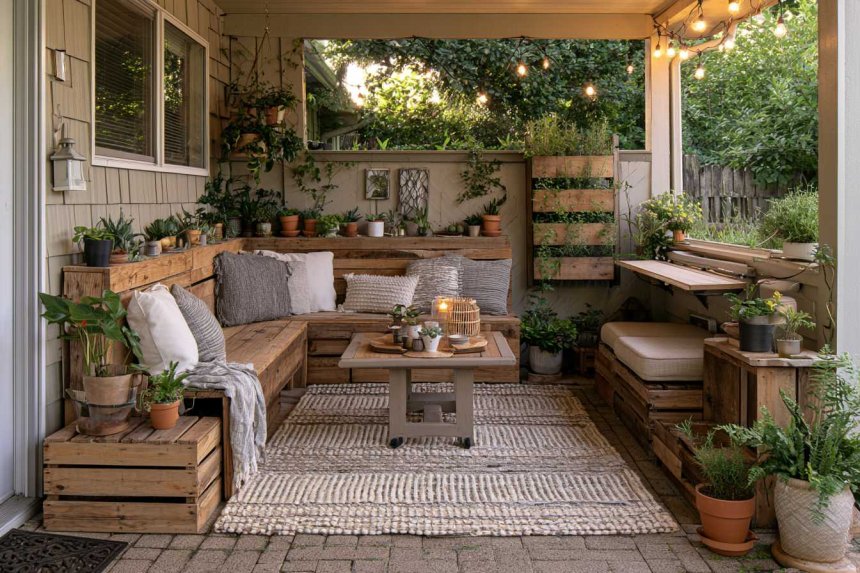
A neutral balcony becomes more inviting when its interest comes from texture rather than numerous colors. Combine a woven-look outdoor rug, timber or powder-coated furniture, washable cushions, and planters with subtly different surfaces. Warm white, oat, sand, and pale stone work well together when their undertones are consistent. Keep the largest elements quiet, then introduce contrast through one darker table, planter, or cushion pattern.
Natural-looking materials still need to tolerate the balcony’s exposure. Untreated indoor rattan, jute, and delicate timber can deteriorate quickly in rain or strong sunlight. Choose outdoor-rated alternatives or store lightweight textiles inside when they are not being used. Leave drainage points uncovered and raise planters slightly so water can move beneath them. Secure light objects where sudden wind could lift or push them toward the railing.
2. Create a Parisian-Inspired Balcony With Slim Furniture
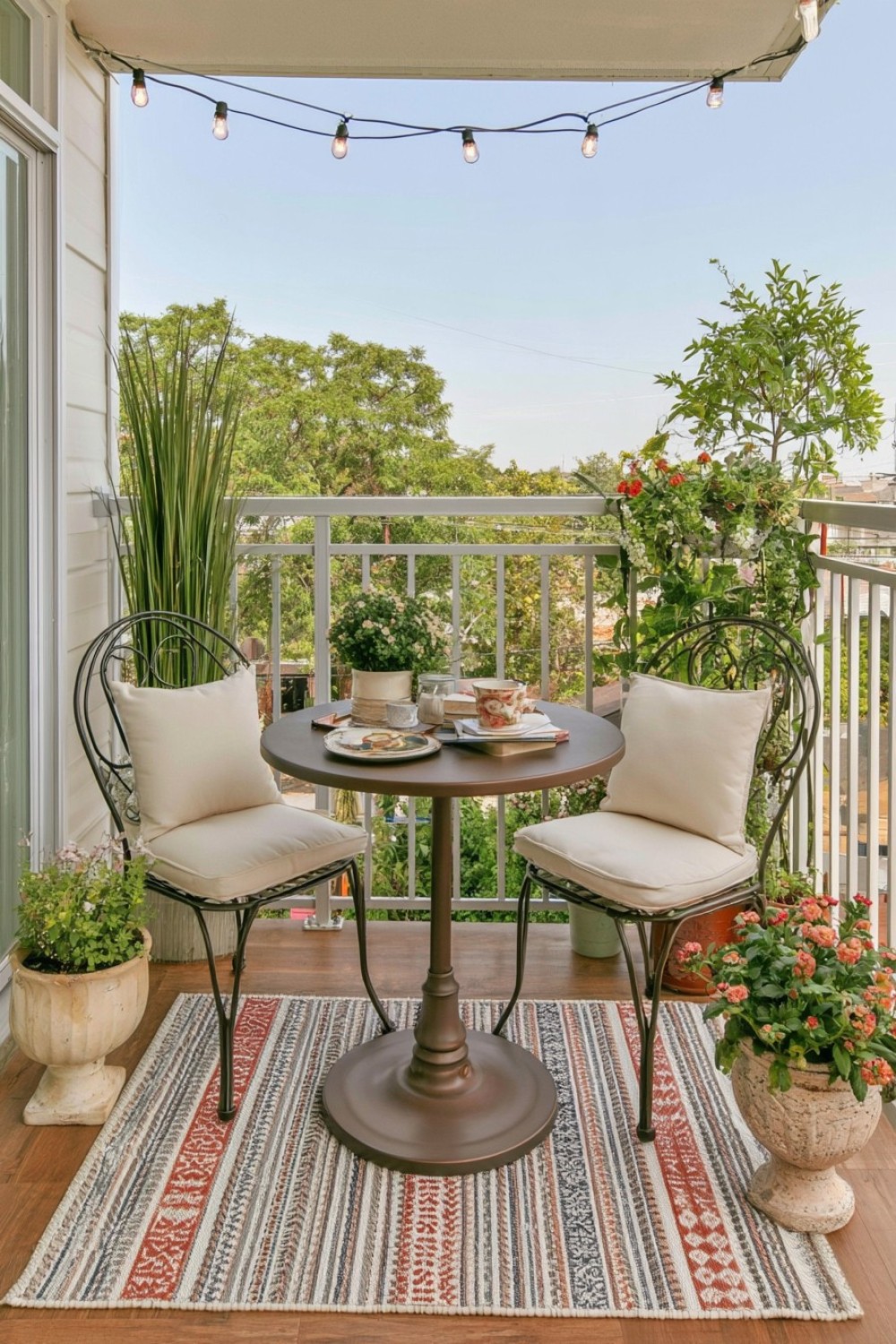
A compact café table and two slender chairs can create a Parisian-inspired arrangement without consuming the entire balcony. Look for folding furniture or chairs that tuck closely beneath the table when not in use. Black, dark green, or muted cream metalwork gives the setting definition, while one or two neatly shaped plants keep the composition elegant. A simple striped cushion can add pattern without making the space feel themed.
Measure both the furniture footprint and the room required to pull out a chair comfortably. Maintain an unobstructed path between the balcony door and the main seating position. Metal furniture may become hot in direct sun and can leave rust marks if its protective coating becomes damaged. Inspect joints periodically and use suitable protective feet. Folding pieces should lock securely when open and remain stored safely during severe weather.
3. Build an Earthy Palette With Terracotta and Sand Tones
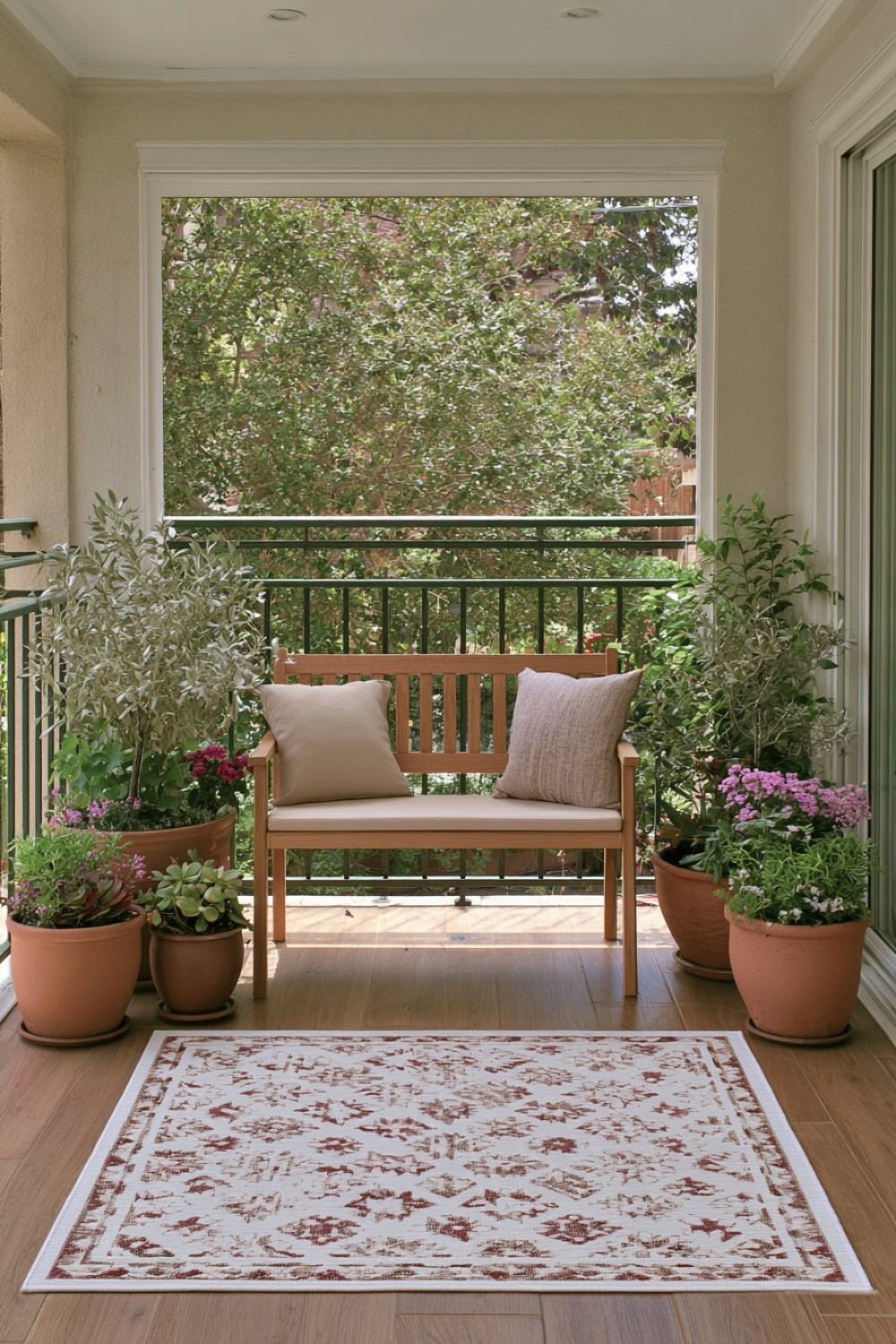
Terracotta, clay, rust, and sandy beige can make a balcony feel warm without requiring elaborate decoration. Begin with a restrained neutral base and repeat two or three earthy tones through planters, cushions, and one weather-resistant throw. Varying the planter heights produces depth, but keeping their material or color family consistent prevents a small area from looking crowded.
Traditional terracotta is porous and may release moisture or develop frost damage in cold climates. Use saucers carefully, avoid standing water, and choose frost-resistant containers where necessary. Filled pots can also become extremely heavy, so consider the balcony’s permitted load and distribute weight rather than concentrating large containers in one corner. Select plants according to actual light and wind conditions instead of their color alone.
4. Create a Coastal Balcony Without Obvious Nautical Decor
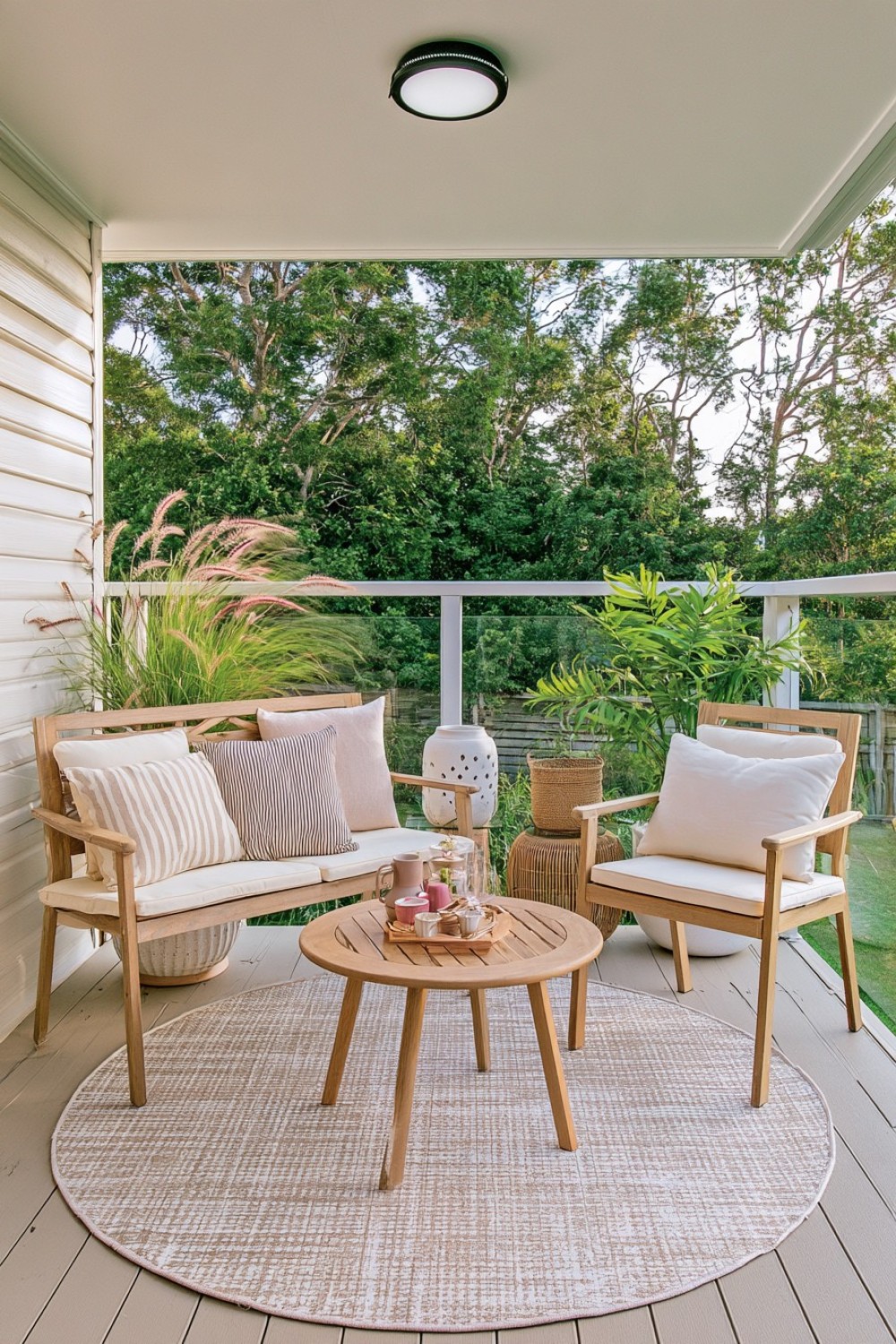
A coastal atmosphere can be created through light, weathered colors and breathable-looking textures rather than anchors, shells, or themed signs. Use chalky white, pale gray, washed blue, and natural timber as the main palette. Slatted furniture, a striped cushion, and loosely shaped greenery can suggest a relaxed seaside character while remaining suitable for a modern apartment.
Exposed coastal and upper-level balconies may experience strong wind, salt, and moisture. Select corrosion-resistant hardware and finishes appropriate for local conditions. Lightweight accessories should be stored or secured, and tall plants may need heavy, stable containers. Outdoor fabrics should resist fading and dry quickly after rain. Rinse salt residue from suitable surfaces periodically, following the manufacturer’s maintenance guidance.
5. Use Sculptural Shapes in a Modern Monochrome Balcony
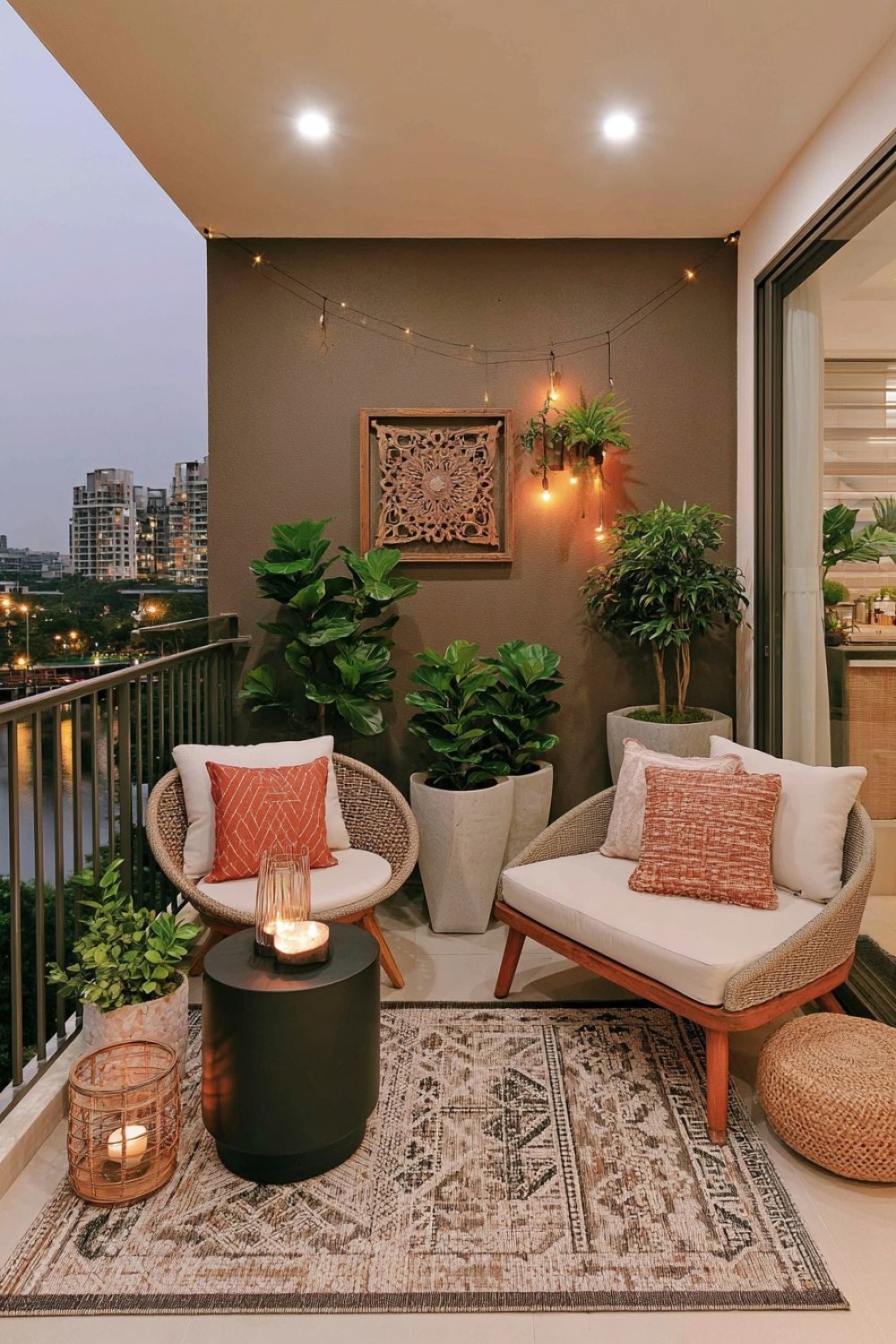
A monochrome balcony gains character when furniture and planters have distinctive silhouettes. Pair a curved chair with a cylindrical side table or combine a straight bench with rounded containers. Black, white, and gray can feel balanced when several surfaces have different textures and sheen levels. Limit the number of statement shapes so circulation remains comfortable and the design retains a clear focal point.
Dark furniture and flooring can become hot under direct sun, while glossy pale surfaces may reveal dirt quickly. Test material samples where possible and consider how the balcony is used at different times of day. Choose stable furniture with outdoor-rated construction rather than selecting items only for their sculptural appearance. Keep heavy objects away from edges unless the structure and positioning are demonstrably secure.
6. Design a Romantic Botanical Balcony With Layered Planting
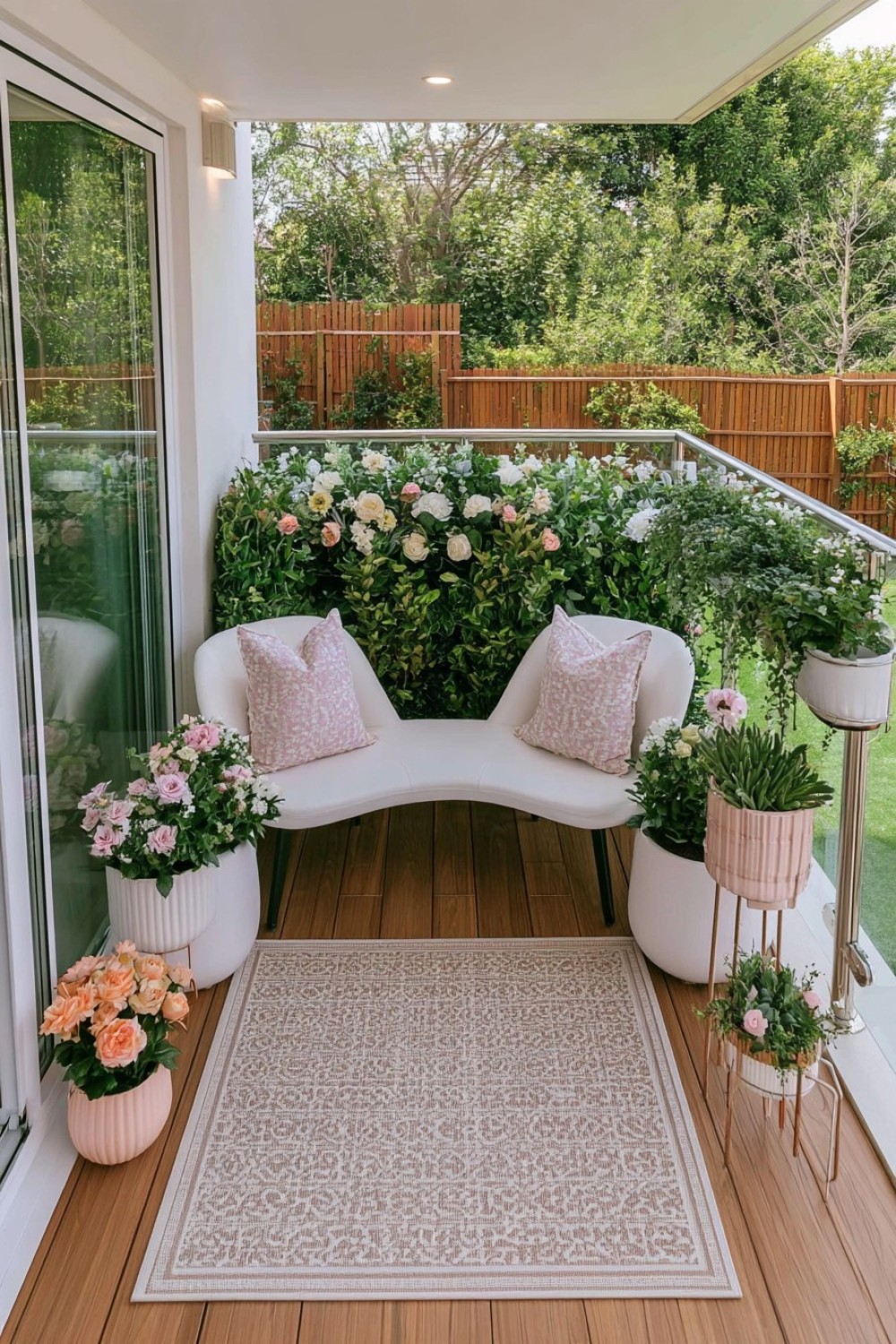
A botanical balcony feels richer when planting is arranged at several heights. Combine a small upright shrub, medium containers, trailing varieties, and one compact plant stand instead of lining identical pots around every edge. Soft green, muted pink, cream, and plum can create a romantic palette when flowering plants are selected for the balcony’s real growing conditions.
Check mature plant sizes before purchasing and leave enough room for watering, pruning, and cleaning. Containers attached to railings must use secure, purpose-made brackets approved by the building where required. Nothing should be able to fall beyond the balcony. Avoid poisonous or irritating plants when children or pets use the area. Drainage water should not create hazards for neighboring properties or pedestrians below.
7. Give a Vintage Balcony Character With Collected Furniture
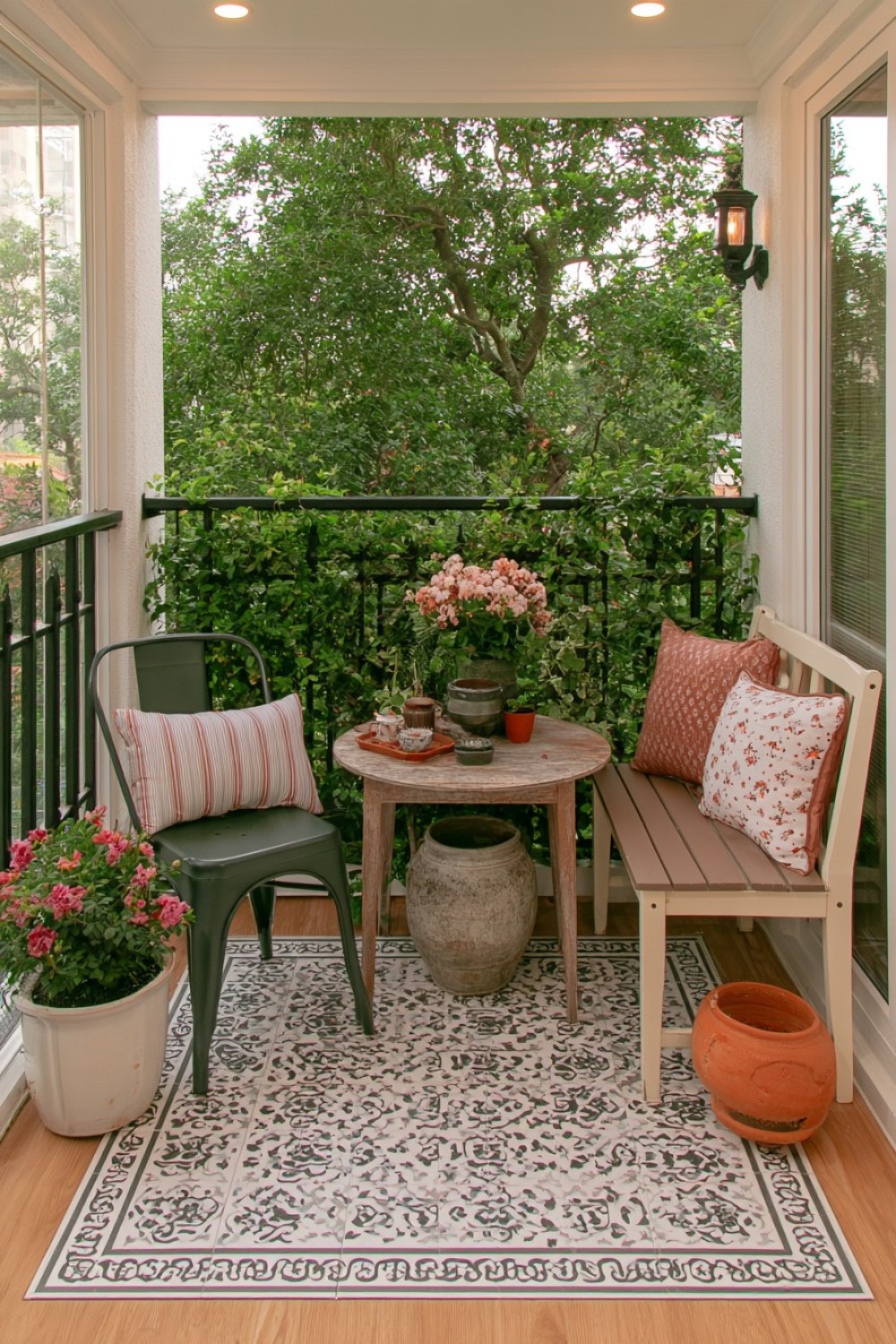
A vintage-style balcony looks more convincing when it contains a few carefully chosen pieces rather than a complete matching set. A restored metal chair, compact timber table, patterned outdoor cushion, and aged-looking planter can create a collected appearance. Repeat one color or material across the arrangement so furniture from different sources still feels related.
Inspect secondhand furniture for loose joints, rust, splinters, pests, and unstable repairs before using it. Indoor antiques may not tolerate rain or temperature changes, making outdoor-rated reproductions a more practical option in exposed spaces. Remove flaking paint safely, particularly when the age or composition of the coating is unknown. Avoid over-distressing new items, since excessive artificial wear can make the design look less authentic.
8. Keep a Japandi Balcony Calm With Controlled Greenery
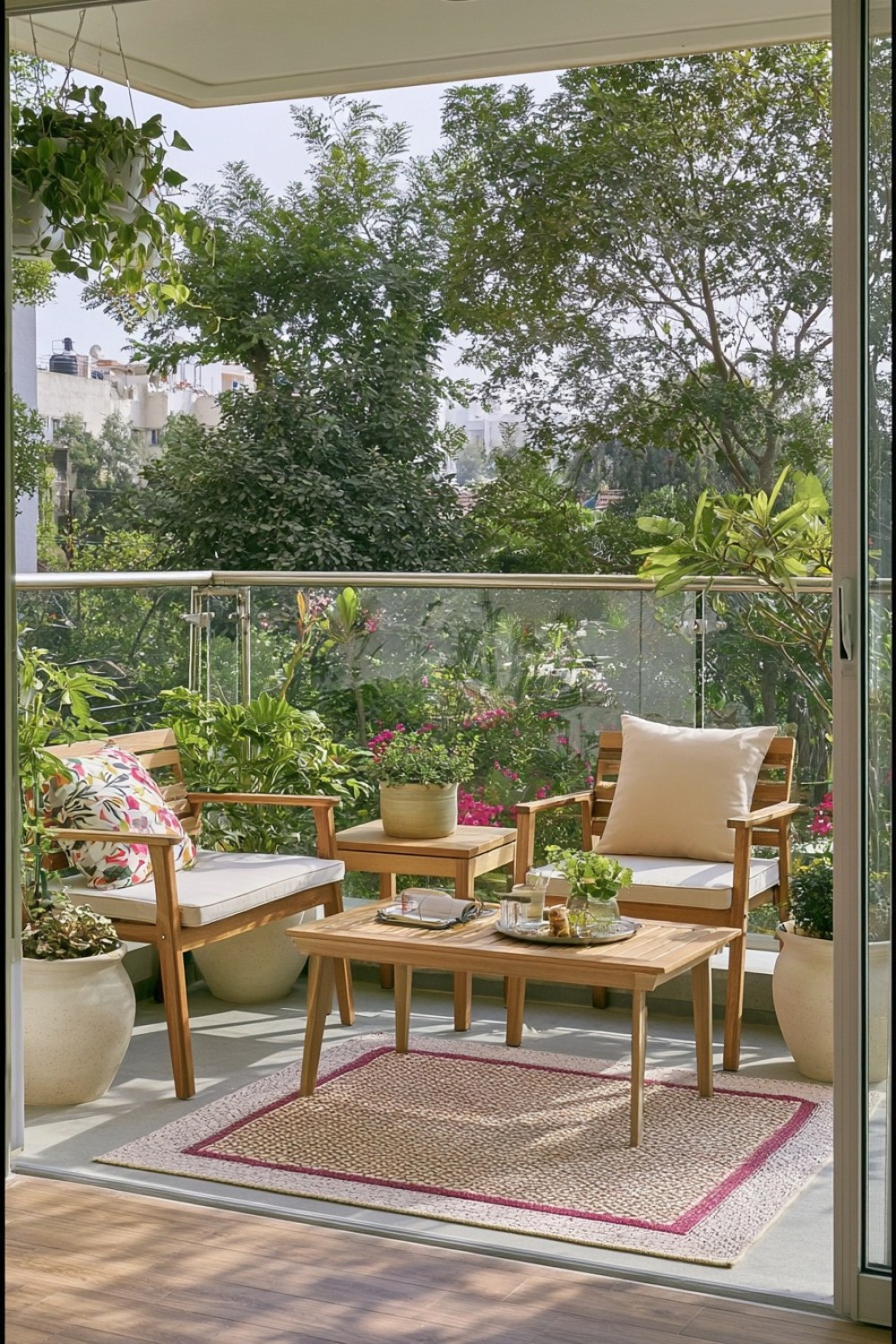
A Japandi-inspired balcony relies on useful furniture, balanced proportions, and a limited material palette. Choose one compact bench or chair with simple lines, a low table, and two or three plants with clearly defined forms. Pale or medium timber tones, charcoal accents, warm gray, and muted green can create a calm setting without leaving the balcony visually empty.
Every object should have a clear purpose, but comfort still matters. Add a supportive outdoor cushion and enough table space for a drink or book. Timber needs a finish suitable for exterior exposure and may require periodic maintenance. Avoid low furniture if it makes standing difficult for household members or guests. Leave sufficient clearance around the arrangement so cleaning and plant care remain straightforward.
9. Add One Oversized Artistic Focal Point
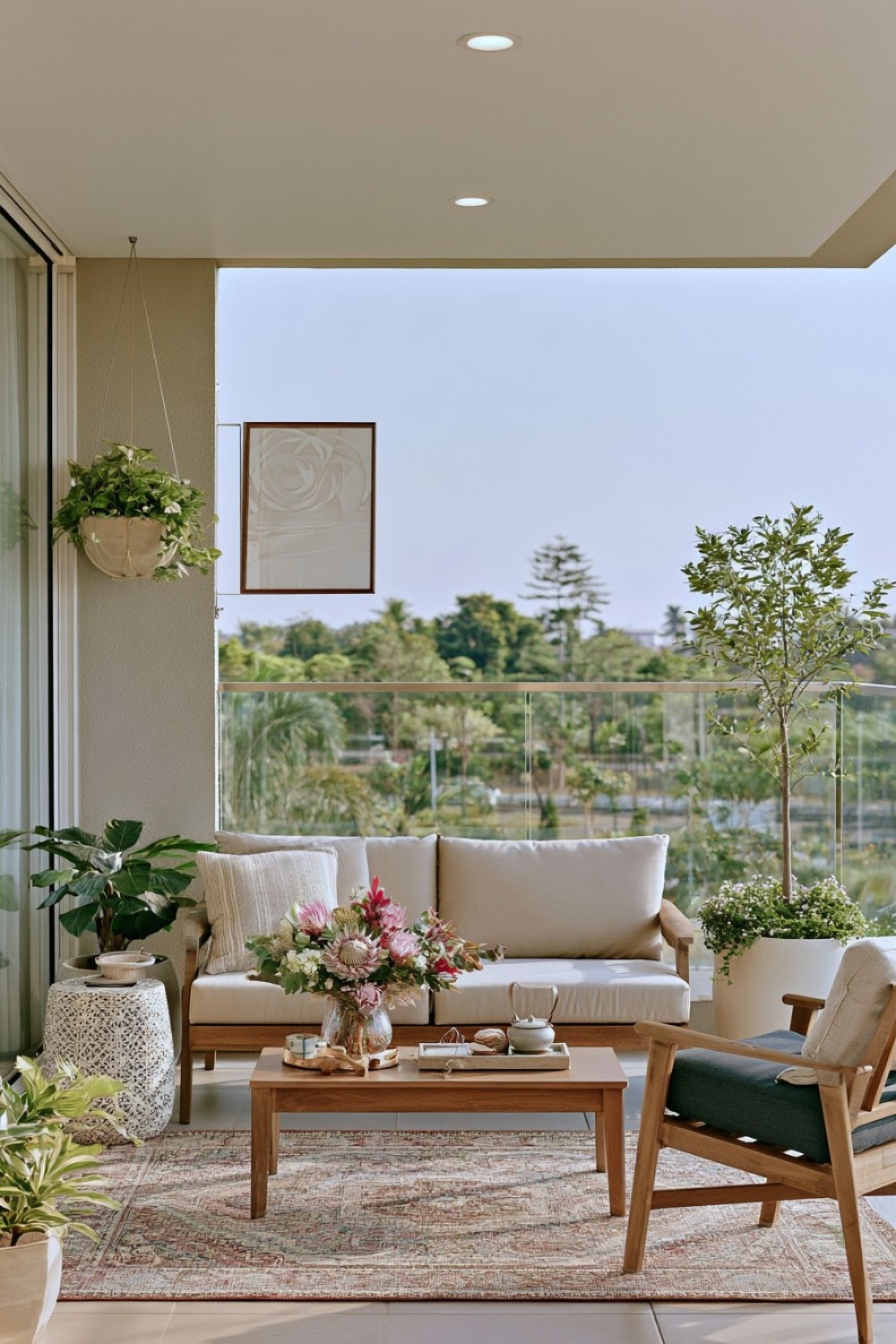
One large decorative feature can give a balcony a stronger identity than numerous small accessories. Consider an outdoor-rated wall panel, sculptural planter, weather-resistant artwork, or a boldly shaped chair. Keep the surrounding furniture restrained and allow open space around the focal point. Its color can guide the cushion, planter, and rug palette without requiring an exact match.
Any wall-mounted feature must be secured with fixings suitable for the surface, weight, weather exposure, and building rules. Do not drill into exterior walls, waterproof membranes, or shared structures without approval. A freestanding piece should have a stable base and must not become a wind hazard. Select materials intended for outdoor conditions so fading, swelling, corrosion, and peeling do not quickly undermine the design.
10. Introduce Graphic Flooring With a Checkerboard Pattern
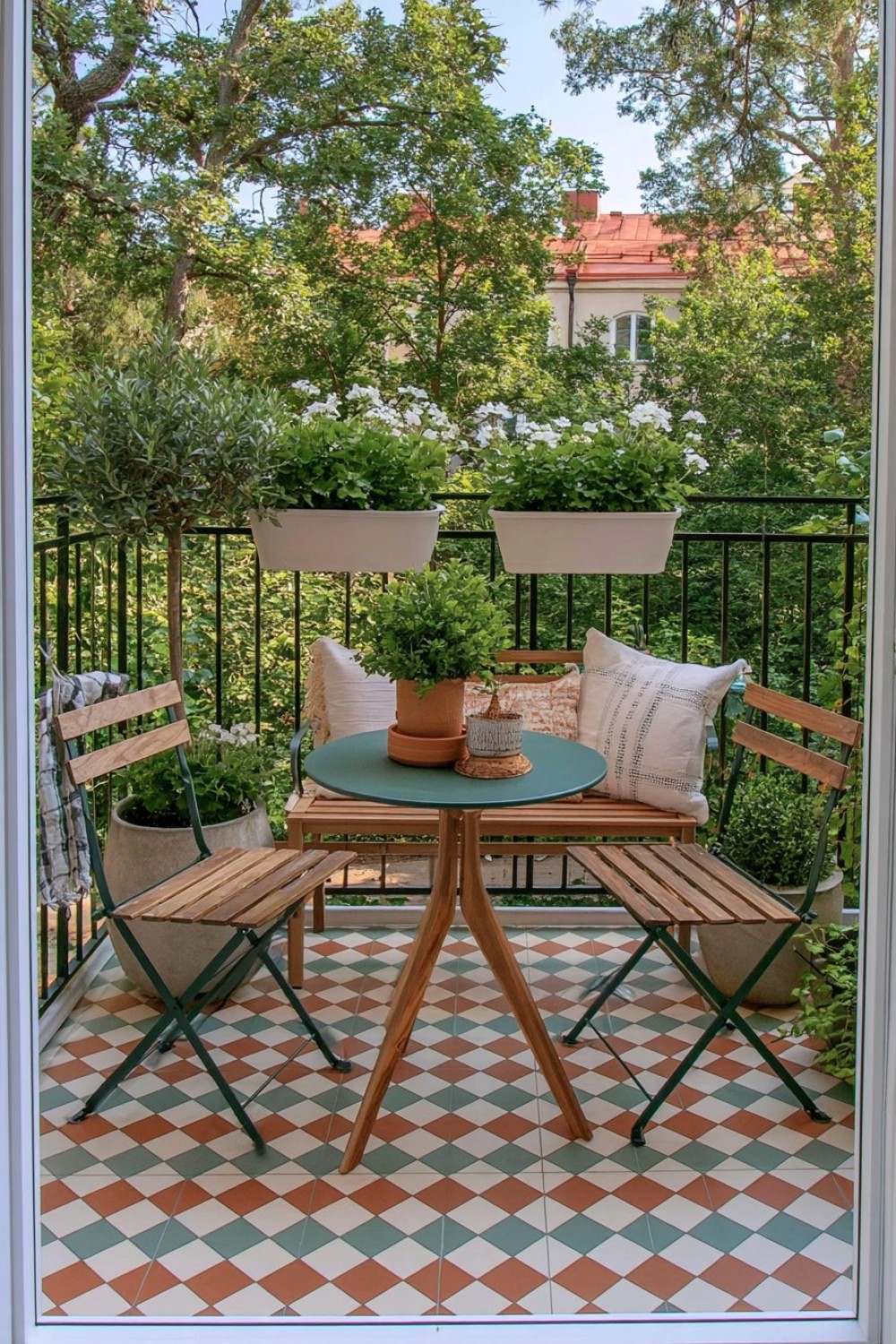
Checkerboard flooring gives a plain balcony an immediate graphic foundation. Black and white feels crisp, while cream with terracotta, sage, or charcoal produces a softer interpretation. Keep furniture shapes simple so the pattern remains readable. Removable outdoor tiles can be useful for renters when building rules allow them and the original surface remains protected.
Balcony flooring must not block drains, trap water, interfere with door clearance, or damage the waterproof layer beneath it. Check that interlocking products are designed for exterior use and suitable for the expected heat, frost, and moisture. The finished surface should remain stable and slip-resistant when wet. Inspect beneath removable flooring periodically because hidden dirt and standing moisture can develop even when the visible surface appears clean.
11. Arrange an Intimate Two-Seat Café Corner
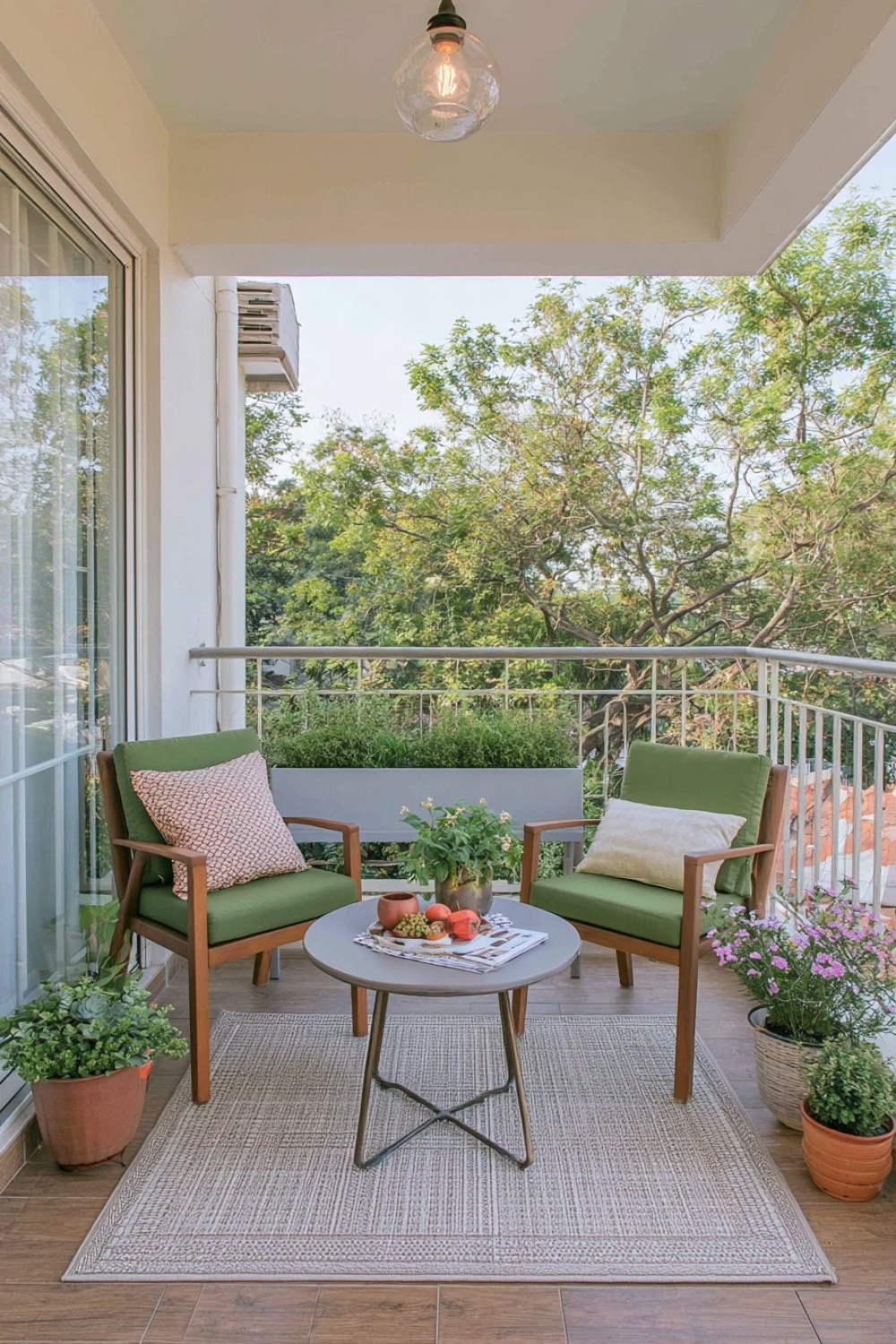
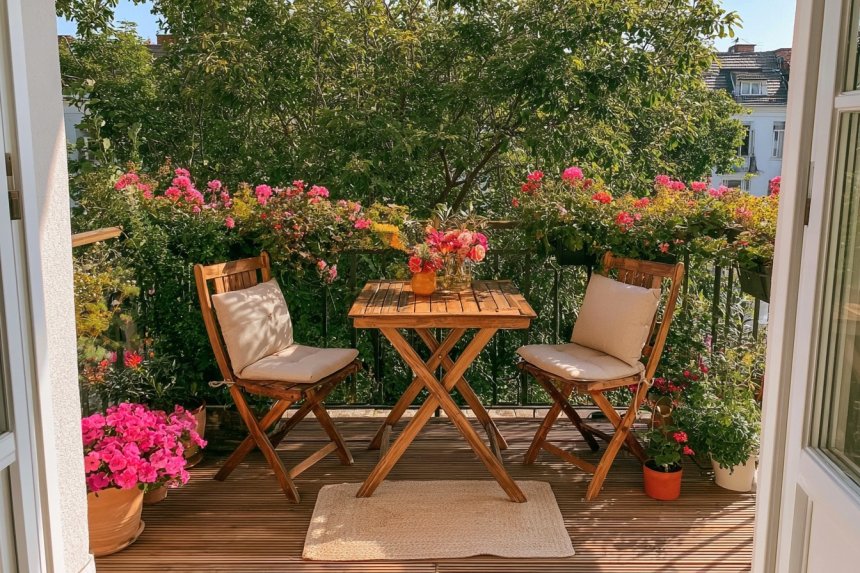
A two-seat café arrangement makes a narrow balcony useful for breakfast, conversation, or occasional laptop work. A round table can soften tight corners, while a half-round wall table may preserve even more floor space. Folding chairs provide flexibility when the balcony is also used for drying laundry or tending plants. Keep the tabletop large enough for its intended use without dominating the layout.
Allow enough room to sit down and stand without moving dangerously close to the railing. Chairs should remain stable on the existing floor and should not be positioned where children could use them to climb. If furniture remains outside year-round, choose finishes and fasteners intended for prolonged exposure. Store folding pieces securely during storms so they cannot move or cause damage.
12. Mix Bohemian Patterns Within a Controlled Palette
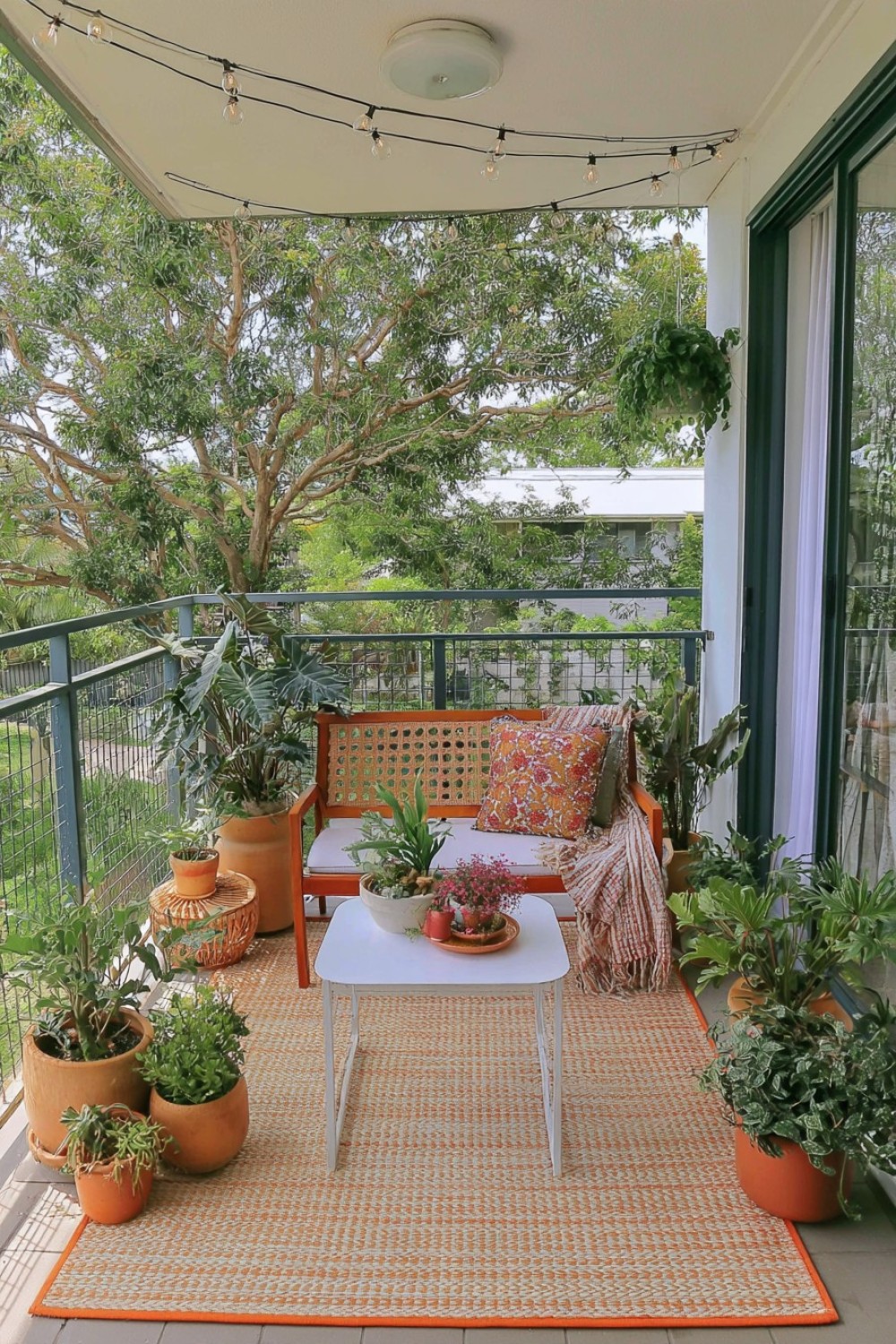
A bohemian balcony can include pattern without becoming visually disorganized. Select one main textile with two or three identifiable colors, then repeat those shades through simpler cushions and planters. Combine patterns at different scales, such as a larger geometric rug with a smaller striped cushion. Natural-looking textures and relaxed greenery can connect the separate elements.
Outdoor textiles should be resistant to fading and moisture, but they still benefit from dry storage when not in use. Avoid piling the floor with cushions that interfere with drainage or become difficult to clean. Heavy fringes and loose decorative elements may retain water and dust. Wash or brush fabrics according to their care labels and replace pieces that develop persistent mildew or weakened seams.
13. Develop a Moody Palette With Deep Greens and Dark Wood
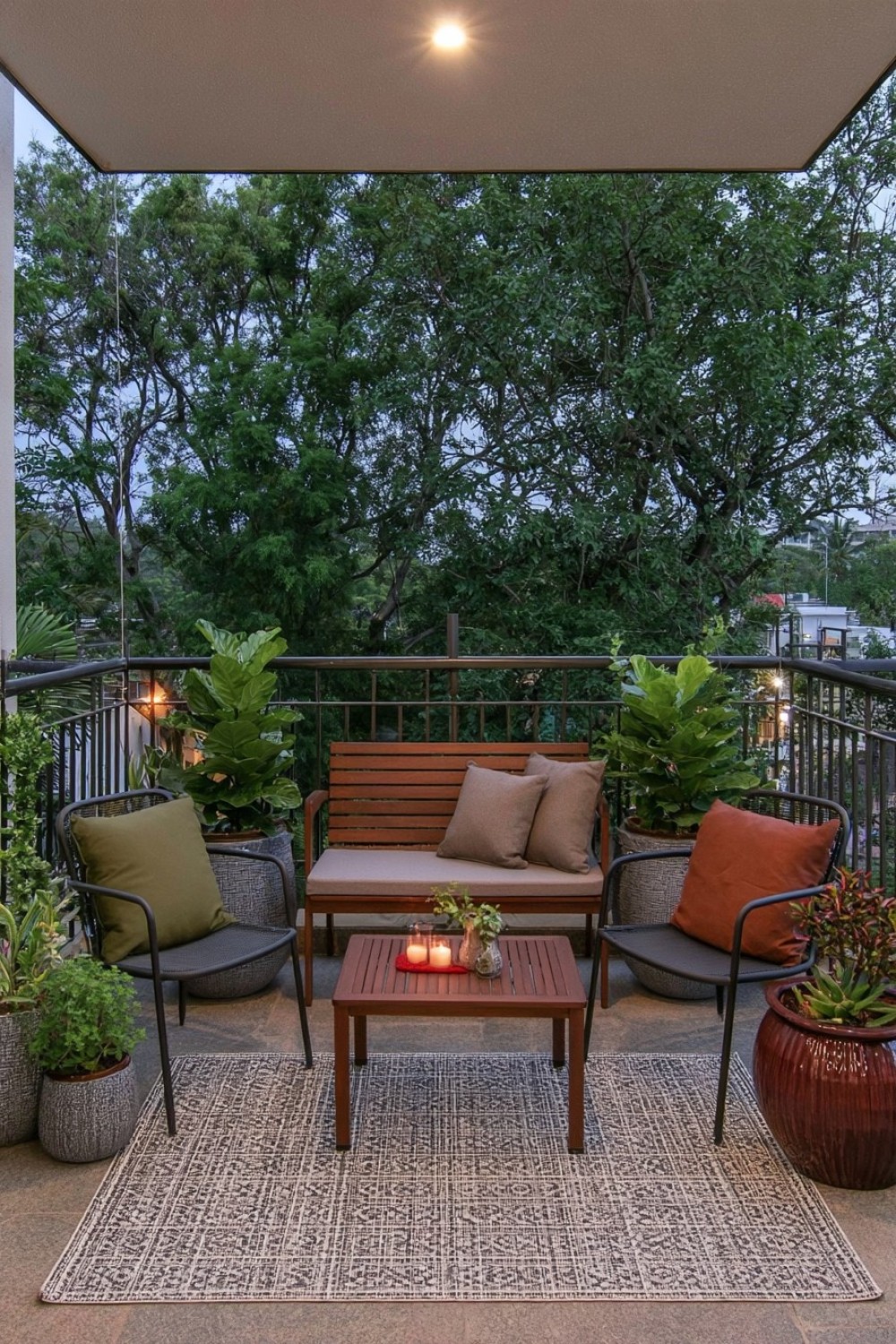
Deep green, charcoal, and dark timber can create an enclosed, restful atmosphere, particularly on a balcony used in the evening. Balance the darker palette with pale flooring, lighter cushions, or reflective metal details so the space does not feel visually compressed. A few large-leaved plants can reinforce the color scheme more effectively than many small containers.
Dark surfaces absorb heat and may fade under strong sunlight. Check furniture and planter materials before using them in an exposed location. Low-level outdoor-rated lighting can improve visibility after sunset, but cables and fixtures must be suitable for weather exposure and installed safely. Keep the balcony entrance, changes in floor level, and drainage areas clearly visible to reduce trip hazards.
14. Keep a Mediterranean Balcony Simple With White and Olive Green
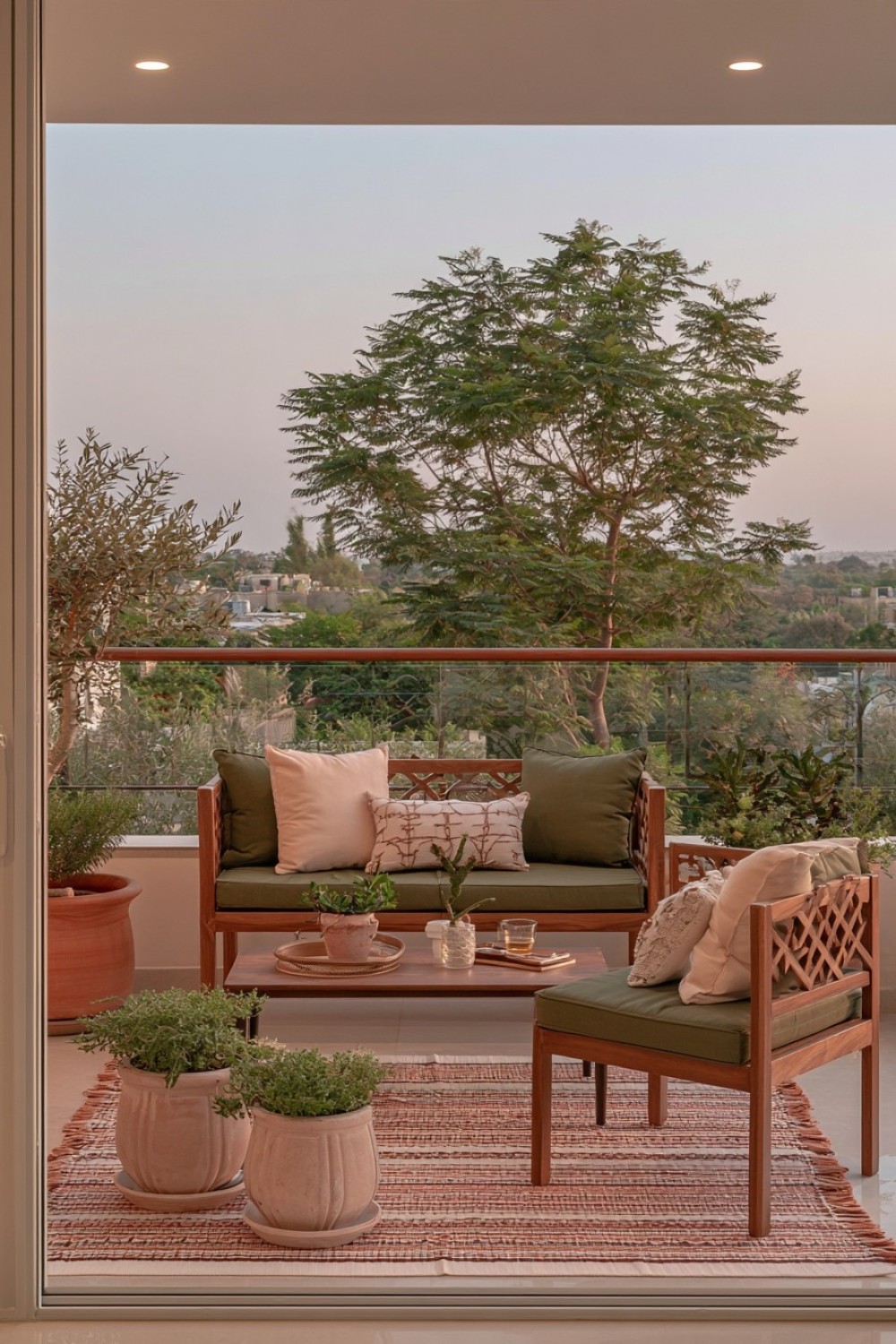
A white and olive-green palette can suggest Mediterranean character without filling the balcony with themed ornaments. Use warm white furniture or planters, muted green cushions, and terracotta accents. One olive tree or another climate-appropriate structural plant can act as the main feature. Keep the arrangement open so the limited colors and natural forms remain easy to appreciate.
Container-grown olive trees need strong light, suitable drainage, and enough root space, but they may not thrive in every climate or balcony orientation. Research a plant’s mature size and winter requirements before purchasing it. Large ceramic containers can be extremely heavy when filled, so use appropriate lightweight alternatives where necessary. White surfaces also show airborne dirt and require regular cleaning to retain their fresh appearance.
15. Introduce One Unexpected Accent Color
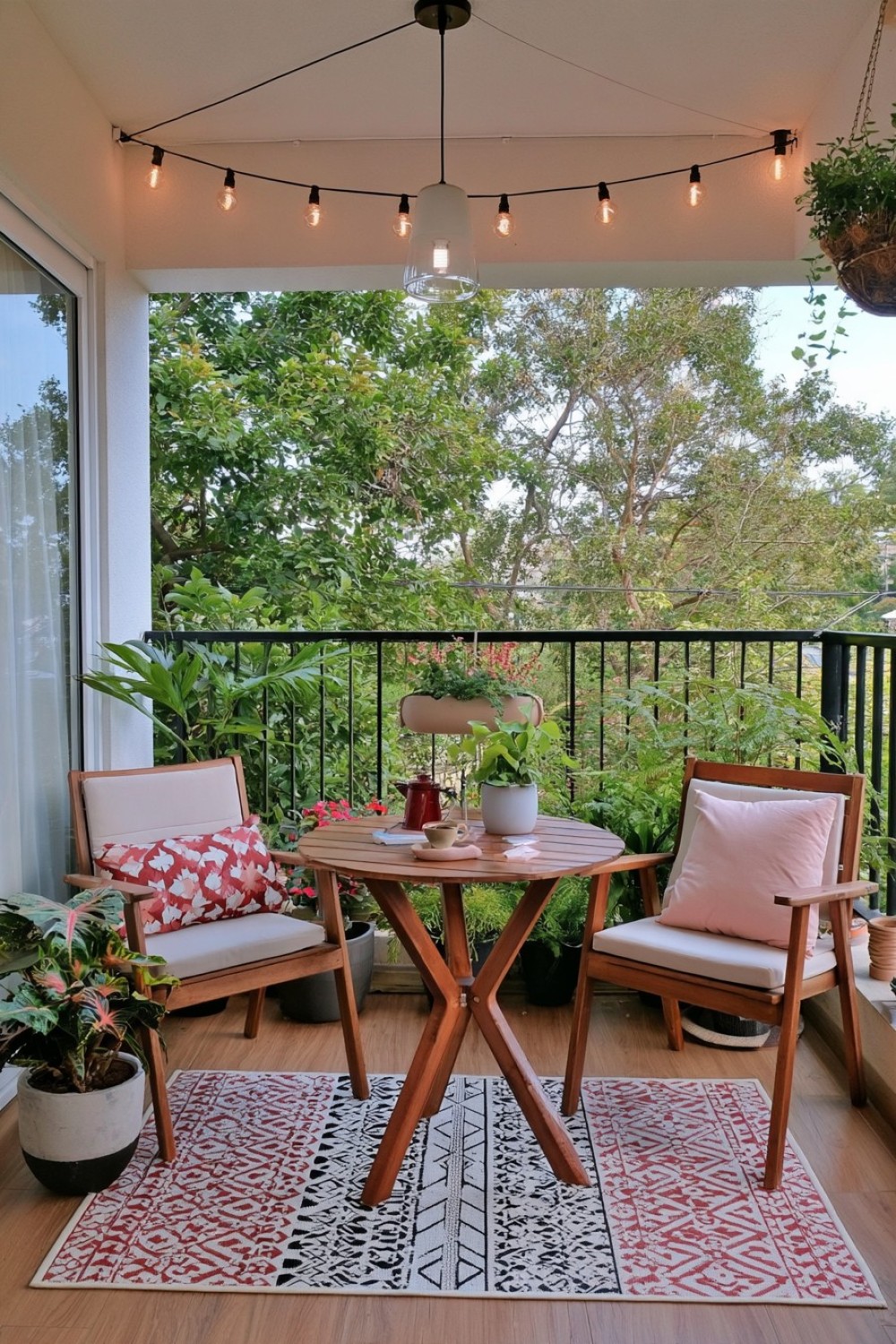
One concentrated accent shade can give a simple balcony a distinctive identity. Begin with neutral furniture and introduce cobalt blue, saffron, coral, burgundy, or another preferred color through one chair, planter group, or cushion set. Repeat the shade in no more than a few locations so it guides the eye instead of fragmenting the space.
Use the boldest color on removable or repaintable items when flexibility is important. Outdoor textiles and painted finishes may change after prolonged sun exposure, so choose products designed for exterior use. View color samples outside because daylight can make saturated shades appear much brighter than they do indoors. Coordinate the accent with the adjoining interior to make the transition through the balcony door feel intentional.
16. Continue the Interior Style Onto the Balcony
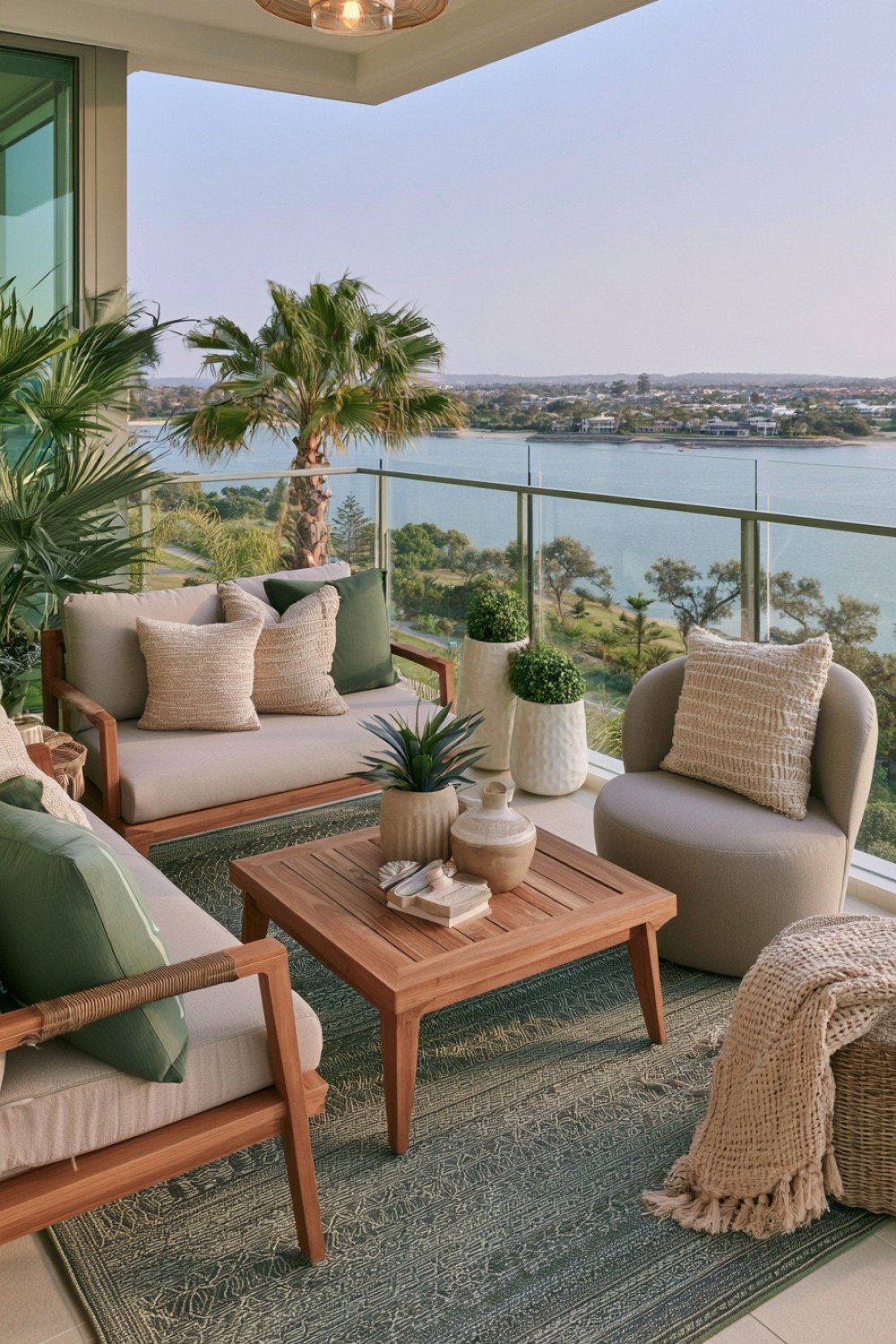
Repeating selected colors, materials, or shapes from the adjoining room can make a balcony feel like a natural extension of the home. A similar wood tone, cushion color, or furniture silhouette may be enough to establish the connection. Exact duplication is unnecessary because outdoor materials need different performance qualities. Focus on visual continuity while choosing every balcony item for exterior conditions.
Keep the transition clear and easy to walk through. Rugs, furniture, and planters should not obstruct the door, threshold, or emergency access. Indoor furniture should not be moved outside permanently unless it is designed for weather exposure. Before making substantial additions, review tenancy terms, building regulations, railing restrictions, permitted loads, and fire-safety rules. These practical limits can guide a design that remains attractive, maintainable, and appropriate for the property.
MORE IDEAS


Share
What's Your Reaction?
 Like
0
Like
0
 Dislike
0
Dislike
0
 Love
0
Love
0
 Funny
0
Funny
0
 Angry
0
Angry
0
 Sad
0
Sad
0
 Wow
0
Wow
0