12 Minimalist Garden Principles That Simplify Design and Long-Term Care

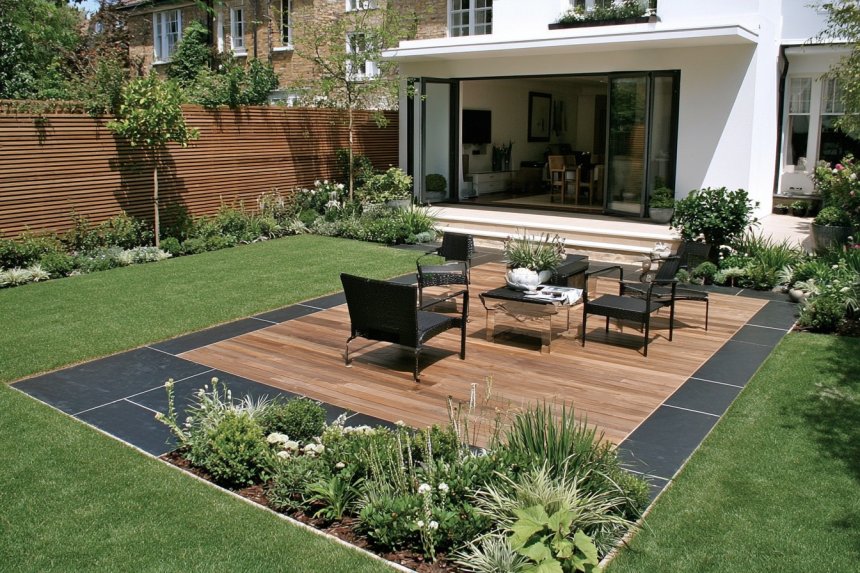
A minimalist garden is not created simply by removing plants or covering large areas with paving. Its character comes from clear spatial organization, repeated materials, carefully selected plants, and visible areas that remain intentionally open. Every path, planter, tree, and seating area should have a purpose while contributing to a calm overall composition.
Long-term maintenance must be considered during the design stage. Plant growth, drainage, irrigation access, seasonal pruning, fallen leaves, and material weathering will gradually change the garden. Choosing species suited to the local climate and allowing enough mature space between them creates a simpler garden than repeatedly cutting unsuitable plants back into artificial shapes.
1. Organize the Garden into a Few Clearly Defined Zones
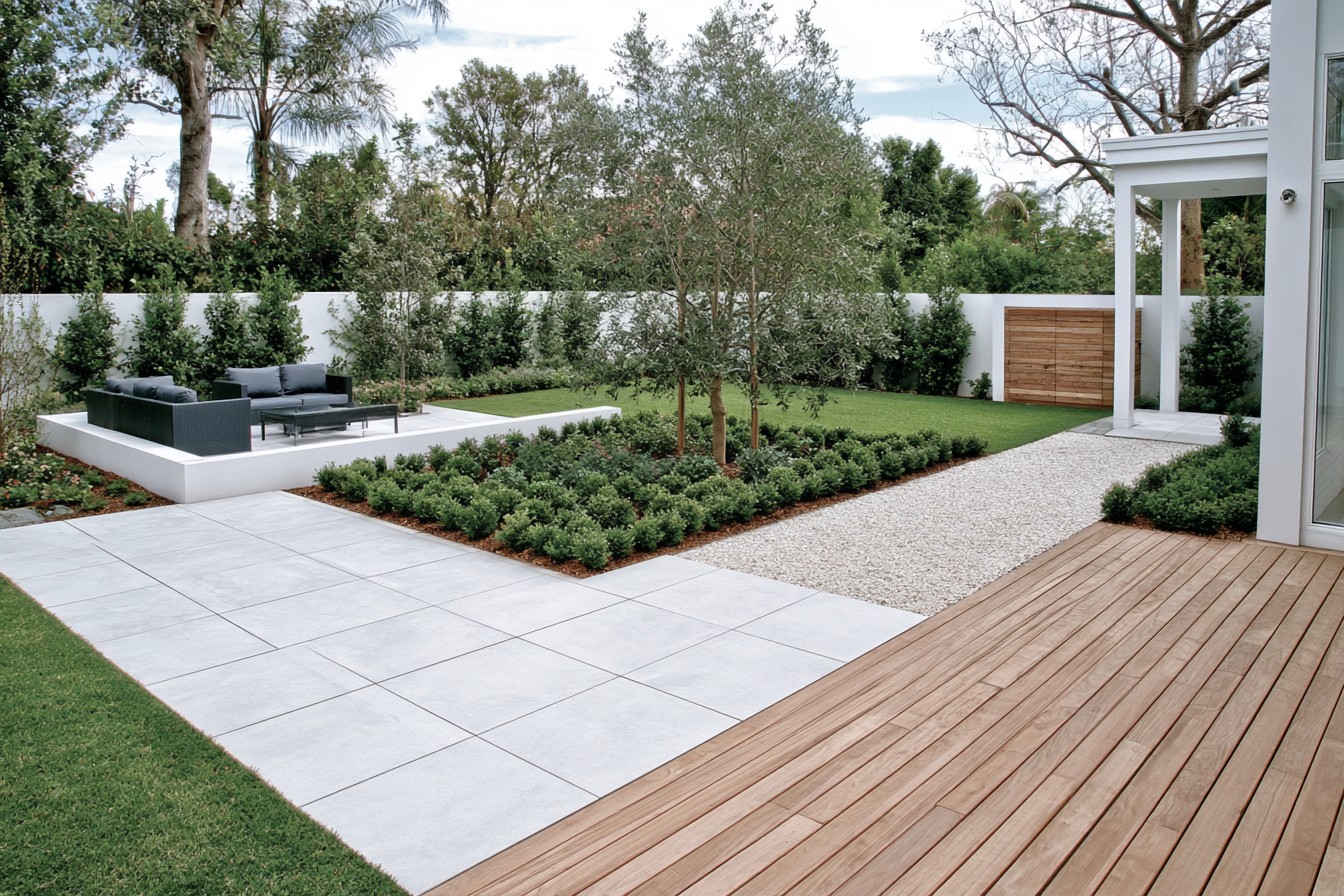
Begin by identifying the essential functions of the garden, such as circulation, seating, planting, utility access, and storage. Give each function a defined area instead of distributing small features throughout the site. A direct path and one well-positioned seating zone often produce a calmer layout than several narrow routes and isolated chairs.
Mark proposed boundaries with temporary stakes or removable paint before installing permanent materials. Check how people move between doors, gates, bins, taps, and garden structures. Paths should remain wide enough for comfortable use and should not direct visitors through planting beds or across poorly drained ground.
2. Limit the Hardscape and Planting Color Palette
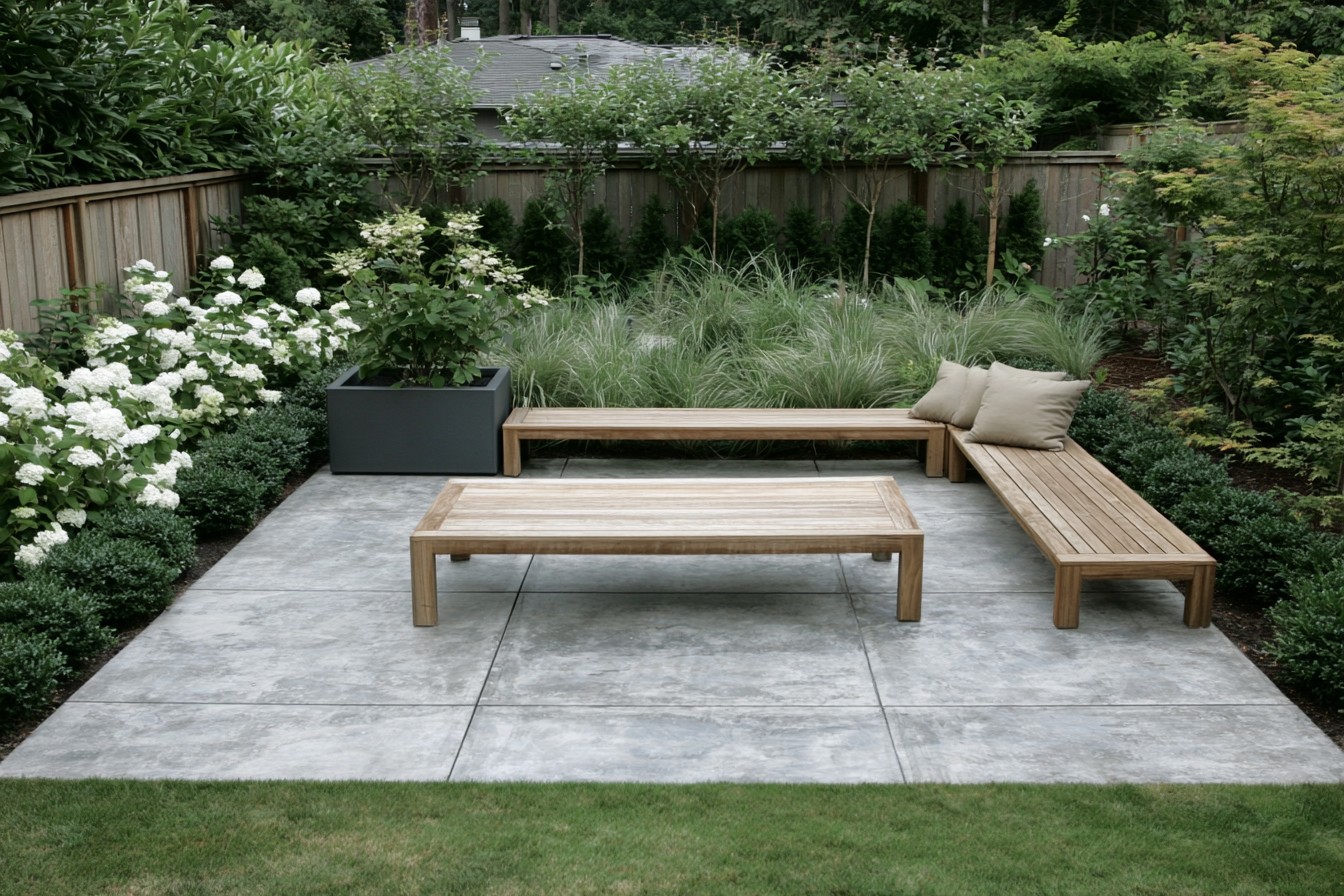
A controlled palette helps separate forms and textures without making the garden visually empty. Select one dominant hardscape material, one supporting finish, and a limited family of plant colors. Gray stone, warm timber, green foliage, and a small amount of white flowering detail can create variation while maintaining continuity.
View material samples outdoors because sunlight, rain, and surrounding vegetation alter their appearance. Pale paving may reveal stains, while very dark surfaces can become noticeably hot in exposed locations. Repeating the same materials in edging, steps, and seating bases can reduce unnecessary transitions and make future repairs easier to coordinate.
3. Repeat a Small Group of Compatible Plants
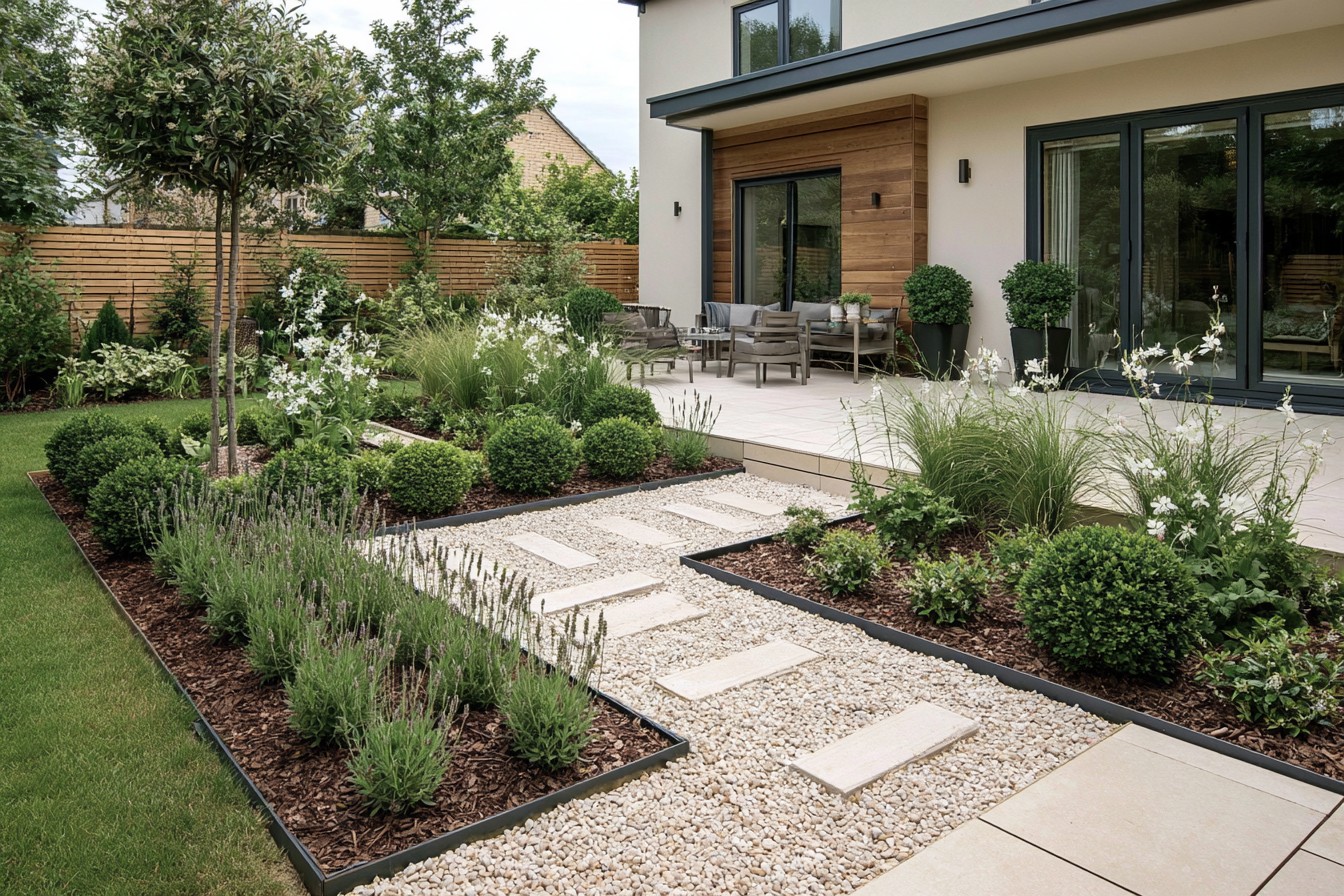
Repeating plants in measured groups gives a garden rhythm and makes the overall design easier to understand. Choose species that share compatible requirements for light, soil, drainage, and water. One structural shrub, a lower ground-cover plant, and a seasonal accent may be enough for a small planting area.
Base spacing on mature width rather than the appearance of young nursery plants. Filling every gap immediately can result in overcrowding, poor airflow, and constant pruning. Temporary mulch or a suitable low ground cover can manage exposed soil while permanent plants establish themselves.
4. Select Flowers for Form, Season, and Maintenance
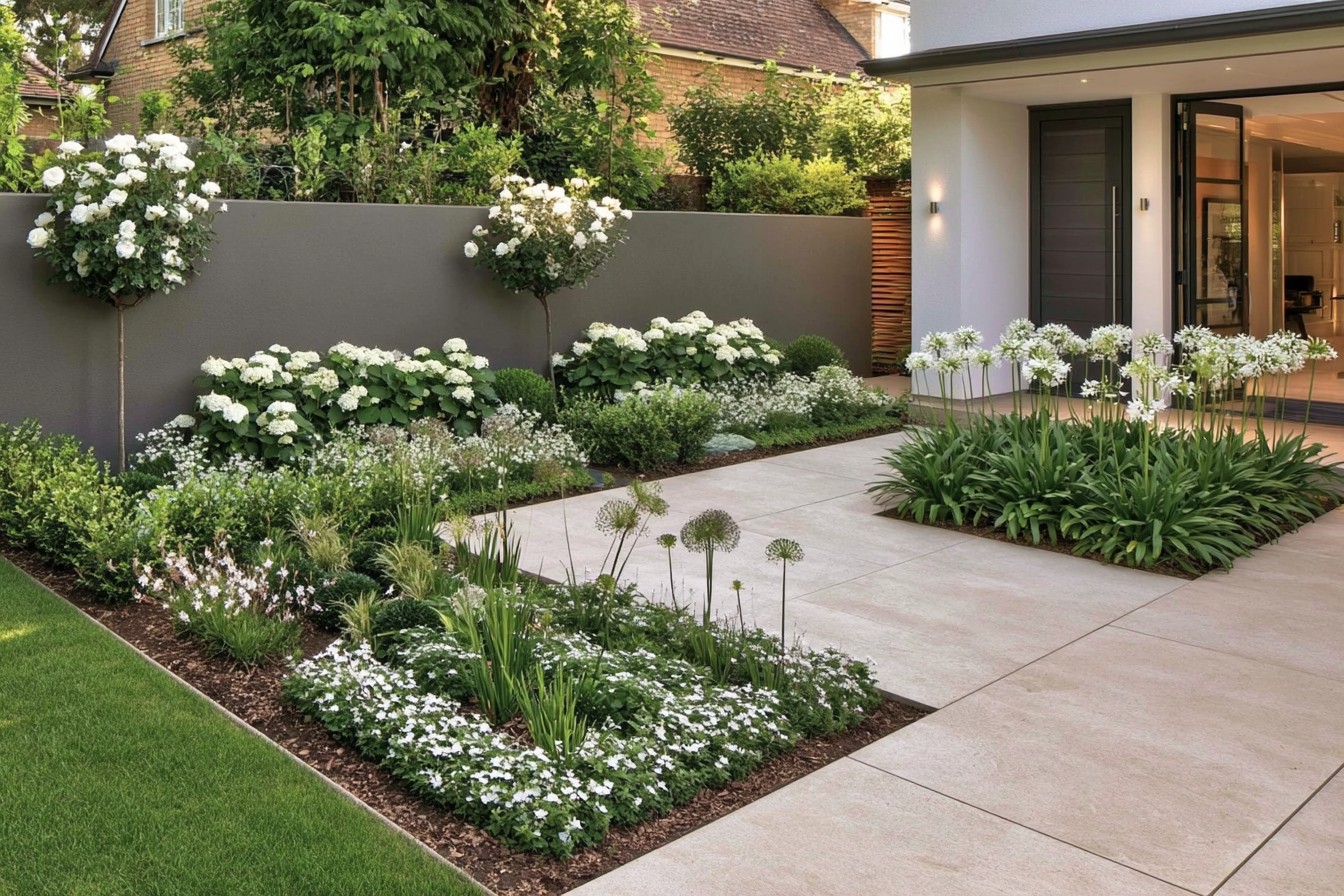
Flowers can appear in a minimalist garden without creating a mixed cottage-style border. Select one or two varieties with clear silhouettes and repeat them in blocks. Consider foliage outside the flowering period so the planting remains attractive when blooms have faded.
Research bloom time, mature size, deadheading needs, winter appearance, and regional suitability before planting. Long-flowering species are not automatically low maintenance if they spread aggressively or require frequent watering. Avoid invasive plants and choose alternatives that can remain within the intended bed without continuous control.
5. Use Ornamental Grasses Where Movement Is Useful
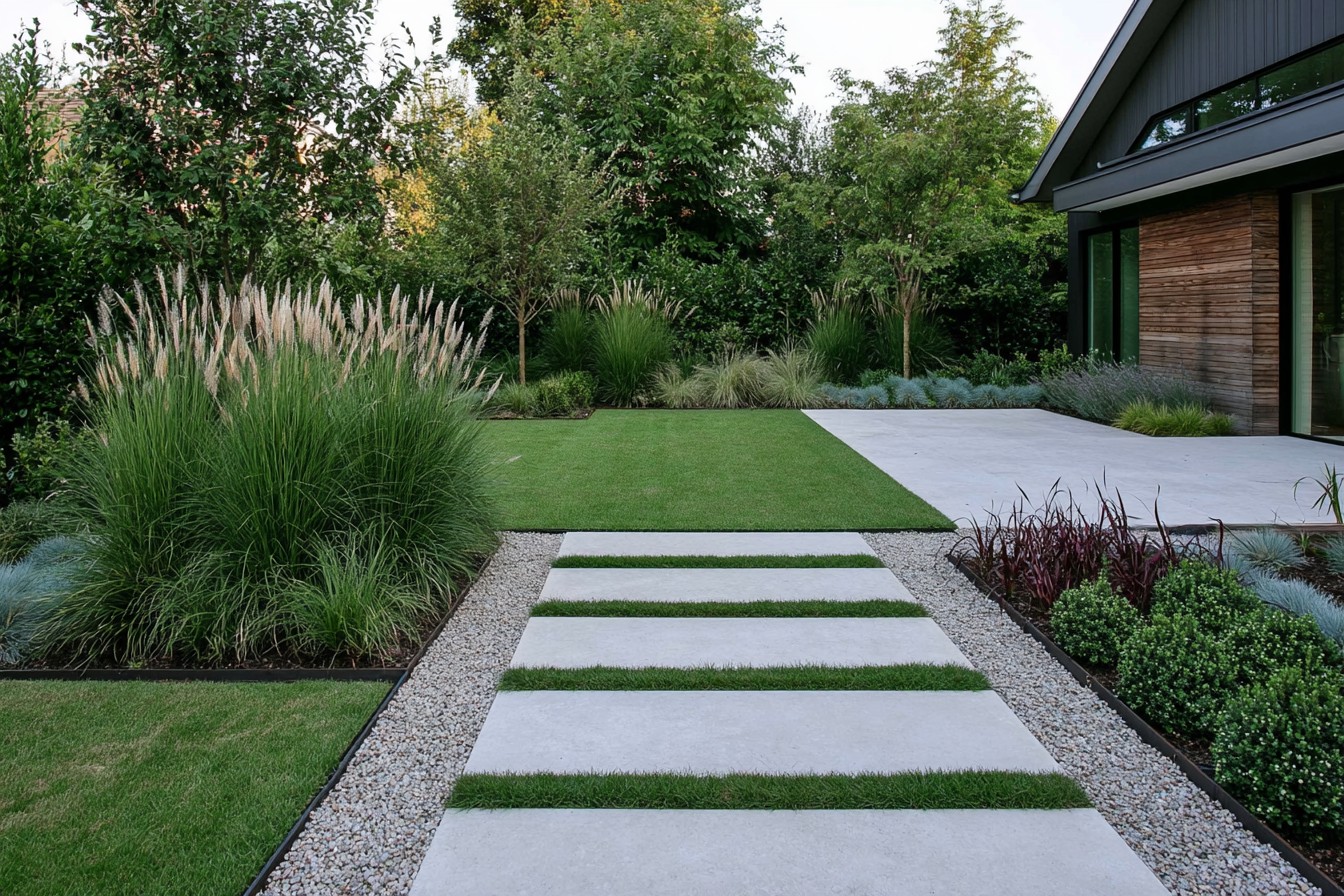
Ornamental grasses can soften straight paths, concrete edges, and geometric planting beds. Use them where their movement will contrast with static surfaces without spilling into circulation areas. Repeating one suitable variety creates a clearer effect than combining many grasses with similar but competing forms.
Check whether the species is clump-forming or spreading, how tall it becomes, and whether it is appropriate for the region. Position grasses so mature foliage does not conceal path edges or create a tripping hazard. Seasonal cutting and removal of dry growth should be included in the maintenance plan.
6. Construct a Simple Bench from Verified Reclaimed Timber
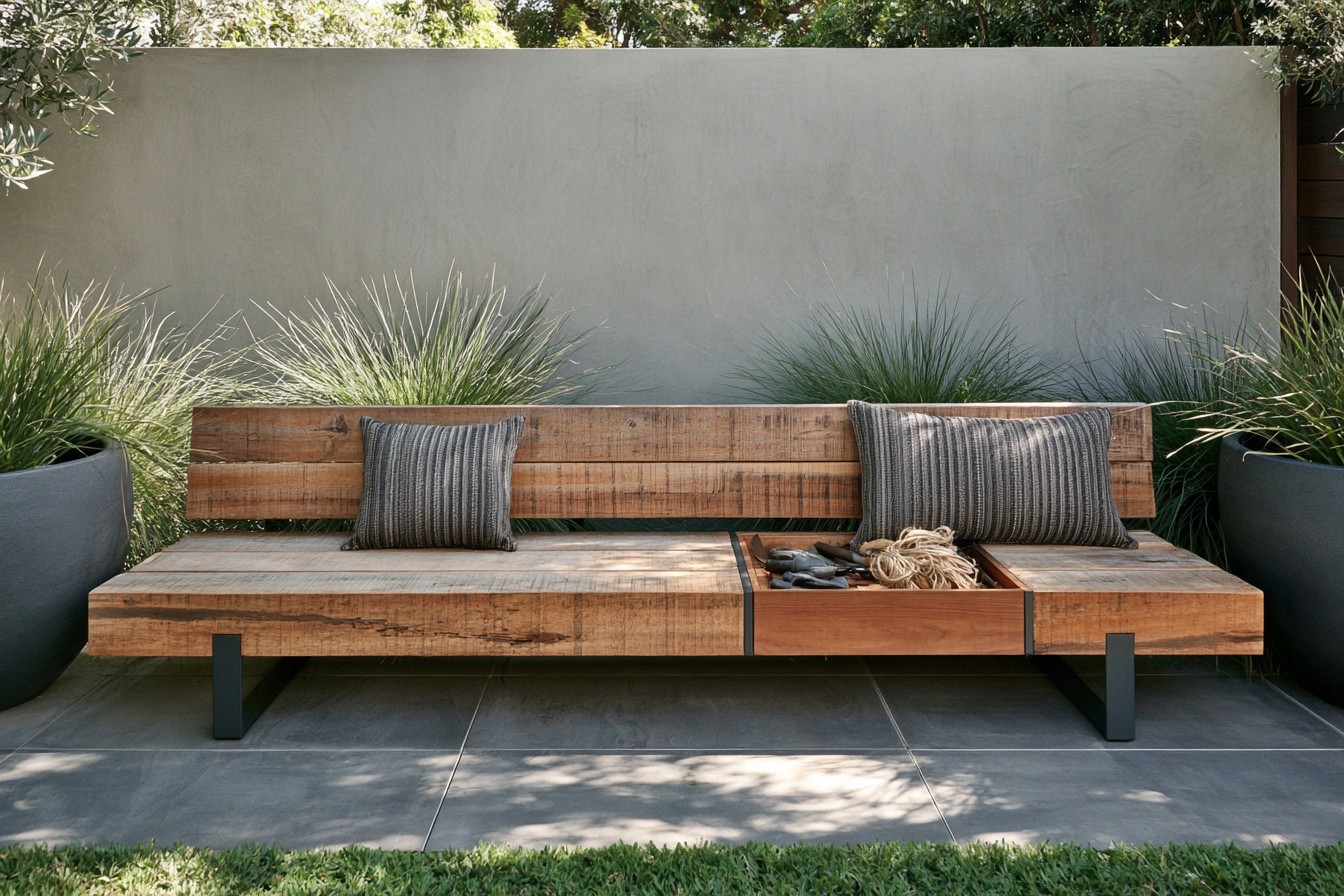
A bench with a straightforward frame can provide a resting point without introducing an elaborate decorative object. Reclaimed wood offers texture, but it must be structurally sound and free from rot, hazardous contamination, active insects, and concealed fasteners. Cosmetic marks can remain visible after the surface has been made safe.
Use exterior-rated fixings and a construction method suitable for supporting seated weight. The bench should stand level without rocking and should be positioned on a stable surface that drains properly. Seal cut ends and inspect the joints, feet, and underside regularly because these areas often deteriorate first.
7. Convert Suitable Metal Containers into Clean-Lined Planters
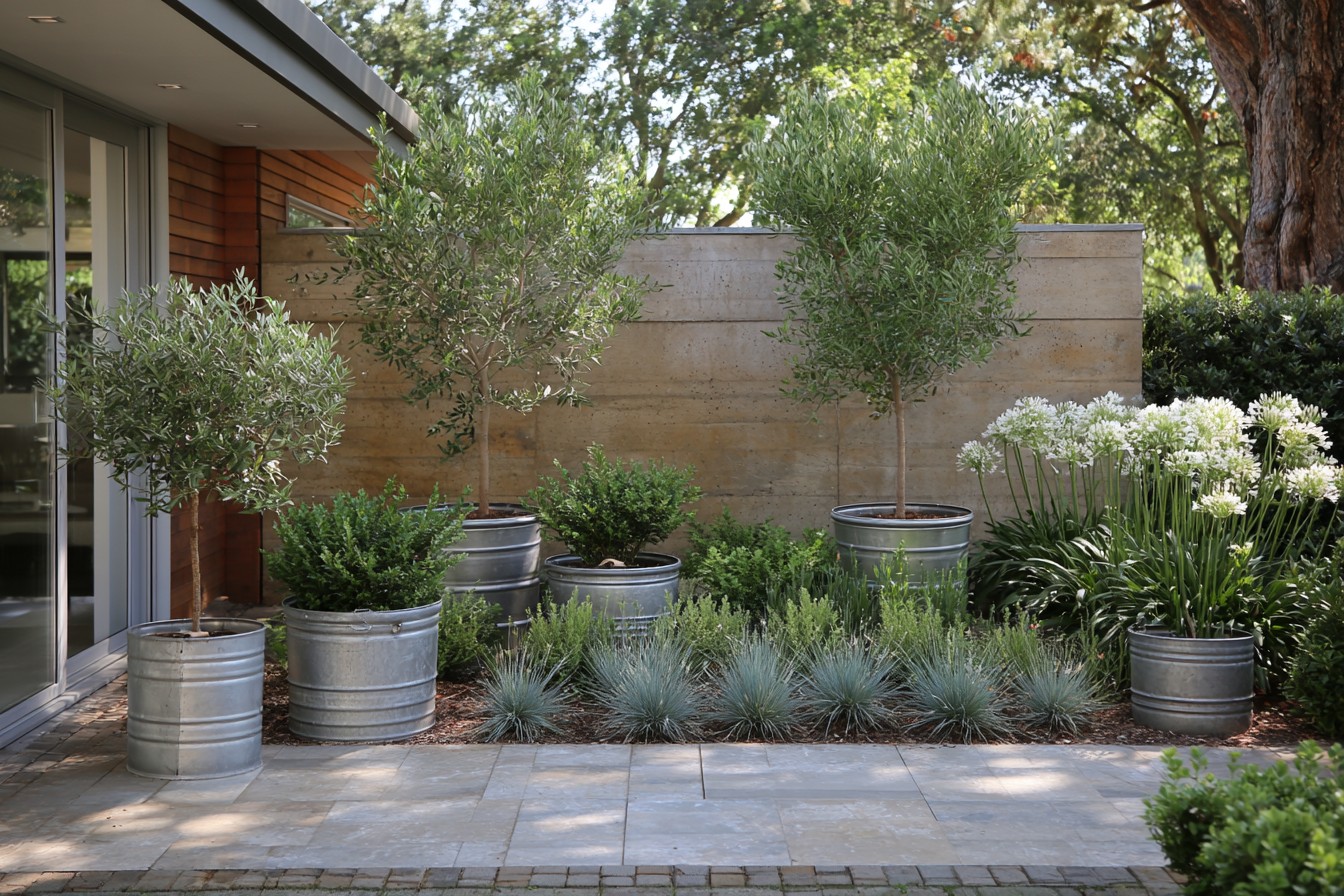
Galvanized containers and other sound metal vessels can become simple planters when their previous use is known. Remove sharp edges, repair unstable handles, and either provide drainage or use the container as an outer cover for a removable nursery pot. Repeating the same finish across several sizes creates visual consistency.
Avoid containers that previously held fuel, pesticides, industrial chemicals, or unidentified materials. Metal can become hot in direct sunlight and may require an internal pot or appropriate liner to protect roots. Position the container before filling because wet growing material adds considerable weight.
8. Form a Geometric Path from Compatible Leftover Materials
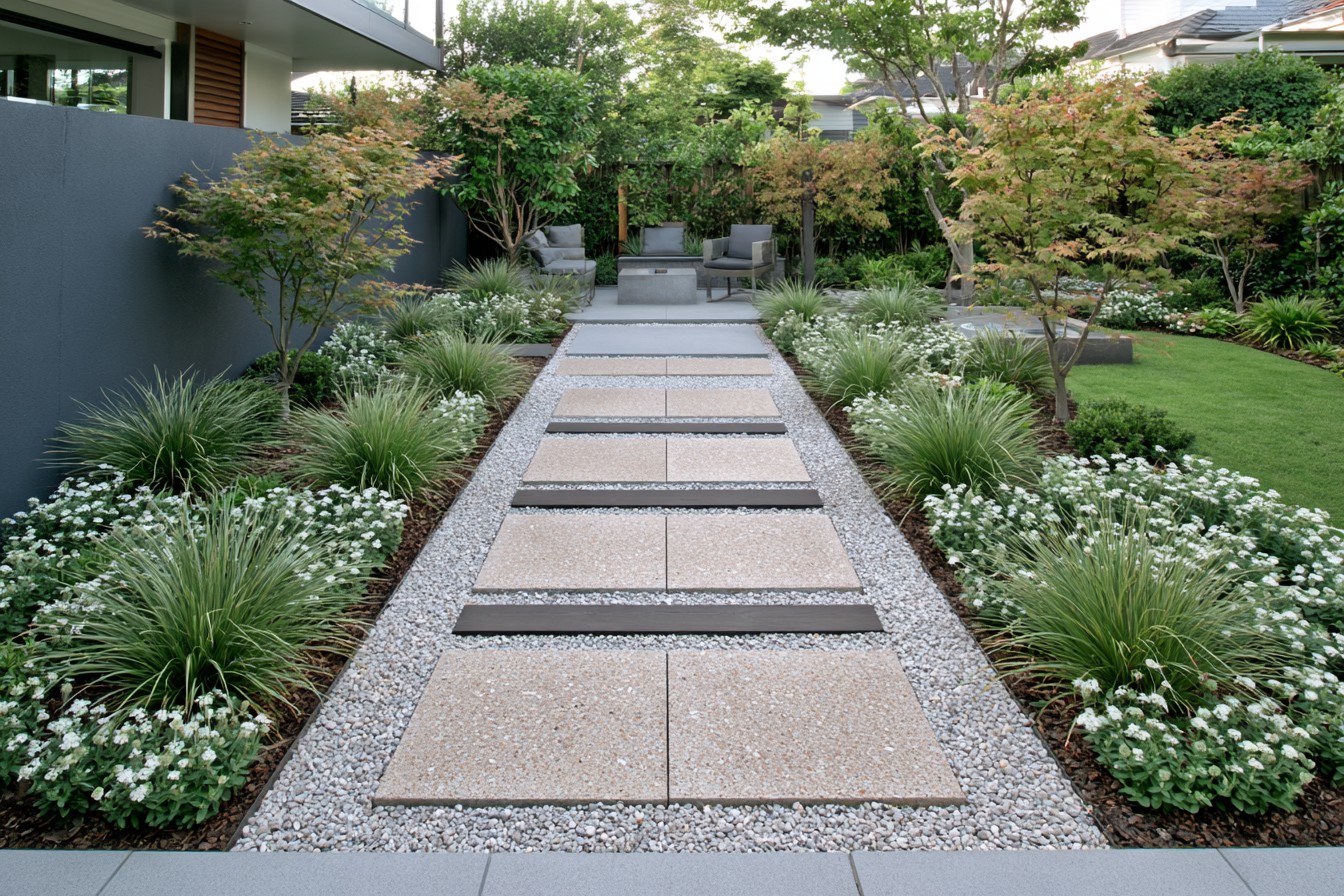
Surplus pavers or stone can form a useful path when the materials have compatible thicknesses and suitable outdoor surfaces. Establish one repeated module or border instead of arranging every leftover piece randomly. A clear geometry connects the reused material to the minimalist design.
The base preparation is more important than the surface pattern. Excavate and compact the path appropriately for the soil, climate, and expected use, and maintain drainage away from buildings. Uneven thicknesses, loose edges, and highly polished materials can create trip or slip hazards and should not be forced into the design.
9. Design Irrigation Before Finalizing the Planting
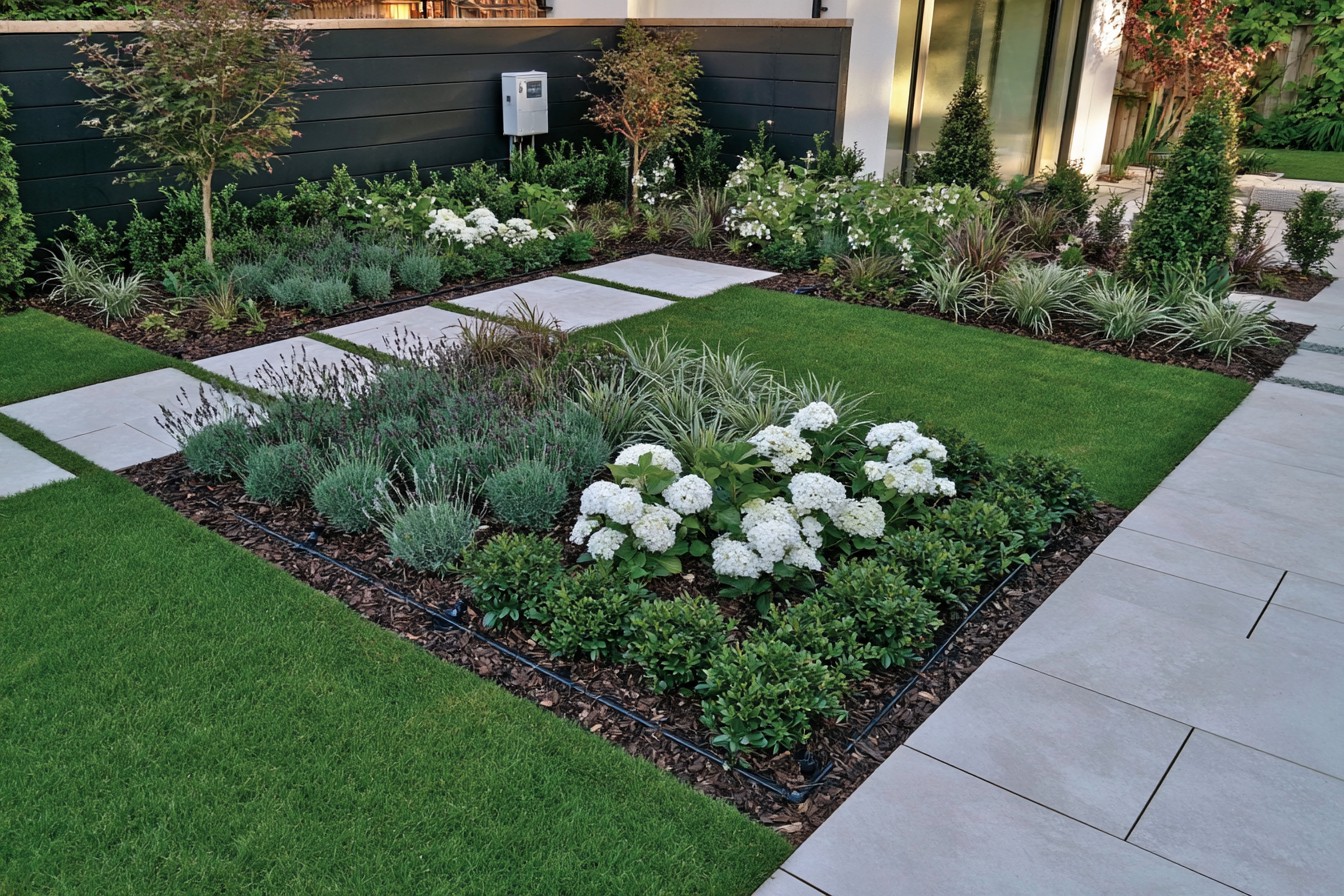
Group plants with similar watering needs so they can be irrigated together. Drip lines or targeted watering can deliver moisture to the root area while keeping paths and foliage comparatively dry. The system should include accessible controls and a way to isolate sections when planting changes.
Water requirements vary with soil, exposure, rainfall, season, and plant maturity. Inspect the soil rather than relying permanently on an unchanged timer. Check hoses and emitters for leaks or blockages, and adjust the schedule as plants establish. Follow local restrictions and use an appropriate backflow-prevention arrangement where required.
10. Use Fewer Containers with Deliberate Scale
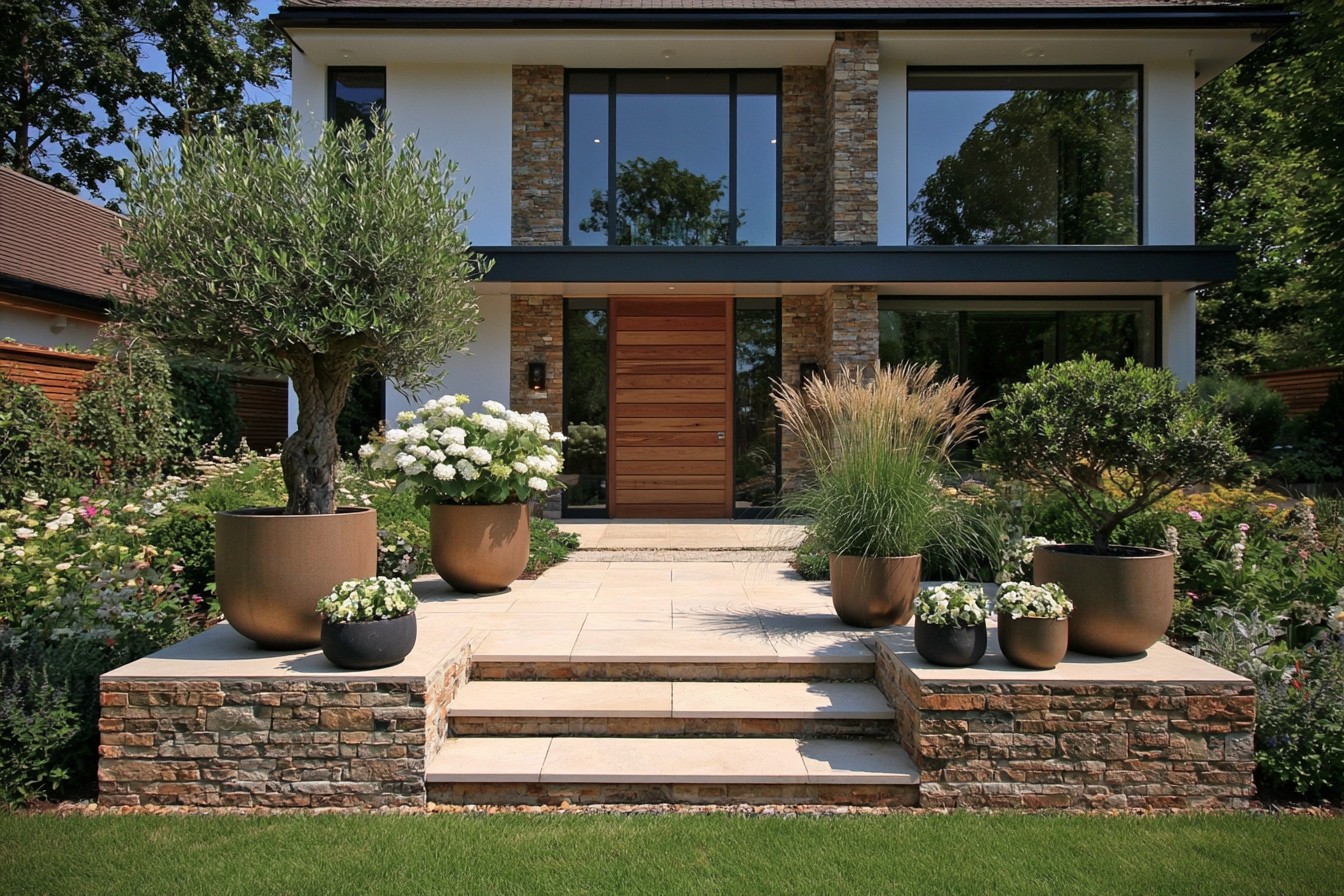
Several large planters can define an entrance, frame seating, or mark a change in level more effectively than many small pots. Choose containers whose shape and finish relate to the garden’s hardscape. Allow open space around each one so its form and planting can be appreciated.
Large containers require drainage and a stable foundation capable of supporting their saturated weight. Position them before filling and avoid locations where they narrow paths or conceal changes in level. Select plants with enough root space to mature without requiring frequent repotting.
11. Schedule Maintenance by Task and Season
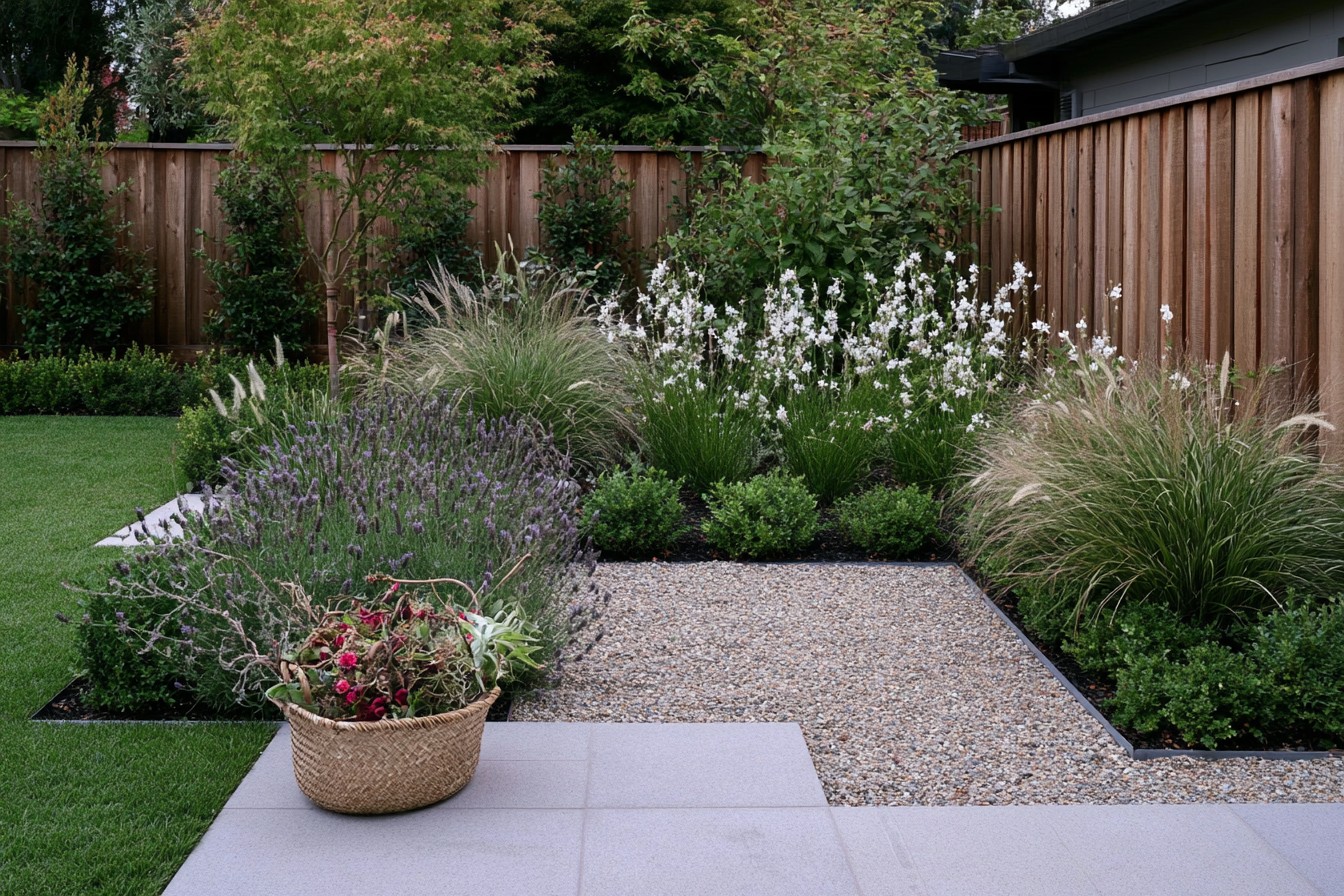
A minimalist garden reveals neglected edges, weeds, damaged surfaces, and irregular growth quickly because there are fewer elements to disguise them. Divide maintenance into short routine checks and larger seasonal tasks. Regular work may include removing debris and checking irrigation, while seasonal work can include pruning, dividing plants, and repairing finishes.
Prune each plant according to its growth habit rather than cutting every specimen into the same shape. Keep blades clean and sharp, and use appropriate protective equipment. Remove diseased material responsibly and inspect paths, seating, edging, drains, and planters while working through the garden.
12. Store Rainwater in a Covered Purpose-Made System
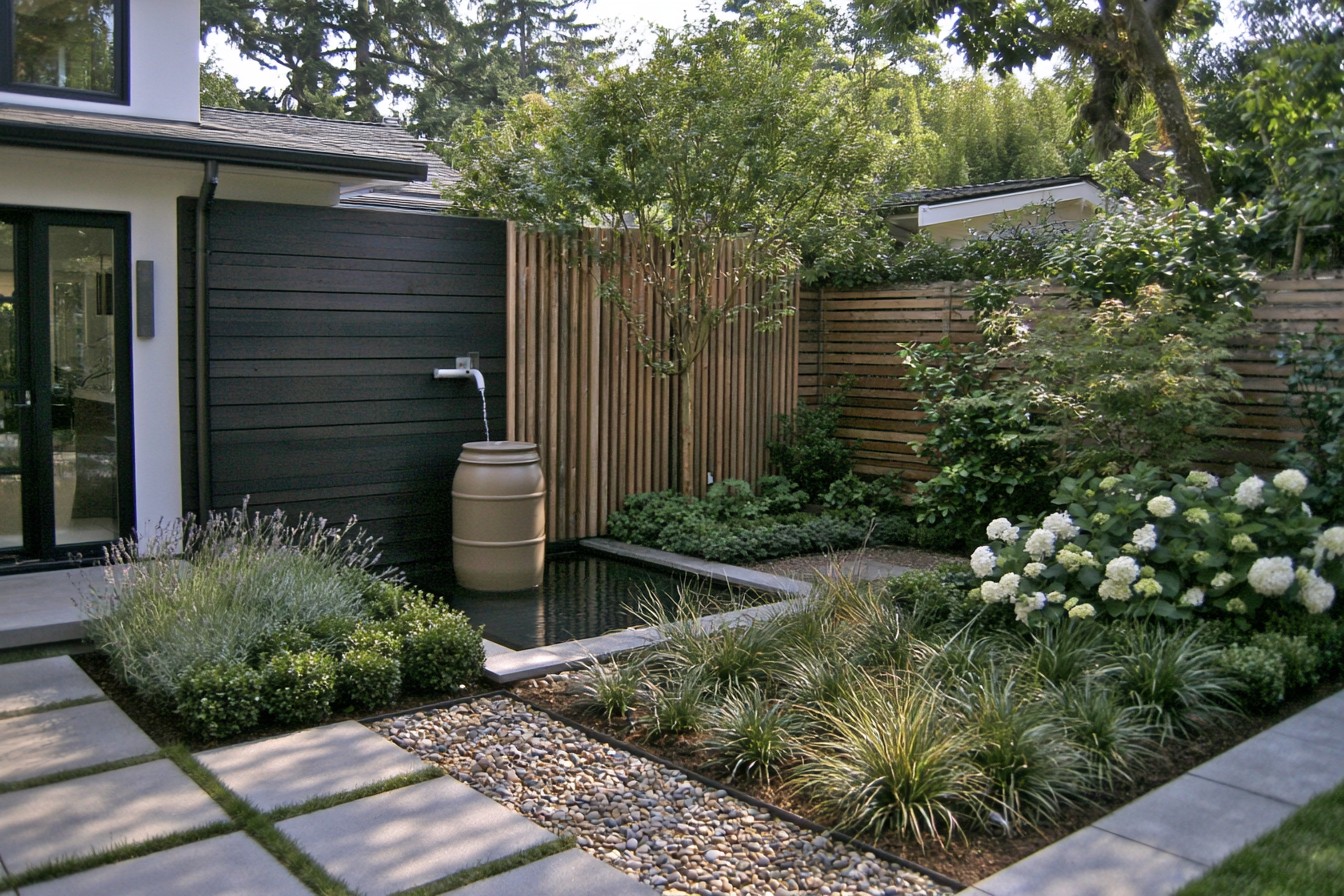
Where local rules permit, a rain barrel can provide water for suitable ornamental planting. Select a purpose-made container with a secure lid, screened inlet, stable tap, and controlled overflow. Position it on a level base capable of carrying the full water weight and close enough to the intended planting area for convenient use.
The container should remain closed to limit debris, mosquito access, and accidental entry by children or animals. Direct overflow away from foundations, paths, and neighboring property. Collected rainwater should not be assumed safe for drinking, cooking, or edible crops without appropriate treatment and official guidance.
Let Every Element Earn Its Place
A minimalist garden succeeds through editing, repetition, and realistic planning rather than emptiness. Clear routes, appropriately scaled seating, compatible planting groups, and a limited material palette provide the structure. Open areas are part of the design and do not need to be filled with additional pots or decorations.
Review the layout as plants mature and the seasons change. Replace unsuitable species, repair failing materials, and adjust irrigation instead of maintaining the original plan at all costs. A garden designed around local conditions and available maintenance time will remain orderly more successfully than one dependent on constant correction.
MORE IDEAS


Share
What's Your Reaction?
 Like
0
Like
0
 Dislike
0
Dislike
0
 Love
0
Love
0
 Funny
0
Funny
0
 Angry
0
Angry
0
 Sad
0
Sad
0
 Wow
0
Wow
0