13 Tropical Patio Designs That Bring Resort Style Home

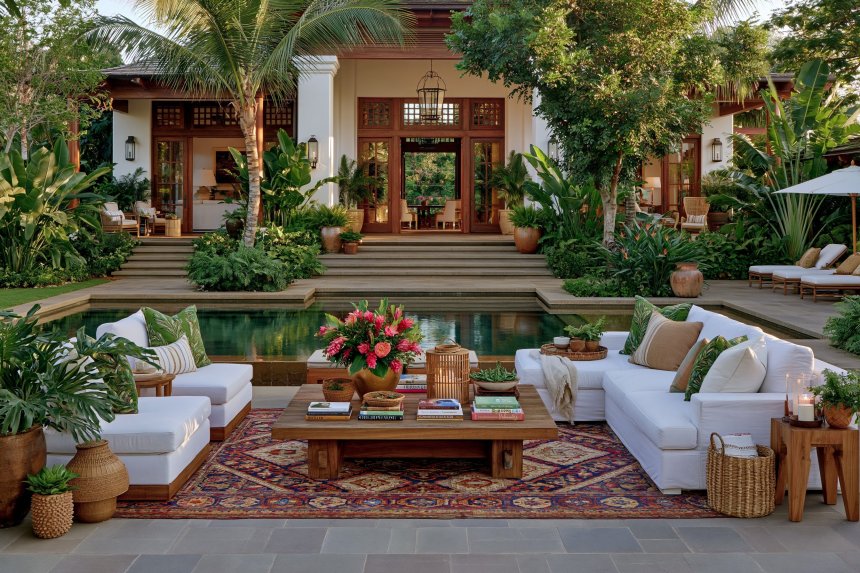
A tropical patio should offer more than a collection of broad-leaved plants. The design needs comfortable shade, air movement, practical seating, controlled drainage, and materials capable of handling local weather. When these elements are planned together, the space can feel relaxed and immersive without becoming difficult to clean or maintain.
Begin by observing how sunlight, wind, and rain move across the patio during the day. Measure the main circulation routes before selecting furniture or large planters, and investigate any existing drainage problem before covering the floor. Tropical character can then be developed through layered planting, natural textures, restrained color, and a few well-positioned functional zones.
1. Arrange Tropical Plants in Distinct Height Layers
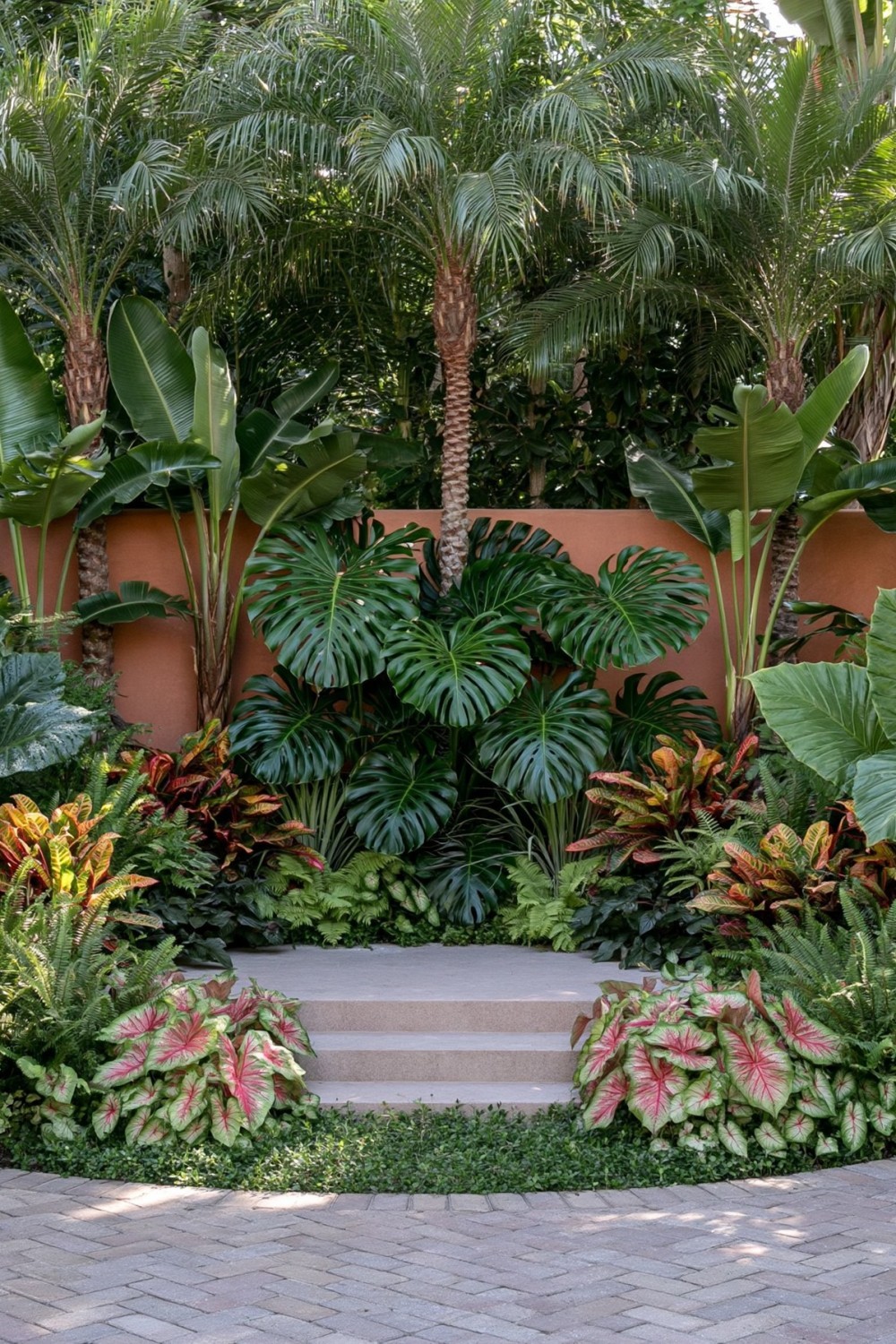
Use one or two tall plants to establish the background, medium foliage to provide fullness, and smaller or trailing varieties near the front. This layered approach creates depth without requiring plants to cover every surface. Repeating a limited number of leaf shapes or container finishes gives the arrangement more visual order.
Leave sufficient space for plants to reach their mature dimensions and for air to move between their leaves. Pots must remain accessible for watering, pruning, and inspection. Keep heavy containers on the floor, preserve the main walking route, and prevent foliage from covering lights, outlets, doors, or ventilation openings.
2. Select Plants for the Local Climate and Exposure
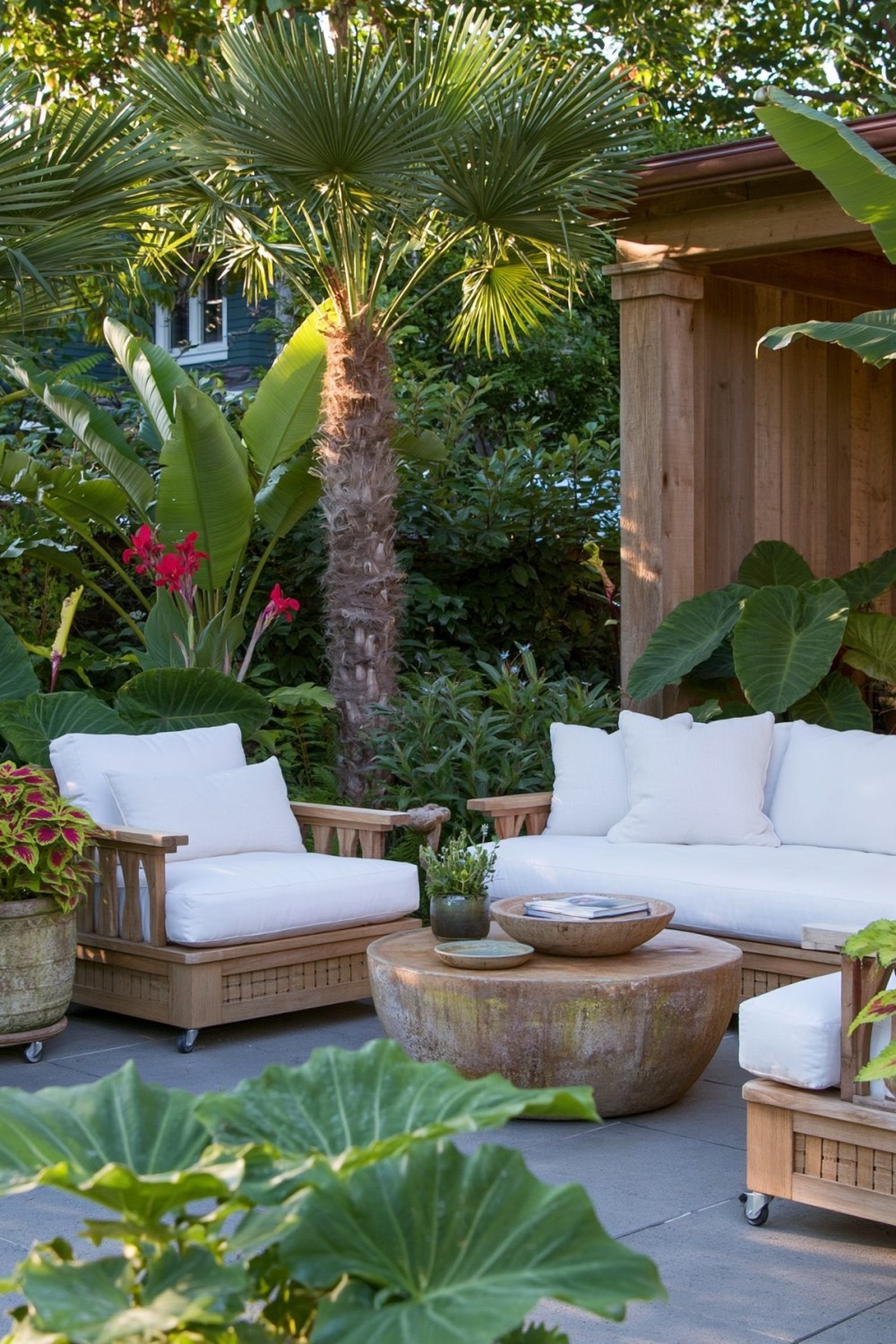
A plant that appears tropical may still be unsuitable for intense sun, winter cold, dry wind, or the limited light of a covered patio. Record how many hours of direct sun each planting area receives and check the mature height, watering needs, and temperature tolerance of every species before purchasing it.
Choose noninvasive plants appropriate for the region and confirm their safety when children or pets use the patio. Tender varieties may require indoor winter storage, which should be considered before buying large specimens. Locally suitable plants with bold foliage can often create the desired appearance with less intensive care.
3. Choose Furniture Designed for Outdoor Exposure
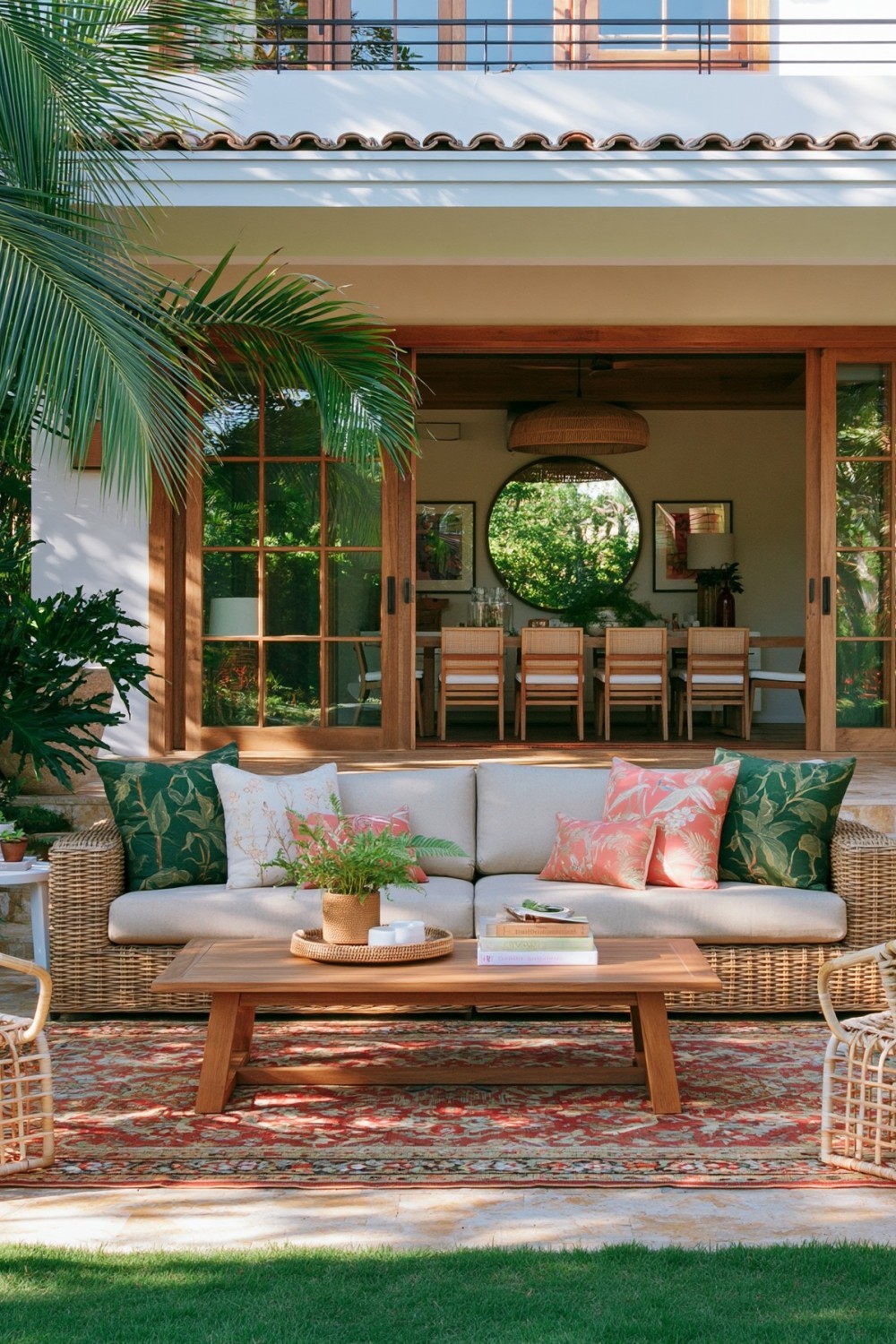
Timber, metal, and woven furniture can contribute natural texture, but each material must be suitable for the degree of weather exposure. Covered patios may accommodate a broader range than completely open areas. Inspect furniture for stable joints, corrosion-resistant fasteners, washable surfaces, and cushions that can be removed easily.
Allow comfortable space between the sofa, chairs, table, and surrounding planters. Furniture should not block doors, drains, or access to plant care. Follow the manufacturer’s maintenance guidance and store removable textiles during severe weather. Treat damage promptly before minor corrosion or timber deterioration becomes structural.
4. Use Tropical Color as a Focused Accent
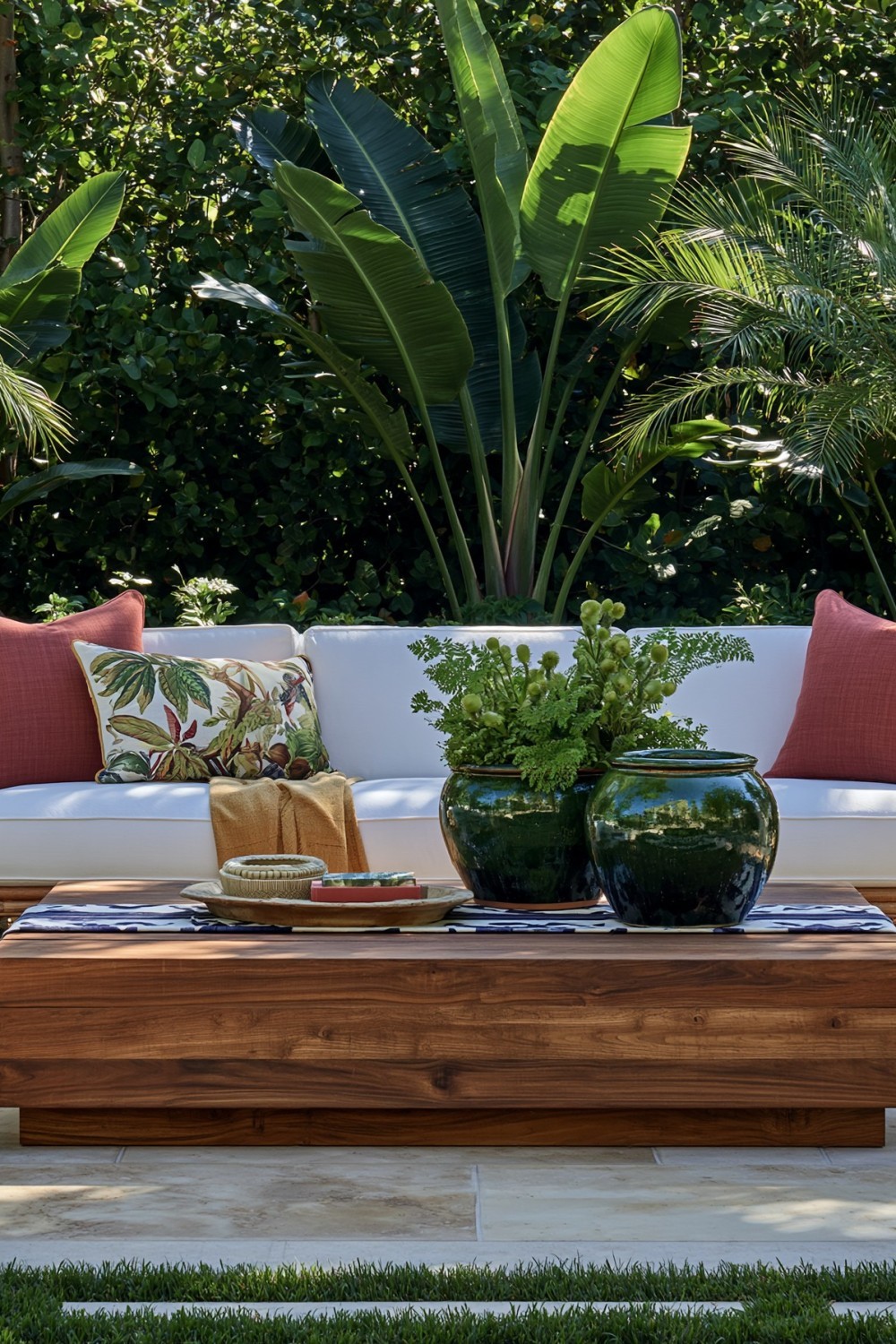
Deep green, coral, turquoise, ochre, and warm pink can provide tropical energy when used in controlled amounts. Let the plants supply most of the green and introduce one stronger color through cushions, planters, or a small table. A quieter neutral foundation prevents several saturated colors from competing.
Outdoor sunlight can fade fabric and paint unevenly, so select products rated for exterior exposure and rotate movable accessories when appropriate. Test a color beside the patio flooring and exterior walls before committing to a large area. Removable cushion covers provide an easier update than repainting permanent surfaces.
5. Position the Main Seating Area beneath Reliable Shade
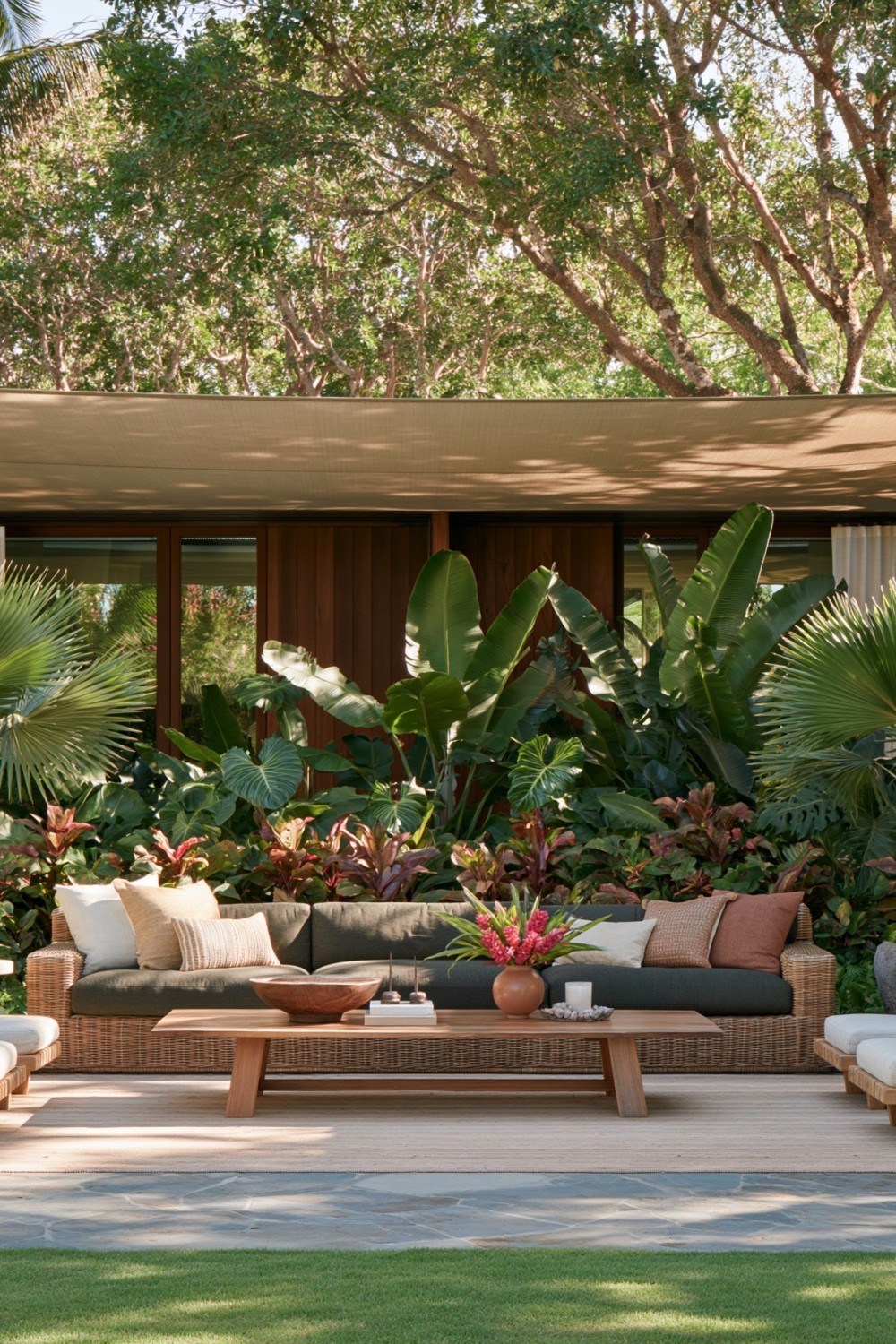
A shaded lounge is more useful when it responds to the sun’s direction rather than occupying the most convenient empty corner. Observe the patio during the hours it will be used and position seating where an umbrella, pergola, awning, or other suitable structure can reduce direct exposure without restricting airflow.
Shade structures and umbrellas must be installed or weighted for local wind conditions. They should not be attached to weak railings, temporary posts, or unidentified parts of a building. Close movable umbrellas during strong wind and keep supports outside the main path between the house and seating area.
6. Use Large Planters to Establish a Green Background
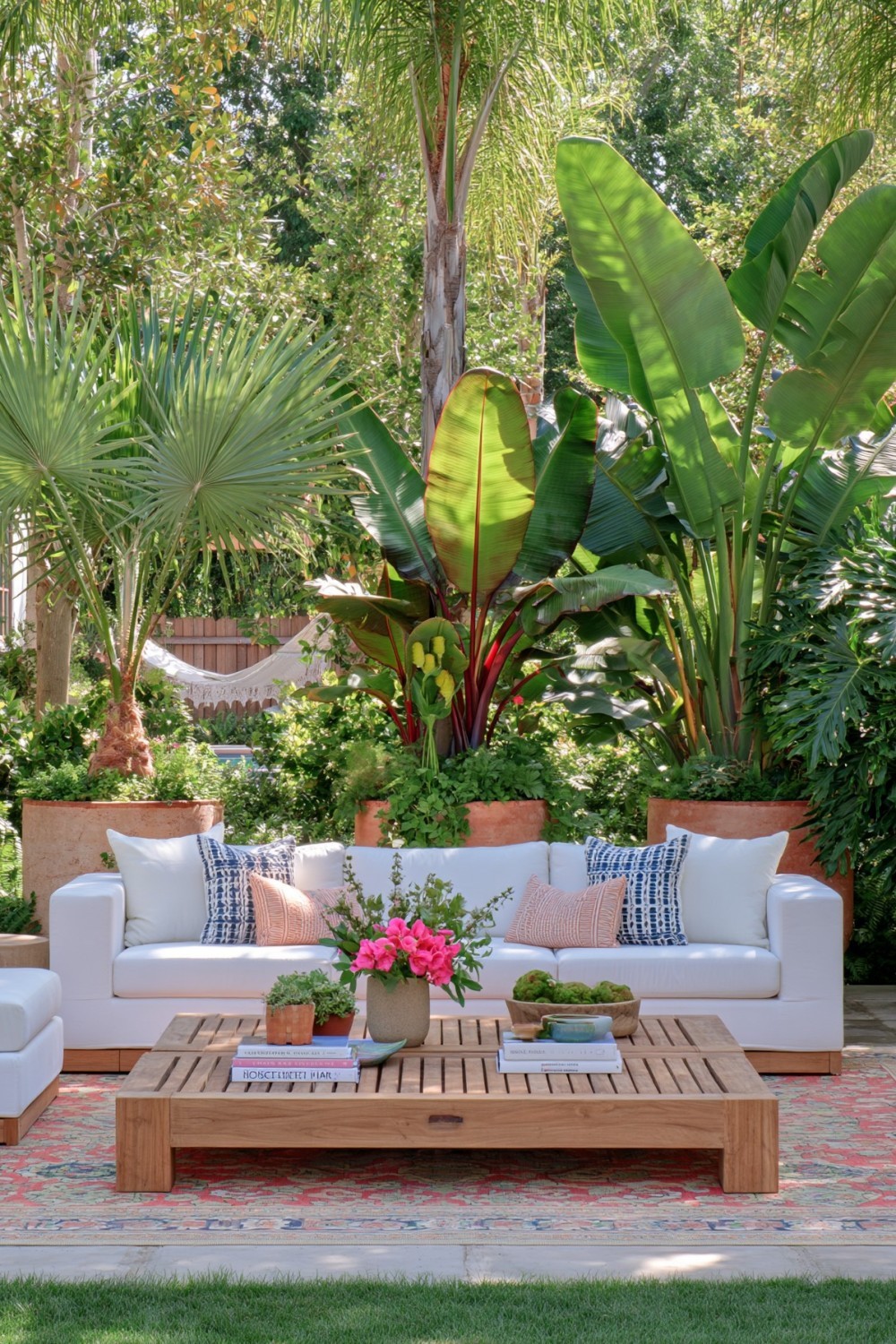
Large containers can frame a sofa, soften a plain wall, or define the edge of the patio. One substantial planter often produces a stronger result than several undersized pots. Select a container proportional to the plant’s mature root system and make sure its color and shape can remain useful if the planting changes.
A large container filled with wet growing material becomes difficult to move. Position it before planting and consider a rated wheeled base only on smooth, level surfaces. Every pot requires drainage, but runoff should not stain walls, create slippery areas, or affect neighboring property. Avoid blocking inspection access around the building.
7. Create Privacy with Secure Bamboo or Timber Screening
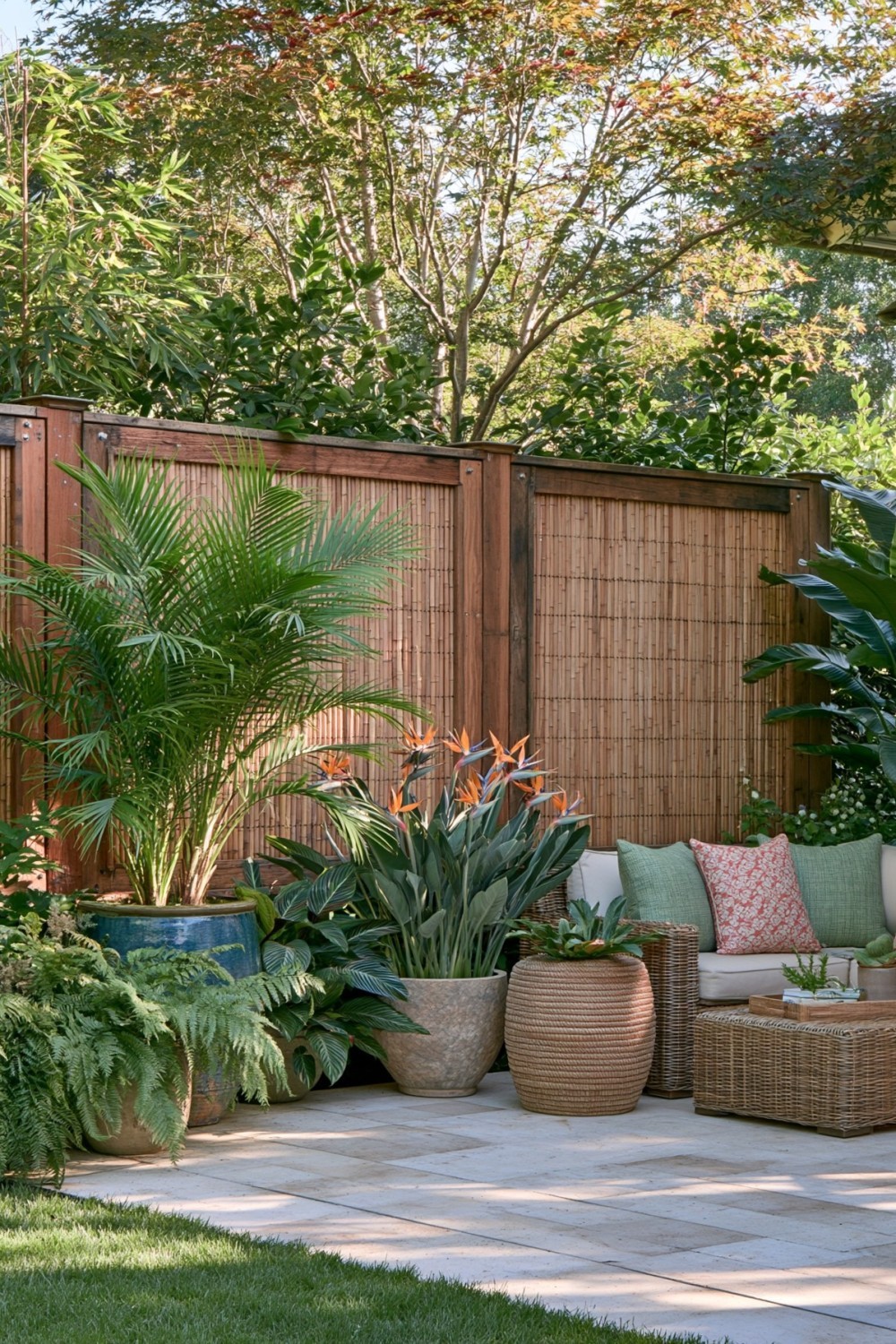
Bamboo panels or narrow timber battens can provide partial privacy while maintaining a natural appearance. A partially open screen often allows better air movement than a solid wall and can support lightweight climbing plants. Its height and position should block the necessary view without making the patio feel enclosed.
Screening experiences significant wind pressure and requires secure structural support. Do not attach it to a railing unless that system is designed to carry the added load. Maintain access to windows, drains, services, and exterior wall finishes. Treat or replace deteriorating natural material before it becomes loose.
8. Vary Floor Texture without Interrupting Drainage
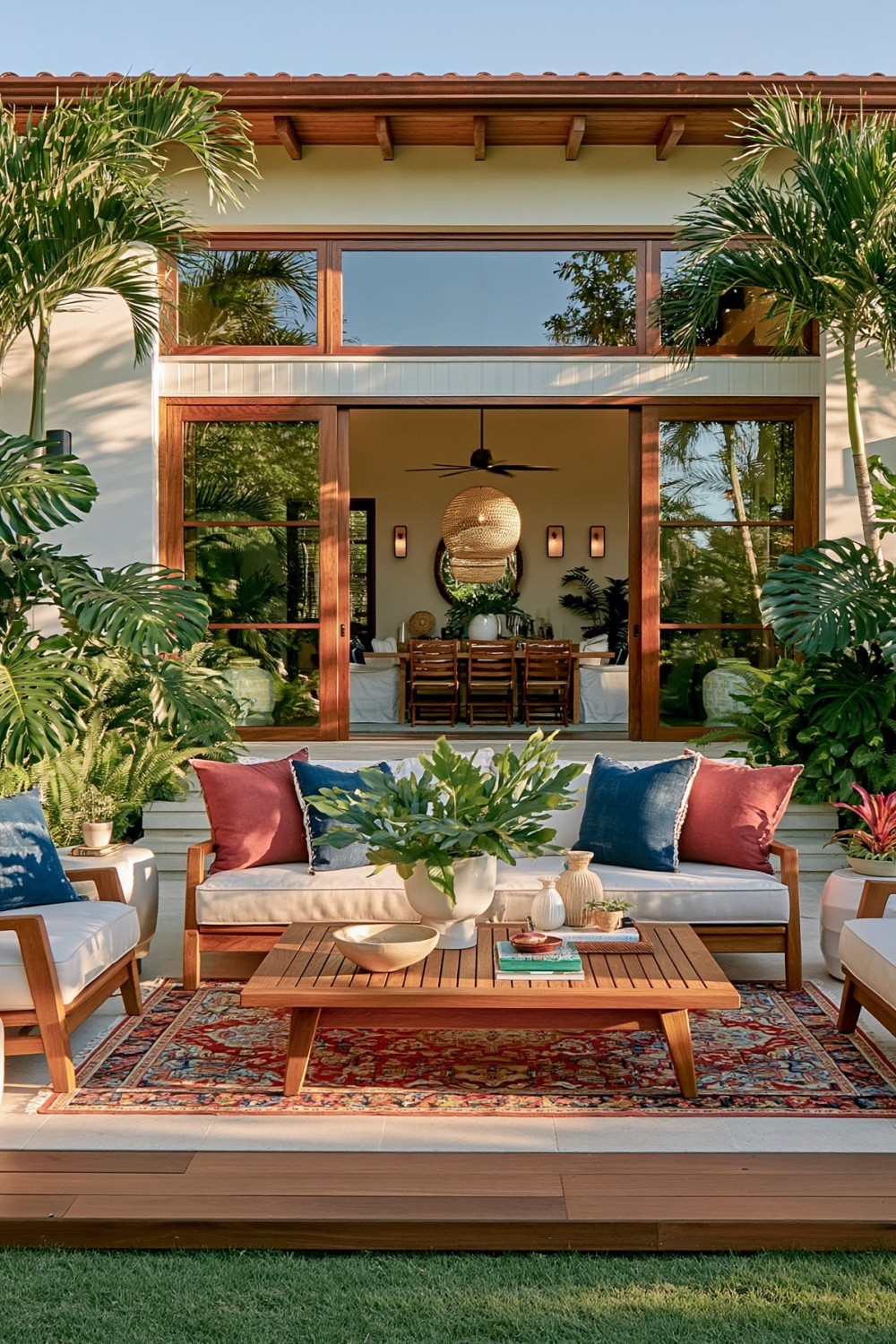
An outdoor rug, timber furniture, stone planters, and woven accessories can introduce natural variation without replacing the patio floor. Choose one primary floor surface and add texture through removable elements. This keeps the composition visually controlled and allows the area to be cleaned more easily.
Rugs should dry quickly, lie flat, and remain secure in wind. Do not cover damaged flooring, blocked drainage, or persistent dampness with decorative material. Raised timber tiles need a stable base and adequate airflow beneath them. Check every walking surface for movement and slipperiness after rain.
9. Select Textiles That Can Be Cleaned and Stored Easily
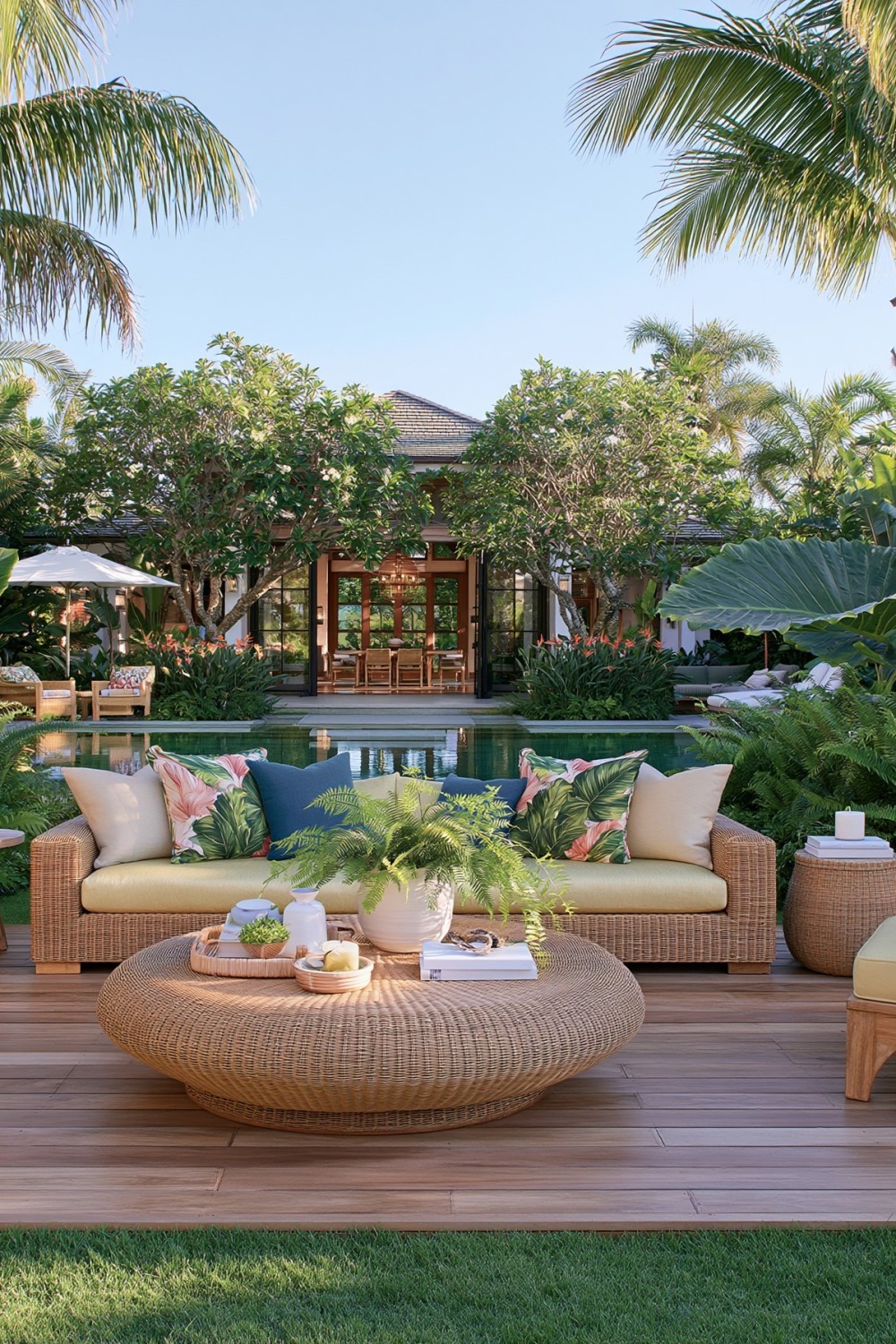
Outdoor cushions soften hard seating and provide an economical way to introduce pattern. Combine one botanical or geometric print with plain fabric in two related colors. Limiting the number of patterns allows natural plant forms to remain the main decorative feature.
Use exterior-rated fabric with removable covers and quick-drying inserts where possible. Even weather-resistant textiles benefit from sheltered storage during heavy rain or long periods without use. Clean spills promptly and allow fabric to dry completely before storing it to prevent persistent odors and mildew.
10. Add a Compact Station for Drinks and Serving
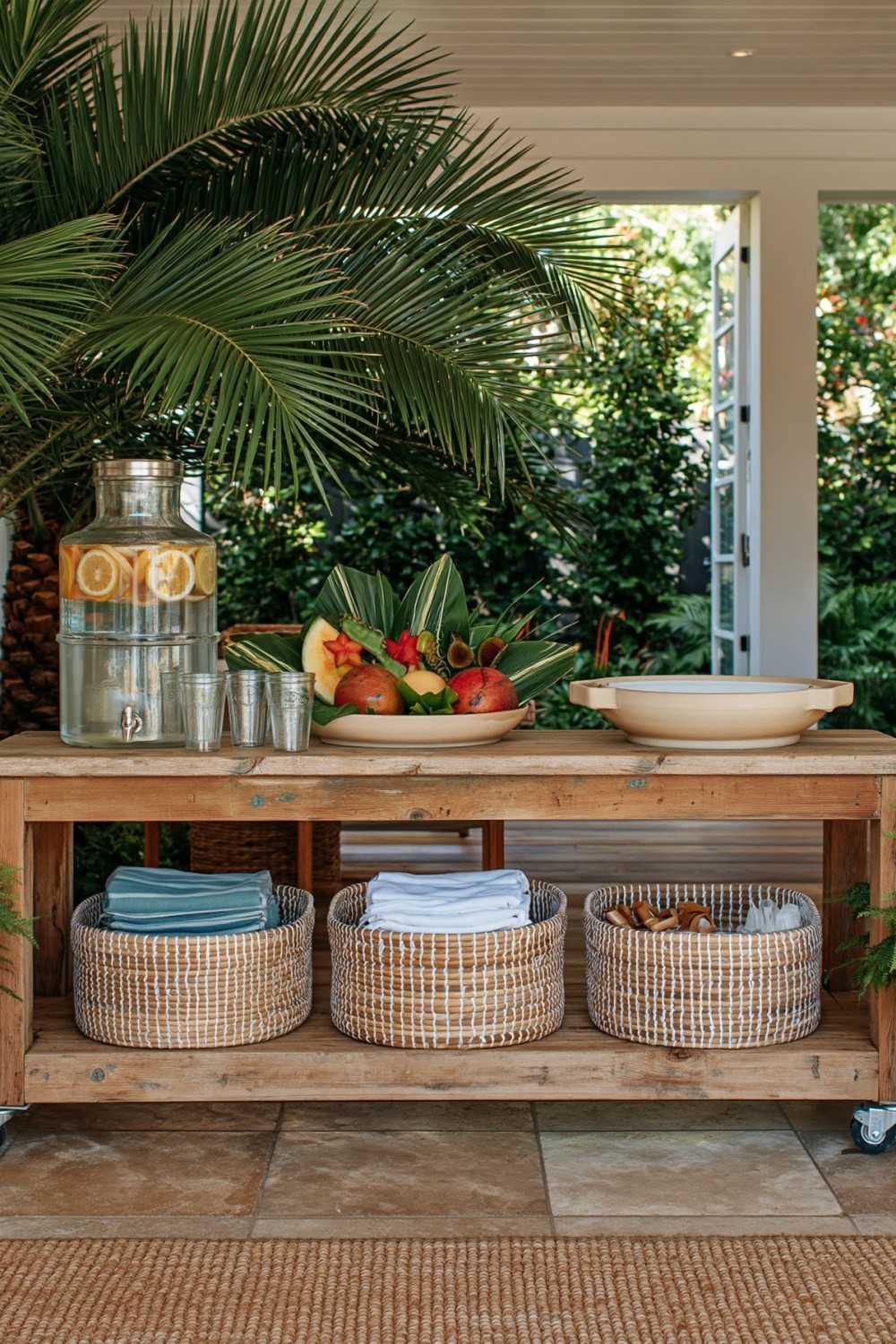
A narrow console or wheeled cart can keep water, glasses, and serving items close to the seating area. Choose a stable, washable surface with enough room for a tray but not so much depth that it restricts circulation. Closed lower storage can hold durable accessories without leaving every object visible.
Return food and perishable drinks indoors promptly, particularly in hot weather. Electrical appliances should be used outdoors only when specifically rated for that environment and connected through an appropriate protected supply. Lock the cart’s wheels during use and keep glassware away from the edge.
11. Group Plants by Watering and Humidity Requirements
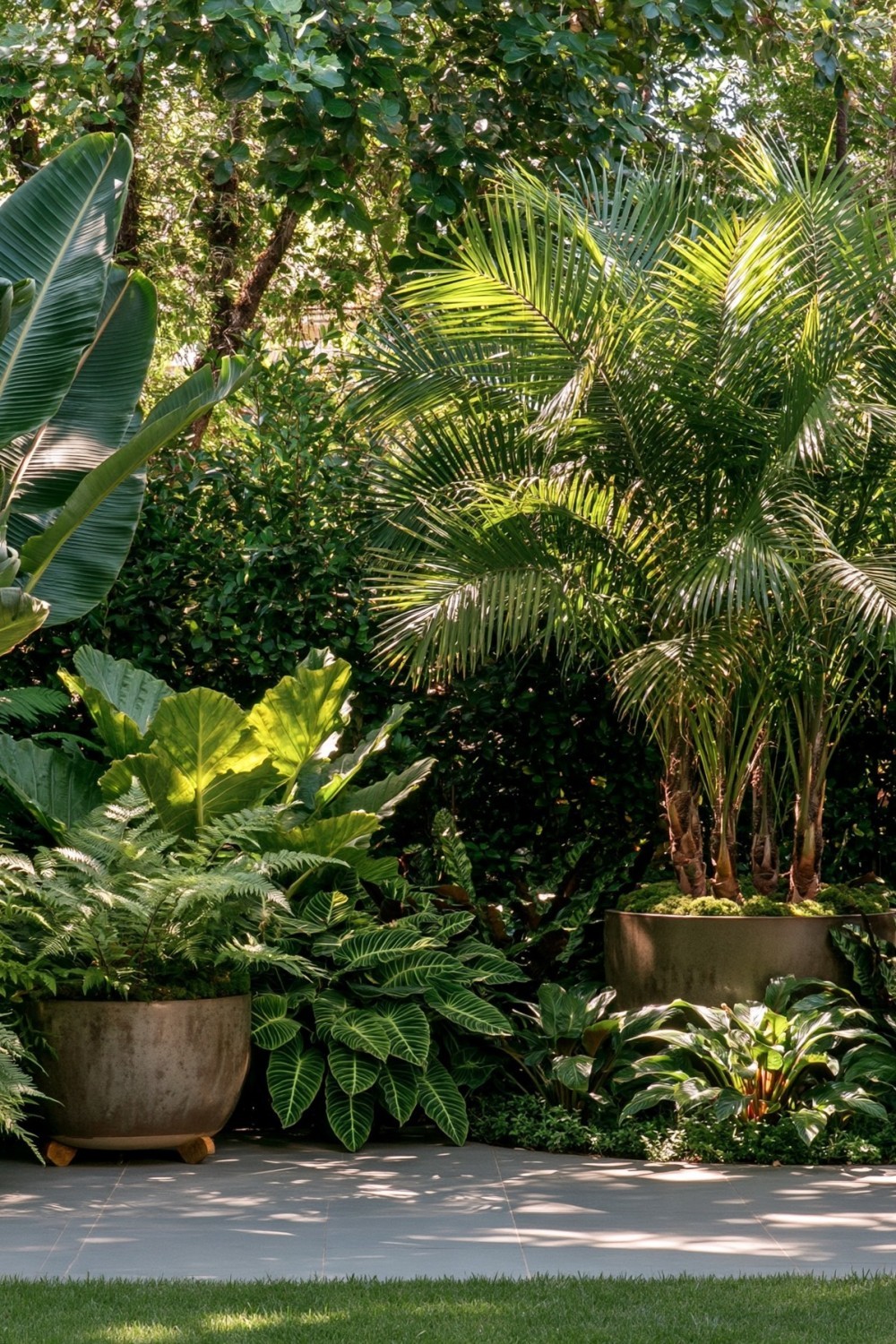
Plants with similar care requirements are easier to maintain when arranged together. Keep moisture-loving varieties in a suitable sheltered group and separate plants that need their growing material to dry more between watering. Labels can record plant names and help prevent an attractive but incompatible arrangement.
Check the growing material rather than watering every container automatically on the same schedule. Elevated pots and exposed edges may dry faster than large shaded containers. Empty standing water from saucers where appropriate and inspect leaves regularly for pests, disease, wind damage, and heat stress.
12. Collect Rainwater in a Covered, Controlled System
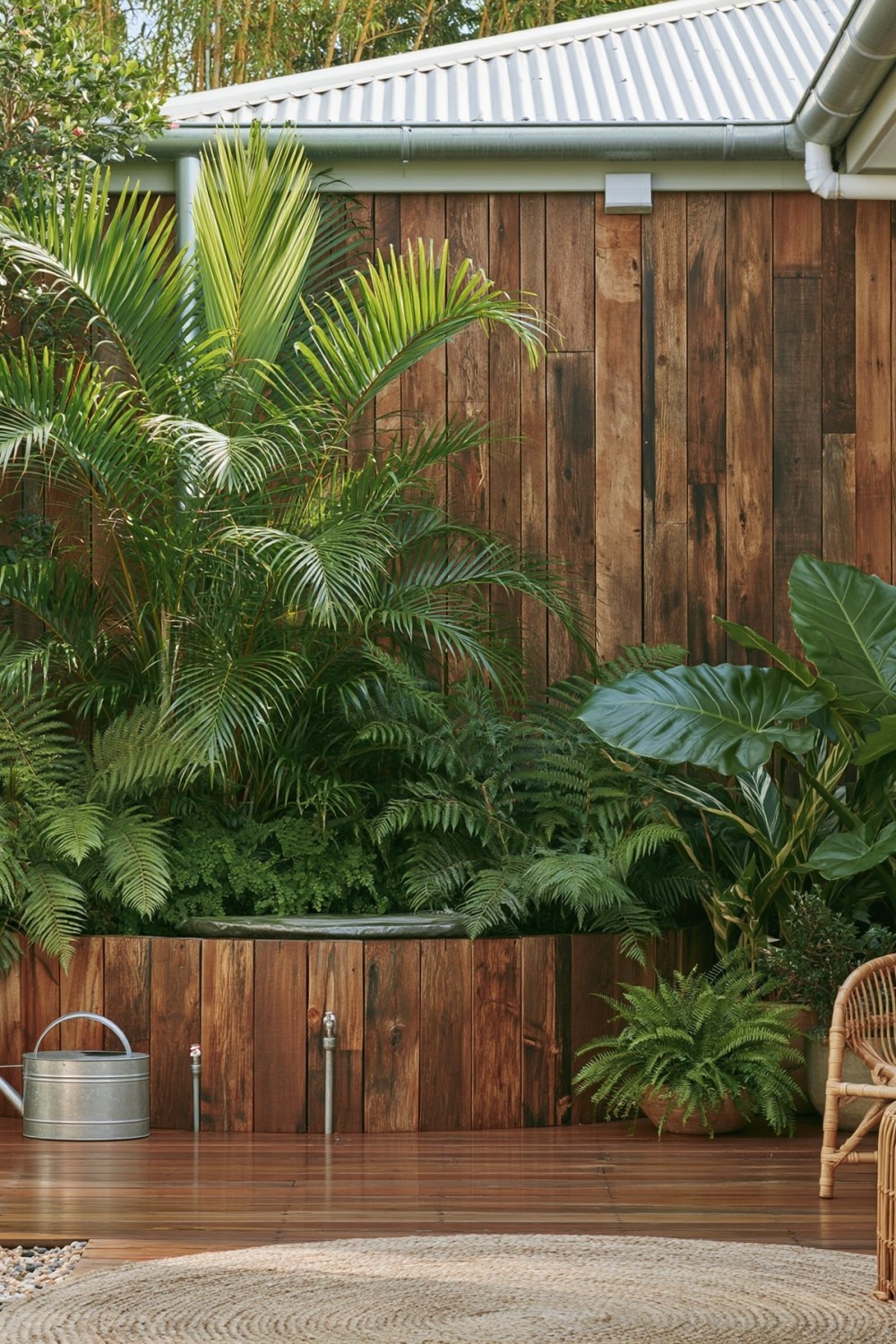
A rain barrel can reduce reliance on treated water for suitable ornamental plants where collection is permitted. Choose a purpose-made container with a secure lid, screened inlet, accessible tap, and controlled overflow. Connect it only to an appropriate collection surface and follow local water-use requirements.
The container needs a stable foundation because stored water is heavy. Keep it closed to reduce debris, mosquito access, and accidental entry by children or animals. Direct overflow away from foundations and neighboring property. Rainwater should not be assumed safe for drinking or food preparation without appropriate treatment and official guidance.
13. Preserve Airflow with a Scheduled Care Routine
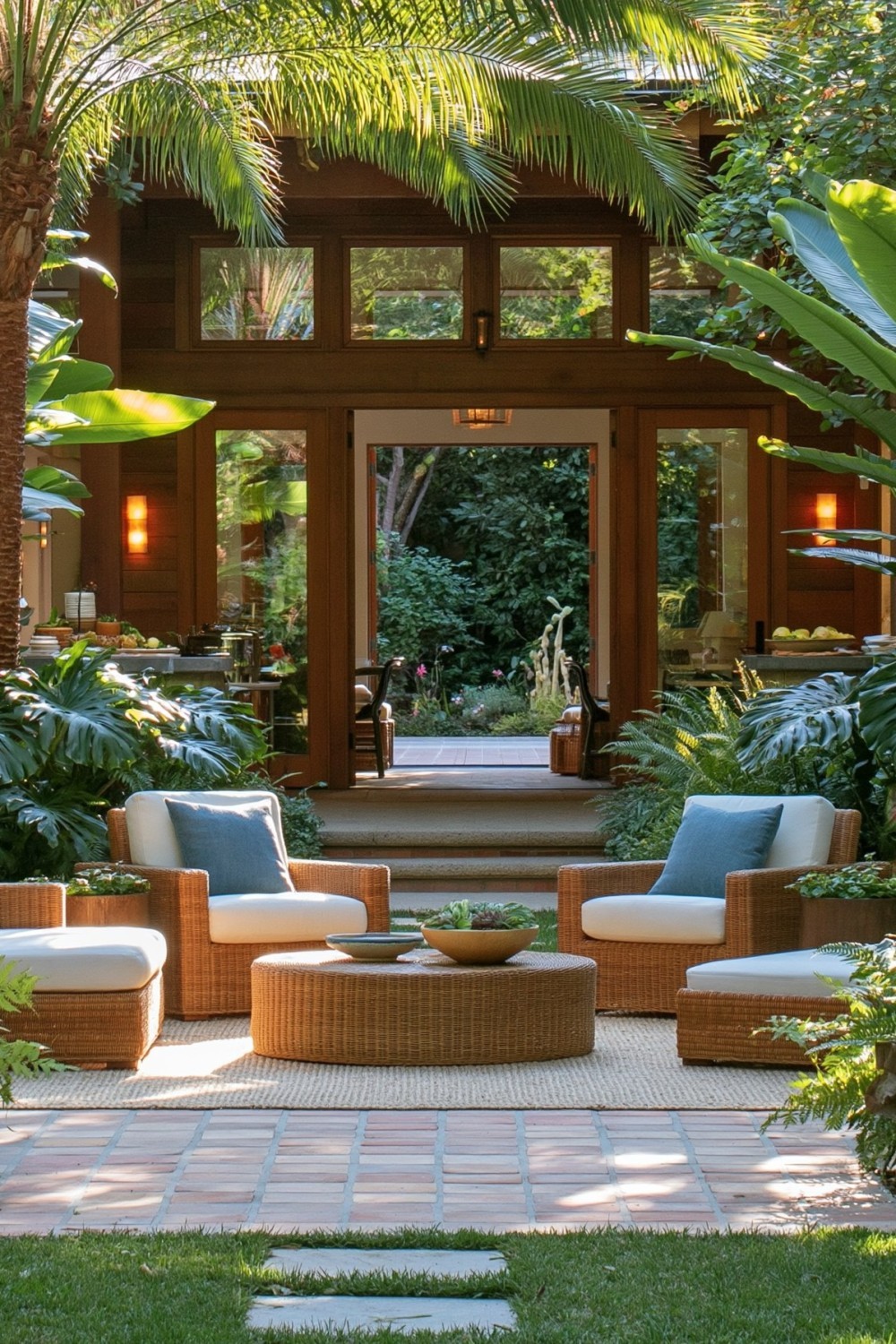
Dense planting can become humid and difficult to inspect when leaves, pots, and furniture are packed together. Maintain space around each group, prune damaged or overcrowded growth, and remove fallen material before it blocks drains. Open circulation also makes the seating area more comfortable during warm weather.
Create a seasonal checklist for watering equipment, furniture joints, shade anchors, screens, textiles, drains, and plant health. Move or divide plants that have outgrown their positions instead of allowing them to narrow pathways. Regular maintenance preserves the tropical atmosphere without letting the patio become overgrown or unsafe.
Build the Resort Feeling Around Everyday Comfort
A convincing tropical patio begins with shade, comfortable furniture, reliable drainage, and enough open space to move around. Plants should then be selected for the climate and arranged in layers that remain accessible for care. Color, textiles, screening, and serving furniture can support this foundation without overwhelming it.
Review the arrangement as plants mature and weather conditions change. A patio that works well in spring may require additional shading, watering, or circulation during summer. When every feature is chosen for both appearance and outdoor durability, the space can feel relaxed while remaining practical throughout the season.
MORE IDEAS


Share
What's Your Reaction?
 Like
0
Like
0
 Dislike
0
Dislike
0
 Love
0
Love
0
 Funny
0
Funny
0
 Angry
0
Angry
0
 Sad
0
Sad
0
 Wow
0
Wow
0